Few people cut to the heart of grace like a warm knife through butter as Brennan Manning:
HT: ChurchLeaders.com (yet again)
Dave Faulkner. Musings of an evangelical Methodist minister.
Few people cut to the heart of grace like a warm knife through butter as Brennan Manning:
HT: ChurchLeaders.com (yet again)

 The last of the Tenebrae candles is extinguished, as I suffocate its fire with the snuffer. Peter has denied Jesus. The congregation sits in near-perfect darkness, observing the silence they read about in their orders of service before the light of the final candle died. I have a little assistance as I oversee the service: I have brought the reading light I bought for my Kindle and attached it to the lectern. Together, we enter the dark silence of God. Or should that be the silent darkness of God? Perhaps it is both.
I resurrect the candle flame, and we are to continue sitting in silence. However, the presence of light makes that silence more difficult. People shuffle. I become more aware of the cramp in my toes, and wish I could take my shoe off to put my foot on the cold stone floor. “Could you not wait?” said Jesus.
We leave in silence. The clearing-up is done in a quiet not usually experienced.
This morning, we gather at Holy Trinity church to begin our silent walk of witness to St Hugh’s for our united service. On a cool, bright morning we prepare to remember darkness. As we pass by the Chinese takeaway, the children of the owners are sitting in the window, munching prawn crackers and watching us with innocent puzzlement. Our cross is large, and only tall, strong men are able to carry it. We walk in silence, surely in contrast to the crowds who witnessed Jesus carrying his cross beam. It was a public holiday then, and it is today. But not for us the usual jollity. Instead, we are solemn.
The quiet, slow pace cannot continue for me, though, as I have no time to attend the united service in Knaphill. Instead, I walk home, unlock the car and drive to Addlestone for their united service. Before I engage clutch and gear lever, I check my mileage: it may be the holiest day of the year, but it is also the first day of a new tax year and I have to enter in my records how many miles I have driven in the last twelve months. Even on Good Friday, I am not in a bubble that insulates me from the usual world.
As Richard leads the service, we are invited to write on paper crosses those things we would like to bring to the foot of Christ’s Cross. While singing the Taizé chant ‘Jesus, remember me’, we do just that. I name some fears and feel some peace in placing them at the Cross.
Richard asks us to leave the service in silence. If we want to talk, we can do so over hot liquid caffeine in the vestibule. Except the silence is broken by an announcement that the teas and coffees must be brought into the worship area, because outside the staff of the Addlestone Food Bank are preparing to serve those in need. Noise and chatter, yes, and no silence – but it seems like a fitting response to the ministry of the Cross, as does my conversation with a colleague from another church about the hosting of an Alpha course.
The rushing from Knaphill to Addlestone has seemed so inappropriate for reflection. It is only now I have got back that I can home in on the value of the silence and the darkness. Today and tomorrow, as I remember Jesus lying in the tomb, I can prepare for a different kind of rushing on Sunday. In three morning services, I shall be facilitating joy. I have to link the two. Today is not merely about despair, and Easter Day is more than the happy ending. They belong together. The silence and darkness of betrayal and death, with the noise and light of an empty tomb.
Samantha Brick’s article in the Daily Mail two days ago in which she bemoans the disadvantages of beauty has caused a (social) media firestorm. The Telegraph reports that some of the criticism seems more nasty than the narcissism of the original piece. In The Guardian, a male journalist has parodied it. In The Independent, a female journalist has defended Ms Brick. All the reaction seems to be in the ‘quality press’ – is this such a deep and important article?
I’m not going to enter into whether I think Ms Brick is beautiful. It only matters that her husband thinks she is. There are worse things to suffer in this world than jealousy for good looks. And in my case, I have a lovely wife and the most beautiful daughter. All I will say is that I find this a particularly sad debate to have in Holy Week of all weeks. My mind has gone to the final Servant Song in the book of Isaiah, one which Christians have traditionally seen as a prophecy of Jesus and his passion. These verses seem apposite:
Just as there were many who were astonished at him
—so marred was his appearance, beyond human semblance,
and his form beyond that of mortals—
so he shall startle many nations;
kings shall shut their mouths because of him
(Isaiah 52:14-15a)he had no form or majesty that we should look at him,
nothing in his appearance that we should desire him.
He was despised and rejected by others;
a man of suffering and acquainted with infirmity;
and as one from whom others hide their faces
he was despised, and we held him of no account.
(Isaiah 53:2b-3)
Does that put all this palaver about beauty into context?

Last week, I was asked to give an extended talk to a midweek group on this theme. This is the text I had before me when I gave the talk.
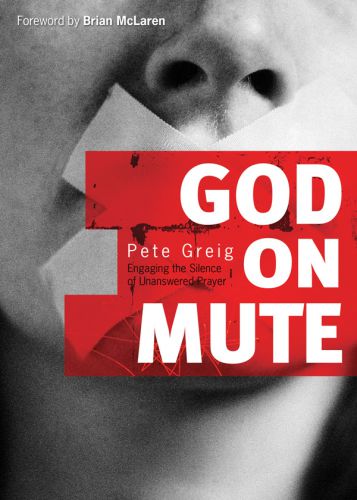
No one really talks about Holy Saturday, yet if we stop and think about it, it’s where most of us live our lives. Holy Saturday is the no-man’s land between questions and answers, prayers uttered and miracles to come. It’s where we wait – with a peculiar mixture of faith and despair – whenever God is silent or life doesn’t make sense.
As we turn to explore the silence of God, we are compelled to address the problem of unanswered prayer more literally than we have done so far, examining the times when God simply doesn’t reply to us when we pray. It’s not that He’s saying ‘yes’, ‘no’ or ‘not yet’ to our prayers; it’s that He’s not saying anything at all. We pray and pray but God remains silent.
Gerard Kelly on the importance of slowing down for greater spiritual depth:
Vodpod videos no longer available.Via the Inspire Network – originally here.
UPDATE: sorry, the video doesn’t seem to be working here. (Not sure what went wrong with Vodpod on this occasion.) I suggest you click the link above, watch the video on the Inspire Network site or here and then come back here to comment.
Are you looking for something different to mark Holy Week this year? Come to St Paul’s Church Addlestone (directions here) on Monday night at 7:30 pm and hear the Kairos Ensemble, a band of four Christian jazz musicians, perform their piece The Passion Suite. Entrance is £5 – a bargain.
Here is another taster of their music:
(Via ChurchLeaders.com)
Volf’s experience of forgiveness is formed not only in the crucible of his brother’s unfortunate death at the hands of a negligent soldier, it also comes from his upbringing as a Croatian and therefore in that tempestuous region of conflict, the Balkans.
Consider what Volf and his family endured in order to forgive (sometimes in droplets, or as a process as he says near the end of the video). Then contrast Arquimedes Nganga, who claims his conversion to Baptist Christianity prevented him from playing for Manchester United. Where do the words ‘petty’, ‘pathetic’ and ‘chancer’ occur here? He was in the Portuguese Third Division when he was converted at the age of 25, and he is delusional enough to think that Man U would have come in for him. It’s a laughable case with no chance in law, and he will have some big bills to pay, so he’d better hope his book does better than the three derisory reviews (all one-star) it has garnered on Amazon.
And which part of the word ‘forgiveness’ didn’t he understand when he was an evangelist?

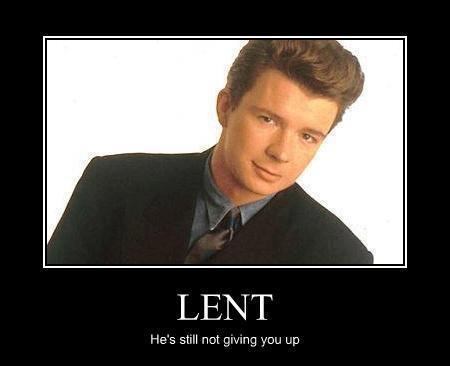 USA Today reports on an initiative called ‘Ashes To Go‘ in which Episcopalian priests are today offering the traditional Ash Wednesday imposition of ashes out on the streets for people in a rush, the same clientele who grab breakfast to go in their daily beat-the-clock dash to work. (According to the article, Roman Catholics officially disapprove, since it should take place within a proper church service of repentance.)
According to the Ashes To Go site,
“Ashes to Go” is about bringing spirit, belief, and belonging out from behind church doors, and into the places where we go every day. It’s a simple event with deep meaning, drawing on centuries of tradition and worship to provide a contemporary moment of grace.
I have found an ashing service powerful in the past, but I’d never thought of taking it to the streets. Specifically, I have noticed that it has not been the ‘traditional’ Methodists who have appreciated ashing, but the more charismatic Methodists. This may seem surprising that such a liturgical act might appeal to those who are regarded as being ambivalent to overt form and structure, but I think the connection is found in the sensory experience.
For me, to receive the imposition of ashes and then to share it with others is moving to the point of being emotionally troubling. That is not a criticism, as I hope you will see as I explain. I deal in the currency of death through ministry, offering comfort to the bereaved and celebrating lives well lived. That makes the connection graphic, especially last week when twice I buried the ashes of someone whose funeral I had taken a few weeks previously. As I watched the crematorium attendant release the lever on the urn and witnessed the ashes pouring down into an empty cube of soil, I wondered what the grieving families were thinking. Were these ashes really a beloved husband or father? What will I think when it is the cremated body of one of my parents?
Not only that, five years ago I had a cancer scare. It was a false alarm. A routine medical found blood in my urine, and I was referred urgently for urology tests. Nothing sinister was discovered. The doctors assumed I had either had an infection or was under stress. (I think it was the latter.) Ever since that episode, my inflamed imagination has wrongly interpreted every bump as a carcinogenic intruder. Silly, I know, but true. I live thinking almost daily of death, and whether I am ready to meet Christ. In moments of spiritual fever, I think more about my sins than God’s grace.
All of which brings me to an excellent editorial in today’s Guardian. It tracks changing attitudes to death in connection with Ash Wednesday. To quote a chunk of it:
These days, if we are asked how we want to die, we generally say that we want it to happen quickly, painlessly and preferably in our sleep. In other words, we don’t want dying to become something we experience as a part of life. This would have made little sense to generations past. For centuries, what was feared most was “dying unprepared”. Death was an opportunity to put things right. To say the things that had been left unsaid: “Sorry”, “I was wrong”, “I always loved you”. We used to die surrounded by our extended family. Now we die surrounded by technology, with a belief in medical science often replacing the traditional puzzle of human existence.
Ash Wednesday inculcates that idea of being prepared for death. The putting right of relationships, the readiness to meet our Maker, and so on. And if that’s the case, then maybe there is a missional application for the imposition of ashes. Perhaps those Episcopalian priests in the States today are doing something significant. When someone asks the ultimate questions about life, death and meaning, it’s not surprising when God comes into the thinking. Ministers will identify that at the other end of life’s spectrum when a couple have their first baby. Facing death in all its reality rather than the saccharine illusion so regularly trumpeted today could well mean a gospel encounter. I am sure earlier generations understood that better than we do, where death is on the NHS.
Yes, dust we are and to dust we shall return. But one day our mortal bodies will be reanimated by the Holy Spirit in resurrection.
HT for video and USA Today story: Bob Carlton on Facebook.)

Right now as I’m typing these words I shouldn’t be at home. I should be in a Methodist church building in Clevedon, Avon, for a memorial service. However, icy conditions have prevented me taking the journey.
 The one being remembered is the Reverend Howard Ashby. Howard was my minister in those formative years of mine between the ages of twelve and nineteen. He and his wife Ida had something special about themselves. They were somehow different from the typical churchgoers who, while nice, seemed to my teenage mind to treat church like a religious club. At an age when rebellion was on my agenda, Howard and Ida had something indefinable that kept me questioning.
It was in his manse study that I found Christ. It was Maundy Thursday, 1976 – 9th April that year. As I’ve said from time to time here, I grew up with the mistaken idea that faith equalled believing in God plus doing good. As he took me and a few other teenagers through the promises and professions of faith in the Methodist confirmation service, I finally discovered that it was about faith in Christ and that the good works stuff only followed as a sign of gratitude.
As a family, we had such fond memories of him. My grandmother lived with us. She had had a stroke, and thanks to a medical error was treated for years afterwards with that evil drug Valium. Under its malign influence. Nanna retreated. She barely went out and she spent most of her time in her room. Whenever Howard visited, he always ended by saying, “God bless you – and he will.” I’ve used those words sometimes with people in my ministry as a result of his example all those years ago.
I’m sorry not to be in that service this afternoon. I would like to mingle with others who have fond memories of him, and reasons for gratitude. I would like to meet again members of his family. Howard’s son Paul was my ‘assisting minister’ at ordination, so the wider family is special to me, too.
But if Howard had that effect upon me, who was it for you? And how?
An article entitled ‘Top five regrets of the dying‘ is a popular link at present. An Australian nurse wrote a blog on the theme which has turned into a book. The top five are:
1. I wish I’d had the courage to live a life true to myself, not the life others expected of me.
2. I wish I hadn’t worked so hard.
3. I wish I’d had the courage to express my feelings.
4. I wish I had stayed in touch with my friends.
5. I wish that I had let myself be happier.
For a minister, number 2 is a big risk, especially if there is any truth in the existence of the Protestant work ethic. In my case, and I’m sure with others, number 4 is another big risk. Being busy, and moving every few years to another appointment in a different part of the country, puts pressure on this. Facebook helps, but only so far. Number 3 can be a risk when your livelihood depends on the whims and opinions (and sometimes the prejudices) of congregations.
What, in your experience, are the major regrets people have in life? Has forgiveness helped?
 Big Circumstance