A Contradiction In Terms: An Inward-Looking Church

Remembering the old quote attributed to Emil Brunner that ‘the church exists by mission as fire exists by burning’, it is sobering to read ‘10 Warning Signs Of An Inwardly Obsessed Church‘ by Thom Rainer. Some of Dr Rainer’s ten signs sound not only familiar but widespread to me.

What do you think of his list? Would you add any? Would you challenge any?

Whatever you think, the tenor of the article underlines even more for me the importance of churches being mission-focussed. (By which, I don’t simply mean, ‘raising funds for others to do mission’.) Stuff about the priority of worship often deteriorates into narcissistic arguments about personal taste and aesthetics. I agree that ‘mission exists because worship doesn’t’, but that is all the more reason to have mission-minded churches.
I’m reminded of the words of Ian Brown, former lead vocalist of the Stone Roses, who talked about his own spiritual quest in an interview in Q Magazine in November 2007:

My spiritual quest is for me to understand God. I’ve gotta educate myself, cos the church isn’t going to show me God. They put themselves next to God so that you’ve got to go through them to get to God. I don’t believe that.

It’s time we stopped getting in the way and being part of the solution for people like Brown.

Ash Wednesday: Would You Like Tacos To Go With Your Ashes?

USA Today reports on an initiative called ‘Ashes To Go‘ in which Episcopalian priests are today offering the traditional Ash Wednesday imposition of ashes out on the streets for people in a rush, the same clientele who grab breakfast to go in their daily beat-the-clock dash to work. (According to the article, Roman Catholics officially disapprove, since it should take place within a proper church service of repentance.)

According to the Ashes To Go site,

“Ashes to Go” is about bringing spirit, belief, and belonging out from behind church doors, and into the places where we go every day.  It’s a simple event with deep meaning, drawing on centuries of tradition and worship to provide a contemporary moment of grace.

I have found an ashing service powerful in the past, but I’d never thought of taking it to the streets. Specifically, I have noticed that it has not been the ‘traditional’ Methodists who have appreciated ashing, but the more charismatic Methodists. This may seem surprising that such a liturgical act might appeal to those who are regarded as being ambivalent to overt form and structure, but I think the connection is found in the sensory experience.

For me, to receive the imposition of ashes and then to share it with others is moving to the point of being emotionally troubling. That is not a criticism, as I hope you will see as I explain. I deal in the currency of death through ministry, offering comfort to the bereaved and celebrating lives well lived. That makes the connection graphic, especially last week when twice I buried the ashes of someone whose funeral I had taken a few weeks previously. As I watched the crematorium attendant release the lever on the urn and witnessed the ashes pouring down into an empty cube of soil, I wondered what the grieving families were thinking. Were these ashes really a beloved husband or father? What will I think when it is the cremated body of one of my parents?

Not only that, five years ago I had a cancer scare. It was a false alarm. A routine medical found blood in my urine, and I was referred urgently for urology tests. Nothing sinister was discovered. The doctors assumed I had either had an infection or was under stress. (I think it was the latter.) Ever since that episode, my inflamed imagination has wrongly interpreted every bump as a carcinogenic intruder. Silly, I know, but true. I live thinking almost daily of death, and whether I am ready to meet Christ. In moments of spiritual fever, I think more about my sins than God’s grace.

All of which brings me to an excellent editorial in today’s Guardian. It tracks changing attitudes to death in connection with Ash Wednesday. To quote a chunk of it:

These days, if we are asked how we want to die, we generally say that we want it to happen quickly, painlessly and preferably in our sleep. In other words, we don’t want dying to become something we experience as a part of life. This would have made little sense to generations past. For centuries, what was feared most was “dying unprepared”. Death was an opportunity to put things right. To say the things that had been left unsaid: “Sorry”, “I was wrong”, “I always loved you”. We used to die surrounded by our extended family. Now we die surrounded by technology, with a belief in medical science often replacing the traditional puzzle of human existence.

Ash Wednesday inculcates that idea of being prepared for death. The putting right of relationships, the readiness to meet our Maker, and so on. And if that’s the case, then maybe there is a missional application for the imposition of ashes. Perhaps those Episcopalian priests in the States today are doing something significant. When someone asks the ultimate questions about life, death and meaning, it’s not surprising when God comes into the thinking. Ministers will identify that at the other end of life’s spectrum when a couple have their first baby. Facing death in all its reality rather than the saccharine illusion so regularly trumpeted today could well mean a gospel encounter. I am sure earlier generations understood that better than we do, where death is on the NHS.

Yes, dust we are and to dust we shall return. But one day our mortal bodies will be reanimated by the Holy Spirit in resurrection.

HT for video and USA Today story: Bob Carlton on Facebook.)

Uncle William The Missionary

One autumn Sunday in 1983, a Chinese student turned up at my home church in London. He’d come over from Hong Kong to study civil engineering at a nearby institution. Rather than go to the Chinese Church in London, he chose to find a local group of native Christians with whom to worship for the three years of his studies here.

That was how we met William. Or ‘Uncle William’, as he became known to us.

He got that name on one of the many days he came back to our parents’ house for Sunday lunch. My sister and I told him how when we were children, we addressed our parents’ friends as ‘Uncle’ or ‘Auntie’. “Well,” said William, “I am your parents’ friend, too. You should call me Uncle William.” So we did, even though he was younger than me.
Over those three years we had great fun. We tried to convince him of the existence of the Wombles, an endangered species on Wimbledon Common, but he didn’t fall for it. When he travelled with us to attend Spring Harvest in Prestatyn, we told him he would need his passport for the Welsh border. It didn’t work.

But when we told him about the male and female haggis animals on the Scottish mountains, we got away with it. We span the old yarn that the males have shorter legs on one side of their bodies and the females have shorter legs on the other side. Thus they have to go opposite ways around the mountains in order to meet and mate. If they go past each other, it means another circuit.

William thought this was nonsense, and announced that he was going to visit a relative of ours who would confirm his suspicions. The moment he went out of the door, we rang her, knowing she had the gift of the straight face …

I have only seen William once since those days. It was ten years ago, when he paid a visit to London with his bride, Vicky. My sister hasn’t seen him at all since 1986, I think.

Today, we saw him again. He was in London for a short break and came down to see us. He hasn’t changed. He looks just as young, he still has the humour and it truly was one of those occasions where it felt like we were picking up only from last week, not years ago.

It struck me tonight that William’s example of worshipping with the locals rather than simply with his own fellow ex-pats was a model for all who seek to share in the mission of God. Get involved in the local culture. Don’t stay in the compound. Don’t huddle in the comfort zone. William didn’t.

William, the title of this piece of music is for you today:

What Is The Gospel?

Scot McKnight is worried:

He’s not the only one. I’m currently reading Michael Frost‘s book ‘The Road To Missional‘, in which he builds on the work of N T Wright and the late David Bosch to say that mission is alerting the world in announcement and demonstration to the fact that Jesus is King.

What they all seem to be getting at is that we have reduced the gospel to easy-believism. ‘Just accept Christ as Lord and Saviour.’ ‘Repent and believe.’ Well, yes, except the emphases on ‘Lord’ and ‘repent’ often fail to connect with Jesus’ frequent command in the Gospels to follow him. Indeed, these approaches are often embarrassed by the Gospels, drawing purely on a certain reading of Paul and only concentrating on the death of Christ, plus perhaps his birth to prove he was divine. The bits in between seem irrelevant to this approach.

How, then, should we summarise the Gospel? How would you summarise the Gospel? Indeed, can we summarise the Gospel briefly?

The Long, Slow Lingering Death Of Eastman Kodak

On a day when Eastman Kodak has filed for bankruptcy protection from its creditors, this seems like a poignant (if rather obvious) song:

Like Paul Simon, ‘I got a Nikon camera.’ But it doesn’t shoot Kodachrome. It’s digital.

I used to have a 35 mm Canon camera. Sometimes I shot Kodachrome, especially when I visited the Holy Land in 1989. I got through twenty-nine rolls of Kodachrome 25. The slow ISO was fine in the bright heat, and its pale to neutral colour bias was right for a dusty land. Back in the UK, I used to prefer the bold, green colours of Fuji Velvia, though.

But not any more. It’s SD cards and Adobe Photoshop Elements for me now.

Kodak was slow to adapt to the culture. It was there at the invention of digital photography, but they refused to bring out what would have been the first digital camera, for fear of damaging their income from roll film. Rather like the church not wanting to offend longstanding worshippers by finding new ways of reaching out to the unchurched, Kodak held back – and is now withering on the vine. The parallels are disturbing.

Today’s news reminds me of a story I read in the newsletter of the (ironically now defunct) organisation MARC in December 1990. On page 3 of that issue, Bryant Myers told this story:

There is a story of a company that manufactured drill bits for over forty years. It had been very successful, but the industry was maturing and profit margins were getting thin.

The son of the founder attended his first senior staff meeting after his father died.

“What business are we in?” he asked the older men, who had served alongside his father for many years.

“We make drill bits!” came the exasperated answer. “Our customers need drill bits.”

“No. Our customers need holes,” the young man quietly replied. Today the company is again successful. In addition to drill bits, it manufactures lasers that make very precise holes.

Kodak’s business was not film but images. We might not want to talk about the church’s business, because economic and consumerist metaphors can be dangerous for us. But we do need to ensure that we are concentrating on our core Gospel calling in a way that can speak to people today, and that almost certainly won’t be in the way it spoke to some of our senior remaining generations.

Tom Wright On Mission And Eschatology


From today’s latest Hope Together email, Bishop Tom Wright on mission and theology:

“We talk in our day about ‘mission-shaped Church’. But mission has to be shaped by what in the trade we call eschatology. In other words, what you believe about what God has promised to do eventually, must shape the way you do mission.”

Similar thoughts to follow in this weekend’s sermon.

Sermon: A Missional Wedding Banquet

I’m not preaching in my own churches or even circuit tomorrow. We have a visiting minister at Knaphill, taking a missions Sunday, and I am filling one of his pulpits. Hence you may recognise the odd little bit of content here that you’ve seen previously from me.

Matthew 22:1-14
Legend tells of Ian Paisley preaching ferociously about the ‘weeping and gnashing of teeth’ that we hear about in this and a couple of other parables in Matthew’s Gospel. As he described the torments awaiting the ungodly in Hell, one elderly woman spoke up:

“What about me? I’ve only got dentures!”

“Teeth,” replied Dr Paisley, “will be provided!”

For those of us who have a cosy image of Jesus and his parables, the ending to this one is a shock. We shall come to think about that shock in the final part of the sermon, but for now let me just say that we have become so used to the parables that we miss their shocking nature. The Good Samaritan is a shocking story. A Samaritan helps a Jew? Whatever next? A terrorist helping a wounded person in New York?
And the Prodigal Son? There’s nothing fluffy in that story. Jesus’ listeners would have been appalled when they heard that the father looked out for his errant son and then ran to meet him. Culturally, the father should have been waiting inside the house for the younger son to return crawling on his hands and knees, grovelling for all he was worth – which wasn’t much.

I would say it is a key to understanding many of the parables: look for the shock. With today’s parable, I venture to suggest that the ending is not the only scandalous part. And I think that in this parable of mission, Jesus needs to shock us into recognising key aspects of God’s mission, in which we share.

Consider, firstly, the initial invitation. This should be routine, shouldn’t it? The servants go out ‘to those who had been invited’ (verse 3). These people are expected to come. We might think with some justification that these are the people who would fall into the natural orbits of the two families about to be joined together. While social conventions are different today, we know that there are certain groups of people from whom we naturally draw the bulk of the numbers when we are issuing wedding invitations. Family – starting with the closest; friends – from school or university, from church or work or social circles related to our hobbies and pastimes. And so on. Most wedding couples don’t spring massive surprises with their guest lists, other than the usual difficulty of deciding where the cut-off point is.
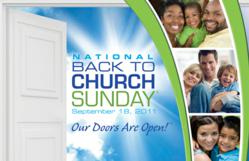
And similarly, perhaps, with our strategies for mission. There are certain people whom it seems right to connect with first, if we hope to touch people with the love of God in Christ with our words and deeds. There are particular groups of people who we shall naturally invite to join us at church. There are those who once used to come, but then dropped out. They may be relatives of existing church members. There will be people associated with groups that hire our premises. Perhaps this list might include uniformed organisations. We might think of people who show a certain affinity with us, even if they do not yet share our commitment to Christ. If you have come across Back To Church Sunday in recent years, that is a strategy directly aimed at those who used to go to church, but who retain more of a sympathy for the church than we might commonly imagine.

Indeed, for a long time now, our mission strategy has been based on an appeal to ‘come’, and in generations when churchgoing was much more natural than it is today, that approach had certain degrees of success.

But there are a couple of dangers.

One is that the religiously sympathetic are not always the most likely to commit themselves to the radical step of following Jesus. Just as the natural invitees to the wedding banquet in the parable ignored, mistreated or killed the second wave of servants that was sent to summon them, so religious people can be those most inoculated against the Gospel. And could it be, given the way the king in the parable sends his army against those people who reject his invitation (verse 7), that God is less impressed with the religious and the respectable than we are?

The other danger is that the natural constituency for this approach is shrinking fast. If we do step out in mission, we want to be as comfortable as possible about it, so we only reach out to people we feel safe with, and furthermore we only do it in locations where we feel at ease – such as our own church buildings.

Secondly, let’s consider the second group that the king invites. The king sends his servants to invite ‘anyone [they can] find’ (verse 9), and this leads them ‘into the streets’ where they [gather] all the people they could find, both good and bad’ (verse 10).

What might this mean for us in terms of the call to Christian mission? Clearly in Jesus’ own day he is indicating a message that will ultimately go beyond the Jewish community to the unconscionable Gentiles. When those we might humanly expect to respond to God’s redeeming love do not do so, God has a way of pushing us out to the least and the last, to those least likely – at least in our eyes.
Before I studied Theology and candidated for the Methodist ministry, my prior work was as a civil servant, working in Social Security. As some people said, that was certainly one way of seeing life. During my first year in the civil service, I had my final family holiday with my parents. We went on a Methodist Guild Holiday[1]. One devout Methodist we met on the holiday asked me what my work was. I explained that I worked in Social Security. Back came a response I have never forgotten: “At least you are on the right side of the counter.”

Obviously, I have never forgotten those words for all the wrong reasons. Apart from the fact that in my work I knew full well that the great majority of those claiming benefits were honest people who didn’t want to be in the situations they had found themselves in, there is also the fact that this parable shows us how the Gospel is for those who are ‘on the wrong side’.

Could we not do with a challenge in the church sometimes to this effect? Who are the people whom we would not naturally consider, but who are loved with an everlasting love by God through Jesus Christ? Are there those he is calling us to reach in word and deed with his love?

Might it be that we just have a problem in the church with being that little bit too comfortable that we need reminding God sends to ‘anyone [we can] find’? Might this be to do with the same fear we hinted at in the first point that leads us just to operate our mission in places where we feel at home? We base our concepts of mission on attracting people to where we are already. However, while we want to bring people into the Christian community, could it be that in a day when – as I said – the number of people for whom it is natural to come onto church premises is shrinking so fast – that we might need to change our primary verb from ‘come’ to ‘go’?
Indeed, might Jesus be saying to us, look at how I embraced the Father’s mission? I am the Word who was made flesh and dwelt among you. I did not wait for you to come to me, I took the initiative and brought the Father’s love to you. And since at my Resurrection I said I sent you as the Father sent me, then do you not hear? Your call in mission is not to say, “Come to us”, but to go to the world, to anyone you can find.

Thirdly and finally, let us consider the intruder at the wedding.
Our own royal family knows all about intruders. Whether it’s Michael Fagan getting into the Queen’s bedroom, a comedian dressing up as Osama bin Laden or protestors from Fathers For Justice landing inside Buckingham Palace, they tend to suffer spectacular intrusions every few years.

I’m not sure whether the word ‘intruder’ is the right one here, but it will have to do. What I’m concerned with is the shocking end to the parable where the king finds a man who has managed to get into the wedding banquet without wearing wedding clothes. He suffers a cruel fate as the king orders him to be bound and thrown out. What could explain such an apparently harsh reaction?

When you attend a wedding today you normally dress up. I remember conducting a wedding in my first appointment and wearing my customary suit and clerical shirt only for a guest to complain that the minister ‘had no sense of occasion’. He was expecting a robed Anglican and got me!
They dressed up for weddings in the ancient world, too. Although a wedding feast could begin at almost any time, there was the tacit understanding that you had time in between receiving your invitation and the wedding beginning for you to find appropriate attire and put it on. There was also a tradition where a king would provide guests with festal clothing. Either way there was no excuse: if you come to the wedding, you will be dressed appropriately. To do otherwise was to bestow a grave insult upon your host.[2]

Now we can understand what was so wrong about the man who was not in wedding clothes. He has insulted the king. Either he had the chance to dress properly and he didn’t bother or the king offered him clothes and he had the temerity to turn him down. The man has enjoyed the invitation but he has not accepted the responsibility that came with it.

Hence this is a powerful picture to challenge the way we respond to God. We may not be like the religious people who refuse the need for grace – indeed we may know only too well that we are entirely dependent upon grace in order to enter God’s presence.

But some of us stop there. We know that Jesus accepts us as we are, but we then coast along complacently. We do not accept the obligation to change – to be clothed differently.

The old saying is that Jesus loves us just as we are, but he loves us too much to leave us as we are. In other words, he provides new spiritual clothes. He expects us to be different. The dirt must go and a clean, holy lifestyle replace it. What else is appropriate as a thankful response to the King for inviting us to his Son’s wedding banquet?

Tragically, some of us are just not serious about living a holy life. God offers us the new clothes – that is, he himself makes it possible for us to be transformed. He does this by the power of his Holy Spirit whose work is to make us more like Jesus. Think of the fruit of the Spirit – love, joy, peace, patience, kindness, goodness, faithfulness, gentleness and self-control – is that not a description of Jesus’ character? This is what God offers us.
But some of us are happy just to wear the same old dirty clothes. I have to admit that too often my wife has to remind me when my suits need to be dry cleaned. I don’t notice the marks on them. Part of my function as a minister is to hold before us all the need for a spiritual dry-clean. We need the reminder that we have got dirty again and we need to be cleaned up.

What does this have to do with mission? Quite a lot, to be honest. The Gospel is the Gospel of the kingdom. God’s kingdom is one of free grace that accepts us as we are. However, God is calling us to be community that is a sign of the kingdom, a sign of what is to come, and that means transformed lives. This too is part of our witness. Our call to mission is not only to go into the streets and gather anyone we can find, it is also to be dressed in our wedding clothes.

Are we playing our part in getting ready for the great wedding?


[1] Now Christian Guild Holidays.

The Church And The Scarecrow Festival

“You’ve got to go to the Pirbright Scarecrow Festival, it’s amazing,” said one of the mums at school. It was on yesterday, and, well, Sally was right.

Over fifty scarecrows scattered around the village green and the church, the latter forming a tableau of the recent royal wedding. I think my favourite, even if not the most sophisticated scarecrow, was the ‘cartwheeling verger’:

And here he is at Pirbright:

Yes, complete with odd socks.

It was a great day. Lots of stalls, amazing sausages and burgers from Fulks the local butcher, music, ice cream, fun for children and adults.

The royal wedding was the theme – or, perhaps more accurately, the theme was ‘William and Kate’. Hence you also saw scarecrows of William Shatner, Willy Wonka, and my favourite, a bush with a speech balloon containing the lyrics to ‘Wuthering Heights’. Yes, the bush was called Kate.

And you know what: the church was the driving force behind it.

Evidently, the event has been going some years, but the way the programme was worded, you couldn’t miss the theme that this had begun from the parish church. They had corralled local businesses into supporting it in various ways, and many local families had made the scarecrows.

No, it wasn’t remotely an overtly religious event, but I wonder what goodwill they build up in the village by doing this.

Create a website or blog at WordPress.com

Up ↑