The Demise Of HMV

Music and entertainment retailer HMV has called in the administrators. The recession, the failure to adapt sufficiently to the digital revolution and so on, after they spent years raking in cash on over-priced CDs, have made this inevitable. Over four thousand jobs are at risk, thanks to what one analyst in the BBC coverage to which I linked calls a ‘structural failure’. They made little tweaks, giving more prominence to DVDs, computer games and MP3 accessories, but tweaks weren’t enough. A revolution was needed, and it never came. The parallels for the Christian Church are obvious. Many a time have I quoted the Seven Last Words Of A Dying Church: “But we’ve always done it this way.”
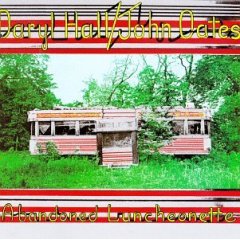
Hall_Oates_LuncheonetteBut I watch the collapse of HMV with genuine sadness. A part of my youth and young adulthood is disappearing. As a teenager, I used to take the bus up to central London, to their huge store in Oxford Street. I would go there with my best friend during the school holidays. We would go up to the singles counter and think of all sorts of old records to request. In those long-before-the-Internet days, it was one place where I could buy something relatively obscure. So when I was first stunned by hearing the long version of ‘She’s Gone’ by an unheard-of American duo called Daryl Hall and John Oates, it was to HMV Oxford Street that I went to buy the album which contained it, ‘Abandoned Luncheonette‘ (still a great album, BTW). But as supermarkets have invaded the space and only sold high volume titles at big discounts, the joy of rummaging around the back catalogue disappeared from HMV shops. When they were available – such as when I started buying CDs by new country artists such as Mary-Chapin Carpenter and Lyle Lovett in the early 1990s – the prices were so high as to need a mortgage. It was a good job I was a single man way back then.

Now, at least part of the Internet supports the ‘long tail’ theory and I can get old titles on Amazon or iTunes.  But the rise of digital and the idea that ‘there is no real future for physical retail in the music sector’, as that analyst puts it, leaves me sad. Yes, I do sometimes download, but another part of my youth was as a hi-fi fan, and you can’t tell me that compressed, lossy files match up to what you can hear on a high quality sound system.

I don’t suppose anything more than an Oxford Street rump will survive the attentions of Deloitte, if anything. I will miss you, HMV.

Violins For India

No new sermon this week: I led a communion service this morning, but we had a guest preacher, Patrick Coad from SCAT.

However, let me highlight something else: one of my former members at Knaphill, Ruth Pugh, recently left these shores for some missions work in India with a difference. She is working under the auspices of a bishop in the Church of North India to give music lessons to deprived children. It may not seem the most obvious of missionary causes, but this project will give increased dignity and self-esteem to these children. In the last few days, Ruth wrote to say that she needed three more small violins for younger children, who cannot cope with the full-size instruments. We held a retiring offering after this morning’s service and raised the money for more than two of them. The congregation didn’t know about this before arriving today, so I’m all the more delighted.

You can follow Ruth’s adventures here and sign up for email updates.

Advice For The New Archbishop Of Canterbury

If it is true that Justin Welby, Bishop of Durham, is to be the new ABC, then I wonder whether he will heed the advice that Rowan Williams is offering his successor (as reported in the same article):

Speaking in Auckland yesterday, at what aides said would be his final press conference, he was asked for advice for his successor.

Quoting the theologian Karl Barth, he said that the new Archbishop should preach “with a Bible in one hand and a newspaper in the other”.

He said that it was vital that whoever is named must be able to make his message relevant to modern life and “like” reading newspapers.

“You have to be cross-referencing all the time and saying, ‘How does the vision of humanity and community in the Bible map onto these issues of poverty, privation, violence and conflict?’

“And you have to use what you read in the newspaper to prompt and direct the questions that you put to the Bible: ‘Where is this going to help me?’

“So I think somebody who likes reading the Bible and likes reading newspapers would be a good start.”

Valuable as this is, I just wonder whether ‘newspaper’ ought to be augmented with ‘social media’. The new Archbishop enters a world where communications are faster than ever, and social media reporting and campaigning (whatever the doubts about accuracy) has such a rapid effect upon events, that he will need to be strongly aware of that, too. Perhaps the ABC needs not only a press office but a rapid response social media office.

That said, who am I to advise? And perhaps it would be good to heed the thoughts of Adrian Chatfield on Twitter, who tweeted,

https://twitter.com/AdrianChatfield/status/266293662160412672

Missional Decision-Making

“We mustn’t do x because it would upset all our longstanding faithful worshippers.”

How often do we make decisions like that in the church? Missional thinker Eric Bryant suggests that’s all wrong. He says,

As church leaders, we need to make decisions based on who is not here yet, rather than on who has been here the longest.

He takes the principle from business, although he wants us to avoid the dangers of consumerism. Essentially, the challenge is this: will we make our decisions based on mission or on maintenance?

What do you think? What is your experience?

Slow Down, You Move Too Fast

It’s a small congregation. Forty members, about twenty-five at Sunday worship. Many are elderly, a significant minority struggle with mental health issues. We can’t cover every necessary job in the church.

One such area is playing music for worship. We can’t find someone to sit on the organ stool every week. Some weeks we have to use CDs of hymn tunes. For convenience, we’ve ripped them on a laptop and one of our members creates a playlist when he knows what songs the preacher has chosen.

Sunday was one of those days. It was harvest festival, and I had picked five well-known harvest hymns. This should be easy, I thought.

Wrong.

Usually there is an organist for my services. Kicking off with the definitely well-known ‘Come, ye thankful people, come’ we soon hit a problem. Our singing was an aural car crash by the end of the second verse, and I don’t mean that I’d forgotten to switch off the radio mic during the hymn. (You wouldn’t want to hear me sing. No, really.) However familiar the hymn was, the congregation was not singing at the same tempo as the recorded organist. They couldn’t hear it well enough in order to do so.

I asked for the volume to be turned up, but that wasn’t possible. We had a clarinettist accompanying the MP3. A real live one. She was altering her tempo to match the congregation, and was able to make her volume a little louder than the recording.

But that risked conflict with the laptop operator. We wouldn’t have had an outbreak of fisticuffs in Christian love – the two people in question are too lovable for that – but you could feel the tension rising.

What was the difference? The real live human musician could adjust to the congregation’s rate of progress. An inaminate recording couldn’t. (Yes, I know you can get software and gadgets that can vary the tempo of music and keep the pitch the same, but we don’t have the riches for swish gizmos.) And that’s the skill of musicians who accompany worship. It’s not a performance: it’s an enabling of the congregation. They may believe a hymn should be sung at a certain rate of knots, but if the worshippers are not up to it, they adjust, in order to achieve the goal of sung praise to our Maker and Lord.

Which in my opinion makes for a parable of church life and leadership. How many of us know how something should be done and at what speed, and won’t adjust for those who are coming along more slowly? If they are coming along and not resisting, why are they a problem? Are the best leaders like the live musicians, who instinctively adjust to the pace of the congregation in order to take them forward?

Yes, conversely, there is a time to urge a congregation forward and get them out of a rut – I don’t deny that. But in our fast-paced always-on culture, we sometimes miss the truth of which Eugene Peterson has often reminded his readers, namely that pastoral work is slow work.

Back To Church Sunday

Joy of joys, today was Synod. That day when two hundred Methodists sit on their backsides for six hours, listening to a select few speaking from the front. (It’s not quite that bad usually, but it can be like that.)

Today, our Synod had a theme: ‘The Invitational Church’. This was good for two reasons: (1) we focussed on mission; (2) business items were kept to a minimum (although the Spring Synod is usually the monster for bureaucracy).

In particular, we had a guest speaker, Michael Harvey, founder of Back To Church Sunday. I have never encouraged a church to take part in BTCS, because it seems to me it concentrates on getting that ever-smaller band of people, the dechurched, into our congregations, and overlooks that growing group, the unchurched. In fairness, BTCS can tell some success stories, and I shouldn’t be mean about them. My worry is that it plays into the notion of meeting people in our comfort zone.

But Michael Harvey had one vital gem for all of us today, whatever our perspective on mission. He pointed out that churches ‘eat strategies for breakfast’. We can come up with as many strategies as we like, but they will all fail, because the core reason people to not invite others to church (or engage in mission generally, I would argue) is fear. Fear of rejection. Fear of embarrassment. We use other words like ‘anxiety’ or ‘sensitivity’ but really we’re talking about fear. In other words, the key issue for mobilising the church in mission is attention to the inner life of existing Christians.

What do you think?

Michael Frost: Missional Listening

It sounds counter-intuitive to many Christians, that listening is a key to mission. Isn’t mission about proclamation, about us speaking? Watch this superb video of Mike Frost on adopting a posture of listening:

(Via ChurchLeaders.com)

He contrasts listening with prepackaged, prefabricated approaches to mission. Our culture likes to buy a package off the shelf to solve a problem, and the church is no exception when it comes to solving our problems of mission, of decline, of making worship more interesting …

Yet one of my churches is currently doing one of these very prefabricated mission packages, Alpha. However, we didn’t adopt it, because we were desperate to stimulate church growth. We ended up doing it as a result of listening. We had made a specific attempt to listen to our community at last summer’s village fair. We offered a lucky dip and asked adults who called at our stall to answer one question about what they thought the church should do in the community. We had about thirty responses, almost all of them positive. Our Leadership Team debated the replies, but didn’t come up with anything concrete.

Alpha came up a few months later. We had a moving and powerful memorial service for a much loved church member. It prompted spiritual questions. From some of those people came the request for Alpha, not us. It wasn’t on our agenda.

I love the way the Frost video ends with the appeal to listen to your community, because it is telling you how to evangelise it. How are you doing that?

Is The Queen’s Jubilee A Real Jubilee?

Er, no, it isn’t. Not to the Christian, anyway.

I bear Her Majesty no malice. Take your pick between monarchies, republics and theocracies: all have serious weaknesses which I’m not going to explore here. And yes, I shall go to our street party and enjoy myself with our friends and neighbours.

But let me defend my opening. Because The Real Jubilee is so much better.

Yesterday, Mark got home from school with a homework project for half-term to research The Queen’s Diamond Jubilee. All the usual stuff about what’s going to happen, what the children are going to do and so on. So he finds the official website and started typing away.

“Hold on a minute,” I said, “do you know what a Jubilee originally was?” I knew he wouldn’t have a clue, and I explained simply the Old Testament origination of the fifty year intervals at which slaves were released and land returned. With the incentive that surely no other child in his class would know about this (and probably not his teacher, either) he added this to the beginning of his project. Never have I found Leviticus so useful with a child.

It is put in a more sophisticated way by Nick Spencer in his article The Other Jubilee, posted at Theos yesterday. There, he explains the heart of the problem. We have confused Old Testament Jubilee (from the Hebrew ‘jobel’) with Latin ‘jubilo’, meaning ‘to rejoice’. Hence we have the incongruous notion of a Jubilee without justice. A party (which is fine) but nothing else. How glad I was, then, to see my friend Sally Coleman post a link on Facebook to the Jubilee Debt Campaign’s Jubilee For Justice petition. Now, I know signing a petition only goes so far, I know that it’s easier than ever online and it becomes a substitute for getting our own hands dirty if we’re lazy, but it’s a start. I like the aims of the campaign:

Cancel the unjust debts of the most indebted nations

Promote just and progressive taxation rather than excessive borrowing

Stop harmful lending which forces countries into debt

I’ll put my name to those. And I just wonder whether, with all the talk we’ve had of churches getting involved with Diamond Jubilee Beacons we might have had a more effective witness by grass roots action for something in the spirit of a biblical jubilee. But then I’m a church leader and I’ve been far too slow to connect with what a jubilee originally was. I’m just catching up rather too late, thanks to my son’s homework.

New Wine Leadership Conference

I am at the above event but cannot currently bring you regular updates here as the wifi is down in the B & B where I am staying. I can do a short post like this from the WordPress app on my phone, but it isn’t suitable for extended typing. Twitter is a good place for keeping up on it. My tweets are here or follow the official conference hashtag #nwlc12

Free Gifts And Happiness

Coca-Cola did this as a publicity stunt, I’m sure. But isn’t it a parable of the Gospel? Isn’t it the kind of thing the church is meant to be doing all the time – lavish, free, unconditional giving to the world?

(Thanks to the weekly email from Share Creative for this.)

Create a website or blog at WordPress.com

Up ↑