
How long would you like your Bible readings in church to be? Would you cope with one that was three chapters long? I thought not.
But that’s what the commentary I consulted for this sermon seemed to claim. The author pointed out that chapters 32 to 34 of Exodus are all of a piece. They tell a story. It begins with Israel’s rebellion that we heard about, it continues with the mediation of Moses (again, we heard that), and concludes with restoration (we didn’t really get to that).
We only have one episode from that larger story to consider. How might we approach this segment of a bigger story?
As I pondered the passage, the closing words of John’s First Epistle came into mind: ‘Little children, keep yourselves from idols.’ Israel didn’t keep herself from idols. It’s our challenge to do the opposite of their poor example in the story.
Hence, our theme today is, ‘How do we guard against idolatry in our lives?’ For idolatry – the worship of false gods – is alive and well today, even if we don’t tend to bump into golden calves.
I believe that by looking at the opposite of what Israel did here, we can learn how to guard ourselves against idolatry.
Firstly, patience:

When the people saw that Moses was so long in coming down from the mountain, they gathered round Aaron and said, ‘Come, make us gods who will go before us. As for this fellow Moses who brought us up out of Egypt, we don’t know what has happened to him.’ (Verse 1)
At this stage in their history, Israel largely only hears from God through Moses. After the Ten Commandments, they asked Moses to speak to them, and for God not to speak to them directly, because that made them afraid.
Therefore, Moses’ absence from them at this point leads to them not hearing from God through him. At this point, they lose patience and decide it’s time to make an idol. Of course, they don’t consider how the idol will speak to them in place of God, but idol-worshippers are not known for their common sense.
When we first come to faith in Jesus Christ, it’s not unusual to experience a whole series of wonderful events where God speaks to us clearly or does amazing things in our lives. Testimonies to what he does in the early stages of our faith can be quite dramatic.
However, as we go on with him over the years, God can become quieter. We wait for the same dazzling interventions and they don’t come.
For some people, it can even become a disturbing season of life, a so-called ‘Dark night of the soul.’
But for all of us, this is meant to be a season of maturing. When God is not putting on his laser light show in our lives, he wants us simply to keep on with basic obedient faith. He may not be so vociferous at this point in our lives, but when we stop to think about it, we realise he has already spoken quite a lot about how he wants us to live the Christian life. We have the whole Bible for starters: it’s just that we sometimes don’t want to do what he has plainly told us to do!
It’s important not to lose patience as the Israelites did. It’s a sign of immaturity to expect the entire life of faith to be lived in Technicolor. Often, it’s in black and white, with lots of grey.
If we lose our patience, we end up creating false gods that are designed to tickle our immature desires for the spectacular. They will never satisfy. And they will prevent us from knowing better the simple, uncomplicated ways of faith to which God often calls us.
Alternatively, if we lose our patience we demand the instant, and when God doesn’t co-operate we find some technological substitutes for him in our society. Tech becomes our idol. But it doesn’t satisfy, either.
The first book I ever read by the late great spiritual writer Eugene Peterson was on the ‘Psalms of Ascent’, the psalms sung by pilgrims on their way to Jerusalem. He called it ‘A Long Obedience in the Same Direction’, and for most of our lives that is the discipline by which we know the true God. Yes, from time to time he will do something special and spectacular, but mostly he calls us to a patient obedience.
Secondly, memory:

‘As for this fellow Moses who brought us up out of Egypt, we don’t know what has happened to him.’ (Verse 1b)
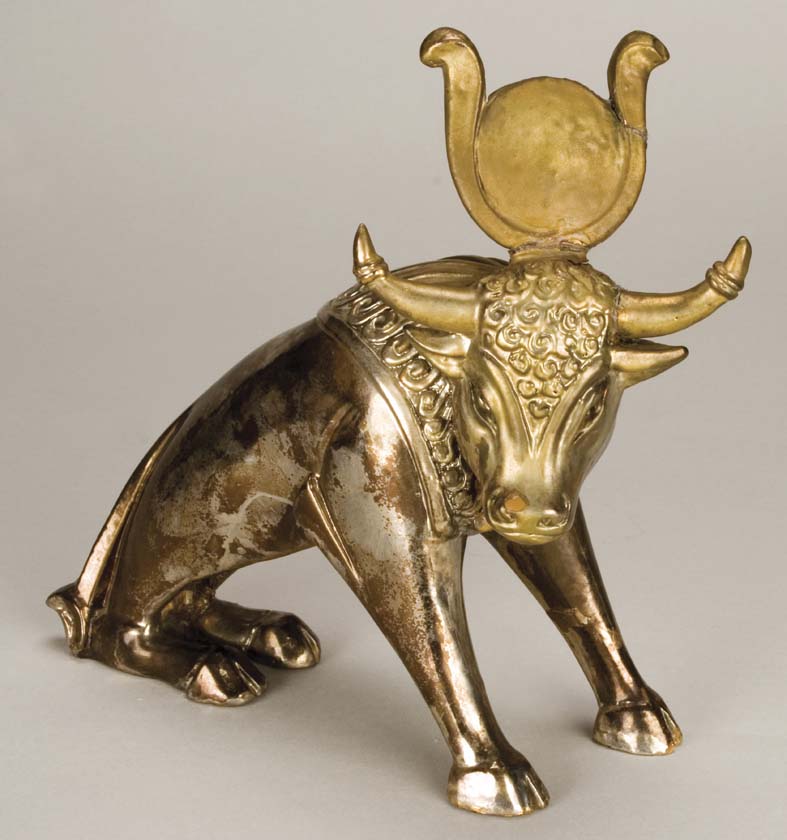
Now granted, the Israelites wanted Moses to speak for God, but it still wasn’t Moses who delivered them from Egypt. He led them, but it was the Lord who brought them out. He orchestrated the plagues and the Passover. He divided the sea. But this doesn’t register. Without a proper memory of God, they make a pale substitute. They choose a calf, a common idol image in the ancient Near East, and make it out of ear-rings, that were often used in pagan religions of the day[1].
Many of today’s idols are similar. In a society that has lost its memory of the Christian story, we find alternatives as our gods. As Bob Dylan sang, you gotta serve somebody. And we do. Even the atheists do.
So what do we do about this? I’m preaching this at a communion service. What is at the centre of the Lord’s Supper? ‘Do this in remembrance of me.’ As we rehearse the details of the Last Supper and the Cross, we do physical actions to remember what Jesus did for us: we eat bread and drink wine. One of the many things this is meant to do is to get the story right inside us, even inside our bodies.
Not only that, in the thanksgiving prayer before we take communion, we will remember much of what God has done ever since creation. We are reinforcing our memory of the One True God. Let us take it seriously.
The church at Pentecost is a model for us. When they were heard speaking in many different tongues, the crowd said, ‘We hear them declaring the mighty works of God in our own languages.’
We hear them declaring the mighty works of God. We need to feed our minds with his mighty works. We need to recall what God has done for us in Jesus. We need to spend disciplined time reading the Bible over and over to recall what he has done down the centuries.
And we need to remember what he has done specifically in our own lives. When God has done something special in your life, do you keep a record of it? I recommend that you do. When I had my amazing experience of God providing the money to get me to theological college, I typed up an account of it. Whenever we move house, it always comes with us.
Why on earth would we settle for a feeble idol, be it money, possessions, status, or anything else? Can any of those things rescue us from sin and bring us into a relationship with the God who made the universe? Can any of those things pour the extraordinary love of God for us into our hearts?
Of course not! And to guard against such a pathetic alternative, let’s cultivate our memory of all that God has done for us – both the great acts of salvation that happened thousands of years before we were born, and also the particular ways in which the God of redeeming love has worked by his Holy Spirit to bring the revelation and provision of his Son Jesus Christ into our lives.
Thirdly and finally, holiness:

So the next day the people rose early and sacrificed burnt offerings and presented fellowship offerings. Afterwards they sat down to eat and drink and got up to indulge in revelry. (Verse 6)
Not only do the Israelites pervert worship by making the offerings due to God to the golden calf, they also become unrelenting pleasure-seekers: ‘they sat down to eat and drink and got up to indulge in revelry.’
That word ‘revelry’ is interesting. The Hebrew word is used in other places to suggest sexual activity. All this at God’s holy mountain.[2] They are pleasure-seekers, not God-seekers.
Does this mean we should instead seek to follow a spoilsport God? By no means. He has given us good things to be enjoyed with thanksgiving, while remembering not to indulge ourselves but remember those who don’t have our plenty.
But they are not ends in themselves. They are, as I said, to be received with thanksgiving. Our main focus is God. Material and physical things are to be enjoyed within that relationship, not for their own sake. You don’t have to look far in our society to see how the material and the physical are worshipped in a society that has forgotten God. These are some of our idols.
Israel is at God’s holy mountain. A few chapters earlier, they have been told they are a holy people, a kingdom of priests to God. Holiness is about being set apart for God’s special purposes. And because his followers are set apart, that leads to a different lifestyle.
It’s whether we accept that calling and commitment that will help determine whether we live to worship the One True God, or whether instead we are enslaved to our passions, having made the fulfilment of our sensory desires into an idol.
Hence, is it any accident that in our society today we have people treated for relationship addiction, sex addiction, food addiction, and the like? It’s a worshipping of sensory and material things instead of the God and Father of our Lord Jesus Christ. Whatever helpful things the therapists offer to cure addictions, the most fundamental cure is to recognise our holy calling. Why? That holy calling is what we were made for: to be a distinctive people who witness to Jesus. It is what puts us back in the groove, fulfilling what we were made for in the first place.
We pursue the wrong things in our desire to find satisfaction. But the ultimate satisfaction in life is in hearing that call of God to be dedicated to his kingdom purposes, and to seek the power of the Holy Spirit to live that way. It’s what we were made for. It’s what engages us with the true God, not worthless idols.
Conclusion
You may listen to this and think, ‘But we all fail. How are we any different from ancient Israel? Have we not all sinned and fallen short of the glory of God, as Paul says in Romans?’
Of course, all sin is serious. All sin puts a barrier between us and God. But Israel was dead set on idolatry here. She needed the mediation of Moses before God relented and restored her.
May it be that if and when we slip, we confess quickly and return to the One who is worthy of all our worship.
[1] Peter Enns, Exodus (NIV Application Commentary), p569
[2] Enns, p571.


What Do You Think?