How To Avoid Idolatry Exodus 32:1-14 (Trinity 19 Ordinary 28 Year A)

Exodus 32:1-14

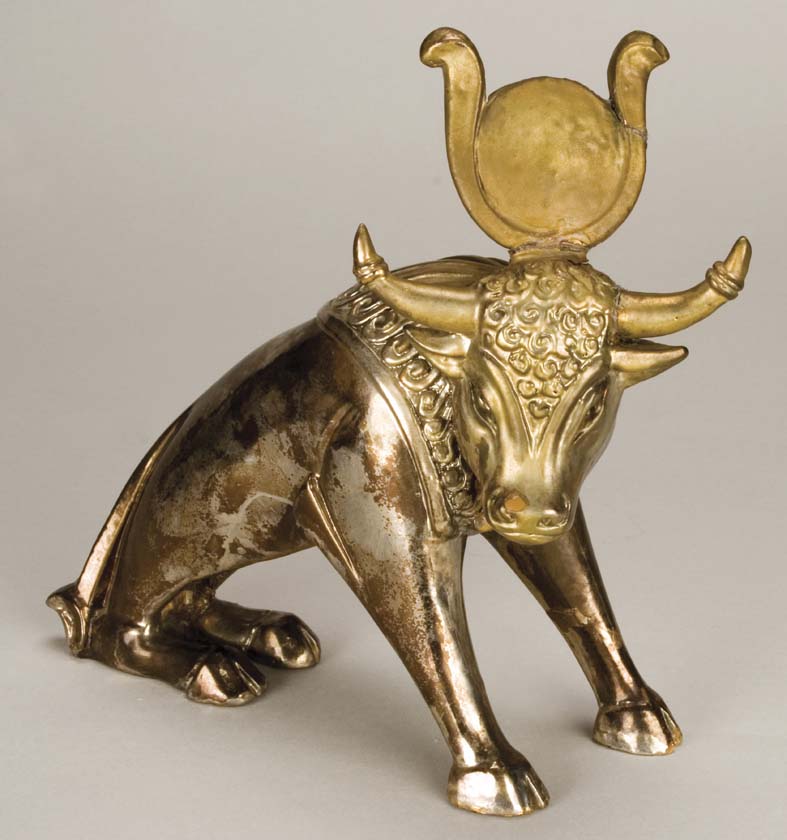
Golden Calf by Gerard van der Leun. CC 2.0.

How long would you like your Bible readings in church to be? Would you cope with one that was three chapters long? I thought not.

But that’s what the commentary I consulted for this sermon seemed to claim. The author pointed out that chapters 32 to 34 of Exodus are all of a piece. They tell a story. It begins with Israel’s rebellion that we heard about, it continues with the mediation of Moses (again, we heard that), and concludes with restoration (we didn’t really get to that).

We only have one episode from that larger story to consider. How might we approach this segment of a bigger story?

As I pondered the passage, the closing words of John’s First Epistle came into mind: ‘Little children, keep yourselves from idols.’ Israel didn’t keep herself from idols. It’s our challenge to do the opposite of their poor example in the story.

Hence, our theme today is, ‘How do we guard against idolatry in our lives?’ For idolatry – the worship of false gods – is alive and well today, even if we don’t tend to bump into golden calves.

I believe that by looking at the opposite of what Israel did here, we can learn how to guard ourselves against idolatry.

Firstly, patience:

Public Domain image at PxHere.

When the people saw that Moses was so long in coming down from the mountain, they gathered round Aaron and said, ‘Come, make us gods who will go before us. As for this fellow Moses who brought us up out of Egypt, we don’t know what has happened to him.’ (Verse 1)

At this stage in their history, Israel largely only hears from God through Moses. After the Ten Commandments, they asked Moses to speak to them, and for God not to speak to them directly, because that made them afraid.

Therefore, Moses’ absence from them at this point leads to them not hearing from God through him. At this point, they lose patience and decide it’s time to make an idol. Of course, they don’t consider how the idol will speak to them in place of God, but idol-worshippers are not known for their common sense.

When we first come to faith in Jesus Christ, it’s not unusual to experience a whole series of wonderful events where God speaks to us clearly or does amazing things in our lives. Testimonies to what he does in the early stages of our faith can be quite dramatic.

However, as we go on with him over the years, God can become quieter. We wait for the same dazzling interventions and they don’t come.

For some people, it can even become a disturbing season of life, a so-called ‘Dark night of the soul.’

But for all of us, this is meant to be a season of maturing. When God is not putting on his laser light show in our lives, he wants us simply to keep on with basic obedient faith. He may not be so vociferous at this point in our lives, but when we stop to think about it, we realise he has already spoken quite a lot about how he wants us to live the Christian life. We have the whole Bible for starters: it’s just that we sometimes don’t want to do what he has plainly told us to do!

It’s important not to lose patience as the Israelites did. It’s a sign of immaturity to expect the entire life of faith to be lived in Technicolor. Often, it’s in black and white, with lots of grey.

If we lose our patience, we end up creating false gods that are designed to tickle our immature desires for the spectacular. They will never satisfy. And they will prevent us from knowing better the simple, uncomplicated ways of faith to which God often calls us.

Alternatively, if we lose our patience we demand the instant, and when God doesn’t co-operate we find some technological substitutes for him in our society. Tech becomes our idol. But it doesn’t satisfy, either.  

The first book I ever read by the late great spiritual writer Eugene Peterson was on the ‘Psalms of Ascent’, the psalms sung by pilgrims on their way to Jerusalem. He called it ‘A Long Obedience in the Same Direction’, and for most of our lives that is the discipline by which we know the true God. Yes, from time to time he will do something special and spectacular, but mostly he calls us to a patient obedience.

Secondly, memory:

Remember: free image at freepingimg.com.

‘As for this fellow Moses who brought us up out of Egypt, we don’t know what has happened to him.’ (Verse 1b)

Now granted, the Israelites wanted Moses to speak for God, but it still wasn’t Moses who delivered them from Egypt. He led them, but it was the Lord who brought them out. He orchestrated the plagues and the Passover. He divided the sea. But this doesn’t register. Without a proper memory of God, they make a pale substitute. They choose a calf, a common idol image in the ancient Near East, and make it out of ear-rings, that were often used in pagan religions of the day[1].

Many of today’s idols are similar. In a society that has lost its memory of the Christian story, we find alternatives as our gods. As Bob Dylan sang, you gotta serve somebody. And we do. Even the atheists do.

So what do we do about this? I’m preaching this at a communion service. What is at the centre of the Lord’s Supper? ‘Do this in remembrance of me.’ As we rehearse the details of the Last Supper and the Cross, we do physical actions to remember what Jesus did for us: we eat bread and drink wine. One of the many things this is meant to do is to get the story right inside us, even inside our bodies.

Not only that, in the thanksgiving prayer before we take communion, we will remember much of what God has done ever since creation. We are reinforcing our memory of the One True God. Let us take it seriously.

The church at Pentecost is a model for us. When they were heard speaking in many different tongues, the crowd said, ‘We hear them declaring the mighty works of God in our own languages.’

We hear them declaring the mighty works of God. We need to feed our minds with his mighty works. We need to recall what God has done for us in Jesus. We need to spend disciplined time reading the Bible over and over to recall what he has done down the centuries.

And we need to remember what he has done specifically in our own lives. When God has done something special in your life, do you keep a record of it? I recommend that you do. When I had my amazing experience of God providing the money to get me to theological college, I typed up an account of it. Whenever we move house, it always comes with us.

Why on earth would we settle for a feeble idol, be it money, possessions, status, or anything else? Can any of those things rescue us from sin and bring us into a relationship with the God who made the universe? Can any of those things pour the extraordinary love of God for us into our hearts?

Of course not! And to guard against such a pathetic alternative, let’s cultivate our memory of all that God has done for us – both the great acts of salvation that happened thousands of years before we were born, and also the particular ways in which the God of redeeming love has worked by his Holy Spirit to bring the revelation and provision of his Son Jesus Christ into our lives.

Thirdly and finally, holiness:

Purity by Joaquim Alves Gaspar at Wikimedia Commons. CC 3.0.

So the next day the people rose early and sacrificed burnt offerings and presented fellowship offerings. Afterwards they sat down to eat and drink and got up to indulge in revelry. (Verse 6)

Not only do the Israelites pervert worship by making the offerings due to God to the golden calf, they also become unrelenting pleasure-seekers: ‘they sat down to eat and drink and got up to indulge in revelry.’

That word ‘revelry’ is interesting. The Hebrew word is used in other places to suggest sexual activity. All this at God’s holy mountain.[2] They are pleasure-seekers, not God-seekers.

Does this mean we should instead seek to follow a spoilsport God? By no means. He has given us good things to be enjoyed with thanksgiving, while remembering not to indulge ourselves but remember those who don’t have our plenty.

But they are not ends in themselves. They are, as I said, to be received with thanksgiving. Our main focus is God. Material and physical things are to be enjoyed within that relationship, not for their own sake. You don’t have to look far in our society to see how the material and the physical are worshipped in a society that has forgotten God. These are some of our idols.

Israel is at God’s holy mountain. A few chapters earlier, they have been told they are a holy people, a kingdom of priests to God. Holiness is about being set apart for God’s special purposes. And because his followers are set apart, that leads to a different lifestyle.

It’s whether we accept that calling and commitment that will help determine whether we live to worship the One True God, or whether instead we are enslaved to our passions, having made the fulfilment of our sensory desires into an idol.

Hence, is it any accident that in our society today we have people treated for relationship addiction, sex addiction, food addiction, and the like? It’s a worshipping of sensory and material things instead of the God and Father of our Lord Jesus Christ. Whatever helpful things the therapists offer to cure addictions, the most fundamental cure is to recognise our holy calling. Why? That holy calling is what we were made for: to be a distinctive people who witness to Jesus. It is what puts us back in the groove, fulfilling what we were made for in the first place.

We pursue the wrong things in our desire to find satisfaction. But the ultimate satisfaction in life is in hearing that call of God to be dedicated to his kingdom purposes, and to seek the power of the Holy Spirit to live that way. It’s what we were made for. It’s what engages us with the true God, not worthless idols.

Conclusion

You may listen to this and think, ‘But we all fail. How are we any different from ancient Israel? Have we not all sinned and fallen short of the glory of God, as Paul says in Romans?’

Of course, all sin is serious. All sin puts a barrier between us and God. But Israel was dead set on idolatry here. She needed the mediation of Moses before God relented and restored her.

May it be that if and when we slip, we confess quickly and return to the One who is worthy of all our worship.


[1] Peter Enns, Exodus (NIV Application Commentary), p569

[2] Enns, p571.

How Should We Understand the Ten Commandments? Exodus 20:1-20 (Trinity 18 Ordinary 27 Year A)

Exodus 20:1-20

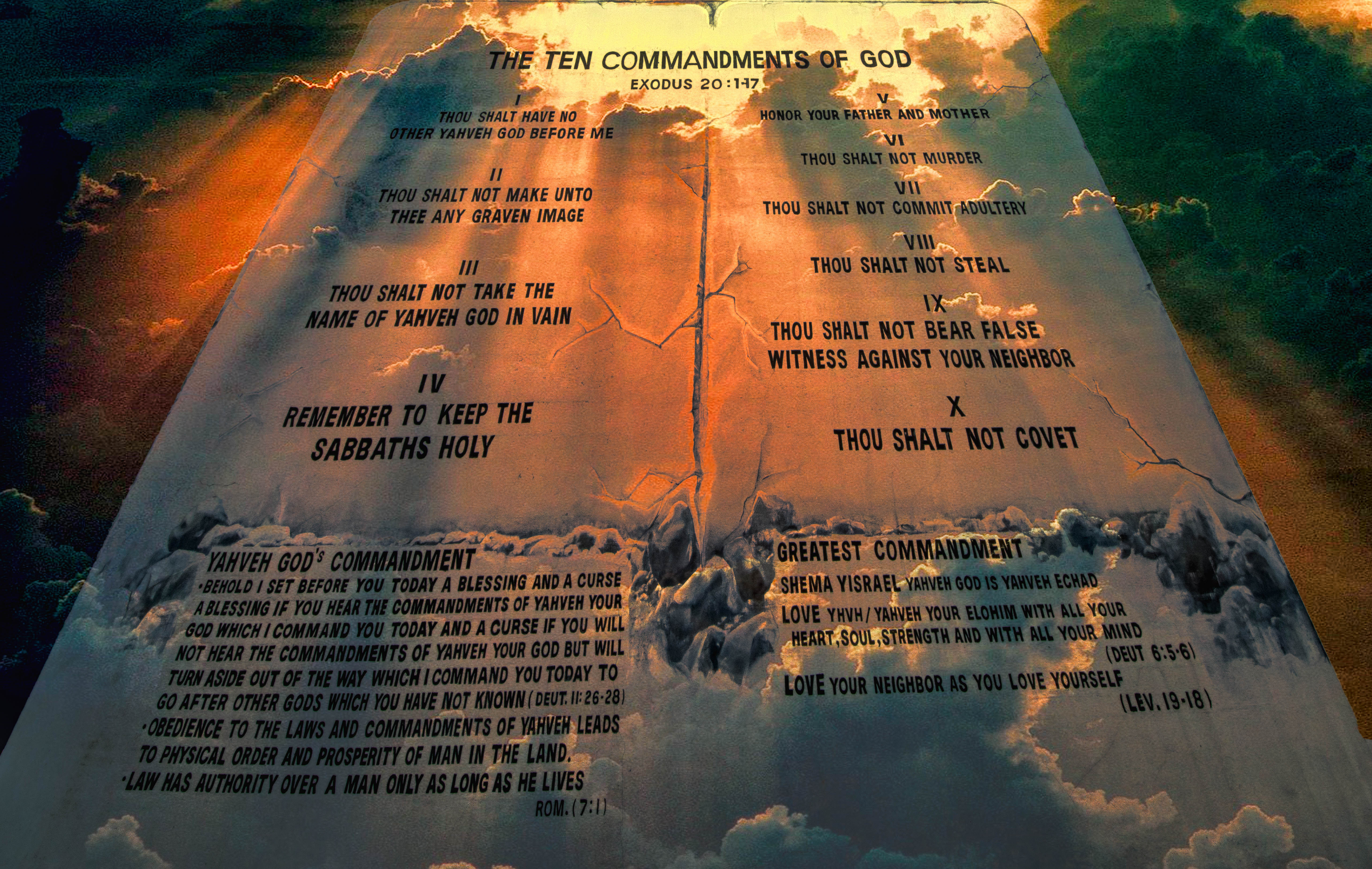
Ten Commandments by Wayne S Grazio on Flickr. CC 2.0.

Back in prehistoric times, when I was not a minister but simply a Methodist Local Preacher, an elderly lady approached me after a service and told me that everything would be sorted in our country if we all just got back to the Ten Commandments. O that things were so simple.

Perhaps that’s also how some American Christians feel with their campaigns to get the Ten Commandments displayed in schools and other public buildings, all despite the constitutional separation of church and state there.

However, things aren’t quite that straightforward. While the Ten Commandments clearly set out moral and social standards, it isn’t as simple a matter as trying to impose them on people.

If we set them in their context and show their purpose, this might make more sense. It might also clarify how we relate Christian faith and living to society.

Firstly, the Ten Commandments follow salvation. They do not precede it.

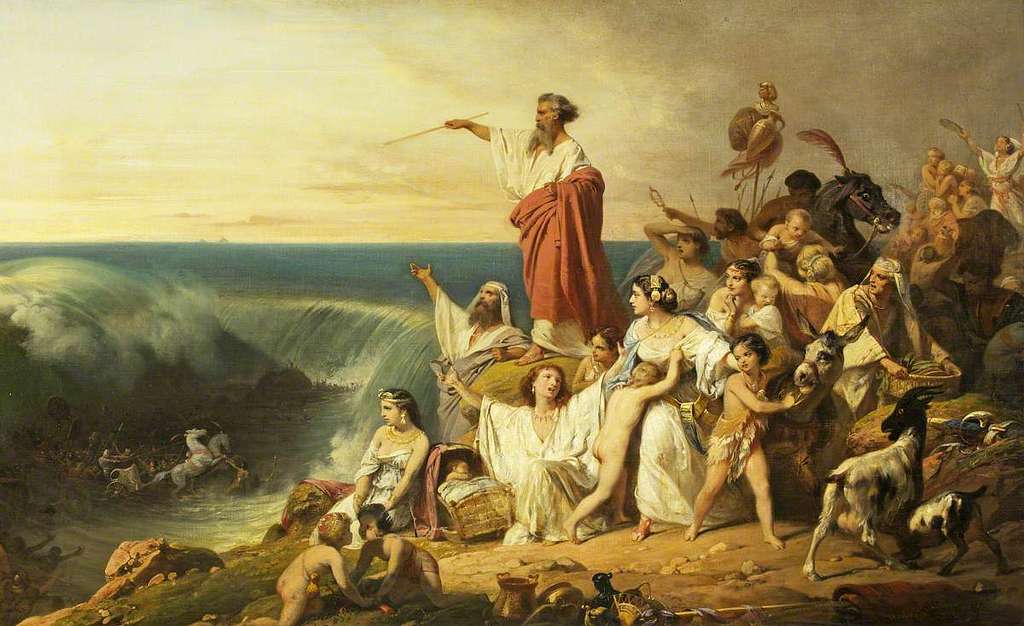
The children of Israel crossing the Red Sea. Image found at Picryl. Public Domain.

Listen to how they begin:

I am the Lord your God, who brought you out of Egypt, out of the land of slavery. (Verse 2)

The commandments only come after God has delivered the Israelites from slavery in Egypt. It was not a precursor. It was not a condition, along the lines of ‘I will deliver you if you will first behave in the way I want you to.’

No. The commandments follow salvation. In that respect, they are consistent with New Testament faith as well as Old Testament. In the New Testament we read that we love, because God loved us first. Jesus died for our sins, and we respond. God makes the first move. Obedience is a response to salvation, not a condition of it. This is about the mercy and the grace of God.

To obey the Ten Commandments, then, is something we do because we have been saved – Israel from Egypt, and us from sin. It is a sign that we have received God’s gift, and we are grateful.

In that sense, you would expect believers to live changed, moral lives: not in order to persuade God to love us, but because we have found out that he loves us, and we want to please him.

In Deuteronomy’s account of the commandments, it is set in the context of an ancient covenant, where a powerful king has rescued some people in a weak situation in distress, perhaps captivity by another nation. In that tradition, the powerful king first set free the imprisoned people, and then set out how he wanted them to behave in response. The commandments are like this.

So should we be campaigning for the Ten Commandments to be obeyed in society? Don’t we want to be part of a culture that abhors murder, adultery, theft, false witness, and coveting? Of course we do! But they only make sense when people have first responded to God’s salvation in Jesus Christ.

Therefore, we have another duty before we ever get to start campaigning for the Ten Commandments. And that is to proclaim the Gospel. People need to know about the predicament they are in without Christ, and how God sent his Son to save them because he loved them so much.

My little old lady wasn’t quite right. People need the Gospel before they need the Ten Commandments. Then – in the words of Ephesians – that is when people will want to ‘Find out what pleases the Lord’, and the commandments tell them.

Secondly, the Ten Commandments fill out the two Great Commandments.

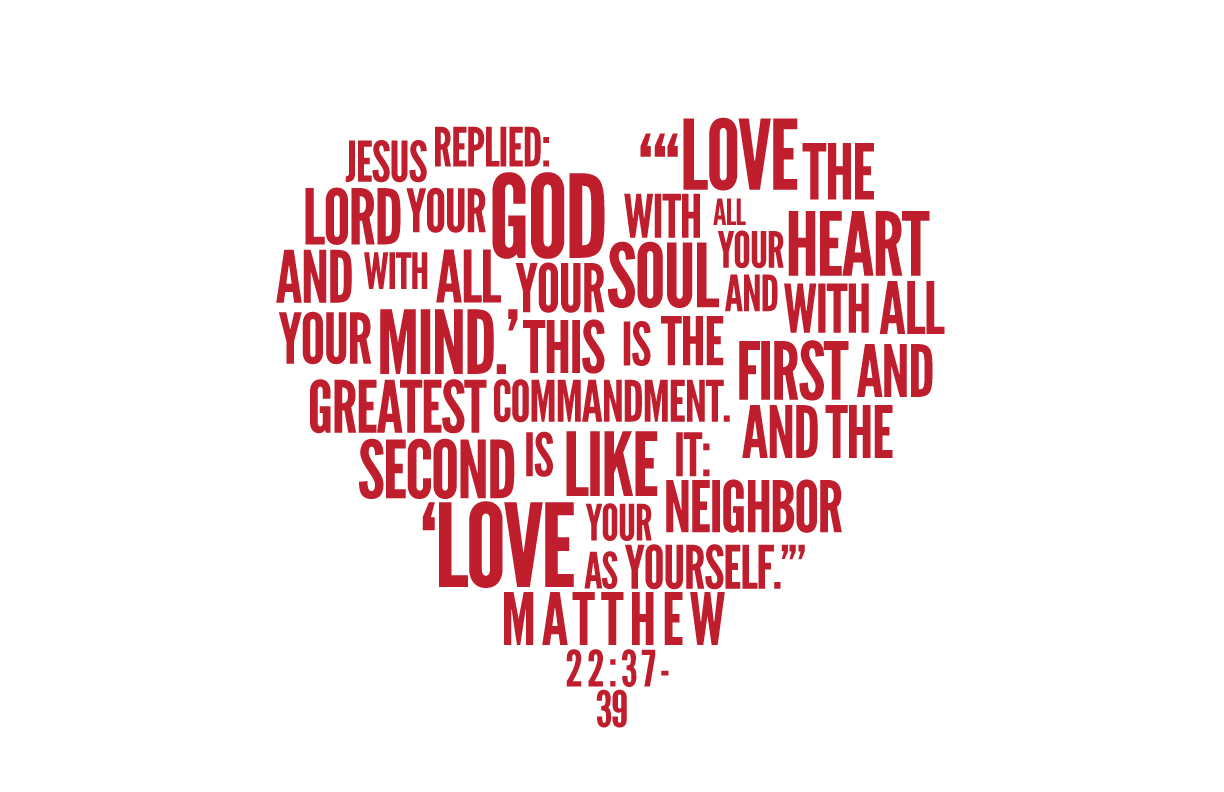
Heart Commandment Design by Nathan Jeffers at Flickr. CC 2.0.

Do you remember when Jesus was asked what the greatest commandment of all was? He answered by giving two. He told his questioners that the greatest commandment is to love the Lord our God with all our heart, soul, mind, and strength, and the second is to love our neighbour as ourselves.

Now you could say that the Ten Commandments are extended illustrations of those two commandments. The first four commandments show us how to love God, and the last six commandments expound how we may love our neighbours.

We love God by having no other gods before him. He comes first in our lives. He is our highest love. He is this, not only because he is the Creator of all, but also because of what he has done for us in love. Remember the words of John in his first Epistle, ‘We love because he first loved us.’ And we begin that by loving and honouring God above and before all other people and things.

Not making a graven image is also about loving God. For one thing, other nations made idols of their gods, and God’s people are not to worship what other people worship. That could cover so many things in our society! And we are not to identify the Lord of creation with created things. He is over and above all he has made.

It’s not loving God to misuse his name, either by using it flippantly and casually, or by using it to gain power over others, such as when some Christians too easily say, ‘The Lord told me,’ or when others use the Lord’s name as a means to harming others. None of these shows love for God. Whereas, honouring God’s name and character is certainly something we do to express love for him.

Keeping the Sabbath is about doing something representative of our entire orientation towards God. We give an hour or so to worship God together, but that stands for the fact that our whole lives are an act of worship. And we keep a day in a special way as a sign that every day is dedicated to God, from the moment we awake to the moment we sleep.

Loving our neighbour begins with our family, and with honouring our parents. Does charity begin at home? Well, we’ll see it doesn’t end there, which is what some people who say that actually mean.

For me, that meant in my last appointment seeking a location within striking distance of my parents. I knew it was likely going to be the period when I would lose them both, and I didn’t see why my call to the ministry meant my sister had to have the call to be the exclusive carer for Mum and Dad in their final years. Thankfully, Methodism was sympathetic.

Of course, loving our neighbour means not murdering them! Most of us don’t! But we can treat people as being of lesser value, or as worthless. The positive side is about how we welcome and value those who are different from us. Currently, I’m reading a book about neurodivergence and faith, because I need to understand more about that, and to be supportive to families where someone has one of the several diagnoses that come under this heading.

Our spouses are our (very close!) neighbours too, and that’s why we’re commanded not to commit adultery. What our spouses need is our faithfulness, for God’s love is faithful love, and we are called to mirror that.

Refusing to steal is also about loving our neighbours. If you used AI to create an image for a poster to advertise an event, it almost certainly pulled images it had stolen from other artists when it surfed the Internet for material to be trained on. Is that fair to the original artist and their need for an income? In general, stealing from your neighbour is a threat to society, because it breeds distrust and strife.[1]

The ninth commandment is not, as commonly thought, a command not to lie, but a command not to give false testimony against our neighbour, and that use of ‘false testimony’ tells us that the context is a legal one. We know the damage caused by perjury in a court of law. The innocent are imprisoned, and criminals set free. This is not good for society. This is an area where love of neighbour by bearing true testimony is not just about personal morality but the strength of the community.

As for the final commandment, not to covet, this is the only one focussed on the heart and not actions[2]. It’s invisible. But when it becomes visible in action, it leads to the breaking of either the eighth commandment (not to steal) or the seventh (not to commit adultery). It is like a summary commandment, showing the danger to the community of living lovelessly towards our neighbour.

Conclusion

Now remember we are seeking to follow the commandments in order to show our gratitude to God who has saved us. The love-your-neighbour commandments show us that a way to show that gratitude is to contribute harmony and well-being to our society. If we were just to live for ourselves, then society will show signs of disintegration. Does that seem familiar?

And this love-your-neighbour gratitude is not some bland ‘Let’s all be nice to each other’ sentiment. It is twinned with a love for God that puts him first and above everything and everyone in our lives.

How do we live in the light of this? The Israelites became so scared of a God who spoke like this that they didn’t want to hear from him anymore. ‘Moses, we can cope with you,’ they said, ‘but will you please shut off the voice of God? We can’t cope.’ (Verses 18-19)

What a terrible mistake to say you don’t want to hear the voice of God. And so Moses says, ‘You’ve chosen the wrong kind of fear. Choose instead the healthy fear of the Lord that will keep you from sinning.’ (Verse 20)

In other words, reject paralysing fear. Instead, cultivate awe and reverence for Almighty God, such that you will grow in love for him and love for your neighbour.

He is the God of our salvation, and this is the fitting way to respond to all that he has done for us.

And as we introduce others to the God who saves in Jesus Christ, so we shall encourage them to respond to him in the same way: love of God and love of neighbour.

This will bring the social transformation my little old lady so longed for.


[1] Peter Enns, Exodus (The NIV Application Commentary), p423.

[2] Enns, p424.

Sermon: Doubting Thomas, Growing Faith

John 20:19-31
Doubting Thomas: if ever anyone got a bad press from a pithy nickname, it’s Thomas. Today I want to join his rehabilitation campaign, and suggest to you that we might see some positive approaches to faith in the story of him coming to believe in the Risen Christ.

Firstly, we need to remember his context. There are a couple of previous references to him in John’s Gospel. In chapter 11, he shows himself to be a disciple who is doggedly committed to following Jesus. He encourages all of them to go along with Jesus to Jerusalem, if necessary to die with him. This is not a coward or an unbeliever: this is a courageous disciple. Let’s remember that when he is cheaply vilified.

Not only that, he was a disciple with honest question, as we see in chapter 14. Jesus says he is going to prepare a place for his friends, and Thomas honestly says, “Lord, we don’t know where you are going, so how can we know the way?” Lord, if you don’t give me the destination, how can I sort out a route? I need the address, Lord! I think you have to applaud a man like Thomas who has the honesty and integrity to ask Jesus the question that perhaps was in other disciples’ minds, but which they didn’t have the courage to voice.

And we should be glad he did, because it leads to Jesus’ famous reply, “I am the way, and the truth and the life. No-one comes to the Father except through me.” Would we have heard those words, but for the honest, questioning faith of Thomas?

As well as these two previous references to Thomas in John’s Gospel, one other piece of context is to compare him with the other disciples. It’s all very well that the others tell him, “We have seen the Lord!” (verse 25), but it isn’t that long since they too doubted. When the women returned from the tomb, the male disciples didn’t initially cover themselves in glory. Why believe a woman? But they had had a personal encounter with the Risen Christ, just as Mary had in the garden, and just as Thomas is about to have.

So setting everyone else’s faith against Thomas’ doubts is unfair. He simply hasn’t had the experience of meeting his risen Lord yet that they have had. Perhaps today we can appreciate a dogged, honest disciple. It isn’t enough to say to some people, ‘Be quiet and just believe’. God is big enough to cope with our questions. We have a Bible filled with books like Job, and with plenty of Psalms where ancient Israel sang her painful questions in worship. If Thomas is an example to us, it is about church being a safe place for people with their questions, not one where they are shouted down.
In suggesting this, I’m not advocating unbelief, because unbelief is very different from doubt. Unbelief is a refusal to believe at all, but Jesus says Thomas was ‘doubting’ (verse 27). Os Guinness has a helpful definition of doubt: he calls it ‘faith in two minds’. Doubt isn’t the absence of faith that unbelief is, it’s faith in two minds.

There’s one other context to Thomas that I haven’t mentioned, and it’s not in the Bible. There is a strong early tradition that Thomas is the apostle who took the Gospel as far as India. There is even a Christian denomination in India called the Mar Thoma Church, which claims to trace its founding to him. If that is the case, then is it not a good thing to give someone the space to wrestle with their questions? If like Thomas they come through to a deeper faith, who knows what they might achieve in the name of the Risen Christ?

Secondly, then, I invite us to remember his questions.

“Unless I see the nail marks in his hands and put my finger where the nails were, and put my hand into his side, I will not believe.” (Verse 25)

What is Thomas’ problem, apart from the fact that – unlike the others – he hasn’t yet met the Risen Christ? As I said, he isn’t an unbeliever. He is far from being a sceptic. In fact, you could say that he was deeply biblical. Like most pious working class Jews (but unlike the wealthy Sadducees) he believed the ancient prophecies that one day, at the Last Judgement, God would raise all people from the dead – some to the reward of eternal life, and some to judgement. He would likely quote Daniel chapter 12 in support of this view.

What they didn’t expect was that God would interrupt the middle of history with a resurrection. You get a flavour of that in John 11, where Jesus turns up at the tomb of Lazarus, four days after the death, and speaks with Mary and Martha. They say they are waiting for the great resurrection at the end of time.

However, Thomas’ willingness to state his question baldly sets the stage for another appearance by Jesus, this time for his benefit. John sees this next appearance, a week later, as a follow-up by Jesus. Again it is in the midst of locked doors because the disciples who are so full of enthusiasm about the Resurrection are still nevertheless afraid, so this isn’t just for Thomas. This is to bless them all.
But in Thomas’ case, his devout biblical faith is now stretched and expanded by meeting the risen Christ. And often, that is what God wants to do through an experience of doubt. It’s not there to destroy our faith, but to expand it. In a profound talk he gave last year on the place of doubt in Christian faith, an American Old Testament scholar called Peter Enns said this:

When you go out into the world and say “it’s not working,” maybe that is a signal. It’s not God who no longer works, it’s your idea of God that needs work. Maybe you are for the first time being called, as C. S. Lewis put it so well in the Narnia books, to go “further up and further in.” That’s where doubt plays a powerful role.

But where does Thomas have his doubts expanded into greater faith? It’s in a context of fellowship. He is with the other disciples this time, and I think that makes a difference. Classically, one of the ways Christians have defended the truth of the resurrection against charges that the disciples experienced hallucinations is to point out that hallucinations are rarely group experiences. They are more commonly solitary in their nature. So by Thomas having his experience of the Risen Christ in the presence of the other disciples there is an assurance here that this is real and true, not a fantasy.

And in doing so, I believe it points up the importance of fellowship when we have our doubts. What do we do when we face a crisis? Some of us, like me, restore our energy from within ourselves. Others gain energy from being with others. However, much as I renew my energy from within and generally alone, if I spend too much time just on my own at a time of doubt, it can all become morbid and increasingly negative. It becomes a downward spiral.  I have seen people facing a crisis of faith take a major step away from church and fellowship for a period of time, and all that really happens is that the negative thoughts are reinforced.

Now, granted, the other disciples may not be the most helpful to Thomas in his doubt, but the fact that they had met the risen Jesus and that he appears to them in that context, is a sign, I believe, that it is worth persevering with Christian fellowship when we have our doubts. Our faith is not solitary. It involves being part of God’s people. Even if at times all our brother and sister Christians give us is a set of trite answers to our questions, nevertheless that is a major arena where we experience Christ.

So I would counsel people facing doubts to stay within the fellowship of the church, to find it a safe place to ask the hard questions, and to be encouraged that in that very place God may well expand and deepen your faith as a result.

Thirdly, I invite you to remember his confession. The other disciples had to see Jesus alive before believing in the resurrection. Thomas wanted that, and more: to touch the wounds. And Jesus offers Thomas what he says he wants. I think he just wants to know for sure, and he expresses it in this black and white manner.

But when the risen Lord stands in front of him, I’m not sure Thomas takes him up on the invitation to touch his hands and his side. Just meeting Jesus is enough, and he says to him, “My Lord and my God!” (verse 28)

‘My Lord and my God.’ That’s the point to which Jesus wants to get Thomas, and us. And yes, this is one of those Bible verses the Jehovah’s Witnesses can’t explain, because Thomas clearly attributes full divine status to Jesus.
But it probably also had huge implications for the first readers of John’s Gospel. If, as most scholars think, John’s Gospel was written towards the end of the first century AD, then it is quite possible that the emperor ruling the Roman Empire was Domitian. He wasn’t the nicest of chaps. He may well have been responsible for the persecution of Christians that is reflected in the Book of Revelation. And what did he require of his subjects? That they worship him as ‘Lord and God’[1].

The confession of the risen Lord at which Thomas arrives through his doubts is not just intellectual. It is one that has practical consequences for daily living and, indeed, dying. Later followers of Jesus who read these words will be those who have sufficiently come through their doubts that they are prepared to make a confession that puts them in opposition to the prevailing values of the society in which they live.

And perhaps this is a major reason why Jesus wants to meet us with our doubts and expand our faith – to make us strong in faith to stand against some of the major forces at work in our world today.
Last week we sang Stuart Townend’s Resurrection Hymn, ‘See what a morning’. It contains the lines,

One with the Father, Ancient of Days
Through the Spirit
Who clothes faith with certainty

Do we have certainty – a certainty with which to face the world? We have a certainty that Christ is risen. We have an assurance of God’s love. To quote U2 for a second consecutive week,

It’s not if I believe in love
But if love believes in me
(from Moment Of Surrender)

Whatever our doubts may be, the Resurrection means that love believes in us. And in the light of that, our confession of faith in our risen Lord and God can be a rock to stand firm in the face of a world that is devoted to values vastly different from his.
Perhaps one of the most notable Christians for steadfastly not bowing down to the values of the world in the last century was Mother Teresa. Her care for the poor and those generally thought not worth bothering with and her freedom from wealth and acquisition made her admired by many, as we well know. After her death in 1997, reports emerged about the severe doubts she expressed in her personal journal. In the lecture on doubt by Peter Enns that I mentioned earlier, he quotes this story about her:

There is a wonderful story of Jesuit philosopher, John Kavanaugh. In 1975 he went to work for three months at the “house of the dying” in Calcutta with Mother Teresa. He was searching for an answer about how best to spend the remaining years of his life. On his very first morning there, he met Mother Teresa. She asked him, “And what can I do for you?” Kavanaugh asked her to pray for him. “What do you want me to pray for?” she asked. And he answered with the request that was the very reason he traveled thousands of miles to India: “Pray that I have clarity.” Mother Teresa said firmly, “No. I will not do that.” When he asked her why, she said, “Clarity is the last thing you are clinging to and must let go of.” When Kavanaugh said, “You always seem to have clarity,” she laughed and said, “I have never had clarity. What I have always had is trust. So I will pray that you trust God.”

Jesus brings us to a confession that may or may not have clarity. But at its heart is trust. That, it seems, took Thomas to India, and the effects of his faith are still felt today.

What if we had trust – deep trust – in our risen Lord? Would he take us ‘further up and further in’? Where might the effects of our faith be felt?

Doubt And Faith

This coming Sunday in our sermon series on ‘People around the Cross and the tomb’, we shall look at Thomas, or ‘Doubting Thomas’ as he is often known. The subject of doubt and faith is a vital one, and today I have begun typing up various random ideas that I hope will make their way into the sermon.
Among them is the text of a speech I found online nearly six months ago. I have kept it open in a browser tab ever since – probably I should have just saved it in Delicious. However, it is coming into its own as I prepare for Sunday, so I thought I would draw your attention to it now. The Benefit of Doubt: Coming to Terms with Faith in a Postmodern Era is a wonderful lecture to read by the American Old Testament scholar Peter Enns. I shall certainly be including some material at the weekend which takes its inspiration from this wonderful piece. If you have half an hour or so to spare, I commend it to you enthusiastically.

Sermon: Advent 2, An Undiluted Prophetic Hope

Isaiah 11:1-10

If I were ever to be on a TV show, I think Grumpy Old Men might suit me. Not that I would ever be famous enough to be invited, but I can be the sort of person who thinks that Ebenezer Scrooge was given an unfair press. It’s not simply that this is the time of year when Debbie gets out all the Singing Santa toys that she and the children love (and which can drive me mad), it’s this Second Sunday in Advent.

You see, the grump in me wonders why it got changed in the current Lectionary. You used to know where you were in the four Sundays of Advent. The first Sunday was about the Advent Hope – not just Christ’s original coming but the promise of his appearing again in glory. The second Sunday was about the promise of the Messiah in the Old Testament prophets. Sunday number three introduced you to the man with the extreme diet, John the Baptist. Then on the fourth Sunday it’s the Annunciation by Gabriel to Mary.

What went wrong? How come we now get a reading about John the Baptist this week as well as next week? Some of it has to do with the moving of Bible Sunday into October, although I’m not sure which came first. Perhaps a grumpy old man like me should appreciate two weeks’ worth of his fire and brimstone preaching, but actually I miss the emphasis on the prophets.

And no, it’s wrong to see the prophets as a job lot of grumpy old men. In the short term, they did warn people about the consequences of sin. But in the long term, they held out the hope of God’s future. In Isaiah’s case, that included the hope that God would send his Anointed One, that is, the Messiah.

So, then, what does this passage from Isaiah point us to in the hope of the Messiah’s coming? I want to take Isaiah’s original intentions and give them a distinctively Christ-centred flavour.

Firstly, let me take you to the manse Debbie and I had in the circuit before last. Known among local Methodists as ‘the Frost manse’, because David Frost famously lived there as a boy when his father was the local Methodist minister just after World War Two. The house had begun life, though, as the admiral’s house for the nearby Chatham Dockyard. Thus, although it was terraced, it was a large house. The downstairs study which Paradine Frost, David Frost’s father, had used when he was there, had by our time been converted into a huge kitchen. There was ample space not only to cook but also to seat several people around a dining table for meals.

There was a large window from the kitchen looking out onto the garden. Unfortunately, it didn’t let in much light, and we had to turn on the lights earlier and more frequently than might have been expected.

Why was this so? Because a large tree stood not far outside the window. Far enough away for the roots not to affect the house, but near enough to darken the kitchen. Eventually, we asked the circuit if they could send in a tree surgeon, which they did, and we gained more natural light when he had reduced it to a stump.

Isaiah begins by talking about a stump:

A shoot shall come out from the stump of Jesse, and a branch shall grow out of his roots. (Verse 1)

‘The stump of Jesse’ is a tragic statement. You will remember that Jesse was the father of David, and all Israel’s hopes had been in him. Yet this seems to suggest that David’s line has failed, even to the point where his father is named instead of him. The great tree has been cut down to a stump. ‘The stump of Jesse’ implies human failure and sin. Time after time, Israel and Judah had been let down by her kings.

Yet, says Isaiah, ‘from the stump of Jesse’ shall come ‘a shoot’ ‘and a branch shall grow out of his roots’. From a long line of human failure, God will grow his purposes. From generations of sinners, God will bring his Messiah. From iffy patriarchs whose morals crumbled under pressure, to Rahab the prostitute, to King David the adulterer and murderer, the ancestral line of the Messiah is filled with broken sinners. Within the purposes of God you get Moses who murdered a man and ran away, then protested when God called him that he couldn’t be a public speaker. You have Gideon, who was fearful and full of doubt. There is Jeremiah, who may well have suffered from depression, yet only Isaiah exceeds him among the prophets.

And so that is the first theme I want to take from Isaiah – the hope of the Messiah is one of God working through sinners. God’s purposes are accomplished through a people that one video clip I saw the other day called ‘The March of the Unqualified’.

This Advent, then, be encouraged by the prophetic hope that whatever your failures, whatever your weaknesses, whatever your disappointments, God is capable of working his purposes out through you. If you think that your sins have disqualified you from God and that you have shrivelled from a tree to a stump, then know that God is able to develop a shoot from your stump and a branch from your roots. The God of grace and mercy has come to shine his light into the world even through a cut-down stump.

Secondly, if there’s one thing I get very little of as a parent of young children, but which I would like to have more of, it’s rest. While – as I told Knaphill last week – I begrudgingly rely on an alarm clock in the morning, there are times when it’s not needed. We have two small human alarm clocks, and one in particular. Rest is something Debbie and I envy in others.

But the trouble with words is one of multiple meaning. Think of how you look up a dictionary definition for a word, only to face a range of options. And ‘rest’ is one such word. In the way I have just used it, the connection is with sleep. But ‘rest’ can also mean ‘stay’. I’d like to combine the two meanings of rest into one, of course: stay asleep!

But it’s this second meaning of ‘rest’, that of staying, which Isaiah uses here:

The spirit of the Lord shall rest on him, the spirit of wisdom and understanding, the spirit of counsel and might, the spirit of knowledge and the fear of the Lord. (Verse 2)

It’s not simply that the Messiah will have the Spirit of the Lord, it’s that the Spirit of the Lord will rest – that is, stay – on him. Generally in the Old Testament when the Spirit of God comes upon someone it is a ‘tumultuous and spasmodic’[1] experience. The Spirit usually comes dramatically, but only temporarily.

Therefore it’s a big thing for Isaiah to speak about the Spirit resting on the Messiah. Here is the one on whom the Spirit will come and remain. The Messiah will have God’s Spirit permanently. And when John the Baptist says that Jesus is the one on whom he saw the Holy Spirit come and remain, he is making a big claim – a claim that here indeed is the Messiah.

What does this resting of the Spirit upon Jesus mean for us? It ushers in the New Testament era of faith, where the people of the Messiah may receive the same gift. The coming of Jesus the Messiah is the coming of a new age, the age of the Holy Spirit, where Jesus, who received the Spirit permanently, gives the Spirit to his followers in the same way. There may still be dramatic experiences of the Holy Spirit, but the Spirit does not generally depart from a person any more. The Spirit may become distant when we grieve him by our sin, but the intention of Jesus in the messianic age is to give the Holy Spirit as a permanent endowment. In this way, Advent and Christmas look forward to Pentecost!

So be encouraged. Just as the Christ child is called ‘Immanuel’, God with us, so he comes with the promise of God being with us – ‘even to the close of the age’ – because he who receives the Spirit permanently gives the Spirit in the same way. Do not think that God has deserted you. As one Christian scholar puts it, even doubt ‘is a time of “disguised closeness” to God’. Or as the liturgy puts it, in a dialogue between minister and congregation: ‘The Lord is here.’ ‘His Spirit is with us.’

So far, then, we have good news twice over: firstly, that God works even through sinners and failures to bring his messianic purposes to fruition. Secondly, that the Messiah receives the Spirit permanently and gives the Spirit in a similar way to his disciples, so we may know that God is always present with us, even when we can neither see nor feel him. I want to draw out a third strand of this messianic hope before I close.

Just as we’ve thought about the word ‘rest’ as having more than one meaning, this third thought also depends on a double entendre. Not in the sense of a rude joke, but because biblical words are often so rich they convey multiple meanings.

There is one such word in our passage, and Isaiah uses it more than once: righteousness: ‘with righteousness he shall judge the poor’ (verse 4); ‘Righteousness shall be the belt around his waist’ (verse 5). Isaiah uses the word ‘righteousness’ of the Messiah here in terms of who he is, and what he does. Isaiah uses ‘righteousness’ for the Messiah’s dealings with people, and for the society he creates.

It’s a many-layered word, and at the heart of God’s righteousness in Christ is God’s covenant faithfulness. In covenant faithfulness through Jesus, God will make people righteous with him. Ultimately, we know he will do that through the Cross. But this righteousness is not just a ‘get out of jail free’ card for the Day of Judgment. God’s righteousness is also about the transformation he wants to bring to people, to societies, to the world and even to all creation. God’s righteousness is about personal and social salvation, personal and social transformation.

If this is what Jesus the Messiah came to do, it crosses the boundaries we sometimes erect in the church. On the one side we have those who say personal conversion to Christ is the be-all and end-all of faith. They say that society will not change until people are changed by God. On the other there are those who are almost cynical about personal conversion and say the big thing is social justice. Yet the righteousness of the Messiah doesn’t allow us to split personal conversion and social justice and play them off against each other, supporting our particular favourite. Jesus has come to call people to personal faith in him, and to share in his project of transforming the world.

And if that’s the case, woe betide us if we reduce Advent or Christmas to gooey sentimental thoughts about a baby. The baby who came did so through God’s purposes of using weak, sinful people. The baby who came would receive the Spirit in full measure and permanently, and came to give the Spirit permanently to those weak sinners that God delights in using. And the baby who came gave the Spirit to weak sinners to bring them to faith in him and to empower them to work for God’s kingdom.

The prophets don’t let us settle for a half-hearted, diluted hope. Let’s make sure we drink their hope neat.

Create a website or blog at WordPress.com

Up ↑