

Back in prehistoric times, when I was not a minister but simply a Methodist Local Preacher, an elderly lady approached me after a service and told me that everything would be sorted in our country if we all just got back to the Ten Commandments. O that things were so simple.
Perhaps that’s also how some American Christians feel with their campaigns to get the Ten Commandments displayed in schools and other public buildings, all despite the constitutional separation of church and state there.
However, things aren’t quite that straightforward. While the Ten Commandments clearly set out moral and social standards, it isn’t as simple a matter as trying to impose them on people.
If we set them in their context and show their purpose, this might make more sense. It might also clarify how we relate Christian faith and living to society.
Firstly, the Ten Commandments follow salvation. They do not precede it.
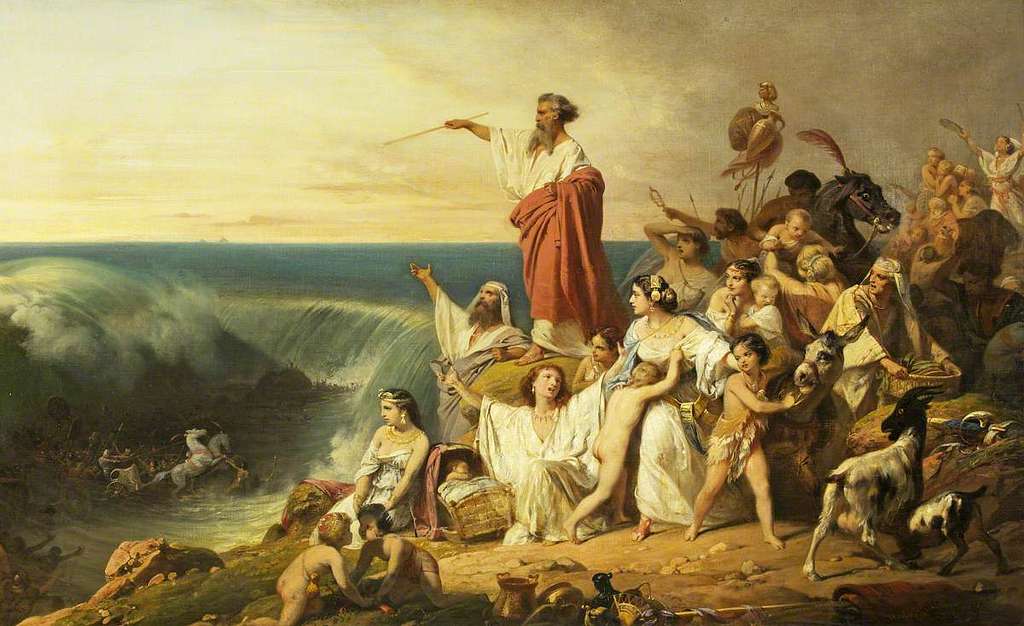
Listen to how they begin:
I am the Lord your God, who brought you out of Egypt, out of the land of slavery. (Verse 2)
The commandments only come after God has delivered the Israelites from slavery in Egypt. It was not a precursor. It was not a condition, along the lines of ‘I will deliver you if you will first behave in the way I want you to.’
No. The commandments follow salvation. In that respect, they are consistent with New Testament faith as well as Old Testament. In the New Testament we read that we love, because God loved us first. Jesus died for our sins, and we respond. God makes the first move. Obedience is a response to salvation, not a condition of it. This is about the mercy and the grace of God.
To obey the Ten Commandments, then, is something we do because we have been saved – Israel from Egypt, and us from sin. It is a sign that we have received God’s gift, and we are grateful.
In that sense, you would expect believers to live changed, moral lives: not in order to persuade God to love us, but because we have found out that he loves us, and we want to please him.
In Deuteronomy’s account of the commandments, it is set in the context of an ancient covenant, where a powerful king has rescued some people in a weak situation in distress, perhaps captivity by another nation. In that tradition, the powerful king first set free the imprisoned people, and then set out how he wanted them to behave in response. The commandments are like this.
So should we be campaigning for the Ten Commandments to be obeyed in society? Don’t we want to be part of a culture that abhors murder, adultery, theft, false witness, and coveting? Of course we do! But they only make sense when people have first responded to God’s salvation in Jesus Christ.
Therefore, we have another duty before we ever get to start campaigning for the Ten Commandments. And that is to proclaim the Gospel. People need to know about the predicament they are in without Christ, and how God sent his Son to save them because he loved them so much.
My little old lady wasn’t quite right. People need the Gospel before they need the Ten Commandments. Then – in the words of Ephesians – that is when people will want to ‘Find out what pleases the Lord’, and the commandments tell them.
Secondly, the Ten Commandments fill out the two Great Commandments.
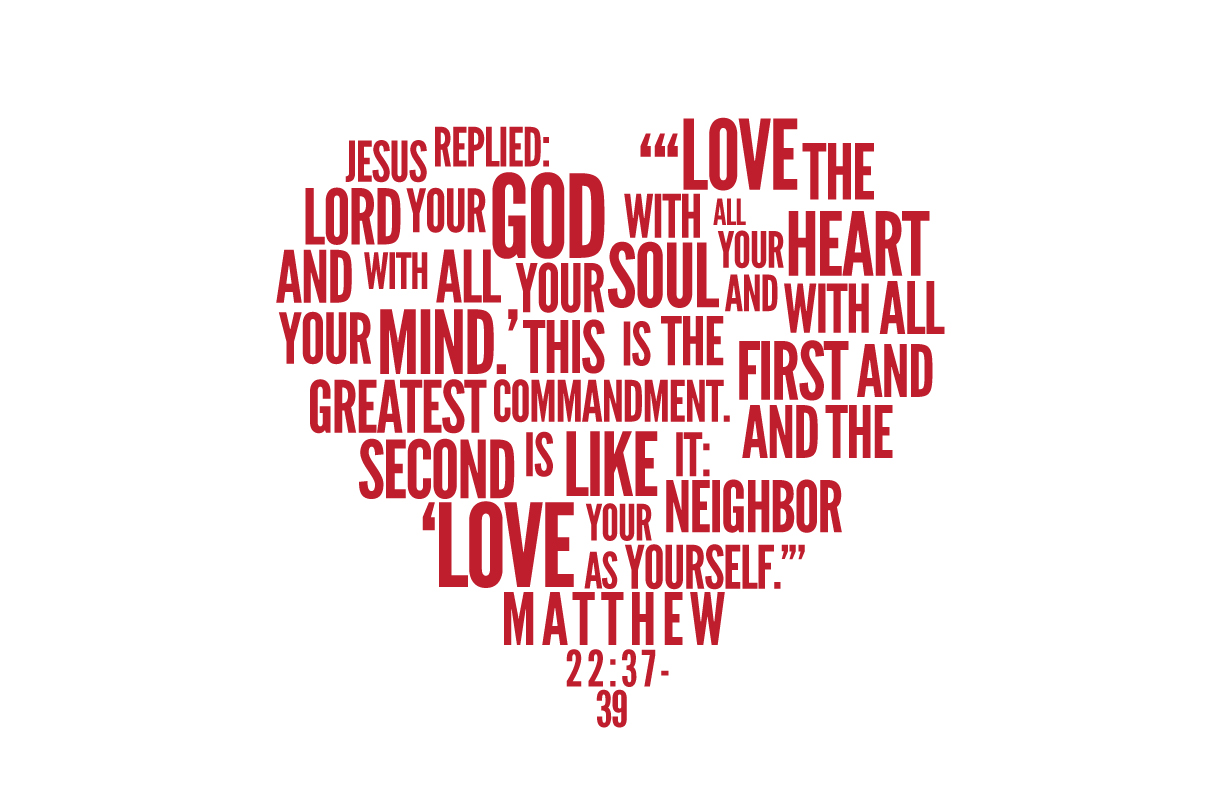
Do you remember when Jesus was asked what the greatest commandment of all was? He answered by giving two. He told his questioners that the greatest commandment is to love the Lord our God with all our heart, soul, mind, and strength, and the second is to love our neighbour as ourselves.
Now you could say that the Ten Commandments are extended illustrations of those two commandments. The first four commandments show us how to love God, and the last six commandments expound how we may love our neighbours.
We love God by having no other gods before him. He comes first in our lives. He is our highest love. He is this, not only because he is the Creator of all, but also because of what he has done for us in love. Remember the words of John in his first Epistle, ‘We love because he first loved us.’ And we begin that by loving and honouring God above and before all other people and things.
Not making a graven image is also about loving God. For one thing, other nations made idols of their gods, and God’s people are not to worship what other people worship. That could cover so many things in our society! And we are not to identify the Lord of creation with created things. He is over and above all he has made.
It’s not loving God to misuse his name, either by using it flippantly and casually, or by using it to gain power over others, such as when some Christians too easily say, ‘The Lord told me,’ or when others use the Lord’s name as a means to harming others. None of these shows love for God. Whereas, honouring God’s name and character is certainly something we do to express love for him.
Keeping the Sabbath is about doing something representative of our entire orientation towards God. We give an hour or so to worship God together, but that stands for the fact that our whole lives are an act of worship. And we keep a day in a special way as a sign that every day is dedicated to God, from the moment we awake to the moment we sleep.
Loving our neighbour begins with our family, and with honouring our parents. Does charity begin at home? Well, we’ll see it doesn’t end there, which is what some people who say that actually mean.
For me, that meant in my last appointment seeking a location within striking distance of my parents. I knew it was likely going to be the period when I would lose them both, and I didn’t see why my call to the ministry meant my sister had to have the call to be the exclusive carer for Mum and Dad in their final years. Thankfully, Methodism was sympathetic.
Of course, loving our neighbour means not murdering them! Most of us don’t! But we can treat people as being of lesser value, or as worthless. The positive side is about how we welcome and value those who are different from us. Currently, I’m reading a book about neurodivergence and faith, because I need to understand more about that, and to be supportive to families where someone has one of the several diagnoses that come under this heading.
Our spouses are our (very close!) neighbours too, and that’s why we’re commanded not to commit adultery. What our spouses need is our faithfulness, for God’s love is faithful love, and we are called to mirror that.
Refusing to steal is also about loving our neighbours. If you used AI to create an image for a poster to advertise an event, it almost certainly pulled images it had stolen from other artists when it surfed the Internet for material to be trained on. Is that fair to the original artist and their need for an income? In general, stealing from your neighbour is a threat to society, because it breeds distrust and strife.[1]
The ninth commandment is not, as commonly thought, a command not to lie, but a command not to give false testimony against our neighbour, and that use of ‘false testimony’ tells us that the context is a legal one. We know the damage caused by perjury in a court of law. The innocent are imprisoned, and criminals set free. This is not good for society. This is an area where love of neighbour by bearing true testimony is not just about personal morality but the strength of the community.
As for the final commandment, not to covet, this is the only one focussed on the heart and not actions[2]. It’s invisible. But when it becomes visible in action, it leads to the breaking of either the eighth commandment (not to steal) or the seventh (not to commit adultery). It is like a summary commandment, showing the danger to the community of living lovelessly towards our neighbour.
Conclusion
Now remember we are seeking to follow the commandments in order to show our gratitude to God who has saved us. The love-your-neighbour commandments show us that a way to show that gratitude is to contribute harmony and well-being to our society. If we were just to live for ourselves, then society will show signs of disintegration. Does that seem familiar?
And this love-your-neighbour gratitude is not some bland ‘Let’s all be nice to each other’ sentiment. It is twinned with a love for God that puts him first and above everything and everyone in our lives.
How do we live in the light of this? The Israelites became so scared of a God who spoke like this that they didn’t want to hear from him anymore. ‘Moses, we can cope with you,’ they said, ‘but will you please shut off the voice of God? We can’t cope.’ (Verses 18-19)
What a terrible mistake to say you don’t want to hear the voice of God. And so Moses says, ‘You’ve chosen the wrong kind of fear. Choose instead the healthy fear of the Lord that will keep you from sinning.’ (Verse 20)
In other words, reject paralysing fear. Instead, cultivate awe and reverence for Almighty God, such that you will grow in love for him and love for your neighbour.
He is the God of our salvation, and this is the fitting way to respond to all that he has done for us.
And as we introduce others to the God who saves in Jesus Christ, so we shall encourage them to respond to him in the same way: love of God and love of neighbour.
This will bring the social transformation my little old lady so longed for.
[1] Peter Enns, Exodus (The NIV Application Commentary), p423.
[2] Enns, p424.


What Do You Think?