
The Blessing of the New Jerusalem, Isaiah 2:1-5 (Advent 1 Year A)

Isaiah 2:1-5

Wine Advent Calendar by In Good Taste. No alterations. CC Licence 4.0.

In among the monsoon of Black Friday emails that have taken over my inbox were links to a fashion of recent years that I have railed against in previous Advent seasons. The luxury Advent calendar.

This year, you could buy not only a perfume Advent calendar, but also a wine Advent calendar. And I thought, I hope someone doesn’t receive both and then confuses the two.

Or maybe it would serve them right!

These luxury Advent calendars show that if Advent means anything in our wider society today, it is that Advent is a countdown to indulgence.

We may respond by saying no, it’s a countdown to the birth of the Messiah.

But we too would be wrong if we said that – at least historically. For in the tradition of the Church, Advent begins with a countdown to focussing on the return of the Messiah.

Like so many, we yearn for the day when evil and suffering will be abolished. Like many critics of faith, we too struggle with why God allows sin and strife in the meantime.

But what we have is a hope based in the promises of God, and which we have glimpsed in the Resurrection of Jesus.

Ancient Israel had her hopes, and we read one such vision in Isaiah 2. We read it, not only for what it is, but through a Christian lens. We believe this prophecy of Isaiah is fulfilled in what is often called the ‘Second Coming’. We believe in a hope described by the New Testament Greek word Parousia, which is often translated as ‘coming’, but which is better translated as ‘appearing’ or ‘royal presence.’

So, when Jesus appears again as King of all creation, what will be the effects of his reign, and what do they mean for us now?

Firstly, blessing for God’s people:

2 In the last days

the mountain of the Lord’s temple will be established
    as the highest of the mountains;
it will be exalted above the hills,
    and all nations will stream to it.

‘In the last days’ here is literally ‘at the close of the days’ – that is, when God’s promises come to fulfilment[1].

Originally, Jerusalem stood at a height below the surrounding mountains. Yet here, Isaiah is inspired to see it elevated in a way consistent with its spiritual significance. God has elevated the city.[2]

God blesses his people. As Psalm 3:3 says,

But you, Lord, are a shield around me,
    my glory, the One who lifts my head high.

God raises his people to their full dignity. In his presence, he makes them into all they were intended to be.

One Sunday when I was at my Anglican college in Bristol, one of my friends invited a few of us to go with him to worship that evening at an independent charismatic church. His contact was a girl he knew. We all went to her house first, and she led us to the place where her church met. She was a plain-looking young woman of unremarkable appearance.

During the service there was an extended time of sung worship. At one point, I looked around the congregation. Wow, I thought: who is that beautiful girl?

I expect you’ve guessed. It was the apparently plain girl who had taken us there. But caught up in the worship and adoration of God, the presence of the Spirit made her into something more.

And I believe that is something of our hope. Just as Jerusalem is elevated in the vision of Isaiah, so God’s people are elevated in the royal presence of God.

It happens already by the Holy Spirit. It will be fulfilled in the coming of Jesus.

I have long believed that the work of the Holy Spirit in us is not to make us less human, as if God wanted us to be religious robots, but rather to make us more human than we’ve ever been. Our gifts are enhanced. Our talents are increased. Our holy desires are raised. As Isaiah saw Jerusalem being raised and exalted, so our destiny is to become everything that God ever intended us to be.

This is not just about ‘religious’ spiritual gifts. It is to do with everything about us. Alison’s admin will be even more on point. Tim’s photos will be even more amazing. Angela’s hospitality will be warmer than ever. Jessica’s tech abilities will be through the roof.

I’m sure that’s something to anticipate with joy and maybe even excitement. But in the meantime, as a sign to the world of all that is to come, let us be open to the Spirit in every part of our lives as God works on this project of elevating us to become more of whom we were always intended to be.

Secondly, blessing for the nations:

3 Many peoples will come and say,
‘Come, let us go up to the mountain of the Lord,
    to the temple of the God of Jacob.
He will teach us his ways,
    so that we may walk in his paths.’
The law will go out from Zion,
    the word of the Lord from Jerusalem.
4 He will judge between the nations
    and will settle disputes for many peoples.
They will beat their swords into ploughshares
    and their spears into pruning hooks.
Nation will not take up sword against nation,
    nor will they train for war any more.

This makes me remember the passage I used on Remembrance Sunday this year, namely Revelation 22:1-5, where ‘the leaves of the tree [of life] are for the healing of the nations’ (verse 2).
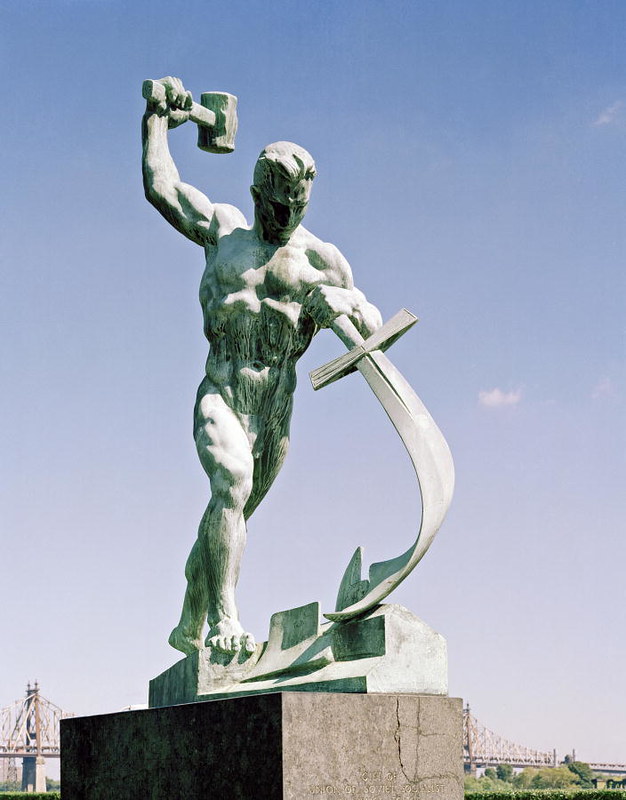
Let Us Beat Our Swords Into Ploughshares. UN Photo/Andrea Brizzi. CC Licence CC BY-NC-ND 2.0

In the New Jerusalem, when God teaches his ways there will be the resolution of disputes between peoples and nations, and the end of all war.  How we long for such a day. Swords into ploughshares and spears into pruning hooks indeed.

Because the New Jerusalem is a place of peace, reconciliation, and justice. Not for the life of the world to come the spectacle of a President lusting after the Nobel Peace Prize while renaming the Department of Defence as the Department of War, while sending quasi-military officers to arrest citizens purely due to the colour of their skin and with no due process, all the while selling Ukraine down the river to his fascist buddy in the Kremlin who probably has dirt on him. That is not peace.

No. The peace of the New Jerusalem will not be the fruit of armed strength but of the Son of God suffering in love on the Cross. The peace of the New Jerusalem will not be about the imposition of a stronger will, because the Cross says otherwise. The peace of the New Jerusalem will not be about finding some compromise halfway in between the positions of two intractable sides but will be based on the truth of God. As we heard in verse 3, ‘He will teach us his ways so that we can walk in his paths.’

Well, what about now? As future citizens of the New Jerusalem, God calls us to point to this future reality by our witness in this life. Can we be people who learn the skills of reconciliation? Can we learn how to transform conflict into peace and harmony? Can we be examples of that in our own relationships? Where are the broken people and broken places in our world to which God is calling us to demonstrate his ways of healing?

Maybe it’s in families. Or in communities. Or in workplaces. Or on a larger stage. But we may be sure, these are the very spaces which God calls his people to inhabit and to serve as a sign of hope in his coming New Jerusalem.

Thirdly and finally, blessing in the here and now:

5 Come, descendants of Jacob,
    let us walk in the light of the Lord.

I’ve been relying this week on the work of the Old Testament scholar John Goldingay to guide my thoughts in understanding this passage. He says that the image of light points in some places to themes of truth or revelation, but not here. ‘The light of the Lord’ has to do with God’s face and hence, God’s blessing. To live in the light of the Lord is to live by his blessing[3].

We can let all sorts of things fire the way we live. It might be material gain. It might be our need for the approval of others. It might be about successful relationships and a good family life.  It might be the desire to be recognised and respected. It might be to climb to the top of our profession.

Not all these things are entirely bad. But they cannot be ends in themselves, or they become idols. Isaiah points us to a better way, a way that enables us to live in the spirit of the Christian hope. It is a way that prepares us for the New Jerusalem.

‘Let us walk in the light of the Lord.’

Let us seek his blessing and respond to that. Where is God shining his light? Let us walk there.

Sometimes God shines a light in a place that is congenial to us, and it is easy to walk there and know his blessing. Other times he shines his light in unexpected and challenging places, and the call to walk there and discover blessing is trickier for us. It can be like that balance we hear in the preamble to the Covenant Service prayer every year:

Christ has many services to be done:
some are easy, others are difficult;
some bring honour, others bring reproach;
some are suitable to our natural inclinations and material interests,
others are contrary to both;
in some we may please Christ and please ourselves;
in others we cannot please Christ except by denying ourselves.
Yet the power to do all these things is given to us in Christ, who strengthens us.[4]

Many ministers did not believe God could be shining his light in that direction as a way of bringing blessing, and some of us had to be dragged kicking and screaming towards that light. Other Christians have known sheer joy and delight in detecting where God was shining his light.

But the reason we do all this is in anticipation again of the New Jerusalem. For in that place, there will be no more night, there will be no more need for lamps or the Sun, because God himself will be the light. Hence, to walk in his light of blessing now is to prefigure that great day. It is to live in a small way now in the ways of eternity, when all our hopes will be fulfilled.

Conclusion

As we step into Advent again this year, may the Holy Spirit hold before us the prophetic vision of hope. May that vision of hope be a blessing that fortifies and energises us.

May we know such blessing that we grow ever more into being the gifted people our Father made us to be. May we offer such blessing that the world knows the Good News of reconciliation with God and with each other. May we walk in such blessing today as we follow God’s light and catch a glimpse of the glory to come.


[1] John Goldingay, New International Biblical Commentary: Isaiah, p42.

[2] Op. cit., p42f.

[3] Op. cit., p44.

[4] Methodist Worship Book, p288.

Video sermon And Text: Active Patience (Second Sunday Of Advent)

This week, having realised that the copyright fears that led me not to post my videos these last couple of weeks were groundless, I’m going to give you both the video and the text of my talk.

2 Peter 3:8-15

In my teens, one of my favourite pop songs was ‘I’m Not In Love’ by 10cc. It was cleverly arranged and produced, and it had wry and touching lyrics that even clicked with a fifteen-year-old.

However, I heard both the single version and the album version on the radio. The single was a four-minute butchered edit of the full six-minute album track, and so I saved my pocket money to buy the album.

The album – ‘The Original Soundtrack’ – also contained much darker material, not least a song called ‘The Second Sitting For The Last Supper’ in which the band mocked the Christian hope of Christ appearing again in glory.

Two thousand years and he ain’t come  yet
We kept his seat warm and the table set
The second sitting for the Last Supper

It’s a hope for which many people mock us. It’s a hope with which numerous Christians struggle.

Perhaps sometimes it touches on those never-quite-disappeared childhood traits, remembering the times as little ones that we sat in the car while our parents drove, and within five minutes were asking, ‘Are we there yet?’

The third chapter of 2 Peter can give us help in understanding God’s purposes and responding appropriately. What these verses tell us is that when we understand God better, we shall also understand better how to live.

So firstly, understanding God better:

8 But do not forget this one thing, dear friends: with the Lord a day is like a thousand years, and a thousand years are like a day.

This verse, which takes some words from a psalm, tells us two things about God which get taken up in the next two verses. If a thousand years are like a day to the Lord, then he acts over a long period of time. But if the reverse is also true, that a day is like a thousand years, then God also acts suddenly and quickly.[1]

We see the long-term patience in verse 9:

9 The Lord is not slow in keeping his promise, as some understand slowness. Instead he is patient with you, not wanting anyone to perish, but everyone to come to repentance.

The slow – to our eyes – acting of God is a mercy to the human race. He doesn’t want to wrap things up without people having a full opportunity to repent and put their faith in his Son, Jesus.

So if someone mocks us as Christians for the fact that Jesus has not returned, we can remind them that he is hanging back to give them the chance to hand over their lives to him. ‘Why hasn’t he come?’ we might reply. ‘Because he’s waiting for you.’

They may or may not appreciate that answer! But it is consistent with the merciful and gracious character of God. The offer of salvation is not a quick, instant, blink-and-you’ll-miss-it event. It is there on the table and stays on the table even for the most recalcitrant of sinners.

God is patient. Jesus hasn’t forgotten to come again, because he hasn’t forgotten the sinners he loves.

But as well as the long-term patience of God there is also his ability to act suddenly and quickly. Verse 10:

10 But the day of the Lord will come like a thief. The heavens will disappear with a roar; the elements will be destroyed by fire, and the earth and everything done in it will be laid bare.

God may be patient, but he will not suffer mocking. He will ‘come like a thief’. Christ appearing again ‘like a thief [In the night]’ is a common New Testament image for his return in glory. No-one expects that a thief is coming: you need to be prepared in order to avoid suffering loss.

It’s no good, then, having a casual attitude to God which says, ‘I’ll live just how I like, and then I’ll repent at my leisure on my deathbed.’ That is to treat a patient and merciful God with contempt, and to forget that he is also holy.

And – although in some cases it can be emotional manipulation – the old line of the evangelists that asked, ‘If you were to be hit by a bus tonight, do you know what would happen to you eternally?’ makes a good point to those who would be casual with God and disregard the fact that he can act suddenly and quickly.

So I think we can put these two apparently contradictory elements of God’s character together and see where that leaves us with our Advent hope. God is patient, because he longs for everyone to repent. Yet he will not be mocked by those who treat him casually, and one day he will come both suddenly and quickly. He will even do that before the end in individual people’s lives.

Therefore secondly, we look at understanding better how to live:

Just as there were two elements to understanding God better, so there are two corresponding ways to live in the light of that as we await our Advent hope of Christ’s appearing again in glory.

In response to God’s sudden and quick action, not least in his glorious return, we read verses 11 to 13:

11 Since everything will be destroyed in this way, what kind of people ought you to be? You ought to live holy and godly lives 12 as you look forward to the day of God and speed its coming. That day will bring about the destruction of the heavens by fire, and the elements will melt in the heat. 13 But in keeping with his promise we are looking forward to a new heaven and a new earth, where righteousness dwells.

Forty years ago, I went to Spring Harvest for the first time. On the first evening, a preacher named Stuart Briscoe said that he believed in 2 Peter 3 when he saw the atomic bomb fall on Hiroshima. Then he knew it was possible for the heavens to be destroyed by fire and the elements to melt in the heat (verse 12).

But we do this a dis-service if we think that Christ’s sudden and speedy return is only about destruction. For we go on to read of the hope expressed elsewhere in the New Testament, not least by Paul in his letters and John in Revelation, that Christ’s goal is to bring ‘a new heaven and a new earth, where righteousness dwells’ (verse 13).

This is why Christ will come again in glory: to bring a new creation, where righteousness dwells.

And so the way to live in the light of that is to live in righteousness now. Christ calls us to live now as a sign of his new world that is coming. Live according to the new creation, not the surrounding culture.

What would it mean to live in righteousness now? Well, the English word ‘righteousness’ might be a little misleading here. Often we take it just to refer to matters of personal morality. But the Greek word means not only personal righteousness but social righteousness – justice, if you will – as well.

So our personal moral conduct needs to come more closely in line with what Jesus calls it to be. But so do our actions in society.

Abraham Kuyper was a Dutch Christian theologian and politician – in fact, he became Prime Minister. He put it this way:

‘There is not a square inch in the whole domain of our human existence over which Christ, who is Sovereign over all, does not cry, Mine!’

Is there any part of our lives where we don’t want Christ to cry, ‘Mine!’?

And then there is the way we live in response to the patience of Christ. This comes at the end of the reading:

14 So then, dear friends, since you are looking forward to this, make every effort to be found spotless, blameless and at peace with him. 15 Bear in mind that our Lord’s patience means salvation, just as our dear brother Paul also wrote to you with the wisdom that God gave him.

‘Our Lord’s patience means salvation.’ As we saw earlier, that patience means salvation in the opportunity for repentance, and so another way we live in the light of Christ’s coming is to offer the Gospel.

But it’s also the climax of our own salvation. For our salvation is not just the forgiveness of our sins through the Cross, it is also the transformation of sinful lives by the Holy Spirit into those that live righteously as we’ve just been saying.

And it is also that our salvation will be completed when Christ appears in glory. For when righteousness dwells, sin will be abolished. Peace will reign. All shall be well, and all manner of thing shall be well, as Mother Julian of Norwich said. This is part of our great hope.

To conclude – Christ’s appearing in glory seems to be a long time coming, but it is because God is patient. The chance is there for repentance, and the Church must announce that.

But Christ will still come suddenly and quickly. Let us be prepared by living according to the pattern of his great future.


[1] My understanding of these two contrasting elements is owed to Ben Witherington III, Letters and Homilies for Hellenized Christians Volume II, pp376-8.

Sermon: Holy Suspense (Advent Sunday)

As with last week and throughout Advent I won’t be able to post the video of my devotional talk for the week. However, here is the text as I explore the Lectionary Gospel (Year B) and tackle that sense of suspense and tension that confronts us at Advent and throughout our Christian lives.

Mark 13:24-37 NRSV

In the lead-up to family birthdays and to Christmas, there is a noticeable difference between the males and the females in my immediate family.

My wife and daughter cannot stand not knowing what their presents will be. They want to know in advance. In particular, I often subjected to intense lobbying from my daughter to know what we’ve bought her.

My son and I are different. Both of us are content to wait and find out on the day. That’s part of the pleasure for us. If we knew in advance, it would be an anti-climax.

Advent – and particularly Advent Sunday itself – is about how you deal with suspense. That’s why this week’s theme in the series I’m following is called ‘Holy Suspense’.

We are living in between times in a sense of tension and hope about what is to come, not satisfied with life as it is and longing for it to be different.

We are in the hour before dawn, the time when the temperature is usually at its coldest, but when the complete darkness begins to be replaced by a blue light. As twilight before dawn beckons, indirect light from the Sun below the horizon takes on a blue shade. It is sometimes called ‘blue hour’.

The ancient Celts used to talk about living in ‘The time between the times’, and while some of their expressions of that would not be helpful to us, I think we can at least affirm those words.

For that is where the holy suspense of Advent, in the hour before dawn, places us: in the time between the times.

But what times are we in between? There are two in Mark chapter 13.

You may be surprised to hear that, because for a long time people have wrongly assumed this chapter is entirely about the Second Coming and the events leading up to it. However, there is a real tension between two ‘comings’ in this chapter, and the Lectionary verses we have today give us the cusp between the two.

So – what is the first coming in Mark 13?

You might assume it is Jesus’ first coming, the Incarnation, the great event to which we are building up.

But you would be mistaken.

24 ‘But in those days, after that suffering,

the sun will be darkened,

   and the moon will not give its light,

25 and the stars will be falling from heaven,

   and the powers in the heavens will be shaken.

26Then they will see “the Son of Man coming in clouds” with great power and glory. 27Then he will send out the angels, and gather his elect from the four winds, from the ends of the earth to the ends of heaven.

Now some of you will jump on that language and say it’s talking about the Second Coming. My one-word answer to that is ‘no’, but bear with me as I explain what it is.

For one thing, language about the sun being darkened, the moon not giving its light, stars falling from heaven, and powers in heaven being shaken is not to be taken literally. This is neither Carol Kirkwood giving the weather forecast on BBC Breakfast, nor is it Brian May or Brian Cox describing an astronomical event on The Sky At Night. This is special language that we call ‘apocalyptic language’, which was a veiled way of speaking so that enemies like the Romans would not understand what they were on about.

But, you say, the verses go on to speak about the Son of Man coming in clouds and sending his angels to gather his elect from the four winds. That must be the Second Coming, mustn’t it?

Only if you don’t recognise your biblical quotes, I respond. ‘The Son of Man coming in clouds’ is a direct citation of Daniel chapter 7. In that chapter the Son of Man does indeed come in clouds – but not to earth. He comes to the Ancient of Days, that is, Almighty God.

It would seem therefore that what Jesus is talking about here isn’t his first coming, nor is it his return, but his ascension to the right hand of the Father, where, as it says in Daniel 7, he receives the kingdom.

And Jesus’ statement

30Truly I tell you, this generation will not pass away until all these things have taken place

makes it quite clear he is talking about an event that is very close at hand, not in the distant future.

What then about the Son of Man sending out the angels to gather the elect? That surely is the evangelistic mission of the church that Jesus commissions his disciples to undertake. He gives that command just before he ascends, and it begins at Pentecost.

Hold onto those thoughts for a moment, while we ask – what is the second coming in Mark 13?

Well – er – it’s the Second Coming! Not that the Bible ever uses that expression. Normally it uses a word that means not ‘coming’ but ‘appearing’ or maybe ‘presence’. Jesus will appear again on earth after his ascension, and we need to be ready.

That’s why he tells the little vignette at the end of the reading about the master who goes away (the ascension again) and leaves his slaves in charge of his property. However, those slaves need to be ready for whenever the master returns. They don’t know when that will be, so they need to be ‘on the watch’ and ‘keep[ing] awake’ (verses 32-37).

That’s all rather more straightforward than what I called the ‘first coming’, isn’t it?

The only strange thing about as far as I’m concerned is that all of Jesus’ teaching in this chapter is a response to him prophesying that the Jerusalem Temple will be destroyed, and Peter asking him when this will happen and what the signs will be (verses 1-3). So why would Jesus go on to talk about his return in glory?

I think it must be something like this: Jesus has solemnly spoken about the destruction of the Jerusalem Temple as a sign of judgment. But he goes on to warn that a greater judgment is waiting in the wings for the end of time.

Right – now that I’ve outlined what I think is the right way to understand this passage, we can answer some practical questions about how we live during holy suspense.

For the suspense in which we live is this: at the ascension, Jesus sat down at the right hand of the Father and was given the kingdom of God. He reigns.

Yet not all is well, and we await his appearing (a.k.a. the Second Coming) when everything will be put under his feet.

Just as the Queen reigns but not everyone obeys the law of the land, so we live in a time like that. Jesus is in charge of the universe, but not everyone acknowledges that. Such a state of affairs creates a sense of tension for us as followers of Jesus.

Two applications, then:

Firstly, the gathering of the elect: because not everyone willingly lives under the reign of King Jesus we are given the Great Commission to proclaim the Gospel. In the Roman Empire when a herald came announcing ‘good news’ it was usually the good news of a new Emperor or of great victories.

Well, that is our message in the Great Commission. There is a new king on the throne, and his name is Jesus. What’s more, he has won the greatest victories of all time – over sin and over death.

As we live with this great tension between Jesus receiving his kingdom and it being completely fulfilled, we call more people to bow the knee to King Jesus.

Secondly, the slaves staying alert and awake in the master’s house: because Jesus will appear again and everything and everyone will acknowledge him as Lord and King, we need to be ready for that. In other words, we need to live as if that future is already here. The call to obey Jesus now is critical, because it’s the consequence of proclaiming the Good News that he is King and has won those victories over sin and death.

Now that creates more of the tension with the world we live in, where to live like that may not be popular. But discipleship is not an option. And if we proclaim to the world that Jesus is King, then a necessary part of our witness to back up our words is to live as if Jesus is King. Which he is.

To conclude: do we know what our present is on the Great Day of Christ’s Appearing? Yes and no. Yes, we know in general terms that his new creation will be full of truth, beauty, and love, and there will no longer be anything to spoil it.

But also no, because how can we imagine such a gift with accuracy and detail? We might just as well also be surprised.

What we know is that Jesus will reign without any further opposition.

Meanwhile, we live as citizens of his kingdom and proclaim his reign, even though that brings tension.

But one day, the suspense will be over and all will be well.

That is the Advent hope.

Sermon For Advent Sunday: It’s The End Of The World As We Know It

Mark 13:24-37

Do you check the weather forecast first thing in the morning? I may be doing so in order to urge one of the children to wear an appropriate coat for school. So I may check the weather app on my phone, or I may look on the BBC website. I may just catch the forecast in the regional news on BBC Breakfast, or I may see a video of that same regional forecast in my Facebook updates.

But whatever method I use, I have yet to hear a forecast include the words,

“the sun will be darkened,
and the moon will not give its light;
25 the stars will fall from the sky,
and the heavenly bodies will be shaken.” (Verses 24b-25)

Even Ian McCaskill at his most dramatic never came up with those lines, and nor do these words come from a missing script of The Sky At Night.

Instead, we’re in the territory of dramatic prophetic language. Prophecies of future events in the Bible seldom use prosaic newspaper-reporting-type language: they tend to use coded, strange, disturbing picture language instead. And for his purposes here, Jesus draws on words originally used by Isaiah to foretell the downfall of Babylon and Edom.

And we commonly assume here that Jesus is deploying this apocalyptic language to talk about the end of the world. But at that point, we have to be careful.

Because Jesus speaks in the passage we heard read about two different ends of the world, if I may put it that way. His prophetic weather forecast is not talking about the end of all things – we’ll come to that later as the second ‘end of the world’ – but the end of the Jerusalem Temple.

For that is where the whole of Mark 13 begins. Jesus’ disciples are admiring the beauty of the Temple, only for Jesus to warn them that it will be destroyed, and that Rome will invade it and set up a pagan idol there, a devastating blasphemy for the Jewish people.

We need to begin, then, this morning, with this first end of the world, the end of the Jerusalem Temple. And you may say that shouldn’t be classed as an end of the world. But it was the end of the world at the time for the chosen people. Their whole system of sacrifice and worship was undone by its destruction (even if later they would develop the synagogue approach to faith that was already in existence).

Think of it as a parallel to the old song ‘Don’t they know it’s the end of the world’, where Skeeter Davis sang,

Don’t they know it’s the end of the world,
It ended when I lost your love.

As a romantic break-up can be a personal catastrophe, so much more Jesus knows when prophesying the failure of the Jewish revolt that the carnage and slaughter of life, combined with the annihilation of the central symbol of their faith will be as good as ‘the end of the world’ for his people.

But he also tells his followers that this awful obliteration of the Jewish hope that will come forty years after he speaks will constitute a vindication of him and his ministry. It prompts him to speak about his coming.

Yet – again, we have to be careful! Just as there are two ‘ends of the world’ in this passage, so there are also two comings of Jesus in these verses. And the coming of Jesus associated with the end of the Jerusalem Temple is not what we commonly call his ‘Second Coming’, his appearing again on Earth.

Listen to how he describes it:

At that time people will see the Son of Man coming in clouds with great power and glory. (Verse 26)

We have assumed that means his visible return to Earth, but the moment you recognise what Jesus is quoting here from the Old Testament, you will begin to see it differently. Jesus is quoting from Daniel 7 where the Son of Man comes on the clouds of heaven. But he doesn’t come on the clouds of heaven to Earth, he comes on the clouds of heaven to the presence of the Ancient of Days, Almighty God. I believe this is the triumph and vindication Jesus receives after his resurrection when he ascends to the Father’s right hand. His life and ministry receive the big ‘thumbs up’ from his Father.

And in that context, we have a job to do – although again, it’s easy for us, with our wrong assumptions that this is about the Second Coming, to miss that fact. For Jesus says next,

And he will send his angels and gather his elect from the four winds, from the ends of the earth to the ends of the heavens. (Verse 27)

We have commonly thought that to mean that God will bring his own people home. But that doesn’t stand up if this is what follows the ascension, Jesus’ coming to his Father, rather than his coming back to Earth.

Why? Remember that ‘angels’ is a word that can also mean ‘messengers’. This is about the proclamation of the Gospel. It is about Jesus’ disciples joining in God’s mission of gathering in his people from everywhere. Christian mission is always the mission of God, in which we are called to participate.

The end of the Jerusalem Temple world and the coming of Jesus to his Father point to the call of the church to engage in the mission of God. Ours is the call to herald the world the One who has been vindicated by Almighty God through his resurrection and ascension. It is our noble call to share in this task, following in the steps of the Early Church. They are the ones Jesus has in mind when he says,

Truly I tell you, this generation will certainly not pass away until all these things have happened. (Verse 30)

It is not that Jesus expected his Second Coming to be early and that he was wrong in his prediction, because these words do not anticipate his return. They are about the mission of God taking place after his ascension.

Perhaps this has particular application for churches today. As churches decline and age, there are fewer ministers to go around, and – as we know here – it becomes harder to maintain the building. But these things are our parallel to the Jerusalem Temple – we thought they were essential to the practice of our faith, but they are not. They are props, albeit sometimes helpful props. But God is taking the props away, and we have to focus on the essential call for this age in history. That call is to engage in the mission of God.

So – to sum up this first point – Jesus prophesies the ultimate failure of Jewish revolts against Rome, and knows that many of his fellow Jews will see the destruction of the Temple as the end of their world. God the Father vindicates his unpalatable message and his suffering on the Cross through the resurrection and ascension, in which he is the Son of Man, coming on the clouds of heaven to God. We, knowing that Jesus has been vindicated by the Father, are to hear and respond to the Father’s call to share in his mission of calling people to place their allegiance with the Vindicated One, Jesus Christ.

I said there were two ‘ends of the world’ in this passage. The second I might call any end of the world. That probably sounds absurd to you, but I mean this to be all-encompassing: it can be any personal or corporate disaster where all that we assumed and everything we cherished has collapsed, like the fall of the Jerusalem Temple for the Jews or the collapse of inherited forms of Christianity that we are experiencing. But it could also be the end of all things. I take this view from these words of Jesus in the second half of the reading:

‘But about that day or hour no one knows, not even the angels in heaven, nor the Son, but only the Father. 33 Be on guard! Be alert[c]! You do not know when that time will come. 34 It’s like a man going away: he leaves his house and puts his servants in charge, each with their assigned task, and tells the one at the door to keep watch.

35 ‘Therefore keep watch because you do not know when the owner of the house will come back – whether in the evening, or at midnight, or when the cock crows, or at dawn. 36 If he comes suddenly, do not let him find you sleeping. 37 What I say to you, I say to everyone: “Watch!”’ (Verses 32-37)

On the one hand, Jesus points back to what he has just talked about, when he begins by saying, ‘But about that day’[1]. But on the other hand, his story about waiting for an owner to come back to a house is different. The servants are not waiting for a catastrophe; rather, they are going to be held to account for their stewardship of what the master has left when he returns.

And that is where we find ourselves. One day, all our opportunities to witness to the kingdom of God and his love in Jesus will be over. Ultimately, that will be when Christ appears to judge the living and the dead. If we die before that day, then that will be closure for us. But it could be earlier. What if I suffer a stroke and my speech and physical mobility are severely impaired? What if I am diagnosed with a grave illness? What if a tragedy befalls a loved one, and I have to give all my time as a carer, no longer having the chance to be much of a witness in the world? Or maybe my world will close in, due to unemployment. What then?

Jesus calls his servants to ‘watch’ for such times, and that doesn’t mean some passive kind of waiting, it means an active waiting. Servants are stewards of what the master has left in their charge. And we are stewards of the gifts God has entrusted to us. This means our talents, our possessions, our relationships, our work – just about anything we are involved in from day to day. If our lives were interrupted today by Christ’s return, or if our lives were shattered by a turn of events, could we say that we have faithfully been using all that God has put in our hands in a way that gives him glory?

I realised that when I was recently granted the extension to my appointment here, it is most probable that after I leave here in several years’ time, I shall likely only have one more appointment as an active Methodist minister. The question of whether I am ‘watching’ over my gifts and calling to make a difference weighs on my mind.

Those of you who are older, and who have made it to retirement may also need the challenge. Will you be able to say that you have made a difference for the kingdom of God when the master of the house comes back, or will you have been sleeping on your talents? It isn’t too late to do something – our Bible contains enough stories of older people responding to a divine call, from Abraham to Moses, from Zechariah and Elizabeth to Simeon and Anna. But do not wait in a leisurely fashion.

Around the time I was finishing this sermon, a friend posted a video on Facebook. He has been posting two songs a day: one to depress you, and one to be uplifting. Last night’s depressing song seemed apposite to what I am saying here: the late Sandy Denny’s ‘Who Knows Where The Time Goes?’

As we contemplate the ends of our own worlds, or even the end of the world as we know it, may we not look back at a frittered life and wonder where the time went.

[1] Italics mine.

Sermon For Advent Sunday: Dawn Is Breaking

Dawn over Redcliffe Jetty
Dawn Over Redcliffe Jetty (3) by Sheba_Also on Flickr. Some rights reserved.

Romans 13:11-14

On most days of the week, I am the first person up in our household. My alarm clock rudely interrupts my sleep, I switch it off and lie in bed for as long as I think I can get away with, before coming down, unlocking the front door, opening the curtains, feeding the cats and making drinks for everyone. It doesn’t come naturally – I am constitutionally a late night person and am also usually the last to bed as well as the first up.

As Paul gets us to prepare for the second coming of Jesus Christ in Romans 13, he gives us an image of the early morning. He gives us three images of preparing for the day that help us know how to live in the light of the fact that Christ will appear again one day.

The first question is, what time is it? As you may know, a hobby I enjoy is photography. One of the most important factors to consider as a photographer is the light. Some people think that the bright light of the middle of the day is the best light for taking pictures, but to many of us it isn’t. It is harsh, and it causes dark, unforgiving shadows.

No: light is better at the beginning or the end of the day. The times around sunrise and sunset are the most interesting. And just as we speak about there being twilight around sunset, so there is also twilight around sunrise. In fact, as I learned from reading an article the other day, there are three phases of twilight just before the sun rises. There is astronomical twilight, when the centre of the sun is twelve to eighteen degrees below the horizon, and the light is dark blue – even still seeming like darkness. Then comes nautical twilight, when the sun’s centre is now between six and twelve degrees below the horizon. Orange and yellow hues join the dark blue. Finally, there is civil twilight, when the centre of the sun moves between six degrees below the horizon to sunrise proper itself. Now the light is a mixture of pale yellow, neon red and bright orange. Only after that is sunrise itself, and the first hour afterwards is called the ‘golden hour’, because red light turns gold at this time.

Why am I telling you all this? Because Paul tells us that we are living between twilight and sunrise.

Besides this, you know what time it is, how it is now the moment for you to wake from sleep. For salvation is nearer to us now than when we became believers; 12the night is far gone, the day is near. (Verses 11-12a)

If you remember the stories in the Gospels about the Resurrection of Jesus, you will recall that it happened in the early morning, before the dawn. Paul effectively says that as we now live in between the Resurrection of Jesus and the Second Coming, when all will be raised from the dead and God’s light will shine everywhere without opposition, we live in between first twilight and sunrise. We live now at a time when the light has begun to come but the darkness is still around. However, the longer time goes on, the closer we get to the full sunrise, when darkness will flee away at the full brilliance of the sun.

This image gives us a reference for our lives. Living as we do between the morning twilight of the Resurrection and the full sunrise of the Second Coming, we know that our world consists of both light and darkness. It can be frustrating and demoralising when it seems like we are surrounded more by darkness than light, but the good news for us is that the light has come and that the sunrise is on its way. It is prefigured even in the Christmas message, as when the apostle John says, ‘The light shines in the darkness and the darkness has never come to terms with it.’

So next time you are discouraged, remember everything to do with Jesus. He came as the light of the world, and the darkness couldn’t cope with him. Darkness thought it had got rid of him on Good Friday, but in the morning twilight of Easter Day we learned that wasn’t true. Now we are waiting for the sunrise. We may be tempted to think it’s pointless doing the right thing, because evil seems to be rampant, but living between the Resurrection and the Second Coming means that it is always worth aligning ourselves with what is good, beautiful and true. Be encouraged by the breaking of the dawn.

The second question is, what shall we wear? The alarm clock has woken you. A good supply of tea or coffee, pumped intravenously into you, has got you going. A shower has brought you closer to full humanity, and now you must decide what clothes to put on. How will you face the world today?

Paul has two images concerning this in the passage: ‘put on the armour of light’ (verse 12b) and ‘put on the Lord Jesus Christ’ (verse 14a). So – two sets of clothes! Let’s think about each set.

It’s about dressing for the occasion, or dressing for the conditions. That we are urged to put on the ‘armour of light’ indicates the conflict we are in. Yes, we know that the light will win, but the darkness is not giving up easily. The forces of darkness will seek not only to fight against us, beat us down and demoralise us; they will also try to infiltrate us. That is why Paul says, after telling us to put on the armour of light,

let us live honourably as in the day, not in revelling and drunkenness, not in debauchery and licentiousness, not in quarrelling and jealousy. (Verse 13)

We are not living in the light of our coming King when we resort to these sins. Now you may think that several of these are quite irrelevant to us, and that you have not witnessed any debauchery here in Addlestone Methodist Church. Well, neither have I (unless it has been kept well hidden!), but listen to what Tom Wright says about this verse:

We should not forget that “quarrelling and jealousy” are put on exactly the same level as immorality; there are many churches where the first four sins [revelling, drunkenness, debauchery and licentiousness] are unheard of but the last two [quarrelling and jealousy] run riot.[1]

The church infested with quarrelling and jealousy might just as well be the one that is rife with sexual scandal and drug abuse, in the eyes of the apostle. Think about it. When we let our tongues behave loosely in our conversation before or after the service, we are a deeply immoral church, filled with darkness. We must protect ourselves against this by wearing armour – the armour of light.

What does that mean? I suggest it involves disciplined efforts with the help of the Holy Spirit to concentrate our minds and our affections upon all that is good, worthy and noble. We resist and we cut down the attempts to infiltrate our minds with darkness. This requires filling ourselves with all that is good, starting with the Scriptures. It involves building our lives around the Gospel and all that it implies – the undeserved grace of God, his sacrificial love in Jesus Christ, the power of the Holy Spirit, the benefits of peace with God and others, and so on.

And having established that, the other clothing – ‘put[ting] on the Lord Jesus Christ’ (verse 14a) – complements that. What is the emphasis here? Tom Wright helps us again:

Frequently when Paul uses more than one name or title for Jesus the one he wishes to emphasize is placed first; here, by saying, “put on the Lord Jesus Christ”, he seems to be drawing attention to the sovereignty of Jesus, not simply over the believer (who is bound to obey the one whose servant he or she is), but perhaps more particularly over the forces of evil that are ranged against the gospel and those who embrace it. … The assumption must be that he is urging them, as a regular spiritual discipline, to invoke the presence and power of Jesus as Lord of all things to be their defense against all evil, not least the evil toward which they might be lured by their own “flesh”.[2]

Jesus, then, has power over the evil that threatens us, and when we are tempted to give way to the darkness that denies the coming of the light, we invoke him, we call upon him and are then able to resist and align ourselves with the breaking of the dawn rather than the powers of the night.

The third and final question is, what appointments do we have today? Our reading ends with these words:

and make no provision for the flesh, to gratify its desires. (Verse 14b)

The NIV speaks about us not thinking about how to gratify the flesh. It’s about excluding appointment requests from our diary, not including. I usually look at my diary for the day and consider what is in there. It affects decisions I make during the day about what things can claim my time. I try to check my diary carefully when I receive requests for appointments in the future, too. Do I have too many demands on a particular day? Does  this fit with what a minister should be doing? Why does this request appeal to me, and is that for good reasons or selfish ones? Why does this next request not appeal to me? Is that for good reasons or selfish?

Likewise, we have influences who want to take up our time in life, and our decisions on who and what we will give time to may well affect how much we align ourselves with the coming daylight of our King. Paul knows that one way in which we end up making wrong, sinful choices is when we give over our time to things which play on our own self-centred desires. Sometimes it’s the casual way we allow ourselves to idle time away, thinking casually about things that then start to take a hold on our minds, until eventually we end up thinking, doing or perhaps saying things contrary to our faith, and which bring us a deep sense of shame.

You can see this in Bible stories like that of David and Bathsheba. David was supposed to be leading Israel’s army in battle, but he gazed at Bathsheba bathing naked on a nearby roof. Why she used her time to bathe like that where she would be seen from the palace is also questionable. We know the horrifying results. David so wants Bathsheba that he arranges the death of her husband in battle. She becomes pregnant, and they lose the baby.

Now that may be the furthest thing from your mind, but think of how we allow the agenda of advertisers to dominate our thinking until we are dissatisfied with things that previously contented us. We then end up exercising poor stewardship of our money. What about when we give our time over to entertaining gossip? Or how about the occasions when we allow our thoughts to be inflamed by the sly prejudices of certain politicians, journalists or television commentators?

No: if we are dressed in the armour of light and we have put on Jesus Christ as Lord, we cannot imagine that we are going into a bright day where there will be room in our schedules for those things which seem harmless but which grow from tiny specks to great swathes of darkness. Advent Sunday is a time to remember that the light has been breaking through, especially since the Resurrection of Jesus, and today’s twilight will soon become the glorious dawn of his second appearing. May we live, knowing what time it is.


[1] ‘Romans’, New Interpreter’s Bible Volume X, p 729.

[2] Ibid.

Live On TV! The Second Coming!

Direct from the crazy world of Christian television, two networks are jostling to cover the Second Coming. Yes, it’s the ultimate ratings war. No longer is the Parousia the great doctrine of hope, it’s the great deliverer of commercial success. You’ll need all those extra viewers to sell your advertising when the Lord returns, won’t you? And as a guy called Leo, who was the second person to comment on Matthew Paul Turner’s post about this, says, if they believe in the ‘Rapture’, who will be operating the TV equipment? Only those ‘left behind’. Won’t it be a shame if Jesus has signed an exclusive deal with a different channel?

Am I being sarcastic? Probably. Should I be? I guess not. But I’m annoyed at another religious stunt which brings our faith into disrepute. It is not that I believe the doctrine of the Parousia should be spiritualised or demythologised. I don’t believe that the coming of the Holy Spirit fulfils the prophecies of this event. Rather, I believe that Christ will appear again (note that word ‘appear’ – it translates the Greek parousia). He is invisibly present in creation but will appear again ‘to judge the living and the dead’. This carrying-on has all the likelihood of becoming the religious equivalent of that early Internet phenomenon, the webcam that was trained on some coffee in a Cambridge University lab. The sceptics will mock ever more loudly. Looks like a case for Tom Wright, in my opinion.

Create a website or blog at WordPress.com

Up ↑