Church Anniversary Sermon: The Jesus-Shaped Faith of the Church (Matthew 16:13-20)

Matthew 16:13-20

As a young person growing up, I became very frustrated by the Church. I used to describe it, in typical teenage black and white terms, as a God club where God had been voted off the committee.

It became a passion for me that the Church become more like she was meant to be. One time, as a young Local Preacher, I was in my bedroom one evening preparing a service for the following Sunday, when my sister came in.

‘What are you preaching about this Sunday?” she asked.

‘The Church,” I replied.

“You’re always preaching about the Church,” she said. She was probably right.

Even when I undertook my postgraduate research in Theology while I was training for the ministry, the focus of my thesis was ‘ecclesiology’ – that is, the doctrine that describes what we believe about the nature of the church.

So when you ask me to take a church anniversary, it feels to me like eating one of Penny’s cheese scones straight from the oven, closely followed by her lemon drizzle cake!

The way I want to speak about this subject today from this passage is to talk about ‘The Faith of the Church’.

Firstly, the Location of the Church’s faith:

Caesarea Philippi. Wikimedia Commons. CC 2.0.

Verse 13:

When Jesus came to the region of Caesarea Philippi, he asked his disciples, ‘Who do people say the Son of Man is?’

‘When Jesus came to Caesarea Philippi’ is not mere decorative detail. Caesarea Philippi[1] was twenty-five miles north from the Lake of Galilee by the source of the River Jordan and close to the ancient city of Dan, that had marked the northern end of the Promised Land.

But this boundary place no longer reflected the ancient faith of Israel. You can tell from the name ‘Caesarea Philippi’ that it had succumbed to Roman influence. It was famous by then for its grottos and caves dedicated to the worship of the Greek god Pan. He was the god of nature, flocks, shepherds, and wild mountain areas. Sacrifices of cows, rams, lambs, milk, and honey were offered to him in the hope he would bring them luck. He was approached noisily: quiet and silence were considered inappropriate.

Against this pagan context, Jesus invites his disciples to elucidate their faith. Not in the relative safety of the synagogue, but as part of God’s people throughout the world, surrounded by paganism and Roman military might. Here – in the midst of the world, where not everyone would agree – the faith was to be lived out.

It’s the same for us today. We live out our faith, not in the cosy warmth of church fellowship but in a world where it is one of many competing ideas. Today, Jesus calls us to live for him not only in a society full of other faiths but also in a context of different cultural persuasions. At one end we have a political protest that wants to reverse all the social change since the 1960s; at the other, we have so-called ‘progressive’ or ‘woke’ values. Not only that, we have a spectrum that runs from those who believe true satisfaction can be found in money and possessions to those who are beginning to realise that their parents’ rejection of God and religion has left a vacuum at the heart of life.

To live as a family that follows Jesus in such a society is neither easy nor simple. But this is the context in which our Lord calls us to be faithful community today. We cannot wistfully hope for a return to the way things were when we were younger. This is the generation in which Jesus calls his church to live as one for him.

Secondly, the Confession of the Church’s faith:
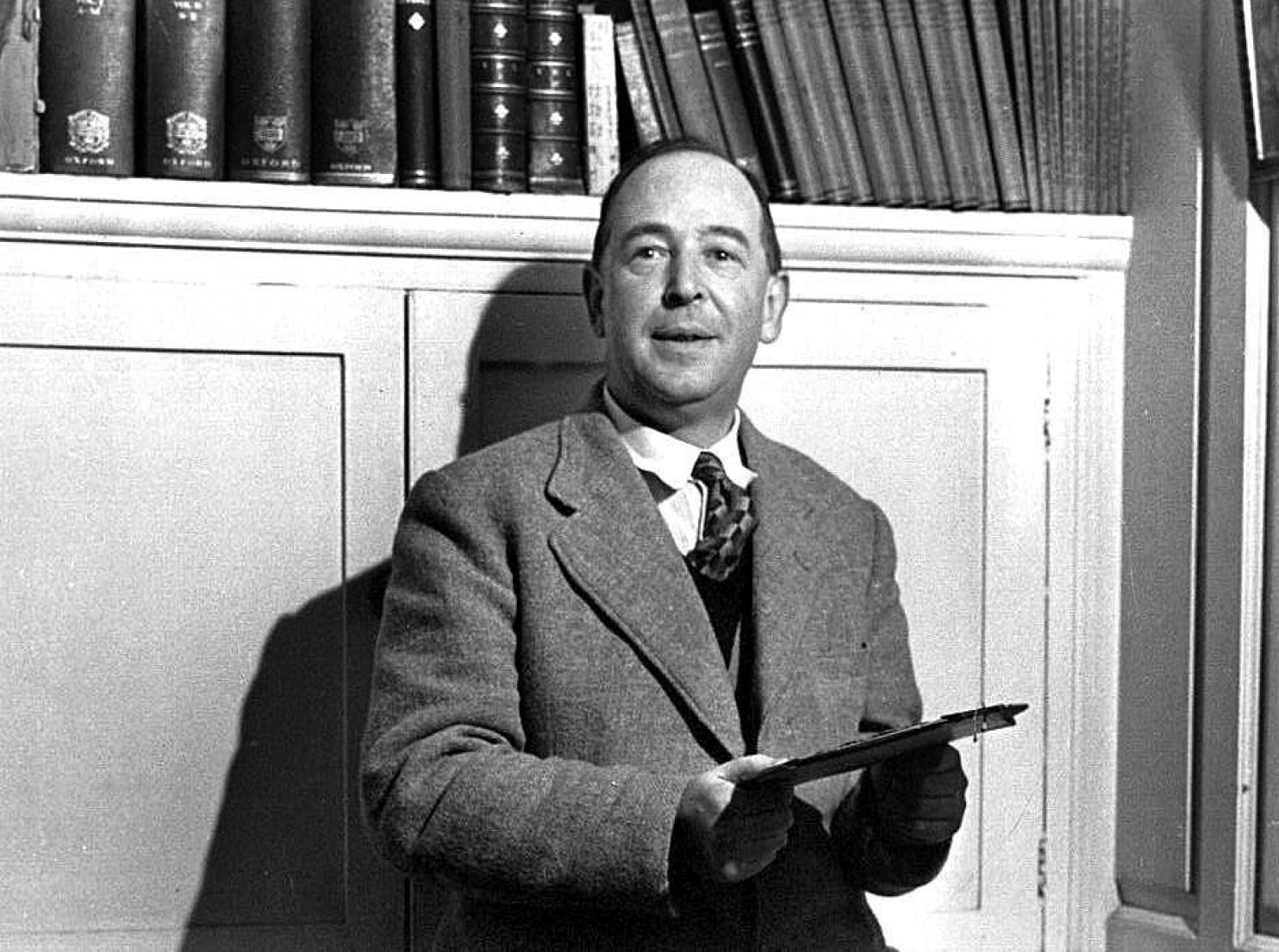
CS Lewis. Leman Ramishvili on Flickr. Public Domain.

Here, we go from ‘Who do people say the Son of Man is?’ in verse 13 to ‘Who do you say I am?’ in verse 15.

To be part of the faithful Church it’s not enough to say Jesus is a good guy, a prophet. Our Muslim friends revere Jesus, and that’s why it’s untrue to claim they want to ban Christmas, but this is as far as they go. They are vulnerable to CS Lewis’ famous criticism that it won’t do to say Jesus was a good man. It doesn’t fit with the remarkable claims he made about himself. Lewis said that the only realistic options in the light of those claims is to say that he is (or was) either Lord, liar, or lunatic. There is no evidence of him being a liar and he doesn’t behave like a lunatic. The best explanation that fits the evidence is that he is Lord.

And that’s where the Church’s confession of faith lands. The earliest Christian confession was the words, ‘Jesus is Lord.’

Naturally, the words of our confession need to be accompanied by deeds. To acknowledge him as Lord, as Son of the Living God, is something to be demonstrated. It calls us to be a community that lives according to his teaching.

Not only that, this complex, plural society that is the context for our faith expects us to live differently, and that is a fair expectation. Moreover, it may be one of the best ways we witness to Jesus. As the saying goes, ‘You may be the only Bible someone reads.’ People do not know the Christian faith anymore. It has been said that we have moved as a society from being one that framed itself inside the Christian story as its defining narrative to one that instead frames itself against the story of Hitler and the Nazis. You hear more reference to them negatively today than you do to Jesus positively. We have a calling here, to confess Jesus as Lord and to live in harmony with that confession.

Thirdly, the Foundation of the Church’s faith:

Sylvester Stallone. Wikimedia Commons. CC 2.0.

Have you ever wondered where Sylvester Stallone appears in the Bible? It’s here. Jesus pronounces a blessing on Simon for his answer that was given to him by heaven and then renames him Rocky. For that’s what Peter means. Those Hollywood movies would never have sounded so attractive had they been called ‘Peter I, II, III, and IV’, but in this text you get a sense of the wordplay if you read it as ‘You are Rocky, and on this rock I will build my church’ (verse 18).

Foundations were often made from rock. Remember Jesus’ teaching in the Sermon on the Mount about the wise man who built his house on a rock, whereas the foolish man built his on sand.

The Church, then, is built on the rock of Peter’s confession of faith in Jesus. How much of that is connected to the person of Peter as our Catholic friends believe is a debate I will not enter here, but the crucial point for us is that we are only the Church insofar as we build on the foundation of faith in Jesus, the Messiah, the Son of the Living God, our Lord. We cannot jettison any of what the apostles handed on to us whilst remaining the Church, even if it is true that we must always interpret the application of the ancient faith in our day.

So whatever we are doing in the Church, let us always bring it back to Jesus – and not our imaginings of him, but his life, teaching, and example as set out in the Gospels. That way, we attend to our foundations, and our house is not swept away in the storm.

Fourthly, the Resilience of the Church’s faith:
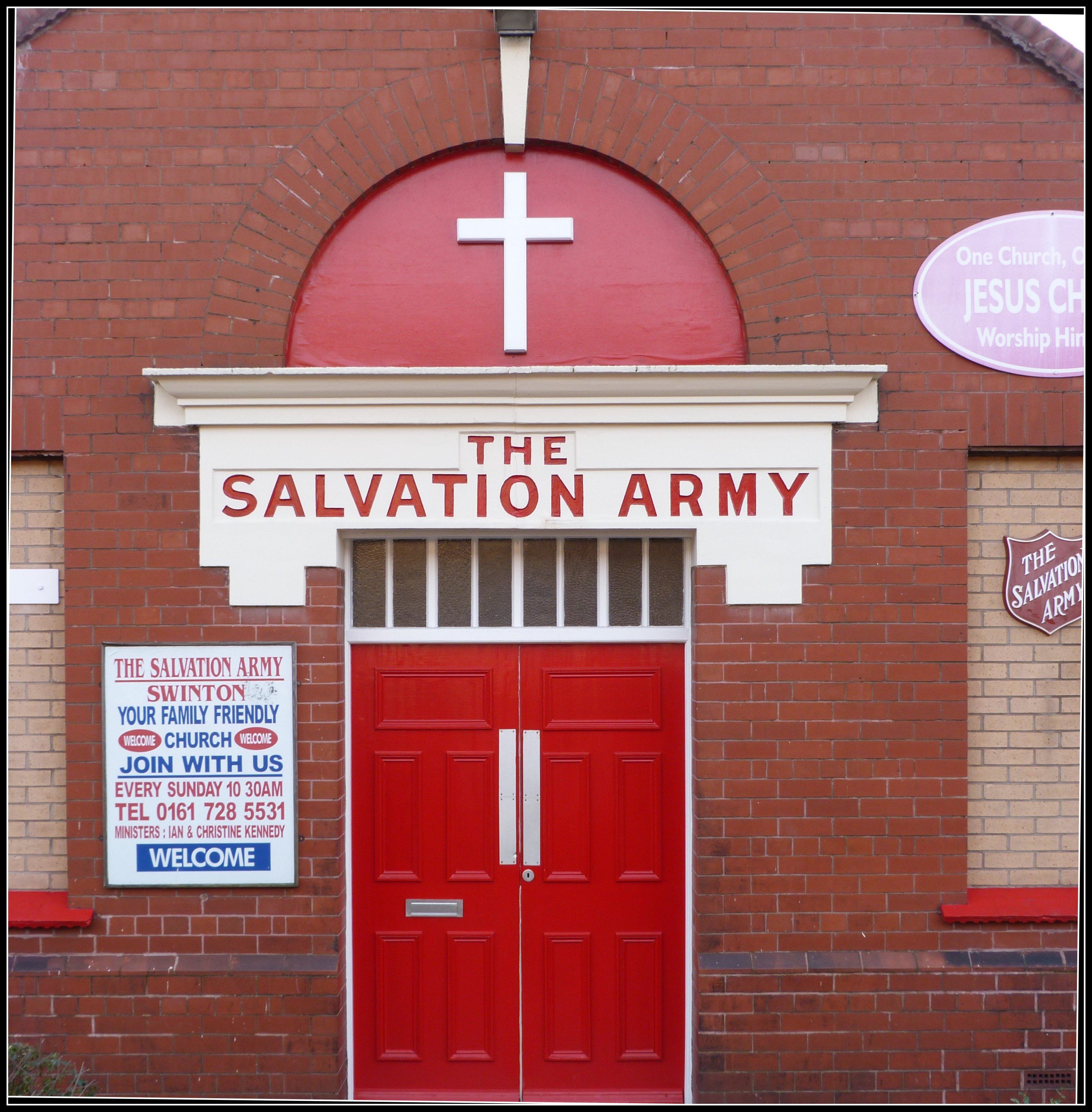
Salvation Army building. Wikimedia Commons. CC 2.0.

Jesus promises that the gates of Hades will not overcome the church in verse 18. Sometimes we imagine these words as depicting the church cowering under attack, but since when was anybody attacked by a set of gates?

No! Gates are defensive objects. They are there to keep people out. And these are the gates of Hades – not of Hell, as in older translations. Hades was the place of death. Here, Jesus promises that death cannot kill the church, and what is more, the church is on the offensive against death.

Therefore, all our worries about church decline and aging need to put into this context. Yes, it is true that certain individual churches (and denominations) will disappear, but overall, the Church of Jesus Christ is indestructible. He has made it so. In history, various denominations have declined and become moribund, but God has raised up a new expression of his church to continue his mission.

Methodism is one example. God raised up the Methodist movement when the eighteenth-century Church of England was not so much full of living waters as of spiritual ditchwater.

Then Methodism became rather too comfortable and middle-class cozy towards the end of the nineteenth century, so God raised up the Salvation Army to restore the importance of bringing good news to the poor.

When Methodism also declined in holiness and spiritual power at the beginning of the twentieth century, God acted again. He raised up the Pentecostal movement partly, at least, out of Wesleyan holiness churches.

Our version of Christianity may possibly wither and die, but still God will do something new with his people.

And whatever form it takes, God’s people will be on the offensive against death and all its friends – sickness, poverty, injustice. The gates of Hades don’t stand a chance against the Church of Jesus Christ.

Fifthly and finally, the Authority of the Church’s faith:

A metal keyring and three keys on a dark surface. Free Images Live. CC 3.0.

Here we’re thinking about all the ‘keys of the kingdom’ and ‘binding and loosing’ language Jesus applies to Peter (or should I say, Rocky?) in verse 19.

These words clearly involve Jesus giving Peter some power and authority. The keys to the kingdom make him some kind of ‘Prime Minister’ or ‘Chief Rabbi’[2] in God’s kingdom, giving ruling decisions and interpretations of God’s will. That comes down to us in the teaching of Peter and the other apostles that is authoritative for us in the New Testament canon.

The binding and loosing on earth as it is in heaven should probably be translated, ‘Whatever you bind on earth will have been bound in heaven, and whatever you loose on earth will have been loosed in heaven.’ Therefore, this is about ratifying the decisions of heaven[3]. It means that church leaders must only allow into the church community those who have confessed Jesus Christ as Lord.

I know an incident in a past circuit where I think I failed in this regard. A couple started coming to the church and eventually asked to see me about church membership. They wanted to know if they were ‘good enough’ for membership of the church. I recommended them.

But those words ‘good enough’ should have been a red flag for me. Their religion was all about rules – that is, so-called legalism. They brought a harshness into the church that was hard to remove. We even had to shut down one home group because the husband of this couple turned all the discussions into occasions of taking every preacher in the circuit to pieces.

Pray that those entrusted with authority in Christ’s Church use it in ways that reflect the life and teaching of Jesus. To vary from it is disastrous.

Conclusion

We’ve looked at the location of the Church’s faith in a varied and mixed-up world. We’ve looked at our confession of Jesus as Lord, and how Jesus alone is the foundation of that faith. We have taken encouragement from the resilience of the Church’s faith, based on the unchanging purposes of God in Christ, and we have looked at the solemn responsibility of leaders to base their authority on Christ alone.

In other words, everything always comes back to Jesus in the Church. Let’s make sure we do.


[1] On what follows, see Craig S Keener, The Gospel of Matthew: A Socio-Rhetorical Commentary, p424.

[2] Keener, p429.

[3] Keener, p430.

The ‘Four Alls Of Methodism’ For Today

My church at Knaphill is redesigning its website. I’ve been asked to write a ‘Statement of Faith’ for it. While Methodism doesn’t generally produce doctrinal statements in the way many Christian organisations have since around Victorian times, I have drafted something based on core Methodist beliefs. This is what I have come up with – although I’m sure it will need tweaking:

What do we believe? The Methodist Church holds the same basic beliefs as all the major Christian traditions. These are summarised in documents such as the Apostles’ Creed and the Nicene Creed.

We are historically connected to the Protestant Reformation, and John Wesley was particularly influenced by the warm devotion of Moravianism and Arminianism’s stress on human free will.

In particular, historic Methodist belief can be summed up as ‘Four Alls’:

All need to be saved
All can be saved
All can know they are saved
All can be saved to the uttermost

What do these mean? Here is a brief outline:

All need to be saved
We believe that human selfishness (‘sin’, if you want the religious word) separates us from God and makes us deserving of divine judgement.

We are unable to change this of ourselves, but God can. Jesus’ death on the Cross absorbs the power of evil and the cost of forgiveness, putting us right with God. His resurrection gives us new life.

Our response is to trust this good news and turn away from our selfish ways of living in gratitude for what God has done in Jesus.

All can be saved
We believe no-one is beyond the possibilities of God’s transforming love. This good news is for everyone. God does not exclude anyone from the offer of his love. That means you and me!

All can know they are saved
What’s more, God wants us to be sure that he loves us. We believe God wants us to have that assurance. It comes through both the promises God makes us in the Bible and in an inner personal experience of God’s love through the Holy Spirit.

All can be saved to the uttermost
The Christian life isn’t just about being forgiven now and waiting for heaven. It’s about our lives being changed for the better here and now. We believe God wants to do that through the power of the Holy Spirit. We want to live differently as a sign of gratitude for God’s love. We want to make a difference in the world as a result.

Methodists Working With New Frontiers

When I was training for the ministry, I remember bridling in one lecture at the assertion that when we chaired meetings, we had to stay neutral. Weren’t we there to give a lead? But rules of meetings took precedence over leadership, apparently.

I found myself in this position last week. I had to chair a complex discussion at my Addlestone church about some proposals to develop our relationship with the local New Frontiers congregation, Beacon Church.  They had recently taken over from some Salvation Army people the running of a toy library that hires our hall. They also wanted to run their debt counselling service from our hall, and they suggested starting a post-Alpha course Bible study group on our premises.

This situation would be a problem for some Methodists. While Methodism and New Frontiers agree on core gospel issues,  there are some areas of Christian belief where we are at opposite ends of the spectrum. We are Arminian, New Frontiers have big Calvinist influences. We are egalitarian when it comes to gender relationships, they are complementarian. My friend Dave Warnock regularly documents these differences, especially the latter one, with some passion.

But despite the potential pitfalls, the story of last week (and the negotiations leading up to our Church Council) is one of grace on both sides. There had been a gap of several months between the old toy library finishing and it restarting, but during that time the rent to us had mistakenly still been paid. There were errors on both sides, and the new manager suggested that each party took a 50% hit. Our Church Council would have none of it. It decided to refund 100% of the overpayment, and calculated there had been a further overpayment which it wished to give back. We knew that although we were not rolling in money, the toy library needed not to be short of funds.

As to the debt counselling, my small and to some extent quite elderly congregation rejoiced that our friends wanted to use our premises. (Beacon don’t have any of their own, and we are located in a prime position in the town.) So yes, have the church hall free of charge for an experimental three-month period. Don’t start until you’ve publicised it properly, but this is a serious social need and if we were younger and fitter it is what we would have wanted to have done. If you can do it on our premises, then God bless you.

And the Bible study? We’re not there yet, because the exact proposals are not firm yet. However, Tom, the senior pastor, has assured us that he will run any study material past us first to ensure we are happy doctrinally with it, and is only too happy if the Methodist deacon and I participate in the group.

Neither side has changed its core convictions. If we debated them, neither of us would convince the other. We would both passionately cling onto what we believe, and to why we think the other party’s views are seriously wrong. However, grace and love can make a way. I hope that is what will continue to characterise the relationship, and will make for a positive witness to the community.

So I was sitting in that meeting straining at the requirement to be neutral. It had some advantages: it made me ensure I was as scrupulously fair as possible to all sides of the debate. But inside? I rejoiced when the Church Council voted as it did.

Being a good (neutral) Christian, though, I had to  be sure I didn’t smile.

Michael Eavis Of The Glastonbury Festival On Methodism And Faith

When I used to read that dismal publication the Methodist Recorder you could guarantee that every year when the Glastonbury Festival came around there would be a reference to its founder, Michael Eavis, as ‘a Methodist’. Well, we learn exactly what kind of Methodist Eavis is in an interview published in the July 2009 edition of Word Magazine. It’s in their ‘Word to the Wise’ column, where well-known people dispense the ‘wisdom’ they have learned over the years. It makes for depressing reading. He says:

I’m a Methodist, we’re chapel people. That’s strange in the 21st century, but Methodism is the social side of religion. We don’t care whether there’s a God or not, really. We’re not that interestested; it’s all about the social side. Charles Wesley, our founder, was a believer in love divine. I’m a believer in love but my love is not divine. I believe in love on earth. We need love for breeding and procreation. Without the love factor on earth we could all be rapists, and that would be dreadful. Love is the most important thing to me personally – but it’s not divine. As Methodists we have enormous social responsibility bred into us. If we make any money we have to spend it on our fellow humans – not all of it, I hasten to add – but most of it. We’ve just built some social housing in Pilton for 22 salt-of-the-earth working-class families with children. And that’s the greatest things I’ve ever done in my life. We have fun, too – we enjoy ourselves, we’re not bearded Mennonites. I’m all for praising nature and you have to tell someone, so we sing loudly and with excitment about creation – we just don’t care precisely how it came about (explodes into laughter)! (Page 60)

Later, he says this:

But with drugs it’s just not my job to stop people doing what they want to do. It’s the Methodist in me. We have broad shoulders. We put up with everyone! (Page 61)

Well, where do I begin? Methodism may – for good or ill – be a broad church, but one thing is for sure: Eavis’ Methodism sure isn’t mine. Yes, my Methodism breeds a sense of social responsibility (although it’s a curious one that cares about homelessness but not about drugs). But to disconnect it from belief in God and God’s love kills the roots of it. (Oh, and to nit-pick: our founder was John Wesley, not Charles.) Eavis might just be a’ cultural Methodist’, to coin a term, much in the same way that we might say there are ‘cultural Catholics’, who have been brought up in that faith but who do not embrace the core beliefs, but that’s about it.

You could say that the Eavis article is typical of much contemporary malaise. The idea that someone famous can dispense wisdom and pronounce on weighty matters such as religion and God is ludicrous and shallow. Much as I might welcome the fact that he still has some kind of social conscience, he is typical of a society that wants social projects but without the religious capital behind many of them. Then, what do we make of his attitude to drug use? Would I be being too cynical if I suggested that it wouldn’t be in the interests of the Glastonbury Festival’s founder to oppose it? No, it must be a coincidence.

Perhaps I am being hard. Maybe I should be more sympathetic and compassionate. I just think the Methodist Church should speak for Methodism (even if I disagree with our hierarchy from time to time). Letting a Michael Eavis trumpet his ignorant views of Methodist Christianity perpetuates ignorance of the Gospel.

But then a ‘secular’ magazine should not be responsible for the Gospel, of course. So maybe this becomes a cry for all of us who do find the core experiences, values and doctrines of Methodist-flavoured Christianity to make them more well-known. Like the need for all to be saved; the belief that no-one is beyond that redemption; that anyone can know they are loved by God in Christ; that personal and social holiness is possible, and we can have an optimism of grace for just how much transformation the Holy Spirit can bring about in and through us.

Because when it comes down to it, God doesn’t rely on the famous. God isn’t dependent upon celebrity culture to spread the Gospel. God calls the ordinary and the obscure to do that job. If you’re as mad as I am by the nonsense spouted by Michael Eavis, let’s rise to the challenge and do it better.

First Day Back

A nice surprise was awaiting me when I arrived this morning at St Augustine’s to take my first service after the sabbatical. They had taken the trouble to buy a ‘welcome back’ card. Many members of the congregation had signed it. I’m not sure, but if I’ve identified the handwriting correctly, then I think it was the initiative of the Anglican priest, Jane. The old cliché says that little things mean a lot, and in this case the cliché was true. It was a simple gesture of love and thoughtfulness, and that from the congregation that gets the least of my time. 

Tonight was the café church service at Broomfield with a lot of DVD clips. Well, I say café church: really it was simply an informal service. I had wondered about the wisdom of constructing an act of worship entirely without hymns, but as it happened, no musician was present, and few present with strong voices to pitch a note, so the format worked better than it might have done. 

To some more liturgical traditions, a service without music might not always seem surprising, but it goes against a core element of Methodist spirituality. As the preface to a previous official hymn book famously put it, ‘Methodism was born in song.’ The rôle of Charles Wesley alongside John in the eighteenth century revival makes that clear. You could say that if you spotted a traditional Baptist, Anglican and Methodist on their way to worship, each would be carrying a book. The Baptist would be carrying a Bible, the Anglican a prayer book and the Methodist a hymn book. It tells you something about the expression of spirituality. Some put it like this: Methodists sing their theology.

Perhaps that’s why a ‘worship war’ over musical styles can be much more painful in Methodist churches. I certainly found that in my first circuit. Having spent my first two years battling a serious problem with unsuitable children’s workers, we had no sooner put that issue to bed than some traditionalist members tried to split the church over music. Ironically, the more charismatic members who enjoyed the contemporary worship songs had no problem singing the great hymns alongside the modern material, because their spiritual experiences helped them identify with what Wesley and others wrote about in their hymns. 

Most of the technology worked tonight – well, the DVDs did, but the XP laptop didn’t want to play a slide show of photos I’d taken on the sabbatical. It only seems happy to pass them onto the video projector if they’re in a PowerPoint show. They weren’t.

Beyond that, I then got embroiled in a church property problem that it wouldn’t be diplomatic or sensible to recount here, and I got home much later than usual.

So that’s about as up to date as I think I can reasonably bring you. It’s not been the smoothest of re-introductions tonight, and I’m back with a bump.

Some Links To Keep Going

Brad Sargent interviews Dr Margaret W Jones about leadership and spiritual abuse. 

A YouTube video of N T Wright on postmodernity and the Enlightenement from Ben Witherington’s blog.

Madonna foreswears celebrity religion; converts to Methodism (via Anna Drew, Methodism’s press officer).

Avaaz have a petition about swine flu. They finger mass factory farming by agrobusinesses as contributing to the encouragement of disease.

Just a few links today – and if you wondered why I broke my sequence yesterday without a post, it had to do with a headache, a Chinese lunch that didn’t want to stay in my stomach, and many hours lying in a darkened bedroom.

Sabbatical, Day 61: Not Perfect, Just Forgiven – Or More?

I’m going to raise a theological issue in a moment. Please don’t go away. It doesn’t require (many) long words, and it’s about an important issue in Christian life and witness. It’s something I’ve had in the back of my mind for a year or two, but never thought a lot about. But it has come up again today while I’ve been reading Tim Keller‘s ‘The Reason for God‘, and it’s rather more important than the continued slow broadband speeds I’m trying to diagnose here. (Something like 200k speed instead of our usual 1.8 meg or so. I’m currently running a full virus check as part of PlusNet‘s faults procedure.)

So here’s the issue. What do we expect of Christian behaviour? Twenty years ago at theological college, I was in conversation with a tutor. I don’t remember the topic, but I must have expressed some disappointment about church life in a placement. He replied, “David, never forget that the church is a company of sinners.”

And I wanted to reply, “Yes, but …”. We are a company of sinners, but I don’t like that most cheddary of Christian slogans, ‘Christians aren’t perfect, just forgiven.’ It seems to be an excuse for all sorts of unacceptable conduct. (Says he who is the chief of sinners. But I don’t want to excuse myself, either. I’m too good at rationalisation.)

The difficulty surfaced again when I read Eugene Peterson‘s book ‘The Jesus Way‘ in 2007. Much of that book is routine wonderful Peterson, but I found one part awkward. In using the example of King David’s life, he rightly trumpets the extraordinary grace of God in bringing forgiveness after forgiveness. And again, I thought, “Yes, but?” The grace of God is truly astonishing. How he picks up people like me, dusts us down and sets us on the road again is staggering.  My ‘but’ was that I wanted to read something about transformation. If it was there, I missed it. 

And that is the one area where I have struggled with Keller. There are so many riches in ‘The Reason for God’. I loved the passage on page 57 where he said that the problem with Christian fanatics isn’t that they are too serious about the Gospel, it’s that they aren’t serious enough, because they act like Pharisees rather than those who know grace. I also appreciated the fact that he tackles so many of the popular objections to faith, including the one where people rightly say that the behaviour of Christians doesn’t always compare favourably to that of non-Christians. 

Now Keller rightly says that Christianity isn’t about moralism. It is – again – about grace. He also says the Christian faith has theological resources for understanding, if not expecting this dilemma. We can expect non-Christians to live outstanding lives, because (using the Calvinist term) he bestows ‘common grace’ on all. We all have the image of God in us, however damaged, is how I would put it. On the other hand, Christians are still sinners. So in believing the best about non-Christians and the worst about Christians (something we rarely do in the church), we need not be surprised if people who do not share our faith outshine us at times.

I am refreshed by the way he consistently goes back to grace. I think he is a shining example of not shooting down those he disagrees with in some crude culture war. Yet I think non-Christians have a point about expecting Christian conduct to be better, even without misunderstanding our message as one of moralism.

I have wondered whether Keller and Peterson’s Presbyterian traditions have anything to do with this. I’m thinking of the debates at the Reformation about justification. Essentially the Reformers separated justification and sanctification, whereas the Catholics conflated the two. Thus the Reformers, in emphasising their difference from Rome, stressed justification as being by the free grace of God through faith in Christ. Sanctification, in the sense of holy living, is also by grace through faith, but the Reformers wanted to separate it out as clearly as possible in order to deny any possible thought that good works merited salvation. So I would suggest it’s possible for someone in a strongly Reformed background to end up emphasising justification (in a Protestant sense) and underplaying sanctification. Might this explain Keller and Peterson?

The weakness I can immediately see in my argument is that the theological college tutor I mentioned was a Methodist. For Methodism has a subtly different tradition here, as I understand it. Wesley was with the Reformers in preaching that sinners were saved entirely by grace through faith in Christ and his atoning work on the Cross. But he moved onto sanctification much more quickly than the classical Reformers did. If you had faith, then (as in Galatians 6), that ‘faith worketh by love’: it was evident in a new lifestyle. The new lifestyle did not save you, but it was the evidence of having received salvation. It was gratitude for salvation, not the cause of it. It was a sign of the Spirit’s work of assurance, which was more than the objective promises of Scripture that the Reformers had stressed. With a theological heritage like that, then whatever one might think about Wesley’s controversial doctrine of Christian Perfection, you will not settle for ‘Christians aren’t perfect, just forgiven.’

So do the likes of Keller and Peterson allow us to be too easy on ourselves, or is that just the wonder of grace? Does Wesley lead us into moral self-flagellation, or is he simply calling out the cost of discipleship? And for those of you who might know Keller, Peterson, Presbyterianism in general or Wesley better than me, have I misread them at any key point? I would be very interested to read your comments, because – as I said in the opening paragraph – this is an important issue in Christian life and witness. For it is about the nature of salvation and a proper portrayal of Christianity to the world.

As Dr Frasier Crane used to say, “I’m listening.”

Sabbatical, Day 6

I haven’t really done any sabbatical work today. Friday is usually my day off, and I’ve kept it much like that. I think it’s good to keep the rhythm. So after taking the children to school, I stayed on, because on Friday mornings I do twenty minutes’ reading with a group of Year 1 children.

Late morning, Debbie and I headed into town. We needed some more bargain school uniform for the monkeys and struck gold at Marks and Spencer. Yes, really. Then we continued our recent habit of having a cheap lunch out together. Yates’s Wine Lodge (why do they put that extra ‘s’ after the apostrophe?) had a two-for-£7.95 deal, and it was good for the price. The downside was the company at the next table. Two young women with a pre-school boy. One was his mother, poor lad. All sorts of unsavoury conversation that youngsters shouldn’t hear. Debbie swears one of them got him to drink a mouthful of her shot. Some kids don’t have a chance.

Meanwhile, I have been following all week the case of Caroline Petrie, the Christian nurse who was suspended for offering to pray with a patient. She offered prayer, the patient declined, Mrs Petrie did not pray. The patient was not offended, but told someone else she thought it was strange. Next thing, Mrs Petrie is under investigation. She has previously been disciplined for offering prayer cards. The Daily Mail reported this on Monday,as did the Daily Telegraph. On Tuesday, the Mail reported support for her case from the Royal College of Nursing and the Christian Medical Fellowship. Today, the Mail reports her reinstatement, but – along with the Telegraph – also quotes a further potentially sinister development. The Department of Health published a document last month in which it warned that doctors or nurses who attempted to preach to patients or other staff would be treated as having committed harassment or intimidation under disciplinary procedures.

Furthermore, I have received a press release today from the Evangelical Alliance in which Hazel Blears, the Government’s Communities Secretary, told faith groups that if they accept money from the state, they must not use it to proselytise. They may speak about their faith if spoken to, she says, but clearly taking the initiative to mention it would be forbidden under a forthcoming ‘charter of excellence’. She then says she doesn’t want to strip away the very reason why faith groups show compassion! The Alliance’s Director of Public Policy, R David Muir, responded:

“The Government wants the social action and welfare that faith groups provide, but there is a danger that they also want faith groups to leave their beliefs at the door.

“Our faith is what equips us as Christians to provide support and compassion to those who are spiritually and emotionally damaged by debt.

“But we are glad that the Government recognises how integral our faith is to the services we provide, and is open to discussion on this critical issue. We look forward to working with them.”

All round, then, seem to be threats against Christians making the first move in sharing their faith and using it to offer comfort and hope to people. Here are a few random reflections:

1. None of this should surprise us. Whatever the faith of Blair first and now Brown, the Labour Party runs these days on a fundamentally secular humanist creed. Let’s here none of that ‘the Labour Party owes more to Methodism than Marxism’ mantra. It may have been true in the past. It isn’t today. Christians should expect such opposition.

2. Nevertheless, none of that should stop us crying ‘foul’. All these cases are about discrimination against the freedom of religion the Government supposedly signed up to when it ratified the European Convention on Human Rights. And while part of me is wary of the secular philosophies behind that document, the Government clearly doesn’t want to accept that sauce for the goose is a tasty accompaniment for the gander as well.

3. We also need to reflect upon ourselves. How much of this might we have brought upon ourselves through insensitive ‘witnessing’? Please note, I’m not saying Mrs Petrie was. I don’t know her, and the fact that she didn’t press on with a prayer for her elderly patient when the offer was declined suggests that while she is upfront with her faith, she is probably not the aggressive sort. Nevertheless, most of us know Christians whose demeanour in faith-sharing makes us cringe, let alone what the non-Christians feel.

4. However, an attempt to prevent us from taking the initiative is effectively a tactic to shut us up. I believe we have to earn the right to speak by loving, holy, just action, but that does not mean we cannot speak first or simultaneously as well.

5. The ‘public money’ argument is specious. It’s not Government money, it’s taxpayers’ money. And while we elect officials to use it, they are stewards, not owners. Do they think Christians should not pay their taxes? This kind of argument amounts to an attempt to strip us of our democratic voice.

6. There is a huge case of historical amnesia here. As today’s Mail article rightly points out, many of our hospitals were explicitly Christian foundations in their origin. In the church we would want to say more than that, in crediting the rise of the infirmaries and more recently the hospices to Christian vision. So to tell a nurse her faith must come second forgets the origin of much health care in this country.

7. Furthermore, no Christian can put her faith second. I am fond of telling the story of an elderly Local Preacher from my home circuit. He was interviewed for the post of Secretary to the local Co-Operative Society. “Where will you put the Co-Op in your loyalties?” the panel asked him. “Second,” he replied, “to the church of Jesus Christ.” I don’t think he meant that all his time would be spent at church, I think he meant that his faith would determine his life. He got the job, and did it well.

8. Nevertheless, putting our faith second puts us under suspicion in society. There is huge historical precedent for this. It’s what Daniel did, praying towards Jerusalem while serving faithfully in Babylon. It’s the centuries-long suspicion of Catholic loyalty to the Vatican. In the name of what is currently calle ‘community cohesion’, authorities call people together to a common loyalty that is effectively a secular creed. Hence other phenomena in our society today, such as the opposition to faith schools, or the legislation that has made it increasingly difficult to have organisations that are exclusively staffed by Christians. Do we cave in? The biblical answer seems to me to be ‘no’. However, that means accepting the consequences. We’re not remotely near the situation Christians found themselves in when communism ruled eastern Europe, but there it was well known that people of faith would not get on well with their careers and would suffer economically for their beliefs. Might we be seeing the thinnest end of that wedge here, or is that alarmist?

I think that’s enough from me. What are your thoughts?

Sermon: Conflict

Here is my sermon on tomorrow’s Lectionary Gospel reading.

Matthew 21:33-46

In the University Library in Cambridge there is an old, leather-bound book containing illustrations copied from medieval manuscripts. There are no captions to the pictures, making them like early cartoon strips, but it isn’t hard to work out what’s going on. At the beginning of one story a woman is standing holding a club, with her skirt for some reason sewn together between her legs. Next to her, a man is standing in a barrel, with one hand behind his back. Battle then commences. The woman clouts the man, while the man tries to grab the woman. In the end she ends up head down in the barrel, her legs (still chastely covered by her skirt) waving in the air. It all becomes clear: this was the way in which they settled marital disputes in the Middle Ages. If the husband got the wife in the barrel, he’d won the argument. If she clouted him into submission – or unconsciousness – she’d proved her point. [Source]

This is not a sermon about marriage! But it is a sermon about conflict. Some people run from conflict. Some try to pacify the situation. Others – like Jesus, in this reading – seem to say, ‘Bring it on.’

The tension between Jesus and the religious leaders is escalating quickly. In particular, his overturning of the moneychangers’ tables in the Temple has proved particularly – and unsurprisingly – provocative. They have questioned his authority. He has confounded their questions, and then begun to tell parables that are pointedly critical of them.

Today’s reading is the second of three consecutive parables in Matthew where Jesus isn’t exactly subtle in exposing the shortcomings of Israel’s shepherds. What’s more, he says, this has been a pattern down the centuries.

And of course, he sees where this is going for him. The son of the vineyard owner will be killed by the tenants.

So how does Jesus chart the tragic story of conflict between God and the People of God in this parable? And where might there be both challenge and grace for us today?

1. Patience
The first theme of the parable is just how extraordinarily patient God is with his people. The landowner sends slave after slave after slave to the miscreant tenants. Eventually he even sends his own son. He gives them chance after chance.

And of course Jesus is telling Israel’s story here – how he formed them through the patriarchs, and sent Moses to lead them out of slavery in Egypt. Then, once they were in the Promised Land, God sent judges and prophets to them over many centuries. Even when they went into Babylonian exile, God sent more prophets to woo them back to him. But now the Father has sent his only Son. We’re talking about a feat of patience that endured around two thousand years. Some of us have trouble being patient for two weeks!

But this is the incredible patience of God our Father. How often have God’s people given him reason for despair or grief? From the golden calf in the wilderness to the golden cow of Christian materialism, he could have ripped it all up and started again with others. Yet by his grace he persists with his people.

We know, I hope, that as the Christian Church we can’t look down on the sins of Israel from superior vantage point. Whatever they did in stoning the prophets or even rejecting the Messiah, we have conducted Inquisitions and Crusades, and devised ways of flatly contradicting the Gospel while claiming still to believe. Time after time, the Church has trashed the Gospel, and yet God keeps using her.

And what about us as individual Christians? How many of us are aware of being failures in faith? Was it the going along with the crowd at work? Being as consumerist or materialistic as anyone else? Looking after number one, instead of caring for others first? Staying silent when God needed us to speak up? Gave into temptation instead of remaining self-controlled?

I imagine we’ve all been there. Some of us have assumed that at our time of failure, God would have given up on us. Surely he has rejected us? Or, if we are still in the family of God, we can never be of any use to God’s kingdom.

Meet the God of patience. He is the patient God, because he is the God of grace. He is slow to anger, abounding in steadfast love.

You may well have heard the saying that the only true failure is not the error, but when we don’t pick ourselves up off the floor and start again after a mistake. That is true in Christian terms. The Cross of Christ facilitates the possibility that in the mercy of God, we may get up from the ground, be dusted down by him and start anew.

Do not stay crawling in the dirt because you feel so bad about yourself. God knows the worst about you and still loves you. Let the crucified and risen Christ lift you to your feet and set you back on the road of discipleship again.

2. Judgment
You may have been surprised about that first point when I said that the parable had arisen from a context of conflict. And the parable’s tone is shocking to some. Am I guilty of misrepresenting the holy God as an indulgent grandfather who looks down upon misdeeds and says, ‘Ah, they’re just little rascals’?

There is a time when patience passes to judgment. Israel already knew that with her history of exile in Babylon. There comes a time when individuals, groups, institutions or nations have so set their faces against the purposes of God that he says, that’s enough. In the parable, it’s the outright rejection of the landowner’s son. It symbolises, of course, the rejection of Jesus himself.

I would hate to dwell on that point in the way parts of the Church have over the years, and turned it into persecution of the Jewish people. And not least because I once worked with a Jewish woman who told me vividly how she was called a ‘Christ-killer’ when she was a little girl.

But the religious leaders of Jesus’ day have had no monopoly on rejecting him as the Christ. Do I mean atheist creeds and nations, as per communism? Yes. Do I mean other totalitarian systems? Yes, I do. Do I mean our society? In a certain way, yes. After all, as John White says in his book The Golden Cow, the difference between communism and capitalism is this: communism says only the material exists, and capitalism says only the material matters.

But this is more: judgment is not merely about ‘them’. It is about us, the church. In his first Epistle, Peter said that judgment begins with the house of God. And when he says that, you could be forgiven for thinking, ‘Wait a minute! I thought we in the church were the forgiven ones. How are we judged? How are we the first to be judged?’

I think it’s something like this: God’s purposes revolve around his people – which, today, is what the Church is meant to be. However, just because that is his overall plan doesn’t mean that certain churches deserve to stay open forever, and that it’s automatically a crime if they close. The Church may be Jesus’ prime agent in the world, but no individual church has a divine right to existence. The gates of Hell may not be able to withstand the Church, but some churches will fail.

Now they will fail for many reasons, but one of them will be that they stopped taking Jesus seriously, and were judged. Oh, they mentioned Jesus. He was still in their hymns and liturgies. But he wasn’t central to the affections of their hearts any more. The church was being maintained for its own members, rather than to give glory to Jesus. Because glorifying Jesus means more than singing hymns about him. It means mission. It means holiness. And within that, the worship is an expression of the spiritual life that is going on the rest of the time.

Wesley said that Methodism was raised up to spread scriptural holiness. If we were to abrogate such a fundamental Christ-centred duty as that, then would the Methodist Church have any right to exist? No.

3. Purpose
God has mostly fulfilled his purposes through people. So what happens if the people are put aside in judgment? In the case of Israel’s leaders, Jesus prophesied that God would raise up new leadership. That new leadership proved, I think, to be a bunch of mostly uneducated, unqualified, ignorant types. The apostles.

And if God can judge his Church an her leaders just as much as he can judge the leaders of Israel, then what will he do to fulfil his purposes? He will raise up new leaders and new churches. 

A non-Christian recently asked me the old question about why there are so many Christian denominations. I’m afraid I slipped into the ‘nice’ answer, namely that we agree on all the basics of the faith, but there are some things on which it’s OK to disagree: church leadership, sacraments, blah blah blah.

I think there are other, uglier reasons. They are to do with human pride, and also to do with God judging those who are refusing to take their Christ-centred mission sufficiently seriously. The Reformers were the sign of judgment on corrupt Catholicism. But the Baptists and Congregationalists were a similar sign on those Reformers who liked to stay close to state power. Wesley was God’s judgment on a moribund Church of England. The Salvation Army was on nineteenth century Methodism. Pentecostal and charismatic Christians were judgment on powerless, lifeless twentieth century mainline Christianity. Today, emerging churches, fresh expressions, missional groups and new monastic communities are judgment on a wider church that won’t make a missionary engagement with today’s generations.

God will not simply judge, he will always find new ways of continuing his purposes.

What does that mean for us? I believe we need to lay hold of God’s patient mercy before judgment falls, and be serious about our Christ-focussed mission. All that we do and share needs to breathe the Spirit of Jesus.

That doesn’t mean that everything we do has to be overtly religious, because to the Christian everything is spiritual. It does mean, though, that we do everything to the glory of God, from eating toast at Sunday breakfast to bread at communion. Whether our gatherings have a religious topic or not, we are seeking to form community based on our life in Christ, rather than simply run a social club where the common interest is religion.

And most fundamentally of all, it is a missionary calling to make Christ known in word and deed. Our agenda is the mission of God. Not just mission as a task to be accomplished – those Jesus criticised in this parable had great missionary fervour, and would travel to all sorts of places in the cause. It is Christ-centred mission that shares his message of love in a spirit of love. We are those who are sent in the love of God to the world.

Now when we are consumed with things like that – rather than maintaining the club, or rearranging the deckchairs on the Titanic – and when our business and property priorities are directed towards the mission of God’s love in Christ, too – then we know we are in the ongoing purposes of God.

Create a website or blog at WordPress.com

Up ↑