Lent Series 1: Reorienting Ourselves To Jesus (Hebrews 12:1-13)

Hebrews 12:1-13

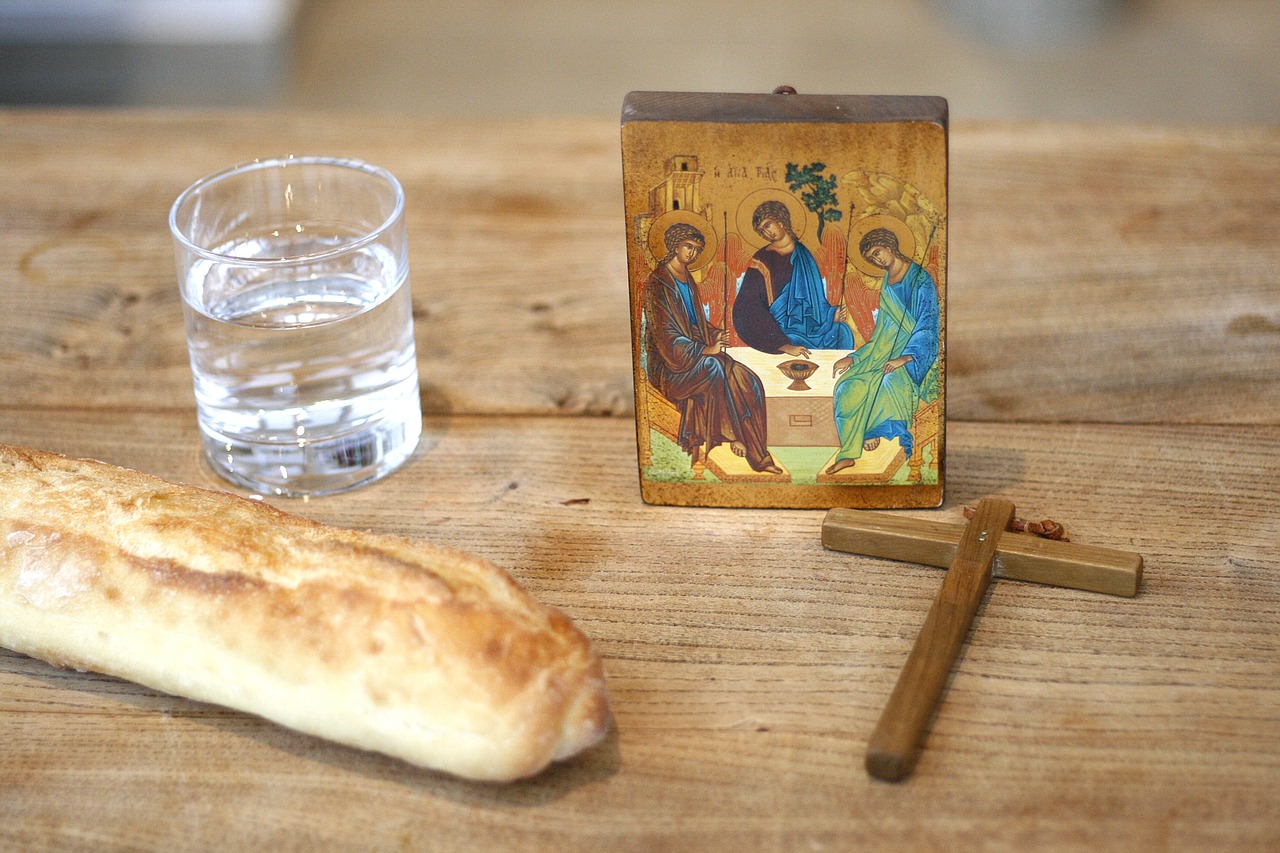
Free image from needpix.com. Public Domain.

We begin our Circuit Lent Sermon Series on Lent not with the temptations of Jesus but with a simple question: why Lent?

Historically, not every Christian has observed Lent. The Lenten fast began as part of the spiritual training for new converts who were going to be baptised on Easter Day, before it became more widespread.

But even today, it is not universal in the Christian Church. Many Christian traditions, especially of the more low-church and informal variety, do not observe it all, and some do not even know what it is.

Even among those who do take Lent seriously, it is misunderstood. We think that giving up something will be good for our physical health, and so we avoid sugary and fatty foods. Or – like one friend of mine – we give up something like social media. But it’s not about us.

Others realise it’s about God, but they think it shows him as a hard taskmaster who expects us to make sacrifices to earn his approval. But when was Christianity ever about that? The Gospel says we cannot earn God’s love, but he comes to us in grace and mercy through Jesus, and we respond.

Lent is about our response to God. It is about reorienting our lives towards Jesus.

And that’s why I chose the passage from Hebrews. This is what the author is calling his readers to do. He doesn’t want them to give up on Jesus, because that is what they are considering. They are Christians of a Jewish background, who are thinking about giving up on Jesus and reverting to Judaism to avoid persecution. But the writer has been saying throughout the letter, don’t do that. Look how amazing and superior Jesus is.

In this passage, he gives us three things to do that help us put our focus back on Jesus, and we’ll consider them this morning. All of them rely on the metaphor of a race happening in an athletics stadium. It may be based on the ancient original Olympic Games.

Firstly, look at the crowd:
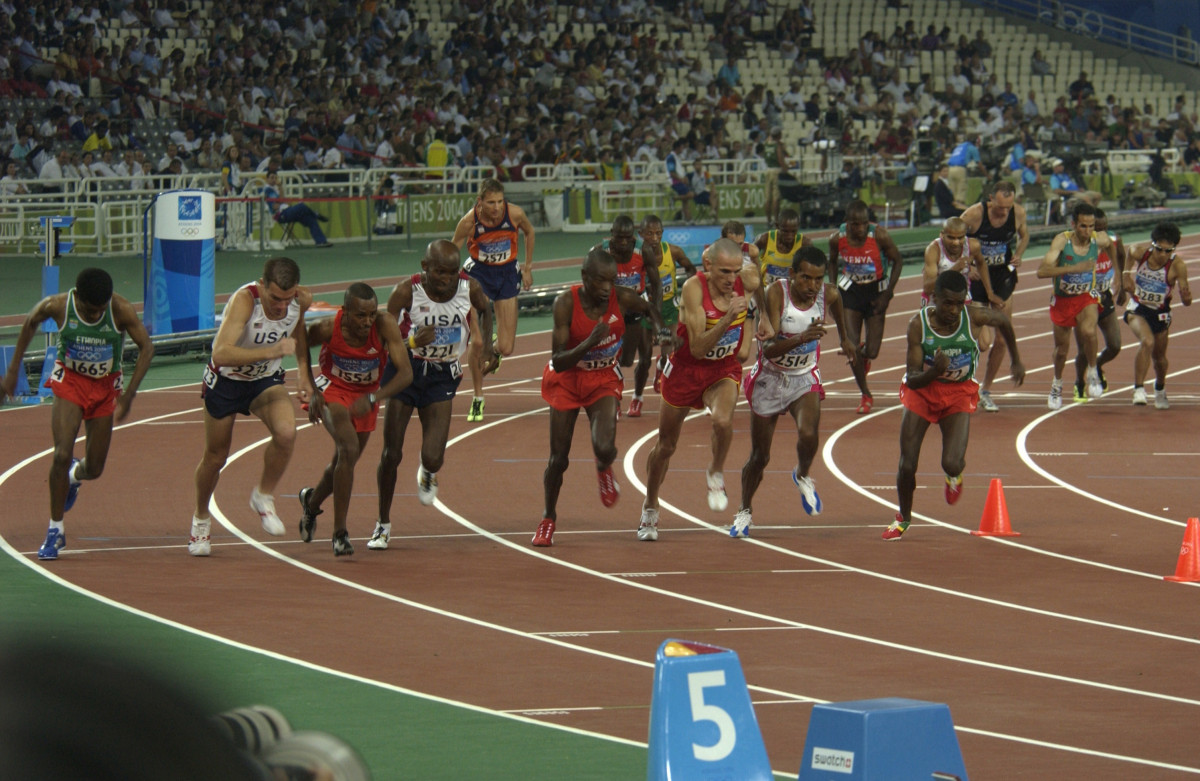
Olympics Athens 2004 at pxhere.com. Public Domain.

Therefore, since we are surrounded by so great a cloud of witnesses (verse 1a)

Who are this cloud of witnesses? They are the heroes of faith, down the centuries. Hebrews 11 has just given a long list of them, some of whom saw great victories, others of whom suffered their way to glory. Now, says the writer, these people are the spectators in the stadium cheering on those who are in the race of faith today.

This, I believe, is what we call in the Creed ‘the communion of saints.’ The faithful down the ages are watching us and rooting for us. While I am not convinced as my Catholic friends are that we can address them in a kind of prayer, I do rather think that if they are a cloud of witnesses watching us they are likely to be praying for us in Heaven.

Let us be encouraged by this. None of these heavenly spectators will boo us, they will only egg us on to victory.

And as we run for Jesus today, let us also be encouraged by the fact that the lives of these spiritual heroes are there as an example to us of how to set about our task. We can learn so much from the lives of the saints in the Bible, church history, and today. (And incidentally, when I say ‘saint’, I mean more than those formally recognised as such by the Vatican.)

If you have ever wondered why in the prayers of intercession we often give thanks for the lives of those who have died in Christ, now you know. They are our supporters’ club. Not only do they urge us to keep pressing on, we can look at how they lived the race of faith and learn from them.

Who has been a great example to you of how to live for Jesus? Was it someone in the pages of Scripture? Did you read about a spiritual giant in a book? Did a preacher tell amazing stories about someone who gave their all for Christ? Was it someone you knew personally in the church, whose life shaped yours? Maybe they even mentored you in some way.

Treasure these people. They are a gift of God to you. Rejoice that God has used them to point you in the direction of Jesus. Let them be an encouragement. And let them mould your life.

Secondly, put down your kit:

Hands On Starting Line by Boom Photography at pexels.com. Public Domain.

let us also lay aside every weight and the sin that clings so closely (verse 1b)

If you have ever watched a track event in an athletics meet, you will have seen that the competitors have a small number of possessions that they bring with them onto the track, but which they leave in a box. These things may be useful to them, but they will be a hindrance to them in running the race.

And so here the writer tells us not only to lay aside our sins, which we would expect, but also to ‘lay aside every weight.’ There are things in our lives which may not of themselves be sins, but which will weigh us down and thus seriously slow us in the race of faith. They may be good things or neutral things. They may be items that are appropriate at other times but not now. They may well be good servants but bad masters, because we have allowed them to have too much importance in our lives. We may have focussed on them instead of Jesus.

What kind of things? Money, food, possessions, work, even relationships. All of these things are in principle good. They are even gifts of God. But when we get out of perspective about them, when we give them too much importance, when they fill our vision instead of Jesus, then they become the stuff that we need to lay aside – maybe permanently, maybe for a season.

This is one of the reasons that the Christian discipline of fasting is so helpful in reorienting ourselves towards Jesus. We need money, but Jesus is essential. We need food, but we need Jesus more. We live in a material world and so material goods are necessary, but they do not rank above Jesus. Work was invented by God, but we need him more. Relationships were one of God’s best ideas, but a mere human being cannot meet our most fundamental needs: only Christ can do that.

Therefore, we lay one or more of these aside, perhaps for a season or perhaps permanently. Not only does it help us focus on Jesus ourselves and remind us that he is Number One, our actions become an example to the world.

So for example, I do not personally believe that all Christians should be teetotal, but God will call some of his followers to do that so the world has a witness that you can live a fulfilled life without alcohol, because fulfilment comes in Christ. He will also call some Christians to a life of celibacy, to show our sex-saturated world that the idol of Eros can be dethroned, and there is a greater and truer God.

If there is something getting in the way of our devotion to Christ, even if it is not a bad thing in itself, then maybe that is what God wants us to give up this Lent, either temporarily or permanently.

Thirdly and finally, run with perseverance:
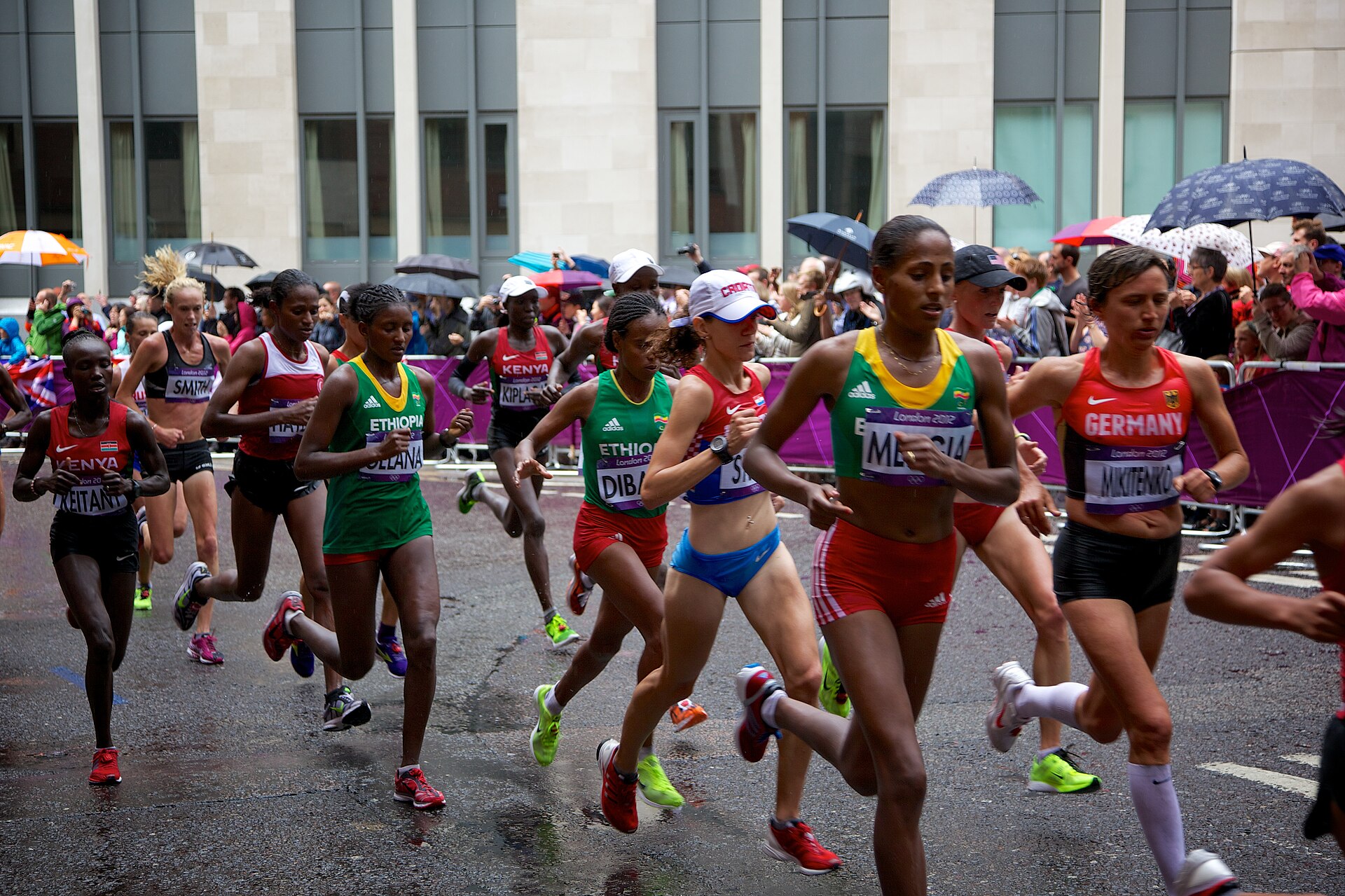
Women’s Marathon London 2012 Olympics at Wikimedia Commons. CC 2.0.

and let us run with perseverance the race that is set before us (Verse 1c)

Let there be no doubt: the race of faith is a marathon, not a sprint. When we are younger, we throw ourselves into things with great enthusiasm and it’s wonderful, but we run the risk of burnout and failure because we think we are running the hundred metres. We need to pace ourselves and be ready for the fact that a key quality we shall need is endurance.

Marathon runners speak of a stage well into the race where they feel they can’t go on any further. They call it ‘hitting the wall.’ However, experience tells them that if they persevere through that phase, they will go on to the fulfilment of completing the race.

There will be those of us in our lives of faith who have hit a wall. Something will have happened that has left us thinking we can’t go on. For some, it is a crisis; for others, it is simply that we get worn down by things over a long period of time.

How, then, do we run with perseverance? How do we break through the wall? The writer to the Hebrews tells us:

looking to Jesus the pioneer and perfecter of our faith, who for the sake of the joy that was set before him endured the cross, disregarding its shame, and has taken his seat at the right hand of the throne of God. (Verse 2)

Jesus is waiting beyond the finish line for us. He too had to persevere. He hit the wall, and it was a terrible experience. It was the Cross. But Jesus knew that beyond the wall of the Cross was unutterable joy. The Resurrection. His Ascension.

We don’t just have the cloud of witnesses cheering us on. We have Jesus himself. He knows what it is to hit the deepest darkness in life, love, and faith. But he has hope for us. He was able to run his race with perseverance, because he knew what lay beyond it. His Father would vindicate him, and he would reign in glory.

We too have a vision of glory to keep us going. It’s not the end until we reach glory. Our destiny is to be with him, first of all in Heaven after death, and then in the New Creation after the resurrection of the dead, celebrating the banquet of God’s kingdom.

In the meantime, we shall have trials along the way. God may use them for good to discipline us as better runners, says the writer (verses 5-11).

But hold your head up. If you fall, get up again, because God in Christ forgives us. Take heart, take courage, get your focus back on Jesus and keep running.

Welcome to Lent.

Lent Crown of Thorns at needpix.com. Public Domain.

My Memory Of John Stott

Yesterday evening, reports appeared on the web that John Stott had passed away yesterday afternoon at the age of 90. (This search will take you to about two hundred stories in Google News at the time of typing.) Obituaries cover his evangelism, his leadership of All Souls, Langham Place, his key place with Billy Graham in the Lausanne Movement, his commitment to social action as core to evangelical understandings of mission, his clear Bible teaching, his concern for the Majority World, his love of birdwatching and much more. I particularly recommend Christianity Today’s obituary.
More concisely, Maggi Dawn has described him this morning on Twitter as

 The most compassionate, sane evangelical Christian I ever met.

I have read many of his books. Favourites of mine include his expositions of Acts and Ephesians (the latter is particularly worn and battered). However, I only heard him preach once. I was training for the ministry in Manchester at the time, and he came to preach one evening at the local Anglican church, which had a large student ministry. Dr Stott agreed to stay behind afterwards and field questions.
I attended that meeting. I was engaged in my postgraduate research in Theology, specialising in ecclesiology, the doctrine of the Church. I asked him a question. Why did he think Archbishop Robert Runcie had chided evangelical Anglicans at the third National Evangelical Anglican Congress in 1987 that

‘If the current evangelical renewal in the Church of England is to have a lasting impact, then there must be more explicit attention given to the doctrine of the church’?

Dr Stott gently batted the question back at me, with quiet grace and a faintly sparkling smile. “Why do you think he did?”
I had no sense that he was trying to dodge the question. Rather, like Jesus, he knew that questions could be more deeply explored by asking further questions. He wasn’t short of answers himself, and for those who want to know, it is worth reading his book The Living Church.

Farewell, then, in this life, to one of the most gracious, compassionate  and hard-thinking evangelical Christians to have come to prominence in the last century. May more of us in that tradition seek to emulate his example.

Weddings And Royal Weddings

If you believed the media, nearly all of us are getting excited about the Royal Wedding on Friday week. Well, not all of us: I noticed that BBC1 are showing a repeat of Shrek that afternoon, and the wedding in that cartoon is more appealing to me.

Not that I wish Wills and Kate any ill-will. Trial by media and marriage by media: no fun. They really do need prayer for a long and happy marriage.

But the coverage of all the royal frills will encourage all the existing wrong expectations people have of weddings. No expense spared – even if you haven’t got a royal budget. All about the day, rather than the life – the wedding, rather than the marriage. A focus on the couple, rather than on the mutual sacrifice that a marriage requires, as Giles Fraser recently got into trouble for saying on Radio 4’s Thought For The Day. The coverage of who’s attending – whereas, as Maggi Dawn recently commented, all you need is the vicar, the couple and two witnesses.

So it was a joy today to register a very different wedding. The bride runs a toy library that uses the hall of one of my churches. A year ago she found faith in Christ through an Alpha Course run by the local New Frontiers church, who worship on Sundays in a local secondary school. But without anyone haranguing her, she came to the conclusion that it was wrong in the sight of God to be living with her partner outside marriage. So at 11 am today she was married, and at 12 noon (in the building of another local church) she was baptised.

It was wonderful to co-operate with her pastor on the marriage ceremony. No trimmings – both bride and groom had had that for their first marriages, and they knew it made no difference. A simple service, with about twenty friends and family present. Not even any hymns, but some worship music on CD – even if the laptop misbehaved for the music during the signing of the register!

I think I’ll remember today’s wedding for longer than next week’s.

More News From The Health Front

This morning I’ve been gently jogging with my preparation to return to duty. The next several weeks will have quite a lot of primary school work, including several assemblies.

This afternoon was all medical. First, I went for my pre-op assessment ready for my nose job on the 19th. It wasn’t quite as straightforward as I hoped. 

The complication is my blood pressure. I’ve been seeing a practice nurse at our GP surgery for two years about. It has been reporting slightly high for comfort, around 140/90 instead of 120/80. Knowing that my body displays involuntary instant stress reactions, the decision was made to treat me not with a blood pressure drug, but a stress one, and so I have been on Propranalol in varying doses ever since. 

However, with the stress reactions, I tend towards what the medics call ‘White Coat Syndrome’. That is, I give higher readings in a surgery than the comfort of my own manse. So before my nurse appointments, I borrow a blood pressure machine for a week and take my own readings.

This afternoon at the hospital, out came the White Coat Syndrome. With a vengeance. 170/116. The nurse who interviewed me was relaxed given the background, but the doctor wasn’t. He said that if my body went into stress on admission day, then it really wouldn’t matter if WCS was the cause, an anaesthetist would say that the surgery shouldn’t proceed. I needed to see my GP urgently.

Which, fortunately, I was already booked to do later this afternoon. I had gone for my annual blood test on Monday, and on Wednesday the surgery had rung, asking me to make an appointment with a doctor, because my cholesterol was high. The GP said we’d better not bother about the cholesterol for now and just concentrate on the blood pressure. He couldn’t understand why I’d never been put on proper BP medication as well as the Propranalol, and promptly prescribed it. He also asked me to book an ECG with one of the nurses, and take another blood test in a month to ensure the new medication wasn’t interfering untowardly with my kidneys. So now we hope the new drug has enough effect in the next ten days for me to have the nasal operation as planned.

Beyond that, here’s my favourite link of the day: Maggi Dawn on why the legalities associated with marriage were brought in to protect women.

Sabbatical, Day 85: Random Links And Thoughts

 There’s not a lot to report today on the cat front. Debbie had a long phone conversation with a woman who runs what amounts to a clearing house for people who cannot keep their pets. We’ve expressed an interest in two separate pairs of cats, and now await a call back regarding arrangements to visit them.

In the area of church and sabbatical, there is also little to say today for delicate reasons.

So instead of the usual, I offer you a pot-pourri. (No, not popery, Mr Paisley.)

Here are some interesting links I came across. 

Some Video Fun 
How about Queen’s Bohemian Rhapsody played on old school computer equipment?

(Via the weekly Mojo magazine email.) 

Here’s a parody of the Christian worship – ahem – ‘industry’:


Jesus Stuff 

Not a link, but a couple of great quotes from an interview with J John in the Summer 2009 issue of New Wine magazine, pages 10 and 11:

If we are all witnesses, does that mean we are all evangelists? 
Not everyone is an evangelist, but everyone is a witness. In a court of law, you have a lawyer who takes the facts and presents them in a convincing manner. As an evangelist, that’s what I do. I take the facts and try to get people to the point where they are convinced that Christianity is true. An evangelist will communicate much more of the substance of Christianity.

But if you are a follower of Jesus, then you are a witness. And a witness in the court stands up and says, ‘Well I don’t know very much, but let me tell you my story.’ Everyone that’s a follower of Jesus has a testimony of what Jesus has done for them. Therefore everyone can answer. It’s not hard at all.

How do you approach people of other faiths? 
I don’t get defensive. Rather, I ask questions such as: in what way does your faith help you in your life, give you confidence for the future or help you face death? I reveal cracks in their philosophy and show them that in Christ, we have a confidence and a hope. But I wouldn’t ever put people down. All we have to do is lift Jesus up.

(This material copyright New Wine Magazine and used with permission.)

Chopping down the Sunday tree: radical thoughts on how to approach a potentially dying church from Graham Peacock. HT: Maggi Dawn.

Mr Tweet recommended Mike Todd on Twitter to me. I found his blog, Waving Or Drowning, and among a feast of riches I found in this post a brilliant quote from Brian McLaren about what Christians might consider to be a proper view from the economic crisis. Do read it. He says that we might contemplate recovery in the way an addict does, in which case we don’t want recovery to be a return to our old addictive highs, but a facing of the addictions.

Tech
1st Web Designer: 28 Online Photo Editing Sites To Have Fun With – via@problogger.

Read-Write Web has great first impressions of Wolfram-Alpha, not a ‘Google killer’ search engine but a ‘computational knowledge engine’ that will cross over into Wikipedia‘s domain. TechCrunch reports there will be a public preview on Tuesday, streamed live from Harvard.

Sabbatical, Day 74: Father And Son

Today, Rebekah headed off for a two-day sleepover with her old childminder, ‘Aunt’ Pat. She will be spoiled rotten have some belated birthday treats, including her first ever ice skating trip and her first visit to the cinema. Debbie took her down to Kent today, leaving Mark and me to have ‘boys’ time’ together. I never want Mark to feel he has a distant father – I’ve seen the damage that causes – so this was a great opportunity.

Our time was constrained by having to wait in for a Tesco delivery, but after that arrived and I had put it all away (no help from Monkey Boy, who was too busy reading and writing), we decided upon an early lunch and a trip to town. 

One snag: Debbie had driven off with both the children’s car seats in her car, leaving me unable to drive Mark safely and legally into town. However, we made a virtue of that. I researched bus times, and we walked to the nearest stop to catch one into the bus station. 

(In passing, Chelmsford’s bus station was infamous when it was first opened two years ago. Someone had the splendid idea of locating it almost opposite the train station. Someone else made the mistake of designing it so that buses couldn’t turn properly. A blame game between the Borough Council and the County Council proceeded. Fortunately, it’s fine now.) 

In readiness for our trip to town, I had printed off a map of the town centre from Streetmap. Mark wanted to indulge his current favourite pastime: spotting CCTV cameras. My task as his humble assistant was to mark every single one he saw on the map. He also likes to spot burglar alarms and satellite dishes, but thankfully he didn’t look for them as well today. As it was, every few seconds, he would point, jump and squeak in a frequency more congenial to canine ears, “CCTV!”

The height of the obsession was when we passed a jeweller’s in the High Street. Mark recognises the yellow sign warning burglars that cameras are fitted at a premises. He saw the sticker on the door of the jeweller’s, and dragged me in to find the cameras. I don’t know what the staff thought: was a four-year-old casing their joint? Or was he a stooge for the strange man with him? 

Eventually, after a roundabout ride, visits to both branches of Waterstone’s and a bag of doughnuts, he tired and wanted to head home for some milk. 

So what do we make of his behaviour, and how can I use it as a sermon illustration? Is he: 

(1) showing early signs of Obsessive-Compulsive Disorder? If so, does this reflect the things we obsess on in churches?

(2) majoring on minors? Again, think about the subject of church disputes.

(3) providing a prophetic critique of a troubling phenomenon in our society that shows how little we trust each other?

Oh, by the way. I’m not serious.

…………

More personal news briefly: first of all, two of the key books I wanted for researching views of ordained ministry finally came today from Amazon. Will Willimon‘s ‘Pastor: The Theology and Practice of Ordained Ministry‘ and Ritva Williams’ ‘Stewards, Prophets, Keepers of the Word: Leadership in the Early Church‘.

Secondly, my life on Twitter has exploded since last night. It all started when Maggi Dawn began following my feed. (Heaven knows why she wants to, let alone how she’d come across me, but I’m grateful.) I started looking at who followed her and whom she followed, adding quite a few as I went. All sorts of other followers then started appearing. I’m keeping an eye to make sure they’re not the Twitter version of stalkers. Hopefully not. A number of the people I’ve found provide genuinely useful information. For example, Religious Intelligence has all sorts of interesting news story about religious issues from around the world.

And with that I’ll bid you goodnight as I check the last few tweets that have come in before logging off for the night.

Blogs On The London Bombings

Lawrence Moore has a perceptive piece: Let’s Stop Pretending Suicide Bombers Are Cowards.

Maggi Dawn has this prayer from Richard Harries, Bishop of Oxford.

Then there’s this from Tall Skinny Kiwi. I wish I shared his confidence that it was because this nation was doing the will of God. Although in some sense we are, regarding international debt. But was it really a spiritual attack in the light of the G8?

Others can only talk about people who were miraculously protected. Jonny Baker is one who was at home when he should have been in central London. Well, yes, but I’ve heard of at least one known Christian who was killed.

Are we getting over-spiritual and forgetting the timing of the day after the Olympics and the thought that the Games could be disrupted? Is it not more likely due to reasons our nation is already hated, viz a viz Iraq, etc.? Maybe we’ve over-spiritualised the atrocity.

Planning V Spontaneity

Maggi Dawn has a good post on this subject. Here are the thoughts I posted in response:

Coming from Methodism, which ostensibly holds together both those of a ‘written liturgy’ approach and those who claim to be non-liturgical, and being someone who finds strength in both approaches, I am often reminded of the early twentieth century Congregationalist leader who said that extempore prayer is ‘preaching with eyes closed’. Or I recall visiting friends who in the 1980s were students at Moorlands Bible College. They were on placement with a Brethren Assembly. My friends were Anglican and FIEC by their roots. They were both cynical about the issue of when in the morning service one of the men (and yes, sorry, it was men) would feel led to move into the breaking of the bread. “You watch,” they said, “the Spirit always moves at 11:45.” Sure enough …

Create a website or blog at WordPress.com

Up ↑