RHS Wisley ‘Glow’ event, 3rd December 2020. Image copyright (C) Dave Faulkner.
Merry Christmas. I guess some of us could do with a Merry Christmas this year. It might be because of the national and international situation. The cost of living. Having to work longer before retirement. The difficulty of getting on the housing ladder. The threat of AI taking people’s jobs.
Or it might be that a Merry Christmas would cheer us up in the face of personal circumstances. A loved one has a serious illness. Family troubles.
Are we too ‘The people walking in darkness’ that Isaiah spoke of? It certainly feels like it at times.
The people of Judah in Isaiah’s day had all sorts of political troubles. They feared invasion by Assyria, who had already taken over the northern kingdom of Israel. And it was worse for them, because they had no way of voting in a new government. Imagine what good news it is to hear Isaiah saying that ‘The people walking in darkness have seen a great light.’
And Isaiah describes the one who is that great light:
6 For to us a child is born, to us a son is given, and the government will be on his shoulders. And he will be called Wonderful Counsellor, Mighty God, Everlasting Father, Prince of Peace.
If the government were to be on his shoulders, they will think this is a political leader, a king. But they will be disappointed. No king in their day fulfils these hopes. Just like us, they pin their hopes on politicians, only to be let down.
The prophecy is only fulfilled in Jesus. He came as the hope of Israel. He is our hope, too. He is the
Wonderful Counsellor, Mighty God, Everlasting Father, Prince of Peace.
But what do those titles mean? And what do they mean for us?
Well, they go in pairs. The Wonderful Counsellor is the Mighty God, and the Everlasting Father is the Prince of Peace.
Firstly, the Wonderful Counsellor is the Mighty God:
The word ‘counsellor’ here doesn’t so much mean an adviser or someone who listens to your problems. It is to do with someone who makes plans. It is a ‘wonder planner.’[1] The mighty God makes wonderful plans for his people.
And you might be cynical about that, especially if you are going through bad times.
But let me tell you about someone who went through terrible times but still had faith in this God. Corrie ten Boom was a Dutch woman who, along with her father Casper and sister Betsy, in World War Two, hid Jews from the Nazis. When they were discovered, they were arrested. Casper died ten days later. The sisters were put in a concentration camp. Betsy died there. Corrie survived.
After the war, she spoke widely and wrote about her experiences and her faith in those dark times. Towards the end of her life, she said she had lived by the promises of God in the Bible while in the concentration camp and found them all to be true. She observed,
When a train goes through a tunnel and it gets dark, you don’t throw away the ticket and jump off.[2]
One of her most famous quotes about God is this:
There is no pit so deep, that He is not deeper still.
She lived and died by that faith. She knew that the good plans of the mighty God for her were seen in Jesus, who came into the darkness of this world, and even died unjustly. But God worked for good in that.
Are you in a deep pit in your life? I invite you to trust Jesus, who is deeper than your pit. God sent him to be with you, to be alongside you by his Spirit, and to bring hope and light in your darkness.
Secondly, the Everlasting Father is the Prince of Peace:
How do we Christians understand the title ‘Everlasting Father’ when Jesus is not God the Father but God the Son? ‘Everlasting Father’ here is an extravagant ancient description of a king’s relationship with his people[3]. The king who ultimately fulfils Isaiah’s prophecy will be the Prince of Peace.
And that is Jesus. ‘Peace on earth, goodwill to all on whom his favour rests.’
Do you need peace in your life? Perhaps you feel you can never be forgiven for something that has left you with deep shame. Jesus can resolve that. He died on the Cross for you. Nothing is too big for him.
Perhaps you are dealing with the pain of broken relationships. Jesus can help. He can show the way to reconciliation through forgiveness, bearing one another’s burdens, and a commitment to truth and justice. And if the other parties will not respond, he can hold you in the certainty of his love.
Or maybe you are worried by the state of the world, as warmongers and aggressive and violent national leaders take centre stage. We can’t control the actions of others, although we can pray. We know that if those who made a lot of their support for Christianity would actually follow Jesus, things would be different. In the meantime, this too is another case of there being no pit so deep that Jesus isn’t deeper still. He will hold us in the storm.
And one day, as the mighty king, he will put all things right.
Conclusion
I don’t want to give you a long address in a Christmas Eve service. But I do want us all to know as we head towards Christmas Day that Jesus is the best present ever. We can begin and have a lifetime of unwrapping all that he is.
[1] John Goldingay, Isaiah (New International Biblical Commentary), p73.
(Bethlehem) The 3 Wisemen were killed attempting to enter the U.S. early this morning. They were still hundreds of miles away from the actual border, but the White House determined there wasn’t time to actually investigate their suspicions.
A White House spokesperson said, “We could tell from the satellite photos that these were bad people. They had gold (probably stolen), myrrh and something that was possibly fentanyl. It was hard to tell from the picture, but the President knew just enough to kill them without an actual investigation.”
…
Also arrested were two immigrants named Joseph and Mary, an unnamed child, and an angel. The White House elaborated, “We can tell you that the two suspects were trying to check into a hotel. When asked if they were married, they responded that they were “betrothed.” We can’t have people flaunting Christian moral conventions at this sacred time of the year.
“The undocumented mother was also secretly recorded as saying “(God) has brought down rulers from their thrones, and has lifted up the humble. God has filled the hungry with good things but has sent the rich away empty.” That sounds like communism, pure and simple. These were probably Antifa terrorists.”
I could read you much more, but I don’t have time!
In amidst all our cosy preparations, with Christmas adverts that tug at the heart-strings like this year’s Waitrose ad, we miss the fact that the coming of the Messiah is much more messy and radical. And I don’t mean the mess in the manger.
It’s about regime change.
Sometimes, we get so fed up with our leaders we want change. Maybe we don’t do it like some powerful nations do, where they act nefariously in another country to change the leadership. But look at last year’s General Election here. Broadly speaking, the country was so fed up with the Conservatives that people voted for anyone who wasn’t Conservative. It wasn’t so much a vote for, as a vote against. No wonder the Labour majority was called a ‘loveless landslide.’
In the ancient world, of course the general population didn’t have a say, but kings were replaced and sometimes entire dynasties were removed. It was their version of regime change.
Isaiah 11 proposes the most radical regime change of all. A regime change that brings in the Messiah. Verse 1:
A shoot will come up from the stump of Jesse; from his roots a Branch will bear fruit.
Not even a shoot from the stump of David, for he was far from perfect. An adulterer, it not actually a rapist, and a murderer. The greatest king of all had his faults. Instead, Isaiah prepares us to sing
Hail to the Lord’s Anointed, Great David’s greater Son![1]
So what will characterise the much-needed Messiah, who alone can bring true regime change?
Three qualities:
Firstly, wisdom:
2 The Spirit of the Lord will rest on him – the Spirit of wisdom and of understanding, the Spirit of counsel and of might, the Spirit of the knowledge and fear of the Lord – 3 and he will delight in the fear of the Lord.
Do you recognise these words? We have adapted them for the laying-on of hands at Confirmation and Reception into Membership of the Methodist Church. The minister prays this for the candidates:
By your power and grace, Lord, strengthen these your servants, that they may live as faithful disciples of Jesus Christ. Increase in them your gifts of grace, and fill them with your Holy Spirit: the Spirit of wisdom and understanding; the Spirit of discernment and inner strength; the Spirit of knowledge, holiness, and awe.[2]
And doubtless we expect the Holy Spirit to impart these qualities: wisdom, understanding, discernment, inner strength, knowledge, holiness, and awe. I’m sure it’s right to expect that.
Wisdom: Public Domain Pictures
But there is a specific context to these qualities of wisdom in Isaiah 11. All of the qualities he lists – wisdom and understanding, counsel and might, the knowledge and fear of the Lord – are lacking in the people of Judah and also of their enemies, such as Assyria. There are various quotes in the preceding two or three chapters that illustrate this.[3]
The Messiah is the One who brings true godly wisdom without lack – we might say it’s wisdom, the whole wisdom, and nothing but the wisdom of God.
When Jesus comes and begins his ministry in the power of the Spirit, we see this without a shadow of a doubt. In Matthew’s Gospel, there are five blocks of Jesus’ teaching, reinforcing the fact that here is the ‘One greater than Moses’ who was prophesied, given that there are five books colloquially known as ‘The Five Books of Moses’ in the Old Testament.
We can gain wisdom from other sources, but nothing is like the wisdom of Jesus. It’s why our high church friends stand for the Gospel reading in worship. They are saying, here is the centre of divine wisdom and revelation in the life and teaching of Jesus.
If we believe we are living under the regime change of the Messiah (which Christians are as citizens of God’s kingdom) then there is a clear application of this truth to us. To honour Jesus as the coming Messiah, our calling is to immerse ourselves in the wisdom of his teaching and commit ourselves to following it more fully.
For that, we too will need the Spirit – just as even Jesus himself, the Son of God, did, at his baptism.
If we are citizens of the coming kingdom, then this is what we do.
Secondly, justice:
He will not judge by what he sees with his eyes, or decide by what he hears with his ears; 4 but with righteousness he will judge the needy, with justice he will give decisions for the poor of the earth. He will strike the earth with the rod of his mouth; with the breath of his lips he will slay the wicked. 5 Righteousness will be his belt and faithfulness the sash round his waist.
Justice. We all want that, don’t we? Our governments should deliver justice. Just so long as we are the ones who are in the right, and those we don’t like are condemned. And we’d like just to leave us feeling comfortable.
Lady Justice Silhouette: Public Domain Pictures
If those are our hopes, then the justice of the Messiah’s regime change will not be what we want. He will bless the poor and the needy (verse 4) – well, that won’t be so great for those of who are used to living with comfort and privilege. For to elevate them, to give them what they need and what is rightfully theirs will means less for us.
And as for all that uncouth talk about striking the earth with the rod of his mouth and slaying the wicked with the breath of his mouth – oh, we don’t like all that violent stuff, do we? Isn’t this one of those parts of the Bible we’d rather strike out? Where’s gentle Jesus, meek and mild? Where’s inclusive Jesus in that?
Or let’s be honest: where’s nice, cosy, liberal, middle-class Jesus?
I’m sorry: he doesn’t exist.
But show passages like these and the similar ones in Revelation that we like to dismiss as altogether too gory to those who are suffering for their faith, and they will rejoice in them. Through the Messiah, God will put things right! If we believe in a God of justice, we must not deny that he will deal with the impenitent.
However, it will be delayed. When Jesus comes and gives his manifesto as Messiah to the synagogue at Nazareth in Luke 4, he reads from Isaiah 61, but he stops before it goes on to talk about ‘the day of vengeance of our God.’ That is coming, but not yet.
Why? Because in his mercy, the Messiah offers the opportunity for even the most reprehensible to repent and amend their ways.
But Jesus is indeed coming to bring good news for the poor. He is coming, as his mother prophesied in the Magnificat, to bring down rulers from their thrones, lift up the humble, fill the hungry with good things, and sent the rich away empty. This is what regime change under the Messiah looks like.
And so again, our duty as citizens of that coming kingdom can be stated very simply, even if it is challenging to implement. It is to advocate for the poor and challenge the powerful.
Thirdly and finally, peace:
6 The wolf will live with the lamb, the leopard will lie down with the goat, the calf and the lion and the yearling together; and a little child will lead them. 7 The cow will feed with the bear, their young will lie down together, and the lion will eat straw like the ox. 8 The infant will play near the cobra’s den, and the young child will put its hand into the viper’s nest. 9 They will neither harm nor destroy on all my holy mountain, for the earth will be filled with the knowledge of the Lord as the waters cover the sea.
The thought of peace between different animals is appealing. As you know, we are dog lovers, and our cocker spaniel can be a bit of a grumpy old man with other animals, especially other dogs, and most notably on his night-time walk. There’s something about the dark. We have taken to referring to one other dog on our estate as ‘Enemy Dog’, because ours has taken a particular dislike to the red flashing light he wears on his collar at night. The wolf will live with the lamb, the leopard will lie down with the goat, the calf, the lion, and the yearling together? I’d vote for that.
Sadly, we’re dealing with prophetic imagery here rather than a literal prediction. As John Goldingay, the scholar I cited last week, says here:
Context suggests that the talk of harmony in the animal world is a metaphor for harmony in the human world. … A literal interpretation of verses 6-8 would also have difficulty in explaining how wolves and leopards can remain themselves if they lie down with lambs and goats.[4]
So what is the metaphor saying? Goldingay again:
The strong and powerful live together with the weak and powerless because the latter can believe that the former are no longer seeking to devour them.[5]
The Messiah brings together and reconciles the strong and the weak, the powerful and the powerless. They are not divided, they are family. No-one takes advantage of anyone else. What matters in relationships is everybody’s well-being. The ‘goodwill to all on whom God’s favour rests’ that the angels spoke about to the shepherds becomes ‘goodwill among all’.
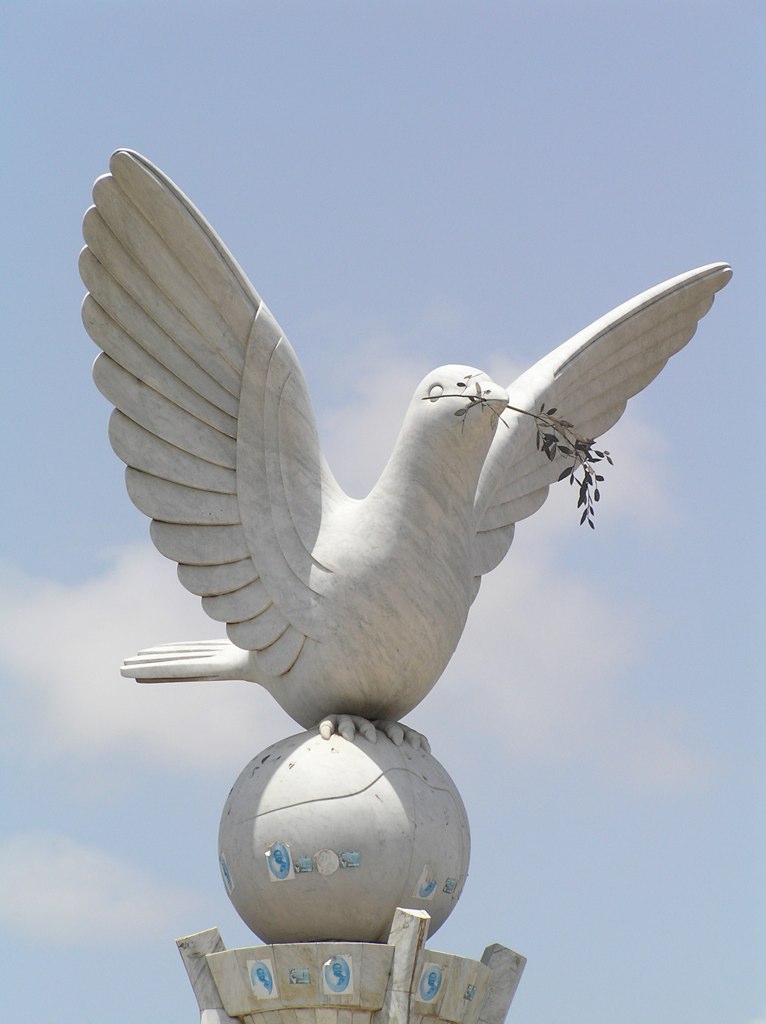
Peace dove: Wikimedia Commons CC 2.0
What does this sound like? Well, to me it sounds like what Jesus always intended his church to be. The redeemed community, the colony of God’s kingdom, is to be the place where the rich and the poor, the highly educated and the barely literate, Europeans, Africans and Asians, the neurotypical and the neurodivergent, old and young, male and female, all care for one another and promote each other’s welfare. Because that’s what Jesus does. That’s the sort of society the Messiah builds.
And imagine not only enjoying a fellowship like that (even though it entails hard and painful work at times). Imagine also inviting someone in to experience it, and being able to say, this is what life is like when Jesus is in charge.
Indeed, this is what regime change under Messiah Jesus brings.
Wine Advent Calendar by In Good Taste. No alterations. CC Licence 4.0.
In among the monsoon of Black Friday emails that have taken over my inbox were links to a fashion of recent years that I have railed against in previous Advent seasons. The luxury Advent calendar.
This year, you could buy not only a perfume Advent calendar, but also a wine Advent calendar. And I thought, I hope someone doesn’t receive both and then confuses the two.
Or maybe it would serve them right!
These luxury Advent calendars show that if Advent means anything in our wider society today, it is that Advent is a countdown to indulgence.
We may respond by saying no, it’s a countdown to the birth of the Messiah.
But we too would be wrong if we said that – at least historically. For in the tradition of the Church, Advent begins with a countdown to focussing on the return of the Messiah.
Like so many, we yearn for the day when evil and suffering will be abolished. Like many critics of faith, we too struggle with why God allows sin and strife in the meantime.
But what we have is a hope based in the promises of God, and which we have glimpsed in the Resurrection of Jesus.
Ancient Israel had her hopes, and we read one such vision in Isaiah 2. We read it, not only for what it is, but through a Christian lens. We believe this prophecy of Isaiah is fulfilled in what is often called the ‘Second Coming’. We believe in a hope described by the New Testament Greek word Parousia, which is often translated as ‘coming’, but which is better translated as ‘appearing’ or ‘royal presence.’
So, when Jesus appears again as King of all creation, what will be the effects of his reign, and what do they mean for us now?
Firstly, blessing for God’s people:
2 In the last days
the mountain of the Lord’s temple will be established as the highest of the mountains; it will be exalted above the hills, and all nations will stream to it.
‘In the last days’ here is literally ‘at the close of the days’ – that is, when God’s promises come to fulfilment[1].
Originally, Jerusalem stood at a height below the surrounding mountains. Yet here, Isaiah is inspired to see it elevated in a way consistent with its spiritual significance. God has elevated the city.[2]
God blesses his people. As Psalm 3:3 says,
But you, Lord, are a shield around me, my glory, the One who lifts my head high.
God raises his people to their full dignity. In his presence, he makes them into all they were intended to be.
One Sunday when I was at my Anglican college in Bristol, one of my friends invited a few of us to go with him to worship that evening at an independent charismatic church. His contact was a girl he knew. We all went to her house first, and she led us to the place where her church met. She was a plain-looking young woman of unremarkable appearance.
During the service there was an extended time of sung worship. At one point, I looked around the congregation. Wow, I thought: who is that beautiful girl?
I expect you’ve guessed. It was the apparently plain girl who had taken us there. But caught up in the worship and adoration of God, the presence of the Spirit made her into something more.
And I believe that is something of our hope. Just as Jerusalem is elevated in the vision of Isaiah, so God’s people are elevated in the royal presence of God.
It happens already by the Holy Spirit. It will be fulfilled in the coming of Jesus.
I have long believed that the work of the Holy Spirit in us is not to make us less human, as if God wanted us to be religious robots, but rather to make us more human than we’ve ever been. Our gifts are enhanced. Our talents are increased. Our holy desires are raised. As Isaiah saw Jerusalem being raised and exalted, so our destiny is to become everything that God ever intended us to be.
This is not just about ‘religious’ spiritual gifts. It is to do with everything about us. Alison’s admin will be even more on point. Tim’s photos will be even more amazing. Angela’s hospitality will be warmer than ever. Jessica’s tech abilities will be through the roof.
I’m sure that’s something to anticipate with joy and maybe even excitement. But in the meantime, as a sign to the world of all that is to come, let us be open to the Spirit in every part of our lives as God works on this project of elevating us to become more of whom we were always intended to be.
Secondly, blessing for the nations:
3 Many peoples will come and say, ‘Come, let us go up to the mountain of the Lord, to the temple of the God of Jacob. He will teach us his ways, so that we may walk in his paths.’ The law will go out from Zion, the word of the Lord from Jerusalem. 4 He will judge between the nations and will settle disputes for many peoples. They will beat their swords into ploughshares and their spears into pruning hooks. Nation will not take up sword against nation, nor will they train for war any more.
This makes me remember the passage I used on Remembrance Sunday this year, namely Revelation 22:1-5, where ‘the leaves of the tree [of life] are for the healing of the nations’ (verse 2).
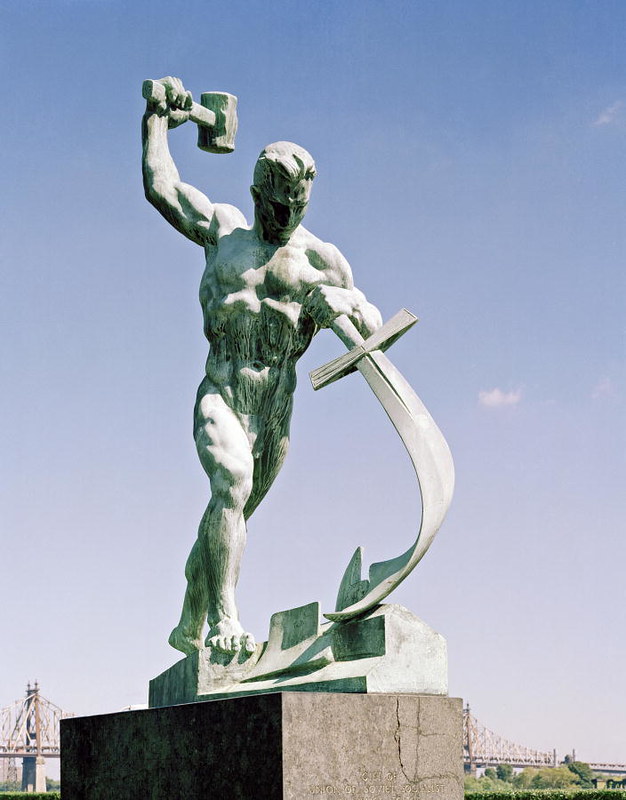
Let Us Beat Our Swords Into Ploughshares. UN Photo/Andrea Brizzi. CC Licence CC BY-NC-ND 2.0
In the New Jerusalem, when God teaches his ways there will be the resolution of disputes between peoples and nations, and the end of all war. How we long for such a day. Swords into ploughshares and spears into pruning hooks indeed.
Because the New Jerusalem is a place of peace, reconciliation, and justice. Not for the life of the world to come the spectacle of a President lusting after the Nobel Peace Prize while renaming the Department of Defence as the Department of War, while sending quasi-military officers to arrest citizens purely due to the colour of their skin and with no due process, all the while selling Ukraine down the river to his fascist buddy in the Kremlin who probably has dirt on him. That is not peace.
No. The peace of the New Jerusalem will not be the fruit of armed strength but of the Son of God suffering in love on the Cross. The peace of the New Jerusalem will not be about the imposition of a stronger will, because the Cross says otherwise. The peace of the New Jerusalem will not be about finding some compromise halfway in between the positions of two intractable sides but will be based on the truth of God. As we heard in verse 3, ‘He will teach us his ways so that we can walk in his paths.’
Well, what about now? As future citizens of the New Jerusalem, God calls us to point to this future reality by our witness in this life. Can we be people who learn the skills of reconciliation? Can we learn how to transform conflict into peace and harmony? Can we be examples of that in our own relationships? Where are the broken people and broken places in our world to which God is calling us to demonstrate his ways of healing?
Maybe it’s in families. Or in communities. Or in workplaces. Or on a larger stage. But we may be sure, these are the very spaces which God calls his people to inhabit and to serve as a sign of hope in his coming New Jerusalem.
Thirdly and finally, blessing in the here and now:
5 Come, descendants of Jacob, let us walk in the light of the Lord.
I’ve been relying this week on the work of the Old Testament scholar John Goldingay to guide my thoughts in understanding this passage. He says that the image of light points in some places to themes of truth or revelation, but not here. ‘The light of the Lord’ has to do with God’s face and hence, God’s blessing. To live in the light of the Lord is to live by his blessing[3].
We can let all sorts of things fire the way we live. It might be material gain. It might be our need for the approval of others. It might be about successful relationships and a good family life. It might be the desire to be recognised and respected. It might be to climb to the top of our profession.
Not all these things are entirely bad. But they cannot be ends in themselves, or they become idols. Isaiah points us to a better way, a way that enables us to live in the spirit of the Christian hope. It is a way that prepares us for the New Jerusalem.
‘Let us walk in the light of the Lord.’
Let us seek his blessing and respond to that. Where is God shining his light? Let us walk there.
Sometimes God shines a light in a place that is congenial to us, and it is easy to walk there and know his blessing. Other times he shines his light in unexpected and challenging places, and the call to walk there and discover blessing is trickier for us. It can be like that balance we hear in the preamble to the Covenant Service prayer every year:
Christ has many services to be done: some are easy, others are difficult; some bring honour, others bring reproach; some are suitable to our natural inclinations and material interests, others are contrary to both; in some we may please Christ and please ourselves; in others we cannot please Christ except by denying ourselves. Yet the power to do all these things is given to us in Christ, who strengthens us.[4]
Many ministers did not believe God could be shining his light in that direction as a way of bringing blessing, and some of us had to be dragged kicking and screaming towards that light. Other Christians have known sheer joy and delight in detecting where God was shining his light.
But the reason we do all this is in anticipation again of the New Jerusalem. For in that place, there will be no more night, there will be no more need for lamps or the Sun, because God himself will be the light. Hence, to walk in his light of blessing now is to prefigure that great day. It is to live in a small way now in the ways of eternity, when all our hopes will be fulfilled.
Conclusion
As we step into Advent again this year, may the Holy Spirit hold before us the prophetic vision of hope. May that vision of hope be a blessing that fortifies and energises us.
May we know such blessing that we grow ever more into being the gifted people our Father made us to be. May we offer such blessing that the world knows the Good News of reconciliation with God and with each other. May we walk in such blessing today as we follow God’s light and catch a glimpse of the glory to come.
[1] John Goldingay, New International Biblical Commentary: Isaiah, p42.
Some bonus blogs for you over the next few days, since one of my churches here likes to have some Holy Week meditations. The Lectionary Old Testament readings take the so-called ‘Servant Songs’ of Isaiah, and I’m reflecting on them.
I don’t have time for an accompanying video, but here at least is the text I have written.
Introduction to series[i] Since 1892, when a German Lutheran scholar named Bernhard Duhm published a commentary on Isaiah, the four ‘Servant Songs’ in Isaiah chapters 42, 49, 50, and 52-53 have been regarded as separate works that belong together in their own right and not in the context where they have been placed in the book.
But this was blown apart in 1983 by a Swedish scholar, Tryggve Mettinger. While Mettinger agreed that there were difficulties interpreting the ‘songs’ in their contexts, that was still less problematic than taking them out of context.
He also said they are not strictly ‘songs.’ Granted, they are poetic – but much of this section of Isaiah is poetic.
Further, they are not the only passages to reference the ‘Servant of the Lord’ in Isaiah. It is a common theme.
Another question to ask is, ‘Who exactly is the Servant?’ Answers vary, and that includes varying from passage to passage. It’s a question we’ll be asking each day in these meditations.
Nevertheless, we can see the influences of the ‘Servant’ passages on Jesus. They inform his identity and his ministry, including his baptism and his healing ministry. Considering the relationship of these readings to Jesus will make them relevant to Holy Week.
And from there we need to make this all relevant to us. So with each reading we shall look at the servant, Jesus, and us.
In this case, the servant is almost certainly Israel, following on from references in the previous chapter. So we’ll think here about Israel, Jesus, and us. I’m going to break the themes of these verses down into three ‘C’s: Commitment/Call/Covenant.
Firstly, commitment: It’s clear from the outset that God is committed to his servant:
Here is my servant, whom I uphold, my chosen one in whom I delight; I will put my Spirit on him
Uphold, delight, my Spirit. All signs of God’s commitment to the servant.
But verse 1 ends with the suggestion that in response to that the servant is committed to God:
and he will bring justice to the nations.
God is committed to Israel in love and in empowering her for the reason he called her. In response, Israel is committed to God’s cause.
At least, that’s the ideal, and we know Israel didn’t live up to it. And thus when we see this in the light of Jesus, we remember that in the New Testament Jesus fulfils everything that Israel was meant to do. He is the True Israel.
So it’s not surprising that we see the same mutual commitment between God and Jesus. At his baptism, the voice from heaven says that God is delighted in Jesus, and the Spirit comes down on him there, just before he begins his public ministry.
In the light of the way we have rightly deduced the doctrine of the Trinity from the Bible, then no wonder the mutual commitment between God and Jesus, involving the work of the Spirit seems logical and even more intense than the relationship between God and Israel. Here is the basis on which Jesus set out on his mission that would eventually lead him to Jerusalem: he is dearly beloved of the Father, and he, even as the Son of God, is also a man empowered by the Holy Spirit.
When we consider ourselves, let us too wonder at the mutuality of the commitment between God and ourselves. We as his servants today are also upheld. God also delights in us – yes, really. Some of us find that hard to believe, but it’s true. He delights in us before we have even done anything for him. His commitment to us is shown in the gift of the Spirit.
Our commitment as servants is only in response to these prior commitments of love by God to us. We do not win God over by his goodness, but we respond to his commitment to us – ultimately seen at the end of this week at the Cross – by committing ourselves to him and the cause of his kingdom.
Secondly, call: Well, the call is there in that description of our response of commitment:
and he will bring justice to the nations.
But what is that call to bring justice? John Goldingay points out that the Hebrew word mishpat that is translated ‘justice’ here has several shades of meaning: justice, judgment, and decisions[ii].
Therefore Israel was called to bring God’s just decisions to the world. This would not merely mean justice in the terms of condemning sin and sinners, this would also be in declaring what is right, and his grace and mercy, because grace is part of what he has decided and mercy is a part of justice, it is not the opposite of justice.
This was Israel’s calling from the beginning. When God called Abram and began to form a people for himself, it was to bless the nations, not simply enjoy blessing themselves. That Israel failed in this is seen in books like Jonah, which is a satire on Israel’s unwillingness to bless the nations.
Jesus, of course did bring God’s just decisions as he inaugurated the kingdom, taught God’s ways, and offered grace and mercy to sinners.
This becomes the church’s call as God’s servants. While bringing justice will involve declaring to the world what God says is right and wrong, it will not stop at that, or we shall be perceived as harsh and judgmental. It will be accompanied by declaring God’s decision to offer grace and mercy to all who will accept it and respond to him in Christ.
And perhaps we see this note of compassion in the proclamation of justice from the next words in the passage:
2 He will not shout or cry out, or raise his voice in the streets. 3 A bruised reed he will not break, and a smouldering wick he will not snuff out.
The tone is quiet and gentle, not loud and strident. Is that something we can aspire to?
Thirdly, covenant: In verses 1 to 4 God speaks about the servant. In verses 5 to 9 he speaks to the servant. It’s like he’s saying, ‘You’ve heard what the calling is. Now do you know what it is going to involve?’
He tells Israel that even though he is ‘The Creator of the heavens’ (verse 5) he will take them by the hand (verse 6) – that commitment again – as they set out on their task to
to open eyes that are blind, to free captives from prison and to release from the dungeon those who sit in darkness. (Verse 7)
And in the midst of that, God also says,
I will keep you and will make you to be a covenant for the people and a light for the Gentiles (verse 6b).
Covenant. Light to the Gentiles. Israel had broken her covenant, and failed to be a light to the Gentiles, choosing instead to mimic them.
But God renews the call here. He does not toss his people aside. They have failed, but his grace and mercy is extended to them, too.
When we consider Jesus as the Servant, then of course we are not talking the language of failure to serve God at all, and the work opening blind eyes and freeing captives can be clearly seen in his public ministry. Of course, doing so wound up the authorities and helped bring him to Holy Week and the Cross. But these things were the work of the Servant, the True Israel.
But when it comes to us, we like Israel have failed. We are to be a blessing to the nations, but we are not always. We are to bring healing into society, but we are not consistent in doing so. Perhaps some of us think that God will have lost his patience with us after repeatedly disappointing him. If so, then look again at the renewal of the covenant and the mission here. Maybe as we dwell on Jesus the Servant we will hear God renewing his commitment and call to us, assuring us that he has not broken covenant with us. We often think of Holy Week as being about endings: could it also be about n
[i]John Goldingay, Isaiah (New International Biblical Commentary); Peabody, Massachusetts: Hendrickson, 2001, p237,
If I were ever to be on a TV show, I think Grumpy Old Men might suit me. Not that I would ever be famous enough to be invited, but I can be the sort of person who thinks that Ebenezer Scrooge was given an unfair press. It’s not simply that this is the time of year when Debbie gets out all the Singing Santa toys that she and the children love (and which can drive me mad), it’s this Second Sunday in Advent.
You see, the grump in me wonders why it got changed in the current Lectionary. You used to know where you were in the four Sundays of Advent. The first Sunday was about the Advent Hope – not just Christ’s original coming but the promise of his appearing again in glory. The second Sunday was about the promise of the Messiah in the Old Testament prophets. Sunday number three introduced you to the man with the extreme diet, John the Baptist. Then on the fourth Sunday it’s the Annunciation by Gabriel to Mary.
What went wrong? How come we now get a reading about John the Baptist this week as well as next week? Some of it has to do with the moving of Bible Sunday into October, although I’m not sure which came first. Perhaps a grumpy old man like me should appreciate two weeks’ worth of his fire and brimstone preaching, but actually I miss the emphasis on the prophets.
And no, it’s wrong to see the prophets as a job lot of grumpy old men. In the short term, they did warn people about the consequences of sin. But in the long term, they held out the hope of God’s future. In Isaiah’s case, that included the hope that God would send his Anointed One, that is, the Messiah.
So, then, what does this passage from Isaiah point us to in the hope of the Messiah’s coming? I want to take Isaiah’s original intentions and give them a distinctively Christ-centred flavour.
Firstly, let me take you to the manse Debbie and I had in the circuit before last. Known among local Methodists as ‘the Frost manse’, because David Frost famously lived there as a boy when his father was the local Methodist minister just after World War Two. The house had begun life, though, as the admiral’s house for the nearby Chatham Dockyard. Thus, although it was terraced, it was a large house. The downstairs study which Paradine Frost, David Frost’s father, had used when he was there, had by our time been converted into a huge kitchen. There was ample space not only to cook but also to seat several people around a dining table for meals.
There was a large window from the kitchen looking out onto the garden. Unfortunately, it didn’t let in much light, and we had to turn on the lights earlier and more frequently than might have been expected.
Why was this so? Because a large tree stood not far outside the window. Far enough away for the roots not to affect the house, but near enough to darken the kitchen. Eventually, we asked the circuit if they could send in a tree surgeon, which they did, and we gained more natural light when he had reduced it to a stump.
Isaiah begins by talking about a stump:
A shoot shall come out from the stump of Jesse, and a branch shall grow out of his roots. (Verse 1)
‘The stump of Jesse’ is a tragic statement. You will remember that Jesse was the father of David, and all Israel’s hopes had been in him. Yet this seems to suggest that David’s line has failed, even to the point where his father is named instead of him. The great tree has been cut down to a stump. ‘The stump of Jesse’ implies human failure and sin. Time after time, Israel and Judah had been let down by her kings.
Yet, says Isaiah, ‘from the stump of Jesse’ shall come ‘a shoot’ ‘and a branch shall grow out of his roots’. From a long line of human failure, God will grow his purposes. From generations of sinners, God will bring his Messiah. From iffy patriarchs whose morals crumbled under pressure, to Rahab the prostitute, to King David the adulterer and murderer, the ancestral line of the Messiah is filled with broken sinners. Within the purposes of God you get Moses who murdered a man and ran away, then protested when God called him that he couldn’t be a public speaker. You have Gideon, who was fearful and full of doubt. There is Jeremiah, who may well have suffered from depression, yet only Isaiah exceeds him among the prophets.
And so that is the first theme I want to take from Isaiah – the hope of the Messiah is one of God working through sinners. God’s purposes are accomplished through a people that one video clip I saw the other day called ‘The March of the Unqualified’.
This Advent, then, be encouraged by the prophetic hope that whatever your failures, whatever your weaknesses, whatever your disappointments, God is capable of working his purposes out through you. If you think that your sins have disqualified you from God and that you have shrivelled from a tree to a stump, then know that God is able to develop a shoot from your stump and a branch from your roots. The God of grace and mercy has come to shine his light into the world even through a cut-down stump.
Secondly, if there’s one thing I get very little of as a parent of young children, but which I would like to have more of, it’s rest. While – as I told Knaphill last week – I begrudgingly rely on an alarm clock in the morning, there are times when it’s not needed. We have two small human alarm clocks, and one in particular. Rest is something Debbie and I envy in others.
But the trouble with words is one of multiple meaning. Think of how you look up a dictionary definition for a word, only to face a range of options. And ‘rest’ is one such word. In the way I have just used it, the connection is with sleep. But ‘rest’ can also mean ‘stay’. I’d like to combine the two meanings of rest into one, of course: stay asleep!
But it’s this second meaning of ‘rest’, that of staying, which Isaiah uses here:
The spirit of the Lord shall rest on him, the spirit of wisdom and understanding, the spirit of counsel and might, the spirit of knowledge and the fear of the Lord. (Verse 2)
It’s not simply that the Messiah will have the Spirit of the Lord, it’s that the Spirit of the Lord will rest – that is, stay – on him. Generally in the Old Testament when the Spirit of God comes upon someone it is a ‘tumultuous and spasmodic’[1] experience. The Spirit usually comes dramatically, but only temporarily.
Therefore it’s a big thing for Isaiah to speak about the Spirit resting on the Messiah. Here is the one on whom the Spirit will come and remain. The Messiah will have God’s Spirit permanently. And when John the Baptist says that Jesus is the one on whom he saw the Holy Spirit come and remain, he is making a big claim – a claim that here indeed is the Messiah.
What does this resting of the Spirit upon Jesus mean for us? It ushers in the New Testament era of faith, where the people of the Messiah may receive the same gift. The coming of Jesus the Messiah is the coming of a new age, the age of the Holy Spirit, where Jesus, who received the Spirit permanently, gives the Spirit to his followers in the same way. There may still be dramatic experiences of the Holy Spirit, but the Spirit does not generally depart from a person any more. The Spirit may become distant when we grieve him by our sin, but the intention of Jesus in the messianic age is to give the Holy Spirit as a permanent endowment. In this way, Advent and Christmas look forward to Pentecost!
So be encouraged. Just as the Christ child is called ‘Immanuel’, God with us, so he comes with the promise of God being with us – ‘even to the close of the age’ – because he who receives the Spirit permanently gives the Spirit in the same way. Do not think that God has deserted you. As one Christian scholarputs it, even doubt ‘is a time of “disguised closeness” to God’. Or as the liturgy puts it, in a dialogue between minister and congregation: ‘The Lord is here.’ ‘His Spirit is with us.’
So far, then, we have good news twice over: firstly, that God works even through sinners and failures to bring his messianic purposes to fruition. Secondly, that the Messiah receives the Spirit permanently and gives the Spirit in a similar way to his disciples, so we may know that God is always present with us, even when we can neither see nor feel him. I want to draw out a third strand of this messianic hope before I close.
Just as we’ve thought about the word ‘rest’ as having more than one meaning, this third thought also depends on a double entendre. Not in the sense of a rude joke, but because biblical words are often so rich they convey multiple meanings.
There is one such word in our passage, and Isaiah uses it more than once: righteousness: ‘with righteousness he shall judge the poor’ (verse 4); ‘Righteousness shall be the belt around his waist’ (verse 5). Isaiah uses the word ‘righteousness’ of the Messiah here in terms of who he is, and what he does. Isaiah uses ‘righteousness’ for the Messiah’s dealings with people, and for the society he creates.
It’s a many-layered word, and at the heart of God’s righteousness in Christ is God’s covenant faithfulness. In covenant faithfulness through Jesus, God will make people righteous with him. Ultimately, we know he will do that through the Cross. But this righteousness is not just a ‘get out of jail free’ card for the Day of Judgment. God’s righteousness is also about the transformation he wants to bring to people, to societies, to the world and even to all creation. God’s righteousness is about personal and social salvation, personal and social transformation.
If this is what Jesus the Messiah came to do, it crosses the boundaries we sometimes erect in the church. On the one side we have those who say personal conversion to Christ is the be-all and end-all of faith. They say that society will not change until people are changed by God. On the other there are those who are almost cynical about personal conversion and say the big thing is social justice. Yet the righteousness of the Messiah doesn’t allow us to split personal conversion and social justice and play them off against each other, supporting our particular favourite. Jesus has come to call people to personal faith in him, and to share in his project of transforming the world.
And if that’s the case, woe betide us if we reduce Advent or Christmas to gooey sentimental thoughts about a baby. The baby who came did so through God’s purposes of using weak, sinful people. The baby who came would receive the Spirit in full measure and permanently, and came to give the Spirit permanently to those weak sinners that God delights in using. And the baby who came gave the Spirit to weak sinners to bring them to faith in him and to empower them to work for God’s kingdom.
The prophets don’t let us settle for a half-hearted, diluted hope. Let’s make sure we drink their hope neat.
Hope is in short supply right now. Increased unemployment. Home repossessions threatening to hit 1991 records. Banks, the backbone of our economy, in turmoil. Many suffering fuel poverty as gas and electricity prices stay high, even when petrol prices have reduced. You know the rest. We could do with some hope.
In the time of John the Baptist, Israel could have done with some hope. You’ve heard it enough times. In their own land, yet feeling like exiles, because they were occupied by Rome. Every now and again, someone popped up to offer hope in terms of an uprising. Every time, Roman legions quelled the rebels and executed them publicly.
Where do you go for hope, when it appear eating a diet not approved by Jamie Oliver and clothes that would give Trinny and Susannah apoplexy. (No bad thing?)
Well, you root yourself in another time when the people of God needed hope. The time addressed in Isaiah 40. Most of God’s people had been deported to Babylon, and had been there a few decades by this point. A handful had been left in Jerusalem.
Then, a prophet in the Isaiah tradition turns up in Babylon, addressing the dispirited exiles and the desolate residents of Jerusalem. Using three metaphors from the physical world around him – wilderness, grass and mountains – he offers God’s hope to those lacking it and most needing it.
And this theme of hope complements what we thought about last week, on the first Sunday of Advent. Then, our theme was waiting. Today, it is hope, which is the content of Christian waiting. Had we read to the end of Isaiah 40, we would have heard – depending on which Bible translation we used – about those who will renew their strength by either ‘waiting’ or ‘hoping’.
So – without more ado – how does the Isaiah prophet help us to hope, using these images of wilderness, grass and mountains?
Wilderness
Last week, as we considered the theme of waiting, we wondered how we live when it feels like God is absent. Isaiah 40 is bold in response to this: you may feel that God is not here, but God is coming! He gives us a picture that is a bit like the building of a new road (hopefully without the environmental concerns we have about such a project in our society). Prepare God’s way in the wilderness, make a straight highway in the desert, raise the valleys, lower the mountains, and smooth out the rough terrain, and you will see God’s glory (verses 3-5).
So – in a time of God’s apparent absence, the good news is that God is coming. In a time of spiritual darkness, the good news is that you will see God’s glory. Music, surely, to the ears of disillusioned exiles in Babylon, and beaten-down people in Jerusalem. This is a message of comfort. Your punishment is over. Enough is enough (verses 1-2).
We may not know when things will change for the better for Christian witness in our culture, but we can hear similar echoes of hope in Advent. Our waiting and hoping is for Jesus who is called Immanuel, God with us. God is coming. We are not alone. Christ is coming. Christ came. The Father sent the Spirit of Christ. Our sense of aloneness is only apparent. It is not actual.
Of course, we must be careful: proclaiming that in Christ, God is with us, can make us sound like we have a religious superiority complex. This is not a matter of our deserving special rank. It is a matter of grace, God’s undeserved favour to sinners. The Son of Man came to seek and save the lost. It is not the healthy who need a doctor, but the sick. Jesus, God with us, came for lost and sick people – including us. Yes, God is with us in Christ. But we hold that knowledge humbly. And as we share it, we do so as one beggar telling another where to find bread.
And the wilderness was specifically to be a place where God’s glory would be seen. Would God’s glory be seen in raining down fire and brimstone? No. It would be seen as he led a raggle-taggle bag of exiles back home.
Similarly, Advent is a time when we wait in hope for the glory of God. His glory will be seen and sung about in skies over Bethlehem. His glory will be seen, in the words of Bruce Cockburn,
Like a stone on the surface of a still river
Driving the ripples on forever
Redemption rips through the surface of time
In the cry of a tiny babe
It’s a different kind of glory. It’s wilderness glory, a manger at the back of a house in Bethlehem, not a palace in Jerusalem. It’s the glory of God humbling himself into human flesh, one who later as an adult would not grant the wish of two disciples known colloquially as the Sons of Thunder, who wanted to unleash damnation on enemies.
Yes, come to unexpected dry places like a wilderness – like a manger – and find that God is present in strange glory. Come to Broomfield and find him? Why not?
Grass
When the prophet speaks about the people being like grass, I think he has wilderness grass in mind. It withers and fades in the heat of the wilderness, so when we hear about that happening when the breath of the Lord blows on it (verse 7), I think we’re meant to imagine that the Lord’s breath is hot and intense. The breath of the Lord, the Spirit of God, is not here life-giving but life-taking. The judgment of God had fallen upon the people with the Babylonian invasion and exile; now, like grass in the hot sun, they are withering and fading.
It’s not difficult to find similarities in later generations. In the days before Jesus was born, Israel was withering under oppression from Rome. In our day, we in the western church (especially in Europe) feel like we are withering and fading. What word of hope do we find here? It comes in verse 8:
The grass withers, the flower fades; but the word of our God will stand forever.
Whatever happens to us, the purposes of God are not thwarted. Whether we wither due to divine judgment on our faithlessness or whether it is general oppression or persecution, hear the promise that ‘the word of our God will stand forever’.
A story was told during the time when Russian communism ruled Eastern Europe. Soldiers raided the home of a Christian family and made some arrests. To humiliate them, they threw the family Bible on the floor. But a soldier noticed that one page didn’t burn. It contained the words of Jesus: ‘Heaven and earth will pass away, but my words will never pass away.’ That incident was key in the soldier’s conversion to Christ.
There will be many attempts to destroy God’s word from its place in our society, and some of those attacks will focus on the church. But we are in Advent, the season of hope. The word of the Lord stands forever, and the gates of hell will never prevail against the church of Jesus Christ.
None of this is a reason for complacency, but it is a reason for hope. Therefore, it’s here to boost our faith and fuel our prayers for God to renew his wonders in our day.
Mountains
So God is present in his strange glory, and he is speaking and will not be silenced. Those are grounds for hope, but they are not very specific. We need a vantage point. The herald, the preacher (who by the way is female in the text), needs to ‘get up to a high mountain’ to see things as they are and be several hundred feet above contradiction in preaching good news to discouraged people (verse 9).
What good news? That God is victorious over the enemies of his people, that he comes in conquest, with his people as his booty, and with the gentleness of a shepherd caring for ewes and lambs (verses 10-11).
Israel’s hope was the end of captivity in Babylon. The hope in Jesus’ coming was in his resurrection from the dead. Our hope, based on that resurrection, is that of God’s final victory when he appears again, not only to claim his own, but to renew all of creation, with a new heaven and a new earth.
There are always reasons in the world to make us gloomy. At present there is a plethora of reasons. There are also reasons to be pessimistic about the western church. You would think there were few grounds for hope. But when you get up the mountain to see things from God’s perspective, the situation looks different. You see hope in the promises of God, who has acted decisively in the past, who will do so again, and who one day will make all things new.
It’s rather like the old story told by Tony Campolo. People give him all sorts of reasons to be negative about the state of the world and the church. But his standard reply is, “I’ve been reading the Bible. And I’ve peeked to see how it ends. Jesus wins!”
So let the world write us off. Let our friends regard our faith as irrelevant. Let Richard Dawkins describe religion as a virus. But see God’s view from the mountain: Jesus wins. Let that fill us with Advent hope.
And while we’re on the mountain, let us – like the female herald in Isaiah 40 – proclaim it to all who will hear. Let us encourage one another in the church. Don’t be dragged down by the lies and limited perspectives of the world: Jesus wins.
And let us also proclaim it to a world sorely in need of hope. To people who thought they could trust in money, until the banks blew up. To people who gained their sense of identity from their job, until redundancy hit. To people struck down with disability or chronic or terminal illness, whose lives had been based on the vigour of their bodies. To all these people and many others, proclaim that Jesus wins. It is promised in the actions of God and especially in the Resurrection. We have a hope worth trusting in. Why be afraid? Why be dismayed?
Conclusion
You may recall I’ve said that my first circuit appointment was in the town of Hertford. There, the Methodists regularly quoted John Wesley’s Journal regarding several of the visits the great man made to the town on his preaching travels. They were fond of quoting one entry in particular, where Wesley was utterly discouraged. It said, ‘Poor desolate Hertford.’ Those words hung like a curse over them.
But you may also remember how I have talked of being involved in ecumenical youth ministry in the town. Somebody gave me the complete set of Wesley’s Journal, and I looked up all the entries on Hertford. They weren’t all doom and gloom. Some were, but one in particular wasn’t. In it, Wesley recounted coming to preach at a school in the town. To cut a long story short, he saw a revival break out among the children.
You can imagine the impact that story had on us as we gathered to pray about youth ministry. Never mind ‘poor desolate Hertford’. There was a heritage of Holy Spirit work among young people in the area. God had not been absent or silent. He had been gloriously present, proclaiming Good News.
So I want to say that the Advent hope is like that. It is time to cast off the darkness. The great Advent text in Isaiah 60 says, ‘Arise, shine, your light has come’. This Advent, might we just dare to believe and to hope in our God?
And might we find that in this hope we have something beyond riches to share with a world, whose own versions of hope have plummeted in value?







 Big Circumstance