Transfigured Jesus, Transfigured Lives (Mark 9:2-9): Worship for the Last Sunday Before Lent (Transfiguration SundaY)

This is the last of our Epiphany/Ordinary Time themes before Lent kicks off on Wednesday. I shall then be following the series ‘Worship in the Wilderness‘ from Engage Worship throughout Lent. If you want to follow that devotionally, you can buy a book to go along with it.

Mark 9:2-9

Our set reading from Mark’s Gospel takes quite a leap this week from last week. For the last few weeks we’ve been in the beginning of the first half of Mark, looking at the early ministry of Jesus.

But this week we jump to the beginning of the second half of Mark’s Gospel. Just before this reading, the first half has come to a climax with Simon Peter confessing that Jesus is the Christ. However, his understanding of that proves to be deficient, when he reacts adversely to Jesus’ first prophecy of his forthcoming suffering and death.

Peter has the right words, the right creed if you like, but not the right understanding. He appears not to be alone, because Jesus teaches the whole crowd about his suffering and also the suffering that his followers will face.

Then he prophesies that some of those present will not taste death until they have seen the kingdom of God come with power (verse 1).

I go into this detail, because Mark clearly links today’s story with that episode in his opening words: ‘After six days’ (verse 2). If Peter and any other disciples cannot understand the link between who Jesus is and how his mission will be carried out through words and arguments, then the experience of a dramatic divine encounter may do the trick.

As a scholar named James Edwards writes,

In Peter’s confession Mark teaches how disciples should think about Jesus (8:33), and in the subsequent transfiguration narrative he allows them to behold his true nature.[i]

If theological argument won’t work, then perhaps experience will.

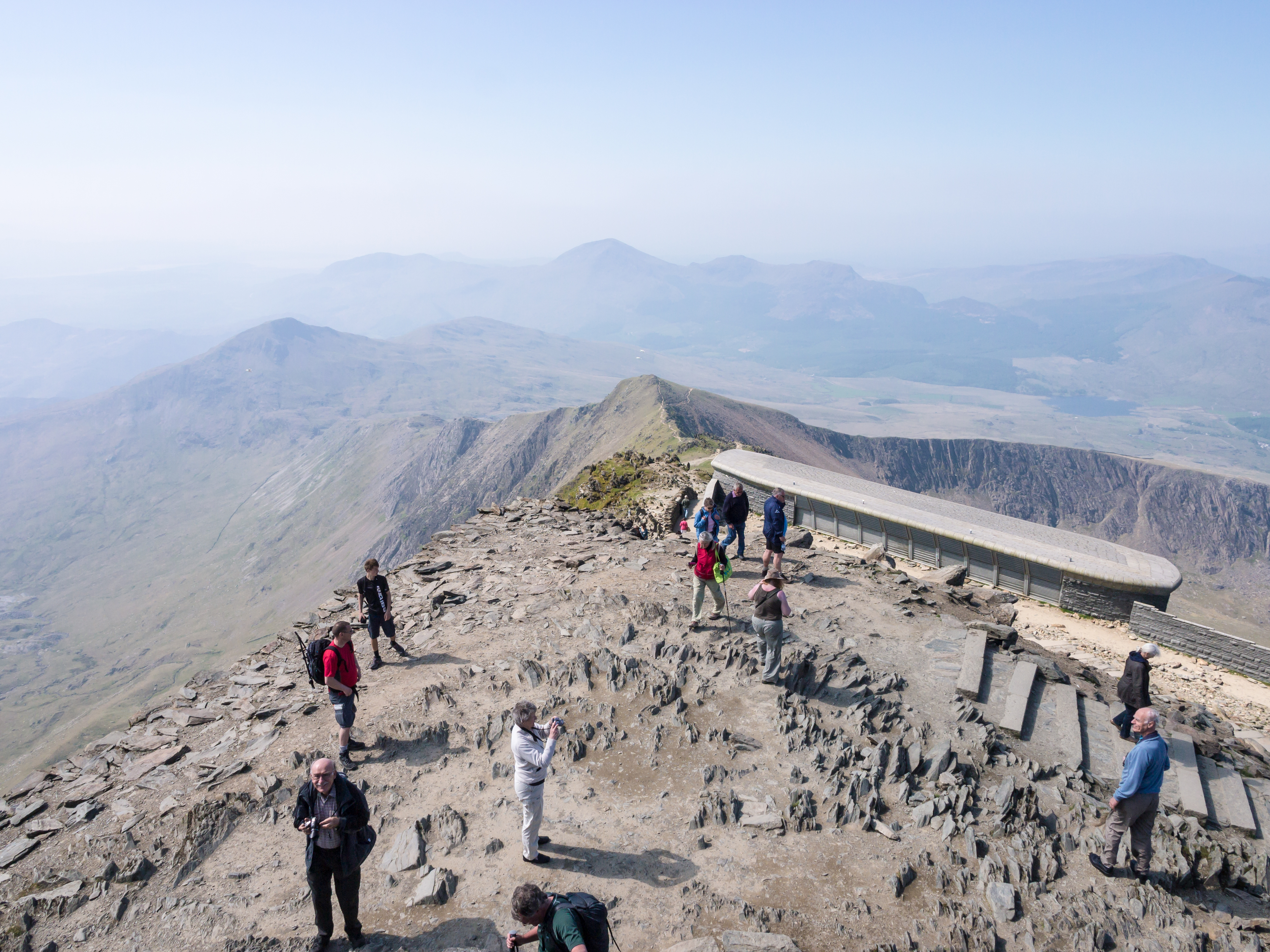
Firstly, the Transfiguration is a story of divine revelation. Mountains were often places in the Bible where God said or did something special, and all the more if – like this one – it was described as a ‘high mountain’ (verse 2). Specifically, this account is reminiscent of Moses going up Mount Sinai to meet with God and receive the Law. Even the six-day gap between this story and the previous one may echo the six days Moses spent at Mount Sinai with God.

All this, then, should prepare Peter, James, and John for a word of revelation from God. Frightened as we know later on they are (verse 6) – and no surprise at that – the clues are there for them as devout Jews to recognise that they should prepare for a revelation from heaven itself.

Sometimes I wonder how prepared we are to hear from God. Is it because we bumble along from the day to day without tuning ourselves in that we rarely hear from him? Is it that so often God has to interrupt our daily routines in an attempt to catch our ears? Might it be that we could tune ourselves in, ready for when he wants to reveal something to us?

This is why I bang on from time to time about our use of the spiritual disciplines, such as personal Bible reading and prayer. These practices get us used to the voice of God. That voice will not always speak something big and dramatic as in today’s story, but as a baby learns soon to recognise its parents’ voices, so we need to do the same with God. The more we practise the spiritual disciplines, and the more we look and listen for the signs of his presence in our routine duties.

Secondly, the Transfiguration is an account of divine glory.

2b There he was transfigured before them. 3 His clothes became dazzling white, whiter than anyone in the world could bleach them.

Think back to Christmas for a moment. Maybe not this last Christmas specifically, but the Christmas season generally.

Specifically, think back to singing ‘Hark! The herald-angels sing’ and that line, ‘Veiled in flesh the Godhead see.’ God coming in human flesh meant that we were shielded from the dazzling brilliance of God’s glory. It is almost too much to bear, rather like the way we warn children not to gaze directly at the Sun.

But here at the Mount of Transfiguration, all the layers that protect sinful humanity from encountering the divine glory are stripped away.

Despite the faltering description, v. 3 succeeds in conveying that the transfiguration is so complete that Jesus’ clothing as well as his person is transformed. …

The diaphanous garments and brilliant face of Jesus signify total transformation and suffusion with the divine presence.[ii]

Jesus reflects the presence of God every bit as much as Moses did on Mount Sinai, if not more so. God hasn’t spoken his revelation yet, but he is showing up.

So again, Peter, James, and John are being called to attention. What they find themselves in counts. It’s important.

Not every Christian has dramatic experiences of God, but most of us would talk about times in our lives when God has seemed especially close. Sometimes those seasons of closeness and almost tangible presence are there to comfort or reassure us through a hard time, but on many other occasions, like the Transfiguration, God is not simply wanting to give us a spiritual thrill, he is wanting to transform us more into people who reflect his glory.

I simply want to ask whether we are open to that.

Thirdly, the Transfiguration is a narrative of divine supremacy, and specifically of Jesus’ supremacy.

4 And there appeared before them Elijah and Moses, who were talking with Jesus.

Why Elijah and Moses? There have been various theories, but the important thing is this: the way this is worded originally gives an indication that they are not equals with Jesus: ‘they hold an audience with Jesus as a superior.’[iii] They appear and they disappear. There is no command to listen to them. They are ‘representatives of the prophetic tradition that, according to the belief of the early church, would anticipate Jesus.’[iv]

Jesus is superior to both of them. Their lives and ministries pointed ultimately to the fulfilment of God’s plans in Jesus. And Jesus is not merely a prophet, as religions like Islam would have you believe.

Jesus is more than our Friend and our Brother. He is more than the celestial lover that some hymns and worship songs portray. He is more even than Saviour. He is Lord.

Peter, James, and John here are learning that Jesus isn’t just a wonderful rabbi. He’s even more than Israel’s promised deliverer. They owe him their allegiance.

And so do we.

Fourthly, the Transfiguration speaks to us of divine presence.

5 Peter said to Jesus, ‘Rabbi, it is good for us to be here. Let us put up three shelters – one for you, one for Moses and one for Elijah.’ 6 (He did not know what to say, they were so frightened.)

Poor Peter. He and his friends are scared out of their wits. What comes out of his mouth is something that would be worthy of a typical pious Jew. He wants to build shelters, or tabernacles, and the Jews looked forward to a time when God would build a new tabernacle or dwelling for his presence on earth to replace the old one that Israel had had in the wilderness.[v]

But what he doesn’t yet grasp is that the new tabernacle is here already. Jesus is the new tabernacle. He is the presence of God on earth.

So Jesus is more than one who is ranked higher in God’s ranks than Elijah and Moses. He is the presence of God on earth. That is enough to blow the fuses in the mind of a devout Jew. It is why many learned Jews rejected Jesus.

But when you meet Jesus, you meet God. Later Christians would look at all the biblical data and formulate the doctrine of the Trinity, but here is one major sign of how Jesus expanded and exploded traditional Jewish beliefs about one God, the chosen people, and the messianic hope.[vi]

Jesus, being God who came in human flesh to earth, is the climax of God’s plans. And as such, we see everything through the light of him. We interpret our hopes and dreams in the light of Jesus. We interpret the Scriptures in the light of Jesus. We frame our very lives in the light of Jesus.

When we realise that God has been present on earth through Jesus and that he is still present through his Spirit, how does that change the way we live?

Because it should.

Fifthly and finally, the Transfiguration speaks to us of divine vindication.

7 Then a cloud appeared and covered them, and a voice came from the cloud: ‘This is my Son, whom I love. Listen to him!’

8 Suddenly, when they looked around, they no longer saw anyone with them except Jesus.

You may recall that a voice from heaven spoke to Jesus in similar terms at his baptism: ‘You are my beloved Son, I am well pleased with you.’ Here, the words are similar, but they are not addressed to Jesus. Instead, God the Father speaks to Peter, James, and John: ‘This is my Son, whom I love. Listen to him!’

They were to listen to all that Jesus had told them. Doubtless – and most importantly – that referred to his prophecies of his coming suffering and resurrection, which had offended Peter so much.

No: the voice from heaven tells the disciples that what Jesus has said is right and true. You must take it on board, even if you don’t understand it.

When we make Jesus out to sound so much like us, with similar views to us, similar ethical standpoints, similar political views, and so on, then we no longer have Jesus, we have an idol. Jesus will always say and so things that go against the things we cherish. But because of his divine nature, we are the ones who need to change.

And here, that’s just what the Father expects of Peter, James, and John. Put aside your objections to the Cross. Put aside your assumptions that you know better.

And that’s a very fitting place for us to end this week’s reflection, especially as we prepare to enter Lent on Wednesday. The Transfiguration calls us to a life where we increasingly conform our will and our ways the will and the ways of Jesus, who has the right to do this, as God who came to Earth. And whose journey to Earth led to the Cross.

We start that journey again now, and as we go into Lent.


[i] James R Edwards, The Gospel According To Mark, p261.

[ii] Edwards, p263, p264.

[iii] Edwards, p265.

[iv] Edwards, p265.

[v] Edwards, p266.

[vi] ‘Monotheism, election, and eschatology’ in NT Wright’s words.

Second Sunday of Christmas: The Mystery of the Incarnation (John 1:1-18)

Here’s this week’s video devotions, followed by the text of the talk.

Seasoned Methodists may wonder why this isn’t a Covenant Service on the first Sunday of the New Year. Both my churches are in Tier 4 and have chosen to close for gathered worship, and I’d rather keep the Covenant Service until we can renew our commitment to Christ face to face with each other. Besides, it’s a long and complex service, and these video devotions need to be shorter than the usual act of worship.

However, if you’d like a Covenant Service sermon, you can search this blog and find quite a few.

John 1:1-18

The Christmas decorations came down earlier in our house this year. The tree was in the place where Debbie had had her home office set up for working from home during the pandemic, so things had to be put back to normal sooner than usual.

Nevertheless, I still want to wish you Happy Christmas, because we’re still in the Christmas season, according to the rhythms of the Church. And of course, I also want to wish you Happy New Year – a happier year than last year, I pray.

Our famous reading from John chapter 1 is known as the Prologue to John’s Gospel. Sometimes, when it is read at carol services or in the Christmas season, the reader will introduce it with words such as, ‘The mystery of the Incarnation.’

Of course, it’s about more than the Incarnation, but for these thoughts I’m going to pick out three themes that John relates here to the Incarnation.

Those themes are light, glory, and grace and truth (which are a pair that go together).

Firstly, light.

John talks about Jesus as being the light of all (verse 4) and the light in the darkness (verse 5) even before his birth. Then, after John the Baptist witnesses to the light (verses 6-8) Jesus the light comes into the world (verse 9) but he is neither recognised (verse 10) or received (verse 11) except by a few (verse 12), and they become children of God (verses 12-13).

Strange, isn’t it? The people that were walking in darkness had seen a great light and yet few recognised and received that light. For Israel, it was the darkness of occupation by Rome. But perhaps they didn’t receive the light because it came in a form they didn’t recognise or indeed want. They wanted the darkness dealt with in a different way.

We may battle with different forms of darkness, but the danger is the same for us. We have our fixed ideas about what God should do about the darkness and how. When he doesn’t deliver, then some people stop believing in him. But of course what they’ve done is find that their own picture of God is faulty.

For what Jesus shows us about the light is he hasn’t come just to banish darkness with a click of his fingers and the flick of a switch, but rather by walking into the depths of darkness and shining his light there. That’s what ties together the Incarnation and the Cross. It’s what his whole life is about.

I recently read an article entitled ‘4 Myths Christians Should Stop Believing About Depression’, written by a professional Christian counsellor who has herself suffered from depression. If ever something is an experience of darkness, depression is.

And one of the most telling statements in the piece for me was this sentence:

Depression has nothing to do with lack of faith, in fact, for me—it has been the catalyst for even deeper faith. Because some days, in the hardest moments, faith was the only thing I had.

Do you see? She found Jesus, the light, in her darkness. That’s where he was.

In 1983, fifteen years before the Good Friday Agreement, a book was published about Christian reconciliation work in the Troubles in Northern Ireland. It was called ‘The Darkness Where God Is’. That’s how Jesus is the light in the Incarnation. He comes to be light in the darkness.

So when we encounter darkness, let’s look for Jesus there.

Secondly, glory.

Just as Jesus brings the light of God in an unexpected way, so also he shows the glory of God in an unforeseen manner. Verse 14:

The Word became flesh and made his dwelling among us. We have seen his glory, the glory of the one and only Son, who came from the Father, full of grace and truth.

We see his glory through the fact that ‘The Word became flesh and made his dwelling among us.’

How would a Roman emperor have shown his glory? In the majesty of his court and the humiliation of his enemies.

How does the Son of God display his glory? Paradoxically, by leaving it all behind in heaven. He comes into a poor family and lives among the poor. ‘Emptied himself of all but love,’ as Charles Wesley put it.

Or as recorded in Mark’s Gospel, Jesus put it this way: ‘The Son of Man came not to be served but to serve, and to give his life as a ransom for many.’

That is the glory of God. Putting aside status to live humbly, serve, and give up his life for the salvation of the world.

Those who are impressed by shallow things and shiny trinkets will never see such glory and will miss their way to the kingdom of God. But for those who have eyes to see, this is God’s glory, the shining of his splendour.

How might the world see the glory of Jesus today, then? When his people decide that hob-nobbing with the rich and powerful is not the way to go, and choose instead to serve the poor, the last, and the least. As one Internet meme puts it:

Want to put Christ back into Christmas? Feed the hungry, clothe the naked, forgive the guilty, welcome the unwanted, care for the ill, love your enemies, and do unto others as you would have done unto you.

That was what Jesus came to do. That is how his glory was seen. It’s really quite straightforward for us to do the same. Isn’t it?

Thirdly and finally, grace and truth.

We just read that Jesus ‘came from the Father, full of grace and truth’ (verse 14). John goes on to tell us that in doing so, he brings ‘grace in place of grace already given’ (verse 16) and that whereas Moses brought the law, Jesus brought grace and truth (verse 17).

In the Old Testament, God is shown to be a God of grace, not least when he saves the Israelites from Egypt and Pharaoh. He then gives Israel his law to keep as a response to that grace and as a sign that they are the People of God. God continues to show grace to his people, even when their sin and rebellion require discipline and punishment. Jesus comes to bring grace on top of all this grace. He brings not only grace, but truth.

So the Incarnation of Jesus says this to us: just when you thought God could not be more gracious, he sends his Son to show grace in person. Now his grace saves us not simply from other people’s wickedness but from ourselves, for our sins would have cut us off from God eternally. It’s a grace that goes all the way from the manger to the Cross.

John is telling us that Jesus was born into this world on a mission of mercy. It is those who recognise their need of mercy who find fulness of life and a place in his family. Those who consider themselves good, decent, upright, upstanding members of society will never see Jesus for who he is. Only those like the publican in the Temple staying at a distance praying, ‘Lord, have mercy on me, a sinner’ understand the Christmas story.

And if we are to live the Christmas story ourselves today, we need to be people who speak about God’s grace and who demonstrate God’s grace. Who needs to hear about a God of grace and mercy? Who will only understand that if his people today show grace and mercy in their actions?

Can we think of one person who would be set free from their personal prison if they knew about a God of grace?

Can we think of one person to whom we need to show grace and mercy?

To conclude, the revelation of Jesus as bringing light, glory, grace and truth at the Incarnation is wonderful, but it is also challenging, because there are implications for us.

The Christmas story encourages us to find the light of Christ in the midst of our darkness.

The Christmas story challenges us to show the glory of Christ not in conquest and arrogance but in humble service.

And the Christmas story calls us to embrace the message of grace for ourselves and spread it by speaking of grace to others and showing grace to those who need it.

The Christmas season may be about to end, but there is no reason for its message to fade away.

New Year Sermon: A Vision Of Jesus

John 1:1-18

Having children has had an effect on my mental health. Not just the increased stress; I find my memory is not what it is, and I don’t like to think that has anything to do with age! Debbie will ask me to bring three items in from the garage, and I will remember one. And while I’m sure some of that is down to the way that I as a typical man like to concentrate on just one task at a time in contrast to typically feminine multitasking abilities, I have to admit that there are just too many times when I forget things I would previously have remembered. Senior moments seem to have started in middle age for me.

And you may be thinking I’ve had another memory failure in the choice of John 1:1-18 as our reading tonight. Didn’t we have it in the carol service? Yes. Didn’t we have it on Christmas Day? Yes: it’s the traditional Gospel reading for Christmas Day, and so if anyone has a memory relapse here, it’s the compilers of the Lectionary! And don’t I go on and on about verse 14 when talking about mission, ‘The Word became flesh and lived among us’? Yes. I’ve remembered all these things.

But when I saw that these great verses occurred again today, I saw an opportunity. This passage, known as the Prologue to John’s Gospel, gives us – to use an overworked word – an awesome vision of Jesus. This passage is for me the Mount Everest of the New Testament. And we have a chance here to let its towering vision of who Jesus is inspires us at the beginning of a New Year.

So I thought I would take some of the great images of Jesus here and explore each of them briefly, so that we might bow before his magnificence and kneel before his wonder. It’s a fitting place to get our bearings for the new year.

Word 
Before Jesus is named at the incarnation, he is the Word. Before time and for all time, he is the Word. He is the creative Word, involved in creation. As in Genesis God spoke and it came to be, so in John ‘all things came into being through’ the Word. So when the Word becomes flesh and speaks to the created order, he is continuing his work of creation. 

For Jesus, then, being the Word doesn’t mean words without action. There is no division between truth and deed. One leads to the other. We can see that in another way as well as Jesus being the Word through whom creation comes into being and is sustained. For John 1 has resonances with Proverbs 8, where Wisdom is spoken of in similar terms to the Word here. Now we might associate the word ‘wisdom’ with wise words or philosophy, but to the Hebrew mind wisdom was not merely intellectual. It was moral. Wise words maybe, but words connected with action. That’s why the Book of Proverbs is full of advice on how to live.

Now if Jesus the Word is the Wisdom of God, then he is not an abstract philosophy, he is the One who supremely shows us how to live. When we call Jesus the Word, we aren’t simply ranking him among or above the great philosophers of the world – although he belongs there – we are saying that he speaks in such a way as to show us the paths of life.

What does this mean for us? Something quite down to earth. It is a renewed commitment to walking in the ways of Jesus. Not only has he died for our sins and been raised to give us new life, he lays down the yardstick for living the new life he grants us.

I don’t know whether you’ve noticed, but in recent months the great majority of my sermons have been based on passages from the Gospels. I have concentrated on those four books where we most clearly get the voice of Jesus. It’s why Anglicans and Catholics stand for the Gospel readings at communion.

Not that he doesn’t speak throughout all of Scripture – of course he does – but the central biblical documents are the Gospels, and if I am to be any kind of Christian, I must tune into Jesus’ life-giving words and align my life accordingly. That would be a worthwhile vision for a new year.

In reception class at school, Mark and his friends have had to learn forty-five ‘action words’. They learned the words by learning the associated actions. (Except Mark knew them all already, including how to spell them.) Jesus the Word is an ‘action Word’. He is not ‘mere words’ but ‘the Word in action’.

Light 
The image of Jesus as light tells me something about his supremacy and victory.

On the one hand, his life is ‘the light of all people’ (verse 4) and he is ‘the true light, which enlightens everyone’ (verse 9). Whatever light may be found in this life has its source in Jesus. The old saying is that all truth is God’s truth. If something is good, beautiful, pure and life-enhancing, then it is from Jesus, whether it is overtly religious or not.  We Christians need not be afraid of truth, wherever we find it, because its origin will be Jesus, who is light to all people. Conversely, we may find goodness in many places but none will outshine Jesus.

So do not worry about truth. Sometimes the world’s discoveries seem to contradict our faith. In time, however, we shall either see how they harmonise (dare I suggest evolution and creation?) or that the world’s claims for truth were over-rated. Let us remember that whenever an intellectual controversy strikes this year. Jesus always brings light. 

But better than that, says John, ‘The light shines in the darkness and the darkness did not overcome it’ (verse 5). The word translated ‘overcome’ is one of those rich, multi-layered Greek words. You could say, ‘the darkness did not overcome it’, but you could also render it as ‘the darkness did not understand it’, or ‘the darkness did not come to terms with it’.

Sometimes understanding is a way of coming to terms with something or controlling it. But darkness can never master light. Even a tiny speck of light cannot be extinguished by the surrounding darkness. And John tells us that the darkness in creation can never master the light of Jesus.

Now that, surely, is Good News for us. The light of Jesus can never be put out. Light and darkness are not even two equal and opposite forces: light is superior! So whenever the life of faith is discouraging – whether due to internal reasons or external pressures – we have good news. Jesus triumphs!

And this is not just a private pious hope for us to enjoy. In the world, when dictators ravage their people, we know they cannot finally prevail. When governments and armies rampage with their forces of war, we who believe in the light know that their darkness is not the final word. It is good news to proclaim to the world as well as the church that the light shines in the darkness and the darkness has not overcome it – nor will it. 

Glory 
John makes a staggering claim about Jesus when he says that ‘we have seen his glory’ (verse 14), especially as he also acknowledges later that ‘No one has ever seen God’ (verse 18). Moses wanted to see God, but he had to hide in a rock and glimpse just a little of God’s glory from behind. Isaiah saw the Lord, but became stricken by a knowledge of his sin and his people’s sin. Claiming that we have seen divine glory in Jesus, then, is a monumental claim.

What might such glory look like? The Queen of Sheba saw the glory of King Solomon: it consisted of wealth, property and expensive possessions, as well as his famed wisdom. If we took a tour of Buckingham Palace, we might hope to see some royal glory, but not all of it would be on display, and that which was would be a matter of high culture, fine art and items from the most exclusive of suppliers.

Similarly, our popular culture has a crude version of glory. We see it in magazines like ‘Hello’, ‘OK’ and ‘Heat’, when they invite us inside the mansions of the rich and famous. Money, possessions and property are still a popular measurement of glory.

Jesus could call on all the resources of heaven to show dazzling glory that would make Bill Gates look like a pauper. But that is not the divine glory John describes. His glory is ‘the glory as of a father’s only son, full of grace and truth’ (verse 14).

The glory of God is not in the splendour of heaven or the armies of angels: it is in grace and truth. The awesomeness of our God is in the grace and truth brought by the ‘father’s only son’. For grace and truth are the family likeness. The glory of God is not in palaces but a manger. The glory of God is not in the amassing of wealth but in the humiliation of the Cross. The glory of God is not in fulness of possessions but in emptiness – Christ emptying himself of all but love, and the emptiness of the tomb on the first Easter Day. The glory of God comes not in the violent conquest of enemies, but love for enemies and forgiveness for sinners.

What does this mean for us? For Jesus, showing divine glory in the form of grace and truth is a matter of the family likeness: he is ‘God the only Son’ (verse 18). We are children of God in a different sense according to the passage: Jesus gave us the power to become God’s children when we received him (verse 12). In Paul’s language, we are adopted children. The family likeness doesn’t pass down easily – not in the same way that our little Mark looks so much like a red-headed version of me. For adopted children, it’s a matter of being open to the influence of the parents and the existing family (which of course is vital in other families, too).

So we are called to reflect God’s glory of grace and truth in also being humble, loving and forgiving of those who wrong us. However, it’s not an easy matter. It’s something that only comes as we grow in grace, and that means being part of the community of God’s family and being consciously open to the work of the Holy Spirit who imparts the character of God to us. (We call it the fruit of the Spirit.) We don’t work this out alone, but together under the influence of the Holy Spirit. That’s why not all the great spiritual disciplines are private actions, but many are also corporate practices, as in fellowship we seek to be open to grace in order that it may transform us and we may share it.

Conclusion 
Jesus the Word, then, is the great ‘action Word’ in creation and ethically wise living. To encounter him who is the very Word of God is a call to our own action in response.

Jesus the Light is good news for the church and the world. Wherever we are enlightened by the truth, it is the work of Jesus. And the victory of his light over darkness is good news for all who may despair when evil advances.

Finally, Jesus brings the Glory of God in grace and truth. He reveals God as so different from the petty obsessions of the world, and calls us to receive and share grace.

These three aspects of Jesus – Word, Light and Glory – constitute just a sketch and not even an oil painting of our spiritual Everest. But I pray that even these sketches might give us enough vision of our incarnate, crucified and risen Lord to inspire our discipleship in this new year.

Hope

Isaiah 40:1-11

Hope is in short supply right now. Increased unemployment. Home repossessions threatening to hit 1991 records. Banks, the backbone of our economy, in turmoil. Many suffering fuel poverty as gas and electricity prices stay high, even when petrol prices have reduced. You know the rest. We could do with some hope.

In the time of John the Baptist, Israel could have done with some hope. You’ve heard it enough times. In their own land, yet feeling like exiles, because they were occupied by Rome. Every now and again, someone popped up to offer hope in terms of an uprising. Every time, Roman legions quelled the rebels and executed them publicly.

Where do you go for hope, when it appear eating a diet not approved by Jamie Oliver and clothes that would give Trinny and Susannah apoplexy. (No bad thing?)

Well, you root yourself in another time when the people of God needed hope. The time addressed in Isaiah 40. Most of God’s people had been deported to Babylon, and had been there a few decades by this point. A handful had been left in Jerusalem.

Then, a prophet in the Isaiah tradition turns up in Babylon, addressing the dispirited exiles and the desolate residents of Jerusalem. Using three metaphors from the physical world around him – wilderness, grass and mountains – he offers God’s hope to those lacking it and most needing it.

And this theme of hope complements what we thought about last week, on the first Sunday of Advent. Then, our theme was waiting. Today, it is hope, which is the content of Christian waiting. Had we read to the end of Isaiah 40, we would have heard – depending on which Bible translation we used – about those who will renew their strength by either ‘waiting’ or ‘hoping’.

So – without more ado – how does the Isaiah prophet help us to hope, using these images of wilderness, grass and mountains?

Wilderness 
Last week, as we considered the theme of waiting, we wondered how we live when it feels like God is absent. Isaiah 40 is bold in response to this: you may feel that God is not here, but God is coming! He gives us a picture that is a bit like the building of a new road (hopefully without the environmental concerns we have about such a project in our society). Prepare God’s way in the wilderness, make a straight highway in the desert, raise the valleys, lower the mountains, and smooth out the rough terrain, and you will see God’s glory (verses 3-5).

So – in a time of God’s apparent absence, the good news is that God is coming. In a time of spiritual darkness, the good news is that you will see God’s glory. Music, surely, to the ears of disillusioned exiles in Babylon, and beaten-down people in Jerusalem. This is a message of comfort. Your punishment is over. Enough is enough (verses 1-2).

We may not know when things will change for the better for Christian witness in our culture, but we can hear similar echoes of hope in Advent. Our waiting and hoping is for Jesus who is called Immanuel, God with us. God is coming. We are not alone. Christ is coming. Christ came. The Father sent the Spirit of Christ. Our sense of aloneness is only apparent. It is not actual.

Of course, we must be careful: proclaiming that in Christ, God is with us, can make us sound like we have a religious superiority complex. This is not a matter of our deserving special rank. It is a matter of grace, God’s undeserved favour to sinners. The Son of Man came to seek and save the lost. It is not the healthy who need a doctor, but the sick. Jesus, God with us, came for lost and sick people – including us. Yes, God is with us in Christ. But we hold that knowledge humbly. And as we share it, we do so as one beggar telling another where to find bread.

And the wilderness was specifically to be a place where God’s glory would be seen.  Would God’s glory be seen in raining down fire and brimstone? No. It would be seen as he led a raggle-taggle bag of exiles back home.

Similarly, Advent is a time when we wait in hope for the glory of God. His glory will be seen and sung about in skies over Bethlehem. His glory will be seen, in the words of Bruce Cockburn,

Like a stone on the surface of a still river
Driving the ripples on forever
Redemption rips through the surface of time
In the cry of a tiny babe

It’s a different kind of glory. It’s wilderness glory, a manger at the back of a house in Bethlehem, not a palace in Jerusalem. It’s the glory of God humbling himself into human flesh, one who later as an adult would not grant the wish of two disciples known colloquially as the Sons of Thunder, who wanted to unleash damnation on enemies.

Yes, come to unexpected dry places like a wilderness – like a manger – and find that God is present in strange glory. Come to Broomfield and find him? Why not?

Grass 
When the prophet speaks about the people being like grass, I think he has wilderness grass in mind. It withers and fades in the heat of the wilderness, so when we hear about that happening when the breath of the Lord blows on it (verse 7), I think we’re meant to imagine that the Lord’s breath is hot and intense. The breath of the Lord, the Spirit of God, is not here life-giving but life-taking. The judgment of God had fallen upon the people with the Babylonian invasion and exile; now, like grass in the hot sun, they are withering and fading.

It’s not difficult to find similarities in later generations. In the days before Jesus was born, Israel was withering under oppression from Rome. In our day, we in the western church (especially in Europe) feel like we are withering and fading. What word of hope do we find here? It comes in verse 8:

The grass withers, the flower fades; but the word of our God will stand forever.

Whatever happens to us, the purposes of God are not thwarted. Whether we wither due to divine judgment on our faithlessness or whether it is general oppression or persecution, hear the promise that ‘the word of our God will stand forever’.

A story was told during the time when Russian communism ruled Eastern Europe. Soldiers raided the home of a Christian family and made some arrests. To humiliate them, they threw the family Bible on the floor. But a soldier noticed that one page didn’t burn. It contained the words of Jesus: ‘Heaven and earth will pass away, but my words will never pass away.’ That incident was key in the soldier’s conversion to Christ.

There will be many attempts to destroy God’s word from its place in our society, and some of those attacks will focus on the church. But we are in Advent, the season of hope. The word of the Lord stands forever, and the gates of hell will never prevail against the church of Jesus Christ.

None of this is a reason for complacency, but it is a reason for hope. Therefore, it’s here to boost our faith and fuel our prayers for God to renew his wonders in our day. 

Mountains 
So God is present in his strange glory, and he is speaking and will not be silenced. Those are grounds for hope, but they are not very specific. We need a vantage point. The herald, the preacher (who by the way is female in the text), needs to ‘get up to a high mountain’ to see things as they are and be several hundred feet above contradiction in preaching good news to discouraged people (verse 9).

What good news? That God is victorious over the enemies of his people, that he comes in conquest, with his people as his booty, and with the gentleness of a shepherd caring for ewes and lambs (verses 10-11).

Israel’s hope was the end of captivity in Babylon. The hope in Jesus’ coming was in his resurrection from the dead. Our hope, based on that resurrection, is that of God’s final victory when he appears again, not only to claim his own, but to renew all of creation, with a new heaven and a new earth.

There are always reasons in the world to make us gloomy. At present there is a plethora of reasons. There are also reasons to be pessimistic about the western church. You would think there were few grounds for hope. But when you get up the mountain to see things from God’s perspective, the situation looks different. You see hope in the promises of God, who has acted decisively in the past, who will do so again, and who one day will make all things new.

It’s rather like the old story told by Tony Campolo. People give him all sorts of reasons to be negative about the state of the world and the church. But his standard reply is, “I’ve been reading the Bible. And I’ve peeked to see how it ends. Jesus wins!”

So let the world write us off. Let our friends regard our faith as irrelevant. Let Richard Dawkins describe religion as a virus. But see God’s view from the mountain: Jesus wins. Let that fill us with Advent hope.

And while we’re on the mountain, let us – like the female herald in Isaiah 40 – proclaim it to all who will hear. Let us encourage one another in the church. Don’t be dragged down by the lies and limited perspectives of the world: Jesus wins. 

And let us also proclaim it to a world sorely in need of hope. To people who thought they could trust in money, until the banks blew up. To people who gained their sense of identity from their job, until redundancy hit. To people struck down with disability or chronic or terminal illness, whose lives had been based on the vigour of their bodies. To all these people and many others, proclaim that Jesus wins. It is promised in the actions of God and especially in the Resurrection. We have a hope worth trusting in. Why be afraid? Why be dismayed?

Conclusion 
You may recall I’ve said that my first circuit appointment was in the town of Hertford. There, the Methodists regularly quoted John Wesley’s Journal regarding several of the visits the great man made to the town on his preaching travels. They were fond of quoting one entry in particular, where Wesley was utterly discouraged. It said, ‘Poor desolate Hertford.’ Those words hung like a curse over them.

But you may also remember how I have talked of being involved in ecumenical youth ministry in the town. Somebody gave me the complete set of Wesley’s Journal, and I looked up all the entries on Hertford. They weren’t all doom and gloom. Some were, but one in particular wasn’t. In it, Wesley recounted coming to preach at a school in the town. To cut a long story short, he saw a revival break out among the children.

You can imagine the impact that story had on us as we gathered to pray about youth ministry. Never mind ‘poor desolate Hertford’. There was a heritage of Holy Spirit work among young people in the area. God had not been absent or silent. He had been gloriously present, proclaiming Good News.

So I want to say that the Advent hope is like that. It is time to cast off the darkness. The great Advent text in Isaiah 60 says, ‘Arise, shine, your light has come’. This Advent, might we just dare to believe and to hope in our God?

And might we find that in this hope we have something beyond riches to share with a world, whose own versions of hope have plummeted in value?

Create a website or blog at WordPress.com

Up ↑