I don’t do 5:30 am. Although I had to, today. Easter Day began with a 7 am ‘sunrise service‘ at Bisley Clock Tower, the highest piece of land locally. It’s part of the National Shooting Centre, so what better place to celebrate the resurrection of the Non-Violent One?
We gathered to sing three traditional hymns that we couldn’t include in the later 10 am All Age Communion, all to the accompaniment of a melodica. During the hymn before my talk, I felt prompted to change what I was going to say. Working from Matthew 28:1-10, I spoke about the women, the angel and Jesus. The women are the first apostles – they are the first witnesses to the resurrection. Effectively, they are the apostles to the apostles. You would not have chosen women as witnesses in the first century if you wanted to be believed – this is a hint of the account’s veracity. And God is always choosing unlikely people as his witnesses.
As for the angel, I loved the piece where – after rolling away the stone, he sat on it. The very object that had contained the imperial seal of Rome. For the Resurrection shows God’s conquest of all powers and authorities. Whatever we see today in terms of opposition, the Resurrection guarantees that principalities and powers will be ‘sat on’!
And Jesus – whereas later I was to talk about meeting him, now I emphasised him going ahead. Not only is the risen Lord always with us, he also goes ahead of us. Wherever we have to go in our life’s journey, we can find that Jesus has gone ahead of us to meet us there.
From that service to Addlestone for an 8:30 am communion, singing our hymns to the backing of CDs ripped to a laptop. And then it was back to the church building at Knaphill, where our wonderfully creative all age worship team had devised a service featuring scents and spices, an earthquake sound effect, drama, dance and Noel Richards‘ recent Easter hymn ‘Because He Lives‘. Back in February you could email Noel for a free MP3 of the song – not sure if that offer is still available, but in case it is, the link is here.
By the end of the morning, I was exhausted. No stamina, me. I didn’t go to the united service in the evening. But it struck me that on the original Easter Day, at least two disciples moved from exhaustion to energy – right at the end of the day. I’m thinking of the Emmaus Road story. Cleopas and his companion are downcast, discouraged and without hope. But when they recognise the risen Jesus in the breaking of bread, they hurry back to Jerusalem from Emmaus, late at night – even though they have invited the stranger (Jesus) in, because it’s late and you shouldn’t be travelling. The Good News that Christ is risen gives new energy – may it do so to us, too.
If you want someone to find an object that’s missing … don’t ask me. Debbie will tell you I am constitutionally incapable of even seeing something that is right in front of my nose. It’s not about the strength of the prescription for my glasses, nor is it my jealousy that Debbie still (just about) doesn’t need specs, I simply don’t seem to notice detail.
And we come to Matthew 28 on Easter Day, with a word that frequently appears in the Greek but doesn’t always make it into modern English translations. That word is, ‘Behold’. Behold: look closely, look carefully, pay attention. The places into which Matthew inserts ‘Behold’ into his text give us a way into appreciating the Easter story. He wanted his original readers to sit up and take notice. And the Holy Spirit wants us to do the same, I’m sure.
The first ‘Behold’ is to behold the earthquake. ‘And behold there was a great/violent earthquake’ (verse 2). An earthquake would certainly make you pay attention. Given the few earthquakes and the relative weakness of them that occur in the UK, it’s something we know very little about. But watch video of people in the middle of a quake or take in news reports, and you’ll know that one thing you can’t do with an earthquake is ignore it. You must pay attention and do something about it.
Now Matthew has a thing about earthquakes. This isn’t the first mention of them in his Gospel. He has recorded an earthquake that happened at the time of the crucifixion, and when Jesus is prophesying the destruction of Jerusalem (and possibly his own Second Coming, too) he speaks of earthquakes as being a sign of ‘the end’.
Put this together and you see the earthquake on Easter morning as God saying, wake up! Listen! I am doing something of world-shattering importance here! It’s not just a by-product of the angel rolling away the stone, it’s God grabbing our attention.
For on Easter morning, we are in the presence of power. God’s power. God at work powerfully in his world. Easter Day is not simply a happy ending after Good Friday: this is about the holy power of God at work. This is God at work in our world, and we stand in awe. The earthquake is there as a marker to say, never forget that God is at work in resurrection power in the world.
I came across a testimony from a man called Gary Habermas. He is a Professor of Philosophy whose lifetime calling is to promote the Christian faith by defending the historical truth of Jesus’ bodily resurrection. However, he lost his first wife, Debbie, to cancer when she was just 43. While she lay dying, he had an argument with God in prayer. He asked the Lord how he could let this happen, when he and Debbie had young children. If she died, how could he both follow his call into ministry and take care of the children?
He felt that God said to him, I’m not asking you to go through something that I myself haven’t. God reminded him that he watched his only begotten Son die on the Cross at a relatively young age. He promised Gary Habermas that he would be with him every inch of the way. And when Professor Habermas complained, saying, what kind of world is this in which you allow a young mother to die?, he felt God say, This is a world in which I raise people from the dead.
Debbie died. But this is a world in which God raised his Son from the dead, and one day he will do the same for us. Behold the earthquake, and the resurrection power of God that makes us stand in awe and live in hope.
On to the second ‘Behold’. It’s in the words of the angel when he says, ‘Come, see the place where he lay’ (verse 6). Or to give it its context, he says to the frightened women:
Do not be afraid; I know that you are looking for Jesus who was crucified. He is not here; for he has been raised, as he said. Come, see the place where he lay. (Verses 5b-6)
Behold the empty tomb is how you could paraphrase it. It is the first sign to encourage faith. The women will begin their journey to faith in the Risen Christ by witnessing the absence of his body from the tomb.
And, ultimately, there are no convincing explanations for the empty tomb other than the Resurrection. If the body had been stolen, someone could have produced it. If the body had been buried elsewhere, all you needed to do was go to that grave and – hey presto – end of the Jesus movement before it started.
It may not be proof, but it is evidence. The empty tomb is a sign that faith in the Risen Christ is not irrational. It has a basis in history. It may not be strictly scientific in one sense, namely that scientific experiments assume that you can repeat what has happened in order to verify the truth or prove it to be false. Here, though, we are dealing with the one and only example of someone being raised from the dead so far, and therefore it is not a scientifically repeatable experiment. But – it does come with circumstantial evidence from history.
So take a good look at the empty tomb. It means that all those ideas that faith means believing something you know not to be true are nonsense. After all, what is faith if not a matter of trust?
Think of it this way. When two people marry, they do not know everything about each other – and they never will! My sister once told me that her decision to marry her husband meant entering into a lifelong process of trying to understand this mysterious male person, whom she knew she would never completely come to terms with! But when people marry, I think it’s reasonable to assume they have come to a point of trust: they have experienced enough of the one they love to know that they can be trusted.
I suggest to you that Christian faith is a little bit like that. God doesn’t give us overwhelming, incontrovertible proofs of his existence, because if he did then there would be no room left in the relationship for trust, and that would diminish any hope of love. But here as we behold the empty tomb, we get that first sign that God says, “I keep my word. Won’t you trust me?”
This Easter Day, then, let your mind be reassured that what we believe is no falsehood, but based in truth. Let the evidence of the empty tomb witness to the possibility of trusting Christ.
However, you can’t stop there. It doesn’t fall into place finally for the women until the third ‘Behold’. In verse 7, the angel instructs the women to tell the disciples that Jesus is risen and that he is going ahead of them to Galilee to meet them there. This instruction ends with the words, ‘This is my message for you’ (NRSV) or ‘Now I have told you’ (TNIV). But what it actually says is, ‘Behold, I have told you.’
So the third ‘behold’ is to take the angel’s words seriously and meet Jesus. And – lo and, er, behold – Jesus meets the women as they run away from the tomb. Beholding the earthquake can make you realise that God is at work. Beholding the empty tomb can put you on the journey of trust. But until you behold Jesus and it becomes personal, it’s not real faith.
You can be convinced that Christianity is true, you can be convinced that Jesus Christ is the Saviour of the world, but unless it becomes personal between you and Jesus it counts for nothing. It has to go from theory to commitment.
I used to work with a lady called Doreen. Her best friend was a Christian, who used to invite her regularly to church. Doreen became inquisitive and spent many Sundays in church. One weekend, she and her friend came to hear me preach. They gave me a lift. In the car on the way back, Doreen spoke wistfully about faith. Her friend said, “I hope one day it will become an affair of the heart.”
Well, one I came back from some sick leave to find that Doreen had been reading a book I had thought of lending to her but never had. What a mistake. Her friend had lent it to her, Doreen had read the story it told of a man who found faith in Christ, and she had made her own decision to follow Christ. Her friend’s prayer had been answered: now it was an affair of the heart. Doreen ‘beheld Jesus’.
And I plug this theme, because quite often in our churches I find people who are devoutly committed to church work, who are deeply religious, and yet who have never met Jesus. They are often ‘pillars of the church’ and we would miss their efforts when they move or die, but actually they are all about doing things and very little about prayer, Bible study and deep fellowship. Why? Because they haven’t discovered that the essence of Christianity is actually about relationship with Christ, and that everything spiritually healthy flows from that relationship.
So what to do? Well, note how in the reading the risen Jesus seems to appear out of nowhere to meet the women. Well, just as he ‘suddenly … met them’ (verse 9), so he is ready to do exactly the same today. We don’t have to go seeking him: because he is risen, he is present.
And so he is here now, greeting us by his Spirit, waiting for each of us to say ‘yes’ to him. Yes to his forgiving love. Yes to enjoying his company. Yes to following him. Yes to living for him in gratitude for his love, rather than out of duty.
We’ve beheld the earthquake and known that God is at work in our world. We’ve beheld the empty tomb to know that God gives us reason to trust him and his word. Will we also behold Jesus, give him our ‘yes’
“But it is,” some object, “It’s 23rd April. That’s St George’s Day.”
Not this year, it isn’t.
The church calendar for this special season of the year takes precedence over saints’ days (we’ll overlook the dubious nature of George as a saint), and this year it’s relegated to 2nd May.
So what is today – Easter Saturday?
No, not that either. Easter doesn’t start until tomorrow. We’re still in Lent today. Easter Saturday is in a week’s time.
Today is Holy Saturday, one of the most neglected days of the church’s year. It is the day when, as my friend Will Grady posted on Twitter and Facebook earlier,
Sometimes, though, we Christians need to observe a Holy Saturday moment. On Holy Saturday, there is nothing you can do except wait. — N. T. Wright, Lent for Everyone
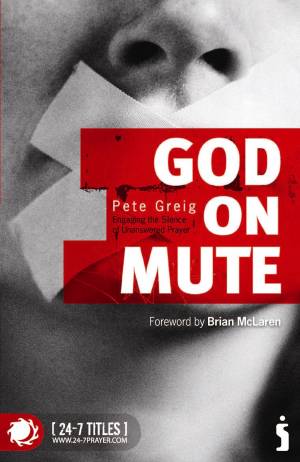
It’s the day of waiting. Jesus is still in the tomb, so to speak. Hopes are still dashed. Darkness still covers over hope. It forms a wonderful section in Pete Greig‘s book on unanswered prayer, God On Mute, where he recognises that this darkness is where many people spend much of their lives. We wait in the tomb of hopelessness, with our prayers seemingly unanswered or refused, not necessarily knowing that it is all going to burst out of the tomb in new and unexpected ways tomorrow. Greig quotes the poet R S Thomas, who says that God is ‘the darkness between stars’.
So let’s not rush past today in the hurry to prepare for tomorrow. If we get a chance, let’s linger here. Because many people are – often against their will.
Later tonight – after sunset – my Easter Day sermon will appear here on the blog. But in the meantime, let’s wait – especially with those who are living protracted seasons in Holy Saturday.
I began Good Friday today with a united walk of witness here in Knaphill. Beginning at the Catholic church, we walked to the King’s House Coffee Shop, then to the Methodist premises, followed by the Baptist church, and finally to Holy Trinity C of E. At each stop someone read a portion of the Passion story. Different people volunteered to carry the big cross on each leg of the journey.
Most moving for me was the final leg, when a man with learning difficulties asked to carry the cross. Nothing like as physically big as his predecessors in the task, he struggled in places and had to be helped by two other men. It was a small glimpse of Jesus falling down and needing help from Simon of Cyrene.
As the one co-ordinating the walk, I found myself at each stop standing on one side of the person with the cross, while on the other side was the reader for that particular episode from the story. In a tiny way, it was like being one of the two thieves either side of Jesus.
In these two ways, I found myself entering into the Passion story in new and unexpected ways this year. The sadness was in having to leave the following united service at Holy Trinity fifteen minutes in to get to the tail end of a united service at my other church, Addlestone Methodist. I arrived at that, just as they were singing the closing hymn. Having to flit between the two communities felt like it undermined a sense of belonging. Can you belong in more than one community at once? If missional Christianity includes earthing ourselves in a particular place by incarnational ministry, does this militate against it?
I wasn’t the only minister facing this issue: the Methodist deacon left at the end of the service to go to his other church, and two of the New Frontiers church leaders came over from Chertsey, where they used to be based and still share with other Christians.
Unlike in Knaphill, there had been no united walk of witness in Addlestone. Some of the people in Addlestone said how much they missed it. A discussion on why we think the procession of witness on Good Friday is important would be interesting. As I’ve said, it hit home for me today in unexpected ways. On other occasions, I’ve watched passers-by as Christians walk behind a cross on this day of the year, and wondered whether they felt we were doing it as a reproach against them. I don’t suppose most Christians do have that attitude, but I’m curious to know how it’s perceived, if at all. A judgement? An anachronism? Other reactions?
In contrast, my wife and children didn’t come with me on any of these events or services. They needed something more child-friendly. Happily, the nearby church of Holy Trinity, West End Village had a suitable act of worship for children for Good Friday. Too often we are so caught up with the solemnity of the day that we exclude children by the tone of what we offer. Holy Trinity West End knew better. They provided a service called ‘Paradox’. It included two songs, a very short talk by the Rector, and plenty of crafts. Rebekah had her photo taken with her cross on which she had chosen to write, ‘Jesus died for me.’ If Christ died for all creation, then he died for the children – don’t we owe it to them also to find a way of including them in on this most holy of days? I’m glad Holy Trinity did.
I’ll be interested to know your thoughts on our experiences. But I’ll stop typing there and go back to finishing preparations for Easter Day.
Notwithstanding the question I raised the other day about when the Last Supper happened, we celebrated a Christianised Passover at Knaphill tonight. We used this order of service, where one of the things I value is that it takes seriously the wide experience of human suffering. In particular, it does not gloat over the suffering of the Egyptians at the time of the original Passover, and uses that as a stimulus to pray for all who suffer. It also made links towards the end with where Christians see elements of fulfilment in the Passover themes.
We added in some hymns and songs – ‘The God of Abraham Praise’, ‘Thank You For Saving Me’, ‘Amazing Grace’ and ‘And Can It Be’.
I’m grateful for a great team of people who made it work – those who planned, those who cooked (our lamb meal was Shepherd’s Pie – a bit of artistic licence there, and our apple-based dessert was a flapjack recipé that contained apples), those who set things out and cleared things up.
What did you do for Maundy Thursday? What do you recommend? Have you participated in a ‘Christian Passover’?
If you believed the media, nearly all of us are getting excited about the Royal Wedding on Friday week. Well, not all of us: I noticed that BBC1 are showing a repeat of Shrek that afternoon, and the wedding in that cartoon is more appealing to me.
Not that I wish Wills and Kate any ill-will. Trial by media and marriage by media: no fun. They really do need prayer for a long and happy marriage.
But the coverage of all the royal frills will encourage all the existing wrong expectations people have of weddings. No expense spared – even if you haven’t got a royal budget. All about the day, rather than the life – the wedding, rather than the marriage. A focus on the couple, rather than on the mutual sacrifice that a marriage requires, as Giles Fraser recently got into trouble for saying on Radio 4’s Thought For The Day. The coverage of who’s attending – whereas, as Maggi Dawn recently commented, all you need is the vicar, the couple and two witnesses.
So it was a joy today to register a very different wedding. The bride runs a toy library that uses the hall of one of my churches. A year ago she found faith in Christ through an Alpha Course run by the local New Frontiers church, who worship on Sundays in a local secondary school. But without anyone haranguing her, she came to the conclusion that it was wrong in the sight of God to be living with her partner outside marriage. So at 11 am today she was married, and at 12 noon (in the building of another local church) she was baptised.
It was wonderful to co-operate with her pastor on the marriage ceremony. No trimmings – both bride and groom had had that for their first marriages, and they knew it made no difference. A simple service, with about twenty friends and family present. Not even any hymns, but some worship music on CD – even if the laptop misbehaved for the music during the signing of the register!
I think I’ll remember today’s wedding for longer than next week’s.
Like many churches, we’ll be marking the Last Supper and the institution of the Lord’s Supper this Holy Week on Maundy Thursday evening. However, it has long been known that the chronology of ‘Holy Week’ is problematic in the Gospels. The ‘Synoptic Gospels’ (Matthew, Mark and Luke) tie the Last Supper to the Passover, but John places Jesus’ execution on the day of Passover.
Theories to resolve this have abounded for years. One involves the idea that Jesus and his disciples used an unofficial calendar. A particular version of this theory has them using an Essene calendar, that varied from the mainstream. However, for many it is a further problem to see Jesus having any crossover with the Essene community at the Dead Sea, since his teaching was so radically different, especially his rejection of an ascetic approach to faith.
Others argue that the Synoptic Gospels got it right, but John put the Passover detail into his account of the crucifixion for symbolic reasons. While John is hugely different from the other three Gospels in many ways, I’m not sure that the way John incorporates this detail into his account easily reads as symbolism rather than history.
A further argument is that Jesus brought the Passover meal forward to an earlier date, knowing what was going to happen to him. This, too, is appealing to some, but if the last theory sits loose to John and history, this one risks not taking the historical detail of the Synoptic Gospels seriously.
Today’s Guardian reports another attempt to resolve the different narratives. In an article entitled Last Supper … or penultimate supper? Scientist challenges Maundy Thursday, the sub-editor makes it sound like a scientific solution to the dilemma. Which it isn’t. Although Professor Sir Colin Humphreys is a metallurgist, he seems to be using similar methods to resolve this conundrum to those used by biblical scholars. He is not the first to assert that the number of trials Jesus is subjected to in between his arrest in Gethsemane after the meal cannot be fitted into one night. Combined with the evidence that there are some missing days in the Gospels’ accounts of Holy Week, others have brought the Last Supper forward, as I have already indicated above.
I first heard a version of this theory in 1989 when I visited the Holy Land for three weeks, and Dr Jim Fleming, formerly of the Ecumenical Institute for Theological Research and the Biblical Resources Centre (now the Explorations In Antiquity Center in the USA) proposed to us that the Last Supper probably took place on the Tuesday. However, Dr Fleming seemed to lean on the Essene calendar theory.
Professor Humphreys tends towards the Wednesday. His work depends upon the crucifixion being in AD 33 and Jesus using another unofficial calendar, one that would have identified him with Moses. It will be interesting to see whether these two factors command assent from scholars. Watch this space.
Location, Location, Location. The Channel 4 programme about people trying to buy their dream home. It was one of a glut of home buying and home improvement TV shows that hit our screens a few years ago.
And ‘location, location, location’ might be a good theme for understanding the challenge of the Palm Sunday story that we’ve heard so often. Matthew starts with a detailed location report:
When they had come near Jerusalem and had reached Bethphage, at the Mount of Olives (verse 1)
Why? The prophecy of Zechariah (14:4) looks to the day when the Lord will stand on the Mount of Olives. It has notions of God fulfilling all his purposes for all time, and it is messianic.
But Bethphage? It’s a place whose name is literally translated, ‘house of unripe figs’[1]. When you remember that a few verses later Jesus curses an unripe fig tree as a prophetic sign, you might say that the challenge of Palm Sunday is that the Messiah has appeared: are we bearing fruit?
So what does a fruitful life look like? To see what the Palm Sunday story tells us about that, we’re going to look at Jesus, his disciples and the crowd.
Firstly, Jesus. It’s not often that my wife Debbie and I get out to the see a film together, but last month we finally managed to see The King’s Speech before it left the cinemas. You will know the story, I’m sure – however relaxed the relationship between the screenplay and actual history was. Prince Bertie – later King George VI – has terrible trouble with public speaking, due to a stammer. In an early scene where he addresses a massive crowd on behalf of his father, King George V, he goes to pieces and you sense the difficulty his audience has, as well as his own agony. His authority is undermined.
There is no record of Jesus stammering, but he does undermine conventional approaches to authority. He comes into Jerusalem ‘humble, and mounted on a donkey’ (verse 5). His authority is expressed in humility. And that’s something some people find hard to understand or accept.
In the 2004 film King Arthur the Knights of the Round Table are portrayed as pagans, and Arthur as a Christian – albeit the only decent Christian, since all the other Christian figures in the film are shown to be corrupt[2]. One day, pagan Lancelot overhears Arthur praying for the safety of his men before they go on one final, dangerous mission. Lancelot says, “I don’t like anything that puts a man on his knees.” Arthur replies, “No man fears to kneel before the God he trusts. Without faith, without belief in something, what are we?”
If we want to be fruitful in the kingdom of God, then Jesus shows us that humility is a prime quality. We may or may not be given special authority (beyond the general authority every child of the King has), but we are all called to demonstrate humility.
Yet isn’t that one problem the world often has with the church? Humility is not the first quality they associate with us. Arrogant, judgmental and with an air of moral superiority are more likely the characteristics of Christians, in their estimation. I’m not suggesting we should water down our profound moral convictions – far from it – but the way we present ourselves can suggest we know little of the grace that brought us to Christ in the first place. It is remembering that grace, that undeserved merciful love of God, that leads us to live in humility.
Sometimes we even inflict that arrogance on others in the church. Again, the problem is the same: someone who does not demonstrate humility is a person who has not let the gospel of God’s grace to sinners permeate deeply into their soul. Jesus didn’t need grace – he wasn’t a sinner. Yet he showed humility as he entered Jerusalem. If he, the sinless Son of God, behaved like that, then how much more should we?
Would it not be a good idea, then, for us to reflect all the more on the fact that we are sinners saved by grace, and let that stimulate the growth of humility in us? What could be more appropriate as we journey with Jesus towards Good Friday?
Secondly, the disciples. Elsewhere the disciples come in for a bad press in the Gospels. They don’t understand Jesus, they don’t do what he wants, they let him down. And coming up in Holy Week is perhaps the biggest failure story of a disciple: Simon Peter’s denial of Jesus.
But what do we have here? We have a positive story about two of Jesus’ disciples. He sends them to the village ahead with cryptic instructions to untie a donkey and her colt, and bring them to him. We don’t know whether Jesus had prearranged a signal with the owner of the animals, or whether this is some prophetic word. Either way, though, it puts the two disciples in a strange position. They could have looked (and felt) like fools, acting on Jesus’ instruction. But the good news is, they obeyed. And that is the second sign of spiritual fruitfulness here: obedience to Christ.
However, obedience stands in contrast to certain cultural values today, especially the popular understanding of freedom. A shallow understanding of freedom is quite common, thinking that freedom is only about me being free to do what I want. I am my own master. I take no orders from anybody else – well, apart from my manager at work, and I only do that in order to draw a salary.
This, however, is a terrible misunderstanding of freedom. True freedom is not about self-indulgence, it is about being free in order to do what is right. Mostly we do not have that kind of freedom, because we are enslaved to sin. But if freedom is the possibility to do the right thing, then freedom and obedience are connected. They are not opposites.
A journalist called Tobias Jones wrote a book in 2007 called Utopian Dreams. He wanted to find out why we affluent westerners were so unhappy. He went to explore various experiments in communal living that were proposed as solutions. Eventually, he embraced Christianity, saying it ‘works because it is true’. He realised that if freedom were only about pleasing myself, then community would not be possible: we would all be doing our own thing, regardless of each other. He concluded that freedom and obedience were not opposites, but two qualities that belonged together.[3]
Now I suggest to you that the two disciples who obeyed Jesus’ strange command to bring the donkey and her colt knew that: the health of their community of disciples depended on obedience. Obedience to Jesus gave them freedom for all that was good.
And does it not make sense for this to be the second sign of fruitfulness? If we know we are sinners saved by grace and that engenders humility, then something that also leads to is obedience to Christ in gratitude for all he has done for us. With that obedience comes true freedom – not just freedom from sin, but freedom for goodness.
Thirdly and finally, the crowd. You may have noticed that I have not included one major potential hymn for Palm Sunday today – ‘My song is love unknown’. Not that it doesn’t have a lot of worthy content, but there is one aspect of the words that I find seriously misleading. It’s the way the hymn portrays the rôle of the crowd in Holy Week. It presents an idea that the same crowd that acclaimed Jesus’ entry into Jerusalem is the one that also cried out for his execution. You’ll remember the words go from ‘Sometimes they strew his way’ to ‘Then “Crucify!” is all their breath’.
It’s a seriously misleading and highly unlikely scenario. Why should the same crowd be around several days later, when thousands of pilgrims descended upon Jerusalem for the Passover? And isn’t it more natural to read that the mob who bray for Jesus’ death are associated with the chief priests and teachers of the law who handed Jesus over to Pilate? Indeed, the word ‘crowds’ used there may simply mean ‘those alongside’[4].
If that is so, then all we are left with here is not a crowd that will later turn against Jesus, but simply a crowd that is trying to come to terms with him, and which isn’t quite there yet. Jerusalem is in turmoil at Jesus’ entry (verse 10), just as it was when news of his birth reached King Herod, and to the question, “Who is this?” the crowds reply, “This is the prophet Jesus from Nazareth in Galilee” (verse 11).
Of course, that doesn’t really do Jesus justice, does it? He is a prophet, but he is more than a prophet. Not until he is crucified later in the week will he be recognised for who he truly is.
How, then, do we react to people who have an incomplete picture of Jesus? It would be very easy to go into ‘telling-off mode’. We’re quite good at that, as I said when considering the humility of Jesus. Thinking back more years than I care to admit, I recall that when Jesus Christ Superstar became a popular West End musical, some Christians reacted by saying, ‘Jesus Christ is not merely a superstar. He is the Son of God. Accept no substitute!’
Now I agree with the content of what they said, but not the tone. And we have a gospel opportunity to be alongside people who have only caught a half-glimpse of Jesus. We can be the quiet voice of gentle encouragement, not the strident voice of condemnation.
What I think we’re witnessing here are the early signs of God’s work in these people, preparing them for the message of his Son. I can recall being asked to visit non-churchgoers at times, not expecting much out of the visit, and probably stereotyping them before I went and at the beginning of the meeting. But then I find they start asking deep spiritual questions, and I realise that while they don’t yet have a handle on all that Jesus is, nevertheless something is going on in their lives. Actually, I don’t so much think it’s something happening in their lives, more like someone. The Holy Spirit is preparing them for the Good News of Jesus.
In other words, it’s what John Wesley called ‘prevenient grace’: God is at work in people’s lives before we ever show up on the scene, and our task is to join in with what he is doing. And that’s exactly how Jesus saw his own ministry on earth. He said he only did what he saw his Father doing (John 5:19).
A third sign of spiritual fruitfulness, then, is to ask the Holy Spirit to show us where he is already at work, so that we can have the privilege of being God’s junior partners in the work of his mission. Let there be no doubt that the Father wants people to find his forgiving love in Jesus Christ and discover true purpose as they become disciples of him. Whatever we think about the state of the church in the Western world at present, it doesn’t change the fact that God is hard at work in the world, wooing people with his love. But he needs us to be the midwives who usher his new life into the world. Humble and obedient disciples will want to pray, “Lord, show me where you are at work so that I may be your assistant in making more disciples of your Son.”
Now that doesn’t sound like a ‘house of unripe figs’ to me. It sounds like true fruitfulness.
Its ten pledges make no reference to God, which leave it doomed to failure in an important sense for me, although it rightly emphasises doing things for others as a source of happiness. Nevertheless, aiming for my own happiness is like looking for the pot of gold at the end of the rainbow. You won’t find it by seeking it.
However, it’s interesting to note that one of the founders, Labour economist Professor Richard Layard, says the project is important because organised religion has failed to turn back the “tide of narrow individualism”. And that’s a criticism I think we should listen to in the Church. Has that happened because we simply have not persuaded people of the virtues of the Gospel? Or is it more about us failing to embody an adequate Gospel?
In an already overtly consumeristic culture, Western Christians tend to view the church as a place that exists to serve my spiritual needs. When viewed like this, it becomes just another silo. If one church (silo) doesn’t fulfill my particular taste and perceived needs, then I will simply look until I find one that does. If this is true, then we can probably say that many Christians have now subconsciously determined that “the community exists for me”, rather than the more missional “me for the community”. (Page 166)
So – there’s the challenge for the Church: to be a community, not a silo.
Anyone who ever followed Monty Python’s Flying Circus will soon recognise those words from the famous Dead Parrot Sketch[1]. John Cleese’s character Mr Praline has bought a Norwegian Blue parrot from a pet shop but it proves to be dead. The pet shop owner says, “He’s not dead, he’s resting.” Exasperated, Mr Praline eventually declares the animal to be “an ex-parrot”.
The Dead Parrot sketch came back into my mind as I re-read Ezekiel’s vision of the valley of dry bones. A friend of mine rewrote it as The Dead Church Sketch. So for the part of the sketch where Mr Praline complains that the parrot is not moving and he is told that the parrot has been nailed to its perch, we instead hear the excuse that the congregation has been nailed to the pews.
In Ezekiel 37 the prophet encounters a vision of a ‘Dead Church’, or Dead Israel to be more accurate. A Dead People Of God. He is taken back and forth among the bones to make it clear that the people of God in exile in Babylon are ‘dead’. Spiritually dead.
The vision is appalling and offensive. You didn’t leave dead bones out in the air: the Jewish custom was (and still is) to bury the dead within a day or two of the death. And contact with dead bodies made a Jew ritually unclean, so to leave them out like this for so long increased the number of people who would be made unclean by coming near them.
More offensive than the implications for Jewish ritual law is the message of the vision: the people of God are dead.
Somewhere among our struggles for the future of Church is a similar fear. Declining church numbers. The lack of under-40s. Does The Future Have A Church?
The historian Callum Brown said in his book The Death Of Christian Britain that he could envisage the disappearance of Christianity from this nation. Ten years ago Archbishop Cormac Murphy O’Connor spoke of our faith as having been ‘almost vanquished‘.
We’re beginning to look like a pile of dead bones out in the air.
Might we turn on to Ezekiel again and see whether God might bring a similar message of hope in the face of devastation to us?
Three times God tells Ezekiel to prophesy. The first occasion is this:
Then he said to me, ‘Prophesy to these bones, and say to them: O dry bones, hear the word of the Lord. Thus says the Lord God to these bones: I will cause breath to enter you, and you shall live. I will lay sinews on you, and will cause flesh to come upon you, and cover you with skin, and put breath in you, and you shall live; and you shall know that I am the Lord.’
[Verses 4-6]
To dead bones comes the promise of life. Life will enter the dead by the breath of God, that is, his Spirit. It’s the same word in Hebrew for wind, breath and spirit. Just as the Spirit brooded over the waters at creation and God put his breath in the man so that he might have life, so to have new life – spiritual life – requires the breath or Spirit of God.
Somebody once said that if the Holy Spirit were taken from the Church, ninety-five per cent of all activities would continue just the same. Was that person right? Instead of defining the Christian life as life in the Spirit, we have defined it by busyness and by whether the church has a full and varied programme of activities.
In my last circuit the ministers had to give reports to every Circuit Meeting on the ‘new initiatives’ in each of our churches. Healthy church life was
measured in new programmes and projects, not in signs of the Spirit. Eugene Peterson says,
Along the way the primacy of God and his work in our lives gives way ever so slightly to the primacy of our work in God’s kingdom, and we begin thinking of ways that we can use God in what we are doing. … [I]t turns out that we have not so much been worshipping God as enlisting him as a trusted and valuable assistant.
[Christ Plays In Ten Thousand Places, p 124.]
The Old Testament calls God the Helper of Israel[2]. Some English translations of the New Testament call the Holy Spirit the Helper[3]. But this should not be taken to justify that subtle shift from utter dependence upon God to regarding him as an accessory. When we treat the Spirit of God like that, we end up as dead bones.
Ezekiel calls us, then, to receive the life of the Spirit and stop depending upon our dead ways of doing church and being Christian. We fill our empty lives with busyness and possessions, when the only fullness that will satisfy is the fullness of the Holy Spirit.
Some will object and say that throughout the Old Testament the Spirit was only given to certain people and at certain times. In our era, living after Pentecost, the Spirit has been given to all who believe and we who have faith in Christ have already received the Holy Spirit. In response I offer a favourite story.
The evangelist D L Moody was once taken to task for the way he preached on Ephesians 5:18, where Paul says, ‘Be filled with the Spirit’. Moody pointed out that it could be translated, ‘Continue to be filled with the Spirit’, and accordingly encouraged his listeners to be filled again with the Holy Spirit.
Afterwards, a minister berated him, saying, “I received the Holy Spirit at conversion. Why are you telling me to be filled with the Spirit again?”
“Because,” said Moody, “I leak.”
Have we leaked the Spirit? Are we living by faith in dependence upon the power of the Holy Spirit? How many of us can honestly say, “Yes”?
The second prophecy. Ezekiel sees some movement:
So I prophesied as I had been commanded; and as I prophesied, suddenly there was a noise, a rattling, and the bones came together, bone to its bone. I looked, and there were sinews on them, and flesh had come upon them, and skin had covered them; but there was no breath in them.
[Verses 7-8]
‘But there was no breath in them.’ Devastating. That which the bones most desperately need – breath – is still absent. What next?
Then he said to me, ‘Prophesy to the breath, prophesy, mortal, and say to the breath: Thus says the Lord God: Come from the four winds, O breath, and breathe upon these slain, that they may live.’ I prophesied as he commanded me, and the breath came into them, and they lived, and stood on their feet, a vast multitude.
[Verses 9-10]
‘Prophesy to the breath.’ And if the breath is being summoned prophetically by Ezekiel, then we have here something like that ancient prayer of the Church, ‘Come Holy Spirit’ (‘Veni Sancte Spiritus’), so often used at ordination services. In our terminology, Ezekiel is praying, “Come, Holy Spirit.” It’s an ancient prayer that has come back in popularity in the last twenty years or
so, largely thanks to the late John Wimber and the Vineyard Movement.
Again, certain people will object. They will again say we are living in a post-Pentecost world where the Holy Spirit has been given and is already present. Why say, “Come, Holy Spirit” when the Spirit is here anyway?
Because we are distinguishing between the general presence of the Holy Spirit and the Spirit’s particular actions and interventions. We are not simply seeking the general presence of the Holy Spirit, but the manifest presence. We need to experience the Spirit at work in our lives and in our midst. Dry bones need to know that the breath is coming into them.
But how do we know when the Holy Spirit has manifestly come? In the Book of Acts there seems to be a common denominator of bold speech in the name of Jesus. It may be the gift of tongues, it may be preaching, it may be courageous testimony.
Other occasions in church history have seen obvious signs that the Spirit was at work. We think of Wesley having his heart strangely warmed and also the dramatic effect upon listeners to his preaching as they sensed the gravity of their sin before God and their need of salvation. We saw it a few years ago with the dramatic phenomena of the so-called ‘Toronto Blessing’.
There are, then, clear signs in history of the ‘manifest presence’ of the Holy Spirit. But the Spirit also comes quietly, and it is not for us to choose whether the mode of his coming is quiet or dramatic. The ‘fruit of the Spirit’ – his work in us to produce Christ-like character – is a slow process, just like the growth of ordinary fruit. There may be few outward, visible signs when this work begins or continues.
What matters is that we are open to God to do his work in and through us as he sees fit, and not be limited by our restricted vision, our fears or our prejudices.
We recognise that we need the Spirit’s empowering, and refuse to be complacent. The Holy Spirit may be ‘the Helper’, but he is not our ‘Santa’s little helper’. He is one Person of the Trinity. When we pray, “Come, Holy Spirit,” we are saying, “Come, Holy Spirit, in whatever way you see fit, and to do whatever work you see fit.”
Can we pray that? We need to.
The third prophecy:
The story so far: Ezekiel has seen the deadness of God’s exiled people. He has firstly been summoned to prophesy their need for the breath or Spirit of God. Secondly he has prophetically called on God’s Spirit to fill them.
But what now? The loss of hope still needs addressing. It’s no good bringing God’s people back to spiritual life if they are still left in their sense of despair. So this is how the vision concludes:
Then he said to me, ‘Mortal, these bones are the whole house of Israel. They say, “Our bones are dried up, and our hope is lost; we are cut off completely.” Therefore prophesy, and say to them, Thus says the Lord God: I am going to open your graves, and bring you up from your graves, O my people; and I will bring you back to the land of Israel. And you shall know that I am theLord, when I open your graves, and bring you up from your graves, O my people. I will put my spirit within you, and you shall live, and I will place you on your own soil; then you shall know that I, the Lord, have spoken and will act, says the Lord.’
[verses 11-14]
Ezekiel addresses ‘the whole house of Israel’ and he brings them good news. Their new life in the Spirit will involve being placed on their own soil again.
But for that to mean something for us as Christians, it needs translating. Although Christianity has continuity with the Jewish faith, it does not share the promise of physical land.
Our inheritance is both now in Christ and future in heaven. If the Spirit of God places Christians ‘on their own soil’ now, it may or may not indicate a revival of Christianity in our land. But it will mean renewed confidence in Christ. It will mean a sense of hope about our faith that goes beyond the personal hope of glory. It will mean being positive about Christ rather than forever being on the defensive. It will mean boldness to speak of Christ even when we might face opposition, because we know the Holy Spirit will give us the words. It will mean finding ways to live for one another and not for ourselves, as the Early Church did soon after Pentecost, in defiance of our consumerist culture. It will mean the Sermon on the Mount becoming a lived-out reality now.
Are we seeing these things now? How do we measure up? For however far we fall short of these signs of the Spirit, that is the indication of how much we need to be filled with the Holy Spirit.
So let us pause. If we are not showing all the signs of life in the Spirit that Jesus would wish us to then now is not the time to rush on. Let us stop and drink from the rivers of living water that he gives us.
Perhaps you’re like a guy called Charlie. He worked in a laboratory. After a Christian meeting he asked the visiting speaker this question: “It says of the early disciples that people took note that they had been with Jesus. How come no-one says that about me?”
The preacher prayed with him. Nothing spectacular happened at the time.
But a few days later, one of his work colleagues said to him, “Charlie, what happened to you the other night? You’re a different kind of Charlie.”[4]
For those of us who want to be a different kind of Charlie, this is the hour. Come, Holy Spirit, breathe life into us. May we be planted in the soil you have prepared for us.

 Big Circumstance