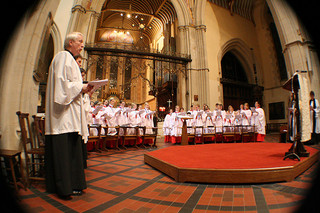
Christingle Talk

Christingle
Christingle by Rachel Ford on Flickr. Some rights reserved.

Here is a Christingle talk I prepared. It isn’t going to be used this year, but filed away for now.

Let me tell you a story about when I was a child.

I grew up in London, and one year our family decided to have a summer holiday in Scotland. It would be a long distance away, and my Dad didn’t want to drive all the way there and back.

So he booked us on a special overnight train from London to Perth in Scotland. It carried the cars at the back, and we went to special bedrooms in the main part of the train. We were to sleep in bunk beds while the train sped through the night to Scotland. My Dad and my sister shared one bedroom, my Mum and I shared another.

There was one problem: as a child, I was afraid of the dark. At home, we used to leave the landing light on at night, so that I wouldn’t be worried at night. But you couldn’t do that on the overnight train. So I insisted that Mum and I kept the main light on in the room all night.

I don’t think we slept much.

Is anyone else here afraid of the dark? I wonder why we are scared of the dark. Sometimes we think there are monsters at the end of our bed. Other times we hear the house creak and we think it’s going to collapse. In other words, we connect the darkness with bad things, scary things, horrible things.

So if we think about the darkness as something bad, we think about the light as something good. And when we call Jesus ‘the light of the world’ or ‘the light that shines in the darkness’, we are saying there is something good about him. He shines light – goodness – into the darkness. The Bible says, ‘The light shines in the darkness and the darkness has not overcome it.’

And that’s what we’re celebrating at Christingle and at Christmas. We know there is a lot of darkness in the world. That is, we know there is a lot of bad in the world: people are selfish, greedy, angry, they hurt people and so on. But we believe that light has come. Jesus is the light and the darkness cannot win in the end.

How is Jesus the light in the darkness? He starts with us. He wants to forgive the darkness in us. He took that darkness upon himself. That’s why when he died on the Cross, the sky went dark. Then he wants to change us, to live more like him. He shows us the way to live a good life, full of light, and he offers us his power to live that way. He also promises that one day he will judge the world, and the evil darkness will be gone.

This Christmas, as you take your Christingles away with you, look at the candle. Remember Jesus, the light of the world, who can shine his light into your world when the dark things worry you. Remember Jesus the light of the world, whose light can change the darkness of our own bad things. Remember Jesus the light of the world, who promises one day to chase all the darkness away.

Carol Service Sermon

Carol service
Carol Service by Stewart Macfarlane on Flickr. Some rights reserved.

Here is the address I gave at yesterday’s carol service.

Luke 2:1-20

There are two groups of people I would like us to think about for a few minutes this evening.

Group number one: cast your mind back to July this year, and the birth of the royal baby. Crowds gathering at Buckingham Palace awaiting the posting of the official announcement; other crowds at St Mary’s Hospital, camera phones poised behind the barricades for that first glimpse, and then an outburst of applause and flash as the proud parents came out.

Follow that with the speculation as we awaited the announcement of his name. And sure enough, he was given conventional royal names: George Alexander Louis. Kevin and Tyler weren’t in the running.

Then we had the christening, where there was more media coverage about the gown the young prince would wear than the meaning of the ceremony. Do only the royals dress up their little boys in frilly clothes, or is it just preparation for a public school uniform when he is older?

Trappings, ceremony, accoutrements – and enough coverage in Hello magazine to destroy all the rain forests. We expect that with a royal birth. Facebook and Twitter going crazy, you know the deal.

Yet we celebrate a royal birth at Christmas that looks so different. No privilege, no wealth, no ease. Mary is a teenage girl who may popularly be suspected of a scandal. She doesn’t come from an upwardly mobile family, and she had no chance of an education, let alone one at a prestigious historic university. Joseph wasn’t born licking a silver spoon, and he merely grew up to become an artisan, working as some kind of carpenter, builder or stonemason. You want that extension on your house or that new fitted kitchen? Call Joseph, and he’ll turn up in his old Transit van, with his plaid shirt, beer belly, and a copy of the Daily Mirror.

Royalty? Well, the only connection they got with royal circles was when the local despot Herod felt threatened and sent his death squads into Bethlehem. Mary, Joseph and the young Jesus have to leave everything behind and become refugees. No palace for them.

All of which leads me to believe that the Christmas story is especially for the poor, the forgotten, the obscure and those who think they are nothing or worthless. Do you feel insignificant? Jesus came for you. Do you feel like you don’t count? Jesus came for you, too. Or do you feel like you are on the margins, or rejected, or that you will never be popular? Do you believe that you are the sort of person who, when fame and fortune come along the road, take a detour to avoid you? The Jesus who came in the Christmas story is for you.

Perhaps, though, you are not like that. You may be one of those Surrey residents who has wealth or power or position or influence. If so, then the story of Christ’s coming at Christmas is one that holds dangers for you – or at least warnings. It is no good relying on our social position or our prestige with Jesus. Why would the King of Kings and Lord of Lords be impressed by that? Doesn’t your power or property seem puny in the light of who Jesus is?

Christmas – the time when we celebrate the coming of the humble king – is the time when we can only come to that king in humility ourselves. We don’t get into heaven on the basis of our contacts or whose number is on speed dial in our phone. But if we do come in humility, then we discover the amazing truth that Jesus is for us.

Group number two: they were a gang of heavy drinkers who lived on the outskirts of town. They carried weapons, which they were ready to use and they were known to conduct burglary raids together. Better not get in their way, or they might use a knife. They weren’t unemployed, they had a trade, but people were happy to do business with them, just so long as they stayed out of harm’s way. Although they tended to use other people’s land for their work, and if they came over your boundary, then you’d better not argue. At least, not if you wanted to keep good health.

If you had a gang like that living in your town, what would your attitude be? Would you call the police? Would you band together to hold a public meeting and demand that civic officials took action? Would you lobby your councillors or MP?

And what would you call for? ASBOs? Have them locked up? Perhaps they’re really illegal immigrants and should be deported.

Do you know what you’ve just done? You’ve just kicked the shepherds out of the Christmas story. The shepherds were the rogues, the chavs, the petty criminals of first century Palestine. Not respectable. The Daily Mail would have run front page campaigns against them and their type.

And yet, and yet … these people, these crooks, these bandits, these ne’er-do’wells, these scum of the earth are the first to hear the announcement that the Messiah has been born. If you think that Jesus came just to hang out with the ‘good’ people, forget it. He came for the bad and for the misfits.

If you doubt me, think about some of the crowd Jesus hob-nobbed with during his adult life. They weren’t all scallywags, but plenty of them were. Simon the Zealot was a terrorist or a freedom fighter, depending on your political views. The brothers James and John had a nickname – they were called ‘the Sons of Thunder – well, what kind of guys get that for a nickname? Early Hell’s Angels, perhaps? Matthew was a collaborator with the occupying Roman army.

So Christmas is a time to put to bed once and for all the idea that Jesus came for good people. Right from his birth, throughout his life even to his death on the Cross , when he was crucified with two common criminals, Jesus came to offer forgiveness and a new life to people who knew they were bad.

If you think you are a failure, this is good news for you. if you think you could never possibly be accepted, this is good news for you, too. Jesus wants you to say ‘yes’ to him and follow him.

But others here might be thinking, I don’t see myself like that. I’m a good, decent, hard-working member of society who is trying to be respectable. I put things into society, I’m not a taker. Why should Jesus favour the scroungers and the hoodlums? It’s unfair.

Do you know what the basic problem with that argument is? When we try to argue that we are fundamentally good, we manipulate our image. Like a photo of a plump person with acne being made to look clear-skinned and slim in Photoshop, so we tell the good story about ourselves and we mask the ugly truth about our own selfishness.

And Jesus won’t let us get away with that. Following him can only begin and continue with an acknowledgement of our selfishness, our thoughtlessness, our unjust behaviour. Without that humility he can’t clean us up, much as he wants to.

So I invite you to be like the shepherds this Christmas. Come dirty to the manger, and find the One who accepts your praise, makes you new, and calls you to follow him.

Sermon For The Second Sunday In Advent: The Revolution Of God

Matthew 3:1-12

The language ‘kingdom of God’ is a problem today. Most obviously it’s a problem if you live in a republic. How do you relate to the image? One American Christian writer faced that difficulty and decided to paraphrase it in a way that he thought maintained the impact of the expression. He called it ‘the revolution of God’.

And even in a monarchy like the United Kingdom, we have trouble relating to the phrase ‘kingdom of God’. In our nation, the Queen acts on the advice of her ministers. The sovereign’s powers have been circumscribed over history. We, too, need to understand that when John the Baptist comes proclaiming the kingdom of God – the very theme that will be central to the ministry of Jesus – we are talking about a revolution. The revolution of God.

Indeed, ‘kingdom of God’ was revolutionary language in New Testament times. And our  mission this morning is to consider what kind of revolution John was heralding, and which would arrive in Jesus.

Because make no mistake, if our Advent preparations consist merely of tinsel, presents and mince pies we have missed its true meaning. This is the season when we prepare for revolution.

And that is essential for us to grasp. We have taken it as a truism for so long that the kingdom Jesus came to preach was not the one that good Jews of his day longed for. That’s a truism because it’s true! But if we Christians aren’t careful, we become smug or complacent about that, and we miss the fact that the kingdom of God is still revolutionary for us. Why? How?

Locusts
Locusts by William Warby on Flickr. Some rights reserved.

Firstly, the revolution of God is an outsider revolution. John is not part of the establishment. No priest or scribe he, even though he was the son of Zechariah who ministered in the Jerusalem Temple. John puts all that behind him and goes to the wilderness. No flowing priestly robes for him, he goes for true shabby chic (without having it professionally distressed) in his choice of camel hair and a leather belt. I have joked in past years that he might have been the inventor of the ‘Bush tucker trial’ on ‘I’m A Celebrity, Get Me Out Of Here’ with his diet of locusts and honey, but actually he wouldn’t have been impressed at all by celebrities. In fact, given the scathing words he addresses to the Pharisees and Sadducees here I can’t see him getting on the phone voting to save them.

Here’s the way God’s revolution often works. It comes from the margins, not the centre. It is rare for God to renew his church and reform society in a movement that comes through the structures of power in the church itself. He tends to be at work on the outer boundaries. He tends to be stirring things up among those who do not have access to traditional sources of power or authority. He takes delight in using nobodies. It’s not just the aims of God’s kingdom that are revolutionary, it is the methods, too.

And if that is true, then it is time for hope to spring up in the pews of the church. Hope – and perspective. Do not wait around, expecting the ministers and Local Preachers necessarily to be the standard bearers of God’s revolution. I would love to be such a person, but God may not choose me. Do not assume that because of my office God will somehow automatically choose me. That is by no means necessarily God’s way. He may come in power upon and through those of you who think you are nothing in the eyes of the church, let alone the eyes of God. It’s what he did, using John the Baptist in the wilderness. It’s what he did, having his son born in poverty and laid in a manger.

So I invite you this Advent to consider the thought that you are as likely as anyone to be the kind of disciple that Jesus would enlist to do something significant in the revolution that we call his kingdom. Do not let the disappointments of everyday life blind you to the possibility that God may choose to use people who are among those who are unexpected, the ones who would never pass the selection criteria for the ministry, the ones who never pass exams, the ones who have never been in the limelight or held a significant rôle in society.

Secondly, it’s a homecoming revolution. Listen to the language of homecoming:

“Prepare the way for the Lord,
make straight paths for him.” (Verse 3)

Homecoming
Homecoming 2013 by Queen’s University on Flickr. Some rights reserved.

The Lord is coming home, is the message. He is coming to take his rightful place on his throne. That is why we can say the kingdom is coming.

And it was relevant to John’s audience. These words are quoted from Isaiah 40, where the prophecies of Israel’s return from exile in Babylon begin. It is no accident that scriptures with that theme were relevant to John and Jesus. For in their day, the Jews believed they were still in exile. Not geographically, for they were in the Promised Land, but because they did not rule it themselves on behalf of God, but living under a foreign power, Rome, they felt they were still effectively in exile. Many felt God had deserted them. Some rabbis had said that after the final prophet in the Old Testament had spoken, the Holy Spirit had left Israel.

So imagine what it is like for them to hear that God is making a homecoming. He will reign – and the Romans will not. He will be present in his kingly power, not absent. This is good news. In fact, it really is good news in their terms, because the word ‘gospel’, which we translate as good news, comes from an ancient practice of proclaiming the great things the king had done. God’s return to Judah and especially to Zion is a Jewish form of gospel.

Yet now see these things not merely as Jewish gospel two thousand years ago, but in the light of the One who did come to Zion, Jesus the Messiah. He comes to reign. He comes and has the title ‘Lord’. He is Lord, and by implication, Caesar is not Lord. The Romans would not have the final say in this world, and nor will the powers that be today, be they political, military, economic or media. Like Jesus was to say to Pilate, they only have power because it has been granted to them from above. The true Lord of our lives and of the whole cosmos is Jesus himself.

So we rejoice that the powers of our day will one day have had their day, while Jesus reigns – not from Zion but from a hill outside where he was lifted up; not in a temple made by human hands but in the midst of a temple made of humans; not in the precincts of Jerusalem but at the Mount of Olives, from where he ascended and where he will appear again.

The authorities of today are put in their place. They can posture and pout as much as they like, but it is all vanity and we can laugh at it, because Jesus is the true Lord.

We can also resist their seductions, in the name of Jesus the coming Lord. It will anger them, and it will cost us, but their days are numbered.

And furthermore, if Jesus is the presence of God coming to us – Emmanuel, God with us, as we remember at this time of year – then we are no longer alone. God has no longer deserted his people. By sheer grace, God is with us. Yes, granted, God hides himself from us for seasons, but he has come to be with us and never to forsake us.

Viper
Viper by William Warby on Flickr. Some rights reserved.

Thirdly and finally, it’s a revolution of repentance. Those who flood out from the big towns to John’s outsider location (verse 5) confess their sins and are baptised (verse 6). John says he baptises for repentance (verse 11). And when the religious élite come to seek baptism too – are they like modern politicians jumping on the coat-tails of a popular phenomenon? – he reserves his choicest insults for them:

‘You brood of vipers! Who warned you to flee from the coming wrath? Produce fruit in keeping with repentance. And do not think you can say to yourselves, “We have Abraham as our father.” I tell you that out of these stones God can raise up children for Abraham. 10 The axe has been laid to the root of the trees, and every tree that does not produce good fruit will be cut down and thrown into the fire. (Verses 7b-10)

This is a kingdom where status counts for nothing. All that matters is the opposite of clinging to status: humility; the humility that leads to repentance. A repentance that does more than say sorry; a repentance that makes straight our crooked paths to be fit for the coming of the Lord.

This is a kingdom where no-one can rest on religious laurels. What could have been truer for good Jews than to trace their spiritual heritage back to Abraham? Yes, that strictly was where God began to form a pilgrim people for himself, but it could not be claimed as a badge. You could not hold up your ‘child of Abraham’ laminate on your lanyard and automatically be granted entry into God’s kingdom. There had to be substance, and that was shown by a willingness to change.

There has to be the substance of repentance for us, too, and it needs to be on-going. John could come to us and say, ‘do not think you can say to yourselves, “We have Wesley as our father’”’ We are not a heritage site designed for spiritual tourists, we are a colony of God’s kingdom.

Let us beware what we are building on. In one previous church, a group of people objected to the use of modern worship songs alongside traditional hymns. (Those who enjoyed the contemporary songs were more generous in their attitude to the tried and tested gems from the past.) The final straw for one of this group came after I had left that church, when they decided to replace the pews with chairs. She and her husband resigned their membership. Her understanding of faith was based on the style of her heritage, and certainly not on the spiritual substance of what Wesley wrote about in his hymns.

So let us ask ourselves this question: when was the last time we allowed God to challenge our actions, our thoughts, our words or our lifestyles? Have we permitted God to effect a revolution in our own lives, such that he may use as agents of his revolution in the world?

There are many popular images of the church. It is common to say that it is a hospital for the sick and the sinners, and I certainly understand the church like that. But I think we also ought to ask what kind of church we are. Would it not also be reasonable to conclude that the church is a field hospital, healing its wounded so that they may be strong for the battle with those forces that foolishly resist the coming revolution? Here God binds up the injured nobodies and sends them to herald his kingdom from the outside, not the centre. Here in the church, his revolutionaries know the presence of Jesus and acknowledge him as Lord, following his instructions in his presence.

Have we signed up for the revolution? Because that is what John – and later Jesus – called us to embrace.

Sermon For Advent Sunday: Dawn Is Breaking

Dawn over Redcliffe Jetty
Dawn Over Redcliffe Jetty (3) by Sheba_Also on Flickr. Some rights reserved.

Romans 13:11-14

On most days of the week, I am the first person up in our household. My alarm clock rudely interrupts my sleep, I switch it off and lie in bed for as long as I think I can get away with, before coming down, unlocking the front door, opening the curtains, feeding the cats and making drinks for everyone. It doesn’t come naturally – I am constitutionally a late night person and am also usually the last to bed as well as the first up.

As Paul gets us to prepare for the second coming of Jesus Christ in Romans 13, he gives us an image of the early morning. He gives us three images of preparing for the day that help us know how to live in the light of the fact that Christ will appear again one day.

The first question is, what time is it? As you may know, a hobby I enjoy is photography. One of the most important factors to consider as a photographer is the light. Some people think that the bright light of the middle of the day is the best light for taking pictures, but to many of us it isn’t. It is harsh, and it causes dark, unforgiving shadows.

No: light is better at the beginning or the end of the day. The times around sunrise and sunset are the most interesting. And just as we speak about there being twilight around sunset, so there is also twilight around sunrise. In fact, as I learned from reading an article the other day, there are three phases of twilight just before the sun rises. There is astronomical twilight, when the centre of the sun is twelve to eighteen degrees below the horizon, and the light is dark blue – even still seeming like darkness. Then comes nautical twilight, when the sun’s centre is now between six and twelve degrees below the horizon. Orange and yellow hues join the dark blue. Finally, there is civil twilight, when the centre of the sun moves between six degrees below the horizon to sunrise proper itself. Now the light is a mixture of pale yellow, neon red and bright orange. Only after that is sunrise itself, and the first hour afterwards is called the ‘golden hour’, because red light turns gold at this time.

Why am I telling you all this? Because Paul tells us that we are living between twilight and sunrise.

Besides this, you know what time it is, how it is now the moment for you to wake from sleep. For salvation is nearer to us now than when we became believers; 12the night is far gone, the day is near. (Verses 11-12a)

If you remember the stories in the Gospels about the Resurrection of Jesus, you will recall that it happened in the early morning, before the dawn. Paul effectively says that as we now live in between the Resurrection of Jesus and the Second Coming, when all will be raised from the dead and God’s light will shine everywhere without opposition, we live in between first twilight and sunrise. We live now at a time when the light has begun to come but the darkness is still around. However, the longer time goes on, the closer we get to the full sunrise, when darkness will flee away at the full brilliance of the sun.

This image gives us a reference for our lives. Living as we do between the morning twilight of the Resurrection and the full sunrise of the Second Coming, we know that our world consists of both light and darkness. It can be frustrating and demoralising when it seems like we are surrounded more by darkness than light, but the good news for us is that the light has come and that the sunrise is on its way. It is prefigured even in the Christmas message, as when the apostle John says, ‘The light shines in the darkness and the darkness has never come to terms with it.’

So next time you are discouraged, remember everything to do with Jesus. He came as the light of the world, and the darkness couldn’t cope with him. Darkness thought it had got rid of him on Good Friday, but in the morning twilight of Easter Day we learned that wasn’t true. Now we are waiting for the sunrise. We may be tempted to think it’s pointless doing the right thing, because evil seems to be rampant, but living between the Resurrection and the Second Coming means that it is always worth aligning ourselves with what is good, beautiful and true. Be encouraged by the breaking of the dawn.

The second question is, what shall we wear? The alarm clock has woken you. A good supply of tea or coffee, pumped intravenously into you, has got you going. A shower has brought you closer to full humanity, and now you must decide what clothes to put on. How will you face the world today?

Paul has two images concerning this in the passage: ‘put on the armour of light’ (verse 12b) and ‘put on the Lord Jesus Christ’ (verse 14a). So – two sets of clothes! Let’s think about each set.

It’s about dressing for the occasion, or dressing for the conditions. That we are urged to put on the ‘armour of light’ indicates the conflict we are in. Yes, we know that the light will win, but the darkness is not giving up easily. The forces of darkness will seek not only to fight against us, beat us down and demoralise us; they will also try to infiltrate us. That is why Paul says, after telling us to put on the armour of light,

let us live honourably as in the day, not in revelling and drunkenness, not in debauchery and licentiousness, not in quarrelling and jealousy. (Verse 13)

We are not living in the light of our coming King when we resort to these sins. Now you may think that several of these are quite irrelevant to us, and that you have not witnessed any debauchery here in Addlestone Methodist Church. Well, neither have I (unless it has been kept well hidden!), but listen to what Tom Wright says about this verse:

We should not forget that “quarrelling and jealousy” are put on exactly the same level as immorality; there are many churches where the first four sins [revelling, drunkenness, debauchery and licentiousness] are unheard of but the last two [quarrelling and jealousy] run riot.[1]

The church infested with quarrelling and jealousy might just as well be the one that is rife with sexual scandal and drug abuse, in the eyes of the apostle. Think about it. When we let our tongues behave loosely in our conversation before or after the service, we are a deeply immoral church, filled with darkness. We must protect ourselves against this by wearing armour – the armour of light.

What does that mean? I suggest it involves disciplined efforts with the help of the Holy Spirit to concentrate our minds and our affections upon all that is good, worthy and noble. We resist and we cut down the attempts to infiltrate our minds with darkness. This requires filling ourselves with all that is good, starting with the Scriptures. It involves building our lives around the Gospel and all that it implies – the undeserved grace of God, his sacrificial love in Jesus Christ, the power of the Holy Spirit, the benefits of peace with God and others, and so on.

And having established that, the other clothing – ‘put[ting] on the Lord Jesus Christ’ (verse 14a) – complements that. What is the emphasis here? Tom Wright helps us again:

Frequently when Paul uses more than one name or title for Jesus the one he wishes to emphasize is placed first; here, by saying, “put on the Lord Jesus Christ”, he seems to be drawing attention to the sovereignty of Jesus, not simply over the believer (who is bound to obey the one whose servant he or she is), but perhaps more particularly over the forces of evil that are ranged against the gospel and those who embrace it. … The assumption must be that he is urging them, as a regular spiritual discipline, to invoke the presence and power of Jesus as Lord of all things to be their defense against all evil, not least the evil toward which they might be lured by their own “flesh”.[2]

Jesus, then, has power over the evil that threatens us, and when we are tempted to give way to the darkness that denies the coming of the light, we invoke him, we call upon him and are then able to resist and align ourselves with the breaking of the dawn rather than the powers of the night.

The third and final question is, what appointments do we have today? Our reading ends with these words:

and make no provision for the flesh, to gratify its desires. (Verse 14b)

The NIV speaks about us not thinking about how to gratify the flesh. It’s about excluding appointment requests from our diary, not including. I usually look at my diary for the day and consider what is in there. It affects decisions I make during the day about what things can claim my time. I try to check my diary carefully when I receive requests for appointments in the future, too. Do I have too many demands on a particular day? Does  this fit with what a minister should be doing? Why does this request appeal to me, and is that for good reasons or selfish ones? Why does this next request not appeal to me? Is that for good reasons or selfish?

Likewise, we have influences who want to take up our time in life, and our decisions on who and what we will give time to may well affect how much we align ourselves with the coming daylight of our King. Paul knows that one way in which we end up making wrong, sinful choices is when we give over our time to things which play on our own self-centred desires. Sometimes it’s the casual way we allow ourselves to idle time away, thinking casually about things that then start to take a hold on our minds, until eventually we end up thinking, doing or perhaps saying things contrary to our faith, and which bring us a deep sense of shame.

You can see this in Bible stories like that of David and Bathsheba. David was supposed to be leading Israel’s army in battle, but he gazed at Bathsheba bathing naked on a nearby roof. Why she used her time to bathe like that where she would be seen from the palace is also questionable. We know the horrifying results. David so wants Bathsheba that he arranges the death of her husband in battle. She becomes pregnant, and they lose the baby.

Now that may be the furthest thing from your mind, but think of how we allow the agenda of advertisers to dominate our thinking until we are dissatisfied with things that previously contented us. We then end up exercising poor stewardship of our money. What about when we give our time over to entertaining gossip? Or how about the occasions when we allow our thoughts to be inflamed by the sly prejudices of certain politicians, journalists or television commentators?

No: if we are dressed in the armour of light and we have put on Jesus Christ as Lord, we cannot imagine that we are going into a bright day where there will be room in our schedules for those things which seem harmless but which grow from tiny specks to great swathes of darkness. Advent Sunday is a time to remember that the light has been breaking through, especially since the Resurrection of Jesus, and today’s twilight will soon become the glorious dawn of his second appearing. May we live, knowing what time it is.


[1] ‘Romans’, New Interpreter’s Bible Volume X, p 729.

[2] Ibid.

Talking Books Christmas Message

I know, I know, it’s not even Advent until next Sunday. It’s one calendar month to Christmas Day. But this afternoon I am recording a short message for a local Talking Books service. I hope this will do.

Last December, our daughter sang in the choir at a school Christmas production based on Charles Dickens’ A Christmas Carol, imaginatively called Scrooge.

My wife would claim that I have a certain affinity with Ebenezer Scrooge when it comes to the Christmas season. No, it isn’t that I want to take advantage of the poor like he did with Bob Cratchet, but it is that I can seem to do a rather convincing ‘Bah, humbug’ routine at this time of year.

What? A Christian minister doing ‘Bah, humbug’ at Christmas?

Yes, really. Because I get fed up and tired out by the rush, rush, rush in the lead-up to Christmas Day. We have so much to cram in. There are all the everyday responsibilities as well as the presents to buy, the Christmas letter to finish and the cards to send. My colleagues and I are having trouble finding a date in our busy schedules to go out for a Christmas meal together.

In my case, it’s complicated by the never-ending run of church services, equalled only in intensity by Easter. At this time of year, it’s carol services followed by Christingles followed by Midnight Mass followed by special Christmas Day services. All the time, I am meant to be the personification of jollity. For you, there may be other pressures. But on my first year as a minister over twenty years ago, I got past Christmas lunch and fell asleep on the bed.

Rush, rush, rush. Bah, humbug indeed.

But I guess it was like that for Mary and Joseph. Forced off to Bethlehem by the occupying Roman power. No room for them in the guest room at their relatives’ house there (sorry to disappoint you, but ‘no room at the inn’ is a dubious translation). The baby born in less than hygienic conditions. The first visitors, shepherds (who were regarded in those days rather like people might treat gypsies and travellers today). Yes, later come the beautiful gifts of the Magi, with their gold, frankincense and myrrh. But then comes the hurried evacuation to Egypt to avoid the blood lust of Herod, whom we know from other sources to have been a violently paranoid ruler.

I think they could be forgiven a bit of ‘Bah, humbug.’ Was it worth it? Really?

And maybe that’s what we’re tempted to think, not only in the run-up to Christmas, but at other times, too. Is it worth it when I suffer from a disability? Is it worth it when I am penalised by the bedroom tax and face financial meltdown? Is it worth it when I am bullied, or when people take advantage of me?

I mean, why not just say ‘Bah, humbug’ to it all?

Except what the Christmas story brings to us in the midst of all the darkness is a chink of light. The poetic description in the beginning of John’s Gospel about the coming of Jesus says, amongst other things, ‘The light shines in the darkness and the darkness has not come to terms with it.’

Jesus and indeed the whole Christian message is real about the existence of darkness in our lives, within us and surrounding us in the world. But there is also this note of hope. Light is shining in the darkness. That light is Jesus himself, entering our human frailty with all he comes to do.

A favourite singer of mine is a Canadian artist whose profile is somewhat obscure in this country (although he is fêted in his homeland). His name is Bruce Cockburn, and he put it like this in one of his songs:

‘Redemption rips through the surface of time in the cry of a tiny babe.’

Happy Christmas. You can put the humbugs away.

Sermon: What Makes You Beautiful (Philippians 4:2-9)

Again, there has been a long gap since the last blog post. I had a week off, then had two consecutive Sundays where I led all age services and the material wasn’t suitable for posting here. Also, the situation with my parents’ health remains stressful and time-consuming. However, I am back to regular preaching today, and here is the sermon.

Philippians 4:2-9

Yesterday, Debbie took Rebekah to the cinema to see the recent film about her (Becky’s, that is) favourite pop group, One Direction. When I was titling the sermons in this series after songs, I thought I would please my daughter by picking the title of a One Direction song for this week: ‘What makes you beautiful.’

In these verses, Paul is telling the Philippians about some attitudes of heart that will make them beautiful in the sight of God and of other people. He seems to have a ragbag collection of thoughts for a motley crew of Christians in Philippi, but the common thought is about the attitudes that make for spiritual beauty.

Firstly, unity makes you beautiful.

I plead with Euodia and I plead with Syntyche to be of the same mind in the Lord. Yes, and I ask you, my true companion, help these women since they have contended at my side in the cause of the gospel, along with Clement and the rest of my co-workers, whose names are in the book of life. (Verses 2-3)

We don’t know why Euodia and Syntyche had fallen out, but all the various theories about who they are and what they might have argued about assume that they were leading members of the congregation, and that their disagreement was serious. Paul calls them ‘to be of the same mind in the Lord’, which implies that they are to share the same broad Christian aims. Somewhere they had taken their eyes off the ball. They had stopped ‘making the main thing the main thing’.

So here’s the thing for us. We know that in our society when the church fights over something (let’s say, the Anglican agonies over women bishops), it doesn’t look beautiful to the watching world, it looks ugly. There are bound to be certain things where we disagree, but if we are to break fellowship with each other it really only ought to be over something pretty fundamental. If the church stops preaching the Gospel, then divide. If the church denies the historic orthodox teachings about Jesus Christ, then divide. If the church starts calling sin righteousness or vice-versa, then yes, I think it is permissible to split.

But other things – lesser things – are not permissible grounds for schism. When people tried to divide one of my previous churches over styles of music, that was unacceptable in the light of God, I believe. When people don’t get their own way, pick up their ball and stop the game, that’s not on for Christians. Believe me, if I as a minister were to go off in a huff every time a congregation didn’t accept something I passionately believed in, I’d be half way to Antarctica by now.

No – if we are to look beautiful to the world and to God then we need to be committed to holding together on the fundamentals about God and the Gospel. We may need outside help to get beyond our divisions, just as Paul asked his ‘true companion’ to ‘help these women’, but it is a priority for our witness.

Secondly, rejoicing makes you beautiful.

Rejoice in the Lord always. I will say it again: rejoice! (Verse 4)

Let me say right away that we should not use this famous verse to promote a certain brand of Christianity that seems to expect the followers of Jesus to engage in pretending to be happy when they are downcast, because on that view the Christian who is not full of joy is a sub-standard believer. This is not about playing games of pretend. This is not about putting on a mask when we are struggling.

But Paul does urge us to rejoice in the Lord. Just as Euodia and Syntyche were to agree ‘in the Lord’, so are we all exhorted to rejoice ‘in the Lord’. What does that mean? I believe it is an encouragement for us when we are down in the dumps. Perhaps the Philippian church was in some way discouraged. I do not believe that Paul would have wanted them to be hypocrites: in other places, he is only too frank about his own experiences of suffering and the struggles that accompanied them.

So I take the view that Paul is giving us a way to find joy even in our darkest hours. We rejoice ‘in the Lord’. When we dwell on who he is and what he has done, then even if the dark clouds remain in our lives, the light of God’s Son shines through and reminds us of his great love for us, the world and all creation. That will give us heart when we are lingering in the shadows.

But this is not just for us in our troubles. The fact that we can have some joy when life is hard is beautiful to others. If you ever get the chance to see or read the testimony of the Australian Nick Vujicic, do so. He was born without any limbs and attempted suicide at the age of eight. He told God he would only come to him when he had an answer to the question, why was he born this way. God’s only reply was a request to trust him.

Yet if you see, hear or read Nick Vujicic you will encounter someone who is full of joy. Why? Because that joy is what Paul here calls ‘in the Lord’. It comes from realising that God has forgiven him, and that he has a purpose for his life. It does not ease his physical difficulties, still less heal him, but Vujicic has learned that true joy is in the Lord and that is what makes him a powerful witness.

Thirdly, gentleness makes you beautiful.

Let your gentleness be evident to all. The Lord is near. (Verse 5)

I expect you can see immediately that for Christians to display gentleness in an aggressive world is an act of counter-cultural beauty. Yet what we are dealing with here is all that and much more. The word translated ‘gentleness’ in the NIV is a word that carries with it ideas of magnanimity and of sweet reason. It is, if you like, about gentleness in a specific context, when someone can

remain reasonable and unperturbed when confronted by difficult people and to treat them calmly and fairly … it is the opposite of a quarrelsome nature; instead of being irritated by other people, the Christians are to treat difficult people with sweet reasonableness.[1]

Now can you imagine if this is what the world experienced when it encountered Christians? What if the Christians, by virtue of this kind of gentleness, were the ones who were known for their peaceable characteristics and who could be called upon when there was tension to help effect reconciliation? Imagine if the Christians were the ones who could defuse the tensions that arise in a workplace from time to time.

Or more than that: what would we look like to outsiders if this were the attitude we brought every time someone attacked the church or Christian values or beliefs (as happens more these days)? Would we not be thought of more positively than we often are – perhaps even as beautiful?

This kind of gentleness requires walking the way of the Cross as we absorb hatred and anger directed at us and at others. But if we are followers of Jesus Christ, then it must be possible.

Fourthly, prayer makes you beautiful.

Do not be anxious about anything, but in every situation, by prayer and petition, with thanksgiving, present your requests to God. And the peace of God, which transcends all understanding, will guard your hearts and your minds in Christ Jesus. (Verses 6-7)

We have an epidemic of stress and worry in our society. It affects relationships, the ability to work, the NHS drug budget and many other things. We speak about the invention of labour-saving devices, but all that happens is that we cram more into our lives and wonder when we are going to schedule sleep.

We Christians are not immune to events and circumstances that have the potential to put strain on our lives, either – and I speak as one who inherited a family predisposition towards high blood pressure.

So what if there were a way for Christians to be attractive in such a climate? The answer comes in prayer. But of course many in our culture pray, especially when the pressure is on.

Yet Paul here commends Christian prayer that taps into other values. Prayer can reduce our anxiety, because our lives are in the hands of God and he has good plans for us. That is why we can bring our requests not only with peace (that again!) but also with thanksgiving. We pray from a perspective of gratitude to God. We pray, knowing that he has answered in the past, and that brings a positive attitude to our prayers, even when the petitions we bring are those which have every reason to increase our worries. We do not only pray when we are at panic stations: we pray at all times, and this tunes us in more closely to God’s wavelength. This gives us more of his perspective, and that enables us to find a greater serenity than if we only turn to God when a crisis hits us. It is, perhaps, this on-going commitment to prayer that makes us beautiful.

Fifthly and finally, thinking makes you beautiful.

Did you hear me aright? Yes, thinking makes you beautiful. But don’t some thinkers just become annoying, smug clever clogs? Yes, they do. But according to Paul, thinking makes you beautiful if you direct your thinking appropriately:

Finally, brothers and sisters, whatever is true, whatever is noble, whatever is right, whatever is pure, whatever is lovely, whatever is admirable – if anything is excellent or praiseworthy – think about such things. Whatever you have learned or received or heard from me, or seen in me – put it into practice. And the God of peace will be with you. (Verses 8-9)

The challenge Paul gives us is in how to focus our minds. This is not about being an intellectual, it is about a positive way of conquering sin and becoming more Christ-like. We may  not all be academics, but we all have a mind and we can all use our minds for good or for sin. The trick, says Paul, is not to leave your mind vacant. One of the objections I have to the meditation techniques of eastern religions (sometimes found in practices such as yoga) is the tendency to empty your mind. Paul knows that an empty mind is one that is vulnerable to invasion. So instead he urges us to fill our minds, by concentrating them on ‘whatever is true … noble … right … pure … lovely … admirable … excellent or praiseworthy’.

But it isn’t just a problem for those who might be seduced by the unhelpful elements of other religions. It’s a difficulty for us when we choose to fill our minds with trash. While it’s important for us to engage with our culture and understand it – Paul isn’t assuming here that we can exist in a safe Christian bubble where, in the words of one satirical singer, ‘You’ll only drink milk from a Christian cow’[2] – it is only to easy for us to entertain ourselves with the trivial and the trashy. The late Martyn Lloyd-Jones used to counsel preachers about their reading that they didn’t have time to read good books, they only had time to read the best[3], and I think the same advice could be passed on to all Christians. By all means read the best literature and engage with the best art and entertainment, but don’t swim with the flotsam and jetsam that our culture offers.

And as well as that, make sure you engage with the best reading that the world of Christian literature can offer you. How can we expect to radiate Christ unless we fill ourselves with his wisdom? It is this that can help us put into practice good Christian living and fill us with the peace of God.

And wouldn’t that above all make us beautiful?

A Brief Sermon For A Memorial Service (2013)

Candles
Candles by Roger Glenn on Flickr. Some rights reserved.

It’s time for our annual All Souls service, where we invite back all those for whom we have conducted funeral services. Here is what I am going to be sharing tomorrow evening:

Psalm 23

If you were here last year, you might just recall that we also built a lot of the service around ‘The Lord’s My Shepherd’ (Psalm 23) on that occasion, too. Why do it again this year?

Well, apart from a lapse of memory on my part (called, failing to check my records), it’s an opportunity to look at these much-loved words in a different way. What does God offer us in this Psalm? I offer to you four gifts of God:

The first gift is that God provides:

The Lord is my shepherd, I lack nothing. (Verse 1)

I was still living with my parents when my grandmother died. We belonged to a church where to be a white European was to be in a minority. Most of the people were West Indian or West African. When we suffered our family bereavement, those friends from other cultures than our own treated us as one of their own families, and did for us what they did for others. They turned up on our doorstep with ready-made meals to take the strain off us. Some insisted on doing the ironing for my Mum. They provided for us, so that we had time and space to grieve, in the midst of all the arrangements we had to make for the funeral.

Most of us gathered this evening are not in the first throes of bereavement. We are months, or even years, down the line. But our grief is still there, even if it expressed differently now. But we still need those people who will be attentive to our needs, because the grief can pop back into our lives without warning too many times. Maybe equally, because of what we have been through, we can be available to do this for others.

There is a second gift in this Psalm, peace:

He makes me lie down in green pastures,
he leads me beside quiet waters,
    he refreshes my soul. (Verses 2-3a)

We talk of our loved ones being at peace, but if we pay attention to ourselves, we are far from at peace. We hope that if our loved ones are no longer suffering, then that will give us some reason not to scream out in pain.

But even if that is what has happened, we still face our loss. Our lives will never be the same shape. I don’t go for explanations that time is a healer.

But what I do buy is the kind of peace that comes from trusting in God. Not that such trusting either is always an easy serenity: sometimes (rather like some of the other Psalms in the Bible) it involves questioning God, and even anger. It’s the kind of trust that beats its fists against the chest of God, only to discover that we are being held in his arms like small children while doing precisely that. It is the peace that comes from knowing a God who is big enough to cope with our pain and our anger.

The third gift is God’s presence:

Even though I walk
through the darkest valley,
I will fear no evil,
for you are with me;
your rod and your staff,
they comfort me. (Verse 4)

Again, this can seem unlikely to us in bereavement: God is present with us in our grief? Didn’t even Jesus cry out while he was dying, “My God, my God, why have you forsaken me?”

Yet the death of Jesus is the very reason we can count on God to be with us in ‘the darkest valley’ or ‘the valley of the shadow of death’.

Right now, my sister and I are having to deal with elderly and increasingly frail parents. Our heads tell us they need to go into care, but our hearts say, “Please, anything but a care home.” As we walk through this dark valley which doubtless will become darker still, we are encouraged by those who say to us, “That’s what I had to do, and I felt exactly like you do.” In other words, it’s the people who are with us now but who have gone through the same experience who are the most help to us.

I suggest to you that this is why God can help us. The God who embraced darkness, who knew suffering and grief, can come alongside us in the worst places that we walk, too.

The fourth and final gift I want to share with you is that God prepares:

You prepare a table before me
in the presence of my enemies.
You anoint my head with oil;
my cup overflows.
Surely your goodness and love will follow me
all the days of my life,
and I will dwell in the house of the Lord
for ever. (Verses 5-6)

This is the language of feasting. The table being prepared is a banqueting table; the reason for anointing someone’s head with oil is that it was an ancient Middle Eastern custom to do that for honoured guests at feasts.

The psalmist had human enemies; the enemy we share in common is what St Paul called ‘the last enemy’, namely death. As enemies scorn and mock us, God prepares those things which will honour us instead. So God is preparing a great feast after death for all his people, when we who embrace Jesus can laugh together that death – which once taunted us so cruelly – has been destroyed. Even now, God is laying the table, setting the places, warming the plates, cooking the finest foods and opening bottles of vintage wine.

And so let me close these reflections with the words of a Celtic blessing:

May the peace of the Lord Christ go with you,
wherever He may send you.
May He guide you through the wilderness,
protect you through the storm.
May He bring you home rejoicing
at the wonders He has shown you.
May He bring you home rejoicing
once again into our doors.

Sermon: Down, Down

Philippians 2:1-11

Mr Motivator
Mr Motivator by Dave Tett on Flickr. Some rights reserved.

If in last week’s sermon I began by alluding to 1960s television with Opportunity Knocks, in this week let us move forward to the 1980s, to the birth of breakfast television and the arrival on our screen of fitness instructors in lurid spandex leotards. If you didn’t go out to work, or if you worked from home, then almost as soon as your cereal had settled in your stomach, an energetic extraverted fitness expert was there to help it all come back through vigorous exercise.

Yes, this morning I bring back to your thoughts the memory of Mr Motivator (or Derrick, to his friends). I can offer prayer afterwards for anyone who finds the recollection too traumatic.

But I do want to talk about motivation today. Not, how do we motivate people to take more physical exercise, but how do we motivate the people of God to live as a Christlike community? How do we become more like a family that bears the resemblance of our heavenly Father and of our elder brother Jesus?

In this most famous of passages in Philippians, Paul gives us three motivations to live our common life as the church in a manner befitting of Jesus Christ.

Firstly, he gives his readers some incentives. I’m sure you have used incentives to motivate people to do something. “If you do that, you’ll get extra pocket money.” “If you don’t do what I want, you’ll lose pocket money.” “If you do this for the company, you could earn a bonus.”

People who observe Christians have to cope with the high degree to which we get involved with things such as community service, and sometimes the uncomfortable fact that Christians do more than average requires an explanation from them. One such explanation that I have heard from some contemporary atheists is that what drives Christians is their fear of burning in hell. As the rock group Crowded House sang in their song ‘Distant Sun’, ‘Like a Christian fearing vengeance from above.’

But nothing could be further from the truth for Christ-followers. We are not motivated by fear of frying, we are motivated by the love of God. The words of the seventeenth century Latin hymn which we know as ‘My God, I love thee not because’  put it well:

My God, I love thee; not because
I hope for heaven thereby,
nor yet because who love thee not
are lost eternally.
Thou, O Lord Jesus, thou didst me
upon the cross embrace;
for me didst bear the nails and spear,
and manifold disgrace,

And griefs and torments numberless,
and sweat of agony;
yea, death itself; and all for me
who was thine enemy.
Then why, O blessed Jesus Christ,
should I not love thee well,
not for the sake of winning heaven,
nor any fear of hell;

not with the hope of gaining aught,
not seeking a reward;
but as thyself hast loved me,
O ever loving Lord!
So would I love thee, dearest Lord,
and in thy praise will sing,
solely because thou art my God
and my most loving King.

And it’s that positive incentive Paul gives the Philippian Christians in verse 1:

Therefore if you have any encouragement from being united with Christ, if any comfort from his love, if any common sharing in the Spirit, if any tenderness and compassion …

It’s all about their experience of God’s love, of being loved and giving love. If you need an incentive to live the Christlike life in community with your brothers and sisters, it is this. God loves you. He has united you with his Son. You are comforted by his love. You participate in the things of the Spirit. You experience tenderness and compassion.

No Christian needs to be stirred up by terror about eternal consequences. We already know that we are loved with an everlasting love. We can be humbly confident in the love of God for us. It is there in God’s promises. It is there in God’s actions. It is there in our spiritual experience. Let us live as the family of God because his love has drawn us to himself and drawn us to one another in his presence.

But what would that involve? We therefore secondly nevertheless hear of our obligations:

then make my joy complete by being like-minded, having the same love, being one in spirit and of one mind. Do nothing out of selfish ambition or vain conceit. Rather, in humility value others above yourselves, not looking to your own interests but each of you to the interests of the others. (Verses 2-4)

You can sum up the obligations here in two words: ‘unity’ and ‘humility’. Unity comes in the words ‘like-minded … same love … one in spirit and of one mind’. Humility comes in doing ‘nothing out of selfish ambition or vain conceit’ but ‘in humility valu[ing] others above yourselves, not looking to your own interests’.

These are to be the characteristics of the Christian family: unity and humility. We are to seek unity in our thinking and goals, bound together by love. That means selfish ambition goes – holy ambition is fine, that is, ambition for the glory of God, but we must not be self-seeking. And vain conceit must go too, because our motivations in the Church are not to seek applause for ourselves but for Christ.

The thing about this is, most of us will sign up to unity and humility without hesitation. Voting against unity and humility is for Christians like voting against apple pie. Yet what we have to watch is the small, subtle temptation. I have to win the argument all the time. I do little things that just elevate my reputation in small, almost indiscernible increments. What I claim to be the cause of Christ is really my own personal campaign.

What are the antidotes? Perhaps some of it comes in Paul’s exhortations to ‘value others above ourselves’. It isn’t that we don’t value ourselves at all – one of the lessons of dealing with my parents’ frailty has been the hard one that I have done all I can but I can’t do it all, and if I try to do it all I will become ill and no good to anyone. So I must value myself to a certain extent, but I mustn’t put myself on a pedestal.

The great thing about valuing others above ourselves is that unity and humility flow as a result. If with a good heart I seek someone else’s well-being, then I will become more united with them. If I do this truly, then by necessity I value them from a posture of humility, because this is an act of service.

Venture
Venture by Luc de Leeuw on Flickr. Some rights reserved.

Yet what we need to remember above all is that these things don’t just happen automatically. We need to be utterly deliberate in our intentions and actions of valuing others. It must be a conscious decision that we act out. As the American preacher Vance Havner once said,

The vision must be followed by the venture. It is not enough to stare up the steps – we must step up the stairs.

Imagine what the effect might be if we did, though. Just as it was said of the early disciples, ‘See how these Christians love one another’, wouldn’t it be wonderful if that were what people said of us in this community?

Thirdly, finally and supremely, we are motivated by the story of Jesus. Now you would expect Jesus to trump everything. He is our example. We are to imitate him, are we not – daunting as that may sound?

But Jesus is not a vague set of principles and laws. Jesus is a person, indeed the Second Person of the eternal Trinity, who became human. He has a story, a narrative, and that is what is compelling for us: his story. He actually lived the things he calls us to do as his family. He has modelled it all for us.

And of course ‘story’ is an engaging and persuasive medium for us humans. You don’t generally communicate truth, goodness and beauty to children by getting them to recite a list of laws in the same way that they learn their times tables by rote. You tell them stories. Many adults find the same is true. It’s why novels, TV shows and films are such strong parts of our culture. The story is magnetic, captivating and convincing. Somewhere embedded in the story are the values of the author.

Nowhere is this truer than in the story of Jesus. And Paul gives his readers a miniature summary of Jesus’ story (verses 5-11), telling of how he who came from the highest heaven put aside all his status to become a servant and obey his Father, even to the humiliation of the Cross. Yet God vindicated that humility by raising him and exalting him, so that one day every being in the universe will recognise him as Lord. When Debbie did her jury duty at the coroner’s court in the summer, everyone had to stand when the coroner himself came into the court or left; similarly, when the name of Jesus is announced at the end of time, all will not stand but bow as an act of homage. That is how far the Father has vindicated his Son for his humility and obedience.

The great thing about what Paul does is that he carries the story of Jesus beyond what the Philippians know. They know Jesus was incarnate, they know about his humble life and death, they know that God raised him from the dead, but they don’t know the climax of the story where the tables are so completely turned that the Humbled One receives the humble praise of all creation. Will not the Judge of the earth do right? Why, yes he will.

As Paul tells the whole arc of the Jesus story, going beyond what we know in the Gospels to the resolution of all the conflict and tension, he gives us an incredible motivation to live as the family of God. Is it that Jesus is our example in how to live in the power of the Spirit? Yes – but it is more here. Paul gives us more than a model for living. He says more than, ‘Copy Jesus’. If that were all he gave us, we might not have much more than a dull moral lecture.

However, the full story of Jesus motivates us to live as a united, humble family. How? By showing us how God ultimately treats those who live in humble obedience. He vindicates them. He exalts them.

Oh, to be sure, all creation will not bow down at the sound of our names – we are not entitled to worship as Jesus is. But our God is the God of the great reversal. Not only does he call us to values that turn upside down the assumptions of the world, he then confirms that upside down way as the true grain of the universe in final judgement. For judgement to God is not simply the punishment of the wicked, it is vindication, too. And those who are willing to live the humble life of service, seeking to build up the family of God by valuing others above themselves are those who will be vindicated by God at the end of all things. These are the people who can expect to hear the words all Christians covet: ‘Well done, good and faithful servant.’ It’s the story of Jesus as told here by Paul that gives them that hope, and the motivation to live for it.

Do we want, then, to live as the family of God? Are we willing to put in the effort under the leading of the Holy Spirit? Let us find incentive in the love of God to fulfil our obligations to unity and humility. And let us be motivated by the vision given to us in the story of Jesus, as we go through our travails, for God is the master storyteller, and although he gives us freedom to improvise our characters, we know he has planned justification for his humble people.

Sermon: Chain Of Fools

Knaphill is having a sermon series on Philippians. It was launched last week by a Local Preacher. Tomorrow, I get to preach the second sermon in the series. Each week is named after a song – hence this week’s title ‘Chain of Fools’. More strictly, this is about chains and fools.

Philippians 1:12-30

Opportunity Knocks
TV Shows We Used To Watch – Opportunity Knocks 1956-1978 by Paul Townsend on Flickr. Some rights reserved.

People of a certain age will remember the TV talent show ‘Opportunity Knocks’ with Hughie Green telling us every week, “I mean that most sincerely, folks”. And anyone who has to remind you they are being sincere is automatically suspect to me.

For that show, the opportunity that came knocking was for fame and perhaps fortune. It was the opportunity that a door would open into a wide vista where all things might be possible for those who won the public vote. For winners such as Freddie Starr, Paul Daniels, Les Dawson and many others, that was the outcome.

But in our reading today the apostle Paul is telling us that opportunity knocks in a different way – not when the doors are flung open but when the doors are shut tightly, and chains are attached to his feet. Paul’s opportunity comes in prison. He is under the fiercest of constraints.

And this morning I want us to explore what Paul tells us about the opportunities we still have as Christians when our lives are constrained. Our constraints may not be imprisonment, but they may be ill health, aging, unemployment, financial loss, bereavement, or any one of many unwelcome intruders into our lives. What kind of opportunities does Paul envisage us having?

The first area where constraints become an opportunity for Paul is in the advance of the Gospel. Writing from prison in Rome, Paul says,

Now I want you to know, brothers and sisters, that what has happened to me has actually served to advance the gospel. 13 As a result, it has become clear throughout the whole palace guard and to everyone else that I am in chains for Christ. 14 And because of my chains, most of the brothers and sisters have become confident in the Lord and dare all the more to proclaim the gospel without fear. (Verses 12-14)

The Gospel has got into the imperial household, not by Paul hob-nobbing with the high and mighty, as if the only way to do so is by mixing with movers and shakers, but by his interaction with the soldiers guarding him. Not only that, his example in straitened circumstances has encouraged the local Christians ‘to proclaim the gospel without fear’.

So find encouragement here if you think the only way the Gospel can prosper in society is if we  in the church have connections with the high and mighty. Do not fear when you see the diminished public influence of the church, because the spread of the gospel is not dependent upon our level of influence in the media or government – much as I believe that it is important for Christians to be involved in both of those areas, creating stories and making policies that have their roots in the Christian faith. Do not be perturbed because you are one of society’s nobodies. The influence of the gospel doesn’t work like that. It goes from person to person as we let people see that Christ has changed us.

And what could be more impactful than the fact that people see how our faith transforms our attitudes when we are down and struggling? It’s easy to say how wonderful Jesus is when times are good, when money is plentiful and when life is on the up. But when we can still speak of his love in those seasons where we are suffering loss or injustice, then we have a powerful testimony to God’s love in Christ for us and the world. It has been said that it is in the bad times that we know how much of God we have: I would say further that it is in the bad times that other people know how much of God we have.

You see, the advance of the gospel in these isles doesn’t depend on the church supplying an unending list of celebrity testimonies, and it doesn’t depend on the Church of England retaining its Established status. The cause of the gospel in our land has more to do with ordinary Christians, even and especially those facing privation in their lives, commending Jesus Christ to people.

The second area where constraints become opportunity for Paul is in the blessing of others who are not suffering.

Listen to what he says next:

It is true that some preach Christ out of envy and rivalry, but others out of goodwill. 16 The latter do so out of love, knowing that I am put here for the defence of the gospel. 17 The former preach Christ out of selfish ambition, not sincerely, supposing that they can stir up trouble for me while I am in chains. 18 But what does it matter? The important thing is that in every way, whether from false motives or true, Christ is preached. And because of this I rejoice. (Verses 15-18)

We move from the chains to the fools. When your circumstances are less than optimal, isn’t it easy to be generous about people who are taking advantage of your misfortune. Some preachers seem to be using Paul’s incarceration as an opportunity to advance themselves in the church. You might expect a person like Paul to be mad about this. Yet he is gracious:

‘The important thing is that in every way, whether from false motives or true, Christ is preached. And because of this I rejoice.’

It’s one thing being chained into a life circumstance you don’t like and still finding a positive way to live for the gospel, but when people who should be colleagues and friends act not in co-operation but in competition, then liberal doses of sodium chloride are applied to an open wound. It may be that at work, someone takes advantage of your misfortune in order to further their career. It may be that in the church, someone you counted on as a friend discreetly puts you down to others behind your back, casting doubts about your suitability for something you are passionate about, and it all leads to them doing something in church life that you had longed to do – and they knew it.

How might we react in such a situation? Well, help is at hand if you want to lash out at them. Just go online to the Biblical Curse Generator on the Ship Of Fools website, and let it randomly give you some juicy Old Testament smiting words to apply. Purely in the interests of research, I tried it out, and I received the following to use:

I pray thou shalt beget difficult teenagers, O thou offspring of a squashed cockroach!

Behold, thou shalt have more mother-in-laws than King Solomon, thou relative of Herod!

Woe unto thee, O thou Mesopotamian harlot, for you will go on a diet of crunchy, unsweetened locusts!

But Paul doesn’t do that. Not only does he leave vengeance to God, rather along the lines of Psalm 35, which begins with the words, ‘Contend, O Lord, with those who contend with me,’ he does more. He rejoices in the successes of others. He just cares that even those who are preaching the gospel for the wrong motives are – well – preaching the gospel.

This is a test of grace. Can we show that the gospel has been having an effect upon our lives in this area, too? We live in a culture whose building blocks include a large one called ‘envy’. Our economy is largely built on the idea that we must get bigger and better things, because other people have bigger and better toys. But can we rejoice that others have things we don’t?

Another building block of our culture is called ‘status’. Can we be pleased for others who are elevated when we languish in obscurity? That young whippersnapper who came into the company after us, and who had the proverbial meteoric rise, shooting past us – can we rejoice in their success, and bless them?

According to the gospel, our self-worth is not in our money and possessions and nor is it in our status. We are valued for far greater reasons: we are made in the image of God, we are redeemed by Christ, and we are being remade into God’s image by the Holy Spirit. These facts give us far more dignity than anything our society can offer. And if these things are central to our identity, we are free to bless others who enjoy the limelight while we are in the shadows.

The third and final area where constraints become opportunities for Paul is in evaluating life and death.

Again – remember Paul is in prison. His future is ambiguous. Will he be released, or will he be executed? That uncertainty would torture the minds and emotions of many.

But not Paul. Again he sees something positive. He weighs up the pros and cons. If he lives, he can preach the gospel and encourage the Philippian Christians. If he dies, he gets to be with Christ – and nothing can better that. He regards his future as what we would call today ‘a win-win situation’. He simply can’t lose. Either he gets to do more useful kingdom work, or he goes to glory.

Let me commend Paul’s positive outlook on the future to you. If life had been easier for him, I wonder whether he would have thought like this. But the chains of prison lead him to this faith-filled assessment of the situation that he just can’t lose, whatever happens to him.

And as we dwell on Paul’s positive faith in the face of adversity, let me ask you again about the uninvited intruders in your life that have the potential to sow discouragement in you. For me, you will not be surprised to know that presently that means the traumas associated with my parents’ increasing frailty, and the major decisions my sister and I are suddenly faced with, far sooner than we expected. Can I live through this, believing in the God who works for God in all things for those who love him, or will I allow the crisis to drag me down? Can I believe that God can be glorified in my parents’ time of weakness and need?

I think one reason why our trials stress us is that we forget to bring God into the evaluation. Without God, and without a hope that death is trumped by resurrection, all will seem futile. But when we factor in our Risen Lord Jesus Christ, things look different. They may still be painful, but they are transformed by him.

Let me put the whole issue this way. If you set someone an assignment to complete in the creative arts, they may well produce their best work if you constrain their options. Ask someone to produce a painting, but limit the number of colours to be used. Invite a photographer to take pictures of an event, but only allow them one lens to use on their camera. These constrictions force new, creative thinking.

Peter Gabriel
Peter Gabriel @ Forest National 2013 by MadmiKe.59 on Flickr. Some rights reserved.

There is one famous example I can think of from the world of rock music. When the singer Peter Gabriel was making his third solo album, he invited his former Genesis band mate Phil Collins to play the drums on the tracks. But Gabriel told Collins he wasn’t allowed to play any cymbals. It contributed towards an unique and pioneering sound.

Paul sets something similar before us here. His options have been limited. His best choices have been removed. And comparable things will happen to us as well. But the apostle rises to the challenge, and his faith in the crucified and risen Lord enables him to advance the gospel, to bless those of whom he might be jealous, and to see the most enormous kingdom possibilities in an uncertain future.

I don’t mean to trivialise or minimise the woes in our lives. But I do hope we can take a lead from Paul in seeing that even when life is tough, we can find positive opportunities to live kingdom lives for the Gospel.

Create a website or blog at WordPress.com

Up ↑