Jesus On The Beach

Part Two of Julian Reindorp’s contributions to the Ministry Today conference: he shared a meditation, based on the work of the late Henri Nouwen. Imagine you are lying on the beach in your swimming gear. You are completely relaxed, and just for once not even one thought from your work in pastoral ministry is intruding into your mind.
As you lie there, you see a person walking in your direction from a distance away. It is a man. When he arrives, you realise it is Jesus. He speaks to you:

“I just wanted to say ‘thank you’ for all you are doing for me.”

How do you react?

Because for some of us, those would be hard words to accept. We think we are such failures that we cannot believe Jesus would speak to us like that. Maybe the critical words of others so loom in our minds that they frame what we think Jesus might say. If they are critical, we may believe he is.

So what does our reaction say about our circumstances, or the state of our souls?

The Importance Of Ordained Ministry

I’m just back from the annual Ministry Today conference. This year our speaker was Canon Julian Reindorp, recently retired from ministry in Richmond, Surrey. His theme was ‘Who Encourages Us?’ I plan to share one brief bon mot from his material each day for three days here.

The first is this: in our first session, he claimed that the work of ordained ministry has never been more important than it is today. Well, that caught my attention. Why would he say that when our rôle is increasingly marginalised and valued less?
For this reason: our calling involves building community – the community of Christ. Yet in our society, there is less and less community building. ‘Social capital’ is declining. Even previously social activities are now conducted alone, as Robert Putnam observed in his book Bowling Alone.

So let us hold our heads up high. Whatever people may think, the church is engaged in the most crucial of activities, and we who serve that church in leadership are contributing something utterly vital to our society.

Letting Jesus Heal

Sally Coleman and I seem to be interested in much the same things right now. Not only have we both written about theology in the last couple of days, she has written about healing and now here am I doing the same.

We’ve just started running the DVD course ‘Letting Jesus Heal‘ from the Christian Healing Mission at Knaphill. Now before I go any further, I should make full disclosure and say that I have known John Ryeland, the director of the CHM, for a good number of years, and indeed went to school with his wife Gillian! So you can accuse me of bias if you like.

However, I want to commend this course enthusiastically, based on the first two weeks of the six. What I like about the teaching here is that John combines a faithful openness to the power of God to heal with a quiet, gentle approach. In style this is about as far removed as you can get from the hyped-up school of healing ministry so prevalent in some places. It is therefore both safe and ideal for introducing an expectancy that God will work in a context where people might be nervous of showmanship, noise or manipulation.

Not only that, one thing I deeply value about John’s teaching is that he opens people up to the belief and experience that God is speaking to us much more than we realise. How often do we think that God is not speaking to us, or just does not speak to us – especially in contrast to other Christians who, in the words many years ago of Gerald Coates, ‘have more words from the Lord before breakfast than Billy Graham has had in a lifetime’?

Eighteen months ago, I heard John give his teaching on ‘Encountering Jesus‘ and had a simple but profound experience of Christ in relation to some serious pain and disappointment in my life. It forms the second session of the healing course, and while I obviously cannot share any confidences, I know that a number of people heard Jesus speak to them on Wednesday night in the course.

If you are looking for something to encourage people in the area of Christian healing, then, I recommend you take a good look at this course. And if you’re not far from Knaphill, feel free to drop in on us next Wednesday at 8:00 pm.

Doubt And Faith

This coming Sunday in our sermon series on ‘People around the Cross and the tomb’, we shall look at Thomas, or ‘Doubting Thomas’ as he is often known. The subject of doubt and faith is a vital one, and today I have begun typing up various random ideas that I hope will make their way into the sermon.
Among them is the text of a speech I found online nearly six months ago. I have kept it open in a browser tab ever since – probably I should have just saved it in Delicious. However, it is coming into its own as I prepare for Sunday, so I thought I would draw your attention to it now. The Benefit of Doubt: Coming to Terms with Faith in a Postmodern Era is a wonderful lecture to read by the American Old Testament scholar Peter Enns. I shall certainly be including some material at the weekend which takes its inspiration from this wonderful piece. If you have half an hour or so to spare, I commend it to you enthusiastically.

The Questions Children Ask

This video clip from the BBC comedy show Outnumbered has gone viral in the last year or two:

My reaction on watching it again this week is that many of young Ben’s questions to the vicar were all too reminiscent of the attitudes many adults have shown this last week when thumping their fists in the air to celebrate the killing of Osama bin Laden. Why not sort everything out with a quick bit of violence? These attitudes start young.

Probably the best question in the clip is from Karen, when she asks the vicar whether Jesus could have found another way apart from the Cross of saving people.

On Friday, I went into our children’s school to be quizzed by Year 1 and Year 2 children. It was our son’s class. On Thursday evening at the meal table, he told me the class had prepared sixteen questions to ask me. The little so-and-so wouldn’t give me a heads-up on any of them! His teacher was very pleased with that the next day.

Some of the questions were routine: do you marry people? What is a christening about? What does your font look like? Do you pray every day? But some were harder, and especially to give an accurate, succinct answer in understandable language. Why did you want to become a minister? Well, actually I didn’t …

After we got through the sixteen questions, the teacher invited a few additional spontaneous questions from the floor. That yielded one I could only answer concisely, and as briefly as I could in the limited span before playtime: do you believe all the stories in the Bible? A ‘yes’, combined with an explanation of needing to treat different literature differently, pointing to the different styles of books in the classroom.

Perhaps unsurprisingly, while I had questions about baptisms and weddings, I had none about funerals. The questions were about what interested and affected them.

But the honesty and directness were refreshing, and a world away from the spite and hate behind many such debates among adults here on the Internet.

The Royal Wedding Sermon

One gem from Richard Chartressermon at today’s wedding of Prince William and Kate Middleton:

As the reality of God has faded from so many lives in the West, there has been a corresponding inflation of expectations that personal relations alone will supply meaning and happiness in life. This is to load our partner with too great a burden. We are all incomplete: we all need the love which is secure, rather than oppressive, we need mutual forgiveness, to thrive.

Unrealistically high expectations of a romantic partner are killing relationships today. Not that a couple shouldn’t do their utmost, but the lack of belief in God leads to new idolatries.

I’d like to say more, but it’s late! That is enough to start chewing on!

David Wilkerson

It is sad to read this morning the overnight news from Texas about the death of David Wilkerson.  in a car crash. His life and ministry impacted millions. No appeals to his supporters for the money to buy a Lear Jet, just a guy who risked his life in the violent Projects of New York to show the love of Christ to gangs led by the likes of Nicky Cruz. Famously, this was recounted in the book The Cross And The Switchblade, and the film of the same name, along with Cruz’ testimony, Run Baby Run.

Then the founding of Teen Challenge, to help young people with troubled lives. And a ministry at Times Square Church, New York, where he still preached regularly, even as he approached 80.

Google the Internet and you will find some of the controversial prophecies he made in recent years, not least on his blog. On some of these, time alone will tell.

His life affected my family. My sister went forward at one of his evangelistic meetings, around 1978 at Loftus Road, Queens Park Rangers football stadium.

Today I give thanks for the life of a courageous Pentecostal preacher, and the fruit of his ministry. May he rest in peace and rise in glory.

Easter: Energy And Exhaustion

I don’t do 5:30 am. Although I had to, today. Easter Day began with a 7 am ‘sunrise service‘ at Bisley Clock Tower, the highest piece of land locally. It’s part of the National Shooting Centre, so what better place to celebrate the resurrection of the Non-Violent One?

We gathered to sing three traditional hymns that we couldn’t include in the later 10 am All Age Communion, all to the accompaniment of a melodica. During the hymn before my talk, I felt prompted to change what I was going to say. Working from Matthew 28:1-10, I spoke about the women, the angel and Jesus. The women are the first apostles – they are the first witnesses to the resurrection. Effectively, they are the apostles to the apostles. You would not have chosen women as witnesses in the first century if you wanted to be believed – this is a hint of the account’s veracity. And God is always choosing unlikely people as his witnesses.

As for the angel, I loved the piece where – after rolling away the stone, he sat on it. The very object that had contained the imperial seal of Rome. For the Resurrection shows God’s conquest of all powers and authorities. Whatever we see today in terms of opposition, the Resurrection guarantees that principalities and powers will be ‘sat on’!

And Jesus – whereas later I was to talk about meeting him, now I emphasised him going ahead. Not only is the risen Lord always with us, he also goes ahead of us. Wherever we have to go in our life’s journey, we can find that Jesus has gone ahead of us to meet us there.
From that service to Addlestone for an 8:30 am communion, singing our hymns to the backing of CDs ripped to a laptop. And then it was back to the church building at Knaphill, where our wonderfully creative all age worship team had devised a service featuring scents and spices, an earthquake sound effect, drama, dance and Noel Richards‘ recent Easter hymn ‘Because He Lives‘. Back in February you could email Noel for a free MP3 of the song – not sure if that offer is still available, but in case it is, the link is here.

By the end of the morning, I was exhausted. No stamina, me. I didn’t go to the united service in the evening. But it struck me that on the original Easter Day, at least two disciples moved from exhaustion to energy – right at the end of the day. I’m thinking of the Emmaus Road story. Cleopas and his companion are downcast, discouraged and without hope. But when they recognise the risen Jesus in the breaking of bread, they hurry back to Jerusalem from Emmaus, late at night – even though they have invited the stranger (Jesus) in, because it’s late and you shouldn’t be travelling. The Good News that Christ is risen gives new energy – may it do so to us, too.

Not St George’s Day

Today is not St George’s Day here in England.

“But it is,” some object, “It’s 23rd April. That’s St George’s Day.”

Not this year, it isn’t.

The church calendar for this special season of the year takes precedence over saints’ days (we’ll overlook the dubious nature of George as a saint), and this year it’s relegated to 2nd May.

So what is today – Easter Saturday?

No, not that either. Easter doesn’t start until tomorrow. We’re still in Lent today. Easter Saturday is in a week’s time.
Today is Holy Saturday, one of the most neglected days of the church’s year. It is the day when, as my friend Will Grady posted on Twitter and Facebook earlier,

Sometimes, though, we Christians need to observe a Holy Saturday moment. On Holy Saturday, there is nothing you can do except wait. — N. T. Wright, Lent for Everyone

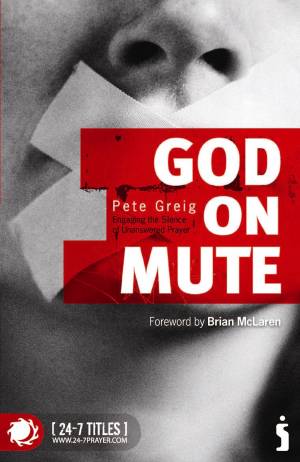
It’s the day of waiting. Jesus is still in the tomb, so to speak. Hopes are still dashed. Darkness still covers over hope. It forms a wonderful section in Pete Greig‘s book on unanswered prayer, God On Mute, where he recognises that this darkness is where many people spend much of their lives. We wait in the tomb of hopelessness, with our prayers seemingly unanswered or refused, not necessarily knowing that it is all going to burst out of the tomb in new and unexpected ways tomorrow. Greig quotes the poet R S Thomas, who says that God is ‘the darkness between stars’.

So let’s not rush past today in the hurry to prepare for tomorrow. If we get a chance, let’s linger here. Because many people are – often against their will.

Later tonight – after sunset – my Easter Day sermon will appear here on the blog. But in the meantime, let’s wait – especially with those who are living protracted seasons in Holy Saturday.

Good Friday Experiences

I began Good Friday today with a united walk of witness here in Knaphill. Beginning at the Catholic church, we walked to the King’s House Coffee Shop, then to the Methodist premises, followed by the Baptist church, and finally to Holy Trinity C of E. At each stop someone read a portion of the Passion story. Different people volunteered to carry the big cross on each leg of the journey.

Most moving for me was the final leg, when a man with learning difficulties asked to carry the cross. Nothing like as physically big as his predecessors in the task, he struggled in places and had to be helped by two other men. It was a small glimpse of Jesus falling down and needing help from Simon of Cyrene.

As the one co-ordinating the walk, I found myself at each stop standing on one side of the person with the cross, while on the other side was the reader for that particular episode from the story. In a tiny way, it was like being one of the two thieves either side of Jesus.

In these two ways, I found myself entering into the Passion story in new and unexpected ways this year. The sadness was in having to leave the following united service at Holy Trinity fifteen minutes in to get to the tail end of a united service at my other church, Addlestone Methodist. I arrived at that, just as they were singing the closing hymn. Having to flit between the two communities felt like it undermined a sense of belonging. Can you belong in more than one community at once? If missional Christianity includes earthing ourselves in a particular place by incarnational ministry, does this militate against it?

I wasn’t the only minister facing this issue: the Methodist deacon left at the end of the service to go to his other church, and two of the New Frontiers church leaders came over from Chertsey, where they used to be based and still share with other Christians.

Unlike in Knaphill, there had been no united walk of witness in Addlestone. Some of the people in Addlestone said how much they missed it. A discussion on why we think the procession of witness on Good Friday is important would be interesting. As I’ve said, it hit home for me today in unexpected ways. On other occasions, I’ve watched passers-by as Christians walk behind a cross on this day of the year, and wondered whether they felt we were doing it as a reproach against them. I don’t suppose most Christians do have that attitude, but I’m curious to know how it’s perceived, if at all. A judgement? An anachronism? Other reactions?

In contrast, my wife and children didn’t come with me on any of these events or services. They needed something more child-friendly. Happily, the nearby church of Holy Trinity, West End Village had a suitable act of worship for children for Good Friday. Too often we are so caught up with the solemnity of the day that we exclude children by the tone of what we offer. Holy Trinity West End knew better. They provided a service called ‘Paradox’. It included two songs, a very short talk by the Rector, and plenty of crafts. Rebekah had her photo taken with her cross on which she had chosen to write, ‘Jesus died for me.’ If Christ died for all creation, then he died for the children – don’t we owe it to them also to find a way of including them in on this most holy of days? I’m glad Holy Trinity did.

I’ll be interested to know your thoughts on our experiences. But I’ll stop typing there and go back to finishing preparations for Easter Day.

Create a website or blog at WordPress.com

Up ↑