This is not a full sermon this week. I am participating in an act of worship led by some church members. I have been asked to give the final reflection that leads the congregation from Palm Sunday into Holy Week.
A former minister of mine who influenced me greatly came to us after he had got in trouble in his previous circuit. It was said that he had divided a church. Because of that, he was given an official telling-off by Methodism. After all, you can’t have people dividing churches, can you?
Or can you?
I don’t think ‘unity at all costs’ survives scrutiny by the ministry of Jesus. The moment we get past the joy and celebration of the Palm Sunday procession, Jesus’ ministry provokes conflict.
Would we give Jesus a welcome? The Palm Sunday procession suggests we would, but these stories question that. Would we turn on Jesus? The joyful mood is turning dark.
Let’s briefly examine the two conflicts in these verses.
Firstly, the turning of the tables:
1610 Cecco del Caravaggio Christ expulses moneychangers anagoria at picryl.com. Public Domain.
What is the charge Jesus levels at all those who are buying and selling in the Temple?
“My house shall be called a house of prayer”; but you are making it a den of robbers.’
‘A house of prayer (for all peoples)’ is from Isaiah 56; the ‘den of robbers’ from Jeremiah 7. He stands in the great tradition of the prophets in announcing this conviction of evil.
A den of robbers? The pilgrims coming to Jerusalem had to risk being attacked by bandits on the way. Criminals lurked in the hillsides next to the pilgrim roads. But if they had survived that and got to Jerusalem, they now face the real bandits, says Jesus – the people running the Temple. Their concern is less with it being a holy, spiritual, and welcoming place – a house of prayer – they are running the enterprise for their own benefit.
Let this be a warning to us before we end up taking that approach, too. Think back to our discussions about the finances of the church. When we know that our regular giving is not covering the assessment we must pay to the circuit and that we rely on hiring out the premises, we are in trouble. But there is another danger here, and that is concentrating so much on the finances that we become a religious business rather than a spiritual family. We can come up with all the fund-raising ideas we like, and we do of course have to be responsible stewards of the finance and the property, but unless we address the spiritual nature of the church family first, we will go in the same direction as the moneychangers in the Temple.
Let me put this on the agenda for this church, then: we can talk about increasing our membership, and we can talk about raising more income, but unless our top priority is to be a ‘house of prayer’, a spiritual community, we shall only be a church in name, not nature.
How many of us have taken up some of the spiritual disciplines we’ve been talking about during Lent? What are we doing together to grow in grace? Jesus says, this is important.
Secondly, the praise of the children:
Brooklyn Museum: He heals the lame (James Tissot) at picryl.com. Public Domain.
Jesus heals the blind and the lame, and the children praise him, saying, ‘Hosanna to the Son of David.’ The chief priests and scribes hate this and say, ‘Do you hear what they are saying?’ (Verses 14-16a) How dare you accept this praise!
But Jesus says it’s right for him to do so, and quotes a verse where he equates the praise of the children to him with praise being given to God himself:
“Out of the mouths of infants and nursing babies you have prepared praise for yourself” (Verse 16b, quoting Psalm 8:2 LXX)
If the authorities didn’t like Jesus already, then now they will hate him. He is accepting praise like he is God. Moreover, Jesus is implying that they have been shown up by children! The children have got their beliefs right, and the religious leaders haven’t!
Now that is provocative. This is not gentle Jesus, meek and mild. You’ve been shown up by the kids, he says, and that in a culture that thought little of the younger generations.
Imagine what the authorities are thinking. He is a blasphemer, and he expects us, with all our education, to take lessons from children!
Can you feel the tension rise? Soon, people will have to take a side. And events will take the darkest of turns.
We too shall need to choose a side. Even if that leads us into a dark place.
The vicar was paying a visit to his local Church of England primary school. To impress him, the children had memorised the Creed. They stood before the vicar, each one reciting a line in turn. ‘I believe in God, the Father Almighty, maker of heaven and earth’; ‘I believe in Jesus Christ, his Son, our Saviour’; and so on.
But when it came to when one child should have said, ‘I believe in the Holy Spirit,’ there was nothing. Eventually, one child broke the embarrassed silence and said, ‘I’m sorry, sir, the boy who believes in the Holy Spirit isn’t here today.’
Are we sometimes embarrassed by believing in the Holy Spirit in the church, too? We do our business without reference to him. We complacently assume his presence. We find the name ‘Spirit’ rather spooky and unsettling, like the old name ‘Holy Ghost.’ And as for all those strange things attributed to his work in the New Testament like speaking in tongues and having direct words from God for people, well no thank you very much, that’s all too awkward and un-British.
I want to take the familiar story of Pentecost from Acts chapter 2 and show you how the deep meaning of Pentecost shows us how vital it is to welcome the Holy Spirit and his work. I’m confining myself to the first thirteen verses: that is, I’m stopping before Peter gets to speak. There is just so much here I have to put a limit somewhere.
Firstly, Pentecost is about obeying God’s Law:
As you will realise, Pentecost was an existing Jewish festival. It celebrated the time when God gave his Law (the ‘Torah’) to Israel at Mount Sinai. He had rescued them from slavery in Egypt. Then, on their way to freedom in the Promised Land, he gave them his Law to obey in response to him having delivered them. Keeping God’s Law always was a response to having first been saved by God. It never was the case that we kept God’s Law in order to be saved in the first place.
But even so, there was a problem. Israel repeatedly failed to keep God’s Law. Ultimately, they were so thoroughly disobedient that in reality they preferred the ways of other gods, the false and imaginary gods of other nations and cultures. It didn’t end well. It ended with them being exiled from the Promised Land, as God had warned them when he first gave them his Law.
I expect we know similar struggles. We know that God has commanded certain standards of behaviour from his people in response to the fact that he has delivered us not from Egypt but from sin. But we fail. Daily! It’s why we have the confession of sin and the assurance of forgiveness in our worship every week.
The coming of the Spirit at Pentecost, the festival of God’s Law, shows us that God has not left us relying on our own feeble resources to obey his will. He pours out his Spirit upon us so that we can do the will of God. So often we are like cars drained of fuel (or electric charge today) and we cannot move. But with the Holy Spirit, we are filled with the power to do God’s will and obey his Law.
So today, if there is an area of life where we know we want to obey God but are struggling to do so, let us seek again to be filled with the Holy Spirit.
Secondly, Pentecost is about God’s harvest:
We are used to having one harvest festival a year in late summer or early autumn to mark the full ingathering of the crops from the fields. Ancient Israel, however, had two harvest festivals a year. One of them was just like ours. It was celebrated at the Feast of Tabernacles (which also remembered other aspects of their history).
But their first harvest festival was at Pentecost. It was the festival of the first fruits of the harvest. The early crops were a sign that promised the full harvest would come later.
This too is what the Holy Spirit does. God promises a full harvest of salvation at the end of time, when his people will be completely saved – not only from the penalty of sin in forgiveness, but also from the practice of sin, because we shall be made completely holy, and further from the very presence of sin, which will be eradicated.
But there are victories on the way to that destination, and the Holy Spirit brings those first fruits in this life. Do we want to see people come to Jesus and find both the forgiveness of their sins and true purpose for life? If so, then we pray for the Holy Spirit to be poured out. We pray that the Spirit will energise our lives and witness. We also pray that the Spirit will be at work ahead of us in the lives of those we are longing to see discover Jesus.
So never mind all the talk of learning techniques for evangelism. Pray instead for the Holy Spirit to be at work powerfully. Our job is simply to be witnesses. That is, we give an account of what has happened in our lives. No-one comes to the Father unless they are first drawn to him, so we ask the Spirit of God to do that.
How many of you have a list of people dear to you whom you are longing to find faith? When you pray for them, pray that the Holy Spirit will reveal Jesus to them.
Thirdly, Pentecost is about God’s new creation:
The coming of the Spirit is mysterious. Notice how Luke struggles to describe it:
2 Suddenly a sound like the blowing of a violent wind came from heaven and filled the whole house where they were sitting. 3 They saw what seemed to be tongues of fire that separated and came to rest on each of them.
‘A sound like the blowing of a violent wind.’ ‘What seemed to be tongues of fire.’ It’s not literal, but it does convey the idea that the Spirit is hovering over the disciples. Does that remind you of anything?
How about Genesis 1 verse 2?
2 Now the earth was formless and empty, darkness was over the surface of the deep, and the Spirit of God was hovering over the waters.
As the Spirit hovered over the waters at creation, so at Pentecost the Spirit hovers over the disciples because this is the making of the new creation.
God has come to make all things new. We’re on that journey to the new creation at the end of all things, when there will be new heavens and a new earth, with a new Jerusalem, God’s people. The renewal starts now.
And so when we see things in the world that do not display the newness of God’s redeeming love, the Holy Spirit empowers God’s people to act for healing, renewal, and justice.
Did the Holy Spirit empower Martin Luther King in the 1960s to stand up against institutional racist policies in the United States? I believe so. Did you know that when the Solidarity movement arose in Poland in the early 1980s against the terrors of Russian communism much of it came out of a renewal movement in the Roman Catholic Church in that nation?
What, then, of the evils we see today? Be it Trump or Putin, God is raising up his people by his Spirit, though it will be costly. Where is the fastest growing church in the world today? It is exploding even under the persecution of the mullahs in Iran.
Is God calling any of us to be equipped by the Spirit to pay the price of advocating for his new creation?
Fourthly and finally, Pentecost is about God’s community:
I want to bring a couple of things together here. One is that the episode begins with the disciples ‘all together in one place’ (verse 1), which followed on from their meeting for prayer in chapter 1.
Then we get the crowd who gather, coming from different places and speaking different languages, yet they all ‘hear [the disciples] declaring the wonders of God in [their] own tongues’ (verse 11). It’s not the reversal of Babel, where proud humankind was scattered from one language into many, because there are still many languages. But it is about diverse humanity being united under ‘the wonders of God.’
In other words, the work of the Spirit brings unity in Christ across the biggest of divisions. Church is not about going to a place where I mingle with people who are just like me. Instead, it is about the Gospel of Jesus Christ uniting people who otherwise would not hold together. European, Asian, and African; highly educated and barely literate; poor and wealthy; even both Spurs and Arsenal fans!
We live in a world riven by division. People feel its pain. We look for ways to cross the divide. The tragically murdered MP Jo Cox said before her untimely death, ‘There is more that unites us than divides us,’ but sadly she underestimated the fact that it is sin which causes the division and Jesus is the cure.
And so the Holy Spirit takes the work of Jesus on the Cross to reconcile us to God and to reconcile us to one another. He applies that to our hearts and minds. In Ephesians Paul talks about God bringing Jew and Gentile together at the Cross. The Holy Spirit makes that real.
It’s what we are marking when we share The Peace at Holy Communion. Some older Christians will remember communion services where the minister said that those who loved the Lord and who were in love and charity with their neighbour were invited to take the holy sacrament to their comfort. It’s the same idea, it’s just that The Peace is actually a much older tradition of the Church to express this.
But while expressing this unity in a traditional, liturgical way is important for what it symbolises, it is also something that needs to be lived out. It involves us building our friendships. It means apologising and seeking forgiveness when we have hurt someone else in the church. It means refusing to hold onto bitterness. And it means the world seeing that our relationships are different.
Conclusion
So who’s up for the challenge, then? These works of the Holy Spirit are all connected. The first about obeying God’s Law and the fourth about unity are two sides of the holiness coin, one personal, the other social. The second about the harvest and the third about the new creation are both about God’s mission on which all Christians are sent.
All of this comes under that description of the crowd: ‘we hear them declaring the wonders of God in our own tongues’. Is that worship, or mission, or both?
Let’s invite the Holy Spirit to empower us to declare the wonders of God in our words and in our lives, in the church and in the world.
‘God’s people’? If you know this psalm in older versions of the Bible you will know this verse as ‘How good and pleasant it is when brothers dwell together in unity.’ Strictly, that is an accurate translation. But today, with the concern for inclusive language, just to render it as ‘brothers’ would in the eyes of many exclude women. We want to get the same truth across in a different way.
But the choice here of ‘God’s people’ as a modern substitute loses the emphasis on family. ‘Brothers and sisters’ would be better, maybe ‘siblings’, depending on your views about transgender and non-binary.
Because it really is a miracle sometimes when brothers and sisters live together in unity! How many of you fell out with your sisters or brothers when you were young? My sister and I certainly did. It took growing and maturing, perhaps also along with a shared faith, to leave our childhood squabbles behind.
You would hope, then, that in a church, a gathering of those who are brothers and sisters in the family of God, that there would be the mature love for one another as we are bound together in unity by the love of God in Christ.
But you know and I know that it isn’t always true. Many churches are more like the childhood siblings engaging in petty arguments. People fall out with one another. They make disparaging remarks about someone behind their backs. Strong personalities clash and neither side backs down. Gossip. Negative comments are repeated without checking whether they are true.
You may think this all sounds trivial. It isn’t. This immature and cavalier attitude to our unity destroys the church, because it undermines our very identity as those who are united in Christ. Habits like gossip are cancer in the church.
What can we do about it? Jesus had a fair bit to say about how we handle our differences, and we could consider them some time. At one church in a past circuit I made it a rule that no-one could bring a complaint about someone to the Church Council if they had not already tried to talk it over with the person they were unhappy with. I did so, because someone drove a couple out of that church by orally attacking them at the Council without warning.
But the Psalmist doesn’t offer solutions here. Instead, he (most likely it was a man in that society) offers a compelling vision of what unity among the believers looks like and accomplishes. There are two images he gives us that make us want to aspire to greater unity in the faith. They are the oil on Aaron’s beard and the dew on Mount Hermon. Put like that, they sound culturally alien to our world today. But it’s quite easy to see what the Psalmist is getting at, and as a result we can be inspired and challenged by the vision he puts before us.
The oil on Aaron’s beard
2 It is like precious oil poured on the head,
running down on the beard,
running down on Aaron’s beard,
down on the collar of his robe.
Aaron, the brother of Moses, and his male descendants were set aside to be the priests of Israel. For this they were anointed and consecrated with holy oil poured on their heads. Therefore, when the psalmist says that the unity of God’s family is like the oil on Aaron’s beard he is saying that unity is a priestly thing for the whole family of God.
But what would it mean for us as the family of God to be priestly? Are we to offer sacrifices? Well, not in the sense of sacrifices for sin. They are all fulfilled, completed, and replaced by the death of Jesus on the Cross. We can, however, offer sacrifices of praise, according to the New Testament.
That will also include making personal sacrifices for one another in Christian love. I saw that at my first theological college when a student from South East Asia lost her mother back at home and a bunch of students, who mostly didn’t have much money, rallied around to make sure she had her return air fare. I saw it in my last circuit when a Nepalese church member was made stateless and the church rallied around to make sure he could afford to apply for British citizenship. We even got that campaign into the local press and gained community support.
But the other ongoing part of the priest’s life is prayer for the people of God. And that’s also where we as brothers and sisters in the family of God can be priestly together. It is our privilege to bring one another to God in prayer.
Yes, of course we all have direct access to God in prayer through the Cross of Christ, and you might therefore wonder why we would ask someone else to pray for us. However, this is about mutual support as part of our unity in Christ. Sometimes there are other ordinary tasks in life that we can normally accomplish but where we need someone else’s help from time to time, especially if we are feeling weak. Prayer is no different.
This came home to me with some force in one pastoral situation at a former church. One lovely couple really did have what the late Queen once called an ‘annus horribilis’, a terrible year. In the space of twelve months, they both lost both of their parents, and then a beloved uncle also died. Five close bereavements in a year. Can you imagine the toll it took on them?
In one conversation, the wife shared with me that this was a season where she found it hard to pray, but she was glad to be carried by the prayers of the church. That’s the oil on Aaron’s beard: a priestly ministry of prayer for one another that enhances our unity.
One other comment on this theme is to point out that you will note I am talking about praying for other Christians, not praying against them. There are some Christians who default too quickly to the latter, effectively using prayer as a way of cursing their brothers and sisters. There are limited extreme circumstances where we might pray against the influence of a brother or sister Christian, but usually it is where they are damaging the unity of the church.
I had one such instance early in my ministry where one of the church organists deliberately sided with a couple who were stirring trouble in the congregation. I learned that the organist and the husband in the couple were both Freemasons in the local lodge. They carried a greater loyalty to one another there than to the church. (There are other reasons to say that Freemasonry is incompatible with Christianity, not least the way it makes human merit rather than divine grace the way to salvation.)
Eventually, I was driven to extreme prayer about the organist and I prayed, ‘Lord, please either change him or move him. I’d far rather you changed him, but if he will not change then please move him.’ A week later, he and his wife put their house up for sale and a few months later they moved a hundred miles away.
But as I say, prayers like that are the exception. Normally, the oil on Aaron’s beard means that we are blessing one another in prayer and thus deepening our unity together in Christ as his family.
The dew of Hermon
3 It is as if the dew of Hermon
were falling on Mount Zion.
For there the Lord bestows his blessing,
even life for evermore.
It’s time for a bit of geography. Mount Hermon is in Lebanon, to the north of Israel. The climate is not quite as hot. Unlike peaks in the Holy Land, Mount Hermon is a place where snow can settle at the top. It thus generates cool water in a way unknown in the Promised Land. The dew on Mount Hermon is thus a symbol for being refreshed.
There is a link, says the psalmist, between our unity as believers and experiencing a sense of refreshment in our lives. When we are one in Christ, we pull together, and we look out for one another.
It’s something we have experienced in the last few weeks. Both ministry and life in general have been profoundly affected by the damage that was caused to the manse and the necessary measures while it has been repaired. Having had to live a distance away has not only meant the strange combination of doing more decamping than you would for a self-catering holiday but less than a full house move, the extra travel combined with road works and road closures to negotiate on our routes has made for getting in substantially later at night and leaving for meetings significantly earlier in the morning. You will not be surprised to know that one effect upon us of such an arrangement has been an increased tiredness.
We have therefore been so glad when people in the churches and circuit have shown particular understanding of our situation. People have not asked more of us than they had to. Some specifically told us not to worry about certain regular commitments for the duration. These attitudes have refreshed us. They have helped us cope with a difficult situation. I can think of other appointments I’ve been in where people would still have wanted their pound of flesh out of me, regardless.
And you know what? When members of the church family decide they are going to do things that refresh others it draws us closer together. The opposite pulls us apart.
Therefore it’s worth us all pondering what we can do to refresh our brothers and sisters in the family of Jesus. Is there a way we can show understanding to someone in difficulty? Is there someone carrying a burden where we can take some of their load? Is there somebody having to cope with a challenging situation where a gesture of service would make a difference to them?
Actually, let me suggest to you a simple prayer we can pray each day. In fact, this one goes wider than just refreshing our brothers and sisters in Christ: there are no boundaries to it. But it will bless the Body of Christ and engender deeper unity when applied there. The prayer is this:
Lord, please show me who I can bless today.
It’s really that simple. Imagine the effect if we all prayed that every day. Imagine what kind of a spiritual family we would become.
Then put it together with the priestly actions indicated by the oil on Aaron’s beard where we are praying for each other and sacrificing for each other. Can you have a vision for the kind of community we would grow into? Can you envisage what it would be like for strangers to encounter a spiritual family like that? How might they react?
For many years now, ITN’s News At Ten bulletin has had the tradition of the ‘And Finally’ item: a lighter item of news with which to close the broadcast after half an hour of unremitting doom.
When we get to Philippians chapter 4, we’re getting into ‘And Finally’ territory in the letter. It’s the final chapter. We might have thought Paul was about to sign off at the beginning of chapter 3 which begins with the word ‘Finally’, but like the enthusiastic preacher that just means, ‘Here come another two chapters.’
But now, and in next week’s reading, Paul is wrapping up his thoughts. This is almost like the ‘Any Other Business’ section of a committee meeting. There are a last few items he wants to cover that he hasn’t been able to fit under any of the themes earlier in the letter.
The ‘AOB’ we shall cover this week are mainly matters of pastoral wisdom; next week we’ll look at some personal remarks Paul makes.
Firstly, stand firm:
Verse 1:
Therefore, my brothers and sisters, you whom I love and long for, my joy and crown, stand firm in the Lord in this way, dear friends!
Stand firm in what sense? Note that Paul begins with the word ‘Therefore.’ He’s referring back to what he’s just said, which I preached about last week. He urged his readers to stay focussed on Christ and the end of all things rather than leaving God out of the picture and only concentrating on earthly desires and making an idol of sensual yearnings.
This is a ‘stand firm’ in the sense of our lifestyle. To choose this way of life is not always easy. We will be subjected to pressure from our society. We are bombarded with messages, not only in advertising, that tell us we should buy things we don’t need. You could even argue that our economy depends on us doing so. If you want to see this in action, go back to 9/11 and remember that the first thing President George W Bush told the American people to do afterwards was ‘go shopping.’
Don’t misunderstand me. I am not saying that Christians cannot enjoy good things. Of course we can, when we can in all conscience do so with thankfulness to God. But we have a higher calling than just satisfying materialistic desires.
Pray too for younger Christians living among the pressure to turn all romantic relationships into sexual ones at an early stage, rather than waiting for marriage.
And the church has got sucked into this, oscillating from its prude-like past to validating this, that, and all sorts of sexual experiences, to the point where many single Christians have felt alienated. But their witness – often costly – to the truth that ultimate meaning is not found in a romantic relationship but in Christ is one we need to hear, but which has been devalued.
So firstly, let’s stand firm in seeking our meaning and our value in Christ and in eternity.
Secondly, be united:
2 I plead with Euodia and I plead with Syntyche to be of the same mind in the Lord. 3 Yes, and I ask you, my true companion, help these women since they have contended at my side in the cause of the gospel, along with Clement and the rest of my co-workers, whose names are in the book of life.
What has happened here? Two women who had been co-workers with Paul in spreading the Gospel have now so fallen out with each other that he needs to ask someone else to mediate in order to restore the relationship. Of course, we don’t know anything about people falling out with each other in the church today, do we?
Except that every time I say something like that in a sermon I get reactions that include nervous laughter and awkward facial expressions.
Because, tragically, today we know only too well. I expect you can tell tales of arguments and verbal fisticuffs in church circles.
My problem comes when people try to laugh it off or minimise it. “Oh, that’s just Mrs Jones, she’s always like that.”
I’m sorry, that just won’t do. People get hurt. Christian witness gets damaged.
Now maybe as a minister I end up in the firing line more than other Christians, especially when I don’t do what some people want me to, but I can tell you stories of when church members have made up false stories about me, and – with no exaggeration – libelled both my wife and me.
We talk about the Internet being a Wild West where keyboard warriors think they can say anything they like, however hurtful, behind the protection of a screen, and – they hope – anonymity. But similar things have been happening in churches for years.
And it’s serious, because the Gospel is a message of reconciliation. It’s not just personal, private reconciliation with God through the forgiveness of our sins – although it is that. It’s also about being reconciled to one another, and the building of a new community that is a sign and foretaste of God’s kingdom.
So our commitment to good and healthy relationships in the church matters. Let’s never forget that Jesus died for our unity.
Thirdly, be positive:
4 Rejoice in the Lord always. I will say it again: rejoice! 5 Let your gentleness be evident to all. The Lord is near. 6 Do not be anxious about anything, but in every situation, by prayer and petition, with thanksgiving, present your requests to God. 7 And the peace of God, which transcends all understanding, will guard your hearts and your minds in Christ Jesus.
Now I’ll be honest with you and say this is the section of today’s sermon that I most have to preach to myself. For those of you who don’t know, I live with depression. It runs in my family. I am blessed in that mine does not require medication.
So I can read this list of positive qualities to which Paul calls us – rejoicing, gentleness, turning anxiety to prayer and finding the peace of God – and know that too often I can be miserable, grumpy, and despairing. Maybe a negative incident will have triggered me. But sometimes, the dark cloud just seems to blow in over my life.
And maybe some of you also struggle to rejoice and be positive, too. The Good News for us is that these qualities of rejoicing, gentleness, and peace are not simply things that can be flicked on like a switch – if only they could – but are an outworking of the Gospel. They come to us as Jesus invites us to get our eyes back on him and away from ourselves.
Yes, every one of these flow from Jesus and the Gospel. His love for us despite our sin is a source of wonder and hence of rejoicing. His grace, mercy, and forgiveness engender gentleness in us, because we want to be like him in response. His trustworthiness and his reign at the Father’s right hand give us confidence to pray and reason to be peaceful rather than anxious.
Some of us will express this by jumping for joy. Others of us, especially more introverted types like me, will do it in a quieter way. And yes, my kids have asked me, “Dad, is there anything that gets you excited?” Actually, there is a good number of things that do, it’s just that excitability is not my default state of mind.
Even if circumstances are discouraging, let’s get our minds on Jesus and the Gospel. Because, as the title of a recent Christian worship music project says, we may have downcast souls but we can still have expectant hearts.
Fourthly and finally, be focussed:
8 Finally, brothers and sisters, whatever is true, whatever is noble, whatever is right, whatever is pure, whatever is lovely, whatever is admirable – if anything is excellent or praiseworthy – think about such things. 9 Whatever you have learned or received or heard from me, or seen in me – put it into practice. And the God of peace will be with you.
Too often in the church we are what one author called ‘cultural Christians.’ It’s been happening since the earliest centuries of the church. We profess faith in Christ, but we imbibe so much of the surrounding culture that it dictates our thoughts and affections more than Christ does. Think of what we watch on TV, the books or magazines that we read, the music or other entertainment that we enjoy. All these things have their own moral values behind them, which may or may not be compatible with Christian faith.
I believe this is one strong reason why a lot of our moral and ethical decision-making as Christians is often indistinguishable from the world, when Jesus expects us to be distinct.
I’m not saying that we should only listen to Christian music and only read Christian books – although frankly a lot more reading of good Christian literature would make an improvement to the spiritual temperature in many churches. But we must be careful what captures our hearts and minds. That is why Paul says we need to take care to fill our minds with what is good, pure, and beautiful.
And if we need to fill our minds with that which is good and godly, the other side of the coin is that we are not to empty our minds. One of the dangers with some forms of meditation that can accompany yoga classes and other practices is that it is based on emptying the mind. But if we empty our minds, then we leave them vacant for all sorts of unhelpful and unsavoury things. It is far better to take a Christian approach to meditation based on the sort of things Paul advocates here, where we fill our minds with what is good and virtuous.
So it’s worth seeking out recommendations of Christ-honouring and beautiful art and culture. And if we find ourselves in a situation where someone wants us to empty our minds in order to meditate, then we either need to withdraw or we need to disregard their instruction and meditate on a verse or passage of Scripture. These are practices that will help us focus on the truth and beauty of our God.
Conclusion
So these four items of Any Other Business are not immediately related to each other – standing firm, being united, positive, and focussed – but together they do form good practices for formation in Christ and hence for Christian discipleship. I commend them to you, and next week I’ll finish my series on Philippians with another virtuous discipline – thankfulness.
What are our ambitions for our church? Is that a good question to ask at my first service at a ‘new’ church?
Typically, people say, we want to attract more members, especially younger people. Or we want our worship to be more lively. Or – well, you add in other examples.
Wouldn’t a better ambition than all of these be to say, we want our church to be Christlike?
Because it sounds to me like that’s what Paul is encouraging the Philippians to set as their ambition. He loves that church, and he wants the best for it. So far he has told them how he is sure God is at work among them and he has encouraged them with ways to bear their suffering for the faith.
But at the root of all of this is that he wants them to be Christlike, and especially to demonstrate that in their relationships with one another.
The quality of our relationships is so important. I don’t know the latest research in the UK about why people leave the church, but recent studies in the United States show that forty-two percent of all church leavers gave ‘hypocrisy’ as a reason for leaving. It was the top reason.
Now I know there is that witty rejoinder to people who say they want nothing to do with the church because of all the hypocrites where we say, ‘There’s always room for one more,’ but I think we should dwell on the issue for a moment. Hypocrisy means that our words and our actions don’t match up. In terms of our relationships, it means we talk about love but then don’t love one another.
I wouldn’t be surprised if that’s what a lot of those American church leavers had experienced.
I therefore think it’s important that we give a priority to Christlike relationships, and in today’s reading Paul tells us what that will involve.
The firstsign of Christlike relationships that Paul describes here is unity:
Therefore if you have any encouragement from being united with Christ, if any comfort from his love, if any common sharing in the Spirit, if any tenderness and compassion, 2 then make my joy complete by being like-minded, having the same love, being one in spirit and of one mind.
Christ is united with the Father and the Spirit; we are united with Christ and experience the fellowship of the Spirit; it’s only natural for Christians to experience unity of love, spirit, and mind.
What makes us one? Well, it’s not simply being members of the human race, because sin has fractured that unity. It’s unity in salvation by grace through faith in Christ, a salvation that comes to us from the Triune God, whose mind is authoritatively revealed to us in the Scriptures.
We don’t necessarily believe all the same things as other Christian traditions. We may differ on things like who may be ordained as leaders and our understandings of the sacraments. But if we hold together on salvation, the Trinity, and the supreme authority of God being revealed in the Bible, then we can have a united relationship that transcends our differences, even when those differences mean our unity is imperfect.
But Paul wasn’t thinking about our wider ecumenical debates of today. They didn’t exist then. He was addressing a local church. He wants them to hold together on these basic issues and live out their faith as one people.
Are we a church where we can count on one another when the chips are down? Are we a fellowship where we will speak well of one another, even when we disagree on secondary matters? Or are we just a collection of snooker balls, who bounce off each other every Sunday morning?
I grew up in an increasingly multi-racial church in north London. When my grandmother, who lived with us, died, our church friends rallied around. The West Indian and West African members of our house group treated us the way they would have treated bereaved friends at home. They turned up with meals they had cooked for my parents, my sister, and me. They came and took domestic duties off my mum. They did everything they could so that we as a family could spend time together, talking about my grandmother and grieving her loss. What a profound experience of united love that was. I shall never forget it.
If you know your Methodist history, you will know that the preacher who got John Wesley preaching in the open air was George Whitefield. However, later Wesley and Whitefield had deep theological differences. And one day, one of Whitefield’s followers spitefully asked him whether he would see Wesley in heaven.
But Whitefield’s reply was a model of Christian unity. ‘Oh no,’ he said, ‘but that will be because Mister Wesley will be far closer to the throne than me.’
How do we practise our unity in Christ?
The second sign of Christlike relationships is humility:
3 Do nothing out of selfish ambition or vain conceit. Rather, in humility value others above yourselves, 4 not looking to your own interests but each of you to the interests of the others.
As we go on to hear in verses 6 to 11, the Jesus story shows that he is the very example of humility, in giving up his status and position in the Incarnation and the Cross. If Jesus, with his ranking in the universe does it, then how much more us?
Yet too many churches have members who jostle for position, like James and John wanting to sit at Jesus’ right and left hand in glory. Too many Christians have the pathetic ambition to be a big fish in a small pond. I see it in church members full of self-importance and ministers chasing the ‘big jobs’ in the church nationally.
How sad that building for God’s kingdom and its vision of a new creation where earth and heaven will be renewed is too small and unsatisfying for these people. Yet what could be more rewarding than playing our part in God’s eternal purposes?
At the other end of the spectrum we have people who so undervalue themselves that they see themselves as worthless. This too is not humility.
What are we looking for, then?[1] The American pastor Rick Warren put it well:
Humility is not thinking less of yourself; it is thinking of yourself less. Humility is thinking more of others. Humble people are so focused on serving others, they don’t think of themselves.[2]
Do not imagine that if you meet a really humble man he will be what most people call ‘humble’ nowadays: he will not be a sort of greasy, smarmy person, who is always telling you that, of course, he is nobody. Probably all you will think about him is that he seemed a cheerful, intelligent chap who took a real interest in what you said to him. If you do dislike him it will be because you feel a little envious of anyone who seems to enjoy life so easily. He will not be thinking about humility: he will not be thinking about himself at all.[3]
You know what? I think those words of Lewis sound rather like a description of Jesus. We are looking for people who are thinking about others above themselves. And so the challenge is to ask whether that is a predominant characteristic of people in our church.
Finally, the third sign of Christlike relationships is servanthood:
The final verses of the reading may (or may not) be taken from an early Christian hymn, and they tell the Jesus story – from pre-existence with the Father through the Incarnation to the Cross and Resurrection, the Ascension and eventually the Last Judgment.
It’s a story we often tell in the church with the purpose of describing what Jesus did for our salvation. And that’s right. But it’s not what Paul does with it here.
In this case, Paul tells the Jesus story not to call people to Christian commitment, but to show us what living as a Christian disciple looks like. It’s ethical.
So we hear that Jesus ‘did not consider equality with God something to be used to his own advantage’ but ‘made himself nothing’, took on ‘the very nature of a servant’, and ‘humbled himself by becoming obedient to death.’
And maybe ‘servant’ is the most important word in that cluster. For a servant was ‘nothing’ in that society. A servant had to be obedient. And so on.
If we want to look like Jesus, then we will serve others.
This is such a contrast to much of what we see promoted in our culture, where the talk is of self-fulfilment, meeting our own needs, charity beginning at home, and so on. The Christian church is meant to look different from this.
But sometimes we too imbibe the values of the wider world. We turn the church into a consumer organisation where the job of the church is to please me and give me what I want. This is not the spirit of Jesus.
I’ve been told to my face by people in the past that my job as a minister is to please everybody. Well, no it isn’t. That isn’t servanthood. That’s capitulating to consumerism.
I’ve also been told when arriving to take a service as a visiting preacher that I was there to entertain people. But that is an attitude that is all about taking and not remotely about giving. Therefore it is the opposite of servanthood. And once again, the church has become infected by the world.
I once knew a church where a minister called people to take on certain jobs to serve the fellowship. But people replied, ‘We don’t do these things. We pay others to do them for us.’
We need to recover the call to imitate Jesus who served. It was by an attitude of servanthood that he transformed the world. Let’s stop assuming that this is something that is done by others.
It means we take Jesus and his example seriously. He is not our comfort blanket. He is our Lord and Saviour.
If we serve one another, copying (however imperfectly) Jesus, then alongside our humility and unity there will be something distinctive about us that differs from so much of what the world offers and yet encapsulates what so many people long for.
This is central to our true identity as church. Let’s make sure we’re about this Jesus work.
I don’t look forward to my eye test every two years. When they ask you how many dots you can see that have flashed up momentarily to test your peripheral vision, I’m always afraid of getting it wrong. I don’t like the sensation of the air pumped into my eye to test for glaucoma. And I’m not fond of the flashing light when they take a photo of my retina.
Last time, having gone into see the optometrist and she had completed all her tests with different lenses and reading letters on a board, and then shone her torch into my eyes, she then said to me, “Were you told last time that you are going to develop cataracts at a later date?”
“No,” I replied, while silently thinking, “Oh great, another sign of getting older.”
This famous story of Saul’s Damascus Road conversion can be organised under the theme of sight. Saul is blinded, but Ananias receives a vision. Note the contrast: blindness and vision.
When the Lord blinds Saul and later heals him, and when he speaks to Ananias in a vision, he is showing that he is in charge and he is taking a divine initiative to bring salvation not only to Saul, but also to many others.
Firstly, then, the blinding of Saul:
To all intents and purposes, Saul has a licence to kill. He is ‘still breathing out murderous threats against the Lord’s disciples’ and asks the high priest in Jerusalem for letters permitting him to take prisoner any ‘followers of the Way’ in Damascus, with the help of the synagogues (verses 1-2). I think we can safely assume that even though he only has permission to arrest people, the religious authorities in Jerusalem will probably turn a blind eye if he also kills anyone. After all, they had stoned Stephen to death, and Saul had approved (Acts 7:1-8:1).
Since Stephen’s summary execution, persecution had broken out against the disciples of Jesus. Apart from the apostles, they had scattered from Jerusalem. Surely things were out of control. They feared for their lives. Some years later, Saul (by then named Paul) would tell the Galatian Christians that he was destroying the church. This is a lethal crisis for those first believers.
But God is in charge, and if his church is powerless, he is not. He takes the initiative. Jesus intervenes.
And he intervenes in a way that counters all the sentimental ‘Gentle Jesus, meek and mild’ nicey-nicey Jesus images. He acts as the holy king in blazing glory.
Of course, Jesus has wider purposes here. Not only does he save the physical lives of believers who would have been arrested and most likely tortured and probably killed, he acts here to bring Saul to him so that many more will be saved in the spiritual sense.
But to get to that point Jesus has to act in a way that the writer and friend of C S LewisSheldon Vanauken called ‘A Severe Mercy.’ Saul is so set in the ways of his misguided zeal that it will only take something radical to stop him, and, moreover, to humble him before his Lord.
So the Damascus Road conversion is dramatic, but for a specific reason. And those of us who worry that we might not be Christians because we have not had what is often called a ‘Damascus Road experience’ need not worry. A survey some years ago showed that little over a third of Christians can name the date or time of their conversion. I am one of that minority. For me, it felt like a sudden revelation. But for most believers, it is a gradual process.
Think of it this way: do you have to remember the moment of your birth to know you are alive? Of course not! None of us does! We know we are alive because we manifest the signs of life. Our heart beats. We breathe. We eat and drink. We think. We get signals from our senses and our nerves.
In the same way, the question for us in terms of faith is less, do you remember the day you were converted, and more, are you showing signs of life in Christ? Do you love Jesus and want to know him more? Is the fruit of the Spirit growing in you? Do you have a desire to worship him and to serve him in the world?
Saul needs to be stopped in his tracks and humbled. I don’t think it’s unreasonable for us in our prayers for some people and places to ask the Lord to do ‘whatever it takes’ to humble people before him and bring them to repentance and faith.
Secondly, the vision of Ananias:
Saul will become famous as Paul and will become probably the most influential follower of Jesus ever. He will carry the Gospel to nation after nation and write letters that reverberate down the centuries. Just one of them – Romans – transformed the lives of St Augustine of Hippo, Martin Luther, and John Wesley, each of whom went on to have major impacts on Christianity and the world.
But Ananias? He makes this one appearance in the story and then disappears from view. Yet, by being the model disciple he leads Saul to Christ and the implications are, as I just indicated, transformative for the world for over two thousand years so far.
When the Lord calls him in a vision, he gives the exemplary response of a Jesus-follower: “Yes, Lord” (verse 10) – or “Here I am, Lord,” as other translations render it. It’s reminiscent of the boy Samuel in the Temple in the Old Testament, hearing the voice of God for the first time and learning from Eli to say the same thing: Here I am.
Yes, Lord. Jesus appears and speaks to one who says yes to him. But if the thought of saying yes to Jesus makes us nervous, note that it did to Ananias, too. When he hears that Jesus wants him to go and lay hands on Saul (verses 11-12), he responds with an understandably anxious question:
13 ‘Lord,’ Ananias answered, ‘I have heard many reports about this man and all the harm he has done to your holy people in Jerusalem. 14 And he has come here with authority from the chief priests to arrest all who call on your name.’
I think he is somewhat like Mary when the Archangel Gabriel appears to her and tells her she is going to conceive the Messiah, despite being a virgin. She certainly had her questions.
And it’s OK for a ‘Yes, Lord’ to be accompanied by questions, because Jesus is patient to explain to Ananias why it is important that he obeys:
15 But the Lord said to Ananias, ‘Go! This man is my chosen instrument to proclaim my name to the Gentiles and their kings and to the people of Israel. 16 I will show him how much he must suffer for my name.’
Ananias has questions, but they are not a reason for him to turn ‘Yes, Lord’ into ‘No, Lord’ (which is a contradiction in terms, anyway).
Jesus gives us no guarantees of whether we will be well-known believers like Saul/Paul, or obscure ones like Ananias. What he requires of each of us is, ‘Yes, Lord,’ even if it is accompanied by questions.
Thirdly and finally, the scales drop from Saul’s eyes:
Blind Saul has nevertheless received a vision of Ananias coming to lay hands on him to restore his sight (verse 12), and now it happens. As Ananias prays, scales fall from Saul’s eyes (verses 17-18).
In a sense, scales have fallen spiritually, too, from both Saul and Ananias. Saul receives the Holy Spirit (verse 17), and he will now be able to redirect his zeal in the holy cause of Jesus and his kingdom. His baptism (verse 18) confirms this radical change of direction. Moreover, he will now have the spiritual strength to endure the suffering that will come his way as he sets out on this mission (verses 15-16).
And in Ananias’ case, he addresses Saul as ‘Brother’ (verse 17). They are not biological family, and nor is this about shared ethnic identity. They are family in Christ. Saul takes food (verse 19), which likely means that he and Ananias share table fellowship[1]. Yes, the persecutor and one who was possibly a fugitive from him[2] are one. This is the miracle of the Gospel. It is similar to Jesus bringing both Matthew the tax-collecting Roman collaborator and Simon the Zealot freedom-fighter together in his twelve disciples. Faith in Jesus does this – even, dare I say, making Spurs and Arsenal supporters one!
There is a lot of talk in the world about how there is only one race, the human race, and that there is more that brings us together than keeps us apart. Unfortunately, that well-meaning talk overlooks the way in which sin has broken relationships. But here, Saul and Ananias’ eyes are opened to see that it is Jesus who restores this unity. That human unity is now found in him.
This is what Saul, later as Paul, will say to the Galatians:
There is neither Jew nor Gentile, neither slave nor free, nor is there male and female, for you are all one in Christ Jesus. (Galatians 3:28)
This is Jesus opening our eyes to the fact that the Gospel is not just personal, individual reconciliation with God – the forgiveness of our sins. It is also the healing and reconciliation of our relationships with one another.
And that’s why it’s important that the church demonstrates this if we are to be a sign of the Gospel. It’s why I love going to my church at Lindford, where the worshipping congregation goes right across the generations, across races, across social and educational backgrounds, and we hang together as one body in Christ. The politicians should be envious! Because they can’t create something like that! But Jesus can!
What will we do so that our church life is not just fellowship with people who are just like us? Do we believe at this election time that we can hold unity in Christ with Christians of differing political convictions, for example? In a deeply divided nation, this is the sort of thing that can become a powerful witness. We need to ‘see’ this so that the world will see Christ.
Conclusion
In using this metaphor of sight and blindness for this sermon, the old chorus popped into my head:
Open our eyes, Lord, We want to see Jesus, To reach out and touch him And say that we love him. Open our ears, Lord, And help us to listen, Open our eyes, Lord, We want to see Jesus.[3]
But open our eyes, Lord, that we may walk with you and not resist you and need blinding and humbling to find you. Open our eyes, Lord, that we may say yes to you, even when we have questions. Open our eyes, Lord, to see that your Gospel brings reconciliation both with you and with others and help us to practise that to your glory before the eyes of the world.
Last week, when our reading was about Jesus stilling the storm on Galilee, the story came to quite a climax. Jesus’ disciples said, ‘Who then is this? Even the wind and the waves obey him!’
It’s quite a punchline. Mark leaves us in no doubt that he wants his readers to consider who this amazing Jesus is.
This week is different. While we have two amazing stories woven into one narrative, the climax after the healing of the woman with the flow of blood and the raising of Jairus’ daughter feels like an anti-climax:
43 He gave strict orders not to let anyone know about this, and told them to give her something to eat.
Keep quiet and have a snack. That’s it.
It’s not the only time Jesus tells people to hush their mouths about one of his miracles in Mark’s Gospel, and many people have assumed that the reason Jesus took this apparently rather strange approach was that if word got out that he was the Messiah the expectations people would have of him would be nothing like the way he saw messiahship.
And with that in mind, we have to look more carefully for the themes of Jesus’ mission that Mark wants to highlight here. I’ve found three.
The first is unity.
Look at the contrasts in the story. Jairus’ daughter is young: she’s only twelve. The woman, on the other hand, has had her distressing medical problem for as long as the girl has been alive. She is much older.
The woman is also now in poverty. She had spent all she had on doctors (verse 26). The young girl, on the other hand, is the daughter of a man who is probably quite well-to-do.
The woman creeps up on Jesus from behind (verse 27). Jairus is direct and open, falling at Jesus’ feet to beg him for mercy for his beloved daughter (verse 22).
Young and old, rich and poor, bold and shy – the range is wide but the need is the same. However different they are, Jesus knows they need the mercy and grace of God.
And that’s what he does. He brings people of all circumstances and life experiences into the family of God, because all need God’s grace and love.
That’s a picture of God’s kingdom. Jesus crosses all our human barriers because everybody needs the grace of God. In our social lives and our friendships we might look for people with similar interests or experiences to us. But in God’s family he brings together rich and poor, black and white, northerner and southerner, male and female.
I can look around congregations I’ve served and see people who owned two homes sitting next to others who were on a fixed pension. I can see my West Indian friends from the Windrush Generation and succeeding generations mixing with white Europeans. I’ve even found Arsenal supporters in the church, and that’s hard for me as a Tottenham fan!
Seriously, this work of Jesus to bring all sorts of people into the love of God is the first sign of his work of reconciliation. He reconciles people to God and he brings them into a family where those same people, often or different or even opposing backgrounds end up being reconciled to one another.
I like to put it like this. Jesus accomplished that reconciliation at the Cross. And the Cross has both a vertical beam, indicating our relationship with God and a horizontal beam, indicating that we are also reconciled with one another.
Do you need that reconciliation with God or with other people? Receive all you need for that from Jesus.
The second theme I’ve found is sovereignty.
Sometimes I wonder how I would be feeling in this story if I were Jairus. After all, I have a daughter, too. But to come in desperation and plead with Jesus, who agrees to come to my house (verse 24), only to find that he then stops and spends time trying to find out who touched him (verse 30) when time is of the essence – I think that would shred any remaining nerves that I had in my body.
Not only that, we get to Jairus’ house and we’re told that the daughter is dead (verse 35). Why did Jesus delay?
It’s a little like the story in John 11 where Jesus’ friend Lazarus dies but he doesn’t rush to Bethany where Lazarus lived with his sisters Mary and Martha. Jesus bides his time.
And so too here. Jesus isn’t ruffled. He encourages Jairus to continue believing (verse 36) and he isn’t rattled by the commotion caused by the professional mourners or the crowd laughing at him for saying the child is only asleep (verses 38-40).
It may not look like it to us, but Jesus has the situation under control. Taking only the girl’s parents and his three closest lieutenants, he goes to the girl and heals her (verses 40-42).
I wonder whether there is something that feels like it’s running out of control in your life? Is there something that seems to be descending into chaos and you’re afraid of where that will leave you?
If you are, I encourage you to invite Jesus into the situation. You can sound as desperate as Jairus if you like, it doesn’t matter. Jesus won’t be fazed. Let him walk calmly with you through what you fear will be an impending disaster.
That’s why I say this is about sovereignty. He’s still in charge. So turn to him.
The third and final theme I’ve noticed in the narrative is purity.
The condition of the woman made her ritually unclean in Judaism. For Jesus to come into contact with her would make him unclean.
And similarly, if you touched a dead body, as Jesus did when he took Jairus’ daughter by the hand (verse 41), that also made you ritually unclean.
It’s as if the uncleanness always pollutes the clean. It’s like dropping one blob of ink into a glass of water and seeing the ink affect all of the water.
Except that doesn’t happen here. You could say that the purity of Jesus is so strong that it overpowers the ritual impurity of the woman and of Jairus’ daughter.
In this story, darkness doesn’t finally overcome good. It isn’t even a fight between two equals as some make it out to be. It isn’t even a fair fight at all. Jesus has all the power of divine holiness. That which would ruin lives cannot compete in his presence.
It makes me think about a couple of verses from the First Letter of John:
The reason the Son of God appeared was to destroy the work of the devil. (1 John 3:8)
Greater is he who is in you than he who is in the world. (1 John 4:4)
Sometimes when we’re involved with all our fallibilities the fight against suffering and sin is long and grim. But with Jesus in charge the final outcome is certain. None of this can stand in his presence. Instead of the virus of sin contaminating him, his holiness infects the darkness, exposes it, and cleanses it.
Isn’t it good news that ultimately the pure holiness of Jesus overcomes all the darkness and despair of this world? If you’re disheartened because the bad stuff so often ends up on top, look at this story and see signs that what Jesus does here puts all the powers of darkness on notice for what will ultimately happen when he appears again on Earth in glory.
Take heart from the superior purity of Jesus!
In fact, take heart from all three of the themes we’ve been thinking about today. Be glad that Jesus opens the kingdom of God to all people, that God longs to see all people reconciled to him and to one another. Rejoice in the sovereignty of God in Christ, where even when we get frantic and time seems to be slipping away he is still in charge. And take heart that suffering and death do not have the final word in all of creation, because the purity of Jesus is superior.
None of this might sound as spectacular as the calming of the storm on Galilee, but believe me, it’s every bit as important.
You may know the story of a question set in a training examination for police recruits:
‘You are on the beat and you see two dogs fighting. The dogs knock a baby out of its pram, causing a car to swerve off the road, smashing into a grocer’s shop. A pedestrian is severely injured, but during the confusion a woman’s bag is snatched, a crowd of onlookers chase after the thief and, in the huge build-up of traffic, the ambulance is blocked from the victim of the crash.
‘State, in order of priority, your course of action.’
One recruit wrote, ‘Take off uniform and mingle with crowd.’[1]
Which direction do you walk in when there is conflict? Do you walk towards it, or do you – like the police recruit – behave like Jesus really said, ‘Go out into the world, shut up and keep your heads down’[2]?
Perhaps you want to avoid conflict, because you see the potential it has to be destructive. And so our theme this week is about how we can affirm hope in conflict. Because if we come through conflict healthily, it can be constructive, it can result in growth.
So how can we approach conflict in hope?
Firstly, we can have a hopeful attitude to conflict by looking to our future goal. Hope is about what the future will hold, so if we can envisage a future goal and work towards it through conflict, that will help.
And – surprise, surprise – Paul has that in mind in Ephesians 4. It’s about unity, one of the things we fear will be a casualty of conflict. He starts the chapter with the fact that God has already given us unity in Christ, and he looks for us to maintain and build that unity. So the unity that is already given is present in all the ‘one body, one Spirit, one hope, one Lord, one faith, one baptism, one God and Father of all’ language (verses 4-6), but he also calls us to ‘make every effort to keep the unity of the Spirit through the bond of peace’ (verse 3, italics mine). By the end of the passage, he is talking about us as one body, where every part does its work together in love (verses 15-16).
Our goal, then, is unity. We have been given and entrusted a basic unity of the Spirit in Christ, but it is our duty to live out the unity we have been given.
What does that mean for us when conflict arises? It means we engage in the humility, gentleness and patience that Paul writes about (verse 2). None of these qualities is about compromising our convictions – humility doesn’t simply mean lying down, rolling over and saying to the other person, “Well of course I was wrong, you are right.” It does mean we bring a certain attitude of heart and mind to the discussion, where we value the worth of the person we disagree with, where we do not shoot them down on the assumption that we are always right and they are always wrong. It means we treat those we disagree with as people who – like us – are made in the image of God, and so should be treated with dignity, love and respect, however much we may genuinely believe they are in the wrong. If we only see conflict as a battle to win, we shall end up with disunity. But if our goal is to resolve our differences honestly and become more united, then we shall bring humility, gentleness and patience to the table. Again, this does not mean we walk away from conflict or pretend it isn’t happening, because those strategies just perpetuate the open wound. But we hold our convictions with a Christ-like heart.
So – to those of you whose natural instinct is to charge into conflict aggressively, I say – by all means don’t duck the conflict, but do take a step back before you get involved in order to check your heart. Please make sure you are entering the fray with humility, gentleness and patience.
And to those of you who find conflict stressful and who would rather duck out, I say – your gifts are needed in order to heal the tensions. You do not need to be afraid of voicing your beliefs, there is an important place for those who would put their point across quietly. We need to hear you, too, and remember that assertiveness is not about being belligerent, it is simply about being able to state your position, your desires and your needs. That truly can be done in a Christ-like way.
There is a second future goal in Ephesians 4, and it is maturity. Listen again to the final three verses of the reading, and note the references to growing up:
Then we will no longer be infants, tossed back and forth by the waves, and blown here and there by every wind of teaching and by the cunning and craftiness of people in their deceitful scheming. 15 Instead, speaking the truth in love, we will grow to become in every respect the mature body of him who is the head, that is, Christ. 16 From him the whole body, joined and held together by every supporting ligament, grows and builds itself up in love, as each part does its work.
From infants to a mature body. That is our goal. How often is it that among a group of people who are physically grown up, the level of behaviour when it comes to working through conflict is nothing less than childish? Too often I have come across actions in churches by adults that amount to more than “It’s my ball, I’m taking it home and you’re not playing.”
So what makes for maturity, according to Paul? His answer would appear to be, getting stuck into Christian service. Tracing back the few verses before these, maturity in the church comes from his people learning to serve, and that’s what leaders are about. Immaturity comes when people just say, “Feed me, feed me, I’m not being fed,” and they complain and spread disgruntlement. It’s no good treating Sunday morning as once-a-week spiritual feeding station, then just going away until next week. That’s a consumer mentality that thinks everything we like must be laid on for us, and we should get something for what we pay. Such an attitude knows little or nothing of the Gospel, and it therefore causes strife in the church by its moaning and bleating.
If we are to be hopeful, then, about conflict, we shall see that one of the ways we can become a more mature, grown-up fellowship is by committing ourselves to serve Christ by serving one another and serving the world. That way, we become less me-centred and more God-centred and other-centred. This takes us away from the complaining state of mind that inevitably follows from a mentality that expects everything in the church to be provided on a plate for me. Too often, the problems we deal with are caused when someone moans that the church in some way let her down, when she has not been cultivating an attitude of service herself.
You see, we are not just shaped as people by what we think: we are shaped by our desires and by our actions. And even if we do not currently desire to serve, we should begin serving, because eventually such action will affect our desires and our attitudes towards others.
Thirdly and finally, although I have touched on some practical action as we have considered how our hopes shape us, there is a particular course of action to which Paul calls us to aspire in our desire to grow into maturity. And yes, it comes in those words of his that have become a hackneyed expression in Christian circles: speaking the truth in love (verse 15). This, he says, helps us grow.
But ‘speaking the truth in love’ is difficult. Some of us are better at truth than love, and so we go up to someone and offer ‘a word in love’, which turns out to be cover for negative criticism. Others of us are better at love than truth, and we use love as a justification to avoid a conflict when one is actually needed.
How, then, can we break the impasse? Let me offer a suggestion. While the context and other uses of the word almost certainly refer to ‘speaking the truth in love’, the literal translation here is, ‘truthing in love’[3]. In general, there is not simply an obligation upon Christians simply to speak the truth but to live the truth. Some of our problems are caused by barstool Prime Ministers who love to criticise but do little to live out the Gospel. We need fewer pontificators and more practitioners. When we are devoted to practising the Gospel life – to ‘truthing in love’ – our hearts become softened by grace. We are aware of how much we need the mercy of God, and this affects the way we approach others.
Naturally, it will also bring us into greater connection with the holiness of God, and this will alert us to many things that are wrong with the church and the world. But before that happens, the holiness of God will expose what is wrong with us.
Equally, for those of us who are too nervous to confront an issue and prefer to pretend it’s not a problem at all, living the truth leads us into a greater courage so that we can bring problems out of the darkness into the light where they can be dealt with healthily.
Unity, maturity, truthing in love – yes, we do actually have cause for hope in the face of conflict.
Mr Motivator by Dave Tett on Flickr. Some rights reserved.
If in last week’s sermon I began by alluding to 1960s television with Opportunity Knocks, in this week let us move forward to the 1980s, to the birth of breakfast television and the arrival on our screen of fitness instructors in lurid spandex leotards. If you didn’t go out to work, or if you worked from home, then almost as soon as your cereal had settled in your stomach, an energetic extraverted fitness expert was there to help it all come back through vigorous exercise.
Yes, this morning I bring back to your thoughts the memory of Mr Motivator (or Derrick, to his friends). I can offer prayer afterwards for anyone who finds the recollection too traumatic.
But I do want to talk about motivation today. Not, how do we motivate people to take more physical exercise, but how do we motivate the people of God to live as a Christlike community? How do we become more like a family that bears the resemblance of our heavenly Father and of our elder brother Jesus?
In this most famous of passages in Philippians, Paul gives us three motivations to live our common life as the church in a manner befitting of Jesus Christ.
Firstly, he gives his readers some incentives. I’m sure you have used incentives to motivate people to do something. “If you do that, you’ll get extra pocket money.” “If you don’t do what I want, you’ll lose pocket money.” “If you do this for the company, you could earn a bonus.”
People who observe Christians have to cope with the high degree to which we get involved with things such as community service, and sometimes the uncomfortable fact that Christians do more than average requires an explanation from them. One such explanation that I have heard from some contemporary atheists is that what drives Christians is their fear of burning in hell. As the rock group Crowded House sang in their song ‘Distant Sun’, ‘Like a Christian fearing vengeance from above.’
But nothing could be further from the truth for Christ-followers. We are not motivated by fear of frying, we are motivated by the love of God. The words of the seventeenth century Latin hymn which we know as ‘My God, I love thee not because’ put it well:
My God, I love thee; not because
I hope for heaven thereby,
nor yet because who love thee not
are lost eternally.
Thou, O Lord Jesus, thou didst me
upon the cross embrace;
for me didst bear the nails and spear,
and manifold disgrace,
And griefs and torments numberless,
and sweat of agony;
yea, death itself; and all for me
who was thine enemy.
Then why, O blessed Jesus Christ,
should I not love thee well,
not for the sake of winning heaven,
nor any fear of hell;
not with the hope of gaining aught,
not seeking a reward;
but as thyself hast loved me,
O ever loving Lord!
So would I love thee, dearest Lord,
and in thy praise will sing,
solely because thou art my God
and my most loving King.
And it’s that positive incentive Paul gives the Philippian Christians in verse 1:
Therefore if you have any encouragement from being united with Christ, if any comfort from his love, if any common sharing in the Spirit, if any tenderness and compassion …
It’s all about their experience of God’s love, of being loved and giving love. If you need an incentive to live the Christlike life in community with your brothers and sisters, it is this. God loves you. He has united you with his Son. You are comforted by his love. You participate in the things of the Spirit. You experience tenderness and compassion.
No Christian needs to be stirred up by terror about eternal consequences. We already know that we are loved with an everlasting love. We can be humbly confident in the love of God for us. It is there in God’s promises. It is there in God’s actions. It is there in our spiritual experience. Let us live as the family of God because his love has drawn us to himself and drawn us to one another in his presence.
But what would that involve? We therefore secondly nevertheless hear of our obligations:
then make my joy complete by being like-minded, having the same love, being one in spirit and of one mind. 3 Do nothing out of selfish ambition or vain conceit. Rather, in humility value others above yourselves, 4 not looking to your own interests but each of you to the interests of the others. (Verses 2-4)
You can sum up the obligations here in two words: ‘unity’ and ‘humility’. Unity comes in the words ‘like-minded … same love … one in spirit and of one mind’. Humility comes in doing ‘nothing out of selfish ambition or vain conceit’ but ‘in humility valu[ing] others above yourselves, not looking to your own interests’.
These are to be the characteristics of the Christian family: unity and humility. We are to seek unity in our thinking and goals, bound together by love. That means selfish ambition goes – holy ambition is fine, that is, ambition for the glory of God, but we must not be self-seeking. And vain conceit must go too, because our motivations in the Church are not to seek applause for ourselves but for Christ.
The thing about this is, most of us will sign up to unity and humility without hesitation. Voting against unity and humility is for Christians like voting against apple pie. Yet what we have to watch is the small, subtle temptation. I have to win the argument all the time. I do little things that just elevate my reputation in small, almost indiscernible increments. What I claim to be the cause of Christ is really my own personal campaign.
What are the antidotes? Perhaps some of it comes in Paul’s exhortations to ‘value others above ourselves’. It isn’t that we don’t value ourselves at all – one of the lessons of dealing with my parents’ frailty has been the hard one that I have done all I can but I can’t do it all, and if I try to do it all I will become ill and no good to anyone. So I must value myself to a certain extent, but I mustn’t put myself on a pedestal.
The great thing about valuing others above ourselves is that unity and humility flow as a result. If with a good heart I seek someone else’s well-being, then I will become more united with them. If I do this truly, then by necessity I value them from a posture of humility, because this is an act of service.
Venture by Luc de Leeuw on Flickr. Some rights reserved.
Yet what we need to remember above all is that these things don’t just happen automatically. We need to be utterly deliberate in our intentions and actions of valuing others. It must be a conscious decision that we act out. As the American preacher Vance Havner once said,
The vision must be followed by the venture. It is not enough to stare up the steps – we must step up the stairs.
Imagine what the effect might be if we did, though. Just as it was said of the early disciples, ‘See how these Christians love one another’, wouldn’t it be wonderful if that were what people said of us in this community?
Thirdly, finally and supremely, we are motivated by the story of Jesus. Now you would expect Jesus to trump everything. He is our example. We are to imitate him, are we not – daunting as that may sound?
But Jesus is not a vague set of principles and laws. Jesus is a person, indeed the Second Person of the eternal Trinity, who became human. He has a story, a narrative, and that is what is compelling for us: his story. He actually lived the things he calls us to do as his family. He has modelled it all for us.
And of course ‘story’ is an engaging and persuasive medium for us humans. You don’t generally communicate truth, goodness and beauty to children by getting them to recite a list of laws in the same way that they learn their times tables by rote. You tell them stories. Many adults find the same is true. It’s why novels, TV shows and films are such strong parts of our culture. The story is magnetic, captivating and convincing. Somewhere embedded in the story are the values of the author.
Nowhere is this truer than in the story of Jesus. And Paul gives his readers a miniature summary of Jesus’ story (verses 5-11), telling of how he who came from the highest heaven put aside all his status to become a servant and obey his Father, even to the humiliation of the Cross. Yet God vindicated that humility by raising him and exalting him, so that one day every being in the universe will recognise him as Lord. When Debbie did her jury duty at the coroner’s court in the summer, everyone had to stand when the coroner himself came into the court or left; similarly, when the name of Jesus is announced at the end of time, all will not stand but bow as an act of homage. That is how far the Father has vindicated his Son for his humility and obedience.
The great thing about what Paul does is that he carries the story of Jesus beyond what the Philippians know. They know Jesus was incarnate, they know about his humble life and death, they know that God raised him from the dead, but they don’t know the climax of the story where the tables are so completely turned that the Humbled One receives the humble praise of all creation. Will not the Judge of the earth do right? Why, yes he will.
As Paul tells the whole arc of the Jesus story, going beyond what we know in the Gospels to the resolution of all the conflict and tension, he gives us an incredible motivation to live as the family of God. Is it that Jesus is our example in how to live in the power of the Spirit? Yes – but it is more here. Paul gives us more than a model for living. He says more than, ‘Copy Jesus’. If that were all he gave us, we might not have much more than a dull moral lecture.
However, the full story of Jesus motivates us to live as a united, humble family. How? By showing us how God ultimately treats those who live in humble obedience. He vindicates them. He exalts them.
Oh, to be sure, all creation will not bow down at the sound of our names – we are not entitled to worship as Jesus is. But our God is the God of the great reversal. Not only does he call us to values that turn upside down the assumptions of the world, he then confirms that upside down way as the true grain of the universe in final judgement. For judgement to God is not simply the punishment of the wicked, it is vindication, too. And those who are willing to live the humble life of service, seeking to build up the family of God by valuing others above themselves are those who will be vindicated by God at the end of all things. These are the people who can expect to hear the words all Christians covet: ‘Well done, good and faithful servant.’ It’s the story of Jesus as told here by Paul that gives them that hope, and the motivation to live for it.
Do we want, then, to live as the family of God? Are we willing to put in the effort under the leading of the Holy Spirit? Let us find incentive in the love of God to fulfil our obligations to unity and humility. And let us be motivated by the vision given to us in the story of Jesus, as we go through our travails, for God is the master storyteller, and although he gives us freedom to improvise our characters, we know he has planned justification for his humble people.


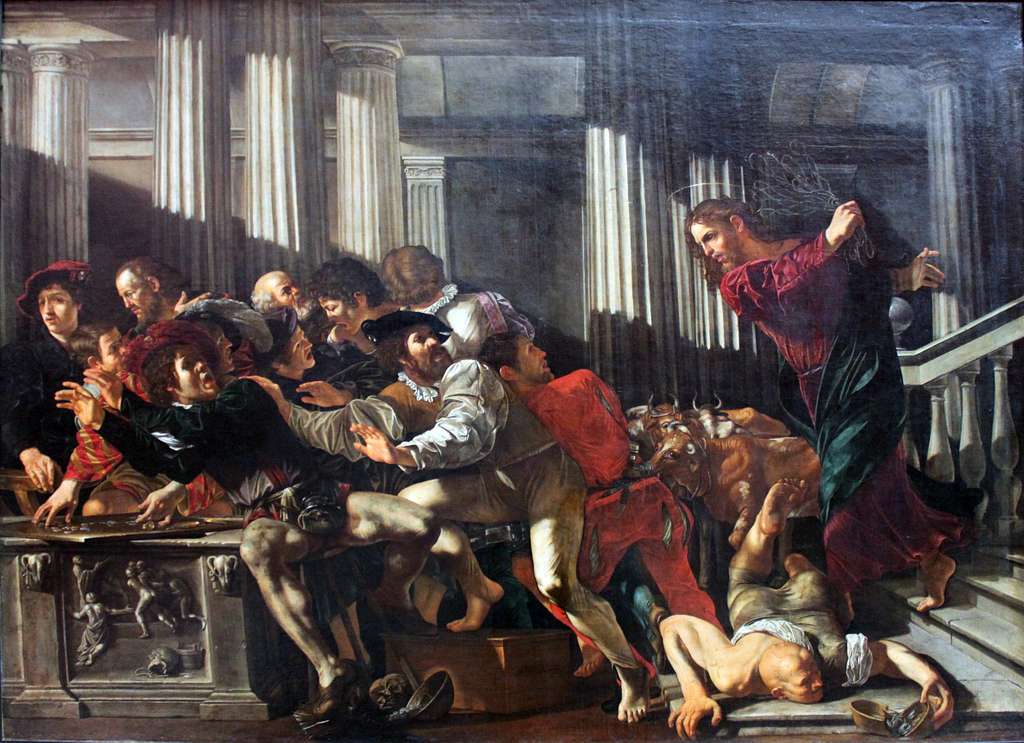
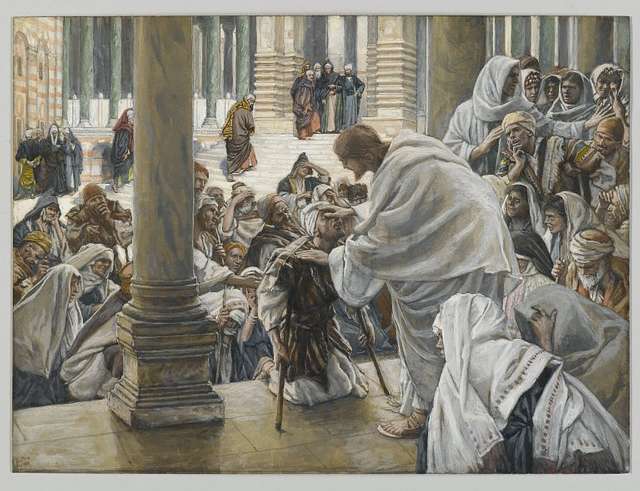




 Big Circumstance