
As a young person growing up, I became very frustrated by the Church. I used to describe it, in typical teenage black and white terms, as a God club where God had been voted off the committee.
It became a passion for me that the Church become more like she was meant to be. One time, as a young Local Preacher, I was in my bedroom one evening preparing a service for the following Sunday, when my sister came in.
‘What are you preaching about this Sunday?” she asked.
‘The Church,” I replied.
“You’re always preaching about the Church,” she said. She was probably right.
Even when I undertook my postgraduate research in Theology while I was training for the ministry, the focus of my thesis was ‘ecclesiology’ – that is, the doctrine that describes what we believe about the nature of the church.
So when you ask me to take a church anniversary, it feels to me like eating one of Penny’s cheese scones straight from the oven, closely followed by her lemon drizzle cake!
The way I want to speak about this subject today from this passage is to talk about ‘The Faith of the Church’.
Firstly, the Location of the Church’s faith:
Verse 13:
When Jesus came to the region of Caesarea Philippi, he asked his disciples, ‘Who do people say the Son of Man is?’
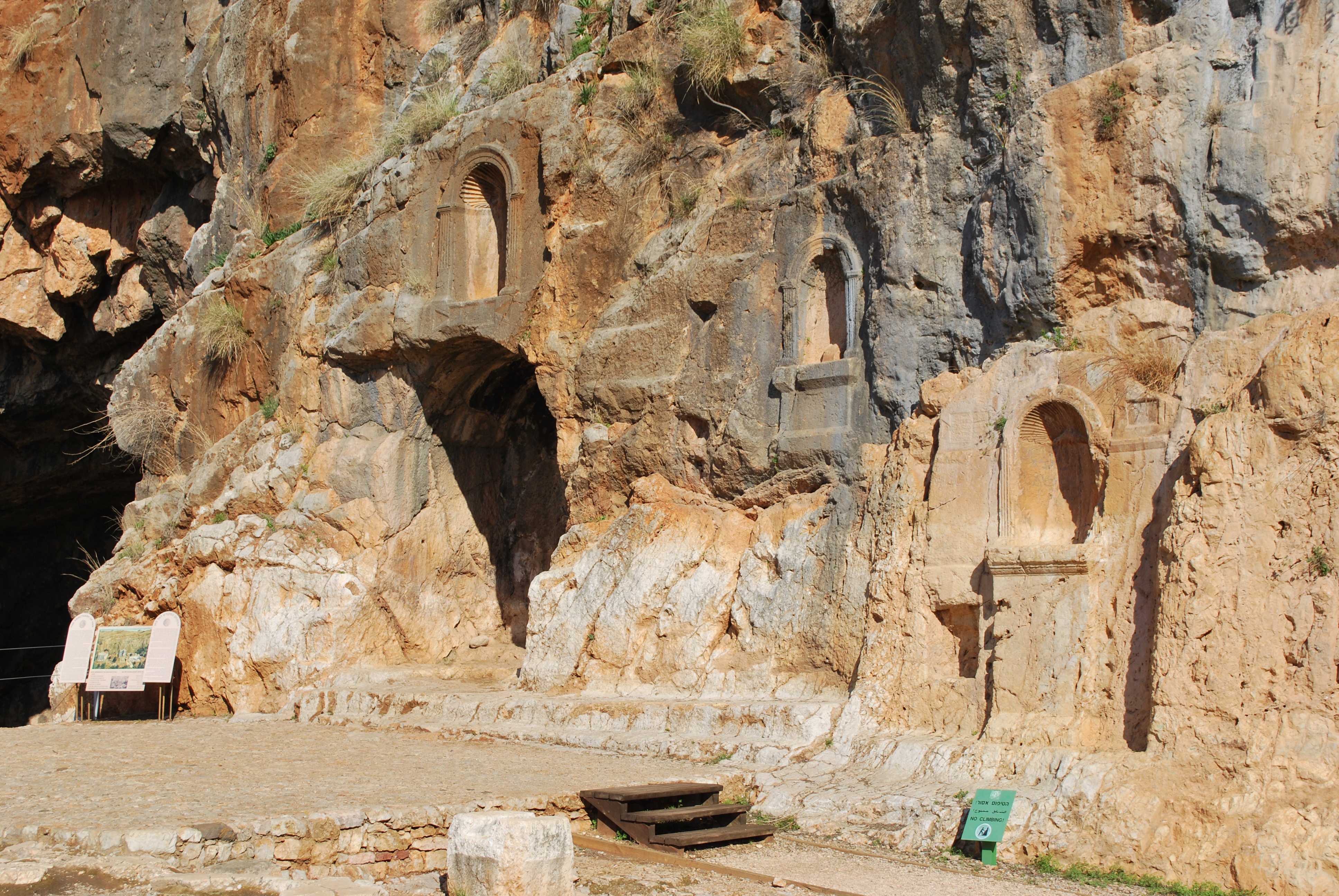
‘When Jesus came to Caesarea Philippi’ is not mere decorative detail. Caesarea Philippi[1] was twenty-five miles north from the Lake of Galilee by the source of the River Jordan and close to the ancient city of Dan, that had marked the northern end of the Promised Land.
But this boundary place no longer reflected the ancient faith of Israel. You can tell from the name ‘Caesarea Philippi’ that it had succumbed to Roman influence. It was famous by then for its grottos and caves dedicated to the worship of the Greek god Pan. He was the god of nature, flocks, shepherds, and wild mountain areas. Sacrifices of cows, rams, lambs, milk, and honey were offered to him in the hope he would bring them luck. He was approached noisily: quiet and silence were considered inappropriate.
Against this pagan context, Jesus invites his disciples to elucidate their faith. Not in the relative safety of the synagogue, but as part of God’s people throughout the world, surrounded by paganism and Roman military might. Here – in the midst of the world, where not everyone would agree – the faith was to be lived out.
It’s the same for us today. We live out our faith, not in the cosy warmth of church fellowship but in a world where it is one of many competing ideas. Today, Jesus calls us to live for him not only in a society full of other faiths but also in a context of different cultural persuasions. At one end we have a political protest that wants to reverse all the social change since the 1960s; at the other, we have so-called ‘progressive’ or ‘woke’ values. Not only that, we have a spectrum that runs from those who believe true satisfaction can be found in money and possessions to those who are beginning to realise that their parents’ rejection of God and religion has left a vacuum at the heart of life.
To live as a family that follows Jesus in such a society is neither easy nor simple. But this is the context in which our Lord calls us to be faithful community today. We cannot wistfully hope for a return to the way things were when we were younger. This is the generation in which Jesus calls his church to live as one for him.
Secondly, the Confession of the Church’s faith:
Here, we go from ‘Who do people say the Son of Man is?’ in verse 13 to ‘Who do you say I am?’ in verse 15.
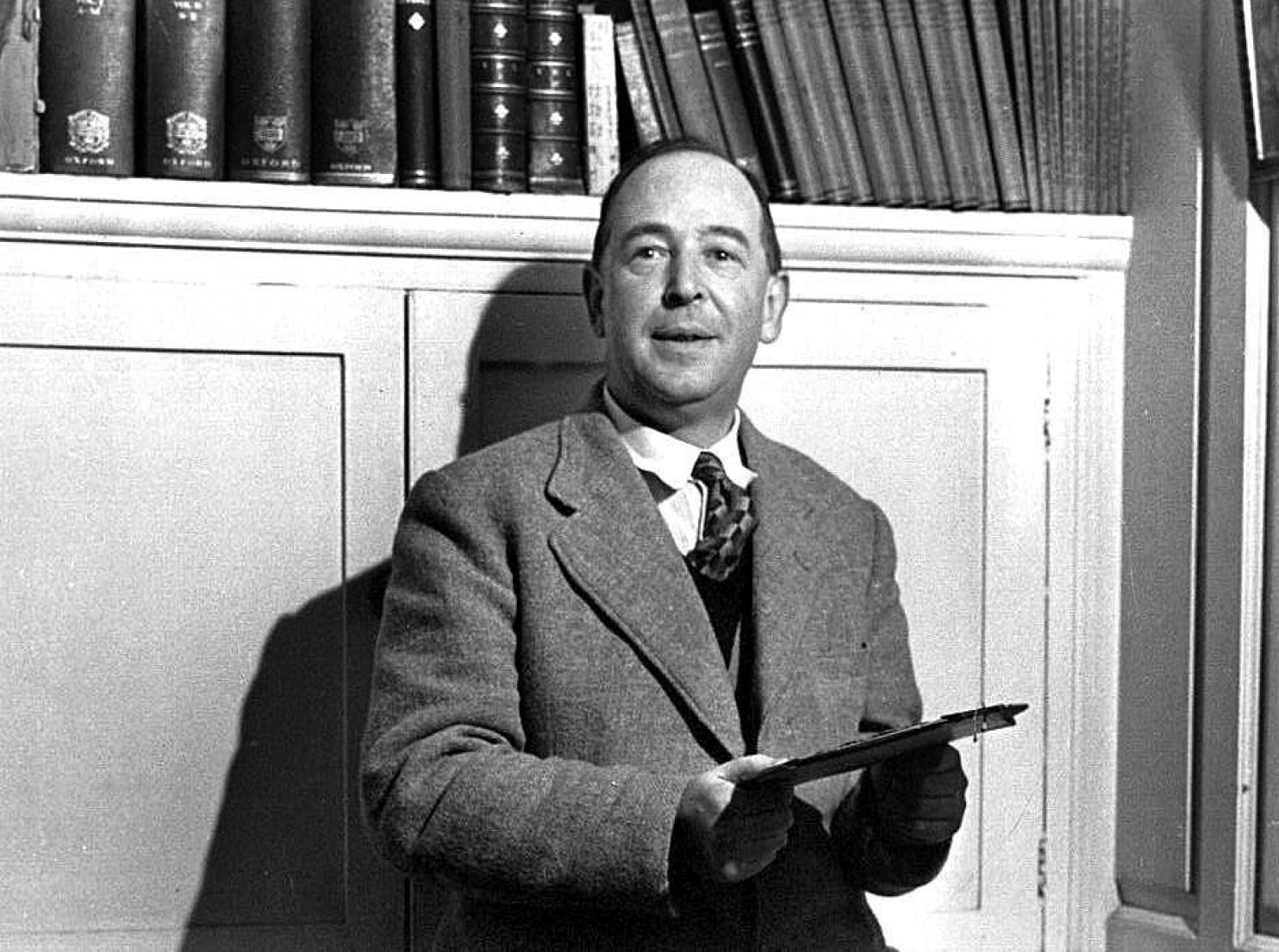
To be part of the faithful Church it’s not enough to say Jesus is a good guy, a prophet. Our Muslim friends revere Jesus, and that’s why it’s untrue to claim they want to ban Christmas, but this is as far as they go. They are vulnerable to CS Lewis’ famous criticism that it won’t do to say Jesus was a good man. It doesn’t fit with the remarkable claims he made about himself. Lewis said that the only realistic options in the light of those claims is to say that he is (or was) either Lord, liar, or lunatic. There is no evidence of him being a liar and he doesn’t behave like a lunatic. The best explanation that fits the evidence is that he is Lord.
And that’s where the Church’s confession of faith lands. The earliest Christian confession was the words, ‘Jesus is Lord.’
Naturally, the words of our confession need to be accompanied by deeds. To acknowledge him as Lord, as Son of the Living God, is something to be demonstrated. It calls us to be a community that lives according to his teaching.
Not only that, this complex, plural society that is the context for our faith expects us to live differently, and that is a fair expectation. Moreover, it may be one of the best ways we witness to Jesus. As the saying goes, ‘You may be the only Bible someone reads.’ People do not know the Christian faith anymore. It has been said that we have moved as a society from being one that framed itself inside the Christian story as its defining narrative to one that instead frames itself against the story of Hitler and the Nazis. You hear more reference to them negatively today than you do to Jesus positively. We have a calling here, to confess Jesus as Lord and to live in harmony with that confession.
Thirdly, the Foundation of the Church’s faith:

Have you ever wondered where Sylvester Stallone appears in the Bible? It’s here. Jesus pronounces a blessing on Simon for his answer that was given to him by heaven and then renames him Rocky. For that’s what Peter means. Those Hollywood movies would never have sounded so attractive had they been called ‘Peter I, II, III, and IV’, but in this text you get a sense of the wordplay if you read it as ‘You are Rocky, and on this rock I will build my church’ (verse 18).
Foundations were often made from rock. Remember Jesus’ teaching in the Sermon on the Mount about the wise man who built his house on a rock, whereas the foolish man built his on sand.
The Church, then, is built on the rock of Peter’s confession of faith in Jesus. How much of that is connected to the person of Peter as our Catholic friends believe is a debate I will not enter here, but the crucial point for us is that we are only the Church insofar as we build on the foundation of faith in Jesus, the Messiah, the Son of the Living God, our Lord. We cannot jettison any of what the apostles handed on to us whilst remaining the Church, even if it is true that we must always interpret the application of the ancient faith in our day.
So whatever we are doing in the Church, let us always bring it back to Jesus – and not our imaginings of him, but his life, teaching, and example as set out in the Gospels. That way, we attend to our foundations, and our house is not swept away in the storm.
Fourthly, the Resilience of the Church’s faith:
Jesus promises that the gates of Hades will not overcome the church in verse 18. Sometimes we imagine these words as depicting the church cowering under attack, but since when was anybody attacked by a set of gates?
No! Gates are defensive objects. They are there to keep people out. And these are the gates of Hades – not of Hell, as in older translations. Hades was the place of death. Here, Jesus promises that death cannot kill the church, and what is more, the church is on the offensive against death.
Therefore, all our worries about church decline and aging need to put into this context. Yes, it is true that certain individual churches (and denominations) will disappear, but overall, the Church of Jesus Christ is indestructible. He has made it so. In history, various denominations have declined and become moribund, but God has raised up a new expression of his church to continue his mission.
Methodism is one example. God raised up the Methodist movement when the eighteenth-century Church of England was not so much full of living waters as of spiritual ditchwater.
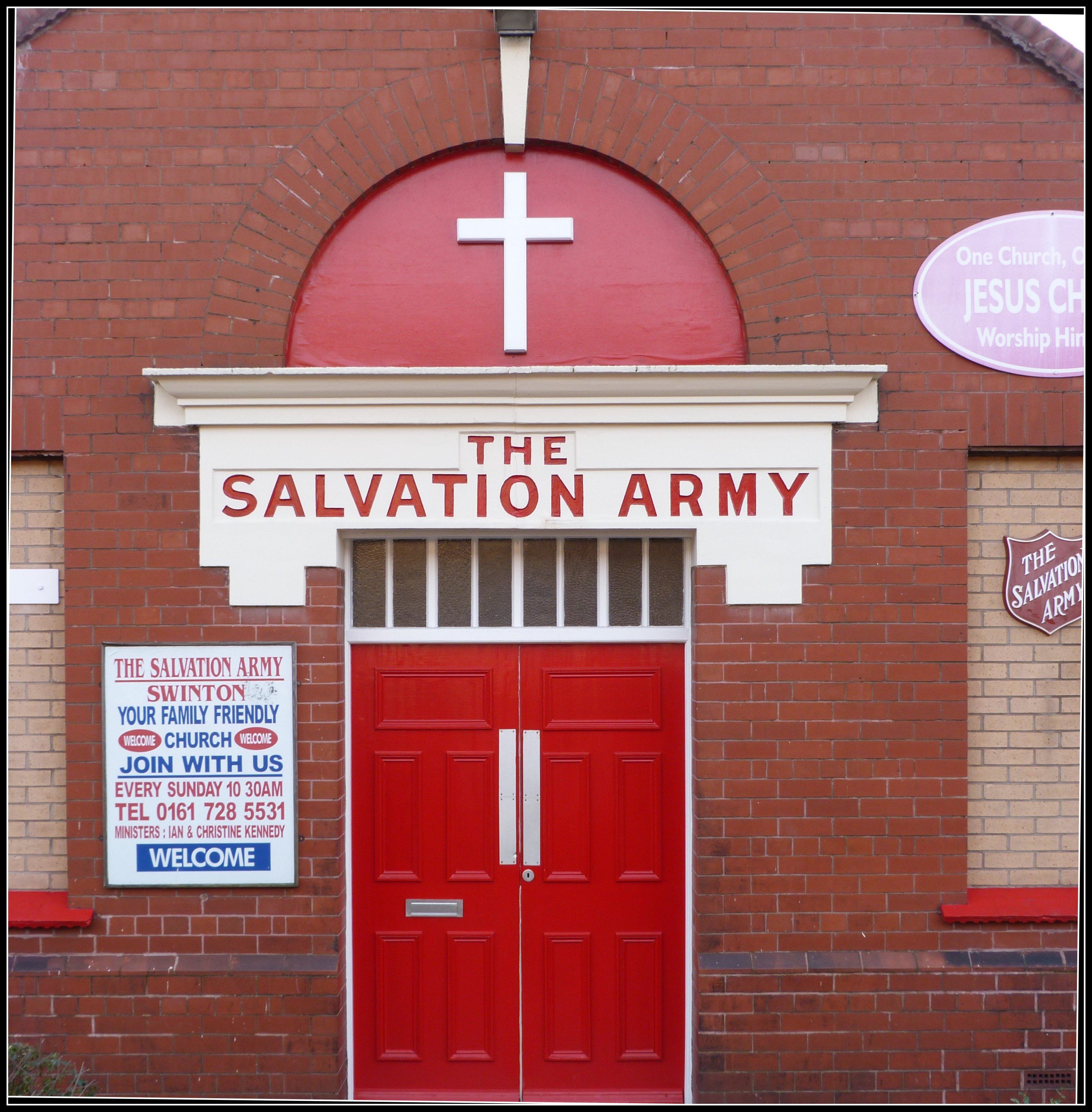
Then Methodism became rather too comfortable and middle-class cozy towards the end of the nineteenth century, so God raised up the Salvation Army to restore the importance of bringing good news to the poor.
When Methodism also declined in holiness and spiritual power at the beginning of the twentieth century, God acted again. He raised up the Pentecostal movement partly, at least, out of Wesleyan holiness churches.
Our version of Christianity may possibly wither and die, but still God will do something new with his people.
And whatever form it takes, God’s people will be on the offensive against death and all its friends – sickness, poverty, injustice. The gates of Hades don’t stand a chance against the Church of Jesus Christ.
Fifthly and finally, the Authority of the Church’s faith:

Here we’re thinking about all the ‘keys of the kingdom’ and ‘binding and loosing’ language Jesus applies to Peter (or should I say, Rocky?) in verse 19.
These words clearly involve Jesus giving Peter some power and authority. The keys to the kingdom make him some kind of ‘Prime Minister’ or ‘Chief Rabbi’[2] in God’s kingdom, giving ruling decisions and interpretations of God’s will. That comes down to us in the teaching of Peter and the other apostles that is authoritative for us in the New Testament canon.
The binding and loosing on earth as it is in heaven should probably be translated, ‘Whatever you bind on earth will have been bound in heaven, and whatever you loose on earth will have been loosed in heaven.’ Therefore, this is about ratifying the decisions of heaven[3]. It means that church leaders must only allow into the church community those who have confessed Jesus Christ as Lord.
I know an incident in a past circuit where I think I failed in this regard. A couple started coming to the church and eventually asked to see me about church membership. They wanted to know if they were ‘good enough’ for membership of the church. I recommended them.
But those words ‘good enough’ should have been a red flag for me. Their religion was all about rules – that is, so-called legalism. They brought a harshness into the church that was hard to remove. We even had to shut down one home group because the husband of this couple turned all the discussions into occasions of taking every preacher in the circuit to pieces.
Pray that those entrusted with authority in Christ’s Church use it in ways that reflect the life and teaching of Jesus. To vary from it is disastrous.
Conclusion
We’ve looked at the location of the Church’s faith in a varied and mixed-up world. We’ve looked at our confession of Jesus as Lord, and how Jesus alone is the foundation of that faith. We have taken encouragement from the resilience of the Church’s faith, based on the unchanging purposes of God in Christ, and we have looked at the solemn responsibility of leaders to base their authority on Christ alone.
In other words, everything always comes back to Jesus in the Church. Let’s make sure we do.
[1] On what follows, see Craig S Keener, The Gospel of Matthew: A Socio-Rhetorical Commentary, p424.
[2] Keener, p429.
[3] Keener, p430.

