Today’s Sermon: The Centrality Of The Resurrection

This Easter season, we are currently preaching through 1 Corinthians 15, Paul’s great chapter on the Resurrection. Here is the passage that falls to me today:

1 Corinthians 15:12-34

‘And they all lived happily ever after.’

We know that line from childhood, even if raw adult experience teaches us that it isn’t always true.

One of the problems we have at Easter is that we think ‘They all happily ever after’ is what the Resurrection means. We see the Resurrection as no more than a happy ending to the story after all the horrible stuff about Jesus dying.

But it isn’t. Do we all live happily ever after now, because Jesus has risen from the dead? No. I know that in one sense the Resurrection does point us towards a ‘happy ever after’ destination at some point in the future, but that isn’t what it means now. And the Resurrection has deep, central meanings for our faith even now, before death.

So much so that even though I initially entitled this week’s sermon ‘The Certainty of the Resurrection’ it might better be entitled ‘The Centrality of the Resurrection’. I want to show from our reading three areas of life and faith where the Resurrection is central, if not the foundation.

Firstly, the Resurrection is central to salvation. We so tie salvation into the death of Christ – ‘Jesus died for our sins’, and so on – that we overlook the place the Resurrection has in salvation. Indeed, this whole chapter has started with what Paul says is the Gospel as passed down to him – not only that Christ died, but that he was buried, raised and appeared to his disciples. The Resurrection is part of the Gospel message of salvation. But in what way?

Here’s what Paul says essentially in verses 12 to 19 of today’s reading. We affirm that Christ died for our sins. His death rescues us and we are forgiven. All well and good. But since the Bible speaks about death as the penalty for sin, death itself must be conquered if we are truly and fully to be saved from our sins. Hence why Paul says that preaching is useless without the Resurrection (verse 14), that we are liars if there is no Resurrection, because death has not been defeated (verse 15), that faith without the Resurrection is futile and leaves us still lost (verses 17-18) and that we are pitiable without that message (verse 19).

Moreover, Paul implies, everything we assume about life and salvation assumes the Resurrection. How can we affirm we are forgiven if the penalty for sin is still in force? If the Queen pardoned the offences of a criminal but he was still sent to prison, what kind of pardon would that be? It would be nonsense. So it is with sin against Almighty God, says the apostle. Say all you like about the Cross being the source of our forgiveness because Jesus died in our place, and that is true, but unless the death sentence is removed from us there is no practical benefit to that forgiveness. Hence the Resurrection is as much a part of our salvation as the Cross is.

But of course we all expect to go through death. The conquest of death for us remains in the future, when we shall be bodily raised, just as Jesus was. And it’s this future hope which is the important thing here, for there is a parallel with forgiveness. The forgiveness we receive through the Cross is an assurance that in the future, at the Last Judgement, we shall be pronounced ‘not guilty’. And our Resurrection to eternal life will be the sign that confirms the Judge’s merciful verdict on us.

One scholar, Kenneth Bailey, puts it like this:

The resurrection affirms that sin and death do not have the last word. At the cross the finest religion of the ancient world (Judaism), and the finest system of justice of the ancient world (Rome), joined to torture this good man to death. These were not evil forces. They were the best institutions the ancient world had to offer, and yet together they produced the cross. But that was not the end. After the cross came the victory of the resurrection. After the cross, no form of evil surprises us, no institutionalized brutality amazes us, because we have been to the cross and we know that beyond it is the resurrection. We have stood at the cross … and have witnessed the empty tomb …![1]

All this, then, makes the Resurrection much more than a happy ending. It makes it far more than any idea that the Cross was all bad and the Resurrection kissed everything better. When we look at the empty tomb and believe in the Risen Lord, we have the assurance of salvation. Believe in the Easter hope and know the promise of salvation.

Secondly, the Resurrection is central to the kingdom of God. In verses 20 to 28, Paul talks about Christ’s resurrection as being the first fruits of the general resurrection of the dead, leading to everything being put under God’s feet. While we wait for that time, Christ reigns until every enemy has been put under his feet.

In other words, God’s act of raising Jesus from the dead by the power of the Holy Spirit shows that God reigns, because he even conquers death in his Son. However, much opposition to that reign remains. Just as a human authority can be in charge of a country despite there being opposition to that person or government, so Christ reigns over creation, despite opposition to him.

It’s within that framework that Paul uses the image of the ‘first fruits’. Judaism celebrated two harvest festivals: as well as the full ingathering of the crops around the end of the summer or beginning of the autumn which corresponds to what we understand as a harvest festival, they also celebrated the appearance of the first fruits in late spring. We have a name for that ‘first fruits’ festival: we call it Pentecost. The first fruits guarantee what is to come, the full harvest. In kingdom terms, Christ’s resurrection is the first fruits of God’s reign that promise the full victory over death in the ingathering harvest when the general resurrection of the dead happens.

Meanwhile, as we await that complete conquest, Christ reigns. Just as a Roman colony (such as Corinth) anticipated a day when the Emperor (who had the status of a god) would come and visit them, so Christians anticipate the future coming of our triumphant risen King. And just as the Roman emperor rewarded the retired soldiers who fought to win that colony for him, so our coming King will reward those who have served in the cause of his kingdom.[2]

But there are bigger implications. It’s not just that you can draw imperfect parallels between the risen King and earthly empires, it is also a matter of contrast and conflict between the kingdom of our Risen Lord and the kingdoms of this world. Kenneth Bailey again:

When Paul wrote, “We have one Lord, Jesus Christ” (8:6), he was not only confessing his faith, he was also making a political statement. If Jesus is kurios (Lord), then Caesar isn’t. In like manner, here in verse 24, even though Paul was writing about the climactic end of the age, he was at the same time de-absolutizing the rulers, authorities and powers around him. It was dangerous to even think let alone proclaim such things anywhere in the Roman Empire. But to write this kind of subversive literature and send it to the largest Roman city outside Rome was extremely risky. The apostle as much as announces that one of the goals of the resurrected Christ was the setting aside of eternal Rome. Paul was intimidated by no one, and by committing his vision to writing he surrendered control over who would discover these views.[3]

The Resurrection, then, proclaims the kingship of Jesus at the expense of the rulers of this world. Now the latter, of course, won’t like that. They expect our allegiance. The Resurrection puts us on a collision course with them and we may end up suffering, because we retain our allegiance to our Risen Lord ahead of them. We respect the earthly authorities as much as we can, but the time comes when we have to choose between obeying God and obeying human beings. It is the Resurrection that leads us to make that choice in favour of Christ. For it shows that he truly reigns and it promises that his kingdom will come in all its fullness. Furthermore, if we do suffer, then the Resurrection promise that life conquers death fortifies us in our eternal perspective.

Thirdly and finally, the Resurrection is central to our lifestyle. We’re into verses 29 to 34 here. And what on earth is all this stuff about being baptised for the dead? We can perhaps appreciate the idea of Christians such as Paul risking their lives virtually every day, because we can read the accounts of their tremendous courage in service of the Gospel. But baptism for the dead?

It has puzzled readers down the ages. There are something like forty major different explanations lying on the scholars’ table. Fear not, I won’t take you through all of them, but I will just briefly mention one famous interpretation. The Mormons have a particular take on this. Since baptism is connected with salvation, what happens to those who have died without being baptised, they ask? So Mormons volunteer for some kind of proxy baptism on behalf of the dead to assure their salvation, and they use this text to justify that practice.

However, that is almost certainly a wrong approach. Much more likely in the view of scholars I trust is this scenario: in the early years of Christianity, some followers of Jesus died, and their loved ones – who may not have embraced the faith – feared that they might not be reunited in eternity. Therefore the surviving relatives were ‘baptised for the dead’, that is, baptised for the sake of their beloved deceased family members, in the hope that such baptism would see them through to the reunion after death that they desired.

Now that may sound like a bizarre practice, but the point Paul is making is that those who went in for it could only make sense of it if there was the resurrection of the dead. If there were no resurrection, they could not be reunited with their loved ones after death. The game was up.

And similarly, and more seriously, was the courage that Paul and the other church leaders showed in the way they proclaimed the Gospel in the teeth of opposition. Why risk their lives every day? Because they knew that even if they paid with their lives, resurrection would one day be their destiny. Therefore they would not be deterred by the worst the world could throw at them. But without the promise of resurrection, such courage would make no sense. There would be no point to that kind of risk-taking, and you might as well indulge yourself to the fullest extent and be done with worrying about living in a good and godly way.

But if you want to know why Christians see a point in living ethically and in holiness, it’s the Resurrection. If you want to have a reason for Christians to do the right thing even at great cost, it’s the Resurrection. It gives meaning and purpose to right living.

I turn for one final testimony to Kenneth Bailey. He writes:

Having lived through nine years of the Lebanese civil war and through the Israeli invasion of Lebanon in the summer of 1982, I understand the affirmation “I die every day.” This is the speech of someone who goes out each day wondering if it will be his last. Included in this is the never to be forgotten feeling at a rogue checkpoint when stopped by heavily armed militiamen. On such occasions one is convinced, “I will not be alive five minutes from now.” The fall of 2009 I was privileged to meet Mr. Paul, the senior manager of “Hotel Rwanda” during the massacres that took place in Rwanda in 1994. For the three-month period of the massacres, Mr. Paul “died every day.” It was the look in the eye. We understood each other. Paul the apostle breaks into very strong language, indeed the language of oath taking, as he declares, “I die every day.”[4]

But the Christian can ‘die every day’ when we live in Resurrection hope. The Resurrection is the reason we can and do live differently from the world. The Resurrection is fundamental to our salvation. It points to the coming kingdom of our Risen Lord. It makes sense of life and faith.

Let us live in the light of the Resurrection.


[1] Kenneth Bailey, Paul Through Mediterranean Eyes, p 439.

[2] See Bailey, p 444f.

[3] Op. cit., p 445.

[4] Op. cit., p 452.

Sermon: The Emmaus Road (Stations of the Resurrection)

After a week in which I’ve caught up with being human after the madness of the Easter routine, I’m back into preaching tomorrow – this time at another church in the circuit, not one of ‘mine’, where they are exploring the Resurrection appearances in a sermon series.
‘Look away now if you don’t want to know the result.’
You may have heard this sentence on the news when they are giving out the sports results, but when highlights are going to be shown later, perhaps on ‘Match of the Day’.
Similarly, I’ve known friends record entire football or rugby games, and plead with their friends not to tell them the result ahead of them watching the recording.
If you’re not a sports fan, you still have the same problem if you like television programmes, films or books. Advance reviews of some contain what are called ‘spoiler alerts’ – that is, if you read the review, you will find out a key element of the plot that you might not want to know ahead of watching or reading.
Christians have the same problem when reading the Gospels. To enter into the action as if we don’t know the ending or the result it close to impossible. In one sense, that gives us hope: we know that the outcome of history, will, in some form be, ‘Jesus wins’, as Tony Campolo puts it.
But in another way it makes it difficult for us to enter into the feelings of, say, Cleopas and his companion on the Emmaus road, and hence feel the impact of their mysterious encounter with Jesus. We read it, having read it many times over the years, knowing that the stranger is the risen Lord. We may not be so foolish as to think that if we were in their place we would have recognised him straightaway, but it is still hard to get inside their blindness.
And indeed, that is the first thing we need to consider when reflecting on this ‘Station of the Resurrection’ – the blindness of these two disciples. Luke tells us that when ‘Jesus himself came near and walked with them’ (verse 15) ‘their eyes were kept from recognising him’ (verse 16). What was it? I think we can rule out any sense of Jesus wanting to hide himself, even if you might get the feeling that Jesus is being rather playful with them. Ultimately, Jesus wants them to recognise him, and to live faithfully in the light of his resurrection.
I think we must look at the disciples and their spiritual and emotional state. They clearly do not believe the resurrection stories they have already heard from the women (verses 22-24). For one thing, women were not regarded as reliable witnesses in their day, to the point of not being allowed to give testimony in court. But more significant than that, resurrection is just not on their radar. They are not expecting it. They are good Jews who either believe that the resurrection will happen at the end of time (if they believe the Book of Daniel) or, like the Sadducees, they don’t believe in resurrection at all. It’s all outside their belief system, just as the idea of a suffering Messiah was. Remember that when Jesus prophesied his betrayal and death to his disciples, they either rejected it (like Simon Peter) or ‘they did not grasp what was said’ (18:34).
Isn’t their blindness, then, caused by their preconceived ideas? Isn’t their blindness caused by what is often called their ‘worldview’? in other words, people have a view of the way life is, and it determines how they see everything else – and indeed what they also fail to see. So for example the scientific atheist will have a worldview that says everything can be explained by reason, experiment and cause and effect. There is no such thing as purpose in our universe, and there are certainly no miracles. Their worldview rules out on principle something like the Resurrection. Cleopas and his companion in the story will have ruled out a resurrection in the middle of history, because it was contrary to their worldview.
Often our worldview is simply that of the prevailing culture in which we live, and that culture is so pervasive that we barely recognise it’s there. The overall perspective by which we understand the world, and the beliefs we hold about life and the universe are all around us. The late Lesslie Newbigin said we no more notice the worldview of our culture than a goldfish notices the water it is swimming in. It’s just there. Sometimes this worldview is helpful and illuminating, but sometimes – like here – it blinds us to ultimate truth.
What, then, is the challenge we might draw from reflecting on how the disciples’ worldview blinded them to the risen Jesus? Is it not something like this? The Christian needs to shape their view of the world not firstly by uncritically absorbing the views around us. If we do that, we may end up believing that the meaning of life is … shopping. Instead, we need a worldview shaped by Jesus. He needs to be the centre and horizon of how we view life. To change the metaphor, we need to look at life through the lens of Jesus. This means taking seriously every part of who he is and what he does. It means an immersion in his life, story and teaching. Like Cleopas, his companion and the other disciples, there will be aspects we just don’t grasp immediately. But to live as disciples of the risen Lord, we need to engage thoroughly and consistently with him.
The second thing we need to consider, then, is how Jesus made himself known to his two followers. The key element seems to be his use of Scripture:
Then he said to them, ‘Oh, how foolish you are, and how slow of heart to believe all that the prophets have declared! Was it not necessary that the Messiah should suffer these things and then enter into his glory?’ Then beginning with Moses and all the prophets, he interpreted to them the things about himself in all the scriptures. (Verses 25-27)
Just to mention Scripture is to open up a potentially difficult subject, especially as this is only one point within a wider sermon, and even one sermon would not do the subject justice. For instance, take the wide divergence of views about the nature and authority of Scripture, even among Christians. How does it relate to other sources of truth such as reason, tradition or experience? Christians who value the Bible equally highly still differ with each other over the interpretation of certain passages and doctrines. Whether your faith is conservative or liberal, you will know that there are difficult passages in the Scriptures. Atheists are quick to use the more violent passages in the Bible in their arguments against us. On the other hand, there are passages of unsurpassed beauty.
Without trying to settle all these arguments (and I’m not sure I could, anyway), let me simply point to the key issue Jesus raises about the Scriptures here: ‘he interpreted to them the things about himself in all the scriptures’ (verse 27).
Jesus, using what we call the Old Testament, says that the critical matter is the way the inspired testimony points to him. The point is not to treat the Bible as having fallen down out of heaven (which in any case is more like a Muslim approach to a holy book than a Christian one), nor is it just to see it as a jumbled and confused collection of human strivings after God. It is to see its overarching purpose as being testimony to Jesus the Messiah. It’s not just about individual proof texts that we think prophesy certain details about Jesus, it’s about the great story of Israel, God’s people, being fulfilled in Jesus. It’s about what we sing of at Christmas in the carol: ‘The hopes and fears of all the years are met in thee tonight.
So what does this mean for us now? We who know more of the story than Cleopas and his companion had while walking the dusty road to Emmaus also have more Scriptures, and much of what we have speaks explicitly of Jesus. We can engage with the sacred writings in order to engage with the risen Lord who appeared to his disciples two thousand years ago. Yes, we engage with him as not only risen but also ascended. He does not walk with us physically as he did in the story we are reflecting on today. But let us embrace one simple aim for our studying, meditating and praying of the Scriptures: how does this point me to Jesus? I believe it’s what he’d want us to do.
If the first two elements here in engaging with the risen Lord are firstly to interpret life through him and secondly to see the Scriptures as pointing to him, there is a third element in the Emmaus Road story that helps us to meet with him today. There may well be others, too, but I am going to make this third point my final one this morning. That third aspect is to meet the risen Lord in ordinary life.
How is Jesus recognised in the end? It’s when he as guest becomes host, when he takes the bread, blesses it, breaks it and gives it to them (verse 30).
For years I interpreted this as a hint of Holy Communion, because the four actions Jesus does here are the four he does at the Last Supper – he takes, blesses, breaks and gives. We even structure our sacramental services around those four actions. We have taken this up into our hymns, such as ‘Be known to us in breaking bread, but do not then depart.
However, what happens when you discover that the four actions Jesus performs – the taking, blessing, breaking and giving of the bread – are simply the four that a devout Jew would have done at an ordinary meal? Is there not a case here for expecting to meet the risen Lord not merely in a ‘religious’ setting such as a sacrament, but in the most ordinary acts of everyday life? After all, as both risen and ascended he is present everywhere, reigning over all things. The problem is, we rush by and fail to take notice that he is present, wanting to reveal himself to us. In our world full of so-called labour-saving devices which really only create more time for us to do more things, we hurry past where God is travelling on foot at three miles an hour and miss his revelation. Back in 1917, the German theologian Rudolph Otto said, ‘Modern man cannot even shudder properly.’  In the nearly one hundred years since he said those words, I suggest the problem has got far worse.
It is time, I believe to recall the words of another early twentieth century European Christian, the French mystic Simone Weil, who said, ‘Prayer is simply coming to attention.’  I believe we need to ‘come to attention’ to Christ’s presence in the world. It is, if you like, to underline what I am sure you have heard other preachers say about the monk Brother Lawrence ‘practising the presence of God’. What it requires to come to attention to Christ’s risen presence among us, with us and beyond us, though, is this: coming to attention means stopping in order to listen. We have to curb the business, we have to pare down the cramming in of more things. We have to delete good things from our lives to concentrate on the best. We need to edit our lives at times to make space for giving attention to Christ’s presence in the world.
One of my hobbies is photography. The photographer whose work I most admire shot mainly black and white pictures in the 1930s and 1940s in the American national parks. His name was Ansel Adams, and here is one of his famous photos taken in Yosemite National Park. Adams used something my children only know of as an historical artefact – a film camera. It was large and bulky. He often had it on a specially made tripod on top of his car. He had to take time to line up his shots, to consider the light, the composition and the exposure. Even in this scene of a clearing winter storm, you can sense that he took his time to pay attention to the scenery and his equipment in order to produce this masterpiece. Does it not fill you with a sense of wonder? You can find many of his images online if you like this.
There is such a contrast with our all-too-quick digital photography today. We point and shoot speedily and indiscriminately, because we can delete the bad ones and we can alter the reasonable ones with software later. Much as I like digital gadgets, I acknowledge there is an incomparable value in those disciplines that require us to take time to pay attention.
I wonder where we might reorder our lives so that we can come to attention that the risen Lord is among us?

The Day I Threw Away My Easter Sermon

I was never going to have time for a long sermon today. Hence why the one I posted last night was brief by my standards. I had two opportunities to preach it: once at 8:30 am at Addlestone, then at the 10:00 Knaphill service. The Addlestone service had to be an abbreviated communion so I could make the twenty-minute drive back to Knaphill. It then also had to be brief in the later service, because that included a baptism and we were also keeping the Junior Church in for the whole time.

I wrote the sermon earlier in the week, but I kept it up on screen for days, worrying at it, making the odd minor change but mostly leaving it untouched. I had been uneasy about it all the time. I  never could let it settle, even when I printed it out. Was I unhappy with the content? Not really. I can’t explain publicly why I was uncomfortable, because it was more about how it might accidentally be perceived. But it was all I had, so I took it with me.

By the time I got to the 8:30, I had already got through an outdoor ‘sunrise’ service at 7:00 am. Not much sunrise, with complete cloud cover and persistent drizzle, but you know what I mean. As we read John 20 there, and as I listened to my church treasurer give a beautiful reflection, some different ideas formed in my head. I turned some of them into the intercessions that followed the talk Chris gave. When I got to Addlestone, I jotted them down , ditched my prepared sermon and gave an informal, if untidy talk on them. Whether people appreciated it I don’t know, because I had to depart during the final hymn, leaving Richard our deacon to pronounce the blessing.

As I drove to Knaphill, I for once switched off the iPod and prayed about whether I should do the same there. The thought came rapidly that I should.

Ditching a carefully prepared sermon is not usual behaviour for me. I do not subscribe to the view that the Holy Spirit only inspires preachers in the moment of preaching. (And hence I do not hold with the nonsense that only extempore preaching is Spirit-led.) I believe the Spirit is present in the struggle of prayer and study that goes into preparation. I am self-aware enough to know that if I have carefully thought through what I am going to say, it is usually unwise of me to depart from it radically on the day, because the replacement words will not have been carefully considered and may lead into some traps.
So far, so very ‘J’ in Myers Briggs terms. There is a big part of me that likes things planned and mapped out. My wife will tell you of a time when we were on holiday, touring the Isle of Wight on a bus season ticket, when she spontaneously wanted us to catch a different bus from Newport Bus Station to another destination, and I panicked. This all fits.

But I’m actually borderline ‘J’ and ‘P’ in Myers Briggs. There is also a large part of me that can be spontaneous and unplanned. So if the J part of me was fearful, the P part was excited. On this occasion, I’m glad I tore up the script. By way of summary, I said the Resurrection was for four groups of people:

Firstly, it is for those who are looking into tombs. Mary comes to the tomb, yes, to do the last thing she can in honour of the man she followed, but also I believe she comes as a way of coping with her disappointment and shattered dreams. Many of us have broken dreams, or we are staring into tombs. We may be bereaved. A loved one may be dying. We may be terminally ill. Or we are metaphorically staring into a tomb. Easter is for all such people. Beyond the unanswered prayer of Holy Saturday comes the hope of Easter Day.

Secondly, it is for people who are struggling to understand. I kept some of the original sermon here. The disciples don’t expect the Resurrection – as good Jews they either believed it would happen at the end of time or they didn’t believe in it at all. They were not gullible ancient simpletons. They do not immediately understand, but they have an encounter. Easter encourages those who are struggling with faith and questions still to walk the way with Jesus. We do not have to wait until we have everything sorted in our minds.


Thirdly
, it is for people who need to hear Jesus speak their name. Jesus says, “Mary.” Chris told a wonderful story at the 7:00 sunrise about a British journalist from the Sunday Telegraph flying to South Africa to interview Desmond Tutu. At the end of the interview, Tutu changed from interviewee to witness. He had surmised that the journalist was a lapsed churchgoer, and reminded him that God loved him just as he was, because God only makes masterpieces. The question of hearing Jesus call you by name was pertinent to a baptism service, as we formally recalled the name given to the baby. Many of us need to know that Jesus addresses us personally. It is his word of love and affirmation, in contrast to the way we are misaddressed and abused in the world. Easter gives us that hope. Jesus is back from the dead to do this.

Fourthly, it is for people who need the challenge to be a movement, not a monument. I find the words of Jesus to Mary, “Do not hold onto me” puzzling, until I see that he is pointing her to the future. He will be returning to the Father, and she has a task to tell the disciples. Easter sends us forward in mission. The trouble many of us have with great spiritual experiences is that we want to build an edifice or an institution instead. We want blue plaques for our spirituality. As Simon Peter garbled at the Transfiguration about building booths for Jesus, Moses and Elijah so we want to have a fixed, static reminder rather than hear the challenge to move forwards and outwards.

And at that point I ended – like I said, there was no neat conclusion, because it was a late rethink.

Was it worth the change? What do you think?

A Brief Sermon For Easter Day

John 20:1-18
I want to begin with one of my all-time favourite stories for Easter Day.

There once was a man who was convinced he was dead. He told his wife he was dead. He informed his work colleagues he was dead. He said to his friends, “I’m dead, you know.” He told the neighbours he was dead.

Everyone became concerned about him, and his friends and family arranged for him to see a psychiatrist. The man agreed, and at their first session the psychiatrist showed the man all sorts of learned medical literature which proved that dead men don’t bleed.

Eventually, having read book after journal after book, the man agreed. “All right, I believe you,” he said, “Dead men don’t bleed.”

At this point the psychiatrist suddenly took a lancet and jabbed the man in the arm. Watching with horror as blood spurted from him, the man gasped, “Good Lord! Dead men do bleed after all!”

Such is the problem with people who will not let the evidence change their minds. Yet that is one of the charges that many of the militant ‘New Atheists’ level at people of faith. In the case of some Christians, it is sadly true.

But the Christian faith is founded on an incident where people of faith did change their minds due to the evidence. That incident is the Resurrection.

It’s not unusual to hear that it must have just been gullible ancient people who came to believe in the nonsense of Jesus coming back from the dead. They talk about myths of gods coming back to life, and assume that’s what the Christian belief in the Resurrection was – desperate and distraught disciples lifted these myths and applied them to Jesus.

But that couldn’t be more wrong. The first witnesses of the Resurrection were all Jews. There is very little about life after death of any kind in their Scriptures, what we call the Old Testament. The only solid text is in Daniel chapter 12, and Daniel is a book that only found its final form in the mid-second century BC. Any kind of belief in resurrection was relatively recent in Judaism, and even then not all Jews believed in it (the Sadducees didn’t) and those who did believe in resurrection only thought it would happen at the end of time, when God judged the world. Not a single one of Jesus’ followers would have been expecting a resurrection in the middle of history.
We get a feeling for this in our reading this morning. Mary Magdalene’s first reaction is to say to Simon Peter and the disciple Jesus loved, ‘They have taken the Lord out of the tomb, and we don’t know where they have put him!’ (verse 2) An empty tomb doesn’t mean resurrection to her. When Simon Peter and the other disciple run to the tomb, the other disciple does believe (verse 8) but immediately after that John says, ‘They still did not understand from Scripture that Jesus had to rise from the dead’ (verse 9). When Mary does encounter the risen Jesus, she thinks he is the gardener (verse 15). These people may not think scientifically in the way that many people today do, but they are not gullible idiots who will either fall for any old nonsense or who will invent an account to support a set of lies. Why? Because they don’t believe in resurrection in the middle of history.

Something changes them. They have to change their beliefs – and they do so because they become convinced that they have met the risen Jesus. Nobody, friend or foe, doubted that Jesus died. Roman soldiers were expert executioners and knew they would suffer the death penalty if they failed to ensure that the prisoners entrusted to them died. Therefore Jesus could not have merely resuscitated in the tomb. If the tomb was empty and Jesus’ body were elsewhere, an opponent of the Jesus movement could soon have produced the body. The resurrection appearances are not easily explained as hallucinations, since hallucinations are usually solitary and several of the resurrection appearances are to groups. Furthermore, there is a sense of expectation about hallucinations, and as I’ve already said, they weren’t expecting it. And if this were a concocted story, it’s an odd decision to make women major witnesses in a culture where women were not allowed to give evidence.

So in fact here is a group of religious people who find that the evidence does make them change their minds. And that evidence is the Resurrection of Jesus.

The Resurrection makes us change our minds in all sorts of ways. ……

We change our minds about hope, because now we have a sign that death is not the end.

We change our minds about the present, because that hope of God renewing all things makes it worth us working for goodness, love and justice now. Indeed, it’s the best reason. Richard Dawkins says that the universe reflects exactly what you would expect if there is no Creator – he says it reflects a sense of ‘pitiless indifference’. Can you live by pitiless indifference? The Resurrection says no, there is meaning and purpose in this world and it’s worth working to change things for the better.

We change our minds about the way we live, because the Resurrection shows us God’s future. It makes sense to align ourselves with that. We have a word for that particular change of mind. There is a Bible word for a change of mind that leads to us living differently. It’s the word ‘repentance’. The risen Jesus calls us to think again about the way we live our lives.

But – what we have here that leads to our change of mind is this. We have evidence, not proof. We have the best explanation for what happened, and with it the best explanation for life. What we don’t have is watertight proof. Nobody has that, whatever their view of life. We have evidence, rather than proof, because God shows us enough on which we can trust him. If he gave us outright proof, there would be no room for proof and no sense of relationship with God.

This Easter, then, let’s consider the possibility that there is enough evidence to lead to a change of mind in every part of our lives and a relationship of trust with God through Jesus.

Sermon: A Missional Wedding Banquet

I’m not preaching in my own churches or even circuit tomorrow. We have a visiting minister at Knaphill, taking a missions Sunday, and I am filling one of his pulpits. Hence you may recognise the odd little bit of content here that you’ve seen previously from me.

Matthew 22:1-14
Legend tells of Ian Paisley preaching ferociously about the ‘weeping and gnashing of teeth’ that we hear about in this and a couple of other parables in Matthew’s Gospel. As he described the torments awaiting the ungodly in Hell, one elderly woman spoke up:

“What about me? I’ve only got dentures!”

“Teeth,” replied Dr Paisley, “will be provided!”

For those of us who have a cosy image of Jesus and his parables, the ending to this one is a shock. We shall come to think about that shock in the final part of the sermon, but for now let me just say that we have become so used to the parables that we miss their shocking nature. The Good Samaritan is a shocking story. A Samaritan helps a Jew? Whatever next? A terrorist helping a wounded person in New York?
And the Prodigal Son? There’s nothing fluffy in that story. Jesus’ listeners would have been appalled when they heard that the father looked out for his errant son and then ran to meet him. Culturally, the father should have been waiting inside the house for the younger son to return crawling on his hands and knees, grovelling for all he was worth – which wasn’t much.

I would say it is a key to understanding many of the parables: look for the shock. With today’s parable, I venture to suggest that the ending is not the only scandalous part. And I think that in this parable of mission, Jesus needs to shock us into recognising key aspects of God’s mission, in which we share.

Consider, firstly, the initial invitation. This should be routine, shouldn’t it? The servants go out ‘to those who had been invited’ (verse 3). These people are expected to come. We might think with some justification that these are the people who would fall into the natural orbits of the two families about to be joined together. While social conventions are different today, we know that there are certain groups of people from whom we naturally draw the bulk of the numbers when we are issuing wedding invitations. Family – starting with the closest; friends – from school or university, from church or work or social circles related to our hobbies and pastimes. And so on. Most wedding couples don’t spring massive surprises with their guest lists, other than the usual difficulty of deciding where the cut-off point is.

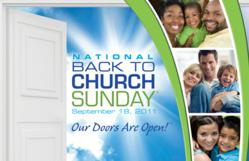
And similarly, perhaps, with our strategies for mission. There are certain people whom it seems right to connect with first, if we hope to touch people with the love of God in Christ with our words and deeds. There are particular groups of people who we shall naturally invite to join us at church. There are those who once used to come, but then dropped out. They may be relatives of existing church members. There will be people associated with groups that hire our premises. Perhaps this list might include uniformed organisations. We might think of people who show a certain affinity with us, even if they do not yet share our commitment to Christ. If you have come across Back To Church Sunday in recent years, that is a strategy directly aimed at those who used to go to church, but who retain more of a sympathy for the church than we might commonly imagine.

Indeed, for a long time now, our mission strategy has been based on an appeal to ‘come’, and in generations when churchgoing was much more natural than it is today, that approach had certain degrees of success.

But there are a couple of dangers.

One is that the religiously sympathetic are not always the most likely to commit themselves to the radical step of following Jesus. Just as the natural invitees to the wedding banquet in the parable ignored, mistreated or killed the second wave of servants that was sent to summon them, so religious people can be those most inoculated against the Gospel. And could it be, given the way the king in the parable sends his army against those people who reject his invitation (verse 7), that God is less impressed with the religious and the respectable than we are?

The other danger is that the natural constituency for this approach is shrinking fast. If we do step out in mission, we want to be as comfortable as possible about it, so we only reach out to people we feel safe with, and furthermore we only do it in locations where we feel at ease – such as our own church buildings.

Secondly, let’s consider the second group that the king invites. The king sends his servants to invite ‘anyone [they can] find’ (verse 9), and this leads them ‘into the streets’ where they [gather] all the people they could find, both good and bad’ (verse 10).

What might this mean for us in terms of the call to Christian mission? Clearly in Jesus’ own day he is indicating a message that will ultimately go beyond the Jewish community to the unconscionable Gentiles. When those we might humanly expect to respond to God’s redeeming love do not do so, God has a way of pushing us out to the least and the last, to those least likely – at least in our eyes.
Before I studied Theology and candidated for the Methodist ministry, my prior work was as a civil servant, working in Social Security. As some people said, that was certainly one way of seeing life. During my first year in the civil service, I had my final family holiday with my parents. We went on a Methodist Guild Holiday[1]. One devout Methodist we met on the holiday asked me what my work was. I explained that I worked in Social Security. Back came a response I have never forgotten: “At least you are on the right side of the counter.”

Obviously, I have never forgotten those words for all the wrong reasons. Apart from the fact that in my work I knew full well that the great majority of those claiming benefits were honest people who didn’t want to be in the situations they had found themselves in, there is also the fact that this parable shows us how the Gospel is for those who are ‘on the wrong side’.

Could we not do with a challenge in the church sometimes to this effect? Who are the people whom we would not naturally consider, but who are loved with an everlasting love by God through Jesus Christ? Are there those he is calling us to reach in word and deed with his love?

Might it be that we just have a problem in the church with being that little bit too comfortable that we need reminding God sends to ‘anyone [we can] find’? Might this be to do with the same fear we hinted at in the first point that leads us just to operate our mission in places where we feel at home? We base our concepts of mission on attracting people to where we are already. However, while we want to bring people into the Christian community, could it be that in a day when – as I said – the number of people for whom it is natural to come onto church premises is shrinking so fast – that we might need to change our primary verb from ‘come’ to ‘go’?
Indeed, might Jesus be saying to us, look at how I embraced the Father’s mission? I am the Word who was made flesh and dwelt among you. I did not wait for you to come to me, I took the initiative and brought the Father’s love to you. And since at my Resurrection I said I sent you as the Father sent me, then do you not hear? Your call in mission is not to say, “Come to us”, but to go to the world, to anyone you can find.

Thirdly and finally, let us consider the intruder at the wedding.
Our own royal family knows all about intruders. Whether it’s Michael Fagan getting into the Queen’s bedroom, a comedian dressing up as Osama bin Laden or protestors from Fathers For Justice landing inside Buckingham Palace, they tend to suffer spectacular intrusions every few years.

I’m not sure whether the word ‘intruder’ is the right one here, but it will have to do. What I’m concerned with is the shocking end to the parable where the king finds a man who has managed to get into the wedding banquet without wearing wedding clothes. He suffers a cruel fate as the king orders him to be bound and thrown out. What could explain such an apparently harsh reaction?

When you attend a wedding today you normally dress up. I remember conducting a wedding in my first appointment and wearing my customary suit and clerical shirt only for a guest to complain that the minister ‘had no sense of occasion’. He was expecting a robed Anglican and got me!
They dressed up for weddings in the ancient world, too. Although a wedding feast could begin at almost any time, there was the tacit understanding that you had time in between receiving your invitation and the wedding beginning for you to find appropriate attire and put it on. There was also a tradition where a king would provide guests with festal clothing. Either way there was no excuse: if you come to the wedding, you will be dressed appropriately. To do otherwise was to bestow a grave insult upon your host.[2]

Now we can understand what was so wrong about the man who was not in wedding clothes. He has insulted the king. Either he had the chance to dress properly and he didn’t bother or the king offered him clothes and he had the temerity to turn him down. The man has enjoyed the invitation but he has not accepted the responsibility that came with it.

Hence this is a powerful picture to challenge the way we respond to God. We may not be like the religious people who refuse the need for grace – indeed we may know only too well that we are entirely dependent upon grace in order to enter God’s presence.

But some of us stop there. We know that Jesus accepts us as we are, but we then coast along complacently. We do not accept the obligation to change – to be clothed differently.

The old saying is that Jesus loves us just as we are, but he loves us too much to leave us as we are. In other words, he provides new spiritual clothes. He expects us to be different. The dirt must go and a clean, holy lifestyle replace it. What else is appropriate as a thankful response to the King for inviting us to his Son’s wedding banquet?

Tragically, some of us are just not serious about living a holy life. God offers us the new clothes – that is, he himself makes it possible for us to be transformed. He does this by the power of his Holy Spirit whose work is to make us more like Jesus. Think of the fruit of the Spirit – love, joy, peace, patience, kindness, goodness, faithfulness, gentleness and self-control – is that not a description of Jesus’ character? This is what God offers us.
But some of us are happy just to wear the same old dirty clothes. I have to admit that too often my wife has to remind me when my suits need to be dry cleaned. I don’t notice the marks on them. Part of my function as a minister is to hold before us all the need for a spiritual dry-clean. We need the reminder that we have got dirty again and we need to be cleaned up.

What does this have to do with mission? Quite a lot, to be honest. The Gospel is the Gospel of the kingdom. God’s kingdom is one of free grace that accepts us as we are. However, God is calling us to be community that is a sign of the kingdom, a sign of what is to come, and that means transformed lives. This too is part of our witness. Our call to mission is not only to go into the streets and gather anyone we can find, it is also to be dressed in our wedding clothes.

Are we playing our part in getting ready for the great wedding?


[1] Now Christian Guild Holidays.

Sermon: Doubting Thomas, Growing Faith

John 20:19-31
Doubting Thomas: if ever anyone got a bad press from a pithy nickname, it’s Thomas. Today I want to join his rehabilitation campaign, and suggest to you that we might see some positive approaches to faith in the story of him coming to believe in the Risen Christ.

Firstly, we need to remember his context. There are a couple of previous references to him in John’s Gospel. In chapter 11, he shows himself to be a disciple who is doggedly committed to following Jesus. He encourages all of them to go along with Jesus to Jerusalem, if necessary to die with him. This is not a coward or an unbeliever: this is a courageous disciple. Let’s remember that when he is cheaply vilified.

Not only that, he was a disciple with honest question, as we see in chapter 14. Jesus says he is going to prepare a place for his friends, and Thomas honestly says, “Lord, we don’t know where you are going, so how can we know the way?” Lord, if you don’t give me the destination, how can I sort out a route? I need the address, Lord! I think you have to applaud a man like Thomas who has the honesty and integrity to ask Jesus the question that perhaps was in other disciples’ minds, but which they didn’t have the courage to voice.

And we should be glad he did, because it leads to Jesus’ famous reply, “I am the way, and the truth and the life. No-one comes to the Father except through me.” Would we have heard those words, but for the honest, questioning faith of Thomas?

As well as these two previous references to Thomas in John’s Gospel, one other piece of context is to compare him with the other disciples. It’s all very well that the others tell him, “We have seen the Lord!” (verse 25), but it isn’t that long since they too doubted. When the women returned from the tomb, the male disciples didn’t initially cover themselves in glory. Why believe a woman? But they had had a personal encounter with the Risen Christ, just as Mary had in the garden, and just as Thomas is about to have.

So setting everyone else’s faith against Thomas’ doubts is unfair. He simply hasn’t had the experience of meeting his risen Lord yet that they have had. Perhaps today we can appreciate a dogged, honest disciple. It isn’t enough to say to some people, ‘Be quiet and just believe’. God is big enough to cope with our questions. We have a Bible filled with books like Job, and with plenty of Psalms where ancient Israel sang her painful questions in worship. If Thomas is an example to us, it is about church being a safe place for people with their questions, not one where they are shouted down.
In suggesting this, I’m not advocating unbelief, because unbelief is very different from doubt. Unbelief is a refusal to believe at all, but Jesus says Thomas was ‘doubting’ (verse 27). Os Guinness has a helpful definition of doubt: he calls it ‘faith in two minds’. Doubt isn’t the absence of faith that unbelief is, it’s faith in two minds.

There’s one other context to Thomas that I haven’t mentioned, and it’s not in the Bible. There is a strong early tradition that Thomas is the apostle who took the Gospel as far as India. There is even a Christian denomination in India called the Mar Thoma Church, which claims to trace its founding to him. If that is the case, then is it not a good thing to give someone the space to wrestle with their questions? If like Thomas they come through to a deeper faith, who knows what they might achieve in the name of the Risen Christ?

Secondly, then, I invite us to remember his questions.

“Unless I see the nail marks in his hands and put my finger where the nails were, and put my hand into his side, I will not believe.” (Verse 25)

What is Thomas’ problem, apart from the fact that – unlike the others – he hasn’t yet met the Risen Christ? As I said, he isn’t an unbeliever. He is far from being a sceptic. In fact, you could say that he was deeply biblical. Like most pious working class Jews (but unlike the wealthy Sadducees) he believed the ancient prophecies that one day, at the Last Judgement, God would raise all people from the dead – some to the reward of eternal life, and some to judgement. He would likely quote Daniel chapter 12 in support of this view.

What they didn’t expect was that God would interrupt the middle of history with a resurrection. You get a flavour of that in John 11, where Jesus turns up at the tomb of Lazarus, four days after the death, and speaks with Mary and Martha. They say they are waiting for the great resurrection at the end of time.

However, Thomas’ willingness to state his question baldly sets the stage for another appearance by Jesus, this time for his benefit. John sees this next appearance, a week later, as a follow-up by Jesus. Again it is in the midst of locked doors because the disciples who are so full of enthusiasm about the Resurrection are still nevertheless afraid, so this isn’t just for Thomas. This is to bless them all.
But in Thomas’ case, his devout biblical faith is now stretched and expanded by meeting the risen Christ. And often, that is what God wants to do through an experience of doubt. It’s not there to destroy our faith, but to expand it. In a profound talk he gave last year on the place of doubt in Christian faith, an American Old Testament scholar called Peter Enns said this:

When you go out into the world and say “it’s not working,” maybe that is a signal. It’s not God who no longer works, it’s your idea of God that needs work. Maybe you are for the first time being called, as C. S. Lewis put it so well in the Narnia books, to go “further up and further in.” That’s where doubt plays a powerful role.

But where does Thomas have his doubts expanded into greater faith? It’s in a context of fellowship. He is with the other disciples this time, and I think that makes a difference. Classically, one of the ways Christians have defended the truth of the resurrection against charges that the disciples experienced hallucinations is to point out that hallucinations are rarely group experiences. They are more commonly solitary in their nature. So by Thomas having his experience of the Risen Christ in the presence of the other disciples there is an assurance here that this is real and true, not a fantasy.

And in doing so, I believe it points up the importance of fellowship when we have our doubts. What do we do when we face a crisis? Some of us, like me, restore our energy from within ourselves. Others gain energy from being with others. However, much as I renew my energy from within and generally alone, if I spend too much time just on my own at a time of doubt, it can all become morbid and increasingly negative. It becomes a downward spiral.  I have seen people facing a crisis of faith take a major step away from church and fellowship for a period of time, and all that really happens is that the negative thoughts are reinforced.

Now, granted, the other disciples may not be the most helpful to Thomas in his doubt, but the fact that they had met the risen Jesus and that he appears to them in that context, is a sign, I believe, that it is worth persevering with Christian fellowship when we have our doubts. Our faith is not solitary. It involves being part of God’s people. Even if at times all our brother and sister Christians give us is a set of trite answers to our questions, nevertheless that is a major arena where we experience Christ.

So I would counsel people facing doubts to stay within the fellowship of the church, to find it a safe place to ask the hard questions, and to be encouraged that in that very place God may well expand and deepen your faith as a result.

Thirdly, I invite you to remember his confession. The other disciples had to see Jesus alive before believing in the resurrection. Thomas wanted that, and more: to touch the wounds. And Jesus offers Thomas what he says he wants. I think he just wants to know for sure, and he expresses it in this black and white manner.

But when the risen Lord stands in front of him, I’m not sure Thomas takes him up on the invitation to touch his hands and his side. Just meeting Jesus is enough, and he says to him, “My Lord and my God!” (verse 28)

‘My Lord and my God.’ That’s the point to which Jesus wants to get Thomas, and us. And yes, this is one of those Bible verses the Jehovah’s Witnesses can’t explain, because Thomas clearly attributes full divine status to Jesus.
But it probably also had huge implications for the first readers of John’s Gospel. If, as most scholars think, John’s Gospel was written towards the end of the first century AD, then it is quite possible that the emperor ruling the Roman Empire was Domitian. He wasn’t the nicest of chaps. He may well have been responsible for the persecution of Christians that is reflected in the Book of Revelation. And what did he require of his subjects? That they worship him as ‘Lord and God’[1].

The confession of the risen Lord at which Thomas arrives through his doubts is not just intellectual. It is one that has practical consequences for daily living and, indeed, dying. Later followers of Jesus who read these words will be those who have sufficiently come through their doubts that they are prepared to make a confession that puts them in opposition to the prevailing values of the society in which they live.

And perhaps this is a major reason why Jesus wants to meet us with our doubts and expand our faith – to make us strong in faith to stand against some of the major forces at work in our world today.
Last week we sang Stuart Townend’s Resurrection Hymn, ‘See what a morning’. It contains the lines,

One with the Father, Ancient of Days
Through the Spirit
Who clothes faith with certainty

Do we have certainty – a certainty with which to face the world? We have a certainty that Christ is risen. We have an assurance of God’s love. To quote U2 for a second consecutive week,

It’s not if I believe in love
But if love believes in me
(from Moment Of Surrender)

Whatever our doubts may be, the Resurrection means that love believes in us. And in the light of that, our confession of faith in our risen Lord and God can be a rock to stand firm in the face of a world that is devoted to values vastly different from his.
Perhaps one of the most notable Christians for steadfastly not bowing down to the values of the world in the last century was Mother Teresa. Her care for the poor and those generally thought not worth bothering with and her freedom from wealth and acquisition made her admired by many, as we well know. After her death in 1997, reports emerged about the severe doubts she expressed in her personal journal. In the lecture on doubt by Peter Enns that I mentioned earlier, he quotes this story about her:

There is a wonderful story of Jesuit philosopher, John Kavanaugh. In 1975 he went to work for three months at the “house of the dying” in Calcutta with Mother Teresa. He was searching for an answer about how best to spend the remaining years of his life. On his very first morning there, he met Mother Teresa. She asked him, “And what can I do for you?” Kavanaugh asked her to pray for him. “What do you want me to pray for?” she asked. And he answered with the request that was the very reason he traveled thousands of miles to India: “Pray that I have clarity.” Mother Teresa said firmly, “No. I will not do that.” When he asked her why, she said, “Clarity is the last thing you are clinging to and must let go of.” When Kavanaugh said, “You always seem to have clarity,” she laughed and said, “I have never had clarity. What I have always had is trust. So I will pray that you trust God.”

Jesus brings us to a confession that may or may not have clarity. But at its heart is trust. That, it seems, took Thomas to India, and the effects of his faith are still felt today.

What if we had trust – deep trust – in our risen Lord? Would he take us ‘further up and further in’? Where might the effects of our faith be felt?

Sermon: Cleopas On The Emmaus Road (People At The Cross And The Tomb)

Luke 24:13-35
This morning we have heard a Bible passage for a wedding service – the Emmaus Road.

What – not 1 Corinthians 13? No. The Anglican Rector friend of mine who preached at our wedding nearly ten years ago chose the Emmaus Road story as his text. He relied on an old tradition that Cleopas and his companion on the journey were a married couple, and proceeded to make five points about marriage from the account. I can’t tell you what those five points were, though, because we never did receive the recording of the service that we were promised.

But today we come to this famous Easter story with a more conventional agenda. What does the experience of Cleopas and his companion of the Risen Christ tell us about true faith? Here are three aspects I have noticed:

Firstly, their experience tells us about the importance of revelation. Faith in Christ is not simply about our free will decision: it requires a revelation from God to understand the truth.

If you come into my study, you will find not only my books but my CD collection. Much as I would like it to be in the main family living space, if I put the shelves of CDs in the lounge, there would probably be no room for the three-piece suite.
Among my large assortment of music you will find plenty by U2, led, of course, by Saint Bono. Their most recent album, No Line On The Horizon (not one of their best – known to some as No Tunes On The Album), there is a song called I’ll Go Crazy If I Don’t Go Crazy Tonight.

It contains this line, which is pertinent to the Emmaus Road story:

How can you stand next to the truth and not see it?

That seems to be the predicament Cleopas is in. He and his companion don’t just stand next to the truth, they walk next to the truth and just don’t see it. They are trapped in their old way of thinking that Jesus was supposed to have redeemed Israel (which I take to mean they thought he would overthrow the Romans) and that all those hopes were dashed in the conspiracy to have him executed (verses 19-21).

Now you know and I know that they were wrong. We know with hindsight and with faith that the reality was different. But what changed it for them? It comes with the response of Jesus:

He said to them, “How foolish you are, and how slow to believe all that the prophets have spoken!  Did not the Messiah have to suffer these things and then enter his glory?”  And beginning with Moses and all the Prophets, he explained to them what was said in all the Scriptures concerning himself. (Verses 25-27)

They needed a word from the Lord. They needed revelation. An encounter with the Risen Christ brings that.

And we need revelation, too. Whatever our human skills and talents, whatever decisions we are capable of making, the life of faith does not start with us. It begins with God revealing himself to us. In our context, with Christ ascended to the Father’s right hand, that means the work of the Holy Spirit.
What implications are there here for us? It reminds us that for anyone to find faith in Christ, there must be revelation from God. Christian witness cannot be reduced just to us saying the right words or doing the right things so that people will come to faith. Think of John Wesley having his ‘heart strangely warmed’. Or hear this testimony from the former pop star Yazz, famous for The Only Way Is Up:

Her life and career had fallen apart after her two or three big hit singles. What was going to heal her life? She says this:

At that point, I’d tried everything to fill this ache inside except Christianity. One evening I asked Mum for a Bible. I didn’t understand what I read, but as I laid the book down next to me I was filled with something that felt like warm peace flowing through me.[1]

So in our witness we rely on the Holy Spirit to reveal Christ and God’s love to people.

But it isn’t purely about the call to conversion. It’s about every aspect of the Christian life. Always we need the revelation of God. However much I study a Bible passage, I need the Holy Spirit. We all do.


Secondly
, Cleopas and his companion discover the importance of a Christ-centred interpretation of Scripture. If there is one thing that non-Christians perceive about Christianity and the Bible, it’s the thought that you can make it mean whatever you want, by picking the bits that suit you. So, for example, the broadcaster Jon Snow, who is the son of an Anglican clergyman, when asked in an interview, ‘Is there anything in the Bible that has particularly resonated with all you have been witness to?’, replied:

‘Yeah, I think treating your neighbour as you would have them treat you is a pretty good idea. I think that turning the other cheek is a pretty good idea. I think there’s a fair amount on conflict resolution in the Bible. But the problem with the Bible, as is well illustrated in Middle America, is that it’s very open to a pick’n’mix approach.’[2]

I’m not about to suggest that I can solve all those problems in one fell swoop, nor resolve all the differences between Christians of various persuasions both presently and throughout history, but the experience of Cleopas does show us one vital, central approach to interpreting the Bible: it all centres on Jesus. It all revolves around Jesus. He is the centre of the Bible, he is the aim of the Bible, he is the key to interpreting it because he is the ultimate focus of it. Hence Luke says,

And beginning with Moses and all the Prophets, he explained to them what was said in all the Scriptures concerning himself. (Verse 27)

Is it any wonder, then, that our High Church friends often stand for the reading from the Gospels in a communion service, and in some traditions also parade the Gospel into the middle of the congregation before the reading? They are proclaiming in a liturgical way their belief that Jesus is at the centre of the Scriptures.
What will it mean for us to interpret the Scriptures in the light of Jesus at the centre? It’s rather more than might be popularly imagined. You will remember that only a few years ago one Christian fashion accessory (how did we get ourselves in such a state?) was a bracelet with the initials ‘WWJD’ – What Would Jesus Do? That’s a good question, but even that is not enough for what I am suggesting here.

Rather than just woodenly thinking of an appropriate Bible text from the life of Jesus, we do something bigger: we ask, how does this fit in God’s great plan of things? How does something fit in God’ grand scheme of salvation in history? Most specifically, how does it read in relation to the story of God taking on human flesh, living among us, dying for our sins, being raised to new life, ascending to the Father’s right hand in glory, sending the Holy Spirit and promising to appear again? How does the Scripture we are wrestling with point to this great narrative of divine blessing?

True, there have been some fanciful Christian approaches to this over the centuries, wanting to see the minutiae of salvation in the prescribed details of Israel’s tabernacle in the wilderness, and so on. But we are less about the minutiae and more about the big picture. And front and centre of our picture as we read the Bible is Jesus, because he is alive.

Thirdly, Cleopas and his companion discover Jesus in the midst of everyday life. He comes alongside them on the road (verse 15), he accepts their offer of hospitality at their home and he eats a meal with them (verses 29-30).
Here is a text where I have changed my mind about its meaning in recent years. I remember preaching on this as a young Local Preacher and making the point that Jesus’ rôle at the meal table in Emmaus foreshadowed Holy Communion. He took the bread, blessed it, broke it and began to give it to them (verse 30). The taking, blessing, breaking and giving were the same four actions as he performed at the Last Supper. Therefore the Emmaus Road story prepares us not only for remembering Jesus at the Lord’s Table, but for recognising his presence there, too.

It’s a popular interpretation. It’s one we sing, when we use the communion hymn,

Be known to us in breaking bread,
But do not then depart (James Montgomery)

But it’s wrong. We too easily ‘churchify’ our interpretations. Those four actions – taking, blessing, breaking and giving – were the four actions that were performed at any standard Jewish meal two thousand years ago. This is a normal family meal at Emmaus.

What we celebrate here is that the Risen Christ joins us everywhere in life. We meet him as much in everyday life as in church. Indeed, much of his public ministry was not conducted in the synagogues but in homes and outdoors – rather like the meal table and the walk in this story.

I am not saying that gathering together in church and in fellowship is unimportant – this is not a variation on the ‘You don’t need to go to church to be a Christian’ nonsense. Many of the ways in which we encourage one another and strengthen each other can only be done by coming together physically.

But I am saying this: we should be open to meeting Jesus in the world, and this has huge implications. It means that our daily working life is important to him. We can do it to his glory, and we can expect to find him there, helping us. I know churches who put a segment into their Sunday services called ‘This Time Tomorrow’, where congregation members talk about what they will be doing not on Sunday morning at 11, but on Monday morning at 11. They then receive prayer – because it’s daft to think that the only people we pray for are ministers, preachers, Sunday School teachers, and doctors and nurses. Jesus is with each one of us in our daily tasks.

It means also that just as Jesus took the initiative to come alongside Cleopas and his companion to explain the Gospel to them and lead them into truth, so he is also coming alongside people to do that today. In other words, it’s a question of how we understand mission. In seeking to take the love of God to people in word and deed, in evangelism and social action, it doesn’t all depend on us. Jesus goes ahead of us and accompanies people. Our job is to join him where he has already been at work in people’s lives before we got there.

So don’t just proclaim – listen to people’s stories. You will find spiritual yearnings, religious questions and even experiences of God in their lives, because Jesus is going ahead on the road to meet them, speak to them and work in their lives in order to draw them to him. He then calls us in as his junior assistants to be the ones who are used by his Spirit to bring people to a point of saving faith in Christ.

In conclusion, then, Cleopas finds the meeting with the Risen Christ on the road to Emmaus completely transforming. It requires revelation. It leads to seeing the Scriptures in the light of Christ. And it involves expecting to meet Christ everywhere in daily life.

The experience led to a revolution in the life of Cleopas and his companion. May we too meet the Risen Christ and have our lives turned upside-down.


[1] Interviewed in Q Magazine, June 2008; quotation via Tools For Talks (subscription required).

[2] Interviewed in Third Way magazine, Winter 2004; quotation again via Tools For Talks.

Sermon: The Post-Easter Church and the Mission of God

John 20:19-31
Fabric conditioner and orange juice: what’s the connection? Apart from being regulars on the Faulkner family shopping list, they have one thing in common: concentrate. It’s hard now to find any fabric conditioner that isn’t of the concentrated variety. And if you are watching your budget carefully, as more of us are in these straitened times, then you may well buy fruit juice concentrate, where the water has been removed before transportation and later added again, rather than the original juice, that is so much more expensive.

What does all this have to do with the second half of John 20, and this account of early post-Easter Resurrection appearances? It’s that word ‘concentrate’. John has so much to say, that he concentrates it into a brief summary. Remember, he will not go on to report Pentecost and the explosion of the early church. So before he concludes his Gospel, he has to communicate briefly some strong hints of the big themes to come as the People of God take on a new shape in response to Jesus. How does he do it? Concentrate. He concentrates down the major themes that will shape the mission of God’s Church.

And because we have a concentrated account here of big themes in the mission of God’s Church, it seems to me that this passage – which is the Lectionary Gospel for today – is also a fitting one for this church anniversary.

What concentrated major themes are there here that shape the Church and her mission? I’ve picked out three. They come from the first half of this story, that is, before Thomas turns up.

The first concentrated theme is Easter. Surprise, surprise! Easter shapes the mission of the Church. It’s there when Jesus says, ‘Peace be with you’ (verses 19 and 21).

Where is Easter in ‘Peace be with you’? Remember the context. The disciples are behind locked doors out of fear that the Jewish authorities will be coming after them next (verse 19). And of course when their mission gets underway a few weeks later, they will soon encounter opposition from the religious establishment. They will be hauled before the Sanhedrin (the Jewish ruling Council), they will be imprisoned, some will be executed and a man named Saul will volunteer for a murderous campaign against the new movement. So to a group of people who are feeling the threat of death now, and who will again in the future, Jesus says, ‘Peace be with you.’

How can he say that? Because of Easter. He shows them his hands and his side (verse 20). Here is the one who was betrayed, who suffered and died, yet whom God raised from the dead. He had faced head-on what this group of his followers now feared, and would indeed encounter soon. But God had raised him from the dead, and so all the forces of evil arrayed against him could not prevail. Neither will they be able to prevail against the Church.

So ‘Peace be with you’ indeed – no wonder Jesus says it twice. Whatever evil, injustice and suffering is thrown the way of Christian disciples, the Resurrection means ‘peace’. The forces of sin and destruction do not get the last word, God does. For he promises to vindicate his people in raising them from the dead to a resurrection body and eternal life in his new creation, just as he did his Son.
‘Peace be with you’ – the Easter message of hope in the face of opposition – therefore becomes something to strengthen God’s People in their mission. To engage in God’s mission risks conflict with the world. Some will ridicule our beliefs. Others will want to silence us, accusing us of indoctrination. Some Christians will pay a price in their work environment. In parts of the world, there will be organised persecution, and even the BBC recently covered that when it reported the mass arrests of Christians from unregistered churches in China on Easter Day. In the face of all that, whether we think we will merely face mockery, or whether we risk physical and material consequences, Jesus says, ‘Peace be with you. Whatever happens to you now, resurrection awaits you, and eternity with God in a new creation where sorrow and pain will be banished.

So when we are nervous to do something that is part of God’s mission – whether it is to speak up for Christ in witness to his love, to show that love to those our culture despises, or something else – let us remember the Easter message. ‘Peace be with you.’ Nothing the world does in response to that mission can outrank the resurrection hope in which we live.

The second concentrated theme is Christmas. At the end of the Knaphill Easter Day service last week, I introduced the final hymn by saying it was the one that you could never omit on Easter Day – ‘O come, all ye faithful’. Then I announced it was actually ‘Thine be the glory’.

But Christmas – at this time of year? Yes! Jesus saw it that way. Not only does Christmas link forward to Easter – he who was born was born to die and be raised – Easter links back to Christmas. And that’s what we have here. Jesus describes the mission of the Church like this in verse 21:

As the Father has sent me, so I send you.

That links Easter back to Christmas. How? Like this: if the way Jesus sends us into the world is modelled on the way the Father sent Jesus, then you’re back to Christmas, when Jesus was sent. So Christmas becomes the model for our mission. We go back from John 20 to John 1, to that description of how Jesus was sent:

The Word was made flesh, and dwelt among us. (John 1:5)

As you get to know me, you’ll realise this is one of my favourite Bible verses. The mission of Jesus was not in terms of “I’m here, come to me” but in terms of “I come to you.” And this is one of our greatest mistakes in Christian mission: we set up so much in the church on the basis of getting ‘them’ to come to ‘us’. We want it all to happen in our comfort zone of the church: how can we get more people in? Well, ultimately that’s a reasonable question if it means, how can we bring more people into the fellowship of Christ’s followers? But when it means that we want to stay on our safe territory and just put on events here or tweak what we do on a Sunday in the hope that people who have not previously been attracted to us will suddenly come through the doors, then it is badly wrong. It is dangerous.

The Risen Christ calls us to go to the world with his love. We go to where others feel secure, not vice versa. We mingle in the community, rather than seeing church life as the centre and circumference of our social life. That’s why in our last circuit Debbie and I got stuck into the networks of people around our children’s school. That’s why here we’re starting to develop strong links with uniformed organisations. Christians need to be active in these places, as bearers of God’s love in Christ. For some it will be a group in their neighbourhood. For others it will be a sports or a social club. If we are in paid employment, then that will certainly be part of it. Where might it be for you?

What is clear is that the Risen Christ wants his disciples to break out of holy buildings and contagiously spread his love in the world. All that is implied in the concentrated sentence, ‘As the Father has sent me, so I send you.’

The third concentrated theme is Pentecost. Jesus breathes on the disciples – breath being to do with the Holy Spirit – and says, ‘Receive the Holy Spirit’ (verse 22). Then he gives them the message of the Gospel about the forgiveness of sins (verse 23).

And you might say, wait, hold on! We’ve got Pentecost coming in six weeks’ time! Can’t we just hang on until then? But remember, John is concentrating all this into a brief account. And furthermore, isn’t there something wrong with us if we only want to think about the Holy Spirit on one Sunday out of fifty-two in the year?

But no: receiving the Holy Spirit is essential to the church’s mission. We have no mission from God unless we reach out in the power of the Holy Spirit, who emboldens us with the message of sins forgiven. Thinking about the Holy Spirit on one Sunday out of fifty-two is approximately fifty-one Sundays too few. The Risen Jesus will return to his Father, and he will send the Holy Spirit in his place. Jesus himself only entered upon his public mission after the Spirit descended upon him at his baptism; how much more do we need to reach out in the power of the Spirit?

And right now part of me doesn’t care what experiences we’ve had of the Spirit in the past, what matters is whether we are living in vital relationship with the Spirit now. Why, even only two chapters after Pentecost the early Church was filled with the Holy Spirit again. What about us?

I am sure of this: that we cannot afford to be complacent about our living in vital dependence upon the Holy Spirit. It is not enough to say, I received the Holy Spirit in the past. It is not enough to have our doctrine of the Spirit in neat order. Some Christians argue about terminology: receiving the Spirit, being filled with the Spirit, being baptised in the Spirit. Who cares? As one preacher I heard many years ago said: “I don’t care what you call it, just get it!”
There can be no doubt about the connection between the empowering of the Holy Spirit and the proclamation of the Gospel of reconciliation. When the Spirit fell at Pentecost, the outcome was preaching. Whenever the Spirit comes in power in the Book of Acts, the result always seems to be some kind of bold speech. John Wesley is reputed to have said that if you are on fire for God, people will come for miles around to watch you burn.

So what might we do? Would it not be good for us to seek God seriously and persistently for the empowering of the Spirit so that we might speak courageously for Christ? That is, the same Spirit by whom God raised Jesus from the dead, so that we might have peace in the face of whatever the world throws at us when we proclaim or show the Good News? And is it not the same Spirit through whom Mary conceived the infant Christ who showed us the model for mission, not in waiting for people to come to him but in going to where they were?

Yes, the Spirit of God is a critical presence through all these episodes that define the Church’s participation in the Mission of God. If God the Father and God the Son relied so much on the Holy Spirit in order to accomplish the central acts of salvation and mission, then is it not doubly important to us that we call upon God so that we, the Church, are filled with that same Holy Spirit and consequently take part effectively in the Mission of God?

What could be more important on a Church Anniversary than that?

Easter: Energy And Exhaustion

I don’t do 5:30 am. Although I had to, today. Easter Day began with a 7 am ‘sunrise service‘ at Bisley Clock Tower, the highest piece of land locally. It’s part of the National Shooting Centre, so what better place to celebrate the resurrection of the Non-Violent One?

We gathered to sing three traditional hymns that we couldn’t include in the later 10 am All Age Communion, all to the accompaniment of a melodica. During the hymn before my talk, I felt prompted to change what I was going to say. Working from Matthew 28:1-10, I spoke about the women, the angel and Jesus. The women are the first apostles – they are the first witnesses to the resurrection. Effectively, they are the apostles to the apostles. You would not have chosen women as witnesses in the first century if you wanted to be believed – this is a hint of the account’s veracity. And God is always choosing unlikely people as his witnesses.

As for the angel, I loved the piece where – after rolling away the stone, he sat on it. The very object that had contained the imperial seal of Rome. For the Resurrection shows God’s conquest of all powers and authorities. Whatever we see today in terms of opposition, the Resurrection guarantees that principalities and powers will be ‘sat on’!

And Jesus – whereas later I was to talk about meeting him, now I emphasised him going ahead. Not only is the risen Lord always with us, he also goes ahead of us. Wherever we have to go in our life’s journey, we can find that Jesus has gone ahead of us to meet us there.
From that service to Addlestone for an 8:30 am communion, singing our hymns to the backing of CDs ripped to a laptop. And then it was back to the church building at Knaphill, where our wonderfully creative all age worship team had devised a service featuring scents and spices, an earthquake sound effect, drama, dance and Noel Richards‘ recent Easter hymn ‘Because He Lives‘. Back in February you could email Noel for a free MP3 of the song – not sure if that offer is still available, but in case it is, the link is here.

By the end of the morning, I was exhausted. No stamina, me. I didn’t go to the united service in the evening. But it struck me that on the original Easter Day, at least two disciples moved from exhaustion to energy – right at the end of the day. I’m thinking of the Emmaus Road story. Cleopas and his companion are downcast, discouraged and without hope. But when they recognise the risen Jesus in the breaking of bread, they hurry back to Jerusalem from Emmaus, late at night – even though they have invited the stranger (Jesus) in, because it’s late and you shouldn’t be travelling. The Good News that Christ is risen gives new energy – may it do so to us, too.

Easter Day Sermon: Behold!

Matthew 28:1-10 NIV NRSV

If you want someone to find an object that’s missing … don’t ask me. Debbie will tell you I am constitutionally incapable of even seeing something that is right in front of my nose. It’s not about the strength of the prescription for my glasses, nor is it my jealousy that Debbie still (just about) doesn’t need specs, I simply don’t seem to notice detail.

And we come to Matthew 28 on Easter Day, with a word that frequently appears in the Greek but doesn’t always make it into modern English translations. That word is, ‘Behold’. Behold: look closely, look carefully, pay attention. The places into which Matthew inserts ‘Behold’ into his text give us a way into appreciating the Easter story. He wanted his original readers to sit up and take notice. And the Holy Spirit wants us to do the same, I’m sure.

The first ‘Behold’ is to behold the earthquake. ‘And behold there was a great/violent earthquake’ (verse 2). An earthquake would certainly make you pay attention. Given the few earthquakes and the relative weakness of them that occur in the UK, it’s something we know very little about. But watch video of people in the middle of a quake or take in news reports, and you’ll know that one thing you can’t do with an earthquake is ignore it. You must pay attention and do something about it.

Now Matthew has a thing about earthquakes. This isn’t the first mention of them in his Gospel. He has recorded an earthquake that happened at the time of the crucifixion, and when Jesus is prophesying the destruction of Jerusalem (and possibly his own Second Coming, too) he speaks of earthquakes as being a sign of ‘the end’.

Put this together and you see the earthquake on Easter morning as God saying, wake up! Listen! I am doing something of world-shattering importance here! It’s not just a by-product of the angel rolling away the stone, it’s God grabbing our attention.

For on Easter morning, we are in the presence of power. God’s power. God at work powerfully in his world. Easter Day is not simply a happy ending after Good Friday: this is about the holy power of God at work. This is God at work in our world, and we stand in awe. The earthquake is there as a marker to say, never forget that God is at work in resurrection power in the world.

I came across a testimony from a man called Gary Habermas. He is a Professor of Philosophy whose lifetime calling is to promote the Christian faith by defending the historical truth of Jesus’ bodily resurrection. However, he lost his first wife, Debbie, to cancer when she was just 43. While she lay dying, he had an argument with God in prayer. He asked the Lord how he could let this happen, when he and Debbie had young children. If she died, how could he both follow his call into ministry and take care of the children?

He felt that God said to him, I’m not asking you to go through something that I myself haven’t. God reminded him that he watched his only begotten Son die on the Cross at a relatively young age. He promised Gary Habermas that he would be with him every inch of the way. And when Professor Habermas complained, saying, what kind of world is this in which you allow a young mother to die?, he felt God say, This is a world in which I raise people from the dead.

Debbie died. But this is a world in which God raised his Son from the dead, and one day he will do the same for us. Behold the earthquake, and the resurrection power of God that makes us stand in awe and live in hope.

On to the second ‘Behold’. It’s in the words of the angel when he says, ‘Come, see the place where he lay’ (verse 6). Or to give it its context, he says to the frightened women:

Do not be afraid; I know that you are looking for Jesus who was crucified. He is not here; for he has been raised, as he said. Come, see the place where he lay. (Verses 5b-6)

Behold the empty tomb is how you could paraphrase it. It is the first sign to encourage faith. The women will begin their journey to faith in the Risen Christ by witnessing the absence of his body from the tomb.

And, ultimately, there are no convincing explanations for the empty tomb other than the Resurrection. If the body had been stolen, someone could have produced it. If the body had been buried elsewhere, all you needed to do was go to that grave and – hey presto – end of the Jesus movement before it started.

It may not be proof, but it is evidence. The empty tomb is a sign that faith in the Risen Christ is not irrational. It has a basis in history. It may not be strictly scientific in one sense, namely that scientific experiments assume that you can repeat what has happened in order to verify the truth or prove it to be false. Here, though, we are dealing with the one and only example of someone being raised from the dead so far, and therefore it is not a scientifically repeatable experiment. But – it does come with circumstantial evidence from history.

So take a good look at the empty tomb. It means that all those ideas that faith means believing something you know not to be true are nonsense. After all, what is faith if not a matter of trust?

Think of it this way. When two people marry, they do not know everything about each other – and they never will! My sister once told me that her decision to marry her husband meant entering into a lifelong process of trying to understand this mysterious male person, whom she knew she would never completely come to terms with! But when people marry, I think it’s reasonable to assume they have come to a point of trust: they have experienced enough of the one they love to know that they can be trusted.

I suggest to you that Christian faith is a little bit like that. God doesn’t give us overwhelming, incontrovertible proofs of his existence, because if he did then there would be no room left in the relationship for trust, and that would diminish any hope of love. But here as we behold the empty tomb, we get that first sign that God says, “I keep my word. Won’t you trust me?”

This Easter Day, then, let your mind be reassured that what we believe is no falsehood, but based in truth. Let the evidence of the empty tomb witness to the possibility of trusting Christ.

However, you can’t stop there. It doesn’t fall into place finally for the women until the third ‘Behold’. In verse 7, the angel instructs the women to tell the disciples that Jesus is risen and that he is going ahead of them to Galilee to meet them there. This instruction ends with the words, ‘This is my message for you’ (NRSV) or ‘Now I have told you’ (TNIV). But what it actually says is, ‘Behold, I have told you.’

So the third ‘behold’ is to take the angel’s words seriously and meet Jesus. And – lo and, er, behold – Jesus meets the women as they run away from the tomb. Beholding the earthquake can make you realise that God is at work. Beholding the empty tomb can put you on the journey of trust. But until you behold Jesus and it becomes personal, it’s not real faith.

You can be convinced that Christianity is true, you can be convinced that Jesus Christ is the Saviour of the world, but unless it becomes personal between you and Jesus it counts for nothing. It has to go from theory to commitment.

I used to work with a lady called Doreen. Her best friend was a Christian, who used to invite her regularly to church. Doreen became inquisitive and spent many Sundays in church. One weekend, she and her friend came to hear me preach. They gave me a lift. In the car on the way back, Doreen spoke wistfully about faith. Her friend said, “I hope one day it will become an affair of the heart.”

Well, one I came back from some sick leave to find that Doreen had been reading a book I had thought of lending to her but never had. What a mistake. Her friend had lent it to her, Doreen had read the story it told of a man who found faith in Christ, and she had made her own decision to follow Christ. Her friend’s prayer had been answered: now it was an affair of the heart. Doreen ‘beheld Jesus’.

And I plug this theme, because quite often in our churches I find people who are devoutly committed to church work, who are deeply religious, and yet who have never met Jesus. They are often ‘pillars of the church’ and we would miss their efforts when they move or die, but actually they are all about doing things and very little about prayer, Bible study and deep fellowship. Why? Because they haven’t discovered that the essence of Christianity is actually about relationship with Christ, and that everything spiritually healthy flows from that relationship.

So what to do? Well, note how in the reading the risen Jesus seems to appear out of nowhere to meet the women. Well, just as he ‘suddenly … met them’ (verse 9), so he is ready to do exactly the same today. We don’t have to go seeking him: because he is risen, he is present.

And so he is here now, greeting us by his Spirit, waiting for each of us to say ‘yes’ to him. Yes to his forgiving love. Yes to enjoying his company. Yes to following him. Yes to living for him in gratitude for his love, rather than out of duty.

We’ve beheld the earthquake and known that God is at work in our world. We’ve beheld the empty tomb to know that God gives us reason to trust him and his word. Will we also behold Jesus, give him our ‘yes’

Create a website or blog at WordPress.com

Up ↑