A Sermon for Remembrance Sunday: God’s Manifesto (Revelation 22:1-5)

Revelation 22:1-5

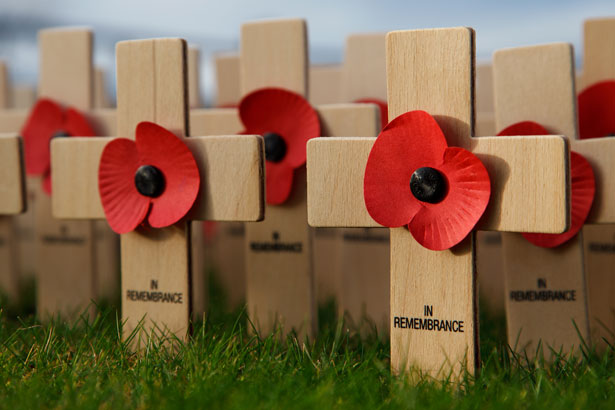
Remembrance Day Free Stock Photo – courtesy Public Domain Photos. Creative Commons Licence 1.0 Universal.

I don’t know whether congregations dread certain Sundays of the year, but I can tell you for sure that preachers do. Remembrance Sunday is one of them. Being planned on this day is the preaching equivalent of what football fans call a ‘hospital pass’: the ball is played to you, but you know an opponent will clatter into you.

For this is a day when whatever you say, there is a high likelihood someone will disagree passionately with you afterwards. You can upset the pacifists and the patriots. Once, as a young minister after I had tried to expound the Beatitudes on this day, a highly opinionated church steward dismissed my efforts by saying, “There’s only one thing to say on Remembrance Sunday, and that is that war is pointless.”

And fundamentally, today is a civic and political day rather than a Christian festival. So you can always upset people politically. You might take the opposite view to someone. Or just saying anything political will annoy those who think the church should stay out of politics.

Well, the Gospel does have political implications, because Jesus is Lord of all creation, and that includes the political sphere. So, we will have something to say about moral and ethical issues. We will have something to say about political leaders who flagrantly contradict God’s Law.

But what we will not do is come up with particular political policies. Those are rightly the realm of the politicians, political advisers, and civil servants with their different rôles to come up with.

What we preachers will do is paint the broad brush-strokes of God’s love, God’s will, and God’s good plans for creation, so that we may live accordingly.

And that, for me, is where our reading from Revelation 22 comes in. Jesus said, ‘The kingdom of God is at hand; repent and believe the Good News.’ Well, here is part of John’s vision about the fulness of God’s kingdom. These verses tell us where we are headed and the kind of society the kingdom of God will be. Therefore, they guide us in how we live today in anticipation of that time. They indicate how we are to live in the midst of a world that contains hatred and violence, pointing instead to God’s kingdom.

That’s why they form something of a manifesto for Christians on Remembrance Sunday.

Firstly, life:

1 Then the angel showed me the river of the water of life, as clear as crystal, flowing from the throne of God and of the Lamb 2a down the middle of the great street of the city.

This part of the vision is inspired by Ezekiel 47, where the prophet sees water coming out from the temple of God and coursing through the land, bringing life in its waters and on its banks wherever it flows. True life and the renewal of the world come from God.

It is not just physical life, but life in every sense, given by God who is Spirit, for in the New Testament the water of life is a way of speaking about the Holy Spirit.

If we want a world and a community where life in all its fulness comes, then we remember that is the promise of Jesus. It is one of his gifts. It can be received from him. He said, ‘I have come that they might have life, and have it more abundantly.’ The trouble with the church, as one preacher said, is that we think Jesus said, ‘I have come that they might have meetings, and have them more abundantly.’

Life in all its beauty and fulness is on offer from God. If you give your life over to Jesus and receive the Holy Spirit, then what you should expect is not to become some spiritual robot, but rather to become more fully human than you’ve ever been. You can expect all your gifts, talents, and passions to flourish like never before, because you are connected to the Source of all life, and all that is good.

It’s significant that in the Roman Empire, if a waterway flowed through the middle of a city like the river of the water of life does here in the New Jerusalem, it wouldn’t be a river. It would be an open sewer.[1] Do not look to the empires of this world for life, be those empires political systems, economic powers, or military might. Of themselves, they will only lead you to the open sewer.

Instead, the Christian God Manifesto is life: life in all its beauty and richness, available through Christ and empowered by the Spirit.

Let’s offer that. And let’s live like it’s true.

Secondly, healing:

2b On each side of the river stood the tree of life, bearing twelve crops of fruit, yielding its fruit every month. And the leaves of the tree are for the healing of the nations.

Now I know that taken literally this is a bizarre image, seemingly describing one tree that stands on both banks of a river. But remember this is a vision. Treat it a little bit like dream language.

And let me point you again to the river of the water of life in Ezekiel 47. Everywhere it goes, as I said, life flourishes in its waters and on the banks. That happens here with the tree of life that we first met in the Bible in the Garden of Eden.

Biblically, the tree of life was taken to represent God’s wisdom, in verses about wisdom such as Proverbs 3:18, which says,

She is a tree of life to those who take hold of her;
    those who hold her fast will be blessed.

But God’s wisdom, although always available, has been scorned. Now, however, as the water of life does its work in the New Jerusalem, it flourishes. In the kingdom of God, the wisdom of God prevails over the foolishness of the world.

Is it not the foolishness of the world that has so often led us to wars and conflict? But in the kingdom, God’s wisdom puts a stop to that.

For whereas in Ezekiel, the tree of life healed God’s people, now says John, the tree of life is for the healing of the nations. The Gospel offer of God’s wisdom is a universal offer. Come and find healing and peace in Jesus Christ, the Prince of Peace.

Oh, to be sure I’m not being simplistic and saying, be converted and everything will be fine. It’s not just a case of being forgiven. For in response to the healing of God’s forgiving love in Christ we need his wisdom to live differently. It needs to be lived out.

And there is our challenge. For too often the world looks at the church and does not see a community that has been healed by the wisdom of God. Rather, it sees one full of foolishness and in-fighting. They see us easily duped by politicians, from American evangelicals falling for Donald Trump to British mainstream churches, where every social pronouncement skews in a left-wing direction. They see us fighting too, tearing one another apart at times.

So to offer this second strand of the God Manifesto, we have some changing to do.

Thirdly, restoration:

3 No longer will there be any curse. The throne of God and of the Lamb will be in the city, and his servants will serve him.

No more curse? John’s vision is sending us back to the Garden of Eden again, only this time not to the beauty of the Tree of Life, but to the consequences of Adam and Eve’s sin.

For God tells them that sin leads to a curse over every part of life. The link between humans and the rest of creation is damaged. The joy of childbirth is infected with pain. The beauty of the male-female relationship is damaged by male domination. The realm of work becomes one of frustration rather than fulfilment. Life ends in the dust of death. Is this the beauty of creation? No.

But in the New Jerusalem, ‘No longer will be there be any curse.’ All that is broken is put right. Relationships are restored. The abuse of power is replaced by the spirit of serving one another. What once seemed futile is now worthwhile.

This, then, is another element of the God Manifesto: a thorough-going restoration that applies across the whole of creation from the physical world itself to human relationships. This is God’s vision. This is what we proclaim.

And therefore it is also what we as the Church are called to live out as a sign of that coming kingdom. We are here to nurture reconciled relationships. We are here to treat the earth with kindness. We are here to alleviate pain and to bring meaning to our everyday work.

Most of all, we are here to say that this all flows from a restored relationship with God, where not only are our sins forgiven, we then with gratitude shall live to serve Jesus Christ, who redeemed us. To repeat the second half of verse 3:

The throne of God and of the Lamb will be in the city, and his servants will serve him.

As with every element of this God Manifesto that proclaims a different and contrary reality to that of war and destruction, this is something the church needs both to preach and to live. If we truly believe what we say we believe, then our calling is to live it and thereby show the world by our actions that it is true.

Conclusion

There is so much more I would love to say about these verses. But here is how I want to draw this vision to a conclusion.

It’s common today when talking about what is right or wrong to say, ‘Make sure you are on the right side of history.’ It’s a dodgy saying that assumes everything in the world is becoming increasingly better from a moral point of view, even though it’s self-evident that things are getting both better and worse.

But there is a God way of being on the right side of history, and it is to embrace this vision. It is to say, here in Revelation we have the blueprint of God’s eternal destiny for all those who will say ‘yes’ to him in Christ.

If we want to be part of God’s eternal Manifesto of life, healing, and restoration, then we need to do two things. We need to ‘publish abroad’ these truths in the church and in the world. And we need to live out their truth in our lives as a witness.


[1] Ian Paul, Revelation (TNTC), p359.

Remembrance Sunday: Realism and Hope, Luke 21:5-19 (Ordinary 33 Year C)

Luke 21:5-19

It’s hard to avoid the idea that we live in tumultuous times. Vladimir Putin has on more than one occasion threatened the use of nuclear weapons in Ukraine or against Ukraine’s supporters. Our economy is going into a recession. Nurses are relying on food banks to make ends meet. Some food banks are running out of supplies. And don’t get me started on the turnover of Government ministers and Prime Ministers. We have had no peace since COVID.

In our reading, Jesus speaks to disciples and others who he knows will also face tumultuous times. Despite popular opinion (and the headings in the NIV) he is less speaking about the end times of all history and more prophesying what life will be like forty years hence when Rome crushes Jewish resistance and destroys the Jerusalem temple – an event that would feel like the end of the world to his listeners.

And here we are on Remembrance Sunday when we remember the slaughter of World War One, the so-called ‘war to end all wars’, and the Second World War, twenty-odd years later.

What Jesus teaches here helps us live through such crises. For sake of simplicity – and I confess it has been ‘one of those weeks’ again – I am taking my points from Ian Paul’s excellent article on this passage.

He makes six points. Yes, six – but they are each brief and to the point. Here goes.

Firstly, however big the catastrophe, God’s purposes are bigger. It’s natural to be frightened, to despair, to ask questions, and to consider desperate actions. But nothing knocks God’s purposes off course. God prevails. God has more free will than any of us, including those who use their free will for the most unspeakable evil.

Whether it’s the destruction of the Jerusalem Temple, the Cuban missile crisis, or the threats of a little despot in Moscow, God always holds the trump card. His kingdom has come and is coming. He will prevail. Keep your faith in him.

Secondly, don’t be surprised if we’re picked on.

12 ‘But before all this, they will seize you and persecute you. They will hand you over to synagogues and put you in prison, and you will be brought before kings and governors, and all on account of my name.

Jesus prepares his listeners for possible persecution. We know that a few years before Rome took down the Jewish revolt there was the great fire in Rome, and the Emperor Nero made the Christians into scapegoats. It is a regrettable but common action by evil people to pick on minorities and victimise them or pass the blame.

In our day we have seen similar things happen, where minorities have been targeted. Only on Wednesday this past week, the fast food chain KFC mistakenly sent a promotional message out in Germany that said this:

“It’s memorial day for Kristallnacht! Treat yourself with more tender cheese on your crispy chicken. Now at KFCheese!”

That their systems should accidentally put together the anniversary of the destruction of Jewish synagogues and other organisations, marking the time when it was no longer safe to be publicly Jewish in Germany, is an horrendous reminder of evil regimes picking on minorities.

True Christianity will always be a minority. If we are pursued unjustly, let us not be surprised. But as with catastrophes generally, let us remember that God is sovereign and in charge. We may or may not escape trouble, but he will bring good out of it.

Thirdly, give testimony to Jesus. If we do end up on the wrong side of the authorities or of those wielding power, do not be ashamed of Jesus.

13 And so you will bear testimony to me. 14 But make up your mind not to worry beforehand how you will defend yourselves. 15 For I will give you words and wisdom that none of your adversaries will be able to resist or contradict.

Trouble becomes our opportunity to tell that powers that be that their only hope of salvation is not in their own might but in Jesus Christ and him crucified. The power of the Holy Spirit comes to us in our difficulty and inspires us with divine wisdom. This may or may not help us in the short term, but be sure that the testimony will be there for the long run and be recalled down the generations. Our words are not just for our contemporaries.

Fourthly, stay rooted in Jesus.

He replied: ‘Watch out that you are not deceived. For many will come in my name, claiming, “I am he,” and, “The time is near.” Do not follow them. When you hear of wars and uprisings, do not be frightened. These things must happen first, but the end will not come right away.’

Of course I hope we’d stay rooted in the teaching of Jesus anyway, but all sorts of people make outlandish claims that exploit a time of crisis or catastrophe. That does mean they are sound or true. Jesus and his teaching remains our plumbline all that is good, beautiful, true, and worthwhile.

Fifthly, expect division.

16 You will be betrayed even by parents, brothers and sisters, relatives and friends, and they will put some of you to death. 17 Everyone will hate you because of me.

When the pressure is on it will be on everyone and it will come close to home, even into the home. Remember how before the Berlin Wall fell people did not even know whether they could trust members of their own family, because they might be members of the dreaded Stasi. They could be reported to the authorities and imprisoned.

You may say this is not good news, and it isn’t, but what Jesus does here is he prepares us. Don’t be surprised by these terrible things, he says. This is why it is important to stay rooted in him and his teaching. If you don’t, then you will succumb to the pressures and may turn. But if you do stay rooted in Jesus, then you have a solid basis for holding firm even in the face of the worst betrayals.

Sixthly and finally, endure to the end.

18 But not a hair of your head will perish. 19 Stand firm, and you will win life.

When our kids were at school, it was recognised that the renewed emphasis in recent years on exam success – plus, I would suggest, the pressures of pushy middle-class parents – meant it was important for the school to teach them how to be resilient.

You hear a lot about resilience today. There has been so much talk about mental health issues resulting from the COVID-19 lockdowns. You can find all sorts of practitioners offering to teach resilience to adults as well.

And Jesus calls his followers to a spiritual resilience. Stand firm, he says. Other parts of the New Testament make similar calls on Christian disciples. To be faithful is to stand firm. Be resilient in your faith.

And although Jesus doesn’t explicitly say so here, the assumption in the New Testament about standing firm is that like all the difficult things we are called to do as Christians, we are promised the help of the Holy Spirit in fulfilling what Jesus calls us to do.

It doesn’t mean we won’t be knocked down. It does mean we shall keep getting back up to our feet.

Conclusion

You may think that I am painting a gloomy picture. What I want to do is bring before you a vision of realism combined with hope.

The famous writer on business leadership, Jim Collins, spoke about what he called the ‘Stockdale Paradox.’ This is how Carey Nieuwhof paraphrases it:

Jim Stockdale was an American Vice Admiral captured and imprisoned during the Vietnam War. He was held and tortured for seven years.

Stockdale said the first people to die in captivity were the optimists, who kept thinking things would get better quickly and they’d be released. “They died of a broken heart,” Stockdale said.

Instead, Stockdale argued, the key to survival was to combine realism and hope.  In Stockdale’s words:

“This is a very important lesson. You must never confuse faith that you will prevail in the end–-which you can never afford to lose–-with the discipline to confront the most brutal facts of your current reality, whatever they might be.”

There is no getting around the fact that catastrophes in life are grim. We cannot afford to play pretend under the pretence of hope.

But as Christians we do have good news for those seasons. God is still in charge of the universe, and his Spirit enables to continue witnessing to Jesus and enduring in faith.

Remembrance Sunday: The Healing of the Nations, Revelation 22:1-5 (Ordinary 33, Year B)

Revelation 22:1-5

When I was a child, the Dam Busters movie came to the local cinema and my Dad – who had loved his National Service in the RAF – took me to see it. To me as a boy, Barnes Wallis, who invented and trialled the ‘bouncing bomb’ not far from here at Brooklands, Wing Commander Guy Gibson, and the crew members of Bomber Command were surely national heroes. This Remembrance Sunday, only one member of Bomber Command is still alive – Squadron Leader ‘Johnny’ Johnson, who is about to celebrate his one hundredth birthday.

Heroes. As a youngster, I didn’t really consider the complex moral questions about the bombing of the Ruhr Valley and whether Christians could view it as justified under the Just War Theory of St Augustine, who said that in a just war you could only target those who were actively involved in the enemy’s war effort.

But I suspect that whatever stance we take on war, a lot of us do childlike thinking about it. As a teenager I was to embrace pacifism, but some would say that is naïve idealism. It can be equally naïve to assume that bombing your enemies into oblivion makes everything right.

And Christians will never totally agree on issues of war. I’m not going to try to take on that hopeless task today.

But I do want us to use this Lectionary reading from Revelation 22 to show us what God’s glorious vision of the future in his new creation is like, because that gives us a good idea of his will, and it therefore points to some of the things we can hope for and live by now as we prepare for the full coming of his kingdom.

Firstly, in the New Creation there is life:

We hear about the ‘water of life’ coming from God and the Lamb (verse 1), just as in Ezekiel the water flowed from the Temple, the place of God’s presence. And we read about the ‘tree of life’ (verse 2), which you will remember from the Garden of Eden, so here Eden is restored but supersized.

So this is life that comes only from God (the water of life) and it is immortal life (Adam would have lived forever had he eaten from the tree of life in Eden). This is eternal life. This is the gift of God. This is the life we receive when we respond to the grace of God in Jesus Christ and find forgiveness of sins and new purpose in following Christ and turning away from sin.

It is this life, the gift of God, which stands in contrast to the death we witness in the world and which is at the forefront of our thinking on Remembrance Sunday. The ways of God are life, not death.

And it is not just physical death but spiritual death which the life of God opposes and replaces. To stay wilfully apart from God is to choose eternal death.

Therefore, one thing we might remember on Remembrance Sunday is the importance of the Gospel. Yes, we join with the rest of our society in commemorating the war dead and the sacrifices that millions made, but as Christians we go further. We say that there is an antidote to the ways of hatred, mistrust, and violence that lead to war, and that is in Jesus Christ and him only.

So one thing we learn from Revelation 22 is that in the church we need to keep the main thing the main thing. And the main thing is the proclamation of the Gospel. What a tragedy it is that other things get in the way. The other day a minister who is retiring next year told me how he sincerely hoped that in his final year of active ministry he would be able to concentrate on preaching and teaching rather than on GDPR, accounts, property, and all the other governance issues.

But not only that, this is a reminder to all of us in the church that we have our part to play in sharing the Good News of Jesus among those we know. It isn’t that we are all preachers – thank goodness we’re not – and it isn’t that we’re all called to go door-to-door or button-hole people in the street. But it remains the call to all of us to talk naturally in conversations about the difference Jesus has made in our lives.

If on Remembrance Sunday we want to see a better world, then it is incumbent upon those of us who believe a better world is coming to share that Good News with the world.

Secondly, in the New Creation there is healing:

We read that ‘the leaves of the tree [of life] are for the healing of the nations’ (verse 2) and that is then explained with the words, ‘No longer will there be any curse’ (verse 3).

The curse on the nations is healed in the New Creation. What does that mean? It means that the curse of Eden is reversed. In the pictorial language of early Genesis, it was the sin of Adam and Eve that led to a widespread curse on humanity. It was a wide-ranging curse. It not only adversely affected our relationship with God, our relationships with each other were cursed, so was our relationship with work, with children, and with the whole of creation. All of life was under a curse. What was previously blessèd became cursed.

But no more. Through the Cross and Resurrection God reverses the curse. We can know him. We can have good relationships. We can find purpose at work. We can bless and restore creation – something that is surely on our minds as the COP26 conference ends. All these are God’s gifts of healing in Christ. They are partial in this life, but they will be complete in the New Creation.

Now this is important in following on from my first point. Because there are those who will say that it isn’t enough to preach the Gospel, and that it doesn’t bring about the wider transformation in society. They will point to things like the dreadful genocide in Rwanda back in 1994 and point out that Rwanda was a heavily evangelised nation with a high proportion of confessing Christians. Indeed, in certain parts of the Christian world it was celebrated as a great example of evangelism and revival. People spoke about the ‘East African Revival.’ Yet many of these Christians participated in the terrible massacres.

The problem with Rwanda is that a narrow Gospel was proclaimed, one that only called converts to a personal, perhaps even private, piety. We need the call to conversion, but it needs to be a call to an entirely converted life. Because the message that the whole curse is lifted in the New Creation and that healing has come is a message that applies right across life – not just to personal and private issues like relationships, but also to public and social areas, such as work.

So what we cannot do as Christians is truncate the Gospel. Some truncate it by the sort of narrow private piety I’ve just described – ‘Come to Jesus, and let him put your personal life in order.’ Others truncate the Gospel but omitting the call to conversion and simply proclaiming that God loves social justice. But the healing of the nations from the curse of the Fall means we need to declare and to live out the healing from the curse in every sphere of life.

As we seek a better world than the one that we live in, let alone the ones that provoked world wars, our calling as Christians is to proclaim the Gospel in all its fulness and to live as an example of that all-encompassing Gospel which brings healing and restoration to every broken part of life.

This will therefore not only be in our spoken message, but in our lifestyles, and in what we offer the world. Too often churches are filled with toxic behaviour, and when that happens it’s a denial of the Gospel and it’s a denial of opportunity to the world to know the beauty of God’s healing love.

Instead, let’s be people who know that the life of the Gospel brings healing and let’s show that.

Thirdly, in the New Creation there is light:

There will be no more night, we read in verse 5. At this time of year when the clocks have gone back and the nights have drawn in, that sounds like Good News to me!

The other day on Twitter, someone parodied the old Simon and Garfunkel song ‘The Sound of Silence’ by writing these words:

Hello darkness, my old friend,
Why are you here? It’s 4 pm.

Not that I want things to be like New York, ‘The city that never sleeps’, having stayed in an hôtel there on Broadway where you could hear traffic noise and be assaulted by neon advertising 24/7.

But light instead of darkness. No more the darkness of sin, because my guilt has been wiped away. No more the darkness of continual sin, because the Holy Spirit has helped us to live differently. And no more the darkness caused by the sins others have inflicted on us, because God in Christ has healed us and helped us to forgive.

All those things that have brought darkness in this life will no longer cast shadows over us and suck life out of us. We shall know the beauty of God’s light.

How does he do this? There might be a clue in the preceding verse:

They will see his face, and his name will be on their foreheads.

God’s name on our foreheads. Do you remember when as a child you had to write your name on everything you owned, and when you had name tags sewn into your clothes? God puts his name on us and says, ‘You belong to me.’ What could be more reassuring and restorative than that? We belong to him. His name is upon us. This can carry us through the darkest times: we are Christ’s.

We may not be facing a world war today, but where could we apply this? You’ve heard me talk about the fact that depression has had quite an effect on my family, and so you may not be surprised to know that I’m concerned by the increase in mental health issues since COVID-19 hit and I believe the church can offer something to the world alongside all the necessary medical resources.

And there is an encouraging growth in Christian resources for use in the church and the community to help with this. I’m looking at one called Kintsugi Hope. Whether it’s the right resource I don’t know yet, but the word ‘kintsugi’ is Japanese for a way of restoring broken pottery by painting it with seams of gold and thus making it more beautiful.

Whether that particular path is the right way forward for us or not, we have here a wonderful picture in these five verses from Revelation about how the fulness of the Gospel hope in the New Creation is the cure for the sickness that the world faces with when we think of the events that led to the establishment of Remembrance Sunday and its continuation. We also recognise that war is far from the only way in which there is brokenness, sickness, and darkness in our world.

We are people of hope. Jesus brings life, healing, and light. One day his new world will be flooded with these things. In the meantime, it’s our call to participate in his work by proclaiming the Gospel, by living and advocating healed lives, and by showing the world how Christ’s light overcomes the darkness.

Remembrance Sunday, then, reminds the church of our unfinished task.

Video Sermon: What Is Your Verdict On God? (Joshua 24:1-28)

We’re jumping from Joshua 3 a week ago to the final chapter today. Why? I suspect it’s because many people are uncomfortable with the Book of Joshua.

I offer some brief responses to those concerns in this video, and then I go on to the way in which Joshua prosecutes for a verdict from Israel in favour of renewing their covenant with God.

Joshua 24:1-28

Finally, there are some prayers for Remembrance Sunday.

Remembrance Sunday: Swords Into Ploughshares

At Knaphill this Sunday we shall hold our usual all age worship parade service for Remembrance Sunday. Our Bible text is Micah 4:1-5, especially the famous words in verse 3, ‘They will beat their swords into ploughshares’.

With that in mind, we are using the video below, which has connections with Christian Aid, and which we found through Barnabas In Churches. It tells a remarkable story of putting this Bible verse into practice in a creative way in Mozambique. Watch and be moved.

Peacemakers

“Blessèd are the peacemakers, for they shall be called children of God.” (Matthew 5:9)

I remember my first Remembrance Sunday service as a minister. The Anglicans and the Methodists gathered together every year in the parish church. The vicar didn’t like preaching, and always delegated that to the Methodist minister. He chose the Beatitudes of Jesus as the Bible reading. I’m sure you don’t see any parallels with this morning, then. 🙂

In my naïveté, I felt I had to expound the whole passage. I said something about every one of the nine beatitudes. So – here we are, another ecumenical Remembrance service in a village parish church, settle back into your pews … 

No. I’ve learned. There is enough in one of these Beatitudes to fill our thoughts on a day like this. I could have chosen, “Blessèd are those who hunger and thirst for righteousness, for they will be filled”, but instead I selected, “Blessèd are the peacemakers, for they shall be called children of God.” What might these words of Jesus mean for us on Remembrance Sunday, and what might they mean for us generally in following him?

Peace with God
We cannot understand the mission of Jesus unless we see it as being out peacemaking between God and human beings. He said that he “came not to be served but to serve, and to give his life as a ransom for the many” (Mark 10:45, italics mine). Jesus came to bring reconciliation. He came with the message of God’s grace and mercy for sinners. He demonstrated it by his outrageous association with the most unworthy members of society. He accomplished it in his death on the Cross, where he took the blame for the sins of the world. In his Resurrection, he made the new life of God’s kingdom visible and possible.

In the Gospel of Jesus, peacemaking bridges the gap between God and people caused by our sin. The apostle Paul says that God in Christ appeals to us to be reconciled to him. That happens through the Cross, when we respond by turning away from sin to follow Jesus and trust him. It is the work of Jesus as the Son of God to make God’s appeal to us and to make the bridge-building possible.

So what better time to find peace with God than Remembrance Sunday?

Peace with Neighbours
At college, a friend of mine bought a book of cartoons about the symbol of reconciliation at Holy Communion services, the sharing of the Peace. The cover had a cartoon showing one character offering the Peace to a rather frosty person. Its title? ‘No Thank You, I’m C of E.’

Some people think the introduction of the Peace into Christian worship is one of those touchy-feely happy-clappy trends that don’t fit with traditional worship. In fact, it’s a much more ancient tradition than the Book of Common Prayer. Only one tradition of Christian reconciliation is older, if you want to be truly traditional, and that is Paul’s command that we greet one another with a brotherly kiss. I don’t hear traditionalists calling for that too often!

But my serious point is this: a liturgical action like the Peace symbolises the fact that if we are at peace with God, we are called to be at peace with our neighbour, insofar as our efforts allow. That is why the Book of Common Prayer invited all those who were ‘in love and charity with [their] neighbour to take [the] holy sacrament to [their] comfort’.

In other words, we cannot have the blessings of reconciliation with God as a private possession without striving for reconciliation with people. Children of God will be such peacemakers. We will forgive those who have wronged us, not by pretending something didn’t happen or didn’t matter, but by separating blame and punishment. We shall take steps to apologise and make appropriate amends when we know others have been hurt by our actions. This is what those who have been adopted into the family of God do. God has built a bridge to us in Christ: we build bridges to others.

Peace with the World
Here’s the thorny problem with this text on Remembrance Sunday: if Jesus calls his followers to be peacemakers, should we ever go to war? Clearly, Christians have disagreed about that for two thousand years. I’m not about to settle it in one brief sermon. 

It’s worth noting that there was a political application to Jesus’ words here. If peacemakers were to be called ‘children [sons] of God’, then that would have struck a chord with his first hearers. In Jesus’ day, you will recall that his homeland of Israel was occupied by Rome. There were different Jewish responses to the fact of occupation. The wealthy Sadducees ingratiated themselves with their rulers. The Pharisees prayed for change.

And the Zealots were the freedom fighters. Rome would have viewed them as terrorists. What did the Zealots call themselves? ‘The sons of God.’ At very least here, then, Jesus repudiates the use of violence in advancing the kingdom of God.

It may be a different matter when it is not a matter of forwarding the Christian cause as one of justice for others, where we defend the oppressed. Jesus would have had the Hebrew word for peace in his mind, shalom. Now shalom is not peace simply defined as the absence of war. It is about the presence of justice and harmony in society.

Thus if promoting justice and harmony meant taking forceful action against the wicked, we might in some ways be peacemakers. However, that is something that needs weighing carefully and only pursuing in ways where we guard as much as possible against descending to the level of the oppressors. So, for example, that is why – although I disagree with Barack Obama on issues such as abortion – I welcome his commitment to close the detention camp at Guantanamo Bay.

An Anglican priest from Kenya once told me, “If I am attacked for being a Christian, I will not fight back. If I am attacked for being a black man, I will.” Whether you agree with him or not, he was trying to distinguish between the fact that Christians may not seek to advance the Gospel aggressively or violently, but we may use force if it is a matter of justice for others. However, let us exercise caution. Force should only be exercised with reluctance, not enthusiasm. 

One final area of peace to mention this morning:

Peace with Creation
This may seem an odd thing to talk about, and perhaps the moment I said ‘Peace with creation’ you thought this was going to be an excuse for some trendy talk about the environment.

Well, this point is about environmental concerns, but it is thoroughly rooted in the text. In the Old Testament shalom peace includes harmony with creation. This is not some ‘Hello trees, hello flowers’ approach, or viewing our planet as a goddess called Gaia, as some do. It is about taking seriously our stewardship of God’s world. If in the kingdom of God the lion will lie down with the lamb, if nothing will be harmed or destroyed on God’s holy mountain, and if the throne of God is surrounded not merely by humans but by ‘living creatures’, then we have a vision of harmony with God’s created order.

Even without this vision, we would surely want to fight to make peace with the environment for the sake of our children and grandchildren, just as many fought for a just peace in World War Two.

But the Bible’s vision of the future is a large and compelling one. It is not, as popularly supposed, one where the material is vaporised and we are all ethereal spirits floating on clouds. Rather, it is one where just as Jesus’ body was raised in a new physical form, so will ours be. It is one where heaven comes down to earth, and God inaugurates a new heaven and a new earth. Creation is redeemed with a new creation. Peaceable creation care today anticipates God’s future. It is in harmony with it.

Blessèd, then, are the peacemakers. Children of God are those who have been reconciled to their heavenly Father through the Cross of Christ. In response, they offer that same peace to others, they seek reconciliation with their neighbours, justice in the world and the well-being of creation.

May the Holy Spirit help us all to be peacemakers.

Create a website or blog at WordPress.com

Up ↑