The Virtues of Wrestling with God, Genesis 32:22-31 (Trinity 9 Ordinary 18 Year A)

Genesis 32:22-31

The London International Invitational Wrestling event took place from 10-11 December 2011. Wrestling 166 on Flickr by Greg Cullen. CC 2.0.

I was sharing at Midhurst on Easter Day about how one of my ministerial student friends in Manchester invited me and others to go with him to watch bouts of professional wrestling. I never understood the fascination and never accepted his invitations.

Why? For me, wrestling was irredeemably camp, and that’s not me. I associated it with my grandmother watching the Saturday afternoon wrestling on World Of Sport with Dickie Davies from 4 pm every week. As she cheered and booed the likes of Mick McManus and Jackie Pallo, I couldn’t wait for it to end so that we could get the football results.

Wrestling was unwelcome for me, and the first thing I want to say about this story is that Jacob’s overnight wrestling with the mysterious man was also unwelcome.

Life is challenging enough for Jacob at this point in his life. He is heading for this first meeting with his brother Esau in years. Esau, you remember, is the twin whom he tricked out of his blessing from their father Isaac. How will Esau receive him? Will he want revenge? Jacob has already prepared to soften the blow by arranging for members of his family and household to go ahead of him, along with gifts for his brother.

The mysterious man in some way represents God, given that at the end Jacob says he has seen God and lived (verse 30). What we read about here is an unwelcome wrestling bout with God, whether that was directly with God or with his representative.  

It is not too much of a jump to recognise the seasons in our own lives when we find ourselves wrestling with God, and that the experience is equally unwelcome for us. We believe God is in charge of our lives, but events happen that we do not want. Ill health. A job loss. Estrangement from family members or friends. A death. We all too easily expect life to resemble a Hallmark greetings card or the cover of a box of chocolates, only for major incidents to throw us off course.

And when they do, it is not unusual for us to end up complaining to the God who has allowed these things. As Jacob might have wondered why he had to face Esau with no certainty of a good outcome, so do we remonstrate with God for our circumstances. Very few of us accept the undesirable circumstances placidly. We are wrestling with God, although it feels like God has come to wrestle with us.

We were never promised the easy life we long for. Jesus said, ‘In the world you will have tribulation, but be of good cheer, I have overcome the world.’ He would then go to the Cross.

A little girl once asked her mother, ‘Mummy, do all fairy stories end with the words, ‘And they lived happily ever after’?’

‘No,’ replied Mum, ‘Some end with, ‘When I became a Christian, all my troubles disappeared.’’

I wish it were different. But God has not opted for a way of working where he routinely presses a button and we fly away from danger in our ejector seat. Instead, he has chosen a path that takes us through unwelcome situations to lead us into greater depth, for our sake, for the sake of others, and even for his glory. That is, after all, what Jesus did through the Cross.

To that end, he has given us resources to help us. We have the Book of Job to read. We have those Psalms that we call ‘The Psalms of Lament’, in which the psalmists eloquently and passionately bring their pain to God. They give us permission to say exactly what we think. As the early church father Athanasius said, ‘Most of the Bible speaks to us, but the Psalms speak for us.’

When we find ourselves caught up in an unwelcome bout of wrestling with God, let us pray that he will do a deep work in us and through us as he accompanies us through this time we would have preferred not to have happened.

Secondly, wrestling with God teaches us trust.

Diverse people stacking hands together at PxHere. Public Domain.

That may sound unlikely at first: why would you grow in trust in this One with whom you have wrestled and complained? But listen to the text in verse 25:

When the man saw that he did not prevail against Jacob, he struck him on the hip socket; and Jacob’s hip was put out of joint as he wrestled with him.

 When sunrise comes, Jacob will limp past Penuel (verse 31). This is Jacob, the fixer, the manipulator, the one who has sought to control his own destiny and the lives of others. Mister Independent now has a limp.

Will he now at last realise that he cannot be in total control of his lot? This is the time for Jacob truly to be a man of faith, rather than one who deceives in order to get his own way.

Faith is about both belief and trust. Believing certain things to be true about God, the world, and us. And trust in the God and Father of our Lord Jesus Christ. Jacob’s challenge here is to embrace the ‘trust’ part of faith. A man who limps is at a serious disadvantage as he prepares to meet the brother he so sorely wronged all those years earlier. He has already tried to butter up his brother by planning to send his family members, servants, and herds ahead of him – but what if they don’t impress Esau? What if all that is left is for him to face Esau with a limp? How can the man who even wrestled for hours with God’s own representative have a chance? There is nothing left but to trust.

And when we wrestle with. God over those unwelcome intruders into our lives, be they health, relationships, work, finance, of any other major aspect of our existence, there is nothing left but to trust in God.

It’s what the Apostle Paul did with his ‘thorn in the flesh’, whatever that was. It’s what Jesus did when the Father would not remove the cup of suffering from him.

I’m not saying we shouldn’t ask God to remove trials from our lives. After all, we shall pray in the Lord’s Prayer in a few minutes’ time, ‘Save us from the time of trial.’ But there are occasions where he does his deep work when we are in the furnace before deliverance comes.

I have spoken before about examples of this in my own life. The lung surgery I had in my twenties that gave me an experience of what it is like to go through major surgery. My encounters with depression. Playing my part in caring for my father through his Alzheimer’s Disease. I would happily never have had any of those experiences. But by letting me go through these, God has given me things whereby I can support people.

The mistake would have been to listen to the lies some Christians tell about these experiences. ‘If you haven’t been healed, then you don’t have enough faith.’ ‘If you suffer from depression, then you must have committed a sin.’ For to believe those lies stops us from trusting our Father in the darkness.

God invites us to trust him as we limp along after wrestling with him. He is the One who works all things together for good for those who love him. If we are struggling right now, let us take courage to trust him.

Thirdly and finally, wrestling with God leads to blessing.

A figurine of a man holding a child at Picryl. Public Domain.

This may be the opposite of what many Christians expect. We have just spoken about trust, and many of us have gained the idea that Christian trust is something simple and serene. Struggle doesn’t enter into it: that would be the opposite of trust. We ‘let go and let God.’

Now there are Christians who seem to have a gift for such trust. But many of us do not. And we are not necessarily inferior in God’s eyes because of that. Listen again to Jacob and his mystery divine assailant:

25 When the man saw that he did not prevail against Jacob, he struck him on the hip socket; and Jacob’s hip was put out of joint as he wrestled with him. 26 Then he said, ‘Let me go, for the day is breaking.’ But Jacob said, ‘I will not let you go, unless you bless me.’ 27 So he said to him, ‘What is your name?’ And he said, ‘Jacob.’ 28 Then the man said, ‘You shall no longer be called Jacob, but Israel, for you have striven with God and with humans, and have prevailed.’

You might think Jacob’s request for a blessing is another example of him trying get something out of the other party at their expense. And we don’t know all his motives. But whether or not his motives are pure, the divine messenger does indeed bless him. He gives him a new name:

‘You shall no longer be called Jacob, but Israel, for you have striven with God and with humans, and have prevailed.’

What Jacob has done here is honoured with a blessing. God approves of his wrestling to the point of prevailing.

Yes! God invites the struggle, and ultimately, he blesses it.

If you are wrestling with God about something, I want to encourage you to continue to do so. Be persistent. Persevere. You will prevail if you do. And you will discover blessing, perhaps of a style or magnitude you never considered.

This may not only be to do with the areas of life we have already pondered where we wrestle with God over adverse circumstances in our lives. One area where it is important that Christians wrestle with God is in prayer, and especially in intercession.

There are examples in Scripture and church history of people who have done this. The prophet Daniel confessed and interceded on behalf of God’s people in respect to their sins that had led them to exile in Babylon. He was eventually granted remarkable visions of God’s will, not just for his own people, but for the nations.

In World War Two, a group of people at the Bible College of Wales gathered to pray against the advances of Hitler and the Axis forces. They believed that if they succeeded, the spread of the Gospel would be hindered. Day after day and night after night they prayed, led by a man called Rees Howells.

I have been in the company of people I would call ‘prayer warriors’, and to listen to them struggle with God over issues of social injustice and personal pain was like listening to women in labour. But they persisted, and God blessed their wrestling in prayer.

When we wrestle with God, let us resist the temptation to dismiss it as unwelcome and seek an easy life. Let us trust God even in the wrestling, and let us persist until his blessing comes.

Sermon: Acts – Who’s The Governor?

Acts 12:19b-25

Ted Robbins
Ted Robbins by Thwaites Empire Theatre on Flickr. Copyright Mike Johnson Mikeseye Photographic. Some rights reserved.

One of the things about having children is that whether you like it or not, you become acquainted with some of the television programming aimed at them. One of the shows to which I admit a sneaking fondness is called ‘The Slammer’. Ostensibly set in a prison – hence ‘The Slammer’ – inmates can earn early release by performing in a weekly variety show called ‘The Freedom Show’. In reality, these are of course stage acts, and they are participating in a talent show. The children in the audience choose the winner by the loudness of their applause. Those who do not win are condemned to stay and face mealtimes where they always eat the dreaded ‘sloppy poppy porridge’.

‘The Freedom Show’ is compèred by the prison governor, who is imaginatively known as ‘The Governor’, played by the comedy actor Ted Robbins. He is assisted a warder called Mr Burgess, who is like a watered-down version of Fulton Mackay’s character Mr Mackay in Ronnie Barker’s comedy series ‘Porridge’.

However, the Governor wants to be more than a compère. He hankers to be a performer himself, and makes a big entrance to ‘The Freedom Show’ every week, often dressed garishly in clothes such as a yellow dinner jacket and bow tie.

When he comes on, he has a catchphrase. He calls out to the children in the audience, “Who’s the Governor?” and the children shout back, “You’re the Governor!”

I don’t know why it makes me laugh, but it does. Anyway, “Who’s the Governor?” becomes a suitable catchphrase for this sermon. Who’s the Governor – Herod Agrippa or God? Let me place that in context.

Herod Agrippa has just suffered a damaging reverse. Having gained political capital by imprisoning and executing some of the early church leaders, he thought he was onto a winner when he had the apostle Peter put in his ‘slammer’, and scheduled for execution. No long years on Death Row in those days. But Peter had miraculously escaped, and Herod in his temper – having been publicly shown up by the power of God – had the guards executed in a moment of pique. This has come not long after Luke has also recounted in Acts the story of the prophet Agabus foretelling a famine, and the church at Antioch responding by organising a relief collection for the disciples in Judea.

So we’re about to see a contrast between the worst of human rulership and the best of God’s kingly rule. As we do this, we shall learn more how to pray and witness today, even in the face of adversity, and more about the true nature of the God we serve.

Here are three areas of contrast:

Firstly, compassion. What’s wrong with this picture?

Now Herod was angry with the people of Tyre and Sidon. So they came to him in a body; and after winning over Blastus, the king’s chamberlain, they asked for a reconciliation, because their country depended on the king’s country for food. (Verse 20)

What’s wrong is that in the Hebrew Scriptures, a king was to look after the people. To be in dispute over the need for food was not good. To withhold food even from those of another nation was not normal behaviour for a good king. But the people of Tyre and Sidon need to grovel to get what they need from Herod. This is not right.

We already know that this Herod was a violent man from his treatment of the church leaders, and perhaps this is no surprise for a man who was the grandson of the so-called Herod the Great, the man who ordered the slaughter of the innocents in Bethlehem, and who might better be called Herod the Terrible. The Herod of our story, Herod Agrippa, had also been educated in Rome, and was a friend of the Emperor Caligula, to whom he owed his power[1].

We don’t know what this unsavoury ruler was going to do about the request from Tyre and Sidon, because he doesn’t get the chance. All we do know is that he had consciously allowed an unjust situation to develop, and there was only any possibility of resolution because one of his officials, Blastus, had taken a chance. This meeting was not by Herod’s initiative. He had shown no interest in the welfare of these people.

We know enough about heartless tyrants in the history of the world and in current affairs. Starving a population is a tactic both ancient and modern. From ancient Assyria to modern Syria, this is a common practice.

Contrast this with what we have seen in the church not long ago in Acts. The prophet Agabus has appeared on the scene and prophesied a coming famine. But the response of the church is to organise support for those who will suffer the most. It is like a reflex action. Think of Joseph in Genesis storing Egypt’s food in the seven years of plenty before the seven years of famine, and you will see a similar approach.

Esther McVey MP
Esther McVey MP by the Department for Work and Pensions on Flickr. Some rights reserved.

What it comes down to is that while the tyrants of the world starve people into submission, the God of the Bible is compassionate, and his people are called to witness to that compassion by modelling it in their own behaviour. That is why it is good that we hosted the Runnymede Food Bank here for its first two years of existence. That is why it is also good that the growth of the food banks in our country, usually started by Christians, have become an embarrassing indictment against heartless government policies. When we see cases like that of David Clapson, the diabetic ex-soldier who was penalised by a Job Centre for missing an appointment, had his £71.70 benefits stopped, couldn’t then afford food or electricity, and died from a condition resulting from not being able to take his insulin because he couldn’t keep the fridge going, then it’s important that Christians witness to the compassion of God in the face of a serious lack in high places. Earlier this year, Esther McVey MP, the minister for employment, admitted

that the number of sanction referrals made by jobcentre advisers is part of a “variety of performance data” used to monitor their work.

Our witness to the God of compassion, who inspired Joseph to feed Egypt, Agabus to warn the early church, and Jesus to feed the multitudes, is needed more than ever today. How will you do it? Buying supplies for the food bank? Supporting a charity? Directly helping someone in need that you meet? It needs doing.

Who’s the Governor when it comes to compassion?

The second area of contrast is that of authority. There’s no doubt that Herod Agrippa enjoys power. We know what he does with it. It’s no surprise to see that he has an ego to match his sense of self-importance:

On an appointed day Herod put on his royal robes, took his seat on the platform, and delivered a public address to them. 22The people kept shouting, ‘The voice of a god, and not of a mortal!’ 23And immediately, because he had not given the glory to God, an angel of the Lord struck him down, and he was eaten by worms and died. (Verses 21-23)

Elsewhere in Acts, apostles like Paul are wrongly acclaimed as gods by adoring crowds, but they are always quick to deny it. Herod doesn’t. Was it all too appealing to him? He had turned up dressed in all his splendour, and had done everything to impress the need people of Tyre and Sidon with his status and power. It does him no good.

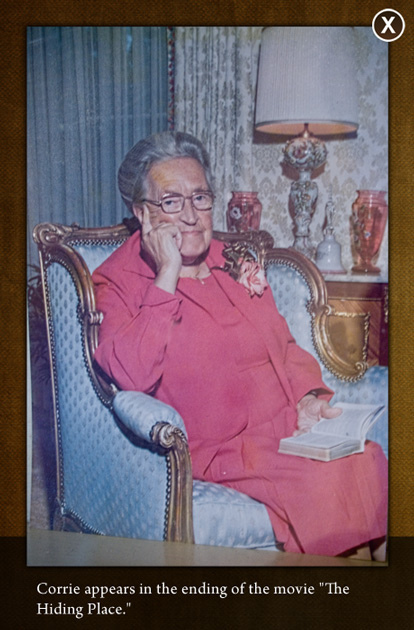
Corrie ten Boom
Corrie ten Boom on Flickr. Some rights reserved.

The Christian knows that the proper response in times like these is to do what Herod didn’t do, and to give the glory to God (verse 23), like the great Dutch Christian Corrie ten Boom. You may recall her story ‘The Hiding Place’, in which she and her family, including her sister Betsie, sheltered Jews from the Nazis and ended up in Ravensbruck concentration camp for their troubles, where Betsie died but Corrie survived. Corrie became a popular and famous Christian author and speaker, and as you can imagine, received much adulation. But she had a wise approach to the receipt of compliments: she described a compliment as like a bunch of flowers. She would say, “These smell nice, but they are for you, Lord.”

How might we approach a proper humility, then? There are some behaviours that look like humility, but aren’t. These include the so-called ‘humblebrag’, where we say something great about ourselves, but set it against a self-deprecating comment, yet really we are trying to tell people how wonderful we are. There is the wrong use of the word ‘humbled’ when we actually mean ‘proud’ – for example, “I am so humbled by the number of people who said they liked my sermon last week.” It’s OK to admit to excitement, but let’s not re-label pride as humility. There is the failure to take a compliment when God gave us the gifts – we need to remember Corrie ten Boom’s bouquet of flowers. Or there is the “All the glory goes to the Lord” school of hyper-spiritual sanctimoniousness. Again, Corrie ten Boom had the balance right.

There is a lovely quote from C S Lewis on the subject in his book ‘Mere Christianity’:

True humility is not thinking less of yourself; it is thinking of yourself less.

Who’s the Governor when it comes to authority?

The third and final area of contrast is that of judgement.

And immediately, because he had not given the glory to God, an angel of the Lord struck him down, and he was eaten by worms and died.

24 But the word of God continued to advance and gain adherents. (Verses 23-24)

Does this sound unlikely to you – that Herod was struck down, eaten by worms, and died? What if I told you that the Jewish historian Josephus records this incident, too? His account is different from Luke’s, but it is complementary. Where Luke says that Herod didn’t give glory to God, Josephus says he failed to rebuke the impious remark. And where Luke says that an angel struck Herod and he was eaten by worms, Josephus tells us that he was struck by severe stomach pains for five days, and then he died.[2] The one who judged violently and unjustly was himself judged.

We know the frustration and horror of looking on while the depraved thrive in power. We can name any number of wicked despots from the present day or the recent past. So too could the biblical authors. They wondered aloud why the wicked prospered, often at the expense of the righteous. They asked why God wasn’t doing anything. And of course we know that Jesus told stories like the parable of the wheat and the tares and the parable of the net which indicated that the separation of the good and the evil would not happen until the last judgement.

Yet here we see an example of judgement being executed in this life. So perhaps this is a time to remember that when we are dealing with the kingdom of God, we speak about it as being both ‘now and not yet’. There is a ‘not yet’ about the kingdom of God in that all will come finally and fully under God’s rule at the end of all things, after the last judgement. But we should not lose sight of there also being a ‘now’ element to God’s kingdom, in that we do see some examples of God reigning in kingly power and overthrowing wickedness, sin, and suffering in our own day and time. That seems to be what the early church witnessed when God sent his angel to strike down Herod Agrippa.

And there are examples from even the darkest times in recent history. Rees Howells, a Welshman deeply affected by the Welsh Revival of 1904-1905, and the founder of the Bible College of Wales, was deeply affected by spiritual awakenings he witnessed as a missionary in southern Africa. During World War Two he was led by Christ into a deep ministry of intercession, which you can read about in the classic book ‘Rees Howells Intercessor’ by Norman Grubb. While some of the story is a little strange, Howells and his colleagues prayed with passion and vigour throughout the war, sensing particular direction from the Holy Spirit at certain times to pray in particular ways for certain specific outcomes. The book is an astonishing account of how God led and answered their prayers, leading eventually to the downfall of the Axis powers. We can talk about the genius of military leaders, the inspiration of politicians, tragic tactical mistakes, and so on. But there is an obscure yet vital story to be made known about the spiritual dimensions of Hitler’s downfall through intense, committed prayer.

Given that, let us not lose hope when we pray for the needs of the world today and every day. We may have to wait, because God’s actions are ‘not yet’, but we never know when he might execute justice ‘now’. So if that is possible, why should we not in prayer ask him to be at work in our time, tipping the thrones of the unjust until they fall from their perches?

Remember this question: who’s the Governor when it comes to judgement?

And more generally, that should be a question to guide our lives: who’s the Governor?

[1] Ben Witherington III, The Acts of the Apostles: A Socio-Rhetorical Commentary, p 383f.

[2] Op. cit.., p 390.

Create a website or blog at WordPress.com

Up ↑