
The Blessing of the New Jerusalem, Isaiah 2:1-5 (Advent 1 Year A)

Isaiah 2:1-5

Wine Advent Calendar by In Good Taste. No alterations. CC Licence 4.0.

In among the monsoon of Black Friday emails that have taken over my inbox were links to a fashion of recent years that I have railed against in previous Advent seasons. The luxury Advent calendar.

This year, you could buy not only a perfume Advent calendar, but also a wine Advent calendar. And I thought, I hope someone doesn’t receive both and then confuses the two.

Or maybe it would serve them right!

These luxury Advent calendars show that if Advent means anything in our wider society today, it is that Advent is a countdown to indulgence.

We may respond by saying no, it’s a countdown to the birth of the Messiah.

But we too would be wrong if we said that – at least historically. For in the tradition of the Church, Advent begins with a countdown to focussing on the return of the Messiah.

Like so many, we yearn for the day when evil and suffering will be abolished. Like many critics of faith, we too struggle with why God allows sin and strife in the meantime.

But what we have is a hope based in the promises of God, and which we have glimpsed in the Resurrection of Jesus.

Ancient Israel had her hopes, and we read one such vision in Isaiah 2. We read it, not only for what it is, but through a Christian lens. We believe this prophecy of Isaiah is fulfilled in what is often called the ‘Second Coming’. We believe in a hope described by the New Testament Greek word Parousia, which is often translated as ‘coming’, but which is better translated as ‘appearing’ or ‘royal presence.’

So, when Jesus appears again as King of all creation, what will be the effects of his reign, and what do they mean for us now?

Firstly, blessing for God’s people:

2 In the last days

the mountain of the Lord’s temple will be established
    as the highest of the mountains;
it will be exalted above the hills,
    and all nations will stream to it.

‘In the last days’ here is literally ‘at the close of the days’ – that is, when God’s promises come to fulfilment[1].

Originally, Jerusalem stood at a height below the surrounding mountains. Yet here, Isaiah is inspired to see it elevated in a way consistent with its spiritual significance. God has elevated the city.[2]

God blesses his people. As Psalm 3:3 says,

But you, Lord, are a shield around me,
    my glory, the One who lifts my head high.

God raises his people to their full dignity. In his presence, he makes them into all they were intended to be.

One Sunday when I was at my Anglican college in Bristol, one of my friends invited a few of us to go with him to worship that evening at an independent charismatic church. His contact was a girl he knew. We all went to her house first, and she led us to the place where her church met. She was a plain-looking young woman of unremarkable appearance.

During the service there was an extended time of sung worship. At one point, I looked around the congregation. Wow, I thought: who is that beautiful girl?

I expect you’ve guessed. It was the apparently plain girl who had taken us there. But caught up in the worship and adoration of God, the presence of the Spirit made her into something more.

And I believe that is something of our hope. Just as Jerusalem is elevated in the vision of Isaiah, so God’s people are elevated in the royal presence of God.

It happens already by the Holy Spirit. It will be fulfilled in the coming of Jesus.

I have long believed that the work of the Holy Spirit in us is not to make us less human, as if God wanted us to be religious robots, but rather to make us more human than we’ve ever been. Our gifts are enhanced. Our talents are increased. Our holy desires are raised. As Isaiah saw Jerusalem being raised and exalted, so our destiny is to become everything that God ever intended us to be.

This is not just about ‘religious’ spiritual gifts. It is to do with everything about us. Alison’s admin will be even more on point. Tim’s photos will be even more amazing. Angela’s hospitality will be warmer than ever. Jessica’s tech abilities will be through the roof.

I’m sure that’s something to anticipate with joy and maybe even excitement. But in the meantime, as a sign to the world of all that is to come, let us be open to the Spirit in every part of our lives as God works on this project of elevating us to become more of whom we were always intended to be.

Secondly, blessing for the nations:

3 Many peoples will come and say,
‘Come, let us go up to the mountain of the Lord,
    to the temple of the God of Jacob.
He will teach us his ways,
    so that we may walk in his paths.’
The law will go out from Zion,
    the word of the Lord from Jerusalem.
4 He will judge between the nations
    and will settle disputes for many peoples.
They will beat their swords into ploughshares
    and their spears into pruning hooks.
Nation will not take up sword against nation,
    nor will they train for war any more.

This makes me remember the passage I used on Remembrance Sunday this year, namely Revelation 22:1-5, where ‘the leaves of the tree [of life] are for the healing of the nations’ (verse 2).
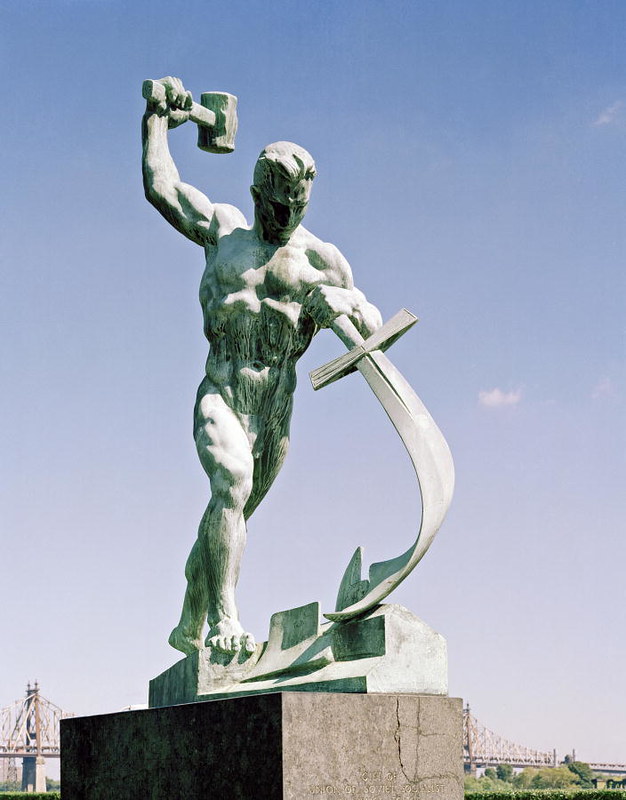
Let Us Beat Our Swords Into Ploughshares. UN Photo/Andrea Brizzi. CC Licence CC BY-NC-ND 2.0

In the New Jerusalem, when God teaches his ways there will be the resolution of disputes between peoples and nations, and the end of all war.  How we long for such a day. Swords into ploughshares and spears into pruning hooks indeed.

Because the New Jerusalem is a place of peace, reconciliation, and justice. Not for the life of the world to come the spectacle of a President lusting after the Nobel Peace Prize while renaming the Department of Defence as the Department of War, while sending quasi-military officers to arrest citizens purely due to the colour of their skin and with no due process, all the while selling Ukraine down the river to his fascist buddy in the Kremlin who probably has dirt on him. That is not peace.

No. The peace of the New Jerusalem will not be the fruit of armed strength but of the Son of God suffering in love on the Cross. The peace of the New Jerusalem will not be about the imposition of a stronger will, because the Cross says otherwise. The peace of the New Jerusalem will not be about finding some compromise halfway in between the positions of two intractable sides but will be based on the truth of God. As we heard in verse 3, ‘He will teach us his ways so that we can walk in his paths.’

Well, what about now? As future citizens of the New Jerusalem, God calls us to point to this future reality by our witness in this life. Can we be people who learn the skills of reconciliation? Can we learn how to transform conflict into peace and harmony? Can we be examples of that in our own relationships? Where are the broken people and broken places in our world to which God is calling us to demonstrate his ways of healing?

Maybe it’s in families. Or in communities. Or in workplaces. Or on a larger stage. But we may be sure, these are the very spaces which God calls his people to inhabit and to serve as a sign of hope in his coming New Jerusalem.

Thirdly and finally, blessing in the here and now:

5 Come, descendants of Jacob,
    let us walk in the light of the Lord.

I’ve been relying this week on the work of the Old Testament scholar John Goldingay to guide my thoughts in understanding this passage. He says that the image of light points in some places to themes of truth or revelation, but not here. ‘The light of the Lord’ has to do with God’s face and hence, God’s blessing. To live in the light of the Lord is to live by his blessing[3].

We can let all sorts of things fire the way we live. It might be material gain. It might be our need for the approval of others. It might be about successful relationships and a good family life.  It might be the desire to be recognised and respected. It might be to climb to the top of our profession.

Not all these things are entirely bad. But they cannot be ends in themselves, or they become idols. Isaiah points us to a better way, a way that enables us to live in the spirit of the Christian hope. It is a way that prepares us for the New Jerusalem.

‘Let us walk in the light of the Lord.’

Let us seek his blessing and respond to that. Where is God shining his light? Let us walk there.

Sometimes God shines a light in a place that is congenial to us, and it is easy to walk there and know his blessing. Other times he shines his light in unexpected and challenging places, and the call to walk there and discover blessing is trickier for us. It can be like that balance we hear in the preamble to the Covenant Service prayer every year:

Christ has many services to be done:
some are easy, others are difficult;
some bring honour, others bring reproach;
some are suitable to our natural inclinations and material interests,
others are contrary to both;
in some we may please Christ and please ourselves;
in others we cannot please Christ except by denying ourselves.
Yet the power to do all these things is given to us in Christ, who strengthens us.[4]

Many ministers did not believe God could be shining his light in that direction as a way of bringing blessing, and some of us had to be dragged kicking and screaming towards that light. Other Christians have known sheer joy and delight in detecting where God was shining his light.

But the reason we do all this is in anticipation again of the New Jerusalem. For in that place, there will be no more night, there will be no more need for lamps or the Sun, because God himself will be the light. Hence, to walk in his light of blessing now is to prefigure that great day. It is to live in a small way now in the ways of eternity, when all our hopes will be fulfilled.

Conclusion

As we step into Advent again this year, may the Holy Spirit hold before us the prophetic vision of hope. May that vision of hope be a blessing that fortifies and energises us.

May we know such blessing that we grow ever more into being the gifted people our Father made us to be. May we offer such blessing that the world knows the Good News of reconciliation with God and with each other. May we walk in such blessing today as we follow God’s light and catch a glimpse of the glory to come.


[1] John Goldingay, New International Biblical Commentary: Isaiah, p42.

[2] Op. cit., p42f.

[3] Op. cit., p44.

[4] Methodist Worship Book, p288.

The Meanings Of Pentecost, Acts 2:1-21

Acts 2:1-21

The vicar was paying a visit to his local Church of England primary school. To impress him, the children had memorised the Creed. They stood before the vicar, each one reciting a line in turn. ‘I believe in God, the Father Almighty, maker of heaven and earth’; ‘I believe in Jesus Christ, his Son, our Saviour’; and so on. 

But when it came to when one child should have said, ‘I believe in the Holy Spirit,’ there was nothing. Eventually, one child broke the embarrassed silence and said, ‘I’m sorry, sir, the boy who believes in the Holy Spirit isn’t here today.’

Are we sometimes embarrassed by believing in the Holy Spirit in the church, too? We do our business without reference to him. We complacently assume his presence. We find the name ‘Spirit’ rather spooky and unsettling, like the old name ‘Holy Ghost.’ And as for all those strange things attributed to his work in the New Testament like speaking in tongues and having direct words from God for people, well no thank you very much, that’s all too awkward and un-British. 

I want to take the familiar story of Pentecost from Acts chapter 2 and show you how the deep meaning of Pentecost shows us how vital it is to welcome the Holy Spirit and his work. I’m confining myself to the first thirteen verses: that is, I’m stopping before Peter gets to speak. There is just so much here I have to put a limit somewhere. 

Firstly, Pentecost is about obeying God’s Law:

As you will realise, Pentecost was an existing Jewish festival. It celebrated the time when God gave his Law (the ‘Torah’) to Israel at Mount Sinai. He had rescued them from slavery in Egypt. Then, on their way to freedom in the Promised Land, he gave them his Law to obey in response to him having delivered them. Keeping God’s Law always was a response to having first been saved by God. It never was the case that we kept God’s Law in order to be saved in the first place. 

But even so, there was a problem. Israel repeatedly failed to keep God’s Law. Ultimately, they were so thoroughly disobedient that in reality they preferred the ways of other gods, the false and imaginary gods of other nations and cultures. It didn’t end well. It ended with them being exiled from the Promised Land, as God had warned them when he first gave them his Law. 

I expect we know similar struggles. We know that God has commanded certain standards of behaviour from his people in response to the fact that he has delivered us not from Egypt but from sin. But we fail. Daily! It’s why we have the confession of sin and the assurance of forgiveness in our worship every week. 

The coming of the Spirit at Pentecost, the festival of God’s Law, shows us that God has not left us relying on our own feeble resources to obey his will. He pours out his Spirit upon us so that we can do the will of God. So often we are like cars drained of fuel (or electric charge today) and we cannot move. But with the Holy Spirit, we are filled with the power to do God’s will and obey his Law. 

So today, if there is an area of life where we know we want to obey God but are struggling to do so, let us seek again to be filled with the Holy Spirit. 

Secondly, Pentecost is about God’s harvest:

We are used to having one harvest festival a year in late summer or early autumn to mark the full ingathering of the crops from the fields. Ancient Israel, however, had two harvest festivals a year. One of them was just like ours. It was celebrated at the Feast of Tabernacles (which also remembered other aspects of their history). 

But their first harvest festival was at Pentecost. It was the festival of the first fruits of the harvest. The early crops were a sign that promised the full harvest would come later. 

This too is what the Holy Spirit does. God promises a full harvest of salvation at the end of time, when his people will be completely saved – not only from the penalty of sin in forgiveness, but also from the practice of sin, because we shall be made completely holy, and further from the very presence of sin, which will be eradicated. 

But there are victories on the way to that destination, and the Holy Spirit brings those first fruits in this life. Do we want to see people come to Jesus and find both the forgiveness of their sins and true purpose for life? If so, then we pray for the Holy Spirit to be poured out. We pray that the Spirit will energise our lives and witness. We also pray that the Spirit will be at work ahead of us in the lives of those we are longing to see discover Jesus. 

So never mind all the talk of learning techniques for evangelism. Pray instead for the Holy Spirit to be at work powerfully. Our job is simply to be witnesses. That is, we give an account of what has happened in our lives. No-one comes to the Father unless they are first drawn to him, so we ask the Spirit of God to do that. 

How many of you have a list of people dear to you whom you are longing to find faith? When you pray for them, pray that the Holy Spirit will reveal Jesus to them. 

Thirdly, Pentecost is about God’s new creation:

The coming of the Spirit is mysterious. Notice how Luke struggles to describe it:

Suddenly a sound like the blowing of a violent wind came from heaven and filled the whole house where they were sitting. They saw what seemed to be tongues of fire that separated and came to rest on each of them. 

‘A sound like the blowing of a violent wind.’ ‘What seemed to be tongues of fire.’ It’s not literal, but it does convey the idea that the Spirit is hovering over the disciples. Does that remind you of anything? 

How about Genesis 1 verse 2?

2 Now the earth was formless and empty, darkness was over the surface of the deep, and the Spirit of God was hovering over the waters.

As the Spirit hovered over the waters at creation, so at Pentecost the Spirit hovers over the disciples because this is the making of the new creation. 

God has come to make all things new. We’re on that journey to the new creation at the end of all things, when there will be new heavens and a new earth, with a new Jerusalem, God’s people. The renewal starts now. 

And so when we see things in the world that do not display the newness of God’s redeeming love, the Holy Spirit empowers God’s people to act for healing, renewal, and justice. 

Did the Holy Spirit empower Martin Luther King in the 1960s to stand up against institutional racist policies in the United States? I believe so. Did you know that when the Solidarity movement arose in Poland in the early 1980s against the terrors of Russian communism much of it came out of a renewal movement in the Roman Catholic Church in that nation? 

What, then, of the evils we see today? Be it Trump or Putin, God is raising up his people by his Spirit, though it will be costly. Where is the fastest growing church in the world today? It is exploding even under the persecution of the mullahs in Iran. 

Is God calling any of us to be equipped by the Spirit to pay the price of advocating for his new creation?

Fourthly and finally, Pentecost is about God’s community:

I want to bring a couple of things together here. One is that the episode begins with the disciples ‘all together in one place’ (verse 1), which followed on from their meeting for prayer in chapter 1. 

Then we get the crowd who gather, coming from different places and speaking different languages, yet they all ‘hear [the disciples] declaring the wonders of God in [their] own tongues’ (verse 11). It’s not the reversal of Babel, where proud humankind was scattered from one language into many, because there are still many languages. But it is about diverse humanity being united under ‘the wonders of God.’

In other words, the work of the Spirit brings unity in Christ across the biggest of divisions. Church is not about going to a place where I mingle with people who are just like me. Instead, it is about the Gospel of Jesus Christ uniting people who otherwise would not hold together. European, Asian, and African; highly educated and barely literate; poor and wealthy; even both Spurs and Arsenal fans! 

We live in a world riven by division. People feel its pain. We look for ways to cross the divide. The tragically murdered MP Jo Cox said before her untimely death, ‘There is more that unites us than divides us,’ but sadly she underestimated the fact that it is sin which causes the division and Jesus is the cure. 

And so the Holy Spirit takes the work of Jesus on the Cross to reconcile us to God and to reconcile us to one another. He applies that to our hearts and minds. In Ephesians Paul talks about God bringing Jew and Gentile together at the Cross. The Holy Spirit makes that real. 

It’s what we are marking when we share The Peace at Holy Communion. Some older Christians will remember communion services where the minister said that those who loved the Lord and who were in love and charity with their neighbour were invited to take the holy sacrament to their comfort. It’s the same idea, it’s just that The Peace is actually a much older tradition of the Church to express this. 

But while expressing this unity in a traditional, liturgical way is important for what it symbolises, it is also something that needs to be lived out. It involves us building our friendships. It means apologising and seeking forgiveness when we have hurt someone else in the church. It means refusing to hold onto bitterness. And it means the world seeing that our relationships are different. 

Conclusion

So who’s up for the challenge, then? These works of the Holy Spirit are all connected. The first about obeying God’s Law and the fourth about unity are two sides of the holiness coin, one personal, the other social. The second about the harvest and the third about the new creation are both about God’s mission on which all Christians are sent. 

All of this comes under that description of the crowd: ‘we hear them declaring the wonders of God in our own tongues’. Is that worship, or mission, or both? 

Let’s invite the Holy Spirit to empower us to declare the wonders of God in our words and in our lives, in the church and in the world. 

Paul’s Favourite Church 7: And Finally (Philippians 4:1-9)

Philippians 4:1-9

For many years now, ITN’s News At Ten bulletin has had the tradition of the ‘And Finally’ item: a lighter item of news with which to close the broadcast after half an hour of unremitting doom.

The tradition continues to this day, and even has its own website. Going there, I discovered that recent stories included a girl from Sunderland whose message in a bottle reached Sweden; a man who has made a calendar from pictures of the M60 motorway; and another man who hopes to be the first disabled skier to reach the South Pole.

When we get to Philippians chapter 4, we’re getting into ‘And Finally’ territory in the letter. It’s the final chapter. We might have thought Paul was about to sign off at the beginning of chapter 3 which begins with the word ‘Finally’, but like the enthusiastic preacher that just means, ‘Here come another two chapters.’

But now, and in next week’s reading, Paul is wrapping up his thoughts. This is almost like the ‘Any Other Business’ section of a committee meeting. There are a last few items he wants to cover that he hasn’t been able to fit under any of the themes earlier in the letter.

The ‘AOB’ we shall cover this week are mainly matters of pastoral wisdom; next week we’ll look at some personal remarks Paul makes.

Firstly, stand firm:

Verse 1:

Therefore, my brothers and sisters, you whom I love and long for, my joy and crown, stand firm in the Lord in this way, dear friends!

Stand firm in what sense? Note that Paul begins with the word ‘Therefore.’ He’s referring back to what he’s just said, which I preached about last week. He urged his readers to stay focussed on Christ and the end of all things rather than leaving God out of the picture and only concentrating on earthly desires and making an idol of sensual yearnings.

This is a ‘stand firm’ in the sense of our lifestyle. To choose this way of life is not always easy. We will be subjected to pressure from our society. We are bombarded with messages, not only in advertising, that tell us we should buy things we don’t need. You could even argue that our economy depends on us doing so. If you want to see this in action, go back to 9/11 and remember that the first thing President George W Bush told the American people to do afterwards was ‘go shopping.’

Don’t misunderstand me. I am not saying that Christians cannot enjoy good things. Of course we can, when we can in all conscience do so with thankfulness to God. But we have a higher calling than just satisfying materialistic desires.

Pray too for younger Christians living among the pressure to turn all romantic relationships into sexual ones at an early stage, rather than waiting for marriage.

And the church has got sucked into this, oscillating from its prude-like past to validating this, that, and all sorts of sexual experiences, to the point where many single Christians have felt alienated. But their witness – often costly – to the truth that ultimate meaning is not found in a romantic relationship but in Christ is one we need to hear, but which has been devalued.

So firstly, let’s stand firm in seeking our meaning and our value in Christ and in eternity.

Secondly, be united:

 I plead with Euodia and I plead with Syntyche to be of the same mind in the Lord. Yes, and I ask you, my true companion, help these women since they have contended at my side in the cause of the gospel, along with Clement and the rest of my co-workers, whose names are in the book of life.

What has happened here? Two women who had been co-workers with Paul in spreading the Gospel have now so fallen out with each other that he needs to ask someone else to mediate in order to restore the relationship. Of course, we don’t know anything about people falling out with each other in the church today, do we?

Except that every time I say something like that in a sermon I get reactions that include nervous laughter and awkward facial expressions.

Because, tragically, today we know only too well. I expect you can tell tales of arguments and verbal fisticuffs in church circles.

My problem comes when people try to laugh it off or minimise it. “Oh, that’s just Mrs Jones, she’s always like that.”

I’m sorry, that just won’t do. People get hurt. Christian witness gets damaged.

Now maybe as a minister I end up in the firing line more than other Christians, especially when I don’t do what some people want me to, but I can tell you stories of when church members have made up false stories about me, and – with no exaggeration – libelled both my wife and me.

We talk about the Internet being a Wild West where keyboard warriors think they can say anything they like, however hurtful, behind the protection of a screen, and – they hope – anonymity. But similar things have been happening in churches for years.

And it’s serious, because the Gospel is a message of reconciliation. It’s not just personal, private reconciliation with God through the forgiveness of our sins – although it is that. It’s also about being reconciled to one another, and the building of a new community that is a sign and foretaste of God’s kingdom.

So our commitment to good and healthy relationships in the church matters. Let’s never forget that Jesus died for our unity.

Thirdly, be positive:

Rejoice in the Lord always. I will say it again: rejoice! Let your gentleness be evident to all. The Lord is near. Do not be anxious about anything, but in every situation, by prayer and petition, with thanksgiving, present your requests to God. And the peace of God, which transcends all understanding, will guard your hearts and your minds in Christ Jesus.

Now I’ll be honest with you and say this is the section of today’s sermon that I most have to preach to myself. For those of you who don’t know, I live with depression. It runs in my family. I am blessed in that mine does not require medication.

So I can read this list of positive qualities to which Paul calls us – rejoicing, gentleness, turning anxiety to prayer and finding the peace of God – and know that too often I can be miserable, grumpy, and despairing. Maybe a negative incident will have triggered me. But sometimes, the dark cloud just seems to blow in over my life.

And maybe some of you also struggle to rejoice and be positive, too. The Good News for us is that these qualities of rejoicing, gentleness, and peace are not simply things that can be flicked on like a switch – if only they could – but are an outworking of the Gospel. They come to us as Jesus invites us to get our eyes back on him and away from ourselves.

Yes, every one of these flow from Jesus and the Gospel. His love for us despite our sin is a source of wonder and hence of rejoicing. His grace, mercy, and forgiveness engender gentleness in us, because we want to be like him in response. His trustworthiness and his reign at the Father’s right hand give us confidence to pray and reason to be peaceful rather than anxious.

Some of us will express this by jumping for joy. Others of us, especially more introverted types like me, will do it in a quieter way. And yes, my kids have asked me, “Dad, is there anything that gets you excited?” Actually, there is a good number of things that do, it’s just that excitability is not my default state of mind.

Even if circumstances are discouraging, let’s get our minds on Jesus and the Gospel. Because, as the title of a recent Christian worship music project says, we may have downcast souls but we can still have expectant hearts.

Fourthly and finally, be focussed:

Finally, brothers and sisters, whatever is true, whatever is noble, whatever is right, whatever is pure, whatever is lovely, whatever is admirable – if anything is excellent or praiseworthy – think about such things. Whatever you have learned or received or heard from me, or seen in me – put it into practice. And the God of peace will be with you.

Too often in the church we are what one author called ‘cultural Christians.’ It’s been happening since the earliest centuries of the church. We profess faith in Christ, but we imbibe so much of the surrounding culture that it dictates our thoughts and affections more than Christ does. Think of what we watch on TV, the books or magazines that we read, the music or other entertainment that we enjoy. All these things have their own moral values behind them, which may or may not be compatible with Christian faith.

I believe this is one strong reason why a lot of our moral and ethical decision-making as Christians is often indistinguishable from the world, when Jesus expects us to be distinct.

I’m not saying that we should only listen to Christian music and only read Christian books – although frankly a lot more reading of good Christian literature would make an improvement to the spiritual temperature in many churches. But we must be careful what captures our hearts and minds. That is why Paul says we need to take care to fill our minds with what is good, pure, and beautiful.

And if we need to fill our minds with that which is good and godly, the other side of the coin is that we are not to empty our minds. One of the dangers with some forms of meditation that can accompany yoga classes and other practices is that it is based on emptying the mind. But if we empty our minds, then we leave them vacant for all sorts of unhelpful and unsavoury things. It is far better to take a Christian approach to meditation based on the sort of things Paul advocates here, where we fill our minds with what is good and virtuous.

So it’s worth seeking out recommendations of Christ-honouring and beautiful art and culture. And if we find ourselves in a situation where someone wants us to empty our minds in order to meditate, then we either need to withdraw or we need to disregard their instruction and meditate on a verse or passage of Scripture. These are practices that will help us focus on the truth and beauty of our God.

Conclusion

So these four items of Any Other Business are not immediately related to each other – standing firm, being united, positive, and focussed – but together they do form good practices for formation in Christ and hence for Christian discipleship. I commend them to you, and next week I’ll finish my series on Philippians with another virtuous discipline – thankfulness.

Mission in the Bible 13: Divine Initiative Seen in the Conversion and Call of Saul/Paul (Acts 9:1-19a)

Acts 9:1-19

I don’t look forward to my eye test every two years. When they ask you how many dots you can see that have flashed up momentarily to test your peripheral vision, I’m always afraid of getting it wrong. I don’t like the sensation of the air pumped into my eye to test for glaucoma. And I’m not fond of the flashing light when they take a photo of my retina.

Last time, having gone into see the optometrist and she had completed all her tests with different lenses and reading letters on a board, and then shone her torch into my eyes, she then said to me, “Were you told last time that you are going to develop cataracts at a later date?”

“No,” I replied, while silently thinking, “Oh great, another sign of getting older.”

This famous story of Saul’s Damascus Road conversion can be organised under the theme of sight. Saul is blinded, but Ananias receives a vision. Note the contrast: blindness and vision.

When the Lord blinds Saul and later heals him, and when he speaks to Ananias in a vision, he is showing that he is in charge and he is taking a divine initiative to bring salvation not only to Saul, but also to many others.

Firstly, then, the blinding of Saul:

To all intents and purposes, Saul has a licence to kill. He is ‘still breathing out murderous threats against the Lord’s disciples’ and asks the high priest in Jerusalem for letters permitting him to take prisoner any ‘followers of the Way’ in Damascus, with the help of the synagogues (verses 1-2). I think we can safely assume that even though he only has permission to arrest people, the religious authorities in Jerusalem will probably turn a blind eye if he also kills anyone. After all, they had stoned Stephen to death, and Saul had approved (Acts 7:1-8:1).

Since Stephen’s summary execution, persecution had broken out against the disciples of Jesus. Apart from the apostles, they had scattered from Jerusalem. Surely things were out of control. They feared for their lives. Some years later, Saul (by then named Paul) would tell the Galatian Christians that he was destroying the church. This is a lethal crisis for those first believers.

But God is in charge, and if his church is powerless, he is not. He takes the initiative. Jesus intervenes.

And he intervenes in a way that counters all the sentimental ‘Gentle Jesus, meek and mild’ nicey-nicey Jesus images. He acts as the holy king in blazing glory.

Of course, Jesus has wider purposes here. Not only does he save the physical lives of believers who would have been arrested and most likely tortured and probably killed, he acts here to bring Saul to him so that many more will be saved in the spiritual sense.

But to get to that point Jesus has to act in a way that the writer and friend of C S Lewis  Sheldon Vanauken called ‘A Severe Mercy.’ Saul is so set in the ways of his misguided zeal that it will only take something radical to stop him, and, moreover, to humble him before his Lord.

So the Damascus Road conversion is dramatic, but for a specific reason. And those of us who worry that we might not be Christians because we have not had what is often called a ‘Damascus Road experience’ need not worry. A survey some years ago showed that little over a third of Christians can name the date or time of their conversion. I am one of that minority. For me, it felt like a sudden revelation. But for most believers, it is a gradual process.

Think of it this way: do you have to remember the moment of your birth to know you are alive? Of course not! None of us does! We know we are alive because we manifest the signs of life. Our heart beats. We breathe. We eat and drink. We think. We get signals from our senses and our nerves.

In the same way, the question for us in terms of faith is less, do you remember the day you were converted, and more, are you showing signs of life in Christ? Do you love Jesus and want to know him more? Is the fruit of the Spirit growing in you? Do you have a desire to worship him and to serve him in the world?

Saul needs to be stopped in his tracks and humbled. I don’t think it’s unreasonable for us in our prayers for some people and places to ask the Lord to do ‘whatever it takes’ to humble people before him and bring them to repentance and faith.

Secondly, the vision of Ananias:

Saul will become famous as Paul and will become probably the most influential follower of Jesus ever. He will carry the Gospel to nation after nation and write letters that reverberate down the centuries. Just one of them – Romans – transformed the lives of St Augustine of Hippo, Martin Luther, and John Wesley, each of whom went on to have major impacts on Christianity and the world.

But Ananias? He makes this one appearance in the story and then disappears from view. Yet, by being the model disciple he leads Saul to Christ and the implications are, as I just indicated, transformative for the world for over two thousand years so far.

When the Lord calls him in a vision, he gives the exemplary response of a Jesus-follower: “Yes, Lord” (verse 10) – or “Here I am, Lord,” as other translations render it. It’s reminiscent of the boy Samuel in the Temple in the Old Testament, hearing the voice of God for the first time and learning from Eli to say the same thing: Here I am.

Yes, Lord. Jesus appears and speaks to one who says yes to him. But if the thought of saying yes to Jesus makes us nervous, note that it did to Ananias, too. When he hears that Jesus wants him to go and lay hands on Saul (verses 11-12), he responds with an understandably anxious question:

13 ‘Lord,’ Ananias answered, ‘I have heard many reports about this man and all the harm he has done to your holy people in Jerusalem. 14 And he has come here with authority from the chief priests to arrest all who call on your name.’

I think he is somewhat like Mary when the Archangel Gabriel appears to her and tells her she is going to conceive the Messiah, despite being a virgin. She certainly had her questions.

And it’s OK for a ‘Yes, Lord’ to be accompanied by questions, because Jesus is patient to explain to Ananias why it is important that he obeys:

15 But the Lord said to Ananias, ‘Go! This man is my chosen instrument to proclaim my name to the Gentiles and their kings and to the people of Israel. 16 I will show him how much he must suffer for my name.’

Ananias has questions, but they are not a reason for him to turn ‘Yes, Lord’ into ‘No, Lord’ (which is a contradiction in terms, anyway).

Jesus gives us no guarantees of whether we will be well-known believers like Saul/Paul, or obscure ones like Ananias. What he requires of each of us is, ‘Yes, Lord,’ even if it is accompanied by questions.

Thirdly and finally, the scales drop from Saul’s eyes:

Blind Saul has nevertheless received a vision of Ananias coming to lay hands on him to restore his sight (verse 12), and now it happens. As Ananias prays, scales fall from Saul’s eyes (verses 17-18).

In a sense, scales have fallen spiritually, too, from both Saul and Ananias. Saul receives the Holy Spirit (verse 17), and he will now be able to redirect his zeal in the holy cause of Jesus and his kingdom. His baptism (verse 18) confirms this radical change of direction. Moreover, he will now have the spiritual strength to endure the suffering that will come his way as he sets out on this mission (verses 15-16).

And in Ananias’ case, he addresses Saul as ‘Brother’ (verse 17). They are not biological family, and nor is this about shared ethnic identity. They are family in Christ. Saul takes food (verse 19), which likely means that he and Ananias share table fellowship[1]. Yes, the persecutor and one who was possibly a fugitive from him[2] are one. This is the miracle of the Gospel. It is similar to Jesus bringing both Matthew the tax-collecting Roman collaborator and Simon the Zealot freedom-fighter together in his twelve disciples. Faith in Jesus does this – even, dare I say, making Spurs and Arsenal supporters one!

There is a lot of talk in the world about how there is only one race, the human race, and that there is more that brings us together than keeps us apart. Unfortunately, that well-meaning talk overlooks the way in which sin has broken relationships. But here, Saul and Ananias’ eyes are opened to see that it is Jesus who restores this unity. That human unity is now found in him.

This is what Saul, later as Paul, will say to the Galatians:

There is neither Jew nor Gentile, neither slave nor free, nor is there male and female, for you are all one in Christ Jesus. (Galatians 3:28)

This is Jesus opening our eyes to the fact that the Gospel is not just personal, individual reconciliation with God – the forgiveness of our sins. It is also the healing and reconciliation of our relationships with one another.

And that’s why it’s important that the church demonstrates this if we are to be a sign of the Gospel. It’s why I love going to my church at Lindford, where the worshipping congregation goes right across the generations, across races, across social and educational backgrounds, and we hang together as one body in Christ. The politicians should be envious! Because they can’t create something like that! But Jesus can!

What will we do so that our church life is not just fellowship with people who are just like us? Do we believe at this election time that we can hold unity in Christ with Christians of differing political convictions, for example? In a deeply divided nation, this is the sort of thing that can become a powerful witness. We need to ‘see’ this so that the world will see Christ.

Conclusion

In using this metaphor of sight and blindness for this sermon, the old chorus popped into my head:

Open our eyes, Lord,
We want to see Jesus,
To reach out and touch him
And say that we love him.
Open our ears, Lord,
And help us to listen,
Open our eyes, Lord,
We want to see Jesus.[3]

But open our eyes, Lord, that we may walk with you and not resist you and need blinding and humbling to find you. Open our eyes, Lord, that we may say yes to you, even when we have questions. Open our eyes, Lord, to see that your Gospel brings reconciliation both with you and with others and help us to practise that to your glory before the eyes of the world.


[1] Craig Keener, Acts, p282.

[2] Keener, p281.

[3] Robert Cull, b 1949; Copyright © 1976 Maranatha Music.

How To Be Better Than The Pharisees, Matthew 5:21-37 (Ordinary 6 Lent -2 Year A 2023)

Matthew 5:21-37

In last week’s Gospel passage from the preceding verses, Jesus said that his kingdom community was being watched by the world and so needed to be the salt of the earth and the light of the world.

But he then went on to say a third thing: that the world needs to see that we are better than the Pharisees and the teachers of the Law. We are not just forgiven people, we are people on a journey of transformation.

This week’s passage puts flesh on those bones. In these verses, Jesus gives us specific examples of how we are meant to be better than the Pharisees and the teachers of the Law.

Jesus does this by taking examples from the Ten Commandments specifically and the Jewish Law, the Torah, generally. You will have noticed there was something of a formula going on in each example in the reading. First, there is a statement along the lines of ‘You have heard that it was said long ago’, followed by the law in question, and then Jesus says, ‘But I tell you’ and he then proceeds to up the ante and make that particular Law even more challenging.

This formula of ‘You have heard that it was said’ followed by ‘But I tell you’ is one that several Jewish teachers used. It’s a way of saying, ‘I have a different and better interpretation of the Law than what you have heard up to now.’ Well, you can bet Jesus has!

What is he trying to get over? That it’s not enough to obey externally in our actions the letter of God’s Law, what God is looking for is more than that. He is looking at our character.[1]

Now it’s easy to see what sort of character faults Jesus is condemning here, but maybe we should take those and reverse them to see what character traits he is commending as worthy of his kingdom.

So let’s look at the four examples he gives that we read.

Firstly, when Jesus talks about the command not to murder, he identifies anger, putting people down, and broken relationships as character faults behind the outward action and similar to it. The positive quality he identifies as important for his followers is reconciliation (verses 21-26). Be reconciled to the person who has something against you before you come to worship. Be reconciled to the person who is taking you to court for a debt.

We know how this fits into wider Christian theology. Because God has reconciled us to himself through the Cross of Christ, he calls us to be reconciled to each other. The church is meant to be a community of reconciliation.

We reflect this at least in part in our denominational structures in the Methodist Church. If a formal complaint against someone cannot be resolved to the satisfaction of all parties in the local circuit, it is passed onto the District. And the body there which tries to resolve the problem is called the District Reconciliation Group.

It’s a shame, then, that some people in our churches would rather complain and assassinate someone’s character, and even make up false accusations rather than seek reconciliation. And after I first wrote those words, I reflected on the expression ‘character assassination’ – you can see why Jesus links attitudes of the heart to murder there.

When I call for reconciliation I am not asking that we sweep differences or pain under the carpet and pretend they don’t exist. That is not reconciliation.

Of course, reconciliation can be difficult, if not downright painful. Sometimes we need a mediator to steer all the parties on a helpful course. It can help to have some mediators who have had particular training and gained certain skills.

But make no mistake, reconciliation is core to who we are as the Christian church. If we undermine it or despise it, then we are undermining our very identity as the church. We become not a place of life but of murder.

Secondly, when Jesus talks about adultery and the adultery of the heart that is lust (verses 27-30), he is calling us to the positive character trait of contentment. For what Jesus is doing here is linking the commandment not to commit adultery with the commandment not to covet. If a man lusts after another woman, he is lusting after someone else’s spouse or partner or daughter.

Jesus does not, of course, refer here to passing attraction, “but the deliberate harbouring of desire for an illicit relationship”[2].

When we are not content with our possessions, we covet buying more. When we are not content in our relationships, we covet someone else.

One of the problems we have with relationships today, and I think I’ve said this before, is that in the absence of belief in God, we expect too much of our romantic partners. We expect them to fulfil all sorts of needs – not just physical, but emotional too. We place a heavy burden on them that really only God can fill.

So when our loved ones fail to meet all our needs, the seeds of discontent are sown. And as those seeds grow, they burst through the surface of the soil as weeds that strangle our contentment. We begin to think that someone else would suit us better.

It’s a delusion. It doesn’t work. And if the thought is allowed to proceed to action, then two families can get destroyed.

As the church, we need to be a community that resists the lies of our world that say we shall only be satisfied with more, more, more. It bankrupts our bank accounts and it breaks up our families and relationships. Betrayed spouses may spend years before they ever trust someone again. Children suffer in their upbringing, however heroic many lone parents are.

I’ve quoted before in weddings the old saying that the bride’s aims and goals on a wedding day are Aisle-Altar-Hymn. But we need to accept one another’s imperfections and frailties, showing some of the grace that God has shown to us in Christ. We need to be less concerned with changing them for the better (and if they don’t, changing them for a newer model) than with changing ourselves.

Thirdly, when Jesus talks about divorce (verses 31-32) the positive character trait he has in mind is faithfulness.

We do have to read Jesus’ words here in parallel with what he says elsewhere in Matthew (in chapter 19) where he underlines sexual immorality as grounds for divorce, and what Paul says in 1 Corinthians 7, that if a Christian is married to a non-Christian and the non-Christian wants out, that too is a ground for divorce, but what is at the root of this teaching is that marriage is meant to be one man and one woman exclusively for life. The New Testament scholar Craig Keener says that Jesus and Paul

… exonerate those who genuinely wished to save their marriage but were unable to do so because their spouse’s unrepentant adultery, abandonment, or abuse de facto destroyed the marriage bonds.[3]

Jesus in his typical use of extreme hyperbolic language is not here sending abused wives back to their abusers, as I have sadly heard some Christian ministers do, but calling on those who have done wrong to mend their ways.

The other week Byfleet church hosted a wedding blessing for another church – one that doesn’t have its own premises. As the pastor took the young couple through their vows, I noticed that when he asked them questions such as ‘Will you be faithful to her/him until you are parted by death?’ their answer was ‘I will.’

Now that’s fine up to a point. ‘I will’ indicates both that it is a promise going into the future, and that sometimes love and faithfulness is an act of will. Because for all the joys of marriage, it will also be tough at times.

I much prefer our marriage service, where the bride and groom don’t say ‘I will’ but ‘With God’s help I will.’ God is ready by the Holy Spirit to help us with those challenging assignments he gives us.

And that isn’t just about marriage. It’s about us in the church being faithful to Jesus and faithful in our commitment to each other. Does Jesus see faithfulness to his teaching and to one another among us?

Fourthly and finally, when Jesus talks about whether or not you should swear an oath in court (verses 33-37), he has in mind the positive character trait of integrity.

Jesus’ banning of oaths wasn’t an unique position, but it was rare, and of course there are examples of oaths in the Old Testament, where the expectation is that if you make an oath you must keep it, even at great cost to yourself. It also warns against foolish oaths.

The intention behind Jesus’ teaching is probably similar to the ancient Greek view that your word should be as good as your oath. It makes me think of my late father’s experience of working in banking in the City. When the so-called ‘Big Bang’ happened in the financial world in 1987, my father bemoaned the fact that what disappeared overnight was the notion that a gentleman’s word was his bond. So much business was conducted in the city on a well-founded basis that if someone gave their word they would keep it. A handshake sealed the commitment of both parties. But this was replaced by lies and suspicion that had to be kept in check by laws.

Jesus is calling his people to be so known for their commitment to truthfulness that our reputation means no-one needs to ask us to back it up in some legal way. He calls us to remember that when we speak, we do so not merely in the presence of human witnesses, but in the presence of God. Yet how much do we live our lives in the knowledge that God is present? Should that not have an effect on our commitment to truth?

In Jesus’ day, some people thought it OK to break an oath and deceive people if they swore on something trivial, such as their right hand, but he wants his people to be different. In our day, we know how easily some people find it to engage in bare-faced deceit. Sadly in the last couple of years we have had too many examples of that in Parliament, but it’s not the only arena where we’ve witnessed this disturbing trend. Some people think they can say anything they like on the Internet, and there will be no consequences. They are wrong.

So if Jesus calls us to be people who are habitually known for their truth-telling, it is another way in which he is calling us to be distinctive in the face of the watching world.

The same is true of the other character virtues we’ve been thinking about today. His call to faithfulness comes to us in a society that has replaced lifetime faithfulness with serial monogamy, and now ‘throuples’. His call to contentment comes to us in a society where we are forever meant to buy bigger and better things, regardless of whether we need them, relationshhips included. His call to reconciliation comes to us in a society where we seem to have caught the American disease of ‘If it moves, sue it.’

How is God calling me to be distinctive as a Christian today?

How is he calling us as a church to be distinctive?

How indeed shall we be the light of the world?


[1] Craig Keener, The Gospel of Matthew: A Socio-Rhetorical Commentary, pp 180-182.

[2] Op. cit., P189.

[3] Op. cit., p192.

Defeating Evil, Luke 8:26-39 – Jesus and the Gerasene Demoniac (Ordinary 12, Year C)

Luke 8:26-39

We had hardly passed the worst of the COVID-19 pandemic when Vladimir Putin began his invasion of Ukraine. For our world, it has been one storm, closely followed by another.

You could say that is what Jesus and his disciples face in this story. From the storm on the lake to the storm in an individual’s life, a storm so violent that he has effectively been put in an outdoor solitary confinement by his society.

Yet as Jesus stilled the storm on the lake he now stills the storm in this man’s life. Surely this story, then, is good news for a world facing its own storms.

We might think that a story of someone infested by many demons is far from our experience and beliefs today, but the themes of the story are in fact profoundly relevant to us.

Yes, it is remote in one sense, even for someone like me who does believe in the existence of the demonic, because even I don’t see demons under every bed. I can only think of one or two cases where I am certain I have encountered them. And in my opinion only a few Christians are called to confront them as Jesus does here.

But I still find relevant themes here for our life and mission today. Luke himself certainly didn’t see this as purely confined to the ministry of Jesus. You can see that in the use of one particular expression that occurs elsewhere in his writings. The man addresses Jesus as ‘Son of the Most High God’ (verse 28). Not only was this a title that the Archangel Gabriel used twice when telling Mary about the child she would conceive (Luke 1:32, 35) it is also a title that pops up in Luke’s other book, the Acts of the Apostles, when Paul is faced by a demonised girl (Acts 16:17). Now if that is the case, Luke must have assumed that this kind of ministry was not unique to Jesus, but it continues with his followers.

Firstly, the story reminds us we are in a spiritual battle.

Where did Jesus fight his initial great spiritual battle? In the wilderness, and the Holy Spirit led him there (Luke 4:1). Note the contrast with the afflicted man in this story:

Many times it had seized him, and though he was chained hand and foot and kept under guard, he had broken his chains and had been driven by the demon into solitary places. (Verse 29b)

The man has not been led by the Spirit but driven by the demon – to where? Solitary places. The Greek word translated ‘solitary places’ is the same one used for the desert where Jesus faced his three temptations.

What are the differences? Jesus is led by the Spirit, the man is driven by the demon. Jesus resists temptation, but the man does not or cannot resist the forces of evil.

We know only too well our own battles with evil and temptation, especially when we are in solitary places, isolated from the support and encouragement of others. How ashamed we feel when we realise yet again that we have not conquered sin and temptation like Jesus did in his earthly life.

But the key to winning the battle is Jesus. When we have failed and need forgiveness again, we remember that he has won the battle against evil not just on his own but on our behalf. Ultimately, he conquered it at the Cross. When we have faith in him and are united with him, then we are clothed in his victory, not our failure. The Father looks at the repentant sinner, united with Christ, and sees the victory over sin of his Son. This is Good News!

And not only that, Jesus gives us hope for our future battles. For just as he was led by the Spirit, so since Pentecost he promises the Spirit to us, too. We can be led by the Spirit as well. When we are faced with temptation, then we can call on the Holy Spirit to strengthen us in resistance and holiness. That’s why Paul writes these encouraging words on temptation in 1 Corinthians 10:

No temptation has overtaken you except what is common to mankind. And God is faithful; he will not let you be tempted beyond what you can bear. But when you are tempted, he will also provide a way out so that you can endure it. (1 Corinthians 10:13)

Secondly, this is a story about power.

I’m sure you will remember from other biblical stories that in ancient times there was something powerful about a person’s name. You will recall stories where people are given particular names with certain meanings, because these indicate the kind of person or life they are going to lead under God.

But the ancients also believed that if you knew someone’s name, you had power over them. So the demons try this on early in the story, even though there seems to be a note of fear in what they get the man to say:

‘What do you want with me, Jesus, Son of the Most High God? I beg you, don’t torture me!’ (Verse 28b)

They know who Jesus is. And they know what he can do to them.

Jesus, though, shows no fear. He asks the name and takes control.

Jesus asked him, ‘What is your name?’

‘Legion,’ he replied, because many demons had gone into him. And they begged Jesus repeatedly not to order them to go into the Abyss. (Verses 30-31)

Jesus has authority as Son of the Most High God, and he knows all about the demons controlling this man. Who is in charge here? Jesus.

Again, this is good news for us. Jesus knows the names of those who oppress us. He has power over the forces of darkness that make our lives miserable. He is coming for them.

Sometimes, that means quite a wait. We don’t know how long this man had been afflicted by demons. Sometimes it is quicker. In other cases they will be dealt with at the Last Judgement.

I believe that Jesus is coming for Vladimir Putin. There will be a dreadful price for him to pay if he does not repent. So too will there be for the monsters in power in Beijing, who persecute Christians, Uyghur Muslims, and others. I think this is part of what we call ‘Good news for the poor.’

One of my favourite Psalms for appreciating this is Psalm 73, where Asaph the Psalmist begins by talking about how the wicked have everything their own way and the righteous suffer (verses 1-16). But then he enters the sanctuary of God (verse 17), the place of worship, where God is acknowledged as King , and he sees things differently:

Surely you place them on slippery ground;
    you cast them down to ruin.
How suddenly are they destroyed,
    completely swept away by terrors!
They are like a dream when one awakes;
    when you arise, Lord,
    you will despise them as fantasies. (Psalm 73:18-20)

God places the wicked on slippery ground. Don’t just look for instant obliteration: watch the unfolding of history, and pray. The power of God will prevail one day, and especially at the Last Judgement.

Thirdly and finally, this story is about restoration.

Contrast the man at the beginning of the story and at the end. At the beginning he has not worn clothes for a long time (verse 27) but after the demons are expelled he is ‘dressed’ (verse 35). I wonder where the clothes came from. Did Jesus send the disciples to get some?

At the beginning of the story he is shouting in a loud voice (verse 28) but afterwards he is ‘in his right mind’ (verse 35).

At the beginning of the story he has been living in tombs, not a house for a long time (verse 27) but at the end Jesus sends him back to his community, and he returns as a witness to Jesus (verses 38-39).

He is restored in so many ways. The physical and material restoration of clothing. The restoration of his mind. The restoration of relationships with his fellow villagers. And key to all this is that after Jesus’ powerful intervention the man is ‘sitting at Jesus’ feet’ (verse 35). This is the power of the Gospel.

And therefore this is what we are called to proclaim and to show. We proclaim restoration of relationship with God through Jesus Christ. We show it in material provision – and the clothes here inevitably made me think of the Knaphill clothes bank.

Yes, we who benefit from the victory of Jesus and his power in the battle against evil now need to share this with others. Like the man, we are to ‘Return home and tell how much God has done for [us]’ (verse 39). Alongside it, Jesus calls us to demonstrate all the ways in which his restoring love works: in feeding the hungry, clothing the naked, offering healing love to the disturbed, and reconciliation of relationships.

The only question is, when are we going to start?

Keep Quiet – Jesus Is At Work (Mark 5:21-43)

Mark 5:21-43

Last week, when our reading was about Jesus stilling the storm on Galilee, the story came to quite a climax. Jesus’ disciples said, ‘Who then is this? Even the wind and the waves obey him!’

It’s quite a punchline. Mark leaves us in no doubt that he wants his readers to consider who this amazing Jesus is.

This week is different. While we have two amazing stories woven into one narrative, the climax after the healing of the woman with the flow of blood and the raising of Jairus’ daughter feels like an anti-climax:

43 He gave strict orders not to let anyone know about this, and told them to give her something to eat.

Keep quiet and have a snack. That’s it.

It’s not the only time Jesus tells people to hush their mouths about one of his miracles in Mark’s Gospel, and many people have assumed that the reason Jesus took this apparently rather strange approach was that if word got out that he was the Messiah the expectations people would have of him would be nothing like the way he saw messiahship.

And with that in mind, we have to look more carefully for the themes of Jesus’ mission that Mark wants to highlight here. I’ve found three.

The first is unity.

Look at the contrasts in the story. Jairus’ daughter is young: she’s only twelve. The woman, on the other hand, has had her distressing medical problem for as long as the girl has been alive. She is much older.

The woman is also now in poverty. She had spent all she had on doctors (verse 26). The young girl, on the other hand, is the daughter of a man who is probably quite well-to-do.

The woman creeps up on Jesus from behind (verse 27). Jairus is direct and open, falling at Jesus’ feet to beg him for mercy for his beloved daughter (verse 22).

Young and old, rich and poor, bold and shy – the range is wide but the need is the same. However different they are, Jesus knows they need the mercy and grace of God.

And that’s what he does. He brings people of all circumstances and life experiences into the family of God, because all need God’s grace and love.

That’s a picture of God’s kingdom. Jesus crosses all our human barriers because everybody needs the grace of God. In our social lives and our friendships we might look for people with similar interests or experiences to us. But in God’s family he brings together rich and poor, black and white, northerner and southerner, male and female.

I can look around congregations I’ve served and see people who owned two homes sitting next to others who were on a fixed pension. I can see my West Indian friends from the Windrush Generation and succeeding generations mixing with white Europeans. I’ve even found Arsenal supporters in the church, and that’s hard for me as a Tottenham fan!

Seriously, this work of Jesus to bring all sorts of people into the love of God is the first sign of his work of reconciliation. He reconciles people to God and he brings them into a family where those same people, often or different or even opposing backgrounds end up being reconciled to one another.

I like to put it like this. Jesus accomplished that reconciliation at the Cross. And the Cross has both a vertical beam, indicating our relationship with God and a horizontal beam, indicating that we are also reconciled with one another.

Do you need that reconciliation with God or with other people? Receive all you need for that from Jesus.

The second theme I’ve found is sovereignty.

Sometimes I wonder how I would be feeling in this story if I were Jairus. After all, I have a daughter, too. But to come in desperation and plead with Jesus, who agrees to come to my house (verse 24), only to find that he then stops and spends time trying to find out who touched him (verse 30) when time is of the essence – I think that would shred any remaining nerves that I had in my body.

Not only that, we get to Jairus’ house and we’re told that the daughter is dead (verse 35). Why did Jesus delay?

It’s a little like the story in John 11 where Jesus’ friend Lazarus dies but he doesn’t rush to Bethany where Lazarus lived with his sisters Mary and Martha. Jesus bides his time.

And so too here. Jesus isn’t ruffled. He encourages Jairus to continue believing (verse 36) and he isn’t rattled by the commotion caused by the professional mourners or the crowd laughing at him for saying the child is only asleep (verses 38-40).

It may not look like it to us, but Jesus has the situation under control. Taking only the girl’s parents and his three closest lieutenants, he goes to the girl and heals her (verses 40-42).

I wonder whether there is something that feels like it’s running out of control in your life? Is there something that seems to be descending into chaos and you’re afraid of where that will leave you?

If you are, I encourage you to invite Jesus into the situation. You can sound as desperate as Jairus if you like, it doesn’t matter. Jesus won’t be fazed. Let him walk calmly with you through what you fear will be an impending disaster.

That’s why I say this is about sovereignty. He’s still in charge. So turn to him.

The third and final theme I’ve noticed in the narrative is purity.

The condition of the woman made her ritually unclean in Judaism. For Jesus to come into contact with her would make him unclean.

And similarly, if you touched a dead body, as Jesus did when he took Jairus’ daughter by the hand (verse 41), that also made you ritually unclean.

It’s as if the uncleanness always pollutes the clean.  It’s like dropping one blob of ink into a glass of water and seeing the ink affect all of the water.

Except that doesn’t happen here. You could say that the purity of Jesus is so strong that it overpowers the ritual impurity of the woman and of Jairus’ daughter.

In this story, darkness doesn’t finally overcome good. It isn’t even a fight between two equals as some make it out to be. It isn’t even a fair fight at all. Jesus has all the power of divine holiness. That which would ruin lives cannot compete in his presence.

It makes me think about a couple of verses from the First Letter of John:

The reason the Son of God appeared was to destroy the work of the devil. (1 John 3:8)

Greater is he who is in you than he who is in the world. (1 John 4:4)

Sometimes when we’re involved with all our fallibilities the fight against suffering and sin is long and grim. But with Jesus in charge the final outcome is certain. None of this can stand in his presence. Instead of the virus of sin contaminating him, his holiness infects the darkness, exposes it, and cleanses it.

Isn’t it good news that ultimately the pure holiness of Jesus overcomes all the darkness and despair of this world? If you’re disheartened because the bad stuff so often ends up on top, look at this story and see signs that what Jesus does here puts all the powers of darkness on notice for what will ultimately happen when he appears again on Earth in glory.

Take heart from the superior purity of Jesus!

In fact, take heart from all three of the themes we’ve been thinking about today. Be glad that Jesus opens the kingdom of God to all people, that God longs to see all people reconciled to him and to one another. Rejoice in the sovereignty of God in Christ, where even when we get frantic and time seems to be slipping away he is still in charge. And take heart that suffering and death do not have the final word in all of creation, because the purity of Jesus is superior.

None of this might sound as spectacular as the calming of the storm on Galilee, but believe me, it’s every bit as important.

Last Week’s Sermon: Reconciliation, Restoration, And Church Discipline

I’m behind on posting sermons – sorry. Here is last week’s sermon. I’ll post today’s sermon tomorrow.

Matthew 18:15-20

You don’t have to look far on any day to see conflict and relationship breakdown in our world. I was putting together these thoughts on Thursday, and looking at the BBC news, I found these stories:

Conclift
Conflict (Chess II) by Cristian V on Flickr. Some rights reserved.

And if it isn’t the national and international news, then we know of troubles among our friends and families. We witness the pain of marriage break-ups, family members falling out with each other, people leaving a place of employment because they don’t get on with the boss, and many other things.

Sadly, the church is not exempt from this. Mrs X won’t speak with Mr Y. A group of people will complain about someone else in the church; that person will consider the complaints unreasonable; and the minister gets lobbied by both sides! Or perhaps the minister goes around upsetting people, and either a campaign starts to get him or her removed, or people lie low until the minister leaves.

What a tragedy it is when the church shows the same characteristics as much of the world. At the heart of our faith is the notion of reconciliation. Through the death of Jesus on the Cross, God reconciles us to himself. And we are meant to be a community of reconciliation. Ephesians talks about Jews and Gentiles being brought together in the Gospel. Jesus talks about forgiving one another. In fact, the story that comes straight after today’s reading is the one where Jesus tells Peter to forgive someone ‘seventy times seven’ and tells the parable of the unforgiving servant.

Doesn’t all this show us that the Christian community is meant to be a model of reconciliation to the world? The way we deal with sins and frictions is surely to be a signpost to the kingdom of God for people.

It isn’t surprising, then, if Jesus here wants us to find a way of reconciliation if at all possible when sin damages relationships in the church. I’m going to split his teaching in this passage into two sections. There are practices for us to implement, and promises from Jesus.

Reconciliation in the sno
Reconciliation In The Snow by Tim Green on Flickr. Some rights reserved.

Firstly, then, the practices Jesus calls us to implement when someone sins against us. He tells us initially to ‘go and point out the fault when the two of you are alone’ (verse 15b). This isn’t what many of us like to hear. Some of us are nervous, and dislike the thought of confrontation. Others of us rather enjoy gossip, and would prefer to talk about the misdemeanour behind the culprit’s back. We like to engage in a form of revenge by sullying the other person’s reputation on the quiet.

If we fall into one of those two reactions to the idea of speaking alone to the person who has hurt us, we need to hear what Jesus says next about the process. He talks about the aim of going to the person: ‘If the member listens to you, you have regained that one.’ (Verse 15c) The point of going to see someone who has caused offence, says Jesus, is reconciliation and restoration: reconciliation between the two estranged parties, and restoration to full fellowship.

Think about that goal if you have a negative feeling about approaching someone who has done you wrong. If the prospect fills you with nerves, then this reassures you that you do not have to go in with a confrontational attitude. This is about putting things right, and healing the relationship.

And if you would rather gossip about the person, then you need to be challenged by Jesus’ goal of reconciliation and restoration. Despite what is practised in some churches by some Christians, being sinned against is no reason for character assassination. That is the opposite of Jesus’ purposes for his people. We are called to show a different way of life to the world. A lot of Christian witness could be improved by the elimination of gossip in favour of building one another up.

shun'd by dalloPhoto
shun’d by dalloPhoto on Flickr. Some rights reserved.

But what if it doesn’t work? There is no guarantee, not even from Jesus. The next stage is this:

But if you are not listened to, take one or two others along with you, so that every word may be confirmed by the evidence of two or three witnesses. (Verse 16)

The Old Testament Law required more than one witness, and Jesus brings that in here. If there is disagreement between the original parties, others are now involved. This isn’t about going mob-handed to the person who has mistreated us. In fact, as Tom Wright says in his popular commentary on Matthew, one point in taking two or three others along with us for the next stage is for the sake of checks and balances. What if I have misconstrued what happened? What if this is a misunderstanding? Others can bear witness and help us through it, if that is the case. Remember, our objective according to Jesus is to ‘regain’ the one who has injured us.

Only if none of this works do we escalate to the level of the church congregation:

If the member refuses to listen to them, tell it to the church; and if the offender refuses to listen even to the church, let such a one be to you as a Gentile and a tax collector. (Verse 17)

Still the hope is that the other member will listen. This is not a court of law; this is the church of Jesus Christ seeking to effect reconciliation. Yes, it may involve difficult and humbling things: if wrong has been done, then an admission of the fact and repentance will be involved. We do not banish someone until these attempts have been exhausted.

But if the person will not respond positively to all these overtures, then the regrettable final stage comes. It is a last resort. We do not leap into excluding someone, but nor do we rule it out if nothing works. For just as Adam and Eve were exiled from the Garden of Eden due to their sin, and just as the people of Israel were exiled from the Holy Land due to their sin too, so in the final analysis may someone be exiled from the Church for persistent and unrepentant sin. Yes, we know we are all sinners, but those who are not prepared to address their condition before God and his people ultimately place themselves outside the fellowship, and the church must confirm this serious state of affairs. Sometimes only this will bring home the severity of the situation.

These, then, are the practices that Jesus briefly outlines here. Sometimes the process will be more complex than this, but this is only a short account of Jesus’ teaching, and the important point is that we keep to his goal of seeking restoration and reconciliation if at all possible. We only confirm exile from the church when the person has hardened their heart against the Gospel call of grace and holiness.

We need now to think about the second half of the reading, the promises of God that Jesus enunciates for these stressful circumstances. The first promise may not sound much like a promise at first:

Truly I tell you, whatever you bind on earth will be bound in heaven, and whatever you loose on earth will be loosed in heaven. (Verse 18)

There are some Christians who think this has something to do with casting out demons, but the context is the one we have of restoring relationships and church discipline. It’s a reminder of who we are as the church: we are the community of God’s kingdom. What we do here is a foretaste of glory. We are rehearsing for God’s great and beautiful reality, his new creation, when he makes all things new. This is our part in making all things new. So be encouraged when you are part of something like this. You are taking part in God’s kingdom work of renewing his world. You are building for God’s great future.

The next promise follows on from this, and it’s one we have misunderstood for so long, because we have regularly quoted it out of context:

Again, truly I tell you, if two of you agree on earth about anything you ask, it will be done for you by my Father in heaven. (Verse 19)

When we take those words out of context, we read them simply as a promise from Jesus about answered prayer. If two of us agree – and some Christians actually refer to what they call a ‘prayer of agreement’ – then our heavenly Father will do it for us.

This leads to disappointment. How many prayer requests over the years have been ones where you were in agreement with other Christians, but you didn’t receive the answer you desired? Many more than most of us care to admit, I’d venture to suggest.

But the context isn’t prayer requests. The context is this desire to bring restoration after sin, only resorting to exclusion in extreme circumstances. It’s a context where God’s people engage in such things as a preparation for the new heavens and new earth to come, where we model God’s kingdom to the world. And so when we agree on restoration to the Christian community, it truly happens. The Father makes it so. Such is his desire for reconciliation that when we forgive and repent, he makes a way through.

And sadly he also honours the exile from the Christian community where someone has so hardened their hearts to sin that they refuse grace. So our preference for restoration and our last resort use of exile are signs of God’s coming kingdom, and the Father puts his seal on what we do, honouring the state of our hearts. What we do is not idle or independent: it is backed up by Heaven.

Then there is a final promise, and yet again – like all these promises – it is a verse we have taken out of context, misused, and misunderstood:

For where two or three are gathered in my name, I am there among them. (Verse 20)

When we are few in number at a service or church meeting, we invoke this verse. God is still with us – and we comfort ourselves with that thought, even if in the ensuing meeting we don’t have much sense of God’s presence at all.

There is some truth in this, and on one level these words of Jesus are radical. Compare it to the Jewish regulation that required at least ten (and they had to be men) in order to form a synagogue, and you see some of the power of these words.

But again, I come back to the question of context. God is with us in the desire to bring restoration. When Jesus speaks or ‘two or three gathered in [his] name’, it’s only four verses since he told the complainant to take one or two witnesses with him, so that the matter might be established by two or three witnesses (verse 16). Context requires us to refer back to that.

And that is why I made the point earlier that those of us who get nervous about this process should hang on for the promises Jesus brings. Not only does he promise us that what we do is a sign of the kingdom; not only does he promise that the Father backs up our work in this area; he also promises to be present with us in the sensitive work of reconciliation, restoration, and repentance.

Why? Because God is committed to this work. Perhaps nothing else shows more clearly the Gospel having an effect upon people’s lives than when they go to extraordinary lengths to overcome estrangement and renew broken relationships.

So we serve a God who does not let sin have the last word: that belongs to grace. And he calls us to be like that: the church is to be a place where the final word goes to grace.

Is that true of us? Here?

Sermon: Acts – Good News

Acts 10:23b-48

Steve Wild
Steve Wild with the kids and me, August 2013

Last August, just before we went on holiday in Cornwall, I noticed that an old friend of mine, Steve Wild, the Chair of the Cornwall Methodist District, would be taking a service in the Methodist church in Looe, the town where we would be staying while we were there. Steve is one of the warmest, most positive Christians I have ever had the pleasure to know. And what’s more, he often turns up at services with puppets – most notably Clarence the Frog. So I contacted him and asked whether Clarence would be accompanying him to the service in Looe.

We went as a whole family to the service, and met Steve outside the chapel, where he greeted us in his customary enthusiastic manner. Inside, he led half an hour of community hymn singing before the service proper began. He desperately wanted our two children to pick something, but the church was still on the 1936 Methodist Hymn Book, and our two even find 1983’s Hymns And Psalms far too ancient. He hadn’t brought along Clarence the Frog, but he had brought one of Clarence’s friends, and he let Bex and Mark play with the puppet during the service. Also, at one point, noticing how difficult the service was for them, he conducted a commando raid on the refreshments during the middle of a hymn and came back with a supply of Jaffa Cakes for them.

All in all, Steve is good news. He embodies the good news that he has preached throughout his life as an evangelist, a lecturer, a local minister, and television presenter. And I consider it good news of another kind to hear this week that he has been elected to be next year’s President of the Methodist Conference.

Good news is our theme this morning. Not the good news of Steve, but the Good News of Jesus (whom Steve proclaims). We come to this reading on the back of the fact that both Peter and Cornelius are facing the challenge to change. Cornelius is a good man, a devout religious man, even, but his vision of a man in dazzling clothes (verse 30ff) has shown him he needs more. Peter is being challenged to move outside his Jewish comfort zone, as well. And the reason for both these challenges to change is the Good News of Jesus. We’re going to spend some time this morning thinking about that Good News.

Firstly, who hears the Good News? Listen again to what Peter says when he introduces himself, having disabused Cornelius of the idea that he is anything more than mortal:

You yourselves know that it is unlawful for a Jew to associate with or to visit a Gentile; but God has shown me that I should not call anyone profane or unclean. (Verse 28)

Unclean
Unclean by Edith Soto on Flickr. Some rights reserved.

Never mind the notions of who’s in and who’s out, ‘Unlawful’ is a rather strong translation of a word that here should probably be taken to mean ‘taboo’[1]. All his social conventions and cultural pressure pointed against him having anything to do with Cornelius. But Peter says: ‘God has shown me that I should not call anyone profane or unclean.’

Now that is potent. Social taboos tell us who the goodies are and who the baddies are. They tell us who is clean, and who is dirty. They wield great power, and tend to come with considerable pressure. Yet Peter resists the taboos, because God has told him otherwise. No-one is subject to God’s taboos when it comes to the Gospel.

What might that mean for us? It’s easy to draw up lists and examples of the social taboos we endorse today. Gypsies and travellers are often not welcome in an area, because they are all deemed to make a mess, but are they taboo to God? Evidently not, given the spiritual revival that has happened among them in recent years, and we have some evidence of that not far from here in the existence of a travellers’ church.

Or what about this week when we have seen two high-profile people in our society sent to prison? As a nation we have been disgusted by the phone hacking scandal that has been exposed in recent years, and it is only right that Andy Coulson, the convicted News of the World editor, has been jailed for eighteen months this week. What terrible things he authorised for victims such as Milly Dowler’s family. But has God declared him beyond the bounds of the Gospel? Was the judge right to declare these crimes ‘unforgivable’? Not at all. In fact, he desperately needs the Good News, and this would be a good time to pray for our prison chaplains.

Similarly, Rolf Harris. Many have been shocked to see his arrest, conviction and imprisonment for various sexual assaults, some upon minors. People are now queuing up to tell him to rot in prison and die there, but again – is he beyond the possibilities of God’s grace? By no means. In his twilight years, could he become like the repentant thief on the cross next to Jesus? Absolutely.

Of course, we don’t minimise the serious and deep repentance that will be needed by anyone who responds to the Good News of Jesus, but neither do we as believers in that Gospel deny people the opportunity to hear it and meet Christ.

And not only that, some of our taboos are not even about people who have done wrong. There are still taboos against people for the colour of their skin. There are various ways in which we exclude people because they are ‘not one of us’. But if God does not treat them as ‘profane or unclean’, then what right do we have to exclude them from the offer of God’s love? How can we? The heart of the Good News is a message of mercy and grace for all – including us, because we need that as much as anybody.

We're all waiting for good news
We’re All Waiting For Good News by Meg Wills on Flickr. Some rights reserved.

Secondly, what is the Good News? Many years ago, I read a Christian magazine article where famous church leaders were asked to define the Gospel in fifty words or less. One or two of them said it wasn’t possible, and implicitly they were derided for complicating a simple message.

Well, the Good News is simple, but it is also huge. Whole books have been written about it, and we can only scratch the surface by looking at how Peter described it to Cornelius before the Holy Spirit interrupted his sermon.

Some Christians will read the account of Peter’s address and major on the ‘simple’ message beginning with peace through Jesus Christ (verse 36) and ending with the forgiveness of sins (verse 43). It’s what many of us are tuned in to hear – that Jesus died for our sins and through his sacrifice we can be forgiven.

Now in what I am about to say I do not want anyone to think that I deny that message. I don’t. I believe it, and it is central to my faith, too. But I want you to notice that it is only one thing among many that Peter says – and he doesn’t even get as far as linking forgiveness to the Cross! And the broad context is that Peter gives a brief account of the story of Jesus. Yes, the message starts with peace and ends with forgiveness, but that is all part of an invitation to enter into the story of Jesus.

The danger with only emphasising the message of forgiveness is that we gain the impression that Christianity is simply a ticket into heaven when we die. But the call is not only to be at peace with God and discover forgiveness through Jesus Christ, it is also to be part of the Jesus story. It is to live a Jesus life that is made possible by God’s peace and forgiveness. It is to know that the Resurrection doesn’t simply mean we have the hope of heaven, but that Jesus

is the one ordained by God as judge of the living and the dead. (Verse 42)

‘Judge’ may not sound like good news, but this is the Jesus who has already been described as ‘doing good and healing all who were oppressed by the devil’ (verse 38).

The message, then, is about receiving God’s forgiveness and peace, but going on from there as a disciple of Jesus, one who learns by seeking to copy his life. Yes, there is the hope of heaven, but before then there is the call as a disciple to build for the kingdom of God and make a difference in this world. This is what Peter calls Cornelius to embrace. This is what we are called to believe and live if we call ourselves Christians. And this is the message we are to take to the world.

Thirdly and finally, how is the Good News lived? It all happens when Peter’s sermon is interrupted. How on earth anyone can come up with the popular cliché that the Holy Spirit is a gentleman when that very Spirit decides that Peter has said enough and it’s time for action is beyond me. But he falls on the listeners ‘while Peter was still speaking’ (verse 44). The Gentiles get the same beginning – ‘speaking in tongues and extolling God’ (verse 46) – that the first disciples had had at Pentecost. The ‘taboo’ people – those thought ‘profane or unclean’ until God’s intervention are most definitely nothing of the sort.

I wonder whether we have ever seen God pour out his favour upon someone of whom we disapproved? Because that’s what Peter and his team witness here. And it is so decisive that Peter orders the immediate baptism of Cornelius and his household. There is all the evidence he needs to know that these are people who have converted to the Good News of Jesus.

Reconciliatoin
Reconciliation by Yohann Aberkane on Flickr. Some rights reserved.

And now, the two groups that were previously hostile to each other are united in Jesus Christ and the power of the Holy Spirit. Here is a powerful sign of God’s ministry of reconciliation. The Gospel again is not simply about my personal forgiveness of sins. We are not only reconciled to God, we are reconciled to each other and called to live a life where we are at peace with God and one another.

Yes, living as a disciple starts right now as God unites us in Christ with people we wouldn’t otherwise choose to be our companions. The old adage that you can choose your friends but you can’t choose your family is just as true of our spiritual family. But if we are serious about seeing the healing of the nations as we work for the kingdom of God, then we need to start by being an example of a healing community right here.

What does that mean? Well, by the power of the Holy Spirit it means I am not going to ignore that person I don’t like. I am instead going to see whether reconciliation is achievable. It means I am not going to keep poisoning our community by indulging in cheap criticism of people, especially when I do it from a perspective that sounds like I think I am superior, I have got everything together, and I am the better disciple of Jesus. It means I am not going to start complaining at the drop of a hat. I do not come to church to be a consumer, and expect that the purpose of church is for everything to be according to my taste, and that I can therefore rattle off my moans when it isn’t exactly how I want it to be. No, I come to my church community to be part of God’s work of reconciliation and healing. I come on Sundays and other days to live out Jesus Christ’s vision of peace – peace with God, peace with one another, and peace for the world.

In short, as I embrace in Jesus’ name those who are socially under a taboo, and seek to lives as disciples of Jesus alongside them, I am committed to a life whose very actions speak the Good News that Christ brought.

Nothing less than that is Christian faith and Christian church.


[1] Ben Witherington III, The Acts of the Apostles: A Socio-Rhetorical Commentary, p353.

Create a website or blog at WordPress.com

Up ↑