RHS Wisley ‘Glow’ event, 3rd December 2020. Image copyright (C) Dave Faulkner.
Merry Christmas. I guess some of us could do with a Merry Christmas this year. It might be because of the national and international situation. The cost of living. Having to work longer before retirement. The difficulty of getting on the housing ladder. The threat of AI taking people’s jobs.
Or it might be that a Merry Christmas would cheer us up in the face of personal circumstances. A loved one has a serious illness. Family troubles.
Are we too ‘The people walking in darkness’ that Isaiah spoke of? It certainly feels like it at times.
The people of Judah in Isaiah’s day had all sorts of political troubles. They feared invasion by Assyria, who had already taken over the northern kingdom of Israel. And it was worse for them, because they had no way of voting in a new government. Imagine what good news it is to hear Isaiah saying that ‘The people walking in darkness have seen a great light.’
And Isaiah describes the one who is that great light:
6 For to us a child is born, to us a son is given, and the government will be on his shoulders. And he will be called Wonderful Counsellor, Mighty God, Everlasting Father, Prince of Peace.
If the government were to be on his shoulders, they will think this is a political leader, a king. But they will be disappointed. No king in their day fulfils these hopes. Just like us, they pin their hopes on politicians, only to be let down.
The prophecy is only fulfilled in Jesus. He came as the hope of Israel. He is our hope, too. He is the
Wonderful Counsellor, Mighty God, Everlasting Father, Prince of Peace.
But what do those titles mean? And what do they mean for us?
Well, they go in pairs. The Wonderful Counsellor is the Mighty God, and the Everlasting Father is the Prince of Peace.
Firstly, the Wonderful Counsellor is the Mighty God:
The word ‘counsellor’ here doesn’t so much mean an adviser or someone who listens to your problems. It is to do with someone who makes plans. It is a ‘wonder planner.’[1] The mighty God makes wonderful plans for his people.
And you might be cynical about that, especially if you are going through bad times.
But let me tell you about someone who went through terrible times but still had faith in this God. Corrie ten Boom was a Dutch woman who, along with her father Casper and sister Betsy, in World War Two, hid Jews from the Nazis. When they were discovered, they were arrested. Casper died ten days later. The sisters were put in a concentration camp. Betsy died there. Corrie survived.
After the war, she spoke widely and wrote about her experiences and her faith in those dark times. Towards the end of her life, she said she had lived by the promises of God in the Bible while in the concentration camp and found them all to be true. She observed,
When a train goes through a tunnel and it gets dark, you don’t throw away the ticket and jump off.[2]
One of her most famous quotes about God is this:
There is no pit so deep, that He is not deeper still.
She lived and died by that faith. She knew that the good plans of the mighty God for her were seen in Jesus, who came into the darkness of this world, and even died unjustly. But God worked for good in that.
Are you in a deep pit in your life? I invite you to trust Jesus, who is deeper than your pit. God sent him to be with you, to be alongside you by his Spirit, and to bring hope and light in your darkness.
Secondly, the Everlasting Father is the Prince of Peace:
How do we Christians understand the title ‘Everlasting Father’ when Jesus is not God the Father but God the Son? ‘Everlasting Father’ here is an extravagant ancient description of a king’s relationship with his people[3]. The king who ultimately fulfils Isaiah’s prophecy will be the Prince of Peace.
And that is Jesus. ‘Peace on earth, goodwill to all on whom his favour rests.’
Do you need peace in your life? Perhaps you feel you can never be forgiven for something that has left you with deep shame. Jesus can resolve that. He died on the Cross for you. Nothing is too big for him.
Perhaps you are dealing with the pain of broken relationships. Jesus can help. He can show the way to reconciliation through forgiveness, bearing one another’s burdens, and a commitment to truth and justice. And if the other parties will not respond, he can hold you in the certainty of his love.
Or maybe you are worried by the state of the world, as warmongers and aggressive and violent national leaders take centre stage. We can’t control the actions of others, although we can pray. We know that if those who made a lot of their support for Christianity would actually follow Jesus, things would be different. In the meantime, this too is another case of there being no pit so deep that Jesus isn’t deeper still. He will hold us in the storm.
And one day, as the mighty king, he will put all things right.
Conclusion
I don’t want to give you a long address in a Christmas Eve service. But I do want us all to know as we head towards Christmas Day that Jesus is the best present ever. We can begin and have a lifetime of unwrapping all that he is.
[1] John Goldingay, Isaiah (New International Biblical Commentary), p73.
One popular Christmas carol, especially among American Christians, is ‘Angels we have heard on high.’ Its first verse reads,
Angels we have heard on high Sweetly singing o’er the plains And the mountains in reply Echoing their joyous strains Gloria in excelsis Deo!
Unfortunately, one source of the music misprinted ‘Echoing their joyous strains’ as ‘Echoing their joyous trains.’
Source unknown. From the Church Service Typos group on Facebook.
I don’t suppose anyone who commutes would readily think of ‘joyous trains.’ I know my wife didn’t on Thursday evening when her train from Waterloo didn’t initially have a driver, when the passengers were told to disembark to find another train, only then to be told to stay on board. They left twenty-seven minutes late. Joyous trains, indeed.
But if the trains were transformed, that truly would be reason for joy.
The theme this week is ‘Joy’ but it is connected with transformation. So maybe a better title might be, ‘Joy in Transformation.’ These verses in Isaiah give five examples of the transformation the coming Messiah will bring, which lead to joy. It was something the southern kingdom of Judah needed to hear, nervous as the nation was due to the military power of Assyria, which had already conquered the northern kingdom of Israel.
But as so often in Isaiah, we shall see that no earthly king could completely fulfil the prophecy. Even with Jesus, the true Messiah, he would begin the transformational work prophesied, but it will only come to complete fruition with his return in glory.
However, in the meantime, in our in-between time, these point to our work for God’s kingdom today. There are five arenas for joy in the reading; I shall deal with each one briefly.
Firstly, joy for the desert:
The desert and the parched land will be glad; the wilderness will rejoice and blossom. Like the crocus, 2 it will burst into bloom; it will rejoice greatly and shout for joy. The glory of Lebanon will be given to it, the splendour of Carmel and Sharon; they will see the glory of the Lord, the splendour of our God.
In the Middle East, the people know all about parched deserts in the heat. But God will restore life to the desert as he breaks the drought and beautiful plants bloom and flourish there.
Our droughts today are often caused by our failure as the human race to fulfil the command we were given when God created us: namely to rule over the created order wisely on his behalf. Instead of caring for it, we have exploited it. Now we pay the consequences – but worse, it is the poorer nations who are suffering first and most.
As Christians, we have common cause with those who are concerned for our environment. But we have a unique reason for being involved. It is that we are doing so as stewards of God’s creation, and as a prophetic sign that God will make all things new in his creation. We agree that the world is in a mess, but we engage out of a spirit of hope, not panic.
So let us engage in our creation care as an act of worship and of witness to the Messiah who will renew the earth. And if we listen carefully, we may catch the sound of the world rejoicing, too.
Secondly, joy for the fearful:
3 Strengthen the feeble hands, steady the knees that give way; 4 say to those with fearful hearts, ‘Be strong, do not fear; your God will come, he will come with vengeance; with divine retribution he will come to save you.’
At the time of the prophecy, Israel could well have been afraid of Assyria. But as we know, fear comes in many flavours. Fear of war. Fear of death. Fear of other people’s expectations. Fear of losing someone. The list of fears is long.
In the specific context, Isaiah promises that those who are afraid of wrongdoers can take heart, because God will judge the wicked who are scaring them.
And yet there is still a universal application. It is often said – and I confess I have not checked the veracity of this – that the words, ‘Do not be afraid’ occur three hundred and sixty-five times in the Bible. One for every day of the year. You can have one day of fear in a leap year!
God does not want us paralysed by fear. He wants us animated by love. And so, he promises to banish the forces and the people that cause us to fear. The life of the messianic age to come will not be characterised by fear. It will be an eternal age of love.
And if God promises that for us, we can ask ourselves, what can we do to help remove fear from the lives of other people? Sometimes we can banish the cause of fear. In other circumstances, we may not be able to do that, but we may be able to show how to live without fear when unwelcome things happen.
I know how easy it is to panic. My body goes into panic mode before my mind catches up with the truth. For me, God’s message of peace and love comes through human beings, not least my wife. There has been more than one occasion when people who didn’t like me in churches have made up false and malicious Safeguarding accusations against me. One time, my Superintendent phoned me and said, ‘Watch your back on Sunday morning.’ Debbie has helped me be anchored in truth when lies have flown about.
Thirdly, joy for the silenced:
5 Then will the eyes of the blind be opened and the ears of the deaf unstopped. 6 Then will the lame leap like a deer, and the mute tongue shout for joy.
There is more than one way of reading these words. Some take them literally as a promise of healing, and we saw in our Gospel reading from Matthew: Jesus did heal the blind, the deaf, and the lame. I wouldn’t want to deny that, nor the promise of full healing when Jesus comes again and makes all things new. I would encourage us to pray for the sick, just so long as we don’t treat chronically ill or disabled people purely as prayer projects rather than people with dignity. As the title of one book puts it, My Body Is Not A Prayer Request.
But I will say there is a wider meaning to these words. Why did I introduce this point as ‘joy for the silenced’? For this reason. Our English translations say at the end of the quote, ‘the mute tongue [will] shout for joy.’ But the words ‘for joy’ are not there in the Hebrew. The mute will shout. That’s it. People who have been silenced by those who oppress them find their voice in the kingdom of God. The persecuted are vindicated and set free. The people that society does not value are of great worth and significance to Jesus.
The early church did this by the way they gave importance to slaves and women. Jesus calls us too to value those who would not be elevated by our society. He longs for them to find their place in his family and his kingdom purposes. Let’s not evaluate people by worldly standards, but by the fact that they are loved and cherished by God in Jesus.
Fourthly, more joy for the desert:
Water will gush forth in the wilderness and streams in the desert. 7 The burning sand will become a pool, the thirsty ground bubbling springs. In the haunts where jackals once lay, grass and reeds and papyrus will grow.
We’re back in the wilderness, but to make a different point. This time, we see the conditions coming together so that life can flourish. Water to drink. Papyrus to make documents. Reeds to make household items.
In this context, artisans, craftsmen, and business can flourish. Their raw materials are plentiful again.
And so, I want to suggest to you that one way we can be a sign of the Messiah’s coming kingdom is by supporting human flourishing, including our local businesses.
Is that a Christian thing to do? I think so. Remember how later the people of Judah were taken into exile in Babylon. The prophet Jeremiah wrote a letter to the exiles. You can find it in Jeremiah 29. In that letter, he tells these Jews who have been separated from their own land and temple that were so vital to their understanding of salvation that they were to seek the prosperity of the city to which they had been taken. Yes – even a pagan city. Go and bless the pagans, says Jeremiah: it is a sign of God’s covenant love.
Let’s cultivate our relationships with local shops and businesses. Not only by giving them our custom, but that when we do so we take an interest in them and we build relationships with them. I have known ecumenical groups of churches in a village take boxes of chocolates to every business in that village at Christmas, with a card thanking them for all they do, and offering to pray for them if they would like it.
Which shops, businesses, or community groups do you appreciate here? Can you bless them? I’m sure you can. Maybe it will provoke questions.
Fifthly and finally, joy for the temple:
8 And a highway will be there; it will be called the Way of Holiness; it will be for those who walk on that Way. The unclean will not journey on it; wicked fools will not go about on it. 9 No lion will be there, nor any ravenous beast; they will not be found there. But only the redeemed will walk there, 10 and those the Lord has rescued will return. They will enter Zion with singing; everlasting joy will crown their heads. Gladness and joy will overtake them, and sorrow and sighing will flee away.
The highway of holiness, on which only the redeemed and not the unclean may walk, is surely the road to the temple in Jerusalem.
This reminds us that when Jesus is present among his people, there is joy. Yes, of course we will be reverent: I am not calling for some religious chumminess with God. But for all that, to have the Messiah in our midst will be a cause for joy and it will reflect in the way we are together in worship and in the sharing of our lives together. With Jesus, church is to be a place of joy.
Today, we only have that experience of Jesus by the presence of his Spirit within us and in our midst. But part of the fruit of the Spirit is joy! And one day, we shall all be together in the presence of Jesus and his Father, too.
It’s nice that we look forward to seeing our friends at church. But that doesn’t make us any different from anyone else. Do we have a sense of joy that Jesus will be present with us, and indeed that we are each bringing him with us to our gathering? That is what the messianic community is like.
Conclusion
Joy to the world, we sing at this time of year, the Lord is come. And when the Lord comes, there is joy. Joy for the broken, joy for God’s people and joy for all creation.
And when he comes again, the joy will be magnified and sorrow banished.
Let us, the followers of Jesus, then, also be joy-bringers.
(Bethlehem) The 3 Wisemen were killed attempting to enter the U.S. early this morning. They were still hundreds of miles away from the actual border, but the White House determined there wasn’t time to actually investigate their suspicions.
A White House spokesperson said, “We could tell from the satellite photos that these were bad people. They had gold (probably stolen), myrrh and something that was possibly fentanyl. It was hard to tell from the picture, but the President knew just enough to kill them without an actual investigation.”
…
Also arrested were two immigrants named Joseph and Mary, an unnamed child, and an angel. The White House elaborated, “We can tell you that the two suspects were trying to check into a hotel. When asked if they were married, they responded that they were “betrothed.” We can’t have people flaunting Christian moral conventions at this sacred time of the year.
“The undocumented mother was also secretly recorded as saying “(God) has brought down rulers from their thrones, and has lifted up the humble. God has filled the hungry with good things but has sent the rich away empty.” That sounds like communism, pure and simple. These were probably Antifa terrorists.”
I could read you much more, but I don’t have time!
In amidst all our cosy preparations, with Christmas adverts that tug at the heart-strings like this year’s Waitrose ad, we miss the fact that the coming of the Messiah is much more messy and radical. And I don’t mean the mess in the manger.
It’s about regime change.
Sometimes, we get so fed up with our leaders we want change. Maybe we don’t do it like some powerful nations do, where they act nefariously in another country to change the leadership. But look at last year’s General Election here. Broadly speaking, the country was so fed up with the Conservatives that people voted for anyone who wasn’t Conservative. It wasn’t so much a vote for, as a vote against. No wonder the Labour majority was called a ‘loveless landslide.’
In the ancient world, of course the general population didn’t have a say, but kings were replaced and sometimes entire dynasties were removed. It was their version of regime change.
Isaiah 11 proposes the most radical regime change of all. A regime change that brings in the Messiah. Verse 1:
A shoot will come up from the stump of Jesse; from his roots a Branch will bear fruit.
Not even a shoot from the stump of David, for he was far from perfect. An adulterer, it not actually a rapist, and a murderer. The greatest king of all had his faults. Instead, Isaiah prepares us to sing
Hail to the Lord’s Anointed, Great David’s greater Son![1]
So what will characterise the much-needed Messiah, who alone can bring true regime change?
Three qualities:
Firstly, wisdom:
2 The Spirit of the Lord will rest on him – the Spirit of wisdom and of understanding, the Spirit of counsel and of might, the Spirit of the knowledge and fear of the Lord – 3 and he will delight in the fear of the Lord.
Do you recognise these words? We have adapted them for the laying-on of hands at Confirmation and Reception into Membership of the Methodist Church. The minister prays this for the candidates:
By your power and grace, Lord, strengthen these your servants, that they may live as faithful disciples of Jesus Christ. Increase in them your gifts of grace, and fill them with your Holy Spirit: the Spirit of wisdom and understanding; the Spirit of discernment and inner strength; the Spirit of knowledge, holiness, and awe.[2]
And doubtless we expect the Holy Spirit to impart these qualities: wisdom, understanding, discernment, inner strength, knowledge, holiness, and awe. I’m sure it’s right to expect that.
Wisdom: Public Domain Pictures
But there is a specific context to these qualities of wisdom in Isaiah 11. All of the qualities he lists – wisdom and understanding, counsel and might, the knowledge and fear of the Lord – are lacking in the people of Judah and also of their enemies, such as Assyria. There are various quotes in the preceding two or three chapters that illustrate this.[3]
The Messiah is the One who brings true godly wisdom without lack – we might say it’s wisdom, the whole wisdom, and nothing but the wisdom of God.
When Jesus comes and begins his ministry in the power of the Spirit, we see this without a shadow of a doubt. In Matthew’s Gospel, there are five blocks of Jesus’ teaching, reinforcing the fact that here is the ‘One greater than Moses’ who was prophesied, given that there are five books colloquially known as ‘The Five Books of Moses’ in the Old Testament.
We can gain wisdom from other sources, but nothing is like the wisdom of Jesus. It’s why our high church friends stand for the Gospel reading in worship. They are saying, here is the centre of divine wisdom and revelation in the life and teaching of Jesus.
If we believe we are living under the regime change of the Messiah (which Christians are as citizens of God’s kingdom) then there is a clear application of this truth to us. To honour Jesus as the coming Messiah, our calling is to immerse ourselves in the wisdom of his teaching and commit ourselves to following it more fully.
For that, we too will need the Spirit – just as even Jesus himself, the Son of God, did, at his baptism.
If we are citizens of the coming kingdom, then this is what we do.
Secondly, justice:
He will not judge by what he sees with his eyes, or decide by what he hears with his ears; 4 but with righteousness he will judge the needy, with justice he will give decisions for the poor of the earth. He will strike the earth with the rod of his mouth; with the breath of his lips he will slay the wicked. 5 Righteousness will be his belt and faithfulness the sash round his waist.
Justice. We all want that, don’t we? Our governments should deliver justice. Just so long as we are the ones who are in the right, and those we don’t like are condemned. And we’d like just to leave us feeling comfortable.
Lady Justice Silhouette: Public Domain Pictures
If those are our hopes, then the justice of the Messiah’s regime change will not be what we want. He will bless the poor and the needy (verse 4) – well, that won’t be so great for those of who are used to living with comfort and privilege. For to elevate them, to give them what they need and what is rightfully theirs will means less for us.
And as for all that uncouth talk about striking the earth with the rod of his mouth and slaying the wicked with the breath of his mouth – oh, we don’t like all that violent stuff, do we? Isn’t this one of those parts of the Bible we’d rather strike out? Where’s gentle Jesus, meek and mild? Where’s inclusive Jesus in that?
Or let’s be honest: where’s nice, cosy, liberal, middle-class Jesus?
I’m sorry: he doesn’t exist.
But show passages like these and the similar ones in Revelation that we like to dismiss as altogether too gory to those who are suffering for their faith, and they will rejoice in them. Through the Messiah, God will put things right! If we believe in a God of justice, we must not deny that he will deal with the impenitent.
However, it will be delayed. When Jesus comes and gives his manifesto as Messiah to the synagogue at Nazareth in Luke 4, he reads from Isaiah 61, but he stops before it goes on to talk about ‘the day of vengeance of our God.’ That is coming, but not yet.
Why? Because in his mercy, the Messiah offers the opportunity for even the most reprehensible to repent and amend their ways.
But Jesus is indeed coming to bring good news for the poor. He is coming, as his mother prophesied in the Magnificat, to bring down rulers from their thrones, lift up the humble, fill the hungry with good things, and sent the rich away empty. This is what regime change under the Messiah looks like.
And so again, our duty as citizens of that coming kingdom can be stated very simply, even if it is challenging to implement. It is to advocate for the poor and challenge the powerful.
Thirdly and finally, peace:
6 The wolf will live with the lamb, the leopard will lie down with the goat, the calf and the lion and the yearling together; and a little child will lead them. 7 The cow will feed with the bear, their young will lie down together, and the lion will eat straw like the ox. 8 The infant will play near the cobra’s den, and the young child will put its hand into the viper’s nest. 9 They will neither harm nor destroy on all my holy mountain, for the earth will be filled with the knowledge of the Lord as the waters cover the sea.
The thought of peace between different animals is appealing. As you know, we are dog lovers, and our cocker spaniel can be a bit of a grumpy old man with other animals, especially other dogs, and most notably on his night-time walk. There’s something about the dark. We have taken to referring to one other dog on our estate as ‘Enemy Dog’, because ours has taken a particular dislike to the red flashing light he wears on his collar at night. The wolf will live with the lamb, the leopard will lie down with the goat, the calf, the lion, and the yearling together? I’d vote for that.
Sadly, we’re dealing with prophetic imagery here rather than a literal prediction. As John Goldingay, the scholar I cited last week, says here:
Context suggests that the talk of harmony in the animal world is a metaphor for harmony in the human world. … A literal interpretation of verses 6-8 would also have difficulty in explaining how wolves and leopards can remain themselves if they lie down with lambs and goats.[4]
So what is the metaphor saying? Goldingay again:
The strong and powerful live together with the weak and powerless because the latter can believe that the former are no longer seeking to devour them.[5]
The Messiah brings together and reconciles the strong and the weak, the powerful and the powerless. They are not divided, they are family. No-one takes advantage of anyone else. What matters in relationships is everybody’s well-being. The ‘goodwill to all on whom God’s favour rests’ that the angels spoke about to the shepherds becomes ‘goodwill among all’.
Peace dove: Wikimedia Commons CC 2.0
What does this sound like? Well, to me it sounds like what Jesus always intended his church to be. The redeemed community, the colony of God’s kingdom, is to be the place where the rich and the poor, the highly educated and the barely literate, Europeans, Africans and Asians, the neurotypical and the neurodivergent, old and young, male and female, all care for one another and promote each other’s welfare. Because that’s what Jesus does. That’s the sort of society the Messiah builds.
And imagine not only enjoying a fellowship like that (even though it entails hard and painful work at times). Imagine also inviting someone in to experience it, and being able to say, this is what life is like when Jesus is in charge.
Indeed, this is what regime change under Messiah Jesus brings.
Wine Advent Calendar by In Good Taste. No alterations. CC Licence 4.0.
In among the monsoon of Black Friday emails that have taken over my inbox were links to a fashion of recent years that I have railed against in previous Advent seasons. The luxury Advent calendar.
This year, you could buy not only a perfume Advent calendar, but also a wine Advent calendar. And I thought, I hope someone doesn’t receive both and then confuses the two.
Or maybe it would serve them right!
These luxury Advent calendars show that if Advent means anything in our wider society today, it is that Advent is a countdown to indulgence.
We may respond by saying no, it’s a countdown to the birth of the Messiah.
But we too would be wrong if we said that – at least historically. For in the tradition of the Church, Advent begins with a countdown to focussing on the return of the Messiah.
Like so many, we yearn for the day when evil and suffering will be abolished. Like many critics of faith, we too struggle with why God allows sin and strife in the meantime.
But what we have is a hope based in the promises of God, and which we have glimpsed in the Resurrection of Jesus.
Ancient Israel had her hopes, and we read one such vision in Isaiah 2. We read it, not only for what it is, but through a Christian lens. We believe this prophecy of Isaiah is fulfilled in what is often called the ‘Second Coming’. We believe in a hope described by the New Testament Greek word Parousia, which is often translated as ‘coming’, but which is better translated as ‘appearing’ or ‘royal presence.’
So, when Jesus appears again as King of all creation, what will be the effects of his reign, and what do they mean for us now?
Firstly, blessing for God’s people:
2 In the last days
the mountain of the Lord’s temple will be established as the highest of the mountains; it will be exalted above the hills, and all nations will stream to it.
‘In the last days’ here is literally ‘at the close of the days’ – that is, when God’s promises come to fulfilment[1].
Originally, Jerusalem stood at a height below the surrounding mountains. Yet here, Isaiah is inspired to see it elevated in a way consistent with its spiritual significance. God has elevated the city.[2]
God blesses his people. As Psalm 3:3 says,
But you, Lord, are a shield around me, my glory, the One who lifts my head high.
God raises his people to their full dignity. In his presence, he makes them into all they were intended to be.
One Sunday when I was at my Anglican college in Bristol, one of my friends invited a few of us to go with him to worship that evening at an independent charismatic church. His contact was a girl he knew. We all went to her house first, and she led us to the place where her church met. She was a plain-looking young woman of unremarkable appearance.
During the service there was an extended time of sung worship. At one point, I looked around the congregation. Wow, I thought: who is that beautiful girl?
I expect you’ve guessed. It was the apparently plain girl who had taken us there. But caught up in the worship and adoration of God, the presence of the Spirit made her into something more.
And I believe that is something of our hope. Just as Jerusalem is elevated in the vision of Isaiah, so God’s people are elevated in the royal presence of God.
It happens already by the Holy Spirit. It will be fulfilled in the coming of Jesus.
I have long believed that the work of the Holy Spirit in us is not to make us less human, as if God wanted us to be religious robots, but rather to make us more human than we’ve ever been. Our gifts are enhanced. Our talents are increased. Our holy desires are raised. As Isaiah saw Jerusalem being raised and exalted, so our destiny is to become everything that God ever intended us to be.
This is not just about ‘religious’ spiritual gifts. It is to do with everything about us. Alison’s admin will be even more on point. Tim’s photos will be even more amazing. Angela’s hospitality will be warmer than ever. Jessica’s tech abilities will be through the roof.
I’m sure that’s something to anticipate with joy and maybe even excitement. But in the meantime, as a sign to the world of all that is to come, let us be open to the Spirit in every part of our lives as God works on this project of elevating us to become more of whom we were always intended to be.
Secondly, blessing for the nations:
3 Many peoples will come and say, ‘Come, let us go up to the mountain of the Lord, to the temple of the God of Jacob. He will teach us his ways, so that we may walk in his paths.’ The law will go out from Zion, the word of the Lord from Jerusalem. 4 He will judge between the nations and will settle disputes for many peoples. They will beat their swords into ploughshares and their spears into pruning hooks. Nation will not take up sword against nation, nor will they train for war any more.
This makes me remember the passage I used on Remembrance Sunday this year, namely Revelation 22:1-5, where ‘the leaves of the tree [of life] are for the healing of the nations’ (verse 2).
Let Us Beat Our Swords Into Ploughshares. UN Photo/Andrea Brizzi. CC Licence CC BY-NC-ND 2.0
In the New Jerusalem, when God teaches his ways there will be the resolution of disputes between peoples and nations, and the end of all war. How we long for such a day. Swords into ploughshares and spears into pruning hooks indeed.
Because the New Jerusalem is a place of peace, reconciliation, and justice. Not for the life of the world to come the spectacle of a President lusting after the Nobel Peace Prize while renaming the Department of Defence as the Department of War, while sending quasi-military officers to arrest citizens purely due to the colour of their skin and with no due process, all the while selling Ukraine down the river to his fascist buddy in the Kremlin who probably has dirt on him. That is not peace.
No. The peace of the New Jerusalem will not be the fruit of armed strength but of the Son of God suffering in love on the Cross. The peace of the New Jerusalem will not be about the imposition of a stronger will, because the Cross says otherwise. The peace of the New Jerusalem will not be about finding some compromise halfway in between the positions of two intractable sides but will be based on the truth of God. As we heard in verse 3, ‘He will teach us his ways so that we can walk in his paths.’
Well, what about now? As future citizens of the New Jerusalem, God calls us to point to this future reality by our witness in this life. Can we be people who learn the skills of reconciliation? Can we learn how to transform conflict into peace and harmony? Can we be examples of that in our own relationships? Where are the broken people and broken places in our world to which God is calling us to demonstrate his ways of healing?
Maybe it’s in families. Or in communities. Or in workplaces. Or on a larger stage. But we may be sure, these are the very spaces which God calls his people to inhabit and to serve as a sign of hope in his coming New Jerusalem.
Thirdly and finally, blessing in the here and now:
5 Come, descendants of Jacob, let us walk in the light of the Lord.
I’ve been relying this week on the work of the Old Testament scholar John Goldingay to guide my thoughts in understanding this passage. He says that the image of light points in some places to themes of truth or revelation, but not here. ‘The light of the Lord’ has to do with God’s face and hence, God’s blessing. To live in the light of the Lord is to live by his blessing[3].
We can let all sorts of things fire the way we live. It might be material gain. It might be our need for the approval of others. It might be about successful relationships and a good family life. It might be the desire to be recognised and respected. It might be to climb to the top of our profession.
Not all these things are entirely bad. But they cannot be ends in themselves, or they become idols. Isaiah points us to a better way, a way that enables us to live in the spirit of the Christian hope. It is a way that prepares us for the New Jerusalem.
‘Let us walk in the light of the Lord.’
Let us seek his blessing and respond to that. Where is God shining his light? Let us walk there.
Sometimes God shines a light in a place that is congenial to us, and it is easy to walk there and know his blessing. Other times he shines his light in unexpected and challenging places, and the call to walk there and discover blessing is trickier for us. It can be like that balance we hear in the preamble to the Covenant Service prayer every year:
Christ has many services to be done: some are easy, others are difficult; some bring honour, others bring reproach; some are suitable to our natural inclinations and material interests, others are contrary to both; in some we may please Christ and please ourselves; in others we cannot please Christ except by denying ourselves. Yet the power to do all these things is given to us in Christ, who strengthens us.[4]
Many ministers did not believe God could be shining his light in that direction as a way of bringing blessing, and some of us had to be dragged kicking and screaming towards that light. Other Christians have known sheer joy and delight in detecting where God was shining his light.
But the reason we do all this is in anticipation again of the New Jerusalem. For in that place, there will be no more night, there will be no more need for lamps or the Sun, because God himself will be the light. Hence, to walk in his light of blessing now is to prefigure that great day. It is to live in a small way now in the ways of eternity, when all our hopes will be fulfilled.
Conclusion
As we step into Advent again this year, may the Holy Spirit hold before us the prophetic vision of hope. May that vision of hope be a blessing that fortifies and energises us.
May we know such blessing that we grow ever more into being the gifted people our Father made us to be. May we offer such blessing that the world knows the Good News of reconciliation with God and with each other. May we walk in such blessing today as we follow God’s light and catch a glimpse of the glory to come.
[1] John Goldingay, New International Biblical Commentary: Isaiah, p42.
The “Ideal” Pastor The ideal preacher lasts precisely ten minutes.
He is a harsh critic of sin, yet he never causes damage to others.
He works as the church janitor in addition to working from 8 AM to midnight.
The ideal pastor is forty bucks a week, drives a nice car, has nice clothes, reads good literature, and gives thirty dollars a week to the church.
With forty years of experience, he is 29 years old.
Above all, he has great looks.
The ideal pastor spends much of his time with older people and has a strong desire to work with youth.
His sense of humor, which makes him smile all the time while keeping a straight face, helps him maintain his unwavering commitment to his church.
He visits fifteen homes every day and is constantly available in his office for emergencies.
The ideal pastor consistently makes time for every committee within the church council. He is always engaged evangelizing the unchurched and never skips a church organization meeting.
The ideal pastor can always be found in the church next door!
Just forward this notification to six other churches that are also sick of their pastor if yours falls short. Your pastor should then be wrapped up and sent to the church at the top of the list.
You will receive 1,643 pastors in one week if everyone works together.
There should be one that is flawless.
Trust this letter. In less than three months, one congregation broke the chain and welcomed back its former pastor.
And if you think that’s just a wild exaggeration for the sake of humour, then you haven’t seen some of the circuit profiles I’ve read over the years. Not least do I remember one I read when I was single where the circuit said their ideal minister was married with children. In other words, they wouldn’t even appoint Jesus.
I used to think this problem of expecting the Archangel Gabriel to be your next minister was a grassroots issue, until I got involved in supporting and mentoring probationer ministers. Then I got to see Methodism’s official documents about the required competencies to become a minister. I realised the problem went right to the top.
There is only one person who has exercised all the different New Testament leadership gifts, and that is, of course, Jesus himself. Ephesians talks about leadership offices of apostle, prophet, evangelist, pastor, and teacher. Jesus encompassed all of those. No-one else does. It’s why if Jesus is not your minister – and he isn’t – you need a team of people in leadership to cover the bases.
And I say all this, not to have a whinge about my own work, but to introduce the fact that in today’s passage Jesus exercises two of those leadership ministries.
Firstly, we have Jesus the Pastor:
Jesus appears to the disciples and speaks peace to them, offers them reassurance and reasons to grow in faith and deal with their doubts. And even when the disbelief persists, he is patient but persistent with them to bring them to a point of complete belief in his resurrection.
Does this sound like pastoral work to you? Because it does to me.
Where do you turn when fear threatens to overwhelm faith? I think that’s part of the story here. If, as I suspect, this is Luke’s version of the story John later describes in his Gospel where on the first Easter evening the disciples are behind locked doors out of fear that they will be arrested next, then no wonder his first words to them are ‘Peace be with you’ (verse 36). Well, that and the utter shock of his sudden materialisation in their midst, of course.
Sometimes it is the pastoral vocation to speak peace to troubled minds. I wish I could give you examples from my own experience, but I would be breaking pastoral confidences. What I will say is that when I was a young and enthusiastic Christian in my mid-twenties and wondering about my calling, a minister I admired said to me, ‘What most people need is simply the assurance they are loved by God and have a hope in heaven.’
And while that might be a bit simplistic, there is an important truth there. It is a pastoral calling to bring people into an assurance of their faith. And nothing does it like the truth of the resurrection. Those first disciples thought they might be facing imminent and cruel death, just as Jesus had. And the risen Lord doesn’t promise them an escape from suffering, but he embeds resurrection hope in them. When you have that, you can face even death with the peace of Christ.
Therefore, Jesus speaking the word of peace is accompanied by other words and demonstration that his resurrection is true. He isn’t a ghost. He has been raised bodily. He shows them his hands and feet to prove that it is him – just as he will offer Thomas a week later.
The other day, the Co-Op was in the news for pricing errors they made on their goods that would be delivered by the Deliveroo service. Jars of Loyd Grossman pasta sauce, Costa ground coffee, and Fox’s cookies were all free of charge. Robinson’s squash went down from £1.50 to 15p. At least one of those who dived in before the mistakes were corrected forty-five minutes later did at least donate his stash to his local food bank, but not all did.
Others steered clear, because we talk about things being too good to be true, and that seems to have been the disciples’ mindset. Luke says, ‘they still did not believe it because of joy and amazement’ (verse 41). So as well as having shown them his wounds and his flesh and bones (verse 39), Jesus eats fish in front of them (verses 42-43).
Too good to be true? No! It’s too good and it is true.
A few years ago, the Christian musician Matt Redman said that the familiar Christian expression ‘good news’ sometimes almost seemed to weak for what it represents. He wanted to use a stronger expression, and opted for ‘beautiful news.’
But whatever form of words we choose to use, we’re talking about something that goes against everything our culture and education tells us. That’s why it needs to go down deep. That’s why, I think, Jesus doesn’t mind offering more than one proof to the disciples so that it sinks in.
And that’s why the task of the pastor is to encourage us in all the ways that help the radical Christian message of the resurrection go deep into our lives and over-write the negative messages of our society. That’s why I will forever bang on about the importance of engaging with prayer and the Scriptures not only on a Sunday morning but in daily devotions and in small groups for fellowship and Bible study.
Jesus the pastor, then, brings the truth of the resurrection to troubled hearts and distorted minds in words and action.
Secondly, Jesus the Apostle:
Jesus takes the disciples on a Cook’s tour of the Scriptures (as they existed at that point). He shows them how they were all leading up to the Messiah suffering and then being raised from the dead (verses 44-46). All well and good. Just the sort of thing you might imagine happening in a home group. It also sounds quite similar to what Jesus did with Cleopas and his companion on the Emmaus Road, that we thought about last week, when we talked about interpreting Scripture in the light of God’s great story that points to the Resurrection and the New Creation.
Except that this time there’s a punchline:
and repentance for the forgiveness of sins will be preached in his name to all nations, beginning at Jerusalem. (Verse 47)
Now there’s a practical application! And if the disciples hadn’t been expecting a suffering Messiah who would also be raised from the dead before the end of history, then they wouldn’t have been anticipating this, either. For in what we call the Old Testament there is a lot of emphasis on the nations coming to Jerusalem to worship Israel’s God at the Temple, but now instead the divine message goes out from Jerusalem to the world.
And that’s going to require a new approach, one that was rarely seen in the Old Testament. You do have Jonah being sent to Nineveh, but as we know, he wasn’t keen on the idea. Now, it seems, Jesus says, this is the new norm. I’m not waiting for the nations to come to the Temple. I want to take the Temple to the nations.
An apostle is one who is sent with a message. That could describe the coming and the ministry of Jesus. But now, as the supreme apostle, he commissions his disciples with the apostolic call to be sent from Jerusalem to everywhere.
After all, when Jesus, as the risen Lord, returns to heaven in the Ascension, his presence will be available everywhere through his Spirit. Therefore, you don’t need to come to Jerusalem anymore. Jesus, the New Temple, can be accessed anywhere and everywhere. So it’s only appropriate to take that message everywhere and call on people to connect with Jesus where they are.
And by definition, a calling like that cannot be fulfilled by one person. It requires everyone who follows the risen Jesus to hear and respond.
But you might reply to that by saying, wait a minute, Dave, didn’t you say we don’t all have the same gifts, let alone all the gifts? Absolutely, I did. And we are not all apostles or evangelists. Quite right.
However, we are all witnesses (and that is not a leadership gift). Every Christian has encountered the risen Jesus in their lives and can bear witness to what that means for them. We bear witness in our words when we find the appropriate times to tell our friends about what Jesus has done in our lives and what he could do for them. We bear witness in our deeds when we live out the teaching of Jesus not only in the church but also in the world.
In all of this, though, we make that New Testament resurrection change of direction from the nations coming to Jerusalem where the Temple is, to taking Jerusalem to the nations, because Jesus the True Temple is accessible everywhere.
So out with all those lame strategies where we wait for people to come to us. Jesus never lived like that, and he never expected us to do that, either.
And when we leave our churches on a Sunday morning it isn’t merely to go home, it is to go into the world as commissioned by our risen Lord. The thought may make us tremble. We shall need the power of God in the Holy Spirit. But that is to jump ahead in the story.
For many years now, ITN’s News At Ten bulletin has had the tradition of the ‘And Finally’ item: a lighter item of news with which to close the broadcast after half an hour of unremitting doom.
When we get to Philippians chapter 4, we’re getting into ‘And Finally’ territory in the letter. It’s the final chapter. We might have thought Paul was about to sign off at the beginning of chapter 3 which begins with the word ‘Finally’, but like the enthusiastic preacher that just means, ‘Here come another two chapters.’
But now, and in next week’s reading, Paul is wrapping up his thoughts. This is almost like the ‘Any Other Business’ section of a committee meeting. There are a last few items he wants to cover that he hasn’t been able to fit under any of the themes earlier in the letter.
The ‘AOB’ we shall cover this week are mainly matters of pastoral wisdom; next week we’ll look at some personal remarks Paul makes.
Firstly, stand firm:
Verse 1:
Therefore, my brothers and sisters, you whom I love and long for, my joy and crown, stand firm in the Lord in this way, dear friends!
Stand firm in what sense? Note that Paul begins with the word ‘Therefore.’ He’s referring back to what he’s just said, which I preached about last week. He urged his readers to stay focussed on Christ and the end of all things rather than leaving God out of the picture and only concentrating on earthly desires and making an idol of sensual yearnings.
This is a ‘stand firm’ in the sense of our lifestyle. To choose this way of life is not always easy. We will be subjected to pressure from our society. We are bombarded with messages, not only in advertising, that tell us we should buy things we don’t need. You could even argue that our economy depends on us doing so. If you want to see this in action, go back to 9/11 and remember that the first thing President George W Bush told the American people to do afterwards was ‘go shopping.’
Don’t misunderstand me. I am not saying that Christians cannot enjoy good things. Of course we can, when we can in all conscience do so with thankfulness to God. But we have a higher calling than just satisfying materialistic desires.
Pray too for younger Christians living among the pressure to turn all romantic relationships into sexual ones at an early stage, rather than waiting for marriage.
And the church has got sucked into this, oscillating from its prude-like past to validating this, that, and all sorts of sexual experiences, to the point where many single Christians have felt alienated. But their witness – often costly – to the truth that ultimate meaning is not found in a romantic relationship but in Christ is one we need to hear, but which has been devalued.
So firstly, let’s stand firm in seeking our meaning and our value in Christ and in eternity.
Secondly, be united:
2 I plead with Euodia and I plead with Syntyche to be of the same mind in the Lord. 3 Yes, and I ask you, my true companion, help these women since they have contended at my side in the cause of the gospel, along with Clement and the rest of my co-workers, whose names are in the book of life.
What has happened here? Two women who had been co-workers with Paul in spreading the Gospel have now so fallen out with each other that he needs to ask someone else to mediate in order to restore the relationship. Of course, we don’t know anything about people falling out with each other in the church today, do we?
Except that every time I say something like that in a sermon I get reactions that include nervous laughter and awkward facial expressions.
Because, tragically, today we know only too well. I expect you can tell tales of arguments and verbal fisticuffs in church circles.
My problem comes when people try to laugh it off or minimise it. “Oh, that’s just Mrs Jones, she’s always like that.”
I’m sorry, that just won’t do. People get hurt. Christian witness gets damaged.
Now maybe as a minister I end up in the firing line more than other Christians, especially when I don’t do what some people want me to, but I can tell you stories of when church members have made up false stories about me, and – with no exaggeration – libelled both my wife and me.
We talk about the Internet being a Wild West where keyboard warriors think they can say anything they like, however hurtful, behind the protection of a screen, and – they hope – anonymity. But similar things have been happening in churches for years.
And it’s serious, because the Gospel is a message of reconciliation. It’s not just personal, private reconciliation with God through the forgiveness of our sins – although it is that. It’s also about being reconciled to one another, and the building of a new community that is a sign and foretaste of God’s kingdom.
So our commitment to good and healthy relationships in the church matters. Let’s never forget that Jesus died for our unity.
Thirdly, be positive:
4 Rejoice in the Lord always. I will say it again: rejoice! 5 Let your gentleness be evident to all. The Lord is near. 6 Do not be anxious about anything, but in every situation, by prayer and petition, with thanksgiving, present your requests to God. 7 And the peace of God, which transcends all understanding, will guard your hearts and your minds in Christ Jesus.
Now I’ll be honest with you and say this is the section of today’s sermon that I most have to preach to myself. For those of you who don’t know, I live with depression. It runs in my family. I am blessed in that mine does not require medication.
So I can read this list of positive qualities to which Paul calls us – rejoicing, gentleness, turning anxiety to prayer and finding the peace of God – and know that too often I can be miserable, grumpy, and despairing. Maybe a negative incident will have triggered me. But sometimes, the dark cloud just seems to blow in over my life.
And maybe some of you also struggle to rejoice and be positive, too. The Good News for us is that these qualities of rejoicing, gentleness, and peace are not simply things that can be flicked on like a switch – if only they could – but are an outworking of the Gospel. They come to us as Jesus invites us to get our eyes back on him and away from ourselves.
Yes, every one of these flow from Jesus and the Gospel. His love for us despite our sin is a source of wonder and hence of rejoicing. His grace, mercy, and forgiveness engender gentleness in us, because we want to be like him in response. His trustworthiness and his reign at the Father’s right hand give us confidence to pray and reason to be peaceful rather than anxious.
Some of us will express this by jumping for joy. Others of us, especially more introverted types like me, will do it in a quieter way. And yes, my kids have asked me, “Dad, is there anything that gets you excited?” Actually, there is a good number of things that do, it’s just that excitability is not my default state of mind.
Even if circumstances are discouraging, let’s get our minds on Jesus and the Gospel. Because, as the title of a recent Christian worship music project says, we may have downcast souls but we can still have expectant hearts.
Fourthly and finally, be focussed:
8 Finally, brothers and sisters, whatever is true, whatever is noble, whatever is right, whatever is pure, whatever is lovely, whatever is admirable – if anything is excellent or praiseworthy – think about such things. 9 Whatever you have learned or received or heard from me, or seen in me – put it into practice. And the God of peace will be with you.
Too often in the church we are what one author called ‘cultural Christians.’ It’s been happening since the earliest centuries of the church. We profess faith in Christ, but we imbibe so much of the surrounding culture that it dictates our thoughts and affections more than Christ does. Think of what we watch on TV, the books or magazines that we read, the music or other entertainment that we enjoy. All these things have their own moral values behind them, which may or may not be compatible with Christian faith.
I believe this is one strong reason why a lot of our moral and ethical decision-making as Christians is often indistinguishable from the world, when Jesus expects us to be distinct.
I’m not saying that we should only listen to Christian music and only read Christian books – although frankly a lot more reading of good Christian literature would make an improvement to the spiritual temperature in many churches. But we must be careful what captures our hearts and minds. That is why Paul says we need to take care to fill our minds with what is good, pure, and beautiful.
And if we need to fill our minds with that which is good and godly, the other side of the coin is that we are not to empty our minds. One of the dangers with some forms of meditation that can accompany yoga classes and other practices is that it is based on emptying the mind. But if we empty our minds, then we leave them vacant for all sorts of unhelpful and unsavoury things. It is far better to take a Christian approach to meditation based on the sort of things Paul advocates here, where we fill our minds with what is good and virtuous.
So it’s worth seeking out recommendations of Christ-honouring and beautiful art and culture. And if we find ourselves in a situation where someone wants us to empty our minds in order to meditate, then we either need to withdraw or we need to disregard their instruction and meditate on a verse or passage of Scripture. These are practices that will help us focus on the truth and beauty of our God.
Conclusion
So these four items of Any Other Business are not immediately related to each other – standing firm, being united, positive, and focussed – but together they do form good practices for formation in Christ and hence for Christian discipleship. I commend them to you, and next week I’ll finish my series on Philippians with another virtuous discipline – thankfulness.
It’s a thrill for parents when their child starts speaking. It’s less of a thrill when that child learns the word ‘Why.’ Every question becomes, ‘Why?’
As a child, I was certainly fond of asking ‘Why?’ Not only the dreaded ‘Why do I have to do this thing you are telling me to do?’ but also ‘Why’ in terms of wanting explanations for the way things worked in the world. I know I was persistent on that last kind of question, because my parents bought me a subscription to a children’s magazine called ‘Tell Me Why.’ You can still find old copies on eBay. It comes under eBay’s category of ‘Antiquarian Collectibles’, such is my age now.
As I read the familiar resurrection story from Luke, I realised that one of the questions I wanted to ask of this passage was ‘Why?’ Why did Jesus appear on this occasion to the disciples? What was this resurrection appearance about?
Going over the text, I came up with three answers to that question: why did the risen Jesus appear to the disciples on this occasion? I realised too that the reasons why Jesus appeared to the disciples here are also reasons that are relevant to us.
Firstly, the Risen Jesus brings peace:
36 While they were still talking about this, Jesus himself stood among them and said to them, ‘Peace be with you.’
These last couple of weeks I could have done with a dose of ‘Peace be with you’ from Jesus. Straight after Holy Week to Easter Day in which I preached or spoke eight times in eight days, I walked into a legal crisis over the text of my book, which I have had to remove from sale.
Then I had serious warning messages flash up on my car dashboard. An investigation by the dealer found that it needs repairs costing over £2000. The fault is something that the manufacturer should have put on the list for last year’s annual service but failed to do so. They are now trying to wriggle out of responsibility on a technicality.
Yes, I could have done with some peace from Jesus.
The one bright part was that I had to submit some blood pressure readings this week to the pharmacist at the doctors’ surgery, and he described my results as ‘gold standard’, so Debbie said that in fact I clearly haven’t had enough stress!
Now on the one hand ‘Peace be with you’ is a fairly standard Jewish greeting. When I flew to and from the Holy Land on El Al Airlines in 1989, every message over the plane’s PA from the pilot or cabin crew always began with ‘Shalom and good evening.’
But here, the disciples really need peace:
37 They were startled and frightened, thinking they saw a ghost.
A ghost: something not of God. So fear is natural. It’s equally possible to be fearful in the presence of God’s almighty power – which the Resurrection indicates.
The way in which Jesus leads the disciples to peace is basically to reassure them: ‘It’s me. You don’t need to be afraid. You know me.’
It was good news for the disciples then, and it is good news for Jesus’ disciples today. The Resurrection says, don’t stay at a distance from Jesus in your relationship with him.
Do you ever feel nervous about drawing near to Jesus? Here’s a secret: I do. My current devotional pattern comes in two parts. Earlier in the day, I have a reflection on a Bible passage, then at night I ponder how the day has gone in the light of Scripture. I find something to rejoice in, and something to confess. When I keep confessing the same sins and failures regularly, I can tell you I don’t want to draw near to Jesus. But what astonishes me is the way my devotional takes me every day to assurances of forgiveness in the Bible. It’s as if every evening Jesus is saying to me, don’t be afraid, don’t stay at a distance, the best thing you can do is draw near to me.
What about you? Where is the Risen Jesus saying ‘Peace be with you’ to you?
Secondly, the Risen Jesus brings proof:
When people invite others over for dinner, the hosts will usually ask in advance if there is anything they cannot eat or dislike. When people ask Debbie and me that question, they will find out that I am allergic to artichokes and dislike roast pork and gammon. Debbie will say that she cannot face fish or mushrooms. Whenever we go out to a pub or a restaurant for a meal, it is a standing joke that I will order fish to make up for not having it at home. If belly pork is on the menu, you can guarantee Debbie will be tempted.
I take great comfort in the Resurrection narratives, because there (including the one we read today) I learn that Jesus likes to eat fish. In John 21, he cooks a fish breakfast for the disciples after their overnight fishing trip. Here, he shows them his wounds and eats some fish to eat as proof that he is bodily to calm their fears and assuage their doubts (verses 38-43).
Now you may say that what was proof for the disciples two thousand years ago is not proof for us. But it is very strong historical evidence. We do not need to doubt the bodily Resurrection of Jesus.
I never tire of emphasising that the Resurrection is bodily. On Easter Day, I told Midhurst how that was a sign that God is renewing his material creation, and that’s why as Christians we care about things like healing, social justice, and the climate.
Today, I want to say that it also means we don’t need to doubt Jesus but trust in him. It’s why we sing lustily on Easter Day,
We can trust Jesus because he has conquered sin and death in the Resurrection.
I know we will doubt him still from time to time. I do. But when I doubt, I always come back to the Resurrection. It’s real. It’s true. It’s bodily. It’s what makes life worthwhile. I hold onto that in my dark times. Or perhaps more accurately, that’s what holds onto me.
I don’t know what all your doubts and struggles are. Feel free to talk with me about them, if that would help. I simply invite you to remember that the bodily Resurrection is true, and so Jesus can be trusted.
I mean, the Risen Jesus must be trustworthy. He eats fish!
Thirdly and finally, the Risen Jesus brings purpose:
The Risen Jesus has brought good news for the disciples: fear replaced by peace and doubts replaced by proof. Now they can draw near to Jesus and trust him.
But if it’s good news for them it’s also good news for the world. And Jesus the Teacher gives his class of disciples a lesson. He recaps how he had told them he would die and rise again as the fulfilment of Israel’s hopes in her Scriptures (verse 44). Then he explains how this was rooted in those Scriptures (verses 45-46) – not so much proof texts, scholars suspect, as allusions to the whole story of Israel as Stephen would tell it before his martyrdom and passages like the Servant Songs, especially the Suffering Servant in Isaiah[2].
Israel’s vocation was to be a light to the nations. Jesus had fulfilled that. Now his disciples had to be the light of the world, taking this good news of peace and trust in Jesus from Jerusalem to the world (verses 47-49).
And in our day, that’s what we continue – being light in the world with the good news of Jesus.
But often we struggle with this vocation. If we have other events in our lives that are good news, we have no problem with sharing: the birth of a child or grandchild, a new job, exam success, a family wedding. We will tell our friends without any problems.
We are more reticent about the good news of Jesus. Has it become stale for us? Are we nervous about the response we shall receive? Are we worried about being a Bible-basher? There are many reasons why we may hold back.
Jesus knows that even though his disciples ‘are witnesses of these things’ (verse 48) they are not ready. They need to wait for the power of the Holy Spirit (verse 49).
We don’t have to wait for the Holy Spirit like they did, but this is a reminder to us that the key to fulfilling our purpose as witnesses is the power of the Spirit. We pray that the Holy Spirit will work through us so that we reflect the light of Jesus in the world. We also pray that the Holy Spirit will guide us to the right time to speak about Jesus, and the right way to talk about him. We further pray that the Spirit will give us courage when we find that difficult.
There’s a catchphrase from the movie and stage musical Mrs Doubtfire, where the title character repeats the words, ‘Help is on the way.’ That’s what Jesus promises his disciples at the end of this reading. Yes, his offer of peace enables us to draw near to him and not remain fearful of him. Yes, his proofs and evidence of his Resurrection enable us to trust him rather than doubt him. And yes, we are called to share this light with the world, which we may find daunting.
But help is on the way, because Easter will connect us to Pentecost.
[1] Edmond Budry (1854-1932), translated by Richard Birch Hoyle (1875-1939): Thine be the glory.
The first time I was invited to a meze meal at a Greek restaurant, I was daunted when I saw the menu. Twelve courses? How on earth would I get through all that?
But I need not have worried. For if any of you have had a meze meal, be it Greek or Turkish, you will know that the many courses are small in size. They are more like taster menu size.
And not only that, they arrive thick and fast. So if you try one thing and don’t like it, then you don’t have to worry, because in a few minutes another dish will be served and you may well like that better.
Today I want to give you a meze sermon. My thoughts on this passage have turned into a series of several short reflections. There won’t be twelve, though!
And while I don’t want you to sit in judgment on the Word of God, I do encourage you to see as we go along which points nourish you, which themes are relevant and challenging to you, and which ones are of lesser importance to you now.
As you will have realised, the overall subject of the reading is the mission of Jesus.
Firstly, mission is about partnership:
After this the Lord appointed seventy-two others and sent them two by two ahead of him to every town and place where he was about to go. (Verse 1)
No big names here. We don’t know the names of the seventy-two. And they don’t go alone, they go in partnership.
There is no need to wait for the next big evangelist to come along and hire a huge venue in which to preach if we want to reach out to the community with the love of God.
I have nothing at all against the Billy Grahams of this world. They have had a good effect on millions of people. But they were of their time, when radio and television were exploding. They may no longer be of our time now, either.
And Jesus didn’t use this method much. Yes, there were a few times in the Gospels when large crowds gathered to listen to his teaching, but mainly he sends his disciples into the world with his message.
Wherever we go in the world, we have opportunities to speak about Jesus. It’s important that we cultivate our relationships in the world for this sake.
I talked about this in a meeting when I was at theological college, and afterwards one of the lecturers came to me and confess, “I don’t think I have any friends outside the church.” How sad. We will never make an impact on the world if we don’t have non-Christian friends.
Where are your non-church friends? Could you and a fellow Christian build a relationship with them and support each other through the challenges of outreach?
Secondly, mission is about prayer.
He told them, ‘The harvest is plentiful, but the workers are few. Ask the Lord of the harvest, therefore, to send out workers into his harvest field. (Verse 2)
I think you know by now that one of the things I am tired and despairing of in the church is the attitude that says we can correct all the things that are wrong in the church or the world with the right techniques or money or publicity. Some have called this ‘the technological fallacy’, because it forgets the supreme rôle of people.
But above all human beings is Almighty God, and it is to him we must turn if mission is going to make a difference. When we have realised that all the technology and the latest fads and fashions will not rescue us, perhaps we will remember that our primary task is spiritual, and it requires a spiritual approach.
We can pray in a number of ways as part of God’s mission. We can pray for those we know and love who do not yet know God’s love in Christ. We can pray that our church will be led by the Holy Spirit in what we do to bring God’s love to our community. We can pray for the wider church in our nation and around the world: what might she be doing to proclaim God’s redeeming love and to demonstrate it?
So who are you praying for? And how are you praying for the church’s involvement in mission?
Thirdly, mission is a priority.
Go! I am sending you out like lambs among wolves. Do not take a purse or bag or sandals; and do not greet anyone on the road. (Verses 3-4)
Look at how Jesus doesn’t want the seventy-two to be distracted. Minimal money and possessions. No distracting conversations on the way that will delay you.
Do we really make mission a priority in the church today? What do the agenda of our business meetings tell us about what we consider important? How much time and money are we spending on showing people outside the church the redeeming love of God in Christ? And how much time and money is going on keeping ourselves comfortable?
So now that we are living without COVID restrictions (would that we were also living without COVID itself) what are the activities we can undertake that will provide a bridge to those who need Christ? The more we go on the more we shall have to do things beyond the boundaries of the church building, because this is an alien and unsettling place for members of the unchurched generations.
But we may also be able to remain invitational to some extent. David Voas, Professor of Population Studies at the University of Essex, wrote this in an Anglican document:
Inviting friends to church does not come easily to most English people, which is partly why it is helpful to have non-threatening halfway house events like carol services as a draw. A corollary of the social difficulty of extending invitations is the reluctance to refuse them. Ours is a culture in which asking is a powerful act: it is hard to do but correspondingly hard to decline.[i]
Fourthly, mission is about prevenient grace.
When you enter a house, first say, “Peace to this house.”If someone who promotes peace is there, your peace will rest on them; if not, it will return to you. Stay there, eating and drinking whatever they give you, for the worker deserves his wages. Do not move around from house to house. (Verses 5-7)
The Gospel is a message of many blessings. It includes peace with God and one another. It includes healing of every kind. So if we want to know whether it is worth giving our time to a particular place or person or family, we look for signs of responsiveness to that good news. Is that something these people desire? Is it something they would love to emulate? If so, then it is worth our time.
Why? Because these are signs that God has been at work before we got there. God is now bringing us in to use us in finishing the job.
Last week we talked about moving on when people reject Jesus, and he still allows for that here in what he goes on to say about those who are unwelcoming and the prospect of judgment. But since we majored on that last week, let’s concentrate more on the idea that we look for signs that God has already prepared people for his Good News.
It’s what John Wesley called ‘prevenient grace’. It is grace that comes before anything we do. God always acts first in salvation, we only respond. If someone finds faith it will not be our doing. Instead, God will have been at work in them before we show up and do our part.
So we bless people with peace. We seek healing and all other kinds of blessings for them. If God has been preparing them we will see some evidence and then we should remain and persist. If there is hostility, we move on and warn them of the consequences if they do not repent.
Fifthly and finally, mission is about peace.
I’ve just said that peace is part of the Gospel. In fact, it’s pretty central. The wonder of the Gospel is that God gives to us before we give to him. He even gives before we are worthy – if ever we are, anyway.
But for all that, it’s easy to get wrapped up with what we have done – especially when things are going well, as the seventy-two found out here.
The seventy-two returned with joy and said, ‘Lord, even the demons submit to us in your name.’
He replied, ‘I saw Satan fall like lightning from heaven. I have given you authority to trample on snakes and scorpions and to overcome all the power of the enemy; nothing will harm you. However, do not rejoice that the spirits submit to you, but rejoice that your names are written in heaven.’ (Verses 17-20)
Just as we proclaim a Gospel that is about God’s grace and mercy rather than human merit, so we need to keep within that. It is dangerous to rejoice in anything other than that, says Jesus. If you start rejoicing when everything is going well, you will falsely attribute success to yourself, rather than to God using you. And if you do rejoice when things go well, what will you do when things go wrong? The sense of your value and worth to God will oscillate. You will be unstable.
No, says Jesus, rejoice that your names are written in heaven. This is what anchors us – the grace and mercy of God to us in making us his own, despite our sin. It’s what we proclaim as the Gospel. And it’s what keeps us on an even keel.
Never lose the joy and wonder that goes with that. It will make people wonder about you – in a good way!
Knaphill friends have heard me tell the story before about how I was once visited by a pair of Jehovah’s Witnesses and when they knew I was a Christian, they pointed out that the word ‘Trinity’ is not in the Bible.
“Neither is the word ‘trousers’,” I replied, “but I’m not about to take mine off!”
My point was that we needed to invent a word like ‘Trinity’ to describe what underlies the biblical teaching.
Because the Christians of the first few centuries were faced with a dilemma. Their faith clearly originated in Judaism, which emphasises that there is but one God. However, Jesus appeared on the scene doing things only God was allowed to do. For example, do you remember how the religious leaders criticised him when he pronounced the paralysed man lowered through the roof as forgiven? They said only God could do that. They were faced with two alternatives: either condemn Jesus as a blasphemer, or rethink.
And this was further complicated after Pentecost, when the Spirit came, also doing divine work. So how do you account for a God who is one but who is revealed as Father, Son, and Spirit?
Muslims and others will tell us this is just plain nonsense: three persons cannot be One. However, the tribes Muhammad encountered and condemned for this reason were probably ones who were actually ‘tritheists’ – people who believed in the three gods. And there is a genuine difficulty with the word ‘persons’ that we use in connection with the Trinity. It’s the nearest English word we have, but it’s not exactly the same.
And so eventually, after three centuries or so of wrestling with these questions, the Church promulgated the doctrine of the Trinity. And we should think of that doctrine not so much as a tight definition but rather a set of boundaries: while you stay within the boundaries, you are describing the true God; go outside the boundaries, and you are not.[1]
Essentially, those boundaries are three lines of a triangle and we need to hold all three lines. Erase one of the lines, and we fall into heresy.
The three boundaries are that there is one God, eternally in three Persons, who are equal. What happens if you remove one of the three lines?
If you keep one God and three Persons but remove the equality, you get the ancient heresy promoted by a man called Arius, called ‘subordinationism’, where Jesus and the Spirit are subordinate to the Father – they are less than him. This is what Jehovah’s Witnesses believe.
If you keep one God and the equality but rub out the idea that God is eternally three Persons, then you get another ancient heresy, this time called ‘modalism’, which was advocated by a man called Sabellius. He said that God was the Father in the Old Testament, Jesus in the Gospels, and the Spirit from Acts onwards. God changed his mode. You can see it in poor sermon illustrations that compare the Trinity to H2O, saying that it can be ice, water, or steam. But Jesus addresses the Father in prayer and promises the Spirit, so this cannot be right.
Finally, if you keep the three persons and the equality and but remove the ‘one God’ line, then you end up with what I said I think Muhammad encountered, not trinitarianism but tritheism, a belief in three gods, contrary to our Jewish heritage.
Now you may say this is thoroughly brain-bending, and perhaps it is! But why should we expect our understanding of the Almighty to be simple? When Albert Einstein’s theories became popular a century ago and they replaced much of Isaac Newton’s thinking, some commented that God would not have had to have stretched himself that much to come up with Newton’s equations. There was something appropriate, if you believed in God, that Einstein’s work was so complex.
Perhaps that is a principle worth bearing in mind when we find the doctrine of the Trinity difficult.
I could say more, and in the past I once preached a series of five sermons to explore the Trinity. If you want any reading on the subject, I particularly recommend ‘Experiencing the Trinity’ by Darrell Johnson.
I said the Trinity underpinned the biblical witnesses to the one God, eternally and equally subsisting in three Persons. Here I’m going to look at their various rôles once – as Paul says in the context – we have been justified by faith.
Firstly, God the Father brings peace.
Therefore, since we have been justified through faith, we have peace with God through our Lord Jesus Christ (verse 1)
Living under the Roman Empire, Augustus Caesar had established peace, the so-called Pax Romana, and he claimed to have done so by the principle of Iustitia, or justice. His successors had taken titles such as ‘Lord’ and ‘Saviour’.[2] Does any of this sound familiar?!
Paul takes this language and utterly transforms it. God the Father, not Caesar, has brought justification, treating people as if they had never sinned, through a Lord and Saviour not called Caesar but Jesus Christ.
And from that he had given the gift of peace, not peace brought through the sword and jackboots of an army but by Jesus suffering on the Cross.
It is peace with God. The barriers are broken down, and the relationship of peace between God and humans is now possible.
Moreover, that peace between God and people leads to peace between people in the community of the kingdom that we call the church. And so the church witnesses to God’s alternative kingdom that is so strikingly different from the Roman Empire. Instead of peace by subjugation, we have peace by suffering. Instead of peace by force, we have peace by putting others’ needs ahead of our own.
It becomes a question for us as a church: not only have we individually found peace with God through Jesus justifying us at the Cross, but also do we live out God’s life of peace together in fellowship? Are the quality of our relationships a sign of God’s kingdom, in contrast to the ways of empire that surround us?
Secondly, Jesus brings grace.
Therefore, since we have been justified through faith, we have peace with God through our Lord Jesus Christ, 2 through whom we have gained access by faith into this grace in which we now stand. And we boast in the hope of the glory of God. (Verses 1-2)
‘Gaining access’ and ‘standing’ are clues that what Paul has in mind here is a room that Jesus has brought us into with the Father. It’s like coming not just generally to the Temple but specifically to the altar with a sacrifice. But that sacrifice is of course Jesus himself and we now stand in a place where we experience ‘grace’ not as a one-off encounter with the forgiveness we don’t deserve but more as an ongoing expression of God’s continuing love.[3]
Just think of that for a moment. The grace that Jesus brings us into is so vast that we stand and remain in it – well, we do, unless we choose to walk out on it.
That is why Paul says ‘we boast in the hope of the glory of God’, because God’s intention is to have us in his temple of grace for all time. We have something to enjoy now and to look forward to. This gives us hope. It’s based on God’s enduring love.
When things get bad in ministry, I sometimes look forward to retirement – perhaps more and more as I get older! The knowledge that we have a house in Sussex is something that tells me life will not always be like this in the bad times.
The followers of Jesus celebrate the good news that he ushers us into the presence of a God who has not promised to love us ‘until we are parted by death’, as the marriage service says, but ‘for ever and ever.’
Be encouraged! Jesus gives us a firm foundation by grace in the love of God.
And from that firm foundation let us be prepared to take risks in his name, rather than forever playing it safe.
As I said, things may be tough, but with the enduring presence of God’s love and grace, we have hope. And so Paul goes on to explain how we are enabled to endure, because we have hope.
And so we come to the point where Paul says that the hope we grow into does not disappoint us, ‘because God’s love has been poured out into our hearts through the Holy Spirit, who has been given to us.’
‘God’s love.’ The Greek literally says, ‘the love of God’, and most translators, like the NIV, take it that way. But it could be translated ‘our love for God’, and given that the context is things we do, such as suffer and persevere, I (following N T Wright on this point[4]) favour that translation.
This would mean that what Paul is talking about here is that the Holy Spirit enables us to love God, especially during those times when we persevere and suffer, leading to the formation of our character and hope.
For in the difficult times it is often harder to love God. When we are up against and we want to complain, love is farthest from our minds. Yet we are called to love the Lord our God with all our heart, all our soul, all our mind, and all our strength, and there are no get-out clauses.
Loving God does not always come naturally or easily. But the good news Paul tells us is that this is one reason the Holy Spirit is sent to us: to help us to love.
And that takes us full circle. The peace of God is not just a personal gift but something we live out in community as an alternative kingdom, doing so reassured that Jesus has brought us into the place of God’s enduring grace and love. But living out that love is difficult. We cannot do it alone. For this we receive the Holy Spirit.
Thus the Trinity is intimately involved in the whole life of Christians, and the Christian community.
[1] What follows is based on Darrell W Johnson, Experiencing The Trinity; Vancouver: Regent College Publishing, 2002, pp 41-45.
[2] N T Wright, ‘Romans’ in The Interpreter’s Bible Volume X; Nashville: Abingdon, 2002, p 515.
Earlier this week I was asking one of my churches whether we had a stock of palm crosses to give out for Palm Sunday. But not to worry if we didn’t, I told them, we could (in the words of one biblical scholar) call it ‘No Palm Sunday.’
You’ll note I didn’t say Napalm Sunday – although that might be a Scottish pronunciation!
Why ‘No Palm Sunday’? All four Gospel writers tell the story of Jesus’ triumphal entry into Jerusalem in the lead-up to his death. But Luke, whose account we read, doesn’t mention the spreading of palm branches. It’s a detail he misses out. He talks about the crowd spreading their cloaks on the ground instead. Maybe we should wave coats instead of palm branches – what do you think?
Be that as it may, if you’re an experienced Christian you’ll know from sermons in the past how the way Jesus enters Jerusalem signals his claim to be the Messiah, and he signals that he’s not coming with an army but in humility. I’m going to assume those things this year rather than go over them again. Instead, I’m going to look at what Luke’s account tells us about how Jesus exercises his kingly status.
Firstly, King Jesus acts in power:
37 When he came near the place where the road goes down the Mount of Olives, the whole crowd of disciples began joyfully to praise God in loud voices for all the miracles they had seen:
You would expect a king in those days to exercise power. But the way Jesus uses his power is in the performing of miracles.
Most of the miracles the disciples had seen were healings. They had also seen him use his power and authority over the elements to calm a storm. In other words, King Jesus used his great power that demonstrated his kingdom as acts of compassion for people.
And the crowd don’t know it, but in the coming week they are going to see the power of their King in unexpected ways. His weakness in dying on the Cross will be an act of power to bring the forgiveness of sins. His raising from the dead will bring new life.
Jesus doesn’t use his power to push people around or humiliate them. He uses his kingly power in compassion.
What does this mean for us if we live under his reign? A couple of things: firstly, it means that Jesus has compassion for us. Yes, as King he has the right to tell us what he wants us to do. But he is not bullying us. And he takes note of our frailties. He helps us with our weakness to sin. He is there with us and to act for us in our trials and pains.
Secondly, we are called to reflect his compassionate power in the world. This is a key part of our witness to him. Where can I show compassion this week, Lord? How about making that a regular prayer?
It may involve offering sanctuary to Ukrainian refugees. It may be caring for a neighbour along the road. It may be praying for someone who needs the intervention of Jesus in their lives.
What is certain is this: if King Jesus uses his power in compassion, then his church acting in compassion in the community should not be an exceptional thing. It should be the norm.
Secondly, King Jesus comes in peace:
38 ‘Blessed is the king who comes in the name of the Lord!’
‘Peace in heaven and glory in the highest!’
Peace in heaven and glory in the highest. Those words should sound familiar to readers of Luke’s Gospel. They are so like the song of the angels who announced the birth of Jesus in Luke 2:
14 ‘Glory to God in the highest heaven, and on earth peace to those on whom his favour rests.’
It’s something the early church majored on. You only have to look at the way the Apostle Paul began his letters. The standard way to begin a letter in his culture was to greet people with the word ‘Grace’. He went one further. He began with ‘Grace and peace.’
But what kind of peace? I don’t think there are any limits. We cannot separate off peace with God from peace with our neighbours – remember the connection between giving and receiving forgiveness in the Lord’s Prayer.
King Jesus is riding into Jerusalem, whose very name means ‘City of peace’, to bring this all-encompassing peace. But what the crowd of disciples hasn’t realised is that the way he will bring that peace will be by what happens a few days later, as he is nailed to the Cross. In his death, God offers peace to us. And that costly peace calls us to be peacemakers with others.
This challenges churches to be communities of peace. If we believe the Gospel, we won’t necessarily agree on everything, but we will deal with our differences peaceably. We will have the joy of knowing that we are forgiven sons and daughters of the living God. And we will seek peace in our communities. I saw this in Knaphill a few years ago when two businesses were in serious conflict. Someone from the Baptist church offered their services as a mediator. It wasn’t successful – success isn’t guaranteed – but that person was living out the Gospel of peace.
So if you want to put Palm Sunday (or even No-Palm Sunday) into practice, go and make peace with somebody.
Thirdly and finally, King Jesus receives praise:
39 Some of the Pharisees in the crowd said to Jesus, ‘Teacher, rebuke your disciples!’
40 ‘I tell you,’ he replied, ‘if they keep quiet, the stones will cry out.’
When our daughter was about three years old, she used to love to dance to the music of the hymns in church. She would dance in the aisle, or maybe up front next to me. One day she was dancing in an all age service when a grumpy man in his eighties bellowed at her to stop.
The Pharisees are still with us. If we become embittered or cynical we will be offended by joyful praise.
Ian Paul, whom I quoted at the beginning, says that there may even be a pun behind the comments of Jesus in the original speech. For eben, the Hebrew word for ‘stones’, is close to ben, the word for ‘son’. If the sons of Israel won’t praise then the stones will, says Jesus.
Stones? Inanimate objects? Maybe it’s poetry, in the same way that many Psalmists envisage the time when all of creation will praise its Maker – ‘the trees of the field will clap their hands’, and many other passages reveal this sentiment.
For Jesus is not just King over individuals: he is King over all of creation. When we Christians engage in creation care, we have much loftier ideals for the whole creation. It’s not just a case of ensuring that the earth survives, it’s a case of being good stewards and leading ‘everything that has breath’ to praise the Lord.
We know this crowd of disciples will be shocked later in the week when a different crowd is whipped up into a frenzy and demands the execution of Jesus. But the disciples will discover the healing power of the Cross, and the healing of creation in the Resurrection.
So what about us? Have we allowed ourselves to become so cynical like the Pharisees, perhaps through years of disappointment in the church and the Christian faith, that we are more like The Grinch than Jesus? If heartfelt praise offends us, then we have a heart problem.
If that describes any of us, then I offer the invitation to use Holy Week as a time to reset and to heal. Take time to get alongside Jesus as he teaches in the Temple, as he issues amazing rebuttals to his critics, and then as he is silent before most of his accusers and goes to his suffering on our behalf.
Then, when we have drunk deeply of that – and only when we have – let the joy and craziness of Easter morning touch your soul. Let the stones – and the sons and daughters – cry out.
So – Jesus is a very different king. For him, not the power of coercion but the power of love. For him, not peace enforced by the jackboot, but peace brought by his own suffering. For him, praise not coming from crowds bussed in and forced to parade but from those captivated by his self-giving love.



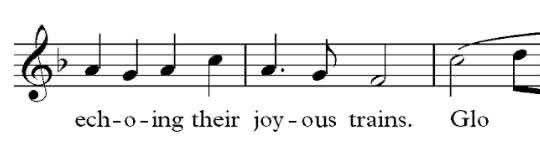






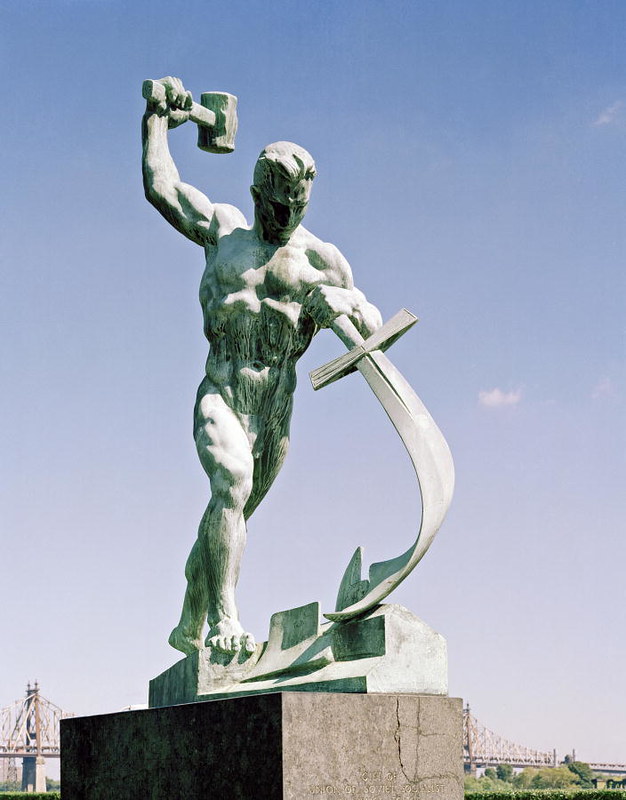
 Big Circumstance