The Blessing of the New Jerusalem, Isaiah 2:1-5 (Advent 1 Year A)

Isaiah 2:1-5

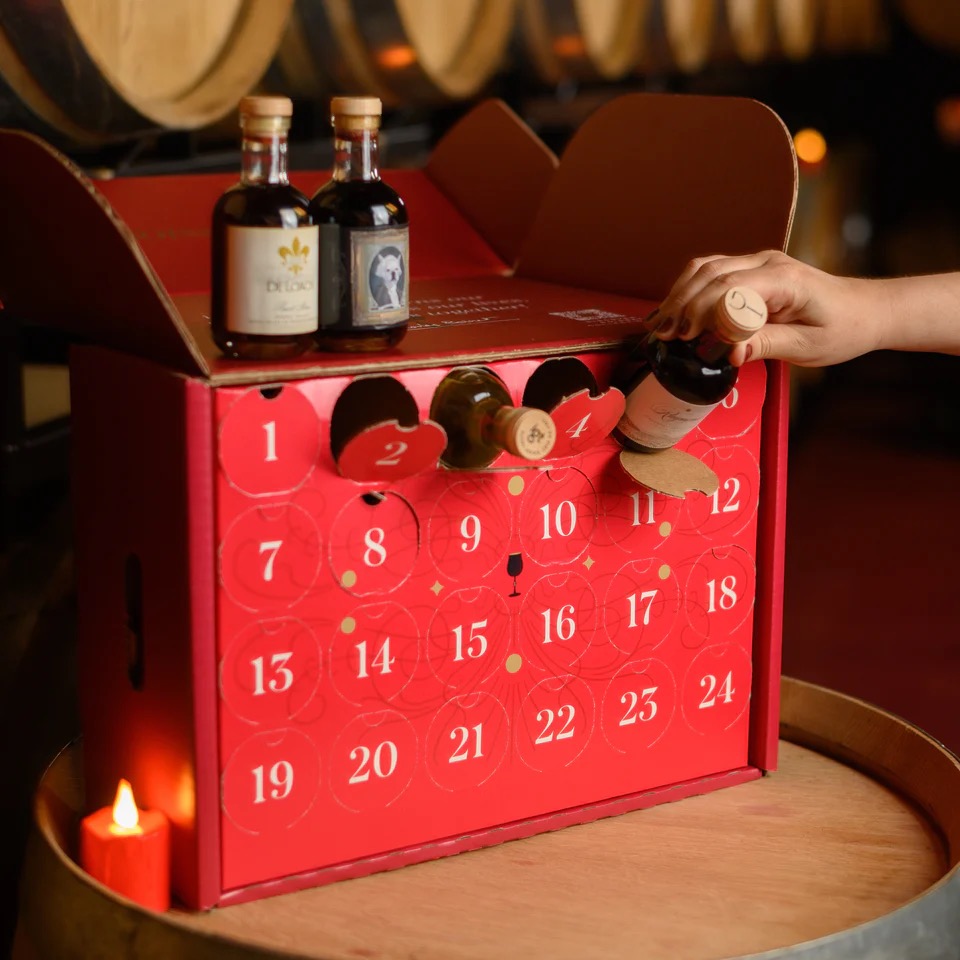
Wine Advent Calendar by In Good Taste. No alterations. CC Licence 4.0.

In among the monsoon of Black Friday emails that have taken over my inbox were links to a fashion of recent years that I have railed against in previous Advent seasons. The luxury Advent calendar.

This year, you could buy not only a perfume Advent calendar, but also a wine Advent calendar. And I thought, I hope someone doesn’t receive both and then confuses the two.

Or maybe it would serve them right!

These luxury Advent calendars show that if Advent means anything in our wider society today, it is that Advent is a countdown to indulgence.

We may respond by saying no, it’s a countdown to the birth of the Messiah.

But we too would be wrong if we said that – at least historically. For in the tradition of the Church, Advent begins with a countdown to focussing on the return of the Messiah.

Like so many, we yearn for the day when evil and suffering will be abolished. Like many critics of faith, we too struggle with why God allows sin and strife in the meantime.

But what we have is a hope based in the promises of God, and which we have glimpsed in the Resurrection of Jesus.

Ancient Israel had her hopes, and we read one such vision in Isaiah 2. We read it, not only for what it is, but through a Christian lens. We believe this prophecy of Isaiah is fulfilled in what is often called the ‘Second Coming’. We believe in a hope described by the New Testament Greek word Parousia, which is often translated as ‘coming’, but which is better translated as ‘appearing’ or ‘royal presence.’

So, when Jesus appears again as King of all creation, what will be the effects of his reign, and what do they mean for us now?

Firstly, blessing for God’s people:

2 In the last days

the mountain of the Lord’s temple will be established
    as the highest of the mountains;
it will be exalted above the hills,
    and all nations will stream to it.

‘In the last days’ here is literally ‘at the close of the days’ – that is, when God’s promises come to fulfilment[1].

Originally, Jerusalem stood at a height below the surrounding mountains. Yet here, Isaiah is inspired to see it elevated in a way consistent with its spiritual significance. God has elevated the city.[2]

God blesses his people. As Psalm 3:3 says,

But you, Lord, are a shield around me,
    my glory, the One who lifts my head high.

God raises his people to their full dignity. In his presence, he makes them into all they were intended to be.

One Sunday when I was at my Anglican college in Bristol, one of my friends invited a few of us to go with him to worship that evening at an independent charismatic church. His contact was a girl he knew. We all went to her house first, and she led us to the place where her church met. She was a plain-looking young woman of unremarkable appearance.

During the service there was an extended time of sung worship. At one point, I looked around the congregation. Wow, I thought: who is that beautiful girl?

I expect you’ve guessed. It was the apparently plain girl who had taken us there. But caught up in the worship and adoration of God, the presence of the Spirit made her into something more.

And I believe that is something of our hope. Just as Jerusalem is elevated in the vision of Isaiah, so God’s people are elevated in the royal presence of God.

It happens already by the Holy Spirit. It will be fulfilled in the coming of Jesus.

I have long believed that the work of the Holy Spirit in us is not to make us less human, as if God wanted us to be religious robots, but rather to make us more human than we’ve ever been. Our gifts are enhanced. Our talents are increased. Our holy desires are raised. As Isaiah saw Jerusalem being raised and exalted, so our destiny is to become everything that God ever intended us to be.

This is not just about ‘religious’ spiritual gifts. It is to do with everything about us. Alison’s admin will be even more on point. Tim’s photos will be even more amazing. Angela’s hospitality will be warmer than ever. Jessica’s tech abilities will be through the roof.

I’m sure that’s something to anticipate with joy and maybe even excitement. But in the meantime, as a sign to the world of all that is to come, let us be open to the Spirit in every part of our lives as God works on this project of elevating us to become more of whom we were always intended to be.

Secondly, blessing for the nations:

3 Many peoples will come and say,
‘Come, let us go up to the mountain of the Lord,
    to the temple of the God of Jacob.
He will teach us his ways,
    so that we may walk in his paths.’
The law will go out from Zion,
    the word of the Lord from Jerusalem.
4 He will judge between the nations
    and will settle disputes for many peoples.
They will beat their swords into ploughshares
    and their spears into pruning hooks.
Nation will not take up sword against nation,
    nor will they train for war any more.

This makes me remember the passage I used on Remembrance Sunday this year, namely Revelation 22:1-5, where ‘the leaves of the tree [of life] are for the healing of the nations’ (verse 2).
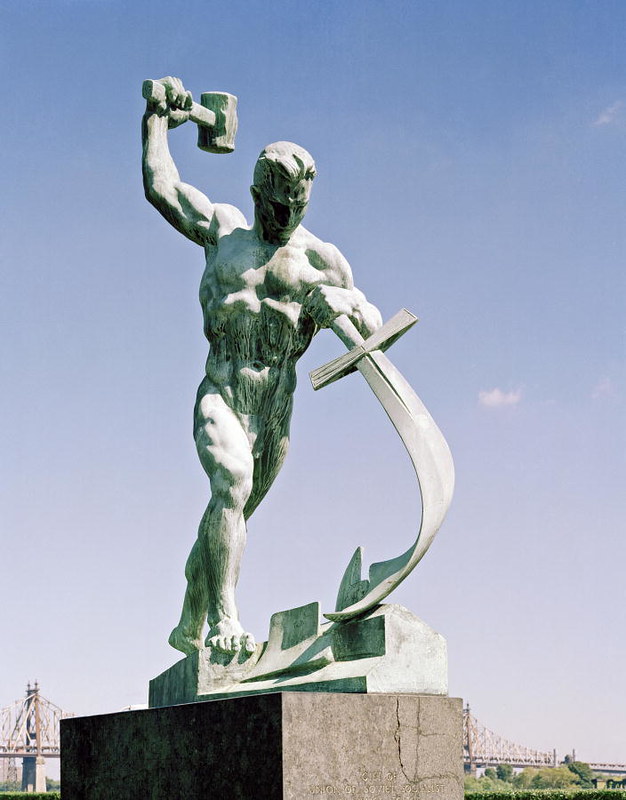
Let Us Beat Our Swords Into Ploughshares. UN Photo/Andrea Brizzi. CC Licence CC BY-NC-ND 2.0

In the New Jerusalem, when God teaches his ways there will be the resolution of disputes between peoples and nations, and the end of all war.  How we long for such a day. Swords into ploughshares and spears into pruning hooks indeed.

Because the New Jerusalem is a place of peace, reconciliation, and justice. Not for the life of the world to come the spectacle of a President lusting after the Nobel Peace Prize while renaming the Department of Defence as the Department of War, while sending quasi-military officers to arrest citizens purely due to the colour of their skin and with no due process, all the while selling Ukraine down the river to his fascist buddy in the Kremlin who probably has dirt on him. That is not peace.

No. The peace of the New Jerusalem will not be the fruit of armed strength but of the Son of God suffering in love on the Cross. The peace of the New Jerusalem will not be about the imposition of a stronger will, because the Cross says otherwise. The peace of the New Jerusalem will not be about finding some compromise halfway in between the positions of two intractable sides but will be based on the truth of God. As we heard in verse 3, ‘He will teach us his ways so that we can walk in his paths.’

Well, what about now? As future citizens of the New Jerusalem, God calls us to point to this future reality by our witness in this life. Can we be people who learn the skills of reconciliation? Can we learn how to transform conflict into peace and harmony? Can we be examples of that in our own relationships? Where are the broken people and broken places in our world to which God is calling us to demonstrate his ways of healing?

Maybe it’s in families. Or in communities. Or in workplaces. Or on a larger stage. But we may be sure, these are the very spaces which God calls his people to inhabit and to serve as a sign of hope in his coming New Jerusalem.

Thirdly and finally, blessing in the here and now:

5 Come, descendants of Jacob,
    let us walk in the light of the Lord.

I’ve been relying this week on the work of the Old Testament scholar John Goldingay to guide my thoughts in understanding this passage. He says that the image of light points in some places to themes of truth or revelation, but not here. ‘The light of the Lord’ has to do with God’s face and hence, God’s blessing. To live in the light of the Lord is to live by his blessing[3].

We can let all sorts of things fire the way we live. It might be material gain. It might be our need for the approval of others. It might be about successful relationships and a good family life.  It might be the desire to be recognised and respected. It might be to climb to the top of our profession.

Not all these things are entirely bad. But they cannot be ends in themselves, or they become idols. Isaiah points us to a better way, a way that enables us to live in the spirit of the Christian hope. It is a way that prepares us for the New Jerusalem.

‘Let us walk in the light of the Lord.’

Let us seek his blessing and respond to that. Where is God shining his light? Let us walk there.

Sometimes God shines a light in a place that is congenial to us, and it is easy to walk there and know his blessing. Other times he shines his light in unexpected and challenging places, and the call to walk there and discover blessing is trickier for us. It can be like that balance we hear in the preamble to the Covenant Service prayer every year:

Christ has many services to be done:
some are easy, others are difficult;
some bring honour, others bring reproach;
some are suitable to our natural inclinations and material interests,
others are contrary to both;
in some we may please Christ and please ourselves;
in others we cannot please Christ except by denying ourselves.
Yet the power to do all these things is given to us in Christ, who strengthens us.[4]

Many ministers did not believe God could be shining his light in that direction as a way of bringing blessing, and some of us had to be dragged kicking and screaming towards that light. Other Christians have known sheer joy and delight in detecting where God was shining his light.

But the reason we do all this is in anticipation again of the New Jerusalem. For in that place, there will be no more night, there will be no more need for lamps or the Sun, because God himself will be the light. Hence, to walk in his light of blessing now is to prefigure that great day. It is to live in a small way now in the ways of eternity, when all our hopes will be fulfilled.

Conclusion

As we step into Advent again this year, may the Holy Spirit hold before us the prophetic vision of hope. May that vision of hope be a blessing that fortifies and energises us.

May we know such blessing that we grow ever more into being the gifted people our Father made us to be. May we offer such blessing that the world knows the Good News of reconciliation with God and with each other. May we walk in such blessing today as we follow God’s light and catch a glimpse of the glory to come.


[1] John Goldingay, New International Biblical Commentary: Isaiah, p42.

[2] Op. cit., p42f.

[3] Op. cit., p44.

[4] Methodist Worship Book, p288.

Harvest Festival: A Harvest of Restoration, Joel 2:21-32

Joel 2:21-32

Many years ago, listeners to Radio 4’s Sunday morning service choked on their corn flakes when the minister leading a harvest festival announced: “And now, the children will bring up their gifts.”

I am glad I never witnessed that!

At harvest festival, there are certain themes that we regularly celebrate – not least the goodness of God in creation but also God’s concern for justice, because not everyone receives what they need from the harvest of the land. These are important themes to consider, even if harvest festival as we know it was merely the invention of a Victorian clergyman in the Cornish village of Morwenstow in 1843. In case you ever need to know it for a quiz, his name was Robert Hawker.

But our reading from Joel prompts another harvest theme, and that is restoration.

The context of Joel’s prophecy is that a locust swarm has invaded the Holy Land, devastating all the crops, and leaving the people facing starvation. Joel says that this is a warning from God to call the people back to him in repentance, although it’s hard to be sure what particular sins have been committed. Part of their returning to the Lord includes fasting – which they may already have been doing involuntarily due to the food shortages.

But now it appears God has heard their cry for mercy. Crops are growing again and he has driven out the locusts. In this context we hear the wonderful words of restoration in our reading. The people truly have reason to give thanks for having crops to harvest again.

Moreover, Joel tells the people that God’s restoration project is bigger and better than they ever asked or imagined. What does it include?

Firstly and most obviously, restoration of the land:

We hear that once again there will be pasture for the wild animals, autumn and spring rains, threshing-floors filled with grains, and vats overflowing with new wine and oil, and that these are reasons for rejoicing, not fear (verses 21-24).

We are used to supporting charities that help with disaster relief – whether it’s earthquakes, floods, droughts, or war. But in the popular mind we are often only thinking about helping those who are in trouble there and then. Yet many of these organisations will want to be in the affected areas for the long haul. Providing temporary accommodation, food, and medical help is only the beginning for them. They know there is a rebuilding job to be done. It’s not for nothing that ‘All We Can’ used to be called the ‘Methodist Relief and Development Fund’.

So, for example, if I visit the ‘Stories’ section of Tearfund’s website, then yes, I will find one account of emergency relief in South Sudan following floods. Homes, infrastructure, and farming land have all been destroyed, and relief workers are trying to bring in temporary shelters, food supplies, and clean water.

But I will also find the story of a small church in Bangladesh that is transforming its village. Many of the people come from lower castes. One consequence of this is they are often not well educated. Only menial jobs are available. But the outcomes from this church of just 33 members studying the Bible have been listed by their pastor:

‘We have seen financial development along with spiritual development.

‘We don’t only do church-based work, we also do various other things outside of the church. For example, we plant trees on behalf of the church. We also do awareness work about hygiene – not only in our congregation, but we also discuss these things in our community. We teach health awareness about toilet issues, such as having to wear sandals, what to do before going to the toilet, and having to use soap after coming back from the toilet.’

Their communication with the government has led to 24 new homes being built. With a water supply that contains toxic levels of arsenic and iron, they have built a water pump. They soon plan to campaign against child marriage.

All this is because they believe in a God who restores the land. God wants to make his creation new. If a small church of poor, uneducated people can make such a difference in their village, what can we do? By all means let us give our harvest gifts, but can we not be more ambitious than that?

Secondly, we have restoration of the people:

In verses 25-27 we hear that God will repay the people for the years the locusts have eaten. They will eat again and praise God. Twice he says, ‘never again will my people be shamed.’

There is a human toll to disasters: not just things like hunger, but also shame. Given that Israel had suffered the plague of locusts due to some unspecified sin, there will have been shame at the wrongdoing. The Gospel says that in Jesus God restores us from the shame of our sins. Those burdens we have carried are ones we can lay down at the foot of the Cross and find them burned up by the holy love of God. The blood of Jesus deals with them – for in the Old Testament blood symbolises life and Jesus replaces our shame with his life.

But shame is not limited to the guilty. Tragically, it is also felt by those who have been sinned against. If you have been following the news story about the monstrous abuse perpetrated by the late Mohamed al-Fayed, the former owner of Harrod’s this week, and if you have heard the stories of women coming forward to say they were raped by him, then time and time again you will have heard those women say that one of the reasons they said nothing for years was their sense of shame. Abusers control their victims by seeking to transfer shame onto them.

And here the Gospel is again by definition Good News for the shamed. Jesus is as much in the business of healing the broken as he is of forgiving sinners. We know that from the Gospels, don’t we?

Many years ago, I read a book called ‘The Locust Years’. It is the story of a woman called Jacqui Williams who went travelling in the United States but became caught up in the Reverend Sun Myung Moon’s Unification Church – the cult popularly known as the Moonies. They took over her life, reducing her to an existence of little more than selling flowers, sweets, and trinkets on the street to support the cult’s income. When she had to return to the UK to renew her visa, she thankfully found faith in Jesus and her new-found Christian faith was her liberation. The book is called ‘The Locust Years’ after this very passage in Joel with God’s promise to restore the years the locusts have eaten – in her case, her time with the Moonies.

The Christian Church is about the business of seeing people restored in Christ. And if we’re not about that, we barely deserve the name ‘church.’ What used to be called ‘the harvest of souls’ is the restoration of people through the love of God in Christ. It’s why John Wesley said we had no business except the saving of souls.

Thirdly and finally, we have the restoration of all things:

Here we’re moving to the famous verses at the end of the reading (28-32) about God pouring out his Spirit on all flesh – sons and daughters, old, young, and servants alike. And I hope you’re thinking, ‘I hear that every year on Pentecost Sunday, because Peter quotes it in his sermon.’

It’s set in the middle of language about ‘the great and dreadful day of the LORD’ and contains references to the sun being turned to darkness and the moon to blood. The nature of this language is clearly not literal. After references to the sun going dark and the moon turning to blood, do not expect someone like Carol Kirkwood or Elizabeth Rizzini or Tomasz Schafernaker to pop up and add, ‘These will be followed by sunny intervals and scattered showers.’

So we’re in ‘end times’ language here, but that doesn’t mean a short countdown to the Second Coming. We have been in the end times since the Resurrection, and that’s one reason this language occurs at Pentecost. God’s kingdom has come and is coming, but it’s overlapping with the old order of things.

Therefore, God’s goal of ‘making all things new’ with a new creation that includes new heavens, a new earth, and a new Jerusalem that we read about in Revelation 21 doesn’t just all pop up at the end of history as we know it. That stuff begins now. Salvation and deliverance in every form have begun.

Hence, even now God wants to bring restoration in every way. And we the church are his agents of transformation. You name it, God wants to do it. The restoring of relationships with him. The restoring of relationships between people. The restoring of our broken relationship with creation. The restoring of the body. The restoring of a just and peaceful society. All these (and probably more!) are the many and varied harvests of restoration which God desires.

Naturally, not all of these things will come in all their fulness before Jesus appears to wrap things up. Don’t we all have the agonised experience of unanswered prayer? But let’s go for as much as we can get. Let’s not give up in despair, because some things have gone wrong. Let’s set out on this wonderful ministry of restoration that we have been given as the people of God. With the help of the Holy Spirit who is poured out on us, as these verses from Joel say, let’s confront the brokenness of this old order with the ministry of restoration that Jesus began and entrusted to us.

Who knows how much of a harvest we might see?

Church Anniversary Sermon: The Holy City

Mosaic of the 12 Tribes of Israel. From Givat ...
Mosaic of the 12 Tribes of Israel. From Givat Mordechai synagogue wall in Jerusalem. Top row, right to left: Reuben, Judah, Dan, Asher Middle: Simeon, Issachar, Naphtali, Joseph Bottom: Levi, Zebulun, Gad, Benjamin (Photo credit: Wikipedia)

If I’m honest, I wish I could have spent more time preparing this. I think I could have distilled my thoughts better. However, this is the best I could do in the time available. I hope it helps you and others.

Revelation 21:10-22:5

So, it’s Church Anniversary today – a time when it’s natural to look back with thankfulness to God for his faithfulness in the past. As the hymn says,

We’ll praise him for all that is past
And trust him for all that’s to come.

But sometimes looking back degenerates from gratitude to complaint. In one of my previous churches, one woman had a regular refrain in her conversation. It was about the time when the Sunday School had a hundred children, and it was run by a particular man who must have been a strong personality. It felt like it was my fault when the only children present at Junior Church were my own two children.

So there is a healthy looking back and an unhealthy looking back. What we often forget to do on occasions like this is look forward. It may be that in times of declining and aging church congregations we find it easier to opt for the warm duvet of nostalgia, because we think that if we look forward we might not see a church.

But the hymn doesn’t just say, ‘We’ll praise him for all that is past’, it also says, ‘And trust him for all that’s to come.’ How can we look forward with hope for the church? I believe we can do that by feasting our eyes on God’s vision for the future of the church, and letting that future destination affect the way we are church today.

Our reading from Revelation does just that. In the picture language of that book, its vision of the Holy City gives us images of God’s perfected new society in his new creation. This is where we are going! So let us use this future vision to check where we are now and look at the direction we are taking.

Just to give you extra value I am going to pick out six elements of the Holy City, the new Jerusalem. This doesn’t mean a double-length sermon, but I hope it does mean we get a rounded picture of the community of which we are a part, and of which we shall be a part.

Firstly, let us look at the gates.

It has a great, high wall with twelve gates, and at the gates twelve angels, and on the gates are inscribed the names of the twelve tribes of the Israelites (21:12).

Angels and the twelve tribes. Let’s take the angels first. When do we first hear of angels at the gates? Is it not when the first humans are expelled from Eden, and an angelic guard is set at the gate of the garden to prevent further access? But what about here? The great story of God and humankind that begins in a garden ends in this city, and angels are at the gates again. However, this time it cannot be to keep all comers out. They might be there to keep certain people out, but they are definitely not on guard duty to keep all and sundry out of the new Jerusalem. For the power of sin which led to that initial expulsion of the first humans from Eden has now been reversed. The curse has been neutralised. Now there is only blessing for those who will walk with the Son of God. Where sin broke relationships between humans and God, between humans and each other, between humans and creation and even within humans themselves, all that is now healed and restored. Eden is back, but with such a large community it can no longer be a mere garden. Now it is a city.

And note that word ‘community’. It is no accident that ‘the names of the twelve tribes of the Israelites’ are on the twelve gates. For what God has done in his project of salvation is to take fractured relationships and build a new, healed community by his grace. Salvation has never been just something that individuals receive. It has always been about reconciliation, not only with God but also with each other. We express this by working on our relationships, to make sure we are at one with each other. We speak the truth in love. We build each other up. We forgive one another. We share The Peace as a sign of this.

Secondly, we have the foundations.

And the wall of the city has twelve foundations, and on them are the twelve names of the twelve apostles of the Lamb. (21:14)

The twelve apostles then locate this redeemed community specifically around Jesus. They are ‘the twelve apostles of the Lamb’ – the Lamb of God, Jesus. It is not just any group: it is a body of people united as disciples of Jesus. He it is who brought God’s work with Israel to a climax. The twelve apostles witness to this, since a requirement of apostleship at the beginning of the church was to be a witness to the Resurrection.

So here is what our community life is centred on: the birth, life, death and Resurrection of Jesus. The church is the gathering that sits forgiven and forgiving at the Cross. We rejoice in new hope at the empty tomb. By the power of the Holy Spirit we seek to imitate Jesus together.

Now if that’s true, what does it do to our priorities? Much as we need to discuss property and finance, the heart of our conversation and action together should surely be centred on Jesus himself. We find it easier to talk about the weather or our aches and pains. Some of us don’t read our Bibles from one Sunday to another, and along with other signs of lukewarm behaviour it’s no wonder our churches are not magnetic to those interested in spiritual questions.

There can be all sorts of reasons why this is so. But perhaps it therefore becomes us to have a conversation about why we struggle to make Jesus explicitly central to our church life – let alone the rest of life. There is no foundation other than the New Testament Gospel of Jesus Christ for the church. From her beginning through eternity it is the basis of her existence. We need to be renewed in that Gospel.

Thirdly, we look at the walls. We have a vivid description of the holy city’s walls being made out of previous stones and metals (21:18-21). No expense has been spared in making the new Jerusalem a place of dazzling beauty.

God is intent on making his new community beautiful. He expects the church to become stunningly attractive, if at the same time also perhaps terrifyingly so. At the cost of the Cross, he has not only seen to it that people are forgiven through his Son’s offering, but also the transforming power is there to make people new. The Easter events lead not only to forgiveness, but also to holiness. There is a perfection in the measurements of the holy city, too, and I think this is all imagery that points us to the holiness of the church.

It is worth remembering how people responded to the early church. There was something wonderfully attractive about those first disciples, but there was also something quite unnerving about the white heat of holiness they displayed. Do you think today’s world sees anything like that in us? The Christian life is not simply one of gaining a ticket to heaven through the forgiveness of sins and then waiting until we die for our arrival at heaven’s station. It is about being the new community, as a sign of God’s future to the world, and therefore calling others to hear the challenge to follow Jesus. As such, our lifestyle is as important as our message.

Fourthly, there is a temple – or is there?

I saw no temple in the city, for its temple is the Lord God the Almighty and the Lamb. (21:22)

The temple is the place of worship. Specifically to Jewish religion, it was the location for the major festivals and the authorised place for sacrifices. The devout became attached to the temple. They admired its architecture, as did Jesus’ own disciples.

But we can become too attached to a building, even one that has been set aside for holy purposes. Jesus knew that. His new community does not finally gather in a bricks and mortar location, it gathers around ‘the Lord God Almighty and the Lamb’. In the holy city we foreswear our idolatry of buildings and concentrate our worship precisely where it belongs: on the God who made and redeemed us. In the new Jerusalem there will be no rivals for our affections: there will only be the Lord our God and his Son. The Holy Spirit will direct our eyes to them.

So what else goes from our worship, along with our buildings? All the other idols of our age and any age. Money, status, possessions, fame, celebrity and power: we cannot chase any of these in the new creation, because only God will be the object of our devotion. It therefore seems sensible to start getting our focus right now. What do we set our hearts on more than God? Is it time to reorder our priorities as we prepare for eternity?

Fifthly, a city needs light. And just as there is no temple but the Lord God and the Lamb, so the Almighty is the light and the Lamb is the lamp (21:23). There will be no darkness (21:25), not even moral darkness (21:27). Rather, the nations will walk by God’s light (21:24) and the glory of the nations will be brought into the city (21:24, 26).

What does this mean? For one thing, it means that we shall live by God’s light – Jesus is, after all, the light of the world. Nothing else will compete to steer our lives. Fear will not speak to us, nor will hatred or greed. Only the pure light of God in Christ will guide our steps. And so again, that is something where we can get used to that at least in part now. How committed are we to wanting God to show us our path in life? We do not stand still if we want that. Just as it is easier to steer a moving vehicle than a stationary one, so we get moving by following Jesus in whatever ways we know how, while at the same time asking him to shed his light upon our ways.

The light of God in Christ also means something else. If the glory of the nations are brought into a city that basks in that light, then this says something positive about all that is good and worthy in human culture. The new Jerusalem is a place to celebrate the fact that we are made in God’s image and likeness, and so we can produce things of great beauty, value and wonder. I think it is no accident that over the centuries, the Christian church has sponsored and promoted the best of the arts, for example. And while much of that has historically been used in the explicit service of worship, I am sure this does not mean that heaven will be littered with the worst in kitsch religious trinkets. What it does mean is that the best of human achievement will be laid at the feet of Christ in adoration. Do we bring our best to him now? Do we deploy our gifts and talents to praise his name?

Sixthly and finally, there is a river in the city. I don’t know about you, but I like that. When we were living in Chelmsford, Debbie and I sometimes liked to go to a sandwich bar in town, buy lunch and sit outside on tables by the River Chelmer. Even if the river seemed dirty, somehow it was still refreshing. We did something similar in Guildford a couple of months ago.

Perhaps it’s not surprising, then, to discover in the new Jerusalem a river whose functions are life and healing. It flows from – guess where? – ‘the throne of God and the Lamb’ (those two again), through the centre of the city (22:1-2). The ‘tree of life’ (echoes of Eden again) grows on both banks ‘and the leaves of the tree are for the healing of the nations’ (22:2). All accursed things will be gone (22:3).

There were rivers in Eden and there is a river in Ezekiel 47 that runs from the temple out to the land, and healing springs up on both banks. This is similar. Christians have sometimes imagined Ezekiel’s river to be a picture of the Holy Spirit. The Spirit of God brings healing to the world. But surely the people of God are sent out from the temple with the Spirit of God. We are sent by God with a healing message to the world, the healing that only Jesus Christ can bring. If we have been at the throne or the temple, the natural thing to do afterwards is to go into the world with the good news of healing in Jesus Christ. It is good news for individuals, and it is good news for whole societies. One day, that mission will be complete. But until that time, we anticipate that glorious fulfilment of all God’s purposes by going out from our worship gatherings proclaiming with our words and demonstrating with our deeds and our lives that God in Christ has the cure for a broken and wounded world.

Perhaps the best act of devotion we could offer in gratitude for God’s faithfulness to his church here would be a renewed commitment to showing his healing love outside our fellowship in the wider world.

Create a website or blog at WordPress.com

Up ↑