What Mission Requires According To Jesus, Matthew 9:35-10:8 (Trinity 2 Ordinary 11 Year A)

Matthew 9:35-10:8

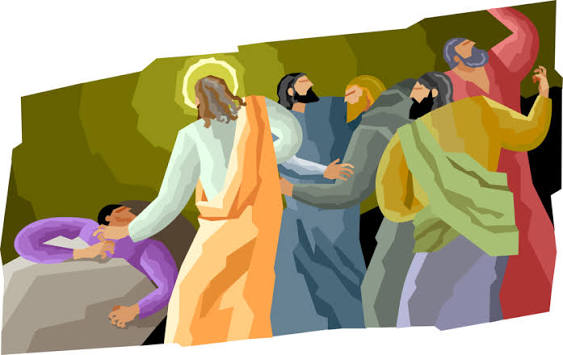
Jesus Christ Heals The Sick – vector image at Wannapik. CC 3.0.

Mission. It’s everything the church is sent into the world to do. It’s our proclamation in words and deeds of God’s kingdom that has come in Jesus.

And increasingly, it’s on the lips of Christians and churches. Well – at least as an agenda item for our meetings.

Maybe church decline has made us wake up to this. In a society where Christianity is no longer natural or normal, we are belatedly realising that we cannot just sit here and wait for people to come to us, as past generations of Christians did.

But then we jump into panic mode. We lift a technique or a fashionable approach off the shelf. It comes with great claims and great reviews. Perhaps there is a book that tells us of the wonderful results this method has had elsewhere.

So we try it. But it doesn’t work for us. More gloom and despair.

Could it be that we need to listen to Jesus? I know that sounds obvious, and possibly patronising, but it’s shocking how little time we do spend seeking out his voice on the matter.

I’m going to suggest we listen to what Jesus has to say about what mission requires from our reading today.

Firstly, Jesus says mission requires compassion:

Image of sheep sourced at PxHere. Public Domain.

35 Jesus went through all the towns and villages, teaching in their synagogues, proclaiming the good news of the kingdom and healing every disease and illness. 36 When he saw the crowds, he had compassion on them, because they were harassed and helpless, like sheep without a shepherd.

There it is: ‘he had compassion on them.’ Compassion for the crowds is his motivation. They have been let down by their leaders. This has left them far from God. He sees their need, and he has compassion. This is why he engages in mission. Compassion.

I have to say, it is not always why we dip our toes into the waters of mission. Our motives can be different.

Martyn Atkins, a former Principal of Cliff College and Secretary of the Methodist Conference, used to tell a story about how he visited a church that said they wanted to engage in mission. He asked them why.

The reply came back that they had lost numbers and had a lot of job vacancies to fill. Otherwise, the church wouldn’t survive into the future.

Atkins observed that this was a poor motivation for mission. It was a motivation that didn’t care about the people they wanted to reach. They only cared about themselves.

Compassion is the only healthy motivation for mission. What we need to consider is not so much the future of the church as the needs of people who do not yet know Jesus.

They may not realise that they are ‘harassed and helpless, like sheep without a shepherd,’ but that does not change their need of Christ. They may be satisfied with reaching their own standard of what it is to be a good person, but they still need Jesus. They may think they will be satisfied by chasing money, but that only demonstrates their inner emptiness, even if they don’t know it yet.

I am sure you can think of people you know who do not yet acknowledge Jesus as Lord. Some of them will be as close as your own family. However full and happy their lives may be outwardly, they are lacking the most important thing of all. Can you allow compassion to rise up within you for them, and let that drive you to prayer, just as it did Jesus?

Others of them will have the kind of needs that Jesus met in the reading. Will you allow their presenting needs also to motivate you to compassionate prayer for them, and for their deepest needs, namely to know Christ?

I hope you have a list of people you pray for regularly – and I would suggest daily. Will you ask God to let you feel something of what his heart feels for them? And as a result, will you let the compassion of the Father grow in your heart, and motivate your prayers, your words, and your actions for the people on your list?

Secondly, Jesus says mission requires delegation:

Sheldon by Dave Faulkner. CC 2.0.

37 Then he said to his disciples, ‘The harvest is plentiful but the workers are few. 38 Ask the Lord of the harvest, therefore, to send out workers into his harvest field.’

1 Jesus called his twelve disciples to him and gave them authority to drive out impure spirits and to heal every disease and illness.

Jesus delegates. Even he can’t do it all. He appoints others to share in his mission. I sometimes wonder how well today’s church has learnt this lesson.

Outside of my local church responsibilities, I have spent some time in recent years helping probationer Methodist ministers (those in their first two years of ministry). I have provided reflective supervision for some as a safe space for some to ponder how things are going. I have also served on the District Probationers’ Committee. In doing this, I have observed the crazy list of ‘competencies’ that new ministers are expected to display, according to the official documents. They are supposed to prove themselves as good preachers, as leaders of traditional and modern worship, as community figures, as pastors, as people with a prophetic voice, as able administrators, as evangelists, as wise on property issues, and so on.

Quite honestly, the system wants people who are better than Jesus. No wonder some circuits write specifications for new ministers that mean the Archangel Gabriel would be turned down. I am reminded of the lay leader who said many years ago when talking about recruiting a minister, ‘You don’t buy a dog and then wag your own tail.’

And how nice to be compared to a dog, by the way.

Oh, and if you think that’s fanciful, there was a church in one of my previous circuits, where, when the circuit asked them to provide volunteers, responded, ‘We don’t do things: we pay other people to do them for us.’

Jesus shows us a different way. Delegation. Responsibilities are shared. They cannot be loaded on one person. Even Jesus cannot do it all. He appoints apostles. They will share in his mission.

We all have a part to play in the mission of God. We do not hire someone else to do the dirty work for us. While we shall each have different gifts and strengths, we are all sent into the world to be witnesses to the love of God in Christ.

Put it another way: if compassion has motivated us to pray for people, then this is the point at which we become the answers to our own prayers. We need to be willing to do what it takes.

How can we use our gifts and talents to demonstrate God’s love to others? If you are good at cooking or baking, have you thought of making some food for a sick person, or a grieving family, or someone who is struggling financially? If you have musical gifts, can you use them to soothe people with troubled souls? If you are good with words, can you bring hope or comfort to those who are despairing?

And given that people’s deepest need is that they are like sheep without a shepherd, will you rely on the Holy Spirit to give you the right words at the right time to point them to the Good Shepherd?

Thirdly and finally, Jesus says mission requires imitation:

Compare what Jesus did with what he called the apostles to do. First, Jesus:

35 Jesus went through all the towns and villages, teaching in their synagogues, proclaiming the good news of the kingdom and healing every disease and illness.

Now, hear again what he commanded the apostles:

7 As you go, proclaim this message: “The kingdom of heaven has come near.” 8 Heal those who are ill, raise the dead, cleanse those who have leprosy, drive out demons. Freely you have received; freely give.

It’s pretty similar, isn’t it? Jesus might just as well have said, ‘Go and do what I’ve been doing.’

Simples, as the advert would say.

But I hear you protest. And I do, too. Mission is as simple as healing the sick, casting out demons, and raising the dead? Well, I don’t call that simple.

Here’s the thing. We don’t all have all the gifts of Jesus, although there’s no harm in seeking more spiritual gifts from the Holy Spirit. But we do have some.

And even if we don’t have a specific gift, there is still something for us to do. For example, some people seem to have a specific powerful ministry of intercession, but we all have the general call to pray. Others have a specific gift of evangelism, but we all have the general call to be witnesses. Some have a specific healing ministry, but we all have the general call to pray for the sick. And you never know what God might do.

Let me repeat a story I have certainly told informally in some church circles and may have mentioned in the odd sermon. I once had a political refugee join one of my churches. He had fled for his life from another country where the regime was one of the cruellest Islamic governments in the world. He had to depart so quickly he left behind his wife and young son. And he didn’t know that his wife was pregnant with their second son.

He had shown an interest in Christianity and joined our church, slowly picking up English as he went. He came to Sunday worship and small groups.

One day, after a morning service, he asked me to pray for his second son back home. He was very sick. His wife had taken him to various doctors, but none could help him. Would I pray? Of course. I said a simple, short prayer, and thought no more of it.

Until, that is, he asked to be baptised. Two of us questioned him. He said that he had never come across anything in Islam like the teaching of Jesus, especially in the Sermon on the Mount. He also noticed how Christianity treated women so much better than Islam.

And one last thing. Did I remember when he asked me to pray for his younger son? Had he told me that after that, his son had been healed?

Well, wow. Because I have never thought I had a healing ministry. That is only one of two cases I know of where I have prayed for someone and they have been healed. But this incident played its part in leading this man to Christ.

Conclusion

So how about we let the compassion of Jesus for people in need drive our mission, rather than our fretting about the state of the church?

How about we all accept the responsibility to play a part in the mission of God, rather than just leaving it to the ‘paid staff’?

And how about we begin to imitate the ministry of Jesus, even if we think what we’re doing is feeble in comparison to what he did? Because you never know what his Spirit might do through your offering.

Pastoral Letter To The Methodist People

Following the recent controversy over the address by the President and Vice-President of Conference to the Church of England’s General Synod (covered here on this blog and in numerous other places), a pastoral letter has today been issued to the Methodist people by the President, Vice-President and Secretary of Conference to clarify the position. I am pasting it below. It will be in the Methodist Recorder this Thursday, and copies will be read out or given to congregations this Sunday. Comments, as usual, are welcome.

A Pastoral Letter to the Methodist People from the President and Vice-President of the Conference and the General Secretary

(following the address of the President and Vice-President to the General Synod of the Church of England on 11th February 2010)

And are we yet alive? Our answer, despite some recent press speculation to the contrary, is a resounding “Yes!”. We have seen the evidence in various ways through our complementary roles. As President and Vice-President we have represented the care, oversight, authority and support of the Conference as we have visited local churches and situations in different parts of the connexion. We have seen the Methodist people being faithful and the Spirit at work in them and through them. We mentioned some examples in our address to the General Synod.   As General Secretary, Martyn  is responsible for leading the development of the mission of the Methodist Church.  He too has seen evidence of energy being released amongst us.

We are all convinced that God is not finished with the people called Methodist yet. We began as a discipleship movement within the wider church, a society of people seeking holiness and engaging in worship and mission. In Wesley’s time and through succeeding generations we have continually adapted to circumstances to fulfil that calling as effectively as possible. It is still Our Calling today. And mission has never been more needed than it is now. We live in a world ravaged by war and poverty, and torn apart by questions of how we care for the natural environment and the morality of financial systems. We live in a world where people need to hear the word of God in a language they can understand, where they need to see the love of God through people like us and experience it as good news for themselves. We live in a world where not enough people are being attracted and formed into disciples of Jesus Christ, responding to the promptings of the Spirit.

Responding to situations like this, allowing God to transform us so that we can be most effective in doing so, supporting each other in that through our interconnections, is what Methodism has always been about. We best honour those who have gone before us by doing the equivalent in our time and our circumstances of what they did in theirs. It is our DNA as a people to be a group of disciples who are committed to glorifying God in worship, to holiness and to being obedient and active in mission. We are therefore delighted to see an increasing interest in and commitment to discipleship amongst us.

We believe that God has a role for us in this mission, and we are increasingly embracing it. We have about 265,000 ‘card-carrying’ members, and that number has been decreasing because of the age-profile of our members. But more churches are making more members each year; a quarter of our churches are growing; the numbers worshipping with us on Sundays and, increasingly, mid-week is rising; fresh expressions are starting to flourish; we have regular contact with over 800,000 people; and we are part of a growing world-wide Methodist communion of over 70 million. There is a growing self-confidence amongst us accompanied by an appropriate humility about ourselves, and a releasing of energy for mission.

But we are not the whole of the church, and we cannot do it all by ourselves. So we have voted consistently over the years for unity schemes that are designed to increase the whole church’s effectiveness in mission. This is not a death wish, but a desire to be obedient and a willingness to be transformed. We can countenance ceasing to exist as a separate Church because we know that we will still be the Methodist people within a wider Church.

As our major statement on the nature and mission of the Church Called to Love and Praise put it in 1999 “the British Methodist Church may cease to exist as a separate Church entity during the twenty-first century, if continuing progress towards Christian unity is made”. Methodism will still contribute some of the riches of its own distinctive history and mission to any future church. We know from that history that we can be the Methodist people either in our own separate church or in some wider expression of the universal church. Helping to create a wider expression of the universal church and becoming part of it will require not just us but other churches to be prepared to move forward together and to leave some things behind in the process for the sake of the Kingdom. So it is not a question of Methodists being submerged or absorbed in the Church of England or any of our other partners. It is not a matter of Methodists returning to the Anglican fold, but of seeing whether together we are prepared to become a ‘new fold’.

This is not just true of our relationship with the Church of England. We have also signed a Covenant with other churches in Wales, and recently a partnership with other churches in Scotland. We have many local partnerships with other churches, the United Reformed Church in particular. And we are all part of wider denominational groupings. For example, the world-wide Methodist communion is over 70 million strong and the world wide Anglican communion about 78 million. Both are faced with questions of how they cohere in the 21st century, and how they deal with situations where there are competing and even contradictory convictions within them. In addressing these we have a lot to share with each other.

When we addressed the General Synod it was only the second time that the President of the Conference had done so; the first since the Covenant between the Methodist Church and the Church of England was signed in the presence of Her Majesty the Queen in 2003; and, importantly, the first time the Vice-President and the president had been invited to address the Synod together. What we were saying to the General Synod was that Methodists have always been committed to unity in order to create greater effectiveness in worship and mission. We said that thinking like this comes naturally from our spirituality. We approach our Covenant with the Church of England in the light of the Covenant Service in our Worship Book which we pray each year. We were gently but urgently asking the General Synod whether the Church of England was prepared to make the same commitment and allow itself to be transformed for the sake of the gospel. And what we say to the Church of England we say to our other partners.

So what happens if other churches are not prepared to be changed in order to become more effective in mission with us? Rather than being groups of Methodist people in a new and wider church, we shall continue as a Methodist people in a separate Methodist Church faithfully trusting in God’s continuing leading of us. We could do that, and we currently do. But even as a separate church we shall have to continue with our commitment to co-operate with others in mission wherever possible and to whatever extent it is possible.

Whether co-operating with others or allowing a wider expression of the universal church to come into existence will require a lot of working together in mission locally. Doing that will throw up some obstacles that will have to be removed and some issues that will have to be resolved if mission is not to be hampered. Some of those include matters of interchangeability of ministries, common decision-making structures, the role of women in the church, and how oversight is embodied. Much work has been done on these and some people will have to be asked to keep working at them on our behalf. When we signed the Covenant we committed ourselves to working to remove any obstacles to visible communion so far as our relationship with the Church of England is concerned. Any solutions will have to be agreed by all of us in due course and by due procedure. But in the interim we must all keep striving to engage as effectively as possible in worship and mission.

We have found the Methodist people in good heart, and an increasing sense of the energy of God’s love being released amongst us. We are a people of one book, the Bible. We allow the gospel to both comfort and challenge us. We let the love of God both confirm and transform us in the body of Christ through the Spirit.

We are yet alive. We shall be alive in the future in whatever form God wills. God has not finished with us yet!

The Revd David Gamble

President of the Conference

Dr Richard M Vautrey

Vice-President of the Conference

The Revd Dr Martyn D Atkins

General Secretary

[End of letter]

UPDATE,  Wednesday 24th February, 11:45 am: Pete Phillips has just blogged on the letter and vibes he’s picked up from the C of E that they’re not even minded to respond. Does that once again leave the Methodist Church as the bride jilted at the altar? Are we – as I suspect – the party making all the running in the Covenant? Why? Is it an issue of power, as I suggested in my orginal blog? Where does that leave one of my churches which on Palm Sunday will be renewing its covenant with the local parish church for another five years – something both parties enthusiastically embrace?

Comments, debate this way please!

UPDATE 2, Thursday 25th February, 1:00 pm: The Church Mouse has weighed in with an impassioned plea from an Anglican perspective.

Create a website or blog at WordPress.com

Up ↑