The Test of Faith, Genesis 22:1-14 (Trinity 4 Ordinary 13 Year A)

Genesis 22:1-14

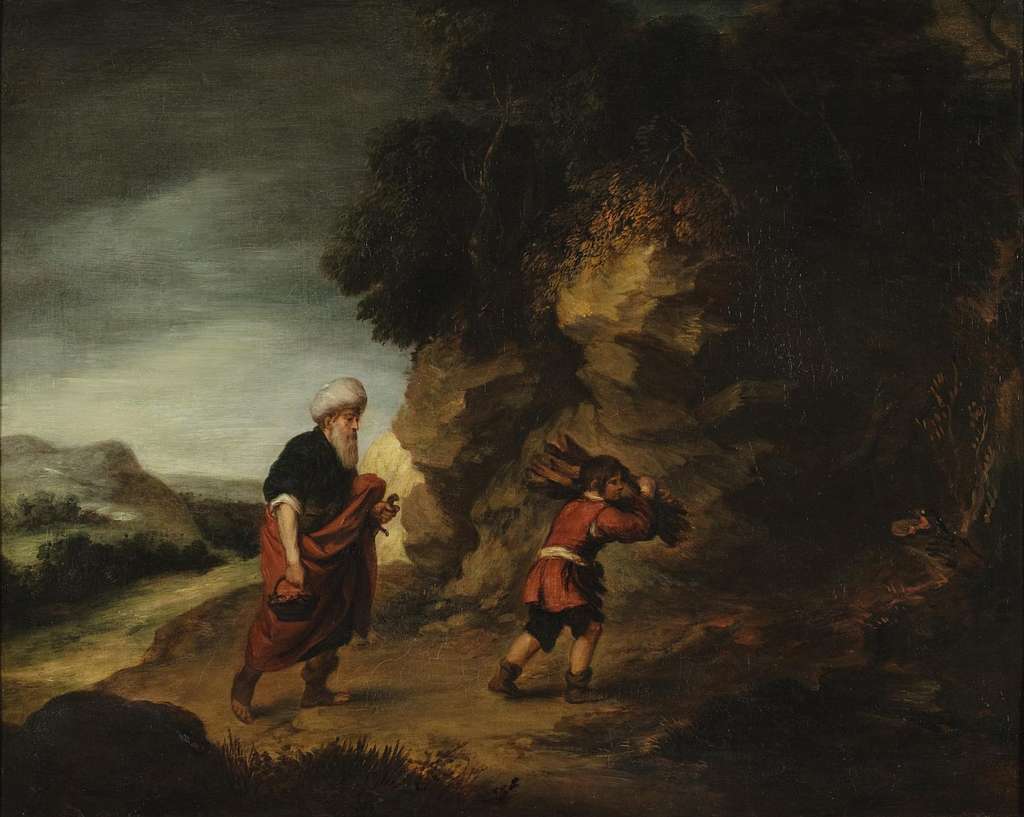
Abraham and Isaac by Gainsborough Dupont at Picryl. Public Domain.

The first time I took my driving test, my instructor said to me, ‘You’ll be all right, just so long as you don’t get Mr McRea as your examiner.’

You can imagine who I got. My left foot kept shaking on the clutch, I don’t know how many times I stalled, and my failure was a foregone conclusion from the first minute of the test.

On my second test, I didn’t fail. But neither did I pass. A quarter of a mile from the end of the test route, there was a nail in the road, and I sustained a puncture. Because I didn’t complete the route, I was given a ‘no result.’

I passed the third time. And on the basis of how that test went, I think I would have passed the second time, but for that pesky nail.

‘After these things God tested Abraham’ (verse 1a)

But what a test this was. When I became a father later in life than most (but nothing like as late as Abraham), this story changed from a Sunday School episode to a distressing narrative. How could you ask a parent to do this? What trauma did it leave in Isaac?

And those who hate our faith love to point to Bible stories like this one to say, look at what a cruel God your Scriptures describe. Do you really want us to believe in a God like this?

So come with me as we wrestle with this disturbing but profound passage. Abraham’s test of faith can illuminate our faith.

I’m going to divide this into three sections: speech, action, and provision.

Firstly, speech:
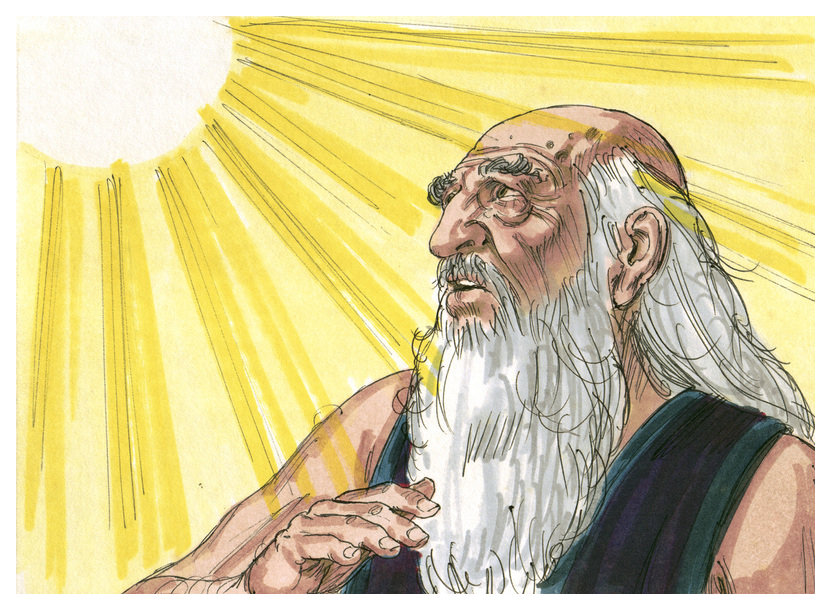
File:Book of Genesis Chapter 22-1 (Bible Illustrations by Sweet Media).jpg – Wikimedia Commons CC 3.0

God speaks to Abraham and gives him this shattering assignment. Sacrifice Isaac, your son of the promise.

If somebody came to me today and said they believed God had called them to sacrifice one of their children, I would doubt whether they had heard God. Why would I say that now, and yet also maintain that Abraham did hear God?

The most important way in which we test whether a claim to hear God’s voice is true is by measuring it against what we know about the general will of God. Our basic plumbline for that is the Bible. Nothing beyond and outside the Bible has quite the same status, because it concludes where it does due to the supremacy of Christ.

In this case, we know from the story of Scripture that God is opposed to child sacrifice. Indeed, when the Israelites enter the Promised Land, one of the reasons he wants them to remove the existing people is that they practice child sacrifice, and it is an abomination to him.

So why not here? Because at this point, God has not yet revealed that. Abraham doesn’t have that particular yardstick to measure against. Now as we know with hindsight, God will ensure the child sacrifice doesn’t happen here, but at this juncture in history Abraham has no grounds to rule it out. He has heard God speak. Somehow, he gets himself together to respond.

There are many things we shall consider when we are wondering whether God has truly spoken to us, and especially if it is something surprising or unusual. There are some Christians who seem to think that the wackier it is, the more likely it is to be of God. And there are others who take the opposite view.

But we shall come back to the big ones. What is the advice and experience of wise Christians? Do the circumstances point us in a particular direction? What does careful reflection and thought tell us? Who does this promote: me or the kingdom of God?

And most of all, is this consistent with what we know about the character of God from Holy Scripture?

You have all heard a lot about scammers on the Internet. One way in which they try to trick people and exploit them is by seeking to make them panic and make rushed decisions. ‘You must phone this number now’ – but it takes you to more criminals. The standard advice is to take your time if you are not at all sure.

I think it is similar with discerning the speech of God. God will not pressurise you and panic you into a hasty decision that you will later regret. Because he is full of grace, he will not be worried if you seek to test whether you have heard him speak. It is only other forces that will aim to frighten you and unnerve you.

Secondly, action:

Day Of Service by Saint Joseph’s University on Flickr. CC 2.0

Abraham acts on what he has heard God say.

It’s easy to say that but think what is behind Abraham’s action. Think of the cost, and the possible confusion.

Isaac is the child or the promise. God had previously promised Abraham and Sarah in their old age that they, despite being decades past their fertile years, would have a son. And not only that, God was going to make their descendants as numerous as the stars in the sky and the sand on the seashore. So why would God now call for that same child, by now probably a teenager[1], to be killed? Doesn’t it go against all that God has revealed as his plan, not only for Abraham’s family but also for his purposes for the world?

And how would it hit him personally? As I said in the introduction, I became a father at a later age than many – although nothing like as late as Abraham! I am sure that most family and friends had thought it was seriously possible that I would neither marry nor become a parent. One of my nephews has David as a middle name, and I’ve always wondered if that was a kind gesture in case I never had children of my own. Were I to be asked to give up one or both of my children, I would become a human wreck. So what might Abraham have felt? We are not told.

But we are told he still acts in obedience to God’s voice. And that is the sign of faith: when God speaks, we respond with the appropriate action.

An awful lot of Christians seem to get worried about not knowing God’s will for their lives. Yet the truth is, he has already given all of us a lot to be getting on with. It’s just that we find some of it, such as much of the teaching of Jesus, too challenging for our liking!

It was Mark Twain who said, it’s not the parts of the Bible that I don’t understand that trouble me: it’s the parts that I do understand that worry me.

I wonder whether some of us ought to take seriously the fact that God has indeed spoken to us, and that we need to respond. It doesn’t have to be something dramatic and life-changing. It may simply be a challenge about how we conduct our daily lives.

We have read the Scriptures. We have heard them read and expounded on Sundays, and maybe in Bible studies too. I don’t think God is half as silent as we claim he is. I suspect he has already spoken quite a lot to us and has given us plenty to be getting on with. We now need to respond in faith by our actions.

Thirdly and finally, provision:
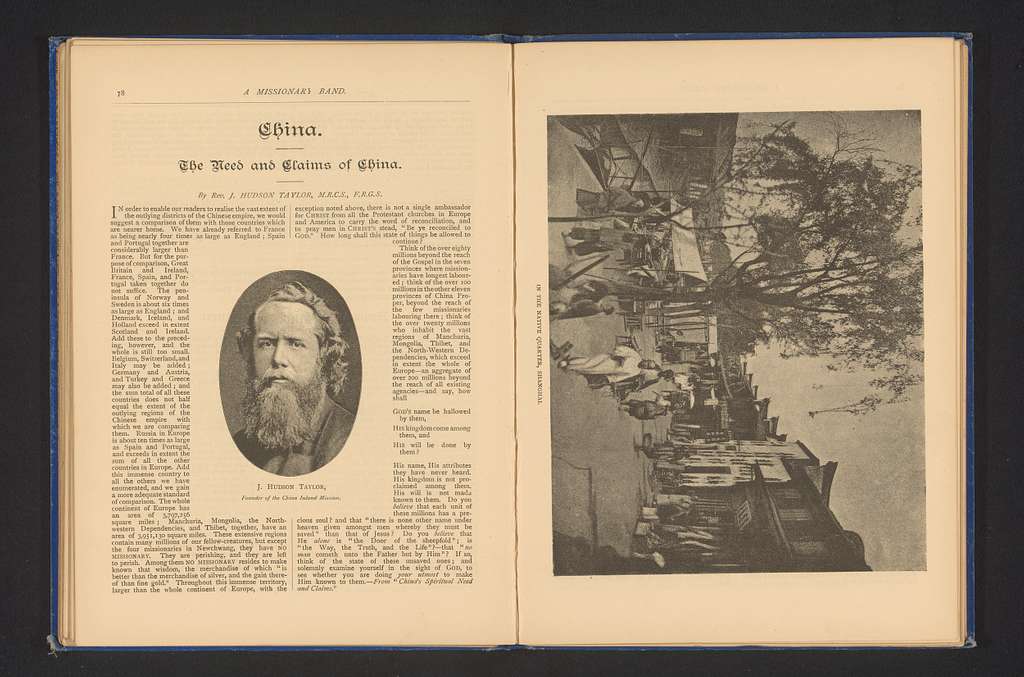
J Hudson Taylor. Photomechanical print at Picryl. Public Domain

Here we get onto the question of the lamb. Isaac asks where the lamb for the burnt-offering is. Abraham replies that God will supply one – although at that point, he is thinking that Isaac is the lamb. Then, when the angel of the Lord calls a halt to the sacrifice, Abraham sees a lamb caught in a thicket by its thorns. God has indeed provided.

Christians of course give a further layer of meaning to this. God will supply his own Son as the Lamb of God to be the offering for the world. But even without that, this is an important truth to remember in the life of faith. When God speaks and calls us to action, he will provide what we need. Speech leads to action leads to provision. This is the natural sequence in the life of faith.

James Hudson Taylor was a pioneer Christian missionary to China in the nineteenth century. He faced many challenges and discouragements in such a huge task. He lost his first wife Maria to cholera. Several children died in infancy. He lived with chronic depression.

His work meant he endured persecution from local authorities, bandits, and warlords during both the Taiping Rebellion and the Boxer Rebellion. He faced language difficulties and a harsh climate. Established organisations criticised him for adopting traditional Chinese dress. Some workers deserted him, because progress was slow.

And with no guaranteed income, he and his colleagues had barely enough money to survive.

But in that context, he wrote these famous words:

Depend on it. God’s work done in God’s way will never lack God’s supply. He is too wise a God to frustrate His purposes for lack of funds, and He can just as easily supply them ahead of time as afterwards, and He much prefers doing so.

Again, there is the pattern: speech leads to action leads to provision. And that’s the challenge. If we have heard God speak, we are called into action, while believing God will provide. That’s often the point at which we are most tested. Will we believe that God will provide for us, so that we can act in response to his challenging word?

I have seen it go both ways. I saw a youth ministry that needed to hire larger premises, which were outside its budget. But they believed God was stretching them, and that God would provide. When they said yes to hiring the new place, a Christian businessman in the town stepped forward with the funding.

But I have also seen a church that wanted to find new ways forward. It engaged a Christian architect. He presented exciting plans that would have given them new opportunities. The church was excited, too. Until it heard the cost. And then all the energy drained away. They acted as if the provision all depended on them, and not their Lord.

So which way will we go? Have we heard God speak? Are we preparing for action? Will we believe in his provision?

Conclusion

There’s a coda to this story. We shouldn’t really finish at verse 14, as the Lectionary dictates. The natural break is at verse 19. In the verses we didn’t read, God re-emphasises his purposes for Abraham and his descendants, and his settled will to bless them so that all the nations of the world will also be blessed.

God promises his blessing when in faith we hear him speak, launch into action, and trust him to provide.

Who would like to see God’s greater blessing on this church? Because this is the way.  


[1] John Goldingay, Genesis (Baker Commentary on the Old Testament), p347.

The Dangers of Going Soft on Commitment to Jesus, John 6:56-69 (Ordinary 21 Year B)

John 6:56-69
I want to paint a picture in your minds of a different story about Jesus from the one we heard in the reading. I want you to imagine the encounter Jesus had with the person we call ‘The rich young ruler.’
You will remember how this young man came to Jesus and asked him what he had to do to inherit eternal life. Jesus replies by listing a number of the commandments.

The young man responds by saying, ‘Teacher, I’ve kept all of these commandments since birth’ – which is an amazing claim, if you think about it.

‘One thing you lack,’ says Jesus. ‘Sell all your possessions and give the proceeds to the poor.’

‘Rabbi,’ replies the young man, ‘I can’t do that. What about I give ten per cent to the poor?’

Jesus answers, ‘OK, it’s a deal. Come, follow me.’

What’s wrong with this picture?

I think you know. In the original story, Jesus doesn’t negotiate with the young man. He doesn’t compromise his call. He doesn’t water down the cost of commitment. He doesn’t soften the hard edges of discipleship.

In today’s reading we don’t have an individual who is rubbed up the wrong way by Jesus’ demands, we have a whole crowd that does.

60 On hearing it, many of his disciples said, ‘This is a hard teaching. Who can accept it?’

And just as with the rich young ruler, Jesus refuses to give an inch.

This is an important lesson for us. The Christian church is faced with many people who say, we can’t believe what you teach, or we can’t accept the morality of the Bible. We are tempted to dilute the challenge of following Jesus to keep these folk.

But I fear that, unlike Jesus, we give in to that temptation to strike a bargain with people. Jesus held firm, but then saw many of his disciples walk away:

66 From this time many of his disciples turned back and no longer followed him.

We, on the other hand, know that people are leaving the church or having nothing to do with it in the first place, and in the face of our declining and aging numbers succumb easily to the temptation to relax the demands of Jesus, or reinterpret them in a way that we think will be more palatable for today’s society.

Now of course there are areas where the church needs to self-correct. There are too many stories of where we have been cruel or uncaring to people, most shamefully perhaps in our failures to protect children. There are also places where we need to understand the teaching of Jesus in its original context to make sense of it.

But at the heart of our message, it is a catastrophic mistake to weaken our claims about who Jesus is and what Jesus teaches. I want to explore those two areas with you today and show why it’s vital that we hold firm on the Person of Jesus and the teaching of Jesus.

Firstly, then, the Person of Jesus.
In this passage, Jesus claims to come from the Father (verse 57) and the true bread that comes from heaven (verse 58). He also says he will ascend back to where he came from (verse 62). He’s pretty much making divine claims here, just as he did earlier in the chapter when he said, ‘I am the Bread of life’, where ‘I am’ is not simply the beginning of a sentence but the claiming of a divine name from the Old Testament.

The crowd doesn’t like this claim. As good Jews, they have problems with it. Jesus hears them grumbling and he knows they are offended (verse 61). But he doesn’t budge an inch.

Why? Because Jesus knows who he is, and he knows that unless he is fully divine as well as fully human, he cannot bridge the gap between heaven and sinful humanity and so save us. For as Lord of all he has the authority to forgive, and as a human being he identifies with us in our plight. So, however difficult it is to understand Jesus as having both divine and human natures, it is a doctrine we cannot row back on.

Where might that be important today? Where might we be tempted to dial down the claims of Jesus? I would suggest that one area is in our conversations with our Muslim friends. I have heard Christians say, ‘We are more similar to Muslims than we thought. Isn’t it good that they recognise Jesus as a prophet?’
But if Jesus is only a prophet, he can’t save us, because he isn’t fully divine. We may think it’s well-meaning from our Muslim friends, but it doesn’t help.

At its root, you will probably know that Muslims reject the idea that Jesus died on the Cross, and they say that it would be beneath the dignity of  a prophet, let alone the Son of God, to die in such a way. Immediately, that cuts out God’s chosen means of salvation.

And this is linked with Muhammad rejecting the doctrine of the Trinity, almost certainly because rather than coming into contact with people who believed in the Trinity, he encountered tribes that believed in three gods.

Of course, we should be kind and loving to our Muslim neighbours. We should have respectful conversations. But what we cannot do is agree with them about who Jesus is.

Ultimately, it’s not that different from the way many people from a western culture say that Jesus was a good man, but no more. However, it’s now many decades since CS Lewis made his famous rejoinder to that position. He said that when you look at the claims Jesus made about himself, either he was exactly who he said he was, or he was being deceitful, or he was deluded. The choice, he said, was between Jesus being Lord, liar, or lunatic. ‘Good man’ is not on the table.

So the first thing I want us to acknowledge today is we need to hold fast to the classical Christian beliefs about who Jesus is. If we move away from them, then salvation itself is at stake.

Secondly, the Teaching of Jesus.
Again, let’s begin by collecting some data from the passage.

Jesus says that people need to eat his flesh and drink his blood to be in relationship with him (verse 56). This isn’t a reference to the Lord’s Supper: there are no allusions to that in John 6: there is no wine, there is no eating and drinking in remembrance of Jesus, and so on. This language is about believing in Jesus and taking his life and words into themselves. The same thing occurs in the next verse where Jesus talks about people feeding on him.

Furthermore, Jesus then says he has spoken words that are full of Spirit and life (verse 63) and when Simon Peter rejects the idea of leaving him, he tells Jesus he has the ‘words of eternal life’ (verse 68).
It is clear, then, that Jesus is telling us that his teaching has divine authority. And if that’s the case, then we’d better not mess with it.

I did say in the introduction to the sermon that there are times of course when we need to be careful how we interpret the teaching of Jesus, because he gave it in a different time and culture, and we need to understand that background in order to make sense of it. Sometimes he does something typically Jewish and uses extreme language – we would call it ‘hyperbolic’ – to make a point. It’s like drawing a cartoon of someone in which their features are shown in an exaggerated way to make a point. Perhaps that includes examples such as when he said we should pull out our eyes or cut off our hands if doing so would prevent us from sinning.

But for all those important caveats, my experience is that Christians of all sorts of persuasions have their ways of trying to neuter the teaching of Jesus. And that’s dangerous, because we are called to be his disciples – that is, his apprentices, or students. To be a disciple is to come under his teaching and be formed by it.

So some right-wing Christians will do somersaults around Jesus’ teaching on money and concern for the poor, and come up with the heresy that we call ‘The Prosperity Gospel’, where wealth is taken to be a sure indication of divine blessing.

And left-wing Christians will do all they can to dance around Jesus’ plain teaching about sexual ethics, to justify relationships outside marriage.

In sum, many of us in the church, across varying social and spiritual persuasions, will find an aspect of Jesus’ teaching that we don’t like and we will look for a route to get around it and avoid it. Sometimes we do that, because it’s an element of Jesus’ teaching that we personally find uncomfortable. On other occasions we do it, because we are afraid that people will reject faith in Christ because of it.

But whatever our motive, this is dangerous. It is a delusion to invite someone to follow Jesus when we are going to alter his teaching to make it more palatable. For then we are not actually following him at all.

Believe you me, there are many parts of Jesus’ teaching that I wish were not there. I feel at times like Mark Twain, who once said that it was not the parts of Jesus’ words that he didn’t understand that troubled him, it was the parts that he did understand that gave him problems. I wonder if any of you share that feeling.

Conclusion
So what are we going to do? It’s not nice seeing people walk away from Jesus and his church, is it? I even get the feeling that Jesus was upset by it. At least, that’s the feeling I draw from verse 67 where he asks the Twelve, ‘You do not want to leave too, do you?’

Now if people are walking away because we haven’t been good ambassadors for Christ, then we have something serious to correct in our life of faith together.

But if they are leaving because they reject who Jesus is or what he teaches, then we need to learn to let them, however painful that feels. For them to stay and follow a false Jesus and distortions of his teaching is no good to anyone. It doesn’t save them at all.

I believe the challenge of this passage for us is to recommit ourselves to presenting a full-blooded Jesus and unvarnished accounts of his teaching to the world.
For we can trust the Father to draw people to Jesus, and we can pray for people to respond to that call.

Create a website or blog at WordPress.com

Up ↑