A Sermon for Remembrance Sunday: God’s Manifesto (Revelation 22:1-5)

Revelation 22:1-5

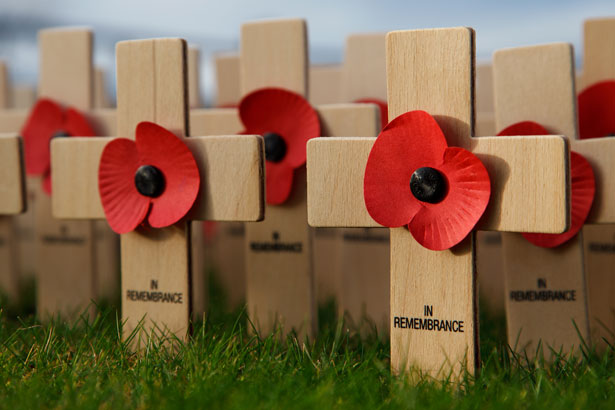
Remembrance Day Free Stock Photo – courtesy Public Domain Photos. Creative Commons Licence 1.0 Universal.

I don’t know whether congregations dread certain Sundays of the year, but I can tell you for sure that preachers do. Remembrance Sunday is one of them. Being planned on this day is the preaching equivalent of what football fans call a ‘hospital pass’: the ball is played to you, but you know an opponent will clatter into you.

For this is a day when whatever you say, there is a high likelihood someone will disagree passionately with you afterwards. You can upset the pacifists and the patriots. Once, as a young minister after I had tried to expound the Beatitudes on this day, a highly opinionated church steward dismissed my efforts by saying, “There’s only one thing to say on Remembrance Sunday, and that is that war is pointless.”

And fundamentally, today is a civic and political day rather than a Christian festival. So you can always upset people politically. You might take the opposite view to someone. Or just saying anything political will annoy those who think the church should stay out of politics.

Well, the Gospel does have political implications, because Jesus is Lord of all creation, and that includes the political sphere. So, we will have something to say about moral and ethical issues. We will have something to say about political leaders who flagrantly contradict God’s Law.

But what we will not do is come up with particular political policies. Those are rightly the realm of the politicians, political advisers, and civil servants with their different rôles to come up with.

What we preachers will do is paint the broad brush-strokes of God’s love, God’s will, and God’s good plans for creation, so that we may live accordingly.

And that, for me, is where our reading from Revelation 22 comes in. Jesus said, ‘The kingdom of God is at hand; repent and believe the Good News.’ Well, here is part of John’s vision about the fulness of God’s kingdom. These verses tell us where we are headed and the kind of society the kingdom of God will be. Therefore, they guide us in how we live today in anticipation of that time. They indicate how we are to live in the midst of a world that contains hatred and violence, pointing instead to God’s kingdom.

That’s why they form something of a manifesto for Christians on Remembrance Sunday.

Firstly, life:

1 Then the angel showed me the river of the water of life, as clear as crystal, flowing from the throne of God and of the Lamb 2a down the middle of the great street of the city.

This part of the vision is inspired by Ezekiel 47, where the prophet sees water coming out from the temple of God and coursing through the land, bringing life in its waters and on its banks wherever it flows. True life and the renewal of the world come from God.

It is not just physical life, but life in every sense, given by God who is Spirit, for in the New Testament the water of life is a way of speaking about the Holy Spirit.

If we want a world and a community where life in all its fulness comes, then we remember that is the promise of Jesus. It is one of his gifts. It can be received from him. He said, ‘I have come that they might have life, and have it more abundantly.’ The trouble with the church, as one preacher said, is that we think Jesus said, ‘I have come that they might have meetings, and have them more abundantly.’

Life in all its beauty and fulness is on offer from God. If you give your life over to Jesus and receive the Holy Spirit, then what you should expect is not to become some spiritual robot, but rather to become more fully human than you’ve ever been. You can expect all your gifts, talents, and passions to flourish like never before, because you are connected to the Source of all life, and all that is good.

It’s significant that in the Roman Empire, if a waterway flowed through the middle of a city like the river of the water of life does here in the New Jerusalem, it wouldn’t be a river. It would be an open sewer.[1] Do not look to the empires of this world for life, be those empires political systems, economic powers, or military might. Of themselves, they will only lead you to the open sewer.

Instead, the Christian God Manifesto is life: life in all its beauty and richness, available through Christ and empowered by the Spirit.

Let’s offer that. And let’s live like it’s true.

Secondly, healing:

2b On each side of the river stood the tree of life, bearing twelve crops of fruit, yielding its fruit every month. And the leaves of the tree are for the healing of the nations.

Now I know that taken literally this is a bizarre image, seemingly describing one tree that stands on both banks of a river. But remember this is a vision. Treat it a little bit like dream language.

And let me point you again to the river of the water of life in Ezekiel 47. Everywhere it goes, as I said, life flourishes in its waters and on the banks. That happens here with the tree of life that we first met in the Bible in the Garden of Eden.

Biblically, the tree of life was taken to represent God’s wisdom, in verses about wisdom such as Proverbs 3:18, which says,

She is a tree of life to those who take hold of her;
    those who hold her fast will be blessed.

But God’s wisdom, although always available, has been scorned. Now, however, as the water of life does its work in the New Jerusalem, it flourishes. In the kingdom of God, the wisdom of God prevails over the foolishness of the world.

Is it not the foolishness of the world that has so often led us to wars and conflict? But in the kingdom, God’s wisdom puts a stop to that.

For whereas in Ezekiel, the tree of life healed God’s people, now says John, the tree of life is for the healing of the nations. The Gospel offer of God’s wisdom is a universal offer. Come and find healing and peace in Jesus Christ, the Prince of Peace.

Oh, to be sure I’m not being simplistic and saying, be converted and everything will be fine. It’s not just a case of being forgiven. For in response to the healing of God’s forgiving love in Christ we need his wisdom to live differently. It needs to be lived out.

And there is our challenge. For too often the world looks at the church and does not see a community that has been healed by the wisdom of God. Rather, it sees one full of foolishness and in-fighting. They see us easily duped by politicians, from American evangelicals falling for Donald Trump to British mainstream churches, where every social pronouncement skews in a left-wing direction. They see us fighting too, tearing one another apart at times.

So to offer this second strand of the God Manifesto, we have some changing to do.

Thirdly, restoration:

3 No longer will there be any curse. The throne of God and of the Lamb will be in the city, and his servants will serve him.

No more curse? John’s vision is sending us back to the Garden of Eden again, only this time not to the beauty of the Tree of Life, but to the consequences of Adam and Eve’s sin.

For God tells them that sin leads to a curse over every part of life. The link between humans and the rest of creation is damaged. The joy of childbirth is infected with pain. The beauty of the male-female relationship is damaged by male domination. The realm of work becomes one of frustration rather than fulfilment. Life ends in the dust of death. Is this the beauty of creation? No.

But in the New Jerusalem, ‘No longer will be there be any curse.’ All that is broken is put right. Relationships are restored. The abuse of power is replaced by the spirit of serving one another. What once seemed futile is now worthwhile.

This, then, is another element of the God Manifesto: a thorough-going restoration that applies across the whole of creation from the physical world itself to human relationships. This is God’s vision. This is what we proclaim.

And therefore it is also what we as the Church are called to live out as a sign of that coming kingdom. We are here to nurture reconciled relationships. We are here to treat the earth with kindness. We are here to alleviate pain and to bring meaning to our everyday work.

Most of all, we are here to say that this all flows from a restored relationship with God, where not only are our sins forgiven, we then with gratitude shall live to serve Jesus Christ, who redeemed us. To repeat the second half of verse 3:

The throne of God and of the Lamb will be in the city, and his servants will serve him.

As with every element of this God Manifesto that proclaims a different and contrary reality to that of war and destruction, this is something the church needs both to preach and to live. If we truly believe what we say we believe, then our calling is to live it and thereby show the world by our actions that it is true.

Conclusion

There is so much more I would love to say about these verses. But here is how I want to draw this vision to a conclusion.

It’s common today when talking about what is right or wrong to say, ‘Make sure you are on the right side of history.’ It’s a dodgy saying that assumes everything in the world is becoming increasingly better from a moral point of view, even though it’s self-evident that things are getting both better and worse.

But there is a God way of being on the right side of history, and it is to embrace this vision. It is to say, here in Revelation we have the blueprint of God’s eternal destiny for all those who will say ‘yes’ to him in Christ.

If we want to be part of God’s eternal Manifesto of life, healing, and restoration, then we need to do two things. We need to ‘publish abroad’ these truths in the church and in the world. And we need to live out their truth in our lives as a witness.


[1] Ian Paul, Revelation (TNTC), p359.

Jesus The Extremist? Luke 14:25-35 (Ordinary 23 Year C)

This is a sermon I wrote in 2007. When I deliver this live on Sunday morning in worship I shall of course be amending some of the references. For example, at the time both my parents were alive, we and my sister’s family were living somewhere else, and our children were small. The iPod reference will be changed to the upcoming iPhone launch. And so on. So this is not the exact script, although it is close.

Luke 14:25-33

1. Family
It was an interesting week to read Jesus’ words in our Gospel reading today:

Shoe Family III by Sami Taipale CC Licence 2.0

‘Whoever comes to me and does not hate father and mother, wife and children, brothers and sisters, yes, and even life itself, cannot be my disciple’ (verse 26).

You see, on Thursday, my parents moved house. Having moved after retirement from London to Hertfordshire, they have now reached an age where they need to be nearer family. Moving near us is not practical, because who knows where we shall be living in a few years’ time? So they decided to move near my sister and her family in Hampshire. I spent Thursday and Friday helping them move in.

How do you read my actions in the light of Jesus telling me I should hate my parents? How do you interpret their decision that it was more realistic to move nearer their daughter than their minister son? Did I fail to hate my parents as Jesus instructed, by giving them some time I should perhaps have devoted to ministry? Or did they recognise that I should put following my call first by moving near my sister? Is the church right to think she can send me anywhere, while expecting my sister to be the one who cares for our elderly parents? If so, then my calling also affects my sister, brother-in-law and nephews.

So how radical should I be? If I am also to hate my ‘wife and children’, then should I do what some Methodist ministers in earlier generations did, and send my children to boarding school? Some missionaries in the developing world still do that – either sending their kids back to the UK or locating them at a school provided by the missionary society. Or should I even be like some radical missionaries who left their wives at home? The cricketer turned missionary C T Studd did that. And these issues are not limited to ministers and missionaries. Many people have to move with their job. If they have felt the call of God into their career, then similar questions arise.

And other questions pop into my mind. Should we take what Jesus said literally? If we do, what does that make us? If we don’t, do we dilute what he said and compromise our discipleship? How do we relate Jesus’ words here to other parts of Scripture that seem to contradict them – ‘Honour your father and mother’, for starters? Isn’t that commandment all the more relevant today in an age of family breakdown?

I think it starts to resolve not simply around the words Jesus uses, but the way he speaks. Like the Jewish and Semitic people of his time, he would speak in extreme terms to make a point, as we do sometimes. It’s like drawing a cartoon to emphasise certain things. Fact fans will like to know it’s called ‘Semitic hyperbole’, but most of us just have to know it’s this blunt and exaggerated form of speech in order to get a message across.

That doesn’t mean we dilute it, but we do look for the meaning underneath it. Jesus honoured his own mother at the crucifixion, when he arranged for John to look after her. But he also said that those who followed his teaching were his mother, brothers and sisters. So I think he calls us to honour our parents and care about our families, but he won’t allow us to make an idol of them.

There are ways in which the Christian church has made an idol of family life. Single adults, divorcees and widow(er)s in the church will have ready examples. I did when I was single. When moving on from my first appointment, I came across a circuit that only wanted to engage a married minister with children. I’ve seen ‘family service’ leaflets with logos featuring two parents and two children. Widows and divorcees tell stories of being under suspicion after they lost their loved ones from members of the same sex in the church: people assumed they were sexual predators.

Now obviously, as someone who is now married with two children, I don’t mean to demean family life, the importance of marriage vows and the like. But I think he envisages the possibility of obedience to him conflicting with the demands of family. While we mustn’t neglect our families, we can neither use them as an excuse for disobedience to Christ’s call. Family might even call us to do things that are displeasing to Christ, and we have to resolve who will direct our lives, Christ or others. We did not sign up for a hobby when we joined the church, but for the daring and costly life of faith.

And that takes us to two other challenges Jesus makes in this passage.

2. Life
Listen again to Jesus’ words in verse 26 – and on into verse 27:

Life And Death by Scott Law CC Licence 2.0

‘Whoever comes to me and does not hate father and mother, wife and children, brothers and sisters, yes, and even life itself, cannot be my disciple. Whoever does not carry the cross and follow me cannot be my disciple.’

Hate your life. Carry the cross. Those two things go together. To carry the cross was not to bear a burden of the general suffering life dishes out to all without discrimination. To carry the cross was to be a condemned person, on the way to execution. In his extreme language here, Jesus surely speaks of discipleship being something where your own life is of no matter to you. It is the willingness to risk. It is being prepared to follow him, knowing that the consequences may involve suffering. That is, suffering inflicted on us by the world, because we have faithfully, humbly and lovingly pointed to a different way, the way of Christ.

Well, this too touches a raw nerve with Christianity as we have conceived it. Just as Jesus makes obedience to him more important than our families (even though a certain strong kind of family life would be a good witness today), so he also calls us to hang loose to life itself. Yet we often talk in the church about the ‘sanctity of life.’ Probably the great majority of Christians generally oppose abortion, euthanasia and infanticide, just as we believe murder is wrong.

Now again, I hold traditional views about those subjects. Life is a gift of God. We should not take it away. However, if it is a gift of God, it may be that he asks for it back. He may ask us to give it up. Whose life is it anyway? It is God’s, and we are only looking after it for him.

But holding lightly to life is not something that comes naturally. Several of you know that at the beginning of this year, I had a health scare. During a routine medical, blood was discovered in my urine, and I was referred urgently to hospital for tests. During the two weeks between seeing my GP and going to the hospital where I got the all clear, I was terrified – not least, because of our young children. Giving up life, had I had to face it, would have been appalling to me.

Yet older generations of Christians have much to teach us about this. In a day of medical advances and increased life expectancy, some of us (not all) have become rather detached from death. But the stories about heroes of our faith challenge us to see this differently. Here is just one story:

When James Calvert went out to Fiji in 1838, he was told by the captain of the ship on which he sailed that he was going to a land of cannibals. The captain tried to dissuade Calvert from going by saying, ‘You are risking your life and all those with you if you go among such savages. You will all die.’

Calvert replied, ‘We died before we came here.’[1]

They had died to sin. They had resolved to risk their lives for the Gospel. Dare I say they were closer to the classical belief in the resurrection from the dead than we sometimes are? They hadn’t been shaped by the practical atheism of our day that thinks this life is all it is. Nor were they so consumed by the vision of heaven that they were no use on earth. Their vision of heaven and the resurrected life was so vivid they could take this attitude to physical death. What would happen to today’s Church if we adopted their robust Jesus-centred faith?

3. Possessions

To The Top And Over by Ed CC Licence 2.0

Well, if Jesus hasn’t already attacked two sacred cows in the Church – family and life – he goes for a third at the end of the reading:

‘So therefore, none of you can become my disciple if you do not give up all your possessions’ (verse 33).

Hold on, you say, possessions are the big thing in the world. We know we live in a consumer society. Aren’t we in the church different?

If only we were. Last night I watched an Internet video created by a Microsoft employee, which showed a woman demanding a divorce from her husband. The punch line was that it wasn’t a real marriage; he had a t-shirt on saying, ‘advertiser’, and she wore one saying, ‘consumer.’ Some Christian commentators are saying it’s uncomfortably like the church.

We have made church into a consumer exercise. Listen to the way some people hop from church to church and their reasons for doing so. We make decisions about finances and purchases in ways that are not radically different from the world. Was I the only one in the Christian church taking an unhealthy interest in the launch of new iPods this last week? We teach it to our kids. Recently I read about the Christian couple who read a Bible story at dinnertime with their children. One night they read the story of Jesus and the temple tax, where Jesus sends Peter fishing, and he catches a fish with a coin in its mouth. Their son was impressed. He asked to go fishing with his Dad and catch a fish. ‘Yours can have a computer in its mouth and mine can have a new toy’, he declared. Can it really be that surprising if Jesus wants to say some hard things about possessions?

Again, isn’t he being extreme? Give up all your possessions to follow him? Even Jesus at his death still owned some clothing for which the soldiers cast lots (Luke 23:34). He hadn’t turned down the support of some wealthy women who had provided for him and his disciples (Luke 8:3).

Maybe we get a clue to our response not from Luke’s Gospel, but from Luke’s sequel, the Acts of the Apostles. There we see how the Early Church put this into practice. They had all things in common and would sell possessions to help those in need (Acts 2:44f; 4:32). Ananias and Sapphira were not condemned for failing to sell all their possessions, but for being dishonest about their actions (Acts 5:3f).

I believe Jesus challenges us to put our money and goods at one another’s disposal. I believe he calls us to model a radically different lifestyle from the world around us, rather than just being religious consumers. The world rightly expects from what it knows about us that we will help the needy. What it doesn’t always know is that we base that on such a sense of belonging to one another as well as belonging to Christ. We may express it in a community gathered in a particular geographical location, from a monastery to a group of Christians moving into the same neighbourhood to an extended household. But we need not. What matters is holding of things in common. What matters is the willingness to help those who need it. What matters is the holding together, rather than the sitting apart as isolated individuals, which is one symptom of chronic consumerism.

Conclusion

Believe by Matthew CC Licence 2.0

What’s at the heart of all this? Probably what’s at the heart of this passage – the two parables about counting the cost. Following Jesus is not an easy option. I had a chat with one of the men from the removal company my parents used. On discovering my profession, he said it must be nice to be able to believe what I did in such a wicked world.

Actually, it isn’t the easy option to believe. Because Christ-followers don’t simply believe certain things to be true. Christ calls us to live what we believe. And what Jesus calls us to live out if we believe in him touches such basic values as family, the sanctity of life and material possessions. It would be wise to count the cost before believing, rather than thinking it’s a nice way to feel good in a bad world.

It’s about following someone who himself counted the cost – and paid it. In incarnation. In crucifixion. But who did it ‘for the joy that was set before him’ (Hebrews 12:2). May we see the joy set before us, count the cost, and follow his example.


[1] Stephen Brown, Don’t Let Them Sit On You, p 140.

Resurrection People: Restructuring Imagination Luke 24:13-35 (Easter 3 Year C)

Luke 24:13-35

How do you see the world? For me, it’s through a pair of glasses.

In my case, the menu for a new pair of glasses contains a number of elements. The lenses are varifocal, so I can have distance vision through the top, I can read through the lower part, and I can do middle distance vision such as computer work through the middle. Sometimes I need an astigmatism correction. Then there are the helpful additions such as anti-reflective coatings and anti-scratch, since I rely on them everywhere except bed and the shower.

But there’s one other element I always pay for. I am a blue-eyed boy – literally – and like all blue-eyed people I am more sensitive to bright light. In my case, I’m particularly sensitive to things like bright sunlight. And so I have photochromic lenses, the ones that darken in bright light.

Now one of the things about photochromic lenses is that whether you have them in their grey version or their brown, they make the colours you see more saturated. If I take off my glasses, the world looks rather washed out in comparison to the way I am used to seeing it.

I even process my photos according to this way of seeing the world. Their colours are brighter and punchier than other photographers would make them.

What about Cleopas and his companion (who may well have been his wife and may have been called Mary)? How did they see the world? Well, they had been seeing it through the lens of believing that Jesus, whom they took to be a prophet (verse 19), ‘was the one who was going to redeem Israel’ (verse 21), but he has been crucified by the authorities (verse 20) so that’s all gone by the board. And now they are confused by reports from women friends that his body is no longer in the tomb (verses 22-24).

They don’t know how to see the world anymore. And that’s a bleak place to be.

All their hopes for this miracle worker from Nazareth had come to a climax when he had ridden into Jerusalem a week earlier signalling himself to be the Messiah, and acclaimed like a new King David, yes, surely he would set Israel free from the Romans and she would no longer be an exile in her own land.

And that hope, that imagined future, that vision of how things were to be, came crashing down in a matter of days. No wonder they’re despondent.

Sometimes we allow ourselves to see life through a vision that appears good and honourable, but which lets us down. It might be about our aspirations for our career, our family, or our children, only for work or a family member to take a wrong turn. I wouldn’t be the first minister to enter this calling with a vision for renewed and growing churches, only to be disappointed.

But the encounter that Cleopas and Mary have on the Emmaus Road with Jesus gives them a new way of seeing life. It’s a vision that won’t let them down. It’s a vision that will sustain them through joy and sorrow. It’s a vision that will inspire them as disciples of Jesus.

Firstly, we see life beating death. The ultimate enemy of the human race and indeed of all beings is conquered. We believe the gospel promise that Christ’s conquest of death in the middle of history guarantees ours at the end of history.

For Christianity, the essence of death is separation. The separation of the deceased from the living; the separation of the soul from the body. The essence of resurrection is reunion: the reunion of the soul with a new body animated by the Spirit of God, and the reunion of those previously parted by death.

That’s why at the funeral of a Christian we have this mixture of grief and hope, not just grief. We grieve our separation from the deceased, but we anticipate resurrection where we will be reunited and our bodies healed as the Spirit of God gives life to them. When we commit that person’s body at the funeral to be cremated or buried ‘in sure and certain hope of the resurrection to eternal life’, this is what we are anticipating. Not just life after death, but a a new quality of life after death.

In this life, it means we face the darkest of challenges with hope. Not that we go rushing after death and martyrdom, but we know that sickness, injustice, and tyranny will not have the final word.

So we don’t become cavalier about Covid, because this life God has given us is precious, but we do know that at its worst it cannot wreak  ultimate destruction.

And right now our Ukrainian Christian brothers and sisters do not become reckless about their lives for the same reason, but they face the shameless violence of Vladimir Putin in the knowledge he cannot ultimately win. Either the events of this life or the resurrection of the dead will mean final defeat for  account to Almighty God for his deeds.

So that’s our first new way of seeing that the resurrection brings, and it’s utterly transformational: we see life and death in a new way.

Secondly, we see hope beating despair.

In 1984, a painter named Gottfried Helnwein created a piece of art called ‘Boulevard of Broken Dreams.’ It depicts four famous people in a diner. Marilyn Monroe and Humphrey Bogart are a flirtatious couple, James Dean is another customer, and Elvis Presley is the bartender. The theme is ‘emptiness’, because all four could have been said to have died senseless deaths: Presley from alcohol and prescription drugs, Bogart from alcohol, Monroe from drugs, and Dean from a tragic motoring accident. If the sort of dreams I described earlier have let you down and you feel empty, then the victory of hope over despair in the resurrection is for you.

We’ve talked a lot about the need for hope in our society over the last couple of years in the wake of the Covid pandemic. To a large extent millions of people have put their hope in science, and we are grateful for the remarkable work on vaccines. I certainly am: I am sure my recent bout of Covid would have been far worse without my three vaccinations.

Yet the hope our society has clung to in the face of the virus, while good, has not been ultimate hope. For that we need the resurrection, which shows that even death, the strongest of all the forces arrayed against us, does not have the final word.

And whether it’s Covid assailing us or the visions and dreams we’ve lived by letting us down, the only ultimate antidote to the despair they bring is the hope of the resurrection.

As I said earlier, I have known broken dreams as a minister. Church life has not generally become what I hoped and prayed it would. I guess my dreams were about some form of religious ‘success’, but of course that is not guaranteed to us and it is therefore not the solid hope that the resurrection is. Indeed, we might say that putting our hope in any vision and dream that is less than the resurrection is some kind of idol.

So what has kept me going when the experience of my calling has been dark? One Bible verse. It’s a verse that Tom Wright keeps coming back to in his wonderful book ‘Surprised By Hope’, and it’s the final verse of the Apostle Paul’s great chapter on the resurrection, 1 Corinthians 15. The climax of his argument about the resurrection is to say this:

58 Therefore, my dear brothers and sisters, stand firm. Let nothing move you. Always give yourselves fully to the work of the Lord, because you know that your labour in the Lord is not in vain.

The resurrection means that our labour in the Lord is not in vain. In the eternal economy of God, all that we do in the Lord’s service counts. We may not be able to see how it does right now, but the resurrection means those acts of faithfulness are not wasted. They are invisible building blocks in the cause of God’s kingdom.

So the resurrection says to us, keep going! Keep doing the Christian thing. One day we will see what God has built with it.

Thirdly and finally, we see the kingdom of God beating the empires of this world.

When God made Jesus’ body new in the resurrection, it was the sign that one day he would make all things new. It was the promise of the new creation, the new creation we begin to experience in ourselves when God begins to make our lives new when we come to him. And it climaxes in the great promise of Revelation 21 that God is making a new heaven and a new earth, with a new Jerusalem at the centre.

So that is where all this is heading. A new creation where there will no longer be any suffering. There will be no sickness, there will be no sin, whether personal immorality or social injustice. Relationships will be whole. There will be harmony among people. Everyone will have enough. This is the new order promised by the resurrection.

But what are we supposed to do? Some Christians particularly of past generations would have simply seen us as rather passively waiting for it to come about at the end of time. No wonder Christians were accused of ‘pie in the sky when you die.’ That is not the way.

No, this great vision of the fulness of God’s coming kingdom that we see in the resurrection inspires us to act now. Of course the kingdom of God has not yet come in all its completeness, but it is coming. It is on the way. Jesus said it had arrived with his coming.

And this is why it’s important to keep doing the faithful stuff, as I said in the last point. Each prayer for healing, each act of care for the sick, each action in support of transforming the lot of the poor, each act of reconciliation, each deed of compassion, each drawing of someone into the love of Christ is all part of the coming kingdom and a pointer to it.

It’s the resurrection and all that it promises that is our inspiration to live this way.

So – like Cleopas and Mary – may we allow the resurrection to change the way we see life. May we then live by that vision – where life beats death, hope beats despair, and the kingdom of God conquers the empires of this world.  

Fifth Sunday in Lent: Worship In The WIlderness – A Truth-Speaking Journey

This week’s passage – Ezekiel’s valley of dry bones vision – isn’t a traditional Lent reading, but you could say it is a vision of wilderness conditions. And so I use this week to explore how God brings hope and life in the midst of crisis and death.

Ezekiel 37:1-14

The concept of the wilderness is used in more than one way in the Bible. Sometimes it’s literal, sometimes it’s an image. Sometimes it’s negative, sometimes positive. Sometimes it’s about sin, sometimes it’s about drawing near to God with no distractions.

Perhaps in a temperate climate like the one we’re used to in Britain, it’s natural to gravitate to the negative connotations of the wilderness. And that’s what Ezekiel 37 gives us in this vision of a valley filled with dry bones. It’s a place of death – although it’s also a place which God visits with hope.

The kind of death it symbolises is set out for us in verse 11:

11 Then he said to me: ‘Son of man, these bones are the people of Israel. They say, “Our bones are dried up and our hope is gone; we are cut off.”

It’s the death of hope. Israel is in exile in Babylon, far from her homeland. Back in Jerusalem, the city has been sacked and the Temple, their most cherished sign of God’s presence with them, has been destroyed.

Our hope is gone; we are cut off.

I am beginning to sense that the longer the COVID-19 pandemic continues, the more there are Christians and churches feeling something similar to this. The continuing financial losses are heightening the crisis some churches face. The Canadian pastor Carey Nieuwhof, whom I often quote, has said, ‘Crisis is an accelerator,’ and the crisis of coronavirus has certainly accelerated critical questions about some of our churches. Issues we might have expected to face in ten years’ time we are suddenly facing today.

That’s why it doesn’t surprise me if some Christians today say similar words to those of Israel in Ezekiel 37:11: our hope is gone; we are cut off.

So in what ways does God bring hope to this wilderness valley of death? And how do we respond if we are to receive his life?

I thought I was going to share two things with you, but it’s turned into three:

Firstly, notice how Ezekiel addresses God:

‘Sovereign Lord, you alone know.’ (verse 3b)

This is the first thing to remember: that God is sovereign. It may feel like social forces are sweeping away things that we cherish and that everything is out of control, but for all this, Ezekiel still addresses God as ‘Sovereign Lord’.

What does it mean, though? The popular Christian cliché is to say, ‘God is in control,’ but I wouldn’t put it like that. It implies God as a micro-manager who direct every minute action. It may be that that is somewhat along the lines of what some of my Calvinist Christian friends believe, but I don’t believe that is true to the Scriptures or true to life.

No: we have to account for a God who is sovereign and for certain exercise of free will by human beings, subject to our limits. It would be fair to say that God has more free will than us, but we still need an understanding of God’s sovereignty that does not obliterate free will and human responsibility, a conception of divine sovereignty that allows both for the sense of purpose and the sense of randomness in the universe.

I think we are moving in the right direction when, rather than saying ‘God is in control,’ we say, ‘God is in charge.’ In the United Kingdom, the Queen is in charge, but not everybody obeys the laws passed by her Government. Nevertheless, she is still sovereign over this kingdom. You could make similar appropriate analogies for different forms of government in other countries.

What Ezekiel is confessing is that God is still in charge, even though Israel is sinful and Babylon is cruel. He can and will exercise more free will than the apparently powerful Babylonians, and that is grounds for hope. In the long term, that will lead to Israel being set free and returning to her land.

Similarly for us, we recognise that God is still in charge, even though COVID-19 has caused carnage and churches and other institutions are in crisis. Yes, some churches will close. Perhaps we see them as casualties of war in the conflict between good and evil. But Jesus promised that he would build his church, and the gates of Hades would not prevail against it[i]. That may constitute our long term hope.

Secondly, notice the emphasis on the word of God. Three times, Ezekiel is told to prophesy (verse 4, 9, 12). On the first and third occasions the call is to bring God’s word to his desolate people. When they hear from God, hope begins to take shape. The bones start to come together (verse 7) and they hear the promise of new life with a return to their homeland (verses 12-14).

The word of God brings hope. It is not simply a message that disappears into thin air. Instead, it has an effect on the hearers. It leads to hope and life.

This is what we need, too: a word from God that stirs hope and new life in us. The very worst thing is when we do not hear God and when God is not speaking to us, as the prophet Amos said:

‘The days are coming,’ declares the Sovereign Lord,
    ‘when I will send a famine through the land –
not a famine of food or a thirst for water,
    but a famine of hearing the words of the Lord.[ii]

But that is rare. If we are to discover hope in our crisis then we need to hear God for ourselves. How might we do so?

The most important way in which we get used to what the voice of God sounds like is to soak ourselves in the Scriptures. A daily, disciplined engagement with the Bible where we both read the words and listen for God speaking to us through them. There is no more a substitute for this in the Christian life than there is for eating regular meals in ordinary, physical life.

When we get a good sense for what God’s message is like, we can then listen for and test today’s claims to prophecy. Where are the people in the Christian community who manifestly live closely to God, and who when have an atmosphere of heaven around them when they speak? Who are the people who bring a fresh word, full of energy, that is consistent with and grows out of what we know about God’s voice from the Bible?

Of course, their words must be tested. Uncritical acceptance is not on the agenda.

But we need to tune in to God if we are to hear his word of hope and life. I have a particular favourite radio station I like to listen to in the car. However, it’s very easy round here to drive in and out of its signal range. If I want to hear it well, I may need to drive closer to the transmitter.

It’s just as easy to drive away from the presence and the voice of God. Each one of us needs to take those steps to tune into the sound of God’s voice in the Scriptures and draw close to him. Then we may hear the message of hope and life he has for us in our day.

Some are suggesting that what God is saying is that the pandemic is like a Great Pause in the world, and that it is like a racing car’s pit-stop where the tyres are changed so that it can accelerate out of the pit lane back into the race. And therefore we are being called to use this time of pause to get right with God, draw near to him, and be prepared not for a ‘return to normal’ but to an acceleration of God’s purposes.[iii]

Does that chime with you as you soak yourself in the word of God? Is that a word of hope and life? Test it and see.

Thirdly and finally, look at all the stress on the breath of God. The bones come together, but there is no life. They need breath.

Then he said to me, ‘Prophesy to the breath; prophesy, son of man, and say to it, “This is what the Sovereign Lord says: come, breath, from the four winds and breathe into these slain, that they may live.”’ 10 So I prophesied as he commanded me, and breath entered them; they came to life and stood up on their feet – a vast army.

Breath – also wind, or spirit. In New Testament terms, this is a prophecy that calls on the Holy Spirit to come and fill the people of God.

Ultimately, to have hope we need the very life of God in us. Just as God breathed life into human beings in the creation story of Genesis 1, so also for the people of God to come alive and be filled with hope we need God to breathe his Holy Spirit into us.

And so Ezekiel prophesies for the breath of God to come from the four winds, just as the ancient prayer commonly used at ordination services says, ‘Veni Sancte Spiritus’ – ‘Come, Holy Spirit’.

Some don’t like that language, because they believe the Spirit of God is everywhere, and there is some truth in that. But at the same time what brings death to us is our living without the Spirit, and we remember how there are biblical stories about the glory of the Lord moving on from the disobedient. So there is justification for us to pray, ‘Come, Holy Spirit.’

Hope comes from the life and presence of God. Lasting, eternal hope is not something human beings can engineer. That’s why we need to pray with fervour, ‘Come, Holy Spirit.’

Everything I’m saying today is about being God-centred. Our hope rests on his sovereignty, his word, and his Spirit. If we want to come out of the dry, hot death of the wilderness into fresh new life and hope then the only way to do is by actively depending on our God in these ways.


[i] Matthew 16:18

[ii] Amos 8:11

[iii] Jarrod Cooper, The Divine Reset. See also this video interview: https://premierchristianmedia.co.uk/16DQ-79OQD-68XW34-4DUIQ7-1/c.aspx

Create a website or blog at WordPress.com

Up ↑