
The Blessing of the New Jerusalem, Isaiah 2:1-5 (Advent 1 Year A)

Isaiah 2:1-5

Wine Advent Calendar by In Good Taste. No alterations. CC Licence 4.0.

In among the monsoon of Black Friday emails that have taken over my inbox were links to a fashion of recent years that I have railed against in previous Advent seasons. The luxury Advent calendar.

This year, you could buy not only a perfume Advent calendar, but also a wine Advent calendar. And I thought, I hope someone doesn’t receive both and then confuses the two.

Or maybe it would serve them right!

These luxury Advent calendars show that if Advent means anything in our wider society today, it is that Advent is a countdown to indulgence.

We may respond by saying no, it’s a countdown to the birth of the Messiah.

But we too would be wrong if we said that – at least historically. For in the tradition of the Church, Advent begins with a countdown to focussing on the return of the Messiah.

Like so many, we yearn for the day when evil and suffering will be abolished. Like many critics of faith, we too struggle with why God allows sin and strife in the meantime.

But what we have is a hope based in the promises of God, and which we have glimpsed in the Resurrection of Jesus.

Ancient Israel had her hopes, and we read one such vision in Isaiah 2. We read it, not only for what it is, but through a Christian lens. We believe this prophecy of Isaiah is fulfilled in what is often called the ‘Second Coming’. We believe in a hope described by the New Testament Greek word Parousia, which is often translated as ‘coming’, but which is better translated as ‘appearing’ or ‘royal presence.’

So, when Jesus appears again as King of all creation, what will be the effects of his reign, and what do they mean for us now?

Firstly, blessing for God’s people:

2 In the last days

the mountain of the Lord’s temple will be established
    as the highest of the mountains;
it will be exalted above the hills,
    and all nations will stream to it.

‘In the last days’ here is literally ‘at the close of the days’ – that is, when God’s promises come to fulfilment[1].

Originally, Jerusalem stood at a height below the surrounding mountains. Yet here, Isaiah is inspired to see it elevated in a way consistent with its spiritual significance. God has elevated the city.[2]

God blesses his people. As Psalm 3:3 says,

But you, Lord, are a shield around me,
    my glory, the One who lifts my head high.

God raises his people to their full dignity. In his presence, he makes them into all they were intended to be.

One Sunday when I was at my Anglican college in Bristol, one of my friends invited a few of us to go with him to worship that evening at an independent charismatic church. His contact was a girl he knew. We all went to her house first, and she led us to the place where her church met. She was a plain-looking young woman of unremarkable appearance.

During the service there was an extended time of sung worship. At one point, I looked around the congregation. Wow, I thought: who is that beautiful girl?

I expect you’ve guessed. It was the apparently plain girl who had taken us there. But caught up in the worship and adoration of God, the presence of the Spirit made her into something more.

And I believe that is something of our hope. Just as Jerusalem is elevated in the vision of Isaiah, so God’s people are elevated in the royal presence of God.

It happens already by the Holy Spirit. It will be fulfilled in the coming of Jesus.

I have long believed that the work of the Holy Spirit in us is not to make us less human, as if God wanted us to be religious robots, but rather to make us more human than we’ve ever been. Our gifts are enhanced. Our talents are increased. Our holy desires are raised. As Isaiah saw Jerusalem being raised and exalted, so our destiny is to become everything that God ever intended us to be.

This is not just about ‘religious’ spiritual gifts. It is to do with everything about us. Alison’s admin will be even more on point. Tim’s photos will be even more amazing. Angela’s hospitality will be warmer than ever. Jessica’s tech abilities will be through the roof.

I’m sure that’s something to anticipate with joy and maybe even excitement. But in the meantime, as a sign to the world of all that is to come, let us be open to the Spirit in every part of our lives as God works on this project of elevating us to become more of whom we were always intended to be.

Secondly, blessing for the nations:

3 Many peoples will come and say,
‘Come, let us go up to the mountain of the Lord,
    to the temple of the God of Jacob.
He will teach us his ways,
    so that we may walk in his paths.’
The law will go out from Zion,
    the word of the Lord from Jerusalem.
4 He will judge between the nations
    and will settle disputes for many peoples.
They will beat their swords into ploughshares
    and their spears into pruning hooks.
Nation will not take up sword against nation,
    nor will they train for war any more.

This makes me remember the passage I used on Remembrance Sunday this year, namely Revelation 22:1-5, where ‘the leaves of the tree [of life] are for the healing of the nations’ (verse 2).
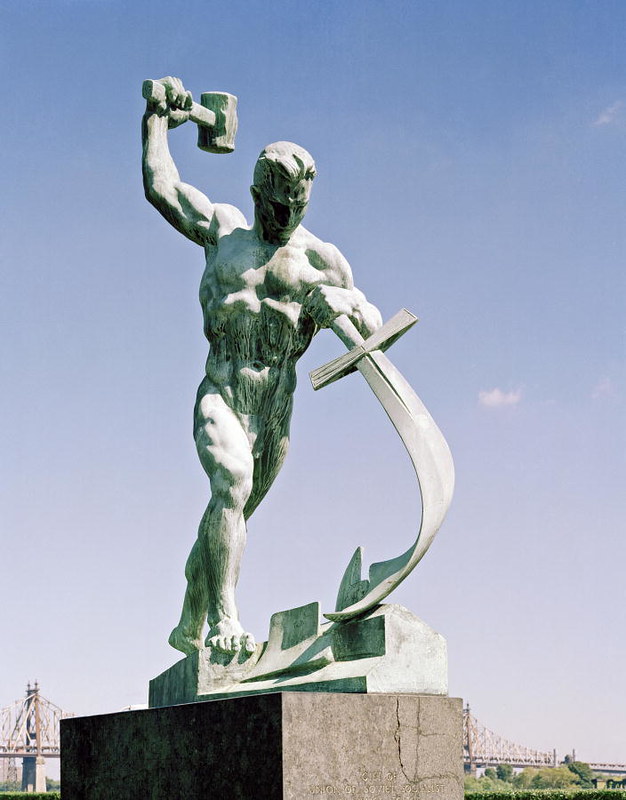
Let Us Beat Our Swords Into Ploughshares. UN Photo/Andrea Brizzi. CC Licence CC BY-NC-ND 2.0

In the New Jerusalem, when God teaches his ways there will be the resolution of disputes between peoples and nations, and the end of all war.  How we long for such a day. Swords into ploughshares and spears into pruning hooks indeed.

Because the New Jerusalem is a place of peace, reconciliation, and justice. Not for the life of the world to come the spectacle of a President lusting after the Nobel Peace Prize while renaming the Department of Defence as the Department of War, while sending quasi-military officers to arrest citizens purely due to the colour of their skin and with no due process, all the while selling Ukraine down the river to his fascist buddy in the Kremlin who probably has dirt on him. That is not peace.

No. The peace of the New Jerusalem will not be the fruit of armed strength but of the Son of God suffering in love on the Cross. The peace of the New Jerusalem will not be about the imposition of a stronger will, because the Cross says otherwise. The peace of the New Jerusalem will not be about finding some compromise halfway in between the positions of two intractable sides but will be based on the truth of God. As we heard in verse 3, ‘He will teach us his ways so that we can walk in his paths.’

Well, what about now? As future citizens of the New Jerusalem, God calls us to point to this future reality by our witness in this life. Can we be people who learn the skills of reconciliation? Can we learn how to transform conflict into peace and harmony? Can we be examples of that in our own relationships? Where are the broken people and broken places in our world to which God is calling us to demonstrate his ways of healing?

Maybe it’s in families. Or in communities. Or in workplaces. Or on a larger stage. But we may be sure, these are the very spaces which God calls his people to inhabit and to serve as a sign of hope in his coming New Jerusalem.

Thirdly and finally, blessing in the here and now:

5 Come, descendants of Jacob,
    let us walk in the light of the Lord.

I’ve been relying this week on the work of the Old Testament scholar John Goldingay to guide my thoughts in understanding this passage. He says that the image of light points in some places to themes of truth or revelation, but not here. ‘The light of the Lord’ has to do with God’s face and hence, God’s blessing. To live in the light of the Lord is to live by his blessing[3].

We can let all sorts of things fire the way we live. It might be material gain. It might be our need for the approval of others. It might be about successful relationships and a good family life.  It might be the desire to be recognised and respected. It might be to climb to the top of our profession.

Not all these things are entirely bad. But they cannot be ends in themselves, or they become idols. Isaiah points us to a better way, a way that enables us to live in the spirit of the Christian hope. It is a way that prepares us for the New Jerusalem.

‘Let us walk in the light of the Lord.’

Let us seek his blessing and respond to that. Where is God shining his light? Let us walk there.

Sometimes God shines a light in a place that is congenial to us, and it is easy to walk there and know his blessing. Other times he shines his light in unexpected and challenging places, and the call to walk there and discover blessing is trickier for us. It can be like that balance we hear in the preamble to the Covenant Service prayer every year:

Christ has many services to be done:
some are easy, others are difficult;
some bring honour, others bring reproach;
some are suitable to our natural inclinations and material interests,
others are contrary to both;
in some we may please Christ and please ourselves;
in others we cannot please Christ except by denying ourselves.
Yet the power to do all these things is given to us in Christ, who strengthens us.[4]

Many ministers did not believe God could be shining his light in that direction as a way of bringing blessing, and some of us had to be dragged kicking and screaming towards that light. Other Christians have known sheer joy and delight in detecting where God was shining his light.

But the reason we do all this is in anticipation again of the New Jerusalem. For in that place, there will be no more night, there will be no more need for lamps or the Sun, because God himself will be the light. Hence, to walk in his light of blessing now is to prefigure that great day. It is to live in a small way now in the ways of eternity, when all our hopes will be fulfilled.

Conclusion

As we step into Advent again this year, may the Holy Spirit hold before us the prophetic vision of hope. May that vision of hope be a blessing that fortifies and energises us.

May we know such blessing that we grow ever more into being the gifted people our Father made us to be. May we offer such blessing that the world knows the Good News of reconciliation with God and with each other. May we walk in such blessing today as we follow God’s light and catch a glimpse of the glory to come.


[1] John Goldingay, New International Biblical Commentary: Isaiah, p42.

[2] Op. cit., p42f.

[3] Op. cit., p44.

[4] Methodist Worship Book, p288.

A Harvest Festival Sermon: As Long As The Earth Endures (Genesis 8:15-22)

Genesis 8:15-22

A week ago, I got a new mobile phone. When I saw that I could get an up-to-date model on a cheaper contract than I had been paying, it was a no-brainer. Save money, get newer model with extra whizzy features: easy decision.

iPhone 17 family from heute.at CC 4.0

To save money, I had to change to a different phone network, and it took a few days to move my number from EE to Vodafone. However, when I then tried to make a phone call once that had all been done, I kept getting the message ‘Call failed.’

The nice AI robot I spoke to at Vodafone told me that what I needed to do was restart the phone. Then I should be sorted.

And a restart is what we have in our passage from Genesis. God reboots creation after the Flood. You can tell that from the way these verses restate things from the original creation stories. For example, the humans and the animals are to ‘multiply on the earth and be fruitful and increase in number on it’ (verse 16), just as it said in Genesis 1.

So what do we learn when we apply this notion of the restart (or reboot) to the words we read about harvest? Here they are again from verse 22:

 ‘As long as the earth endures,
seedtime and harvest,
cold and heat,
summer and winter,
day and night
will never cease.’

The rhythms of the world that we mark at a time like harvest remind us of God’s original good intentions for his creation. When seeds are planted and they ripen at the right time, this is a sign that what God built into his creation is working. The same goes, says the writer, for the rhythms of day and night, and of cold and heat – although as a true Brit I really don’t like it when the days get shorter, and I would happily settle for a climate that had no extremes of cold and heat.

Cosmic waves dancing at Stockcake CC 1.0

God’s intention was always to build a reliable rhythm into his creation. It fits with the notion of there being scientific laws that tell us how the universe behaves. A certainty and a reliability in how something behaves or operates is good and helpful. And because God has not simply created but continues to uphold the universe by the word of his power, as the Letter to the Hebrews says, one preacher was confident to say that scientific laws are a description of God’s habits.

Miracles, by the way, then become those occasional times when God in his sovereign will chooses to change his habits temporarily.

Therefore, one of the things we celebrate at a festival such as harvest is this rhythm and reliability that God has built into his creation. It is out of his goodness that he has built a predictability into our world. This is what he does as a good and benevolent Creator. Hence, the first thing we are doing at harvest is lifting our voices in praise to a trustworthy God who has made his creation reflect that nature of his character.

But when I say this, some of you have questions in your mind. Some of you are saying an inward ‘No’ or at the very least a ‘Yes, but.’ You are probably protesting, ‘But it isn’t always as good and as nice as that.’ We need to observe a second attribute of God when we consider harvest and creation.

Allow me to talk about my new phone again. Part of the process of setting it up involved restoring all my apps, text messages, photos, and so on to the new device so that when I wiped the old one I didn’t lose them. Thankfully, there is a simple way of doing this. Since I was moving from one iPhone to another, I logged into my Apple account on the new phone, and it began a process of downloading everything I needed to my shiny new model. I had always kept the old one backed up, so it went smoothly – although it did take time, and I still have to log into apps again when I first use them.

Why tell you this? Because the God we praise at Harvest is the God who restores. We are used to talking about God restoring broken people through the Cross of Christ, when he heals and forgives broken sinners, bringing us into that knowledge that he loved us before we ever considered him. We may also talk about a God who restores broken relationships, as he teaches us to forgive one another, just as God in Christ forgave us.

National Trust for Scotland Work Party restoring House 15, built in 1860 at Wikimedia Commons CC 2.0

But when we celebrate Harvest, we mark a God who also longs to restore his creation. He put things back together after the Flood, and I therefore believe he also wants to see the healing of creation in our day.

That’s why denominations and church leaders increasingly say that creation care is a Christian duty. We don’t do this out of fear that the world is about to burn, as many do, but out of trust in a God whose desire is to restore. It is an urgent task, but Christians can be hopeful about it.

Those decisions we make when shopping for small things or when considering large purchases like what kind of car we will buy are not just private financial matters. They are questions of discipleship. Do we truly believe in a God whose desire is to restore creation?

It is also our Christian duty to call out those who are banging the drum for policies that will blatantly damage God’s good creation. This week, we have witnessed what one environmental expert dubbed ‘The stupidest speech in UN history’. I am, of course, talking about President Trump’s address, where he falsely claimed that clean energy sources don’t work and are too expensive, and advocated a return to coal (or ‘clean, beautiful coal’ as he has mandated it be called in the White House) and North Sea oil.

Now you may so there is little chance of Mr Trump taking heed, and sadly I think that is right. But it is still our responsibility to declare God’s truth. That way, he – and his acolytes in this country and around the world – will be without excuse on the Day of Judgment.

For most of us, though, we won’t be operating in the political sphere. It will be about standing up for truth when friends pass on misinformation on social media or from extreme political parties.

Finally, there’s a third element I want to bring into this, and it requires us to interpret Genesis in the light of the New Testament.

I want to pick up on the words, ‘As long as the earth endures.’ The Old Testament doesn’t have much to say about the life of the world to come. There are a few glimpses, but for most of what the Bible says about that, we have to go to the New Testament.

The New Testament talks about the destruction of the earth in 2 Peter 3, which is what environmentalists worry about, and which climate-sceptic Christians take as a reason not to worry about the earth’s future.

End Of The World (El Fin Del Mumbo) at Wikimedia Commons CC 4.0

But what both miss is the greater promise of the New Testament that God is making all things new, that there will be a new creation, with new heavens and a new earth. God is the God of resurrection, and resurrection is bodily and material. Our eternal destiny is not to be disembodied spirits, but to be raised with a new body, just as Jesus was.

And therefore, our eternal home is also physical and material. Could it be that there will be harvests too in the life to come? I don’t see why not. John’s vision of the New Jerusalem in Revelation includes trees, and while Revelation is more symbolic than literal, it indicates to me a physical place.

What does that mean for us now? Given that, as Paul tells us, our ‘labour in the Lord is not in vain’ (1 Corinthians 15:58), can we assume that God takes what we do for his kingdom in this world and mysteriously builds it into his coming kingdom? Can it be that nothing we do for God’s creation is ever in vain?

If so, then this reinforces why as Christians we approach harvest and creation with a sense of hope. Yes, there are serious and dangerous issues to face in the world. Harvests do not always happen at their proper time. They do not always yield all that we need. And much of this is down to the way the human race has damaged the planet.

Let us not lose heart when we see the dreadful effects of climate change on our world, with its extreme temperatures, storms, and shortages. It’s not a case of just piously saying, everything is going to be all right and abdicating our responsibility, we still need to take these things seriously and act appropriately. But when we do so, and when we do so in faith that God in Jesus is making all things new, we know that we contribute will count, because God will make it so.

When we make that lifestyle change – it’s worth it. When we raise funds for people suffering in the developing world – it’s worth it. When we write to our MP about government policy – it’s worth it. When we refuse to be taken in by the conspiracy theories our friends are spreading – it’s worth it.

I invite you to ask yourself a question that I see posed in a Christian Facebook group every Friday: what have you been working on this week to help make the world a little more beautiful?

Isn’t that a fitting thing to do? After all, we have a trustworthy God who has made a good creation. He is worthy of our praise, both in gathered worship and in making what is good in the world ourselves.

Not only that, but our God is also a God who restores what is broken, and therefore we can sing his praise for his restoring work and show it by the beauty we create in the world.

And finally, he is a God whose restoring work extends into the life to come, and so it is worthwhile praising him now in anticipation of that new world, and in crafting things that are valuable and praiseworthy.

Let us rejoice in the harvest and build for God’s kingdom.

By Faith: Hebrews 11:1-3, 8-16 (Ordinary 19 Year C)

Hebrews 11:1-3, 8-16

What faith is

Now faith is confidence in what we hope for and assurance about what we do not see. (Verse 1)

What is faith? Silly atheists will tell you that it’s believing in something that cannot be true. They tell you they don’t have faith at all, they rely on facts. But of course, they do have faith – they have faith in human reason. And while human reason is a good gift of God, it is corrupted by human sin. That’s why good things like science have also given us bad things such as nuclear weapons and instruments of torture.

So what is faith? It’s a combination of two things: belief and trust. It’s the belief in certain things being true about God, and that leads to the trust that we put in God. So we believe that Jesus died for our sins and God raised him from the dead and declared him to be Lord. We then trust him as Saviour and Lord with the direction of our lives.

This is something we practise in everyday life. We get to know certain things about a person, and when we know them well enough to believe they are trustworthy, we then trust them. We might believe in the qualifications an electrician has and then trust them to repair our lights. We might believe in a romantic partner’s love for us and then enter into marriage with them. Both these illustrations are examples of faith that is made up of belief and trust.

The definition of faith our reading begins with is more on the ‘trust’ end. It assumes we already know things about God. Then, in the light of that, we trust:

Now faith is confidence in what we hope for and assurance about what we do not see.

Given what we know and believe to be true about God, we can be confident in our hope and sure about what we do not see.

Again, what do we know about God as revealed in Jesus? We know this is a God who even gave up his only Son for us. We know that Jesus suffered to the uttermost with us and will be alongside us in the darkest moments of life. We know that God said ‘Yes’ to all Jesus did on the Cross by raising him from the dead. We know that as God made the body of Jesus new, so he will one day make new the whole of creation.

This is the God we believe in. This is why we can have certainty about our future hope: we have seen this God in action. We know he has good plans.

And so we trust him. We trust our entire lives over to him. Even though walking with him will sometimes be difficult and painful, we know he has good purposes in mind for us and the whole world. We may not be able to see where he is leading us, but he has done enough for us to believe he is trustworthy. Therefore, we say ‘Yes’ to him.

So that’s my first point. What is faith? It is believing we know enough about God in Christ to trust ourselves to him.

What faith does

Here we’re specifically going to look at the example of Abraham in the text. We don’t know how much he knew about God, nor even how he got to know God in the first place. But we do know that he believed enough to trust God when he heard him speak to him.

8 By faith Abraham, when called to go to a place he would later receive as his inheritance, obeyed and went, even though he did not know where he was going. 9 By faith he made his home in the promised land like a stranger in a foreign country; he lived in tents, as did Isaac and Jacob, who were heirs with him of the same promise.

If you know God loves you, if you know he has your best interests at heart, and if you know that the best thing in all creation is the kingdom of God, then what do you do when God asks something of you?

Many of us say, ‘No.’ I knew someone in my home circuit who said, ‘Whenever I think God is calling me to something, I always say ‘No,’ because if it is him, he will ask me again.’

However, some of us say no, because we would rather stay comfortable, and we know that God’s call to obey him with trusting faith may lead us into situations that take us away from that comfort we crave.

Certainly, that happened in the Bible, and it definitely happened to Abraham. We just read that he obeyed and went, even though he didn’t know where he was going, and he ended up making his home like a stranger in a foreign country, even though that place would be part of the Promised Land for God’s people.

It has happened to me in following God’s call in the ministry. I wouldn’t even be in the ministry in the first place if I had limited myself only to comfortable circumstances. And when I first went to visit the circuit that would be my second appointment, I can still remember how disheartened I felt as I drove down a hill into the area. I saw how dirty and run-down the place was. Later, I would regularly walk along pavements that were covered in discarded cigarette butts and other litter.

But had I not gone, I would have missed out on serving with some amazing Christians across a variety of churches and denominations. I would not have made some lifelong friends, many of whom still live there.

And of course, it is where I was living when I met Debbie – not that she came from there. It is where we married and where we had our children.

We need to be careful about saying ‘No’ to God when he calls us to trust him and obey in faith. If we’re seeking clarification of his will, like the friend of mine I mentioned, I guess that’s fine.

But when it comes down to it, if we are people of faith and God has spoken to us about something he wants us to do, we need to say ‘Yes’, even if it’s daunting. God will be with us when we trust him and set out as Abraham did. There may indeed be some struggles ahead of us when we go, but Jesus knows what it is like to walk a dark road. He will never leave us or forsake us.

I wonder if there’s anyone here who is being prodded by the Holy Spirit. Is he prompting you to do something or go somewhere? I challenge you to say ‘Yes’ and then see God at work as you trust him in faith.

What faith sees

Believing and trusting isn’t always easy, as I’ve suggested. But there is something that keeps us going forward and drives us on. It is what faith sees. It is the vision faith gives us. Abraham had it. So did others. We can, too.

What is it?

10 For he was looking forward to the city with foundations, whose architect and builder is God.

13 All these people were still living by faith when they died. They did not receive the things promised; they only saw them and welcomed them from a distance, admitting that they were foreigners and strangers on earth. 14 People who say such things show that they are looking for a country of their own.

Even if God leads us to a place where we are not comfortable, faith tells us this is not the last stop on the journey. Faith holds before us the vision that God is making all things new, that a new creation is coming, with new heavens and a new earth. And God’s people will dwell in the New Jerusalem, the new holy city, in all its glory and splendour.

This is not just about where we go after we die. This is about what God is building in his kingdom. This vision shows us the ultimate purposes of God. We believe this by faith. We set out in trust in that direction, building for it ourselves, by what we do in our lives.

Has God led you into somewhere or something that is troubling or challenging? Be assured that it is not the last stop on the journey.

When we are in that disheartening situation, it is easy for us to look back to when times were better, but what God says to us is, don’t look back, look forward. Look forward to his great future with solid hope. As verses 15 and 16 say,

15 If they had been thinking of the country they had left, they would have had opportunity to return. 16 Instead, they were longing for a better country – a heavenly one. Therefore God is not ashamed to be called their God, for he has prepared a city for them.

We often talk about our future hope in terms of what Jesus promises in John 14 when he tells his disciples that he is going to prepare a place for them. But in these verses, the promise is much bigger than that. Not only will Jesus prepare a place for us, God is preparing a whole city for his people. Wow! We might not like the place where we are today, but one day we shall be in the City of God. That is what we look forward to by faith.

So if we are discouraged, if we wonder why on earth God has allowed us to be in some dispiriting location or circumstance, let us lift up our eyes. I know I need to do that at times, so I am preaching to myself here every bit as much as I am preaching to you.

Yes, let us lift up our eyes. Let us say, Lord, all those years ago I learned what you were like, and I believed you. And I have stepped out in trusting faith with you. It may not be great right now, but I am going to lift my vision and see something of that future hope, the City of God.

And if for you things are good right now, then I would still encourage you to lift your eyes and dwell on the future hope. For that new creation, that New Jerusalem, is the template for what we do now by faith. It shows us what we are building for. It informs our decisions and our actions now.

For all of us, let us believe. Trust. Act. And hope.

Jesus, Pastor and Apostle of the Resurrection: Luke 24:36-49 (Easter 3)

Luke 24:36-49

Here is a supposed church chain letter from the United States:

The “Ideal” Pastor
The ideal preacher lasts precisely ten minutes.

He is a harsh critic of sin, yet he never causes damage to others.

He works as the church janitor in addition to working from 8 AM to midnight.

The ideal pastor is forty bucks a week, drives a nice car, has nice clothes, reads good literature, and gives thirty dollars a week to the church.

With forty years of experience, he is 29 years old.

Above all, he has great looks.

The ideal pastor spends much of his time with older people and has a strong desire to work with youth.

His sense of humor, which makes him smile all the time while keeping a straight face, helps him maintain his unwavering commitment to his church.

He visits fifteen homes every day and is constantly available in his office for emergencies.

The ideal pastor consistently makes time for every committee within the church council. He is always engaged evangelizing the unchurched and never skips a church organization meeting.

The ideal pastor can always be found in the church next door!

Just forward this notification to six other churches that are also sick of their pastor if yours falls short. Your pastor should then be wrapped up and sent to the church at the top of the list.

You will receive 1,643 pastors in one week if everyone works together.

There should be one that is flawless.

Trust this letter. In less than three months, one congregation broke the chain and welcomed back its former pastor.

And if you think that’s just a wild exaggeration for the sake of humour, then you haven’t seen some of the circuit profiles I’ve read over the years. Not least do I remember one I read when I was single where the circuit said their ideal minister was married with children. In other words, they wouldn’t even appoint Jesus.

I used to think this problem of expecting the Archangel Gabriel to be your next minister was a grassroots issue, until I got involved in supporting and mentoring probationer ministers. Then I got to see Methodism’s official documents about the required competencies to become a minister. I realised the problem went right to the top.

There is only one person who has exercised all the different New Testament leadership gifts, and that is, of course, Jesus himself. Ephesians talks about leadership offices of apostle, prophet, evangelist, pastor, and teacher. Jesus encompassed all of those. No-one else does. It’s why if Jesus is not your minister – and he isn’t – you need a team of people in leadership to cover the bases.

And I say all this, not to have a whinge about my own work, but to introduce the fact that in today’s passage Jesus exercises two of those leadership ministries.

Firstly, we have Jesus the Pastor:

Jesus appears to the disciples and speaks peace to them, offers them reassurance and reasons to grow in faith and deal with their doubts. And even when the disbelief persists, he is patient but persistent with them to bring them to a point of complete belief in his resurrection.

Does this sound like pastoral work to you? Because it does to me.

Where do you turn when fear threatens to overwhelm faith? I think that’s part of the story here. If, as I suspect, this is Luke’s version of the story John later describes in his Gospel where on the first Easter evening the disciples are behind locked doors out of fear that they will be arrested next, then no wonder his first words to them are ‘Peace be with you’ (verse 36). Well, that and the utter shock of his sudden materialisation in their midst, of course.

Sometimes it is the pastoral vocation to speak peace to troubled minds. I wish I could give you examples from my own experience, but I would be breaking pastoral confidences. What I will say is that when I was a young and enthusiastic Christian in my mid-twenties and wondering about my calling, a minister I admired said to me, ‘What most people need is simply the assurance they are loved by God and have a hope in heaven.’

And while that might be a bit simplistic, there is an important truth there. It is a pastoral calling to bring people into an assurance of their faith. And nothing does it like the truth of the resurrection. Those first disciples thought they might be facing imminent and cruel death, just as Jesus had. And the risen Lord doesn’t promise them an escape from suffering, but he embeds resurrection hope in them. When you have that, you can face even death with the peace of Christ.

Therefore, Jesus speaking the word of peace is accompanied by other words and demonstration that his resurrection is true. He isn’t a ghost. He has been raised bodily. He shows them his hands and feet to prove that it is him – just as he will offer Thomas a week later.

The other day, the Co-Op was in the news for pricing errors they made on their goods that would be delivered by the Deliveroo service. Jars of Loyd Grossman pasta sauce, Costa ground coffee, and Fox’s cookies were all free of charge. Robinson’s squash went down from £1.50 to 15p. At least one of those who dived in before the mistakes were corrected forty-five minutes later did at least donate his stash to his local food bank, but not all did.

Others steered clear, because we talk about things being too good to be true, and that seems to have been the disciples’ mindset. Luke says, ‘they still did not believe it because of joy and amazement’ (verse 41). So as well as having shown them his wounds and his flesh and bones (verse 39), Jesus eats fish in front of them (verses 42-43).

Too good to be true? No! It’s too good and it is true.

A few years ago, the Christian musician Matt Redman said that the familiar Christian expression ‘good news’ sometimes almost seemed to weak for what it represents. He wanted to use a stronger expression, and opted for ‘beautiful news.’

But whatever form of words we choose to use, we’re talking about something that goes against everything our culture and education tells us. That’s why it needs to go down deep. That’s why, I think, Jesus doesn’t mind offering more than one proof to the disciples so that it sinks in.

And that’s why the task of the pastor is to encourage us in all the ways that help the radical Christian message of the resurrection go deep into our lives and over-write the negative messages of our society. That’s why I will forever bang on about the importance of engaging with prayer and the Scriptures not only on a Sunday morning but in daily devotions and in small groups for fellowship and Bible study.

Jesus the pastor, then, brings the truth of the resurrection to troubled hearts and distorted minds in words and action.

Secondly, Jesus the Apostle:

Jesus takes the disciples on a Cook’s tour of the Scriptures (as they existed at that point). He shows them how they were all leading up to the Messiah suffering and then being raised from the dead (verses 44-46). All well and good. Just the sort of thing you might imagine happening in a home group. It also sounds quite similar to what Jesus did with Cleopas and his companion on the Emmaus Road, that we thought about last week, when we talked about interpreting Scripture in the light of God’s great story that points to the Resurrection and the New Creation.

Except that this time there’s a punchline:

and repentance for the forgiveness of sins will be preached in his name to all nations, beginning at Jerusalem. (Verse 47)

Now there’s a practical application! And if the disciples hadn’t been expecting a suffering Messiah who would also be raised from the dead before the end of history, then they wouldn’t have been anticipating this, either. For in what we call the Old Testament there is a lot of emphasis on the nations coming to Jerusalem to worship Israel’s God at the Temple, but now instead the divine message goes out from Jerusalem to the world.

And that’s going to require a new approach, one that was rarely seen in the Old Testament. You do have Jonah being sent to Nineveh, but as we know, he wasn’t keen on the idea. Now, it seems, Jesus says, this is the new norm. I’m not waiting for the nations to come to the Temple. I want to take the Temple to the nations.

An apostle is one who is sent with a message. That could describe the coming and the ministry of Jesus. But now, as the supreme apostle, he commissions his disciples with the apostolic call to be sent from Jerusalem to everywhere.

After all, when Jesus, as the risen Lord, returns to heaven in the Ascension, his presence will be available everywhere through his Spirit. Therefore, you don’t need to come to Jerusalem anymore. Jesus, the New Temple, can be accessed anywhere and everywhere. So it’s only appropriate to take that message everywhere and call on people to connect with Jesus where they are.

And by definition, a calling like that cannot be fulfilled by one person. It requires everyone who follows the risen Jesus to hear and respond.

But you might reply to that by saying, wait a minute, Dave, didn’t you say we don’t all have the same gifts, let alone all the gifts? Absolutely, I did. And we are not all apostles or evangelists. Quite right.

However, we are all witnesses (and that is not a leadership gift). Every Christian has encountered the risen Jesus in their lives and can bear witness to what that means for them. We bear witness in our words when we find the appropriate times to tell our friends about what Jesus has done in our lives and what he could do for them. We bear witness in our deeds when we live out the teaching of Jesus not only in the church but also in the world.

In all of this, though, we make that New Testament resurrection change of direction from the nations coming to Jerusalem where the Temple is, to taking Jerusalem to the nations, because Jesus the True Temple is accessible everywhere.

So out with all those lame strategies where we wait for people to come to us. Jesus never lived like that, and he never expected us to do that, either.

And when we leave our churches on a Sunday morning it isn’t merely to go home, it is to go into the world as commissioned by our risen Lord. The thought may make us tremble. We shall need the power of God in the Holy Spirit. But that is to jump ahead in the story.

Journey To Jerusalem 4: The Gift Of Hope, Psalm 130 (Lent 5)

Psalm 130

I have childhood memories of Monty Python’s Flying Circus. Even though our parents didn’t let us watch it, I still heard enough about it. We would ape The Ministry Of Silly Walks in the playground. We recited The Five-Minute Argument. And the Dead Parrot Sketch was our holy text. One of my college friends even rewrote the latter as the Dead Church Sketch. I might still have the script somewhere.

It therefore won’t surprise you to know that Fawlty Towers features among my very favourite ever TV shows. 

And I also like to quote from one of John Cleese’s movies. Not one of the Monty Python films, nor A Fish Called Wanda, but Clockwise, in which Cleese plays the Headmaster of a minor public school, who needs to travel to the annual meeting of the Headmasters’ Conference, the organisation for public school Heads. He is up for an award there. 

But one disaster after another befalls him on the way, and at one dark point he says, ‘The despair I can cope with. It’s the hope that kills me.’

The pilgrims of ancient Israel went to the festivals at Jerusalem to find hope. Today’s psalm reflects that. The kind of hope they sought was similar to that which we seek. 

Firstly, hope for forgiveness:

1 Out of the depths I cry to you, Lord;

2     Lord, hear my voice.

Let your ears be attentive

    to my cry for mercy.

3 If you, Lord, kept a record of sins,

    Lord, who could stand?

4 But with you there is forgiveness,

    so that we can, with reverence, serve you.

If our sins are not forgiven, we have no hope. If we know we have done wrong, then we need mercy. The pilgrims would see God’s forgiveness enacted at the Temple with the sacrificial system. Here, in their culture, it was dramatically enacted that God had dealt with his people’s sins and they were forgiven. 

In the next two weeks we come to our annual remembrance of what God did decisively in Jesus to bring forgiveness. At the Cross, Jesus dies in our place, and he conquers the forces of evil. 

And we should not baulk at the New Testament idea that the forgiveness of our sins comes at a price. It is no coincidence that the Scriptures sometimes talk of this in terms of the forgiveness of debts, both in the Lord’s Prayer and in the parables of Jesus, such as the Parable of the Unforgiving Servant. If I forgive someone a debt that they owe to me, then that is a cost for me, because I absorb that. If they owe me two hundred pounds, then my forgiveness of them costs me two hundred pounds that I no longer have. The New Testament tells us that God in Christ has paid a cost that makes the forgiveness of all our debts to him possible and available. We simply receive this gift by holding out the empty hands of faith and giving our lives over to him and to his ways, not ours. 

We cannot earn this, but we can show our gratitude for receiving this extraordinary gift. As the Psalmist says in verse 4, 

4 But with you there is forgiveness,

    so that we can, with reverence, serve you.

It is by serving God that we live out our gratitude for the hope and new beginnings his forgiveness of our sins gives us. The call to serve in the local church is not merely to fill vacancies, even if it looks like that. It is to express gratitude for the hope God has filled us with. When at the Annual Meeting you hear of jobs that need filling in the church, please see it as an opportunity to express your gratitude for the hope that God’s forgiveness has given you.

And similarly in the community. When an opening arises, this is a way to show gratitude for the hope of forgiveness. We might not see things quite the way Martin Luther did when he said that if there were a vacancy for the post of village hangman the conscientious Christian should apply, but there will be other more palatable possibilities! 

Secondly, hope for life:

5 I wait for the Lord, my whole being waits,

    and in his word I put my hope.

6 I wait for the Lord

    more than watchmen wait for the morning,

    more than watchmen wait for the morning.

People need hope in the sense of having purpose and fulfilment in life. It’s the way God made us. When that doesn’t exist, something is wrong, usually to do with the brokenness of the world God desires to mend and redeem. 

So something like long-term sickness may affect our sense of hope. I read the regular writings of an author named Tanya Marlow, who was once a theological lecturer, but who contracted ME following the birth of her child, and now can rarely get out of bed. If she does so, it’s probably in a wheelchair, and she pays for it in the following days. She writes movingly and passionately on disability issues and has pointed out that the latest Government benefit savings will not always get more people back to work, because many of those receiving them have no chance medically of ever working again. What will that do to their hope?

Or maybe the existence of sin is what suffocates hope in life. To take a personal example, some people naively say to me, ‘Oh, your work must be very rewarding and fulfilling.’ Well, sometimes it is, but there are other times when the hope is sucked out of me. High upon my list of hope-sucking events have been those times when I have done something that one of my chief detractors in a church didn’t like, and the next thing I knew, I was facing an entirely fabricated Safeguarding accusation. 

Around one such season in my life, I bumped into a friend from the local Anglican church outside the village Co-Op. For a year or so, our children had been at the same school. Asking her what she was doing now, she told me she had left the teaching profession to train in a therapy that made a significant difference in the lives of children and teenagers who were neurodivergent, or who had conditions like cerebral palsy. Now qualified, she had set up her own practice, and saw transformative change in the lives of young people. She told me how richly rewarding this was. While I was delighted for her that God had done something special in her life, my own heart ached. 

Some of us, then, find hope and fulfilment in this life; others of us wait, like the Psalmist did. We rejoice in those who find that God makes their lives worthwhile and rewarding. For those who wait, we believe that God is present in the waiting. We know that ‘hope deferred makes the heart sick’, as Proverbs 13:12 says, and we stand with those who endure such sickness. We believe too that God is present in the cries for justice where sin stands in the way of fulfilled hope. 

Thirdly and finally, hope for the world:

7 Israel, put your hope in the Lord,

    for with the Lord is unfailing love

    and with him is full redemption.

8 He himself will redeem Israel

    from all their sins.

What has all this stuff about Israel being forgiven got to do with hope for the world? Simply this: God chose Israel in order to bless the world. Israel’s so called ‘election’ was not a matter of Israel being saved and others not, but of God working through Israel to bring his salvation to the whole world. If Israel is to be renewed, as the Psalmist here prays, then the consequence is not an in-house bless-up, but blessing that spreads to the world. 

It follows that God’s plans for his people, the Church, are similar. We are a channel for God to bless the nations. The renewal of the church matters, not for our own sakes, but so that God’s mission of blessing all creation may move forward. 

I belong to a network that speaks of ‘local churches changing nations.’ I also support the relief and development charity Tear Fund, which speaks of ‘transforming communities through the local church.’ Here’s what Tear Fund says on the subject: 

Extreme poverty impacts every aspect of a person’s life, devastating families, destroying local businesses, and draining communities of their resources and hope. This overwhelming reality is not God’s plan for our world.

We work through the local church in the world’s poorest countries because they know their communities best. The local church is best placed to recognise challenges and release people’s God-given potential to overcome them.

Transforming Communities is not about giving short-term aid. We train local churches to identify the resources they already have so that they can develop lasting solutions to the problem of poverty. This approach supports communities to rewrite their own stories and build a future filled with hope and opportunity.

How do they do this? Not only do they stand against poverty and hunger, they run programmes to restore broken relationships, support local businesses, and support challenges to injustice. 

We have a part to play in this as the church, too. Not only do we do so by supporting God’s work of hope among the poor, we have a calling to bring God’s hope to our neighbourhoods and community, too. It is fundamental to our calling that God has put us here to bring his blessing and hope to our town. 

It goes without saying that there are already ways in which we are doing that here. I believe that if this church were to close, the town would notice. And I can’t say that of every church, sadly. 

But that doesn’t stop the fact that we are always called to seek the spiritual renewal of the church, so that she may continue to grow in her destiny of blessing the world in Jesus’ name. Let us be grateful for where we are, but let us never be satisfied and sit back. 

Conclusion

I pray that being a part of this worshipping community is something that increases our hope:

  • That our hope in forgiveness increases our gratitude, and that we show that by finding new ways to serve our God;
  • That our hope in life brings fulfilment to us and others, and that we stand with those for whom this is not yet true; 
  • And that our hope for the world is expressed through the ministry of the church here and across the globe, in bringing God’s blessings in Christ to all in need.

Many years ago, Amnesty International used to speak about a ‘conspiracy of hope.’ I think we can go much bigger and deeper than them with our vision of hope, don’t you think?

Pentecost: The Spirit Brings Life, Purpose, And Hope (Ezekiel 37:1-14)

Ezekiel 37:1-14

I don’t know what associations go through your mind when you hear the reading from Ezekiel about the valley of dry bones. Perhaps you hear the words of the old spiritual, ‘Dem bones, dem bones, dem – dry bones.’

I always remember hearing an Anglican bishop read the passage and then ask the question of his congregation, ‘Can these dead Anglicans live?’

It goes without saying that ‘Can these dead Methodists live?’ is an equally valid paraphrase!

Well, maybe ‘dead Methodists’ is a bit harsh (although not in some places!) but perhaps we ask, ‘Can these struggling Methodists live?’ You don’t need me to rehearse the issues of smaller congregations with older members.

And to that issue, God’s promise to send the Holy Spirit speaks powerfully. In Ezekiel, the people of God are struggling in exile in the alien culture of Babylon. And we struggle as now a minority in a culture which no longer uses Christian values as a foundation for life.

So let’s go digging for hope in Ezekiel 37, and the way I propose to do it is this. Three times in the passage God tells the prophet to prophesy the coming of the Spirit on the dry bones, and each time the promised result gets bigger and better. Come with me and catch a vision of hope in these verses.

Firstly, life:

Then he said to me, ‘Prophesy to these bones and say to them, “Dry bones, hear the word of the Lord! This is what the Sovereign Lord says to these bones: I will make breath enter you, and you will come to life. I will attach tendons to you and make flesh come upon you and cover you with skin; I will put breath in you, and you will come to life. Then you will know that I am the Lord.”’

So I prophesied as I was commanded. And as I was prophesying, there was a noise, a rattling sound, and the bones came together, bone to bone. I looked, and tendons and flesh appeared on them and skin covered them, but there was no breath in them.

There is no cure for the state of God’s people other than a spiritual one. At the risk of stating something that is a hobbyhorse of mine, no amount of new programmes will change the fortunes of the church. No new creative techniques will bring life to dry bones. It is our foolishness that we fall for these parodies of the spiritual life so often. It is to the shame of our denominations that national leaders so often propagate them.

The only cure is for the Sovereign Lord to breathe his breath, the Holy Spirit, into us. If the flowers and plants in the garden are withering, we water them. It is the same with us. We need to be watered with the living water that Jesus promised, namely the Holy Spirit.

I want to tell you one of my favourite sermon stories. It concerns the nineteenth century American evangelist, D L Moody. On one occasion, he was visiting the United Kingdom and spoke to a group of church leaders. For his text he chose Ephesians 5:18, where Paul urges the recipients of his letter to ‘Be filled with the Spirit.’ Moody pointed out that this is legitimately translated into English as ‘Continue to be filled with the Spirit.’

At the mention of this, a vicar objected. ‘Why do I need to continue to be filled with the Spirit? I was filled with the Spirit at conversion.’

‘I need to continue to be filled with the Spirit,’ replied Moody, ‘because I leak.’

And we all leak. We may well be able to point back to glowing times in our lives when we were particularly conscious of the Holy Spirit’s power at work in us, and nothing I say is intended to diminish those experiences. But we cannot live on past glories. As our cars need refilling with petrol or recharging with electricity, so we need refilling with the Spirit.

Perhaps life or our Christian duties have drained us. Think of the time in the Gospels when the woman with the issue of blood touched the hem of Jesus’ garment and we read that he knew that virtue had gone out of him. It happened to Jesus. We know he recharged in times with his Father. Why not us, too?

Surely, Pentecost is the best day of all to make this our prayer. ‘Lord, we leak. Fill us again with your Spirit.’

Secondly, an army:

Then he said to me, ‘Prophesy to the breath; prophesy, son of man, and say to it, “This is what the Sovereign Lord says: come, breath, from the four winds and breathe into these slain, that they may live.”’ 10 So I prophesied as he commanded me, and breath entered them; they came to life and stood up on their feet – a vast army.

Now if we get nervous at the mention of an army, let me just say that this is a vision, not something literal. There is nothing that follows this which is military. Nor are we meant to conjure up images of extreme militant believers, like the Christian Nationalists in the USA or anything else of that ilk.

I think the force of the image that the coming of the Spirit creates ‘a vast army’ is about the way the Holy Spirit equips all God’s people to be a missionary people, to be a movement that is a force for good rather than evil in the world.

To hear some Christians talk about their experience of the Holy Spirit, you would think that the function of the Spirit was little more than the supplying of a personal bless-up. And while I have no doubt that on occasions the Spirit provides comfort and encouragement for us, and enables us to experience God’s love, I am also certain that the Holy Spirit is not here for our self-indulgence.

On the day of Pentecost, the coming of the Spirit sent one hundred and twenty disciples of Jesus onto the streets of Jerusalem among a multinational crowd with the good news of Jesus.

If you want a contemporary example of this, then the 24-7 Prayer Movement re-formed an ancient lay Christian order called the Order of the Mustard Seed. Its participants take three vows, which are worked out in six practices, that are seen as flowing from the Holy Spirit. Together, they form a corporate body that takes God’s love to the world. These are the vows the associated practices:

What does it mean to be true to Christ?
We live prayerfully
We celebrate creativity to His glory

What does it mean to be kind to people?
We practice hospitality.
We express God’s mercy and justice.

What does it mean to take the gospel to the nations?
We commit ourselves to lifelong learning that we might shape culture and make disciples by being discipled.
We engage in mission and evangelism.

Were we to pray, as Moody recommended, to be refilled with the Spirit because we leak, then I suggest this is the sort of body we would look like, too.

Thirdly and finally, restoration:

11 Then he said to me: ‘Son of man, these bones are the people of Israel. They say, “Our bones are dried up and our hope is gone; we are cut off.” 12 Therefore prophesy and say to them: “This is what the Sovereign Lord says: my people, I am going to open your graves and bring you up from them; I will bring you back to the land of Israel. 13 Then you, my people, will know that I am the Lord, when I open your graves and bring you up from them. 14 I will put my Spirit in you and you will live, and I will settle you in your own land. Then you will know that I the Lord have spoken, and I have done it, declares the Lord.”’

Now, just as with the word ‘army’, we have to be careful here. The promise of the land was central to Judaism, and certain interpretations of that are central to the current war between the Israeli government and Hamas in Gaza. But the promise of hope for Christians has never been about a geographical nation.

We also have to be careful not to see the idea of returning to the land as meaning for us a thought that things will be restored to the way they were in the supposed ‘good old days.’

Restoration for us is the recovery of our hope. After generations of decline, where in the next couple of decades some long-established Christian denominations may no longer exist in this country, where respect has turned to grudging toleration and then to the attempted silencing of Christians in areas of public life including politics, it’s not surprising that we have become disheartened.

There may or may not be some green shoots of recovery in our society. Justin Brierley, the Christian broadcaster, podcaster, and thinker, has written and spoken about what he calls ‘The Surprising Rebirth of Belief in God’. The professed conversions of the former atheist Ayaan Hirsi Ali and the media personality Russell Brand, along with the interest in Christianity shown by public intellectuals such as the historian Tom Holland after an answered prayer may start to shift the atmosphere in the public arena.

But whether that happens or not, the Spirit restores our hope not on the basis of whether Christianity’s popularity is waxing or waning, but on the promise of Jesus that he will build his church and the gates of Hades (that is, death) will not prevail against it. It is the hope that even death cannot destroy God’s People, because of the Resurrection and the promise of the new heavens and new earth. The Holy Spirit settles us in that hope, whatever is happening in the wider world.

This becomes yet another reason to pray, ‘Come, Holy Spirit.’ It may not be one of the ministries of the Spirit that most readily occur to us, but it is an important one nevertheless.

In conclusion, when we may be troubled about the future of the church, we pray again, Come, Holy Spirit.’ For the Spirit will give life to the tired and discouraged in the People of God. And the Spirit will make us a corporate body of God’s redeeming love in Christ for the world. And the Spirit will give us rock-solid hope, whatever fluctuations there are in the culture around us.

Can these dry bones live? Let us not simply say, ‘Sovereign Lord, you alone know.’ Let us instead say, ‘Come, Holy Spirit.’

Holy Week Meditations 2024: Isaiah’s Servant Songs (3) Isaiah 50:4-9

Session 3
Isaiah 50:4-9a

Each day so far we’ve had to ask who the servant is in each passage. On Monday, the servant was Israel, the People of God. Yesterday, the servant was the prophet.

Today, it’s fairly easy to see that once again the servant is the prophet who is bringing this message. And so, following the pattern of the last two days, we will consider the relevance of this passage to the prophet, to Jesus, and to ourselves.

We’ve observed that Isaiah 40-55 belongs to the time when Israel was in Babylonian exile. It’s a section of the book that brings hope to a desolate people. It may date to ten or twenty years before they began returning home to Jerusalem and Judah, thanks to the policies of King Cyrus, whose Persian Empire would conquer Babylon.

But even though these chapters bring a message of hope right from the beginning – if you don’t know ‘Comfort, comfort my people’ at the beginning of chapter 40 you will at least know that Handel quotes it in The Messiah – it still takes a while for a positive message to have a healing effect on a discouraged and downcast group of people. They are ‘weary’, we learn in verse 4.

And their Babylonian captors haven’t yet given up all their old tricks, because we read in verse 6 about how the prophet has been beaten, had his beard pulled out, and subjected to mocking and spitting.

What does it take to be a faithful servant when we are surrounded by darkness and people struggle to hear and accept God’s good news? That’s what this ‘Servant Song’ is about.

Again, I am picking out three elements. Not three ‘C’s this time, like the commitment, call, and covenant of chapter 42 on Monday, or the call, crisis, and cure of chapter 49 yesterday, though. This time, it’s three ‘H’s.

Firstly, hearing:
Listen again to verses 4 and 5:

The Sovereign Lord has given me a well-instructed tongue,
    to know the word that sustains the weary.
He wakens me morning by morning,
    wakens my ear to listen like one being instructed.
The Sovereign Lord has opened my ears;
    I have not been rebellious,
    I have not turned away.

If the prophet is to have a ‘word that sustains the weary’, he must hear from God. He is in communion with God ‘morning by morning’ and it is a listening time: the Sovereign Lord ‘wakens [his] ear’ and ‘opens [his] ears’. God is saying, ‘Listen,’ and so I expect the prophet is silent in the presence of God to hear his word. If the word is to sustain the weary, then it needs to come from heaven.

We know Jesus took time out for prayer. He escaped from the crowds and those who would value him for being busy to spend time with his Father. Often that meant going to solitary places. Sometimes we read that he spent the night in prayer.

For us, I will not dare to suggest that we don’t pray, but I will venture the thought that for many of us prayer is a shopping list and a monologue. It is all us talking. I for one am by no means always good at leaving space and time in silence for God to speak to me during a time of prayer.

And we model the monologue approach to prayer in our Sunday services. If a preacher has a time of silence during prayers, I can assure you some people will feel uncomfortable, and may even tell the preacher afterwards.

If we approach God through Scripture and worship, though, we can tune into him. Yes, the distracting thoughts will still come our way when we are silent – so we take them captive by writing them down and leaving them for another time so we can return to silence.

And then should it be so very surprising if a heavenly Father wants to speak to his children? And should it surprise us also if when he speaks he not only has something for us but also something that will bless others in need?

Secondly, humility:
Babylon may soon be facing military defeat at the hands of Persia, but that doesn’t change its behaviour now for the better:

I offered my back to those who beat me,
    my cheeks to those who pulled out my beard;
I did not hide my face
    from mocking and spitting.

If God’s prophet is mistreated like this, then that too will have a negative effect on captive Israel’s morale. It may even be designed to have that effect.

But the prophet does not fight back. He bears his unjust suffering. He doesn’t even hide from it.

It’s easy to see the parallels in the life of Jesus here, especially in Holy Week, how he didn’t fight his tormentors. Surely indeed he could have called down fire from heaven against them, but he declined to do so.

This is tough for us. If we are attacked with words, we often become defensive. We justify ourselves, and we fight back with our own words. If we are physically attacked, we will resist as much as we can. If we are strong enough, we may overpower and disarm our assailant. Who wants to be hurt?

Into this dilemma let me offer you the words that a friend of mine once said on this subject. John was an Anglican priest from Kenya. He was used to inter-racial and inter-tribal tensions, as well as religious conflict. John said,

‘If I am persecuted for being a black man or for being a member of the Kikuyu tribe, I will fight back. But if I am persecuted for being a Christian, I will not resist. The way of Christ involves suffering for him.’

I wonder what you think of that. Does he have the balance right? Whether he does or not, it is clear that in the face of difficulties for our faith and opposition to it, we are called to a gracious humility in the Name of Jesus.

Thirdly, hope:
God’s people may be short on hope, but the hope which sustains the prophet is not the short-term, quick-fix variety. They’ve had enough of that from false prophets. How I hope our political parties will resist that approach whenever the General Election is called.

The prophet goes in for a longer-term hope that is based on the character of the God in whom he trusts. Listen again to verses 7 to 9:

Because the Sovereign Lord helps me,
    I will not be disgraced.
Therefore have I set my face like flint,
    and I know I will not be put to shame.
He who vindicates me is near.
    Who then will bring charges against me?
    Let us face each other!
Who is my accuser?
    Let him confront me!
It is the Sovereign Lord who helps me.
    Who will condemn me?
They will all wear out like a garment;
    the moths will eat them up.

When it comes down to it, the prophet believes in a God of justice who will vindicate the righteous and the innocent, and who will oversee the downfall of the ungodly and unjust. That isn’t a five-minute job, but it is the right long-term hope. And of course, he and his ministry was proved to be right, and also Babylon fell.

Jesus entrusted himself into his Father’s hands at the Cross. He committed his spirit into his Father’s care before he died. And on the third day, he was vindicated like no-one else ever has been.

When we face discouragement, or when those around us cannot drag themselves out of a pit, we too would do well to set aside the hopes in a quick fix and instead base our hopes on the solid truths we know about the character of God. His love. His justice. His grace.

These truths will stand for ever and will strengthen us to stand in hope.

New Beginnings 1: Isaiah 43:14-21

Isaiah 43:14-21

I was once talking with a Baptist minister friend about what our respective denominations do when one minister leaves and a new minister comes. I extolled the Methodist system where there is little or no gap between one minister going and the new one taking over. It saved congregations from enduring a vacancy or interregnum, I said. 

“But you’ve got that wrong,” he told me. “There is value in a church having a gap in between pastors. It gives them space to grieve the loss of a much-loved minister.”

And I think he had a point. I start with you today only a few days after David completed his time as your presbyter. Not only that, but he is also still in the circuit, and that’s a situation I know all about from the minister’s side. Five years into my last appointment, my responsibilities changed. I went from looking after Knaphill and Addlestone Methodist churches to having care of Knaphill and Byfleet. I missed Addlestone. And they were still close by in the circuit, which made it harder. 

So if today you are feeling the loss of David, and are wondering what things will be like with me, when I am largely an unknown quantity to you, I want to say I get it. 

You may not be wild that the first thing I want to highlight from Isaiah 43 is God telling his people to put the past behind them.

            Forget the former things;
    do not dwell on the past. (Verse 18)

This needs handling carefully. There are good ways to relate to the past, and bad ways.

But make no mistake, God is serious about us putting the past behind us. In the passage, the ‘former things’ he tells Israel to forget are when he parted the Red Sea for them and then closed it over the pursuing Egyptian army. It’s like he’s telling them to forget the Exodus – the central event in Israel’s history and the focus of the Passover. It would be like telling Christians to forget Good Friday, Easter, and Holy Communion – and did you notice how Jesus in the Luke reading referred to his forthcoming death and resurrection as his ‘departure’, or his ‘exodus’?

Of course, the Lord doesn’t mean it completely literally that Israel should forget the Exodus. Later in the chapter, he talks about Israel’s need to remember. This is shock language to get over a point, just as Jesus’ teaching, including his parables, often included shock language to make a point. 

We need to distinguish between living in the past (which is unhealthy) and learning from the past (which is life-giving). We live in the past when we make past events romantic and perhaps perfect when they probably weren’t. They become a mental prison for us. They crush our imagination and hope. 

For example, in one previous circuit there where I served there was one vociferous elderly lady who would not stop going on about the time when the Sunday School at the church had a hundred children in it. She expected us to get back to those days, and she loaded guilt on those who were serving in the Junior Church. She expected our two children, themselves only just on the cusp of starting school, to be among the pioneers!

Whatever you have enjoyed and appreciated in the past at this church, please do not allow those memories to blind you to what God wants to do today. 

Our reasons for living in the past are often not good ones. It may be that we don’t like the way things are going in our world today and that we fear the future. Well, there are bad trends in our society, but no Christian has reason to fear the future. We believe the future is in God’s hands. 

Indeed, one of my favourite quotes for sermons (and I’m nervous about playing this card right at the beginning of my ministry here!) is from the American preacher and sociologist Tony Campolo. When asked how he could be so positive and hopeful in a dark and depressing world he replied, “I’ve read the book and I’ve peeked at the final chapter: Jesus wins!”

So don’t live in the past out of fear. 

And don’t live in the past out of a sense of comfort. Yes, there are uncertainties ahead of us, but we are people of faith. We are called to put our trust in Jesus. Don’t go back in your mind to a comfortable time in the past in preference to trusting him. That isn’t our calling. 

The best thing to do with the past is to learn from it. We can learn about strengths and weaknesses in our lives, and in our families and institutions that influence us. 

Most important of all, learning from the past means we look back at what God has done in Jesus Christ, and we learn more about the character of the God that we love, trust, and serve. Isn’t that what we do in reading Scripture, for example?

So that’s my first point – let’s put the past behind us. Learn from it, yes, but live there, no. 

The second of the two things I want to emphasise to day is look for what God is doing now.

            See, I am doing a new thing!
    Now it springs up; do you not perceive it?
I am making a way in the wilderness
    and streams in the wasteland. (Verse 19)

In the case of Israel, they were in exile in Babylon at this time and had been so for a few decades. Older generations were dying off. New generations were being born there who had never seen the Promised Land. But now God promises to take them home: that’s what the way in the wilderness is. Our best guess is this prophecy came about ten years or so before they began to return. 

Maybe you are disillusioned about the state of the church today. I certainly get that way at times! There is a sense in which we are in exile, too. We are now a minority in our nation and our culture. Most people are not religious. We are strange to them. Sometimes they regard us as a threat. There may be Christian elements embedded into our unwritten constitution, as we saw in some ways at the coronation of King Charles earlier this year. But in practice, we are anything but a Christian nation (whatever that is, anyway). Spiritually, we live in exile. 

And when you live in exile for any length of time, either hope starts to fade, or we chase the latest fad, or we try to ape the culture we are living in. None of these is a good Christian response. 

We do need to live in the alien culture and to bless it, as Jeremiah told the first batch of Jewish exiles in Babylon, when we wrote them a letter. (You can read it in Jeremiah 29.) We can even get involved in its structures and power, as Daniel and his three friends did. What we can’t do is absorb the values. 

What will that look like for us? The COVID pandemic taught us the importance of the digital world as a way people live and communicate today. It doesn’t replace meeting together physically but is added to it. We are called to live in a hybrid of the two. 

We also look at how we can bless people outside the church today. We may or may not agree with their lifestyles, but we can still bless them. For instance, in my last circuit in one village the churches took boxes of chocolates to all the local shops and businesses at Christmas. We told them how much we appreciated them and that we were praying for them to prosper. We also gave them an email address if they wanted to send us any prayer requests. 

We get on with doing things like this while we wait for a word from the Lord about the new things he wants to do with us and among us. They won’t be any old crackpot thing that someone suggests, but they may surprise us, and they will certainly be consistent with what we know about his will and character from Holy Scripture. 

Indeed, we shall need to be people who are soaked in the Scriptures in order to test various claims when they come along, saying, ‘This is what God is calling us to do today.’ We shall need to echo the cry of John Wesley when he prayed, ‘O Lord, make me a man of one book.’

It may even be that, just like the Jewish exiles in Babylon, the older generations like many of us die out and God does his new thing predominantly with younger generations who will be the vanguard of his renewal. Older forms of church like ours might go and the newer churches replace us. But if that is what takes the Gospel into a new day and age, we should rejoice. God did that when he raised up Methodism. He may do that again. 

Of this I am sure: God’s new thing will involve us going outward with his redeeming love and not merely inward to a religious club.

So in conclusion, are we ready to leave the past behind, learning from it but not living in it? Are we willing to hear God speak of his new thing and test all claims to it by Holy Scripture? And in the meantime, will we hear the call to bless this alien culture we live in?

So now you know why the hymn before the sermon was ‘Lord, for the years.’ Let us echo the final two lines in our lives and in our life together: 

            Past put behind us, for the future take us,

                        Lord of our lives, to live for Christ alone. (Timothy Dudley-Smith)

Remembrance Sunday: Realism and Hope, Luke 21:5-19 (Ordinary 33 Year C)

Luke 21:5-19

It’s hard to avoid the idea that we live in tumultuous times. Vladimir Putin has on more than one occasion threatened the use of nuclear weapons in Ukraine or against Ukraine’s supporters. Our economy is going into a recession. Nurses are relying on food banks to make ends meet. Some food banks are running out of supplies. And don’t get me started on the turnover of Government ministers and Prime Ministers. We have had no peace since COVID.

In our reading, Jesus speaks to disciples and others who he knows will also face tumultuous times. Despite popular opinion (and the headings in the NIV) he is less speaking about the end times of all history and more prophesying what life will be like forty years hence when Rome crushes Jewish resistance and destroys the Jerusalem temple – an event that would feel like the end of the world to his listeners.

And here we are on Remembrance Sunday when we remember the slaughter of World War One, the so-called ‘war to end all wars’, and the Second World War, twenty-odd years later.

What Jesus teaches here helps us live through such crises. For sake of simplicity – and I confess it has been ‘one of those weeks’ again – I am taking my points from Ian Paul’s excellent article on this passage.

He makes six points. Yes, six – but they are each brief and to the point. Here goes.

Firstly, however big the catastrophe, God’s purposes are bigger. It’s natural to be frightened, to despair, to ask questions, and to consider desperate actions. But nothing knocks God’s purposes off course. God prevails. God has more free will than any of us, including those who use their free will for the most unspeakable evil.

Whether it’s the destruction of the Jerusalem Temple, the Cuban missile crisis, or the threats of a little despot in Moscow, God always holds the trump card. His kingdom has come and is coming. He will prevail. Keep your faith in him.

Secondly, don’t be surprised if we’re picked on.

12 ‘But before all this, they will seize you and persecute you. They will hand you over to synagogues and put you in prison, and you will be brought before kings and governors, and all on account of my name.

Jesus prepares his listeners for possible persecution. We know that a few years before Rome took down the Jewish revolt there was the great fire in Rome, and the Emperor Nero made the Christians into scapegoats. It is a regrettable but common action by evil people to pick on minorities and victimise them or pass the blame.

In our day we have seen similar things happen, where minorities have been targeted. Only on Wednesday this past week, the fast food chain KFC mistakenly sent a promotional message out in Germany that said this:

“It’s memorial day for Kristallnacht! Treat yourself with more tender cheese on your crispy chicken. Now at KFCheese!”

That their systems should accidentally put together the anniversary of the destruction of Jewish synagogues and other organisations, marking the time when it was no longer safe to be publicly Jewish in Germany, is an horrendous reminder of evil regimes picking on minorities.

True Christianity will always be a minority. If we are pursued unjustly, let us not be surprised. But as with catastrophes generally, let us remember that God is sovereign and in charge. We may or may not escape trouble, but he will bring good out of it.

Thirdly, give testimony to Jesus. If we do end up on the wrong side of the authorities or of those wielding power, do not be ashamed of Jesus.

13 And so you will bear testimony to me. 14 But make up your mind not to worry beforehand how you will defend yourselves. 15 For I will give you words and wisdom that none of your adversaries will be able to resist or contradict.

Trouble becomes our opportunity to tell that powers that be that their only hope of salvation is not in their own might but in Jesus Christ and him crucified. The power of the Holy Spirit comes to us in our difficulty and inspires us with divine wisdom. This may or may not help us in the short term, but be sure that the testimony will be there for the long run and be recalled down the generations. Our words are not just for our contemporaries.

Fourthly, stay rooted in Jesus.

He replied: ‘Watch out that you are not deceived. For many will come in my name, claiming, “I am he,” and, “The time is near.” Do not follow them. When you hear of wars and uprisings, do not be frightened. These things must happen first, but the end will not come right away.’

Of course I hope we’d stay rooted in the teaching of Jesus anyway, but all sorts of people make outlandish claims that exploit a time of crisis or catastrophe. That does mean they are sound or true. Jesus and his teaching remains our plumbline all that is good, beautiful, true, and worthwhile.

Fifthly, expect division.

16 You will be betrayed even by parents, brothers and sisters, relatives and friends, and they will put some of you to death. 17 Everyone will hate you because of me.

When the pressure is on it will be on everyone and it will come close to home, even into the home. Remember how before the Berlin Wall fell people did not even know whether they could trust members of their own family, because they might be members of the dreaded Stasi. They could be reported to the authorities and imprisoned.

You may say this is not good news, and it isn’t, but what Jesus does here is he prepares us. Don’t be surprised by these terrible things, he says. This is why it is important to stay rooted in him and his teaching. If you don’t, then you will succumb to the pressures and may turn. But if you do stay rooted in Jesus, then you have a solid basis for holding firm even in the face of the worst betrayals.

Sixthly and finally, endure to the end.

18 But not a hair of your head will perish. 19 Stand firm, and you will win life.

When our kids were at school, it was recognised that the renewed emphasis in recent years on exam success – plus, I would suggest, the pressures of pushy middle-class parents – meant it was important for the school to teach them how to be resilient.

You hear a lot about resilience today. There has been so much talk about mental health issues resulting from the COVID-19 lockdowns. You can find all sorts of practitioners offering to teach resilience to adults as well.

And Jesus calls his followers to a spiritual resilience. Stand firm, he says. Other parts of the New Testament make similar calls on Christian disciples. To be faithful is to stand firm. Be resilient in your faith.

And although Jesus doesn’t explicitly say so here, the assumption in the New Testament about standing firm is that like all the difficult things we are called to do as Christians, we are promised the help of the Holy Spirit in fulfilling what Jesus calls us to do.

It doesn’t mean we won’t be knocked down. It does mean we shall keep getting back up to our feet.

Conclusion

You may think that I am painting a gloomy picture. What I want to do is bring before you a vision of realism combined with hope.

The famous writer on business leadership, Jim Collins, spoke about what he called the ‘Stockdale Paradox.’ This is how Carey Nieuwhof paraphrases it:

Jim Stockdale was an American Vice Admiral captured and imprisoned during the Vietnam War. He was held and tortured for seven years.

Stockdale said the first people to die in captivity were the optimists, who kept thinking things would get better quickly and they’d be released. “They died of a broken heart,” Stockdale said.

Instead, Stockdale argued, the key to survival was to combine realism and hope.  In Stockdale’s words:

“This is a very important lesson. You must never confuse faith that you will prevail in the end–-which you can never afford to lose–-with the discipline to confront the most brutal facts of your current reality, whatever they might be.”

There is no getting around the fact that catastrophes in life are grim. We cannot afford to play pretend under the pretence of hope.

But as Christians we do have good news for those seasons. God is still in charge of the universe, and his Spirit enables to continue witnessing to Jesus and enduring in faith.

Understanding and Experiencing The Trinity, Romans 5:1-5 (Trinity Sunday Year C)

Trinity Introduction

Knaphill friends have heard me tell the story before about how I was once visited by a pair of Jehovah’s Witnesses and when they knew I was a Christian, they pointed out that the word ‘Trinity’ is not in the Bible.

“Neither is the word ‘trousers’,” I replied, “but I’m not about to take mine off!”

My point was that we needed to invent a word like ‘Trinity’ to describe what underlies the biblical teaching.

Because the Christians of the first few centuries were faced with a dilemma. Their faith clearly originated in Judaism, which emphasises that there is but one God. However, Jesus appeared on the scene doing things only God was allowed to do. For example, do you remember how the religious leaders criticised him when he pronounced the paralysed man lowered through the roof as forgiven? They said only God could do that. They were faced with two alternatives: either condemn Jesus as a blasphemer, or rethink.

And this was further complicated after Pentecost, when the Spirit came, also doing divine work. So how do you account for a God who is one but who is revealed as Father, Son, and Spirit?

Muslims and others will tell us this is just plain nonsense: three persons cannot be One. However, the tribes Muhammad encountered and condemned for this reason were probably ones who were actually ‘tritheists’ – people who believed in the three gods. And there is a genuine difficulty with the word ‘persons’ that we use in connection with the Trinity. It’s the nearest English word we have, but it’s not exactly the same.

And so eventually, after three centuries or so of wrestling with these questions, the Church promulgated the doctrine of the Trinity. And we should think of that doctrine not so much as a tight definition but rather a set of boundaries: while you stay within the boundaries, you are describing the true God; go outside the boundaries, and you are not.[1]

Essentially, those boundaries are three lines of a triangle and we need to hold all three lines. Erase one of the lines, and we fall into heresy.

The three boundaries are that there is one God, eternally in three Persons, who are equal. What happens if you remove one of the three lines?

If you keep one God and three Persons but remove the equality, you get the ancient heresy promoted by a man called Arius, called ‘subordinationism’, where Jesus and the Spirit are subordinate to the Father – they are less than him. This is what Jehovah’s Witnesses believe.

If you keep one God and the equality but rub out the idea that God is eternally three Persons, then you get another ancient heresy, this time called ‘modalism’, which was advocated by a man called Sabellius. He said that God was the Father in the Old Testament, Jesus in the Gospels, and the Spirit from Acts onwards. God changed his mode. You can see it in poor sermon illustrations that compare the Trinity to H2O, saying that it can be ice, water, or steam. But Jesus addresses the Father in prayer and promises the Spirit, so this cannot be right.

Finally, if you keep the three persons and the equality and but remove the ‘one God’ line, then you end up with what I said I think Muhammad encountered, not trinitarianism but tritheism, a belief in three gods, contrary to our Jewish heritage.

Now you may say this is thoroughly brain-bending, and perhaps it is! But why should we expect our understanding of the Almighty to be simple? When Albert Einstein’s theories became popular a century ago and they replaced much of Isaac Newton’s thinking, some commented that God would not have had to have stretched himself that much to come up with Newton’s equations. There was something appropriate, if you believed in God, that Einstein’s work was so complex.

Perhaps that is a principle worth bearing in mind when we find the doctrine of the Trinity difficult.

I could say more, and in the past I once preached a series of five sermons to explore the Trinity. If you want any reading on the subject, I particularly recommend ‘Experiencing the Trinity’ by Darrell Johnson.

Romans 5:1-5

I said the Trinity underpinned the biblical witnesses to the one God, eternally and equally subsisting in three Persons. Here I’m going to look at their various rôles once – as Paul says in the context – we have been justified by faith.

Firstly, God the Father brings peace.

Therefore, since we have been justified through faith, we have peace with God through our Lord Jesus Christ (verse 1)

Living under the Roman Empire, Augustus Caesar had established peace, the so-called Pax Romana, and he claimed to have done so by the principle of Iustitia, or justice. His successors had taken titles such as ‘Lord’ and ‘Saviour’.[2] Does any of this sound familiar?!

Paul takes this language and utterly transforms it. God the Father, not Caesar, has brought justification, treating people as if they had never sinned, through a Lord and Saviour not called Caesar but Jesus Christ.

And from that he had given the gift of peace, not peace brought through the sword and jackboots of an army but by Jesus suffering on the Cross.

It is peace with God. The barriers are broken down, and the relationship of peace between God and humans is now possible.

Moreover, that peace between God and people leads to peace between people in the community of the kingdom that we call the church. And so the church witnesses to God’s alternative kingdom that is so strikingly different from the Roman Empire. Instead of peace by subjugation, we have peace by suffering. Instead of peace by force, we have peace by putting others’ needs ahead of our own.

It becomes a question for us as a church: not only have we individually found peace with God through Jesus justifying us at the Cross, but also do we live out God’s life of peace together in fellowship? Are the quality of our relationships a sign of God’s kingdom, in contrast to the ways of empire that surround us?

Secondly, Jesus brings grace.

Therefore, since we have been justified through faith, we have peace with God through our Lord Jesus Christ, through whom we have gained access by faith into this grace in which we now stand. And we boast in the hope of the glory of God. (Verses 1-2)

‘Gaining access’ and ‘standing’ are clues that what Paul has in mind here is a room that Jesus has brought us into with the Father. It’s like coming not just generally to the Temple but specifically to the altar with a sacrifice. But that sacrifice is of course Jesus himself and we now stand in a place where we experience ‘grace’ not as a one-off encounter with the forgiveness we don’t deserve but more as an ongoing expression of God’s continuing love.[3]

Just think of that for a moment. The grace that Jesus brings us into is so vast that we stand and remain in it – well, we do, unless we choose to walk out on it.

That is why Paul says ‘we boast in the hope of the glory of God’, because God’s intention is to have us in his temple of grace for all time. We have something to enjoy now and to look forward to. This gives us hope. It’s based on God’s enduring love.

When things get bad in ministry, I sometimes look forward to retirement – perhaps more and more as I get older! The knowledge that we have a house in Sussex is something that tells me life will not always be like this in the bad times.

The followers of Jesus celebrate the good news that he ushers us into the presence of a God who has not promised to love us ‘until we are parted by death’, as the marriage service says, but ‘for ever and ever.’

Be encouraged! Jesus gives us a firm foundation by grace in the love of God.

And from that firm foundation let us be prepared to take risks in his name, rather than forever playing it safe.

Thirdly, the Holy Spirit helps us to love.

Not only so, but we also glory in our sufferings, because we know that suffering produces perseverance; perseverance, character; and character, hope. And hope does not put us to shame, because God’s love has been poured out into our hearts through the Holy Spirit, who has been given to us. (Verses 3-5)

As I said, things may be tough, but with the enduring presence of God’s love and grace, we have hope. And so Paul goes on to explain how we are enabled to endure, because we have hope.

And so we come to the point where Paul says that the hope we grow into does not disappoint us, ‘because God’s love has been poured out into our hearts through the Holy Spirit, who has been given to us.’

‘God’s love.’ The Greek literally says, ‘the love of God’, and most translators, like the NIV, take it that way. But it could be translated ‘our love for God’, and given that the context is things we do, such as suffer and persevere, I (following N T Wright on this point[4]) favour that translation.

This would mean that what Paul is talking about here is that the Holy Spirit enables us to love God, especially during those times when we persevere and suffer, leading to the formation of our character and hope.

For in the difficult times it is often harder to love God. When we are up against and we want to complain, love is farthest from our minds. Yet we are called to love the Lord our God with all our heart, all our soul, all our mind, and all our strength, and there are no get-out clauses.

Loving God does not always come naturally or easily. But the good news Paul tells us is that this is one reason the Holy Spirit is sent to us: to help us to love.

And that takes us full circle. The peace of God is not just a personal gift but something we live out in community as an alternative kingdom, doing so reassured that Jesus has brought us into the place of God’s enduring grace and love. But living out that love is difficult. We cannot do it alone. For this we receive the Holy Spirit.

Thus the Trinity is intimately involved in the whole life of Christians, and the Christian community.


[1] What follows is based on Darrell W Johnson, Experiencing The Trinity; Vancouver: Regent College Publishing, 2002, pp 41-45.

[2] N T Wright, ‘Romans’ in The Interpreter’s Bible Volume X; Nashville: Abingdon, 2002, p 515.

[3] Wright, p 516.

[4] Wright, p 517.

Create a website or blog at WordPress.com

Up ↑