The Lord’s Prayer: Who Is The God We Pray To? Luke 11:1-13 (Ordinary 17 Year C)

Luke 11:1-13

The late Rob Frost used to run a Christian conference after Easter every year, called Easter People. I don’t know whether any of you went to it. Some people described it as Spring Harvest for Methodists who were too scared to go to Spring Harvest. That’s a little harsh, but for some people there was some truth in that!

One year, I was asked to be a speaker at a set of seminars where a team of us was going to teach on the meaning of the Lord’s Prayer. Each of us had a section of the prayer to expound – one each morning for the week. It is so rich as a prayer that explaining and applying the entire prayer in one talk or one sermon fails to do it justice.

Indeed, when I have taught on it in churches before, I have taken a series of sermons to explore it.

But I don’t have that luxury today. So rather than go through the entire prayer at breakneck speed, I want to explore the teaching Jesus gives here immediately after the Lord’s Prayer. For it’s all very well knowing what to pray, but it helps to know who we are praying to, which is what that teaching is about. It’s no good using the right words or formula if we have a distorted picture of God.

Firstly, God is a friend. This is the theme of verses 5 to 8, where Jesus tells the story of the man who needs to disturb his friend at night for bread. And it’s no coincidence that Jesus mentions bread in this story after the petition in the prayer for ‘daily bread’ (verse 3). When we need our daily bread, God is our friend.

Jesus tells the story on the assumption that friends are bound together by honour or obligation. This wasn’t discussed much in Judaism, but the pagan philosophers of his world certainly explored this, and if we remember that Luke was a Gentile, then we see here some teaching that will make some immediate sense outside of Judaism among the new Gentile converts.

And in fact that is made all the clearer when we look at a difficult part of these verses. The latest version of the NIV translates verse 8 this way:

I tell you, even though he will not get up and give you the bread because of friendship, yet because of your shameless audacity he will surely get up and give you as much as you need.

Did you expect those words ‘your shameless audacity’? Aren’t you used to hearing ‘your persistence’, with the preacher then calling you to persistence in prayer?

The trouble is, the old ‘persistence’ translation is almost certainly wrong. An American scholar, the late Kenneth Bailey, who lived most of his life in the Middle East and who studied the ancient texts, the early translations into other Middle Eastern languages, and the local culture concluded that ‘persistence’ was wrong. It was wrong as a translation and it was wrong in the culture of hospitality in Palestine.

In fact, Bailey linked it to this concept of honour that I mentioned. The friend would not want his honour to be questioned, however grumpy he was for being woken up at midnight. That desire to maintain his honour would motivate him to answer the request for bread.

And so I go with the alternative translation that is a footnote in the NIV: not ‘because of your shameless audacity’ but ‘to preserve his good name’. God is an honourable friend, so much more honourable than the grumpy friend in Jesus’ story. He does not want the honour of his name to be called into question, because it is so important to him that his position as our friend is maintained.

So I wonder what ‘daily bread’ needs you bring to God? It may literally be daily bread, especially with the problems our world is having with supply and inflation. We now know that Jesus’ expression ‘daily bread’ was one that was in everyday use in his day, because some years ago archaeologists found an ancient shopping list which specifically mentioned daily bread.

If you are bringing your basic needs to God, know that you are bringing them to an honourable friend. And that is not just a formal expression in the way that Members of Parliament refer to MPs of the same party as ‘my Honourable Friend’, this is real and deep with our God. For the honour of his name as our friend, he will make sure our needs are met. He will not do so miserably or reluctantly, because he cares for us.

I urge you to put aside any thought that it’s unworthy to bring your basic needs to God in prayer. As your friend, he cares about the food you eat, the income you have, the energy you need for your home, the clothes you wear, and many other things, too. As Jesus reminded us in the Sermon on the Mount, he does not want us to worry about these things. Why? Because as an honourable friend, he will see to it that we have enough.

Do not view God as an ogre, says Jesus, view him as your caring friend. He is so much better than that. He is not cruel. He is caring. He is not indifferent and asleep but ready to be asked. Bring him your needs without shame.

Secondly, God is our Father.

Now in recognising God as Father, I am of course aware that there are people who have had bad experiences of a human father. That’s not something I can say. When my father died five years ago, I wrote on Facebook that a light had gone out of my life.

But what I experienced was growing up in a family where money was tight. Often I tell the story of being a small boy and overhearing my parents talking one evening about how they were going to manage all the bills, so I went into the front room where they were and offered to give up my pocket money. So I didn’t have an abusive father like some, but I had an experience of finding it hard to believe that a father could provide everything I asked for.

Things improved as I got older, but the key for me was slowly absorbing the biblical picture of God as a caring, concerned, compassionate Father, who had all the resources of creation at his disposal:

for every animal of the forest is mine,
    and the cattle on a thousand hills (Psalm 50:10).

So for those who do not have a good image of the word ‘father’ I do not take the route of dispensing with it and just using feminine language for God, I prefer over time to rehabilitate the notion of fatherhood, because its use for God is a good and nourishing one.

This is what Jesus basically says to his listeners. Paraphrasing, he says, you know that human fathers want to give what is good to their children, so how much better is your heavenly Father? Scorpions for eggs? No! In the Holy Land, scorpions are common and I read the other day of someone who camped on a beach there and found a small scorpion had crawled into his sleeping bag.[1]

But no loving father would do that to their children. And neither will our heavenly Father with us. He will only give us what is best for us.

Now ‘what is best’ is naturally not necessarily what the world considers ‘best’. It is not necessarily the best of material possessions, the highest of incomes, and the most desirable of homes.

Rather, you may have noticed that Luke’s account of these words differs in one important way from Matthew’s. Here, Jesus does not say, ‘how much more will your Father in heaven give good things to those who ask him,’ he says, ‘how much more will your Father in heaven give the Holy Spirit to those who ask him’ (verse 13).

The very best is God’s own presence with us for ever, the Holy Spirit. Can anyone beat such a gift? No!

As parents, Debbie and I will give to our children so that they may make the best of their lives, and we keep savings in order to do that. We do not give to them in order to indulge them, but so that they can have the best we can provide for them to make something worthwhile with their lives.

Well, it’s all that and much, much more with God. We can confidently ask him for the good things we need, and because not only is he an honourable friend, he is also a loving Father, he will provide for us. But he will set us up for the life of serving and loving him in his kingdom – the best life of all, even if it is costly – by the gift of his Spirit.

Would it not be the most natural thing of all, therefore, for Christians regularly to be praying for more of the Holy Spirit in their lives? It seems logical to me if we have such a loving and caring Father in heaven.

I know that we still go through hardships. I know that we still face trials. I know that we still face life situations where we do not know why certain things are happening to us. But through all that I am still convinced of God’s fatherly goodness to us. Let me tell you one final story about that goodness as I have experienced it.

Much earlier in my ministry, and a little while before I met Debbie, I was considering whether to buy a new computer for my work. I really liked the look of one particular model, and I wanted to buy it.

But I was hesitant. As you know, I like computers! And I didn’t want just to kid myself that this was God’s will to spend this large amount of money. So I prayed and left it with God.

In my main church was a woman called Mandy. One night at the church prayer meeting she had had such a powerful experience of the Holy Spirit and afterwards she discovered that she had received the spiritual gift of prophecy. Not prophecy in the sense of foretelling the future, but prophecy in the sense of being able to bring direct and relevant messages from God to people.

One Saturday morning she had gone to the church premises to pray on her own. Walking around, she came to the front of the sanctuary, near the communion table and the lectern, and in that area she felt prompted to pray for me.

While she was praying there, she heard God say to her, ‘Tell Dave he can have what he wants.’

She relayed that to me sometime in the succeeding days and I knew instantly this referred to my dilemma about the computer. My prayer was answered by a loving Father.

In conclusion, I don’t want to harangue you about the need for prayer, it’s too easy to do that. Instead, I want you to hear just how good and loving our God is. He is the friend who will maintain his honour by providing what we need. He is the Father in heaven who provides the good and the very best for his children.

Let us be confident in this God of love when we pray.


[1] https://www.psephizo.com/biblical-studies/how-can-we-pray-like-jesus-in-luke-11/

Finding The Will Of God (Mark 7:1-23) Ordinary 22 Year B

Sorry about the typo in the opening titles!

Mark 7:1-23

I have known more than one friend who went vegetarian find themselves derailed from their noble intentions by the same stumbling block.

They couldn’t face life without bacon. The smell of it sizzling in the pan drove them back to the carnivore world.

I also know friends who are going vegan, because they believe the research that shows the amount of red meat production in the world to be a contributor to climate change.

Neither my friends who are former vegetarians nor those who are currently vegan made their decisions in the light of Jesus’ teaching in our passage today that all foods are ritually clean. There is a tiny minority of Christians who believe we should still follow the Old Testament kosher laws on food, but overwhelmingly the Christian Church has taken Jesus’ abolition of the kosher laws here as read and we make our ethical decisions about food on other bases.

If that’s the case, how is today’s reading relevant to us?

The answer is that it has a wide relevance to how we understand the will of God and put it into practice. It helps us guard against living our faith in the sincere but sterile way of the Pharisees and instead in the life-giving way of Jesus.

I have three ‘H’s for you.[1]

Firstly, the Holy Spirit.

The Pharisees had the Scriptures, such as were recognised at the time. Jesus had the same Scriptures. But what set them apart?

The Pharisees knew that the Scriptures weren’t exhaustive for every single situation you would face in life, and so they made up for that by fencing the Scriptures off with their own traditions which they believed enabled you to be faithful. You heard some of them in the reading. It was a sincere effort to do the right thing, but it wasn’t a godly one. It was much like the way we prescribe our own rules for churches and organisations.

But Jesus said these traditions were signs of how far from God they were, not least because the human rules and traditions tended to take over from the Scriptures.

Jesus lived differently. The Son of God lived as a man empowered by the Holy Spirit. As the Son of God, living by the power of the Spirit, he isn’t someone who can be contaminated by what is unclean. He doesn’t need the precautionary measures against ritual and moral uncleanness that ordinary people needed, according to the Old Testament Scriptures.

For us, the application is simple. The example of Jesus leads us into the New Testament era where all disciples of Jesus receive the Holy Spirit. We don’t become divine like him, but we do receive the Spirit when we commit our lives to him.

And it is living by the Spirit that is our answer to hedging every Scripture around with particular rules and regulations of our own making. When we live by the Spirit, who inspired the biblical writers, then we have our way of being faithful to divine teaching.

In his Epistle to the Galatians the Apostle Paul called on believers to keep in step with the Spirit, that is to live by the Spirit and be led by the Spirit (Galatians 5:16-18). For the Holy Spirit desires the opposite of sin and will guide us in the spirit of scriptural teaching, having himself inspired those same Scriptures.

So this is our first strategy in seeking the will of God – it is to listen for the still, small voice of the Holy Spirit making sense of the Scriptures to us.

Secondly, history.

Just because we believe the Bible is inspired doesn’t mean we can read a verse from here, a verse from there and another verse from somewhere else, treating them all the same. There is more to the Bible than that. We don’t seek guidance by playing ‘Bible Bingo’, where we almost randomly select verses and treat them all as having equal weight.

No. We set them in their historical context. We take account of where they fall in the canon of inspired writings to which the church submits. What is the cultural background? What is the historical context?

A good example is to compare two different things in this passage. We have the food laws, which Jesus says are no longer needed (‘Thus he declared all foods clean’, verse 19), but we have other ethical standards, including sexual behaviour, which certainly come over from the Old Testament, but which he clearly retains. Hence, the way the reading ends:

21For it is from within, from the human heart, that evil intentions come: fornication, theft, murder, 22adultery, avarice, wickedness, deceit, licentiousness, envy, slander, pride, folly. 23All these evil things come from within, and they defile a person.’

What’s the difference? Historical context in the great story of God’s salvation that the Bible tells provides us with the answer.

In the case of the food laws, they do not originate at creation, where the first humans are given some simple vegetarian permissions, nor later in Genesis after the Flood where meat-eating is also allowed. They come specifically in the context of how Israel will inhabit the land. I have heard a doctor suggest they may even be specific to what was hygienic at the time, but I am not qualified to judge that.

The sexual laws here, banning fornication and adultery, however, have a much bigger context. They can be traced back not only to the prohibition of adultery in the Ten Commandments but to the earliest teaching about such relationships, way back in the creation stories, in Genesis 2:24, where sexual relations are defined as being between one man and one woman exclusively for life. Furthermore, Jesus and Paul both base their teaching on sexual ethics on that verse.

So history shows us that the food laws were for a particular context which has since passed, but the sexual ethics were for all time.

One of the things we can do when we are faced with difficult biblical teaching is to look for the context of the canon of Scripture, the cultural background, and the historical context. We may need to ask those more learned than ourselves, or to research on the Internet, being careful to keep to reputable websites. But probably many more Christian homes could do with having a one-volume Bible commentary on the bookshelf, and maybe one or two other helpful resources as well.

Two ‘H’s so far: the Holy Spirit and history.

The third is the heart.

Jesus is very clear here and in the Sermon on the Mount that it’s the inner attitudes which determine the way we live as Christians. What goes on inside our lives determines what comes outside into the world. What we dwell on, what we love, what we spend our time thinking about will have an effect on our actions.

That’s why so much of Scripture is addressed to the inner life of disciples. It’s not to keep everything inside and private. It’s to recognise that the rôle of Holy Writ is to address those inner attitudes and tune them towards our life with God.

What we cannot do is simply treat the Bible as a collection of rules that regulate human action. That would make it no different from the kinds of laws that Parliament passes and to which the Queen assents. If we treat biblical teaching as just a collection of laws that regulate our behaviour, we will find that it lets us down and that we let God down.

I once heard a Muslim teacher say that this was one area where Muslims and Christians disagreed. Islam, he said, had no time for the question of inner motives and the workings of the heart. It only looked at the outer actions.

Followers of Jesus cannot go down that road. When we read the Bible and seek to hear God speaking to us about our lives through it, one thing we need to do is to ask, how does this form my inner life? How does it impact all my affections and the things I love? As one Christian writer has put it, ‘You are what you love.’

If we do that, then we will draw closer to God and that will have the knock-on effect that we live in greater holiness. Let the Scriptures focus on our attitudes of heart and the result will not be that grimy list of sins that Jesus lists at the end of the reading: that is what comes when we focus on the outer rule-keeping without the inner formation of the spirit.

No: allowing the Scriptures to mould our hearts will lead instead to the fruit of the Spirit: love, joy, peace, patience, kindness, goodness, faithfulness, gentleness, and self-control.

So in conclusion, this is how we work with the Scriptures to discover God’s will. We listen for the voice of the Holy Spirit who inspired the Scriptures and are willing to be led by that same Spirit. We explore the history, including the cultural context and the place in God’s great story. And we let the Spirit use the Scriptures to work on our hearts, forming us into the people he wants us to be, rather than just folk who forever struggle and fail to conform to outward regulations.


[1] My inspiration for what follows (but not the three ‘H’s) comes from Ian Paul’s blog post, Do followers of Jesus obey OT food laws (Mark 7)?

Leaders of the Opposition – dealing with resistance to the Gospel (Mark 6:1-13)

Mark 6:1-13

Are you a glass half-full person or a glass half-empty person? I know plenty of people of both persuasions.

As some of you have heard me say before, I come from a family which has a history of depression, so you can imagine there can be quite a bit of half-empty in the Faulkners.

But I also have friends who are entrepreneurs and who can find opportunities even in a crisis. I think of one particular friend whose business collapsed when the first COVID-19 lockdown happened, but he saw new and different opportunities in the changed circumstances, and soon he had invented two brand new businesses plus a new expression of an old business.

Both incidents in our reading today contain the possibility or the reality of difficulty for the Gospel. Jesus doesn’t get anywhere when he returns to his home town (verse 5), and he warns the disciples that they may have to shake the dust off their feet against those who refuse to listen to them (verse 11). In both cases the narrative teaches us important things about following Jesus’ call to mission.

Firstly, let’s consider Jesus at Nazareth.

He could not do any miracles there, except lay his hands on a few people who were ill and heal them. 

Only a few people were healed, Jesus? Goodness me, we’d settle for that! It would be an improvement for us, unlike you!

So what’s going on? We have the corrosive acids of cynicism and unbelief. Cynicism from a crowd who think they know all about Jesus when actually they don’t. They think he’s still the carpenter’s son. They take offence – he can’t be any better than us! (Verses 2-3)

Unbelief? Jesus was amazed at their lack of faith (verse 6), but it follows on from their cynicism. If they’re refusing to believe Jesus is anything more than just local lad made good, they will not have the openness to have faith in him and thus receive the blessings he has for them. What a contrast from the many times Jesus says to some individuals, ‘Your faith has made you well.’

If even Jesus can have this experience of running up against a spiritual brick wall in people then at least let that help us take heart when we are attempting to share our faith and no-one wants to know. How we would love them to respond! We might even be desperate for a response! But it isn’t in our hands.

Some of this is about recognising the rôle of free will and of accepting that we cannot force a response. We have to ask ourselves whether we have been truly faithful to the Gospel, because that’s our task.

None of this should stop us praying for the Holy Spirit to be at work. If people are going to respond to Jesus then the Spirit needs to be at work in them before we even open our mouths. This is where John Wesley famously believed in what he called ‘prevenient grace’, where the word ‘prevenient’ is made up of ‘pre’ (i.e., going before something or someone) and ‘venir’, the French verb ‘to come’. The Holy Spirit comes first. Before we even get into the nitty gritty of reaching out to people with the love of God in our words and our deeds we need to pray that the Spirit of God will go ahead of us.

So when we are in mission mode, our task is fidelity to the Gospel. We leave the response to the people’s free will, but we pray that the Holy Spirit will get to them before us and prepare their hearts, otherwise no positive response to Jesus is possible.

But I think before we leave this first of the two episodes we need to reflect on the story in a different way. When I realised that as I said Jesus’ hearers ‘think they know all about Jesus when actually they don’t’ a nasty chill went up my spine.

Because I thought that could describe us.

We think we know all about Jesus, and like them we rarely if ever see him working any miracles among us. Could it be that we’ve deceived ourselves and we don’t know Jesus as well as we think?

Sadly, I think that’s possible. I listen to some Christians describe their understanding of Jesus and it’s very limited, if not downright partial. They just take on the bits of Jesus that they like and they discard the rest in much the same way that we put leftovers from dinner in the food recycling bin.

So as well as encouraging us to be faithful in sharing the Gospel and leaving the results to God while praying for his Spirit to be at work, I also want to issue a challenge today. How many of us have become complacent about Jesus? How many of us have remained with little more than a Sunday School image of him? How many of us go on seriously engaging with Jesus as portrayed in the four Gospels? How many of us are willing to let Jesus reshape our image of him instead of us persistently making him in our image?

It’s imperative we let Jesus challenge us into appreciating a more fully orbed understanding of him, because we can’t afford to proclaim a fantasy Jesus to the world. And praying to a fantasy Jesus will get us nowhere: we certainly won’t see any miracles.

Secondly, let’s consider the disciples on mission.

Humanly, it seems surprising that Jesus entrusts his mission to his disciples at this point. As one scholar says,

Heretofore they have impeded Jesus’ mission (1:36-39), become exasperated with him (2:23-25), and even opposed him (3:21). Their perception of Jesus has been – and will continue to be – marked by misunderstanding (8:14-21).[1]

Fancy Jesus choosing a motley crew like that and entrusting them with his mission! But that’s exactly what he does. This bunch of incompetents is sent out by Jesus to the nearby villages with his message in word and deed.

The Christian church still does similarly crazy things at time, often with young people. My first ever trip abroad was to Norway with a project of the European Methodist Youth Council where young people got used to mission by becoming missionaries in a foreign land during the school holidays.

Later, I would be involved with a Youth For Christ centre where the team spearheading our outreach was drawn entirely from young people in their late teens and their twenties who were taking gap years to offer themselves to the church.

As you can imagine, many of these people (me included) were rough around the edges, but God used us.

What excuse, then, do those of us have who have served Christ for many decades?

And it’s the real thing, too, not a trial run. The simplicity of their sending is similar to the simplicity with which the Israelites had to leave Egypt. This is therefore like a new Exodus. That makes it highly significant in a Jewish context. The clueless disciples get a central role in Jesus’ kingdom mission.

But – just like Jesus – they may encounter difficulty:

11 And if any place will not welcome you or listen to you, leave that place and shake the dust off your feet as a testimony against them.’

That’s quite a sign, to shake the dust off their feet against those who don’t believe:

This is a searing indictment since Jews travelling outside Palestine were required to shake themselves free of dust when returning home lest they pollute the holy land.[2]

In other words, if people rejected the message, treat them like they are heathens, even if they are Jews living in the Holy Land!

Jesus prepares them for the worst, just as he has suffered rejection at Nazareth. Don’t waste your time with such people, he says, move on to where it will be more fruitful.

Local Preachers and ministers might identify a little bit with the disciples here: we have all known congregations that have been resistant to our preaching of the word. I think there are serious questions about whether the denomination should pour resources into such churches.

In that sense, those we send out on mission should be able to know that they can move on from the places of resistance and opposition to those where the Holy Spirit is at work with the prevenient grace we talked about earlier. I once heard about an Anglican curate who had a terrible time in his first parish. On the day he moved out, he drove to the edge of the parish boundary, took off the socks he was wearing, and threw them down as a sign of shaking the dust off his feet against those who had mistreated him.

All that said, the disciples with their half-baked faith see amazing results.

So – let’s by all means anticipate possible opposition or resistance to the Gospel, but let’s leave things in the hands of the Holy Spirit to work miracles in people’s hearts and minds, and let’s also be willing to walk away from those who are hostile to our faith and go somewhere fruitful.


[1] James R Edwards, The Gospel According To Mark, p177f.

[2] Edwards, p181.

Sermon: If You’re Down In The Valley, Then Pentecost And The Gift Of The SPirit Is For you

Ezekiel 37:1-14

A film I enjoyed back in the 1980s was a comedy called Clockwise, starring John Cleese. He plays Brian Stimpson, the headmaster of an independent school. Stimpson is known for his strict punctuality, something he enforces in the culture of the school.

Stimpson is invited to be the guest speaker at an educational conference. However, one obstacle after another puts him more and more behind time to get there – the very worst thing for such a punctual man.

As the stress on him heightens with hopes regularly raised and then dashed, Stimpson says this:

I can take the despair. It’s the hope I can’t stand.

Ezekiel knows something of the oscillation between despair and hope, and what that can do to someone. In the previous chapter, he has had a wonderful message from the Lord about how he will give Israel a new heart and a new spirit. It’s a wonderful message, where God’s people are back in their own land, and no longer in exile in Babylon, as is the case at the time of Ezekiel’s ministry. Imagine how that lifts him up.

Then in here in chapter 37 it begins with ‘The hand of the LORD’ being on him (verse 1), and so surely this exhilarating sense of hope is going to continue. But no. He is taken to a valley – rarely, if ever, a good place in Scripture – and that valley is filled with the dry bones of the dead. Israel isn’t alive. She is dead.

And you realise just how down in the dumps Ezekiel has become when the Lord asks him,

‘Son of man, can these bones live?’

I said, ‘Sovereign Lord, you alone know.’ (Verse 3)

Not much hope there. The vision of the new heart with God’s Spirit inside and God’s people living back in the Promised Land has been sunk by seeing the valley of dry bones. I don’t know, Lord, says Ezekiel, only you know.

I labour the point because something similar can be our experience. We have in a sense gone into exile too in that Christians are now not only a minority in our culture but also increasingly a group that is thought of as evil. Every now and again, though, we see some signs of hope. But then along comes a pandemic, our churches lose a lot of money, decisions and crises that were still potentially five or ten years away suddenly confront us, and even when in-person worship resumes not everybody feels happy to come back. Some of those who don’t return make that decision for obvious medical reasons, but others who don’t show up again are a big surprise.

Are we walking among a valley of dry bones? Sometimes we are.

Is there any solution? Yes there is, but what Ezekiel 37 and the Feast of Pentecost make clear is that it doesn’t lie with us. None of our programmes, none of our wheezes will make a scrap of difference. We are dry bones.

No, the solution comes from God and it is in the shape of his Spirit. There are three prophecies about the Holy Spirit that Ezekiel receives, and each shows what God can do for us when we are open to being filled with the Holy Spirit.

The first prophecy reveals the Holy Spirit as the Spirit of promise:

Then he said to me, ‘Prophesy to these bones and say to them, “Dry bones, hear the word of the Lord! This is what the Sovereign Lord says to these bones: I will make breath enter you, and you will come to life. I will attach tendons to you and make flesh come upon you and cover you with skin; I will put breath in you, and you will come to life. Then you will know that I am the Lord.”’

So I prophesied as I was commanded. And as I was prophesying, there was a noise, a rattling sound, and the bones came together, bone to bone. I looked, and tendons and flesh appeared on them and skin covered them, but there was no breath in them.

It all begins here. The job isn’t finished – those last words were ‘there was no breath in them’ – but here the sending of the Spirit (or breath, it’s the same Hebrew word) is the sign that God will keep his promise to give life to his people.

But the question is, will we seek and pray for the work of the Holy Spirit in our lives? Yes, it’s a work of divine grace, we are dependent on God for the gift of the Spirit, but that happens after Ezekiel prophesies the word of the Lord. So will we seek the work of the Holy Spirit in our lives?

I know some Christians get nervous about the Holy Spirit. There is something about that word ‘Spirit’ and sometimes the Holy Spirit does strange things. However, we shouldn’t expect the Spirit of God to do things exactly our way! The good news is that the Holy Spirit is also called in the Book of Acts ‘The Spirit of Jesus’, so what if the question instead were this: how much do we want the Spirit of Jesus to be at work in our lives?

Or put it this way: if I’m conscious that I’m not as much like Jesus as I might be, then what I need is more of the Spirit of Jesus.

And frankly, which one of us is as much like Jesus as we might be? So don’t we all need more of the Spirit of Jesus?

It’s time to put our fears about the Holy Spirit aside and recognise that we need to be filled and filled again with the Spirit.

The second prophecy reveals the Holy Spirit as the Spirit of power:

Then he said to me, ‘Prophesy to the breath; prophesy, son of man, and say to it, “This is what the Sovereign Lord says: come, breath, from the four winds and breathe into these slain, that they may live.”’ 10 So I prophesied as he commanded me, and breath entered them; they came to life and stood up on their feet – a vast army.

Now there is life and breath in the bones, and they become not an enormous mausoleum but ‘a vast army’. That is God’s power, the power of the Holy Spirit, at work.

Doesn’t this speak to another way in which we sense our inadequacy from operating on our own without the Spirit of God? Isn’t it true that so often we look at ourselves in the church and feel powerless to do anything effective in society? Do we feel that our best efforts are feeble in the face of overwhelming social forces that aggressively promote values that are contrary to what we hold dear as Christians? Do we look like a vast army? Probably not, much of the time.

Then think of how it was said of the early church that they had turned the world upside-down. Oh sure, they hadn’t got rid of some vicious Roman emperors, but they had started a subversive revolution at ground level. For all the good the church does today, I have to be honest and say I don’t think we’re leading a Jesus revolution in our day.

Of course, we don’t want to be a vast army in a literal sense. That’s not how God’s kingdom works, as Jesus showed, and as the early church lived. But the battle for what is good, pure, true, and beautiful is one in which we need to be engaged, and we need to fight in a manner like Jesus and the apostles.

So once more, there is really only one solution: to cry out in persistent prayer for more of the Holy Spirit.

The third prophecy reveals the Holy Spirit as the Spirit of prophecy itself:

11 Then he said to me: ‘Son of man, these bones are the people of Israel. They say, “Our bones are dried up and our hope is gone; we are cut off.” 12 Therefore prophesy and say to them: “This is what the Sovereign Lord says: my people, I am going to open your graves and bring you up from them; I will bring you back to the land of Israel. 13 Then you, my people, will know that I am the Lord, when I open your graves and bring you up from them. 14 I will put my Spirit in you and you will live, and I will settle you in your own land. Then you will know that I the Lord have spoken, and I have done it, declares the Lord.”’

It is prophesied that Israel will be back in her land of promise. And a few decades later, it happened.

Not for Christians, of course, is there to be a physical land with its borders somewhere on this planet. Instead, we seek the kingdom of God, where not only God reigns but people walk in his ways and no longer rebel against him. And even inanimate creation is affected, no longer damaged but flourishing. Under God’s reign we have a community of disciples, a community of beauty, of peace, of love, of justice.

We’re a long way short, aren’t we? Not just in society, but in the church. Whatever good things we find in the church, it would take someone with the most rose-tinted spectacles ever made to argue that we were close to the kingdom in all its fulness in the way we live.

Certainly, I believe we’re a long way short. Not only do I as a minister often see the dark side of the church, the longer I live as a Christian the more conscious I am of the ways I fall short.

Either way, there is only one answer, and it’s the one we keep coming back to this week: we need to be more full of the Holy Spirit than we are right now. That is how God changes things for ancient Israel: ‘I will put my Spirit in you and you will live.’

In conclusion, everything points to us needing more of the Holy Spirit. The Spirit isn’t absent from us as with ancient Israel, when the Spirit only came upon selected individuals. In our era, the Holy Spirit comes upon all who entrust their lives to Jesus Christ.

But just as some people have a vitamin deficiency where they need to take more vitamins, so I think the signs I’ve described show that we have a Spirit deficiency.

If there is one thing we could all do that would lead to a major difference in the life of the church of Jesus Christ, it would be that we set ourselves persistently, regularly, and urgently to pray that God would fill us with his Holy Spirit.

Because when he does we shall be more like Jesus. When he does, we shall be more equipped to be Christ’s subversive army of love in he world. And when he does, we shall see more of his beautiful kingdom.

And if the church changes like that, then we shan’t be weighed down with despair, but surrounded by the growing seeds of hope.

Fifth Sunday in Lent: Worship In The WIlderness – A Truth-Speaking Journey

This week’s passage – Ezekiel’s valley of dry bones vision – isn’t a traditional Lent reading, but you could say it is a vision of wilderness conditions. And so I use this week to explore how God brings hope and life in the midst of crisis and death.

Ezekiel 37:1-14

The concept of the wilderness is used in more than one way in the Bible. Sometimes it’s literal, sometimes it’s an image. Sometimes it’s negative, sometimes positive. Sometimes it’s about sin, sometimes it’s about drawing near to God with no distractions.

Perhaps in a temperate climate like the one we’re used to in Britain, it’s natural to gravitate to the negative connotations of the wilderness. And that’s what Ezekiel 37 gives us in this vision of a valley filled with dry bones. It’s a place of death – although it’s also a place which God visits with hope.

The kind of death it symbolises is set out for us in verse 11:

11 Then he said to me: ‘Son of man, these bones are the people of Israel. They say, “Our bones are dried up and our hope is gone; we are cut off.”

It’s the death of hope. Israel is in exile in Babylon, far from her homeland. Back in Jerusalem, the city has been sacked and the Temple, their most cherished sign of God’s presence with them, has been destroyed.

Our hope is gone; we are cut off.

I am beginning to sense that the longer the COVID-19 pandemic continues, the more there are Christians and churches feeling something similar to this. The continuing financial losses are heightening the crisis some churches face. The Canadian pastor Carey Nieuwhof, whom I often quote, has said, ‘Crisis is an accelerator,’ and the crisis of coronavirus has certainly accelerated critical questions about some of our churches. Issues we might have expected to face in ten years’ time we are suddenly facing today.

That’s why it doesn’t surprise me if some Christians today say similar words to those of Israel in Ezekiel 37:11: our hope is gone; we are cut off.

So in what ways does God bring hope to this wilderness valley of death? And how do we respond if we are to receive his life?

I thought I was going to share two things with you, but it’s turned into three:

Firstly, notice how Ezekiel addresses God:

‘Sovereign Lord, you alone know.’ (verse 3b)

This is the first thing to remember: that God is sovereign. It may feel like social forces are sweeping away things that we cherish and that everything is out of control, but for all this, Ezekiel still addresses God as ‘Sovereign Lord’.

What does it mean, though? The popular Christian cliché is to say, ‘God is in control,’ but I wouldn’t put it like that. It implies God as a micro-manager who direct every minute action. It may be that that is somewhat along the lines of what some of my Calvinist Christian friends believe, but I don’t believe that is true to the Scriptures or true to life.

No: we have to account for a God who is sovereign and for certain exercise of free will by human beings, subject to our limits. It would be fair to say that God has more free will than us, but we still need an understanding of God’s sovereignty that does not obliterate free will and human responsibility, a conception of divine sovereignty that allows both for the sense of purpose and the sense of randomness in the universe.

I think we are moving in the right direction when, rather than saying ‘God is in control,’ we say, ‘God is in charge.’ In the United Kingdom, the Queen is in charge, but not everybody obeys the laws passed by her Government. Nevertheless, she is still sovereign over this kingdom. You could make similar appropriate analogies for different forms of government in other countries.

What Ezekiel is confessing is that God is still in charge, even though Israel is sinful and Babylon is cruel. He can and will exercise more free will than the apparently powerful Babylonians, and that is grounds for hope. In the long term, that will lead to Israel being set free and returning to her land.

Similarly for us, we recognise that God is still in charge, even though COVID-19 has caused carnage and churches and other institutions are in crisis. Yes, some churches will close. Perhaps we see them as casualties of war in the conflict between good and evil. But Jesus promised that he would build his church, and the gates of Hades would not prevail against it[i]. That may constitute our long term hope.

Secondly, notice the emphasis on the word of God. Three times, Ezekiel is told to prophesy (verse 4, 9, 12). On the first and third occasions the call is to bring God’s word to his desolate people. When they hear from God, hope begins to take shape. The bones start to come together (verse 7) and they hear the promise of new life with a return to their homeland (verses 12-14).

The word of God brings hope. It is not simply a message that disappears into thin air. Instead, it has an effect on the hearers. It leads to hope and life.

This is what we need, too: a word from God that stirs hope and new life in us. The very worst thing is when we do not hear God and when God is not speaking to us, as the prophet Amos said:

‘The days are coming,’ declares the Sovereign Lord,
    ‘when I will send a famine through the land –
not a famine of food or a thirst for water,
    but a famine of hearing the words of the Lord.[ii]

But that is rare. If we are to discover hope in our crisis then we need to hear God for ourselves. How might we do so?

The most important way in which we get used to what the voice of God sounds like is to soak ourselves in the Scriptures. A daily, disciplined engagement with the Bible where we both read the words and listen for God speaking to us through them. There is no more a substitute for this in the Christian life than there is for eating regular meals in ordinary, physical life.

When we get a good sense for what God’s message is like, we can then listen for and test today’s claims to prophecy. Where are the people in the Christian community who manifestly live closely to God, and who when have an atmosphere of heaven around them when they speak? Who are the people who bring a fresh word, full of energy, that is consistent with and grows out of what we know about God’s voice from the Bible?

Of course, their words must be tested. Uncritical acceptance is not on the agenda.

But we need to tune in to God if we are to hear his word of hope and life. I have a particular favourite radio station I like to listen to in the car. However, it’s very easy round here to drive in and out of its signal range. If I want to hear it well, I may need to drive closer to the transmitter.

It’s just as easy to drive away from the presence and the voice of God. Each one of us needs to take those steps to tune into the sound of God’s voice in the Scriptures and draw close to him. Then we may hear the message of hope and life he has for us in our day.

Some are suggesting that what God is saying is that the pandemic is like a Great Pause in the world, and that it is like a racing car’s pit-stop where the tyres are changed so that it can accelerate out of the pit lane back into the race. And therefore we are being called to use this time of pause to get right with God, draw near to him, and be prepared not for a ‘return to normal’ but to an acceleration of God’s purposes.[iii]

Does that chime with you as you soak yourself in the word of God? Is that a word of hope and life? Test it and see.

Thirdly and finally, look at all the stress on the breath of God. The bones come together, but there is no life. They need breath.

Then he said to me, ‘Prophesy to the breath; prophesy, son of man, and say to it, “This is what the Sovereign Lord says: come, breath, from the four winds and breathe into these slain, that they may live.”’ 10 So I prophesied as he commanded me, and breath entered them; they came to life and stood up on their feet – a vast army.

Breath – also wind, or spirit. In New Testament terms, this is a prophecy that calls on the Holy Spirit to come and fill the people of God.

Ultimately, to have hope we need the very life of God in us. Just as God breathed life into human beings in the creation story of Genesis 1, so also for the people of God to come alive and be filled with hope we need God to breathe his Holy Spirit into us.

And so Ezekiel prophesies for the breath of God to come from the four winds, just as the ancient prayer commonly used at ordination services says, ‘Veni Sancte Spiritus’ – ‘Come, Holy Spirit’.

Some don’t like that language, because they believe the Spirit of God is everywhere, and there is some truth in that. But at the same time what brings death to us is our living without the Spirit, and we remember how there are biblical stories about the glory of the Lord moving on from the disobedient. So there is justification for us to pray, ‘Come, Holy Spirit.’

Hope comes from the life and presence of God. Lasting, eternal hope is not something human beings can engineer. That’s why we need to pray with fervour, ‘Come, Holy Spirit.’

Everything I’m saying today is about being God-centred. Our hope rests on his sovereignty, his word, and his Spirit. If we want to come out of the dry, hot death of the wilderness into fresh new life and hope then the only way to do is by actively depending on our God in these ways.


[i] Matthew 16:18

[ii] Amos 8:11

[iii] Jarrod Cooper, The Divine Reset. See also this video interview: https://premierchristianmedia.co.uk/16DQ-79OQD-68XW34-4DUIQ7-1/c.aspx

First Sunday In Lent: Worship In The Wilderness – A Spirit-Led Journey

Having begun the ‘Worship in the Wilderness’ series on Ash Wednesday, we move now to the First Sunday in Lent and a theme where we look at the good God can bring out of our wilderness experiences.

Deuteronomy 8:1-5, 15-18

Mark 1:9-13

When we speak of having a ‘wilderness experience’, we don’t tend to mean something good. A wilderness experience is a time when life is hard and discouraging, when we feel far from good and unable to gain spiritual nourishment. Nothing grows. We hunger and thirst but are not satisfied.

It’s not good.

Would you consider it strange, then, to hear this week’s title: ‘A Spirit-Led Journey’?

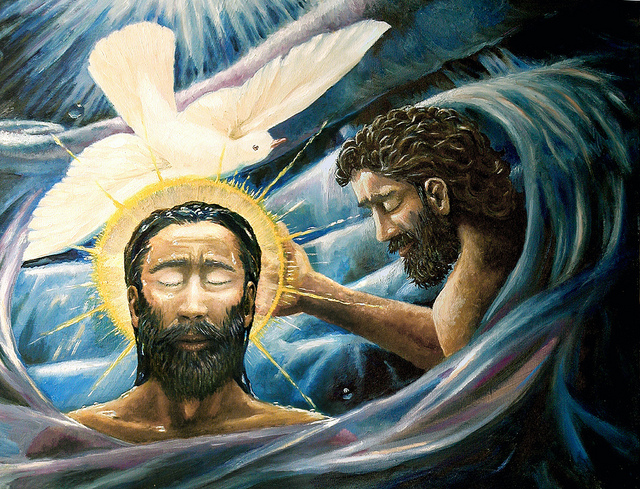
‘At once the Spirit sent him out into the wilderness’ (Mark 1:12) says Mark of Jesus. It’s just after his baptism, and at that wonderful experience the Holy Spirit has descended on him. ‘like a dove’ (Mark 1:10). According to Mark, being sent into the wilderness is every bit as much an experience of the Holy Spirit as that of the dove and the voice from heaven.

In fact, as I’m fond of pointing out when preaching on the temptations of Jesus, to say the Spirit ‘sent’ Jesus out into the wilderness or ‘led’ him there does not reflect the full force of the Greek. Perhaps it’s our British fondness for understatement, but a more literal translation would be, ‘At once the Spirit threw him out into the wilderness.’

The Greek word is ekballo. The ‘ballo’ part is where we get our word ‘ball’. So think of a sports competitor hurling a ball a long distance, and you have some idea of what Mark is saying here. Imagine a fielder in cricket running round to stop a ball going for four, and then hurling it back to the wicket-keeper.

So the Holy Spirit has very forcefully taken Jesus into the wilderness to face temptation. And as Jesus resists that temptation, he wins key battles that that refine and strengthen the calling he has had affirmed at his baptism.

And that may be the first reason why some of our wilderness experiences are Spirit-led journeys: they are training exercises.

You may have seen television documentaries that follow prospective recruits to elite military outfits like the SAS, where the candidates are put through a series of tough, uncompromising, and even distressing experiences. Those who overcome are further on the journey to selection.

And for us, when the Holy Spirit leads us into a bleak place for a training exercise, we are being refined for when we face future battles. If we win victories over difficulty in a wilderness experience, we may be more ready for the trials of life later so that we can overcome them by faith in Christ for his glory.

You will not become an elite soldier by watching Netflix episodes from the comfort of your sofa. Nor will you grow in spiritual strength as a Christian if all you have is an easy life. So sometimes the Holy Spirit removes our comforts and prepares us for what is to come.

That’s one way to see the disciplines of Lent, such as giving up certain things. Our lack of those creature comforts for a season can be a way that the Holy Spirit trains us in the way of Christ.

A second reason why a wilderness experience can be a Spirit-led one can be found in our reading from Deuteronomy 8. It’s about learning humble dependence on God.

Remember how the Lord your God led you all the way in the wilderness these forty years, to humble and test you in order to know what was in your heart, whether or not you would keep his commands. He humbled you, causing you to hunger and then feeding you with manna, which neither you nor your ancestors had known, to teach you that man does not live on bread alone but on every word that comes from the mouth of the Lord. Your clothes did not wear out and your feet did not swell during these forty years. Know then in your heart that as a man disciplines his son, so the Lord your God disciplines you.

Who or what do you really want, God asks us. Do you want me, or do you want an easy life? Learn to depend on me, he says, and to listen to my word, because that is where you will find life.

It’s not about us. It’s about God. Things may seem fine and dandy when we have plenty of good things to eat (‘bread alone’) but we need to learn the lesson that our priorities are not the same as those of the rest of the world.

Remember what Jesus said in the Sermon on the Mount in Matthew 6, when he told his disciples not to worry about food, drink, and clothes:

32 For the pagans run after all these things, and your heavenly Father knows that you need them. 33 But seek first his kingdom and his righteousness, and all these things will be given to you as well.

For me it was the experience of living without a guaranteed income for my first three years as a student when I didn’t qualify for Government grants. I learned as time after time people gave money that enabled me to study and to live.

Again, a Lenten discipline of giving up something may help us cultivate this humble trust in God. It may also be that the experience of being deprived of many good and valuable things through the coronavirus pandemic has done something similar.

God wants our trust, and sometimes he takes us to the wilderness to find it.

A third reason why a wilderness experience can be a Spirit-led journey can be found in the prophecy of Hosea. In the book, and I’m particularly concentrating on chapter 2 here, Israel is compared to an adulterous wife who is always running after other lovers than her husband. In particular, one of her ‘lovers’ is the false god Baal.

But God wants Israel to know that he is the source of all good things, such as grain, wine, and oil. So what will he do?

At first it is severe. Israel will lose her crops of grain, wine, wool, and linen, making her metaphorically exposed before the world. Her festivals will stop, and her vines and fig trees will be ruined.

It all sounds like devastating punishment.

But the thing is, it doesn’t stop there, with Israel in a new but figurative wilderness. For what is the next thing God says?

14 ‘Therefore I am now going to allure her;
    I will lead her into the wilderness
    and speak tenderly to her.
15 There I will give her back her vineyards,
    and will make the Valley of Achor a door of hope.
There she will respond as in the days of her youth,
    as in the day she came up out of Egypt.

This is the third way in which a wilderness experience can be a Spirit-led journey: God brings us back to himself when we have gone far from him.

In other words, when God takes away things from us in the wake of our walking away from him, it’s not the final punishment. Instead, he is removing items from the scene so that all we have is him. He wants us to see him and him only, so that our love for him may be rekindled.

It is a severe form of mercy, but mercy it is. God removes our idols and in doing so shows they have no power. ‘Who will you worship?’ he asks us. And better that he asks us that now than later when it will be too late.

So in conclusion, I haven’t specifically chosen to give up anything for Lent this year. But maybe sometimes the Holy Spirit makes the choice for us. He leads us into the wilderness and removes props from our lives as he trains us to be stronger spiritually for future battles. He takes away our creature comforts so that we may depend on Christ. And he gets rid of our idols so that we may devote ourselves wholeheartedly to our God and Father.

How is the Spirit leading you in the wilderness right now?

Video Sermon: How Do We Understand The Presence Of God?

Continuing with the story of Moses and the Israelites, this week we arrive at Exodus 33:12-23.

However, rather than explore this story, I’m taking up one important theme in it – the presence of God – and giving a sketch of that subject as it appears through Scripture.

I hope you find these thoughts helpful in your own life.

Don’t Be Weirded Out By Pentecost (Acts 2:1-21)

This week’s devotions are for Pentecost Sunday. Many Christians get spooked by the narrative of Pentecost and the Holy Spirit generally. In this talk I want to encourage you to embrace the meaning of Pentecost and all it stands for.

Apologies for the over-exposure of the video – not sure what went wrong. Everything looked right before we started recording!

Sermon: Baptised Into Freedom (The Baptism Of Jesus)

The Advent and Christmas rush means I’ve missed posting several sermons lately. Hopefully, I’ll post them soon, even though they will be rather ‘after the event’. At least they will be present here then nearer next December for those who search this blog and others for relevant sermons.

In the meantime, here is a sermon for this coming Sunday, when we mark the baptism of Jesus.

Mark 1:4-11

Baptism of Christ
Baptism Of Christ 10 by Waiting For The Word on Flickr. Some rights reserved.

If you follow the movies, you may have noticed that in recent months Hollywood has had a bit of a religious obsession. Much of it has been poor, or at least contentious. God’s Not Dead caricatured atheists, Left Behind took up some dubious fundamentalist theories of the end times based on a questionable series of Christian pulp fiction novels, and Noah divided opinion.

Now Ridley Scott’s Exodus: Gods And Kings has caused a stir. Not just because any such film is bound to provoke polarised opinions (and that’s just in the church!), but because Scott engaged famous white actors to play dark-skinned Egyptians so as to generate box office income. And that’s before we get to the controversies about whether the script took liberties with history and scholarship.

But Hollywood hasn’t usually worried too much about the choice between truth and a juicy story. Coming from a family where my grandmother was a friend of Gladys Aylward, I am only too aware how furious Aylward was with the fictional romance that was invented for the film about her life, The Inn Of The Sixth Happiness (never mind the dubious morals of Ingrid Bergman, who portrayed her).

Let me come back to Exodus, though. Because Mark’s account of John baptising people, including Jesus, has Exodus themes in it. I’ve said before in sermons that the Jewish people of Jesus’ day commonly regarded themselves as being in a kind of exile, even though they lived in their own Promised Land, because they were occupied by Rome. So they longed for freedom. And as well as a theme that was like the liberation from Babylon, the Gospels also contain the imagery of freedom from their original place of captivity, Egypt. The Good News that Mark is beginning to tell is couched at the beginning in Exodus language.

Our problem is that we are so used to hearing these stories in the light of more recent Christian debates and themes that we miss this. Perhaps we hear the baptism stories and start thinking about what we believe about baptism. Is it for infants, or is it for committed disciples?

But we need to return to the Exodus theme. ‘Exodus’ is a Greek word. It is usually taken to mean ‘departure’, and so the second book of the Old Testament narrates the departure from Egypt. ‘Exodus’ as a word is a compound of two other words – ‘ek’, meaning ‘out of’, and ‘hodos’, meaning ‘road’ or ‘way’. This is the road or way you take out of somewhere. It is the escape route that you follow. And so an Exodus theme is a freedom theme. It is about liberation and liberty. I want to explore the baptism of Jesus, then, and its implications for us, under this theme of ‘freedom’.

Firstly, the baptism itself. It’s implicit in Mark what is made more obvious in other Gospel writers, namely that John’s baptism is a baptism of repentance. Mark simply notes,

Confessing their sins, they were baptised by him in the River Jordan. (Verse 5b)

Exodus
Exodus By Giorgio Raffaelli on Flickr. Some rights reserved.

It’s therefore strange that Jesus embraces John’s baptism. Why does he need to repent? Again, the other Gospel writers are more explicit about this problem, but Mark characteristically keeps his account brief. Jesus certainly identifies with the people. He is the One who will lead people out of slavery – not, in this case, the slavery of Israel in Egypt, but slavery to sin. As the Israelites came through the waters of the Red Sea (or Sea of Reeds) to freedom from Egypt and her powers, so Jesus leads his people through the cleansing waters of baptism to freedom from sin.

This is the good news of Jesus’ baptism: the Messiah has come to lead his people to freedom from sin. It begins with confession and forgiveness, but it becomes a whole pilgrimage from ‘Egypt’ to the ‘Promised Land’, as that initial setting free becomes a journey in which God leads us into freedom not only from the penalty of sin but also into increasing freedom from the practice of sin, until one day, in the New Creation, we shall be free from the presence of sin.

For Jesus, that journey will embrace what our baptism service calls ‘the deep waters of death’. His Red Sea will not only be the waters of the Jordan at John’s baptism, but Calvary and a tomb. But he will rise to new life and ascend to his Promised Land, promising that we will one day go with him at our own resurrection.

This is Good News that says to us, life doesn’t always have to be like this. It doesn’t have to remain a catalogue of remorse and failure. There is hope. We do not have to hate ourselves, because God loves us to the point of offering forgiveness and new life.

Thus begins our transforming journey, in a baptism that calls us out of Egypt and on the road of increasing freedom. It’s worth reminding ourselves of this from time to time.

One person who did that in his life was Martin Luther. He was a man prone to mood swings between elation and darkness. He could be the wittiest person alive, but he could also plumb the depths. But he said that whenever he was most tempted to doubt or to give up, he would remind himself of one fact: ‘I am baptised.’

I am not saying that baptism is some religious magic trick, but I am saying that to remember our baptism is to remember the promises of God to forgive our sins, and the power of God to change us and ultimately all creation, too. It is a sacrament of hope, as well as of beginnings.

Secondly, the Holy Spirit. On the one hand, John promises,

I baptise you with water, but he will baptise you with the Holy Spirit (verse 8)

And on the other, we read,

Just as Jesus was coming up out of the water, he saw heaven being torn open and the Spirit descending on him like a dove. (Verse 10)

Veni Sancte Spiritus
Veni Sancte Spiritus by Fr Lawrence Lew, OP on Flickr. Some rights reserved.

What does this have to do with the Exodus freedom story? It’s about the manner of God’s presence.

I’m sure you will recall that when Israel was being led through the wilderness, it was by a pillar of cloud by day and a pillar of fire by night.

But now, in the New Covenant, God’s people get an upgrade. Not only will the presence of God (cloud and fire) lead them, now that same presence will come upon all of them and dwell within them. For you frequent flyers, they have effectively gone from economy class to business class.

In Jesus’ case, there is something else. The descent of the Spirit upon him shows that he is the Messiah, for Messiah means ‘Anointed One’. He is anointed, not with the oil used to mark an earthly monarch, but with the oil of God, the Holy Spirit.

And if Jesus the Messiah is anointed with the Holy Spirit and we receive the Spirit too, then that confirms our Christian identity – we are to be ‘little Christs’. No, we are not Messiahs, and heaven deliver us from any more people in the Church with Messiah complexes, but the upgrade to the indwelling Spirit equips us for our pilgrimage to freedom. It is the witness of the Holy Spirit that confirms we are forgiven and loved. It is the work of the Holy Spirit to lead us into increasing freedom from the practice of sin, thus making us more Christ-like. (Although we may more modestly feel it’s a case of becoming less un-Christ-like!)

We need not fear the gift of the Holy Spirit. He is the Spirit of freedom. ‘Where the Spirit of the Lord is, there is liberty,’ wrote the Apostle Paul. He brings God’s freedom to us, and empowers us then to be ministers of God’s freedom in the world. Through the Spirit’s work, we offer Christ and his liberating work to those in the chains of sin – the chains of their own sin, and the chains imposed by others upon them.

And not for us the limited distribution of the Holy Spirit in the Old Covenant. Now the Spirit is given not only to a select number of God’s people, he is given to women and men, young and old, privileged and poor – anyone who desires to follow Jesus the Messiah, the leader of freedom.

Those in higher church traditions than us have a liturgical symbol for this in the way the bishop applies anointing oil (‘chrism oil’) to the foreheads of candidates for confirmation. I came to like that tradition when I used to take part in ecumenical confirmation services with Anglicans, and concluded that we were missing out on that symbolism. I can offer something ad hoc, in that I possess a bottle of anointing oil, which has a beautiful smell of frankincense, and some people find it helpful to link the fragrant aroma of the oil with the presence of the Holy Spirit, who brings freedom.

Thirdly, the voice of God. The terrifying thunder from the mountain on the Exodus route now becomes the voice from heaven as Jesus comes up out of the water. Heaven is ‘torn open’, the Spirit descends like a dove (verse 10), and the voice from heaven speaks:

‘You are my Son, whom I love; with you I am well pleased.’ (verse 11)

Door To Heaven
Door To Heaven by Tragopodaros on Flickr. Some rights reserved.

Tom Wright says[1] that we should not see the opening of heaven as like a door ajar in the sky, because heaven in the Bible is rather the dimension of God’s reality that is invisible to us. So instead, this is like an invisible curtain being pulled back so that we see the whole of life in the light of this different reality. And in this case, when heaven opens the curtain into our life, we hear the divine voice that addressed Jesus addressing us, too:  ‘You are my child, whom I love; with you I am well pleased.’

And certainly that is a totally different reality in which to live. Think about God addressing Jesus this way. Mark hasn’t recorded any virtuous acts by Jesus yet at all. His baptism is his first action in this Gospel, and even that is done to him. There is not even a reference to the humility of the Incarnation in Mark. What, then, has Jesus done to earn his Father’s pleasure here? Absolutely nothing. But he hears the voice of unconditional love. God loves him and is pleased with him.

Those of you who are parents, recall those times when you went into your children’s bedrooms at night when they were fast asleep. They might have delighted you that day, or they might have been utter pickles. But still you gazed at them and whispered words about how much you loved them. You had unconditional love for them.

So ask yourself this: is God angry with me, or does he love me? Can I really believe the Good News that God delights in me? This is the liberating news of our New Testament Exodus.

And that is a transforming insight. If God loves us like this, why do we not love ourselves? I don’t mean in a self-centred way. Rather, I mean something that the author Donald Miller has recently written about. In a booklet available online called Start Life Over, he lists five principles towards changing our lives for the better. The second of these is that – strange as it may sound – we are in a relationship with ourselves, so we should make it a healthy one.

What he says is this. To some extent, we all seek the approval of others, but what we don’t notice is how we seek our own approval. It is as if we are two people: one doing the actions of daily life, the other watching those actions in judgement. Miller noticed that a friend whom he deeply admired was always doing respectful things. And he wondered: if I start doing more respectful things, will I respect myself more, and thus change for the better? He writes,

And it worked. I would find myself wanting to eat a half gallon of ice cream while watching television and I asked myself “if you skipped this, would you have a little more respect for yourself?” and the truth is I would. So I skipped it. And I had much more self respect.

I liked myself more.

This sort of thing translated into a whole host of other areas of my life. I started holding my tongue a little more and found I respected myself more when I was more thoughtful in conversation. I found myself less willing to people please because, well, people who people please aren’t as respectable, right? (Page 9)

I suggest to you that this kind of transformation is open to us when we embark on our baptismal journey of freedom, in the power of the Holy Spirit, and hear God’s voice from heaven telling us we are loved unconditionally. It makes change possible.

So often, the way we seek to promote change in ourselves and in others is through threat. We are no carrot and all stick. But all that produces is fear and paralysis. We might see some change, but it is the change wrought by sleeplessness and night terrors, rather than love. Ultimately, it doesn’t achieve much, and it affects us badly as people.

God chooses the way of unconditional love to lead us into freedom.

[1] N T Wright, Mark For Everyone, p5f.

Create a website or blog at WordPress.com

Up ↑