
The Blessing of the New Jerusalem, Isaiah 2:1-5 (Advent 1 Year A)

Isaiah 2:1-5

Wine Advent Calendar by In Good Taste. No alterations. CC Licence 4.0.

In among the monsoon of Black Friday emails that have taken over my inbox were links to a fashion of recent years that I have railed against in previous Advent seasons. The luxury Advent calendar.

This year, you could buy not only a perfume Advent calendar, but also a wine Advent calendar. And I thought, I hope someone doesn’t receive both and then confuses the two.

Or maybe it would serve them right!

These luxury Advent calendars show that if Advent means anything in our wider society today, it is that Advent is a countdown to indulgence.

We may respond by saying no, it’s a countdown to the birth of the Messiah.

But we too would be wrong if we said that – at least historically. For in the tradition of the Church, Advent begins with a countdown to focussing on the return of the Messiah.

Like so many, we yearn for the day when evil and suffering will be abolished. Like many critics of faith, we too struggle with why God allows sin and strife in the meantime.

But what we have is a hope based in the promises of God, and which we have glimpsed in the Resurrection of Jesus.

Ancient Israel had her hopes, and we read one such vision in Isaiah 2. We read it, not only for what it is, but through a Christian lens. We believe this prophecy of Isaiah is fulfilled in what is often called the ‘Second Coming’. We believe in a hope described by the New Testament Greek word Parousia, which is often translated as ‘coming’, but which is better translated as ‘appearing’ or ‘royal presence.’

So, when Jesus appears again as King of all creation, what will be the effects of his reign, and what do they mean for us now?

Firstly, blessing for God’s people:

2 In the last days

the mountain of the Lord’s temple will be established
    as the highest of the mountains;
it will be exalted above the hills,
    and all nations will stream to it.

‘In the last days’ here is literally ‘at the close of the days’ – that is, when God’s promises come to fulfilment[1].

Originally, Jerusalem stood at a height below the surrounding mountains. Yet here, Isaiah is inspired to see it elevated in a way consistent with its spiritual significance. God has elevated the city.[2]

God blesses his people. As Psalm 3:3 says,

But you, Lord, are a shield around me,
    my glory, the One who lifts my head high.

God raises his people to their full dignity. In his presence, he makes them into all they were intended to be.

One Sunday when I was at my Anglican college in Bristol, one of my friends invited a few of us to go with him to worship that evening at an independent charismatic church. His contact was a girl he knew. We all went to her house first, and she led us to the place where her church met. She was a plain-looking young woman of unremarkable appearance.

During the service there was an extended time of sung worship. At one point, I looked around the congregation. Wow, I thought: who is that beautiful girl?

I expect you’ve guessed. It was the apparently plain girl who had taken us there. But caught up in the worship and adoration of God, the presence of the Spirit made her into something more.

And I believe that is something of our hope. Just as Jerusalem is elevated in the vision of Isaiah, so God’s people are elevated in the royal presence of God.

It happens already by the Holy Spirit. It will be fulfilled in the coming of Jesus.

I have long believed that the work of the Holy Spirit in us is not to make us less human, as if God wanted us to be religious robots, but rather to make us more human than we’ve ever been. Our gifts are enhanced. Our talents are increased. Our holy desires are raised. As Isaiah saw Jerusalem being raised and exalted, so our destiny is to become everything that God ever intended us to be.

This is not just about ‘religious’ spiritual gifts. It is to do with everything about us. Alison’s admin will be even more on point. Tim’s photos will be even more amazing. Angela’s hospitality will be warmer than ever. Jessica’s tech abilities will be through the roof.

I’m sure that’s something to anticipate with joy and maybe even excitement. But in the meantime, as a sign to the world of all that is to come, let us be open to the Spirit in every part of our lives as God works on this project of elevating us to become more of whom we were always intended to be.

Secondly, blessing for the nations:

3 Many peoples will come and say,
‘Come, let us go up to the mountain of the Lord,
    to the temple of the God of Jacob.
He will teach us his ways,
    so that we may walk in his paths.’
The law will go out from Zion,
    the word of the Lord from Jerusalem.
4 He will judge between the nations
    and will settle disputes for many peoples.
They will beat their swords into ploughshares
    and their spears into pruning hooks.
Nation will not take up sword against nation,
    nor will they train for war any more.

This makes me remember the passage I used on Remembrance Sunday this year, namely Revelation 22:1-5, where ‘the leaves of the tree [of life] are for the healing of the nations’ (verse 2).
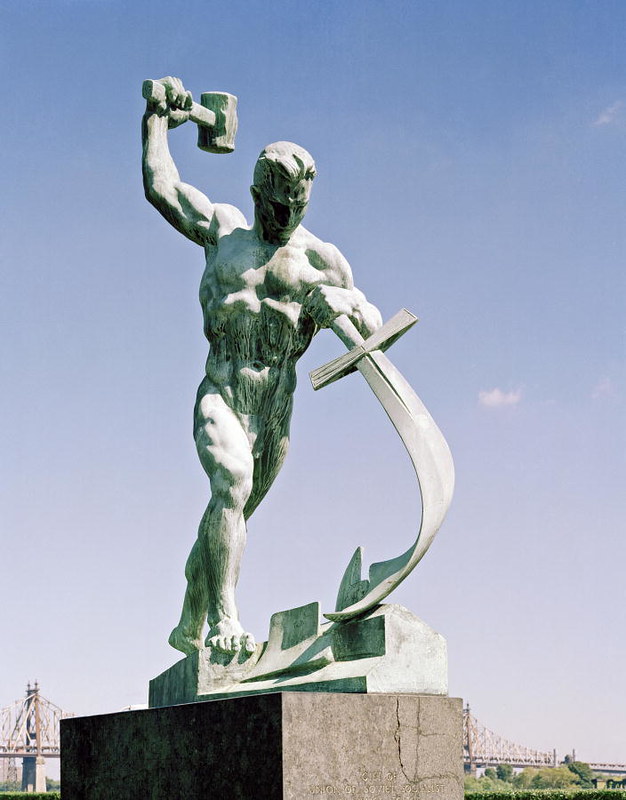
Let Us Beat Our Swords Into Ploughshares. UN Photo/Andrea Brizzi. CC Licence CC BY-NC-ND 2.0

In the New Jerusalem, when God teaches his ways there will be the resolution of disputes between peoples and nations, and the end of all war.  How we long for such a day. Swords into ploughshares and spears into pruning hooks indeed.

Because the New Jerusalem is a place of peace, reconciliation, and justice. Not for the life of the world to come the spectacle of a President lusting after the Nobel Peace Prize while renaming the Department of Defence as the Department of War, while sending quasi-military officers to arrest citizens purely due to the colour of their skin and with no due process, all the while selling Ukraine down the river to his fascist buddy in the Kremlin who probably has dirt on him. That is not peace.

No. The peace of the New Jerusalem will not be the fruit of armed strength but of the Son of God suffering in love on the Cross. The peace of the New Jerusalem will not be about the imposition of a stronger will, because the Cross says otherwise. The peace of the New Jerusalem will not be about finding some compromise halfway in between the positions of two intractable sides but will be based on the truth of God. As we heard in verse 3, ‘He will teach us his ways so that we can walk in his paths.’

Well, what about now? As future citizens of the New Jerusalem, God calls us to point to this future reality by our witness in this life. Can we be people who learn the skills of reconciliation? Can we learn how to transform conflict into peace and harmony? Can we be examples of that in our own relationships? Where are the broken people and broken places in our world to which God is calling us to demonstrate his ways of healing?

Maybe it’s in families. Or in communities. Or in workplaces. Or on a larger stage. But we may be sure, these are the very spaces which God calls his people to inhabit and to serve as a sign of hope in his coming New Jerusalem.

Thirdly and finally, blessing in the here and now:

5 Come, descendants of Jacob,
    let us walk in the light of the Lord.

I’ve been relying this week on the work of the Old Testament scholar John Goldingay to guide my thoughts in understanding this passage. He says that the image of light points in some places to themes of truth or revelation, but not here. ‘The light of the Lord’ has to do with God’s face and hence, God’s blessing. To live in the light of the Lord is to live by his blessing[3].

We can let all sorts of things fire the way we live. It might be material gain. It might be our need for the approval of others. It might be about successful relationships and a good family life.  It might be the desire to be recognised and respected. It might be to climb to the top of our profession.

Not all these things are entirely bad. But they cannot be ends in themselves, or they become idols. Isaiah points us to a better way, a way that enables us to live in the spirit of the Christian hope. It is a way that prepares us for the New Jerusalem.

‘Let us walk in the light of the Lord.’

Let us seek his blessing and respond to that. Where is God shining his light? Let us walk there.

Sometimes God shines a light in a place that is congenial to us, and it is easy to walk there and know his blessing. Other times he shines his light in unexpected and challenging places, and the call to walk there and discover blessing is trickier for us. It can be like that balance we hear in the preamble to the Covenant Service prayer every year:

Christ has many services to be done:
some are easy, others are difficult;
some bring honour, others bring reproach;
some are suitable to our natural inclinations and material interests,
others are contrary to both;
in some we may please Christ and please ourselves;
in others we cannot please Christ except by denying ourselves.
Yet the power to do all these things is given to us in Christ, who strengthens us.[4]

Many ministers did not believe God could be shining his light in that direction as a way of bringing blessing, and some of us had to be dragged kicking and screaming towards that light. Other Christians have known sheer joy and delight in detecting where God was shining his light.

But the reason we do all this is in anticipation again of the New Jerusalem. For in that place, there will be no more night, there will be no more need for lamps or the Sun, because God himself will be the light. Hence, to walk in his light of blessing now is to prefigure that great day. It is to live in a small way now in the ways of eternity, when all our hopes will be fulfilled.

Conclusion

As we step into Advent again this year, may the Holy Spirit hold before us the prophetic vision of hope. May that vision of hope be a blessing that fortifies and energises us.

May we know such blessing that we grow ever more into being the gifted people our Father made us to be. May we offer such blessing that the world knows the Good News of reconciliation with God and with each other. May we walk in such blessing today as we follow God’s light and catch a glimpse of the glory to come.


[1] John Goldingay, New International Biblical Commentary: Isaiah, p42.

[2] Op. cit., p42f.

[3] Op. cit., p44.

[4] Methodist Worship Book, p288.

What To Do When A Move Of God Is Dying, 2 Kings 2:1-18 (Ordinary 13 Year C)

2 Kings 2:1-18

On my first full day at the first theological college I attended, one of the pastoral tutors said to us: ‘Coming to college is a bereavement experience.’

She was right. Of course, it was not on the scale of the death of a loved one. But there are other bereavements, including smaller ones. The tutor explained that we were going through the loss of families, friends, networks, homes, jobs, and other things that we had left behind to study and train. (Most of us were mature students.)

The account of Elijah’s departure to heaven is also a bereavement story. And it’s more than just losing a beloved leader of God’s people from this earth. There is a bigger bereavement going on here for Elisha, the company of the prophets, because the loss of Elijah to heaven is the end of one major phase of God’s work among his people.

In that respect, I believe this passage has a lot to tell today’s church. So much of it is dying, especially in the more traditional churches. We know the numbers are down and the age profile is increasing. A phase of God’s work is dying. But how do we respond?

We can take clues from this narrative about good and bad ways to respond when one move of God is passing, and we are waiting for the next. I am going to look at how Elisha reacts, and then how ‘the company of the prophets’ reacts.

Firstly, Elisha

I have no doubt that Elisha was consumed with grief. Every time Elijah told him to stay in one place while he went on, Elisha replied, ‘As surely as the Lord lives and as you live, I will not leave you.’ Elisha clings onto Elijah. Can he not face the thought that he is going to be separated from him? Or maybe he’s not willing to let his master go on his final journey alone.

Equally, every time the company of the prophets asks Elisha, ‘Do you know that the Lord is going to take your master from you today?’, he gives the same reply: ‘Yes, I know, so be quiet.’ I doubt this is like the old British stiff upper lip, because that would not fit the culture. But it does sound like someone who is saying, I just don’t want to talk about it. This is too awful.

In these ways, Elisha doesn’t sound that different from a lot of grieving people. Those who have studied the various stages of grief have shown that one of the early stages is that of denial, where we just cannot accept the awful reality.

I suspect some of us are like that in the church as it declines and ages. Some of us don’t want to talk about it. Somehow, we think that if we keep on doing the same old same old then maybe magically things will turn out for the better. We seem to have fallen for what some have called Einstein’s definition of insanity, which is to keep on doing the same things will expecting a different result.

But Elisha doesn’t stop there. He knows a new season is coming. For sure, his grief cries out after Elijah departs as he asks, ‘Where now is the Lord, the God of Elijah?’ But before that, we read this in verses 9 and 10:

9 When they had crossed, Elijah said to Elisha, ‘Tell me, what can I do for you before I am taken from you?’

‘Let me inherit a double portion of your spirit,Elisha replied.

10 ‘You have asked a difficult thing,’ Elijah said, ‘yet if you see me when I am taken from you, it will be yours – otherwise, it will not.’

The ‘double portion’ is what the eldest son received in their father’s will. It showed he was the favoured one. Here, Elijah knows the double portion of the spirit isn’t in his gift, it is only from the favour of God. Elisha will know he has received it if he sees Elijah when he is taken – for that is what a prophet does, he sees into the will of God.

At this point, Elisha gets it right. The succession of God’s work depends not on hankering for the days of Elijah but depending on the work of the Spirit. Only the Spirit of God animates the prophetic ministry.

And … only the Spirit of God animates the Church of Jesus Christ. Amid all our talking, posturing, and fantasising in the light of ongoing decline, the ‘one thing necessary’, a dependence upon the power of the Holy Spirit, seems to be the ‘one thing neglected.’ We need Pentecost fifty-two weeks of the year.

It’s no good telling stories of what the Holy Spirit did in past generations or when we were younger if we are not also relying on the Spirit now as well. It reminds me of my favourite story about the nineteenth century American evangelist D L Moody. During one visit to the UK, he spoke to a group of church leaders on the text Ephesians 5:18, ‘Be filled with the Spirit.’ He pointed out (correctly) that the Greek actually says, ‘Continue to be filled with the Spirit.’

An Anglican clergyman objected. ‘Mr Moody! Why do I have to be filled with the Spirit now? I was filled with the Spirit at conversion.’

And Moody simply replied: ‘Because I leak.’

Isn’t that our problem? We have leaked the Holy Spirit and we are dying. Is anything more urgent than petitioning God passionately to pour out his Spirit on his people again?

Let me ask you: are there any ways in which your church is in denial about the fact that the move of God which created our churches is dying? Are there ways you are trying to hide from this? We can have all the coffee mornings we like, but unless the Spirit is poured out, we are done for. Are we crying out for the Holy Spirit?

Secondly, the company of the prophets

If Elisha starts off on the wrong foot but then gets it right, the company of the prophets gets things the opposite way around. They start off well. Look at all the times they warn Elisha, ‘Do you know that the Lord is going to take your master from you today?’ Get real, Elisha, they say: you can’t play pretend, you need to face up to reality. This is good, honest living. They know you can’t live in denial. They know that fantasising and hiding are not helpful. They show a healthy instinct.

So where does it all go wrong for them? Well, that happens after Elijah has been taken to heaven and Elisha has taken up the prophetic mantle, both literally and spiritually, with Elijah’s cloak. After Elisha proves his spiritual authority by dividing the waters and walking across, we read this:

15 The company of the prophets from Jericho, who were watching, said, ‘The spirit of Elijah is resting on Elisha.’ And they went to meet him and bowed to the ground before him. 16 ‘Look,’ they said, ‘we your servants have fifty able men. Let them go and look for your master. Perhaps the Spirit of the Lord has picked him up and set him down on some mountain or in some valley.’

The very people who have warned Elisha that Elijah will be taken from him now propagate a delusional fantasy that maybe he hasn’t really gone, after all. Elisha may have the Spirit resting on him, but they still want the good old days, even though God is blatantly doing something new now.

And I fear this is where much of the mainstream, traditional church is spiritually today. God is doing something else, but we still want to propagate the old ways. Look at how Methodism clings onto its old structures. We must have our Circuits and Districts! So, we combine them into ever larger sizes. Here I am, in our circuit where three old ones were amalgamated twelve years ago, preaching at a church that is not one of mine, and travelling thirty-four miles to do so.

Or another Methodist example: every church must have a minister in pastoral charge. We can’t possibly let churches have a vacancy, like many other denominations do. Our congregations become infantilised, and our ministers get stretched over ever more small churches, because the rate of decline in church members is faster than the rate of decline in numbers of churches. We ministers are then far less able to be effective, because we are just travelling cheerleaders and find it hard to embed ourselves in a community.

Can’t anybody see what is blatantly in front of our eyes, that the system is breaking and dying? Have we so idolised the system that no-one will grasp the nettle? Yet we still go looking for Elijah when the Spirit is resting on Elisha.

But here’s the thing: although the company of the prophets go from being realistic and honest to living in a world of make-believe, ultimately there is hope. Why? Because if you continue reading in 2 Kings, the company of the prophets continues to work in partnership with Elisha. They come to the realisation that they must follow the leading of the Spirit in their day, even if that means doing something new.

And surely the same is true for us. We have lived for so long under the illusion that the structures the Holy Spirit led John Wesley to establish in the eighteenth century are still the structures we must use today, as if somehow God’s leading then were on the same level as Holy Scripture itself. But if we are both to survive and to thrive as the church, we shall need to stop our version of looking for the body of Elijah and instead ask what the Spirit is doing through the Elishas of our day. It may look very different. What we can guarantee is that if it is truly the work of the Holy Spirit then it will not be contrary to biblical teaching.

What might we do about it? Exactly what we have already seen Elisha do. We need as much of the Holy Spirit as the Lord will be pleased to pour out on us. When we are full of the Spirit we shall be led in Christlike ways. When we are full of the Spirit, we shall find that God will lead us to express the unchanging Gospel of Jesus Christ in new ways for our generation. Some sacred cows will need to go, but it will only be us who made them sacred in the first place, not God.

So, yes – we still need to do those administrative things that consume our time, like the accounts, Safeguarding, and GDPR, and we need to do them well as a good witness. But for all their importance on our agenda, the one thing that needs to trump them all in our priorities is seeking the fulness of the Holy Spirit.

Because – as Moody said – we leak.

The Meanings Of Pentecost, Acts 2:1-21

Acts 2:1-21

The vicar was paying a visit to his local Church of England primary school. To impress him, the children had memorised the Creed. They stood before the vicar, each one reciting a line in turn. ‘I believe in God, the Father Almighty, maker of heaven and earth’; ‘I believe in Jesus Christ, his Son, our Saviour’; and so on. 

But when it came to when one child should have said, ‘I believe in the Holy Spirit,’ there was nothing. Eventually, one child broke the embarrassed silence and said, ‘I’m sorry, sir, the boy who believes in the Holy Spirit isn’t here today.’

Are we sometimes embarrassed by believing in the Holy Spirit in the church, too? We do our business without reference to him. We complacently assume his presence. We find the name ‘Spirit’ rather spooky and unsettling, like the old name ‘Holy Ghost.’ And as for all those strange things attributed to his work in the New Testament like speaking in tongues and having direct words from God for people, well no thank you very much, that’s all too awkward and un-British. 

I want to take the familiar story of Pentecost from Acts chapter 2 and show you how the deep meaning of Pentecost shows us how vital it is to welcome the Holy Spirit and his work. I’m confining myself to the first thirteen verses: that is, I’m stopping before Peter gets to speak. There is just so much here I have to put a limit somewhere. 

Firstly, Pentecost is about obeying God’s Law:

As you will realise, Pentecost was an existing Jewish festival. It celebrated the time when God gave his Law (the ‘Torah’) to Israel at Mount Sinai. He had rescued them from slavery in Egypt. Then, on their way to freedom in the Promised Land, he gave them his Law to obey in response to him having delivered them. Keeping God’s Law always was a response to having first been saved by God. It never was the case that we kept God’s Law in order to be saved in the first place. 

But even so, there was a problem. Israel repeatedly failed to keep God’s Law. Ultimately, they were so thoroughly disobedient that in reality they preferred the ways of other gods, the false and imaginary gods of other nations and cultures. It didn’t end well. It ended with them being exiled from the Promised Land, as God had warned them when he first gave them his Law. 

I expect we know similar struggles. We know that God has commanded certain standards of behaviour from his people in response to the fact that he has delivered us not from Egypt but from sin. But we fail. Daily! It’s why we have the confession of sin and the assurance of forgiveness in our worship every week. 

The coming of the Spirit at Pentecost, the festival of God’s Law, shows us that God has not left us relying on our own feeble resources to obey his will. He pours out his Spirit upon us so that we can do the will of God. So often we are like cars drained of fuel (or electric charge today) and we cannot move. But with the Holy Spirit, we are filled with the power to do God’s will and obey his Law. 

So today, if there is an area of life where we know we want to obey God but are struggling to do so, let us seek again to be filled with the Holy Spirit. 

Secondly, Pentecost is about God’s harvest:

We are used to having one harvest festival a year in late summer or early autumn to mark the full ingathering of the crops from the fields. Ancient Israel, however, had two harvest festivals a year. One of them was just like ours. It was celebrated at the Feast of Tabernacles (which also remembered other aspects of their history). 

But their first harvest festival was at Pentecost. It was the festival of the first fruits of the harvest. The early crops were a sign that promised the full harvest would come later. 

This too is what the Holy Spirit does. God promises a full harvest of salvation at the end of time, when his people will be completely saved – not only from the penalty of sin in forgiveness, but also from the practice of sin, because we shall be made completely holy, and further from the very presence of sin, which will be eradicated. 

But there are victories on the way to that destination, and the Holy Spirit brings those first fruits in this life. Do we want to see people come to Jesus and find both the forgiveness of their sins and true purpose for life? If so, then we pray for the Holy Spirit to be poured out. We pray that the Spirit will energise our lives and witness. We also pray that the Spirit will be at work ahead of us in the lives of those we are longing to see discover Jesus. 

So never mind all the talk of learning techniques for evangelism. Pray instead for the Holy Spirit to be at work powerfully. Our job is simply to be witnesses. That is, we give an account of what has happened in our lives. No-one comes to the Father unless they are first drawn to him, so we ask the Spirit of God to do that. 

How many of you have a list of people dear to you whom you are longing to find faith? When you pray for them, pray that the Holy Spirit will reveal Jesus to them. 

Thirdly, Pentecost is about God’s new creation:

The coming of the Spirit is mysterious. Notice how Luke struggles to describe it:

Suddenly a sound like the blowing of a violent wind came from heaven and filled the whole house where they were sitting. They saw what seemed to be tongues of fire that separated and came to rest on each of them. 

‘A sound like the blowing of a violent wind.’ ‘What seemed to be tongues of fire.’ It’s not literal, but it does convey the idea that the Spirit is hovering over the disciples. Does that remind you of anything? 

How about Genesis 1 verse 2?

2 Now the earth was formless and empty, darkness was over the surface of the deep, and the Spirit of God was hovering over the waters.

As the Spirit hovered over the waters at creation, so at Pentecost the Spirit hovers over the disciples because this is the making of the new creation. 

God has come to make all things new. We’re on that journey to the new creation at the end of all things, when there will be new heavens and a new earth, with a new Jerusalem, God’s people. The renewal starts now. 

And so when we see things in the world that do not display the newness of God’s redeeming love, the Holy Spirit empowers God’s people to act for healing, renewal, and justice. 

Did the Holy Spirit empower Martin Luther King in the 1960s to stand up against institutional racist policies in the United States? I believe so. Did you know that when the Solidarity movement arose in Poland in the early 1980s against the terrors of Russian communism much of it came out of a renewal movement in the Roman Catholic Church in that nation? 

What, then, of the evils we see today? Be it Trump or Putin, God is raising up his people by his Spirit, though it will be costly. Where is the fastest growing church in the world today? It is exploding even under the persecution of the mullahs in Iran. 

Is God calling any of us to be equipped by the Spirit to pay the price of advocating for his new creation?

Fourthly and finally, Pentecost is about God’s community:

I want to bring a couple of things together here. One is that the episode begins with the disciples ‘all together in one place’ (verse 1), which followed on from their meeting for prayer in chapter 1. 

Then we get the crowd who gather, coming from different places and speaking different languages, yet they all ‘hear [the disciples] declaring the wonders of God in [their] own tongues’ (verse 11). It’s not the reversal of Babel, where proud humankind was scattered from one language into many, because there are still many languages. But it is about diverse humanity being united under ‘the wonders of God.’

In other words, the work of the Spirit brings unity in Christ across the biggest of divisions. Church is not about going to a place where I mingle with people who are just like me. Instead, it is about the Gospel of Jesus Christ uniting people who otherwise would not hold together. European, Asian, and African; highly educated and barely literate; poor and wealthy; even both Spurs and Arsenal fans! 

We live in a world riven by division. People feel its pain. We look for ways to cross the divide. The tragically murdered MP Jo Cox said before her untimely death, ‘There is more that unites us than divides us,’ but sadly she underestimated the fact that it is sin which causes the division and Jesus is the cure. 

And so the Holy Spirit takes the work of Jesus on the Cross to reconcile us to God and to reconcile us to one another. He applies that to our hearts and minds. In Ephesians Paul talks about God bringing Jew and Gentile together at the Cross. The Holy Spirit makes that real. 

It’s what we are marking when we share The Peace at Holy Communion. Some older Christians will remember communion services where the minister said that those who loved the Lord and who were in love and charity with their neighbour were invited to take the holy sacrament to their comfort. It’s the same idea, it’s just that The Peace is actually a much older tradition of the Church to express this. 

But while expressing this unity in a traditional, liturgical way is important for what it symbolises, it is also something that needs to be lived out. It involves us building our friendships. It means apologising and seeking forgiveness when we have hurt someone else in the church. It means refusing to hold onto bitterness. And it means the world seeing that our relationships are different. 

Conclusion

So who’s up for the challenge, then? These works of the Holy Spirit are all connected. The first about obeying God’s Law and the fourth about unity are two sides of the holiness coin, one personal, the other social. The second about the harvest and the third about the new creation are both about God’s mission on which all Christians are sent. 

All of this comes under that description of the crowd: ‘we hear them declaring the wonders of God in our own tongues’. Is that worship, or mission, or both? 

Let’s invite the Holy Spirit to empower us to declare the wonders of God in our words and in our lives, in the church and in the world. 

Begin With The End In Mind, Revelation 21:1-8 (Easter 5 Year C)

Revelation 21:1-8

Have you ever heard the saying, ‘Begin with the end in mind’? A novelist may have a beginning point and also know the end of the story but then has to work out how to get the characters from that beginning point to the end. We do something similar when planning a journey. Our sat-nav knows where we are, and we enter the place where we want to end up. It would be ludicrous just to set out on our travels with a vague hope that we will arrive at somewhere good. We begin with the end in mind.

But do we apply the same principle to the life of faith? I believe we should. A good, clear, healthy vision of the end of all things will guide us as we wonder how to live now.

And the book of Revelation does something like that for its readers. While I don’t believe it was written only to be decoded in our day with details that correspond to our world political situation, it does give a vision of the end that enables its readers to live faithfully now. I accept the common theory that Revelation was written for persecuted Christians, perhaps in the late first century. As they struggled to know how to live as Christians when under pressure and facing suffering, Revelation gave them a vision of the end, which enabled them to calibrate their lives right where they were.

We may not live our lives of faith in Jesus under the same level of stress that they did, but we too need to live with the end in mind. If we don’t, our lives will drift aimlessly, like heading out on that journey with no idea where we’re going.

Our passage today tells us about the end in verses 1 to 5 and then shows how we live with the end in mind in verses 6 to 8. So first of all we’re going to think about the end, and only then secondly are we going to think about how we begin.

Firstly, then, the end:

What is the end that we are to have in mind? As I said, it is described in verses 1 to 5, and to understand it I want us to think about a sandwich[1]. A sandwich has bread on the outside, top and bottom. Then just inside that, we have the butter on each slice of bread. Finally, in the middle, we have the filling.

Verses 1 to 5 are like that. The bread on the outside are the statements about things being made new. So on the top we have the new heaven and the new earth in verse 1 and on the bottom, we have God saying that he is making everything new in verse 5.

This bread of newness is buttered with the ‘No longer’ statements. The top slice is buttered with the statement at the end of verse 1 that ‘there was no longer any sea’ and the bottom slice is buttered with verse 4, where we hear

He will wipe every tear from their eyes. There will be no more death” or mourning or crying or pain, for the old order of things has passed away.

What, then, is the tasty filling? It is that God and his people will dwell together in the holy city, the New Jerusalem, as found in verses 2 to 3.

The making of all things new, eventually leading to the renewal of the entire heavens and the earth, began with the bodily resurrection of Jesus, and that’s why it’s appropriate to read this passage in the Easter season. When God raised Jesus from the dead, while he was recognisable, his resurrection body clearly had new powers, as we see from the times when he suddenly appears and disappears before the disciples. In 1 Corinthians 15 Paul tells us the resurrection body will be animated by the Holy Spirit.

We, then, are anticipating living in a new creation where everything is recognisable but has new powers and does not decay.

The butter on the bread is the ‘no longer’ statements, which show that in this new creation, suffering will be ended. Imagine you are a persecuted Christian in the first century and you hear that in the world to come ‘there will be no more death or mourning or crying or pain’ – all the things you have gone through as either you have been tortured or your friends and loved ones have suffered and even been killed at the hands of the authorities.

And add to that the mysterious – to us – vision that ‘there was no longer any sea’ in verse 1. I suspect this alludes to the fact that the sea was a place of terror for ancient people, and that also earlier in Revelation one of the evil beasts had arisen from the sea. So if there is no longer any sea it’s not that H2O has been abolished: it is that in the new creation, not only is suffering gone, but the cause of suffering is no more. Evil will no longer have its way.

So at the end we have all creation renewed. It is identifiable but now no longer subject to decay but exhibiting new power at animated by the Holy Spirit. Furthermore, suffering and all that causes it has been given its marching orders.

But it gets better. Because the filling in the sandwich, the very centre and heart is the fact that we will dwell together with God. This is what everything is leading up to: creation – including us – is remade, suffering and its causes are banished, all so that the redeemed can live with God with no handicap. Such will be the new creation that, as Augustine of Hippo, the great thinker who inspired the new Pope, put it, everything will mediate the presence of God.

That is the great vision Revelation 21 gives us. That is the end. It is the end we keep in mind when we begin to live the Christian life now.

So secondly, let’s turn to the way we begin:

For now, by the vision we can see that both creation and new creation are accomplished. As God looked on his initial creation and said it was good or it was very good, so he has looked on his new creation and said, ‘It is done.’ (verse 6)

Now, we have a choice in the way we begin our journey with the end of the new creation, drained of evil but filled with the presence of God in mind.

God offers us the free gift of the water of life if we are thirsty (verse 6). Biblically, the water of life is the gift of the Holy Spirit. Our thirst will only truly be quenched by the Spirit of God. It is the Holy Spirit who leads us on in the direction of the end. I mentioned Augustine of Hippo earlier, and one of his prayers puts it neatly:

Breathe in me, O Holy Spirit, that my thoughts may be holy.
Act in me, O Holy Spirit, that my work may be holy.
Draw my heart, O Holy Spirit, to love what is holy.[2]

The way to get on the route from wherever we are beginning to God’s great end is to open ourselves to the Holy Spirit, and to all the Spirit wants to do in our lives. Paul says in Galatians we are to ‘walk by the Spirit’, the Spirit leads us on the journey from where we are now to the destination God has for us in the new creation and in his presence. The Spirit prepares us for such an existence, purifying our motives and transforming our lives, making us more into people who will be in harmony with God’s new creation where suffering and evil are gone.

To set ourselves on this route from our starting place to the end is what will make us ‘victorious’ in the word of verse 7. In other words, we will not bow down to the evil forces of this world that seek to get us to deny our faith in Jesus and our allegiance to him. The Spirit of God is offered to us so that we may persevere in following Jesus. Or to put it another way, when my least favourite Christmas carol ‘Away in a manger’ ends with the words ‘And fit us for heaven to live with thee there,’ the way God fits us for our destiny is by the work of the Holy Spirit.

The other choice is to reject all this and say, actually, Lord, I don’t want to live in your beautiful new creation where evil has had its marching orders and we live close to you in your presence. For those who choose the lifestyles described in verse 8 – ‘the cowardly, the unbelieving, the vile, the murderers, the sexually immoral, those who practise magic arts, the idolaters and all liars’ – are by their very lifestyle saying no to God’s new creation. These are examples of practices that will be extinguished there. Hence, there is nothing harsh and vindictive about the fate of the depraved being ‘the fiery lake of burning sulphur’ (verse 8). It is ‘the second death’ and this is the natural consequence of choosing against the beautiful end God has planned, designed, and promised.

That probably isn’t most or even all of us. But the tricky challenge we face is that sometimes we want the beautiful destination God has for us but we’d like to compromise – everything in moderation as it were, even sin. We can do a bit of cowardice, not always confessing our faith. We can be unbelieving if there are parts of the faith that don’t suit us. We can make concessions to the sexual standards of society. Magic arts? Well, I certainly think of those Christians who read their horoscopes. I see idolatry in the devotion of some Christians to Donald Trump or to the acquisition of wealth.

Some of us want it both ways, but Jesus doesn’t allow us that option.

Don’t get me wrong, I know we are all far from perfect, not least me. But there is a difference between on the one hand setting our sights on the presence of God in his new creation but slipping up from time to time, and on the other hand wanting to hoover up the blessings of God while not wanting to change our lives out of gratitude for all he has done for us.

So as we approach Ascension and then Pentecost, when God pours out his Spirit through the ascended Jesus, let us examine ourselves. Are we imperfect followers of Jesus who desire the ways of God as well as the blessings of God? Or do we simply want to have our cake and eat it?

Pentecost will be an ideal time to avail ourselves of the living water, the Holy Spirit, so that we can indeed live with the end in mind.


[1] This is my version of Ian Paul’s description of the chiastic structure of verses 1 to 5 in his TNTC on Revelation, p338f.

[2] Lectio 365 morning prayer, 16h May 2025, adapted and modernised from https://www.loyolapress.com/catholic-resources/prayer/traditional-catholic-prayers/saints-prayers/holy-spirit-prayer-of-saint-augustine

Fourth Sunday in Advent: God Is Coming Home (Luke 1:39-55)

(This is a second consecutive repeat sermon from six years ago – sorry about that, but the week has been thoroughly disrupted by loss of landline and broadband for five days. I’m really not sure the words ‘BT’ and ‘Business’ belong together in the expression ‘BT Business Contract’!)

Luke 1:39-55

‘It’s coming home, it’s coming home, it’s coming – football’s coming home.’

Every time the England football team has qualified for a major tournament since 1996, that songs – ‘Three Lions’ – is dusted down and sung again.

There is a sense of ‘coming home’ when Mary visits her older cousin Elizabeth. It’s not immediately obvious in English translations of the Bible, but there are allusions in this story to 2 Samuel 6:2-19, where King David and his men bring the ark of the covenant to Jerusalem. Just as the ark of the covenant was the portable sign of God’s presence among his people, so now in the Incarnation Jesus will be ‘the portable presence of God’, if that doesn’t sound too irreverent. And just as David danced before the ark of the covenant, so the infant John leaps in his mother Elizabeth’s womb. The prophetic voice in Israel has been silent since Malachi four hundred years earlier, but now God is at work. Like that sentence in ‘The Lion, The Witch, And The Wardrobe’, ‘Aslan is on the move.’

So what happens when God is on the move? Blessing – that’s what happens. Mary is blessed. Her baby is blessed. Elizabeth is blessed – she says she is ‘favoured’, which is a word that explains what blessing is. And surely her leaping, dancing baby is also blessed.

What blessings appear when God comes home to his people?

For Elizabeth’s unborn baby John, it is the blessing of joy. He leaps in the womb (verse 41) and Elizabeth says he ‘leaped for joy’ (verse 44). Why would John leap for joy?

Remember what their relationship will be. They are cousins, but John will be born first and he will herald the coming of his cousin Jesus, the Messiah. John will be the forerunner. He will be the compère, introducing the main event. He will be the best man to the bridegroom. In adult life, nothing will give John greater joy than the advent of Jesus. He will be filled with joy to announce that the Messiah is coming. He will not be interested in promoting himself; instead, his passion will be to introduce Jesus, and then get out of the way so that all the spotlight can fall on his cousin.

Our joy too is to announce the presence of Jesus. For in him, God has come to be with all who will follow him. We are not left alone, for the One called Immanuel, God with us, is here. We have no interest in promoting ourselves, only in highlighting Jesus, for he is our joy and nothing gives us greater joy than to see people recognise him, acknowledge him, and celebrate his love.

Remember what I said that the infant John leaping in his mother’s womb is a New Testament parallel to King David leaping and dancing for joy before the ark of the covenant, the Old Testament sign of God’s presence, being restored to the midst of God’s people. Does anything give us more joy than to know that in Christ God is present? We are not left alone. We are not deserted. Even in the silence, God is here.

So let us be joyful this Christmas. We rightly query the self-indulgence of society at Christmas, and the excessive celebration of – well, what, exactly? But if anyone has reason for joy at Christmas it is the Christian.

That said, being truly joyful in this season can be difficult. There are so many pressures and things to do that if we are not careful, we get so run down that we are unable to celebrate. I know that is true of me as a minister, with all the extra services, and I can remember the time my daughter asked me how grumpy I was going to be this Christmas.

But I also know I am not alone in that experience. It is widespread. How ironic that the loudest voice I have heard in the last year or two urging people to simplify Christmas in order to make it better has been the television and internet money saving expert, Martin Lewis. What’s the irony in Martin Lewis urging people to simplify Christmas in order to enjoy it more? He isn’t a Christian. He’s Jewish.

Can we find space again this year to be filled with joy at the coming of our Lord?

For Elizabeth herself, the blessing of God coming home to his people is to be filled with the Holy Spirit.

41 When Elizabeth heard Mary’s greeting, the baby leaped in her womb, and Elizabeth was filled with the Holy Spirit.

God not only comes near to Elizabeth, God comes right into Elizabeth’s life. It is a sign of what is to come. The coming of God will not end with the departure of Jesus but will continue in the gift of the Holy Spirit.

Now the coming of the Holy Spirit can lead to all sorts of gifts in God’s people. What do we see in Elizabeth? Let’s read on:

42 In a loud voice she exclaimed: ‘Blessed are you among women, and blessed is the child you will bear! 43 But why am I so favoured, that the mother of my Lord should come to me?

Elizabeth’s gift is to ‘recognises blessedness’[1]. In other words, the Holy Spirit enables Elizabeth to recognise what God is doing, to notice where God is bestowing favour. So when God comes close to Elizabeth and fills her with the Holy Spirit, she receives the ability to discern what God is doing, and then to welcome it and live accordingly.

Now when you state the work of the Holy Spirit like that, isn’t that something we long for and desperately need? Isn’t it critical for us too to be able to discern what God is doing and respond appropriately? In today’s church we often lurch from one thing to another, trying this trick or that technique in order to see things turn around, but I rarely hear people say, let us seek God to know what God is doing. It’s as if we can solve the problems of the church by human ingenuity and technology. And we can’t. Not only that, God won’t let us, because if things turned for the better that way we would end up glorifying ourselves, telling ourselves what clever folk we are, rather than bringing praise to God.

Remember that in Elizabeth and Mary’s day things were bad. As I said in the introduction, it had been four hundred years since God had spoken through the prophet Malachi. God’s people were not even free in their own land, they were under the occupying force of Rome. They weren’t truly it at home: they saw themselves as being in exile, similar to when they had been carted off to Babylon in the sixth century BC. The people of God in their day were looking around for ways to turn the situation around, just as we are with the aging and declining numbers of the church.

But unlike the leaders of her day, Elizabeth realised that the problem was a spiritual issue. When God drew near, she was filled with the Holy Spirit and began to see what God was doing. Surely her blessing is a lesson for us. As we long to find a way forward today, it won’t do to follow the fads and fashions. We need instead to pray, ‘God, come close to us. Holy Spirit, fill us with the presence and wisdom of God.’ Should not this be our posture in response to the plight we find ourselves in – prayer rather than conferences and committees?

Finally, Mary: what is her blessing when God comes near? It is the gift of faith. For as the discerning Elizabeth recognises,

45 Blessed is she who has believed that the Lord would fulfil his promises to her!

We need to pause and reflect on just how remarkable Mary’s faith was. Unlike our society, to fall pregnant outside marriage was shameful. And while the imposition of the death penalty by stoning was by no means certain, the ending of her betrothal by divorce and social shaming and ostracization were sure bets. In the face of this, Mary believes her Lord.

Think also about Mary’s age. Marriages were arranged soon after girls reached puberty, and the young men were just a few years older, but not much. Mary is therefore probably about thirteen or fourteen when she learns of her unusual supernatural pregnancy. At that tender age, Mary believes her Lord. In a society where older people were respected and younger people weren’t, Mary is the one who is the example of faith.

The fact that God has moved close to Mary in sending Gabriel to announce the birth and in the Holy Spirit overshadowing her to cause the pregnancy has put Mary in touch with the great tradition of faith in which she stands. She

places herself squarely in solidarity with all God’s people and recognises in her own experience the establishing at least in principle of all that the faith of God’s people had encouraged them someday to expect from God.[2]

It all comes alive in Mary. The great stories of faith and trust in the past, long dormant in the four-hundred-year silence of God, are seen now in a young teenage girl.

And if we feel remote from God and the great heroes of faith, then one thing we can surely do is petition God to draw near to us that our faith might be ignited and we display faith that puts us too clearly within our great spiritual heritage. We might stop banging on about the greatness of the Wesleys and begin instead to emulate them.

But let’s notice too that Mary’s faith is not some vague, general belief. Elizabeth defines it as ‘she who has believed that the Lord would fulfil his promises to her’. Often that is the challenge of faith. God makes many promises to us in the Scriptures and either they seem hard to believe (as was surely the case for Mary with her pregnancy) or we are left waiting a long time for God to come through on what he has promised.

But Mary stood firm. God had spoken. Yes, she sought clarification from Gabriel, but unlike Zechariah she did not lapse into unbelief. It is symbolic, surely, that when Zechariah expresses unbelief he is struck dumb, because he had nothing worthwhile to say, whereas Mary, who asks questions but still believes can hurry rejoicing to her cousin’s house and pour out her praise in the hymn we call the Magnificat (verses 46-55).

Maybe it’s easier when we sense the nearness of God to stand firm. But whether we currently feel God to be close to us or not, are there divine promises where we are still waiting to see the fulfilment? Is God asking us to wait trustingly to see what he will do?

We might be facing the temptation to wobble in our faith. If we do, remember how the children of Israel wobbled at the Red Sea when they felt trapped between the waters and Pharaoh’s army. And remember what Moses said to them: ‘Stand still and you will see the deliverance of the Lord.’ Where is God calling us to stand still and see his deliverance, like Mary?

So this Christmas, as we tell the two-thousand-year-old story of God coming to his people in human flesh, may it not be another act of going through the motions. May it be a time when we sense God drawing near to us and filling us with joy. May we sense God’s nearness as he pours out his Spirit on us and we discern what he is doing, so that we may respond and join in. And may the closeness of God’s presence strengthen our faith so that we may believe his promises and stand firm to see his deliverance.


[1] John Nolland, Luke 1-9:20, p75.

[2] Ibid.

Mission in the Bible 12: Listening with Two Ears (Acts 8:26-40)

Luke 8:26-40

If Debbie tries to speak to me about something while I am watching the television, there is more than a fair chance that I won’t take in what she’s saying. She will have to tell me to stop listening to the TV in order to listen to her. After all, as a man, I can only ever do one thing at a time. And I certainly can’t listen to more than one source simultaneously.

It makes me think of something I was told in a training session for people who were going to engage in prayer ministry. The instructor said that we had two ears, and that we had to listen to the person in need with one ear and the Holy Spirit with our other ear. That sounded tricky! It was better when they advised a team of two people to pray with whoever came forward, with one team member listening to the person and the other listening to the Spirit.

But part of our task as the church is to engage in multiple listening. The late John Stott called it ‘double listening’, where we listen to the Bible and to the world. Not that we squeeze the Bible into today’s standards and values, which happens far too often, but that we find where the Gospel speaks to today’s world.

And in our strange and wonderful Bible reading today, Philip engages in multiple listening. And it’s this multiple listening that enables him to lead the Ethiopian eunuch to faith in Christ.

Firstly, Philip listens to the Holy Spirit:

An angel (speaking on God’s behalf) directs Philip to go to the desert road (verse 26) and when he is there, the Spirit tells him to go near the eunuch’s chariot and stay near it (verses 27-29).

Well, it’s easy to say ‘listen to the Holy Spirit’, isn’t it, but harder to get to grips with it for ourselves. At one end of the Christian spectrum we have people who say they have never known God speak to them along with others who say that God only speaks to us now through the Bible.

At the other end there are Christians who, in the words of one preacher, claim to have more words from the Lord before breakfast than Billy Graham had in a lifetime. Some of these people are harmless fruitcakes, but others are manipulative and abusive leaders.

I once heard a story about a man who went to his vicar and said, ‘Wonderful news, vicar! You know that gorgeous blonde woman in the choir? The Lord has told me to marry her.’

‘No he hasn’t,’ replied the vicar.

‘Yes, he has!’

‘No, he hasn’t.’

‘Yes he has!’

‘NO HE HASN’T,’ insisted the vicar. ‘You’re already married.’

I think there’s a healthy middle path to be found here. I do believe God still speaks to us, but I also believe we test that against what he has revealed to us in the Bible.

And I would also say that some of us who think God hasn’t spoken to us are mistaken. He has told us things, but perhaps we haven’t always recognised it was him. Take the common example of feeling prompted to phone a friend or a relative, only to do so and discover they are ill or in some other predicament. We can then pray for the person or help meet their needs. Isn’t that something the Holy Spirit would do?

An Anglican priest friend of mine used to lead an organisation in London called the Christian Healing Mission. In teaching Christians about prayer, John would invite people to sit quietly and ask God to speak to them, then keep silence. He would encourage them to write down whatever impressions came into their mind, believing that God did indeed want to speak to his children. He never denied the need to be discerning about what people thought they heard, but he believed we should be optimistic about God’s desire to speak to us.

So why don’t we open ourselves all the more to the possibility of the Holy Spirit speaking to us? What adventures might he take us on for the sake of God’s kingdom advancing?

Secondly, Philip listens to the eunuch:

Here I’m thinking of where Philip enters into a conversation with the eunuch about what he is reading and what it means (verses 30-35).

When I was a child, we had a family GP who seemed to start writing you a prescription before you had finished telling him what was wrong with you. He didn’t really listen to your problems.

And we have seen something similar in the current General Election campaign. How many of our leaders, when a member of the public asks them a question, be it in a TV debate or on a radio phone-in, just launch into their prepared answer on that subject without listening to the nuances of that person’s personal concerns?

It happens in the religious sphere, too, when well-meaning evangelists splurge out the Gospel without listening to the people they are trying to reach. And while they have a point that the Gospel is unchanging, we need to find the point of contact or even perhaps the point of conflict so that we can make the Gospel connect with folk.

So Philip takes the trouble to listen to the man’s concerns. On his way back from Jerusalem to Ethiopia, a journey that would have taken a couple of months by chariot, this man is serious in his enquiring after God. He seems to think there is something in the Jewish faith and is reading the Hebrew Scriptures, but as a eunuch he will not be allowed to convert fully to Judaism. I think there is a desire for God and for belonging here, and Philip picks up on it. Philip knows this man’s deepest longings can be satisfied in Jesus.

W E Sangster, the famous minister at Westminster Central Hall in the mid-twentieth century, said that the Gospel is like a diamond with many facets. We need to discover which facet shines on a particular person in order to make the Gospel connect with them.

And the moment we understand that, we see the need to listen to people, not just regurgitate a pre-packaged version of the Gospel that we have memorised. It’s a good thing sometimes to learn summaries of the Gospel and also to be able to recount our own testimony, but we must be careful first to listen to the people we are aiming to reach for Christ so that we may share the Good News in the most appropriate way.

Thirdly, Philip listens to the Scripture:

I think the fact that the eunuch is reading this powerful passage from Isaiah 53 that we often call ‘The Suffering Servant’ means that the Holy Spirit is already at work in his life, preparing him for the Gospel and pointing him in to where he needs to ask questions. Perhaps he realises that attempts to explain this passage in terms of it merely being about the prophet himself can only go so far and are ultimately doomed to fail. There are parts of it that just don’t fit.

And along comes Philip for a meeting orchestrated by the Spirit. He listens to the Bible passage the eunuch is reading, and he responds.

But notice how he responds:

35 Then Philip began with that very passage of Scripture and told him the good news about Jesus.

Philip does what the early church did. They listen to Scripture and interpret it in the light of Jesus. The Hebrew Scriptures had pointed to a coming Messiah. Now he had come in the Person of Jesus, it made sense not just to read the holy writings to quote proof-texts out of context, but to read and understand them in the light of Jesus.

So that’s what Philip does here. He listens to these verses from Isaiah and says that ultimately they only make sense in the light of the Good News of Jesus. And as a result, this man who could not fully belong in Judaism due to his castration can fully belong to Jesus. His baptism (verses 36-39) is surely a joyful expression of that truth.

What Philip is doing is rather like Jesus on the Emmaus Road. As Jesus came alongside the two travellers, he opened the Scriptures and related them to himself. Philip comes alongside the Ethiopian eunuch and relates the Scriptures to Jesus.

This approach grounds us in the centrality of the Bible as the authoritative account of the Christian faith, but we do not act as Bible-bashers. We are not using isolated Bible texts as weapons to hurt people. There will always be the odd prejudiced person who accuses us of that and we can’t do anything about that, but our main task is to listen to the Scriptures and share how they point to Jesus. The Holy Spirit uses this to make Jesus real to people and lead them to him.

However, most of the people we encounter will not be reading Bible passages and asking us to make sense of them to them – although it might happen occasionally. We instead need to be people who are listening to the Bible ourselves anyway and looking for how it points to Christ. As we feed ourselves in this way on Jesus, the Bread of Life, we shall be more fully equipped for the conversations we have with friends and family members who don’t share our faith. Our own willingness to engage in spiritual discipline with the Bible is not only good for us, it has benefits for our witness.

Conclusion

When we consider mission and especially evangelism, we give a lot of emphasis to speaking. And the speaking is of course necessary.

But we need to appreciate the importance of listening too, as Philip knew. We need to listen to the Holy Spirit, who guides us into divine appointments. We need to listen to those we are aiming to reach, so that we may share our hope in Christ in a way that connects with them and challenges them. And we need to listen to Scripture, particularly to the way it points to Christ, because that is the truth we are seeking to share.

Thank you – for listening.

What Is The Ascended Jesus Doing Now? Acts 1:1-11, Hebrews 1:1-4 (Easter 7, Sunday After Ascension)

Acts 1:1-11 and Hebrews 1:1-4

When George Carey was Bishop of Bath and Wells, he was once asked to perform the reopening of the Post Office in Wells. However, they didn’t tell him all the arrangements.

He turned up, and it was Ascension Day. There he found a hot air balloon, and the plan was for him to ascend in it while the assembled throng sang the hymn, ‘Nearer, my God, to thee.’

Whether the ancient Jews believed that heaven was spatially directly above us is disputed. Some scholars believe their understanding was more akin to heaven being like a parallel dimension to our existence but usually invisible to us. Put like that, it sounds a bit like science fiction, doesn’t it?

But the key aspect in the description of the Ascension that we have in Acts chapter 1 is not simply the being taken up (which is quite a vague expression) but also that ‘a cloud hid him from their sight’ (verse 9). Yes, the ‘taking up’ is reminiscent of Enoch and Elijah going directly to heaven in the Old Testament, but the cloud also has Old Testament connotations, for clouds were sometimes a sign of God’s direct presence. Think of the Exodus, where the Israelites were led by a pillar of cloud by day and a pillar of fire by night.

So the Ascension tells us that Jesus has left this existence and is now in the direct presence of God in heaven.

But what is he doing now? I want to take you around a few New Testament references today to answer that question.

Firstly, he is resting:

After he had provided purification for sins, he sat down at the right hand of the Majesty in heaven. (Hebrews 1:3b)

He sat down. That sense of satisfaction when a job is finished. You’ve probably done that after completing something at home. Put the kettle on, make a brew, and put your feet up. He sat down. Even Jesus.

And so he should, because his mission on earth was complete. John’s Gospel records that just before he died on the Cross, he cried out, ‘It is finished!’ (John 19:30). And ‘finished’ here doesn’t mean, it’s over, I’ve failed, that’s it, it means quite the opposite. It means, ‘It is accomplished.’ Jesus has completed everything his Father sent him to do. His suffering and death opened the way to God’s presence. He was vindicated in the Resurrection. It’s done. Big tick!

When we celebrate the Ascension, we rejoice that Jesus has done everything necessary to bring us into fellowship with the God Who Is Trinity. There is nothing we can do or need to do to add to it, for we do not earn our salvation. Jesus has done it all, and now offers it as a gift, which we receive with the empty hands of faith.

I once had a couple start worshipping at a church I served, and they asked about becoming church members. I visited them, and they wanted to know if they were good enough to be accepted as members. I wish I’d picked up on that language at the time, because they turned out to be very judgmental people – especially the husband. If you’re forever trying to earn your salvation, you either become hugely self-critical, because you can never live up to your own standards, or you become hugely critical of others, always taking them to pieces.

And indeed, to try to earn salvation is effectively to say to Jesus, you didn’t need to die on the Cross. Which one of us dares to look Jesus in the eye and say that? But it’s what we do when we try to earn our own passage to heaven.

Instead, rejoice that Jesus has sat down. He has done it all. Receive his wonderful gift!

Secondly, he is sending:

‘For John baptised with water, but in a few days you will be baptised with the Holy Spirit.’ (Verse 5)

In a few days the Father would send the Holy Spirit through Jesus upon the disciples. Now of course we’ll think about that next week at Pentecost, so at this point I want to focus on the words ‘in a few days.’

Yes, it’s true that we no longer have to wait for the gift of the Holy Spirit. When we turn our lives over to Jesus Christ, the Spirit comes into our life. Indeed, even to get to that point the Spirit has already been prompting us. But again, that’s for next week.

What about those occasions when Jesus promises something good but it’s a long time coming? We’re not used to that in an instant society. We like fast broadband, Amazon Prime with next-day delivery, twenty-four hour news channels where political spokespeople are expected to react immediately to the latest gossip rather than take the time to be considered and reflective.

Is there something to be said for Jesus to temper his sending with waiting? Could it be that our demand to have everything now has made us immature, like overgrown children, saying, in the words of the Queen song, ‘I want it all, I want it all, and I want it now’?

Jesus does indeed send us good things, but he may well make us wait. For in the waiting for what he sends he has work to do in us, forming us and shaping us into more mature disciples.

Even the psychologists agree that the ability to delay gratification is a sign of maturity. But Jesus knew that long before the rise of psychology!

Is there something we have been praying about for a long time? To the best of our knowledge, does it sound like something the Jesus of the Gospels would approve of? If it is, then I encourage us to keep praying, even if we have been disheartened. Let him use the time before it is fulfilled to prepare us and shape us.

As someone who had to wait longer than most to find a wife, I speak from experience. But she was worth waiting for. And what Jesus sends to you will also be worth waiting for.

Thirdly, he is praying:

Later in the Epistle to the Hebrews we read these words:

Therefore he is able to save completely those who come to God through him, because he always lives to intercede for them. (Hebrews 7:25)

Over time, I have known a few people who promised to pray for me daily. Most of them are now dead. They included my parents, and a wonderful elderly Local Preacher. I only know of one person who prays for me daily now.

Actually, there’s a second. I know that the ascended Jesus is praying for me. He ‘ever lives to intercede for [us].’ You can’t do better than that! Jesus is praying for his people!

Someone I know once had a conversation with some Catholic friends and asked them why they prayed to Mary. They replied, ‘Because she’s human, so she understands.’

This seemed rather sad to my friend, who realised that her Catholic friends were so fixated on the divinity of Jesus that they had forgotten his humanity.

Her response to them was, ‘Why go to the mother when you can go straight to the boss?’

We can go straight to the boss. He is already praying for us.

Have we ever thought of asking Jesus to pray for us? Because his answer is ‘yes.’

What about those times when we really don’t know what to ask for in prayer? Could we pray, ‘Jesus, I have this issue, and I don’t know the right way to pray about it. I’d love you to guide me in the right way to pray and the right things to ask, but would you also pray to the Father about it for me, please?’ It seems to me that this would be a perfectly biblical approach to take and is far better than simply stating our request and just tacking on the end the words ‘If it be your will.’

Fourthly and finally, he is reigning:

‘He sat down’ not only hints at Jesus resting after completing his earthly work, it is also an act of authority. A Jewish rabbi sat down in the synagogue to teach – as Jesus himself did in the Nazareth synagogue in Luke 4. A king or an emperor would sit down on a throne. And Jesus here sits down ‘at the right hand of the Majesty in heaven’ (Hebrews 1:3).

But how do we understand him to be reigning when so much continues to be wrong with his creation? Allow me to answer that by talking about The Lord Of The Rings.

If you saw all three three-hour movies, you may remember that the final film comes to a climax with victory at the battle of Minas Tirith, and the ring that caused all the trouble being cast into the fires of Mount Doom. After that, most of the heroes board a boat to The Undying Lands, whereas Samwise goes back to the peace of The Shire. It’s just as we would want it.

But that’s not how the original trilogy of books end. There, after the battle is won at Minas Tirith and the ring is destroyed in the fires of Mount Doom, we come to a penultimate chapter, entitled ‘The Scouring of the Shire.’ In it,

the Hobbits come back to the Shire to find it under the thumb of Saruman and Wormtongue. It’s an Orwellian nightmare of jobsworths, ruffians and snitchers. Frodo, Sam, Merry and Pippin join forces with Tom Cotton and his family to throw off the Orwellian oppressors and collaborators and MtSGA (Make the Shire Great Again).[1]

The decisive victories have been won, but there are still skirmishes to be had with evil. Can you tell what I’m about to say?

For Christians, the decisive victories have been won at the Cross and the Resurrection. Christ is now reigning at the Father’s right hand. But we still have battles with evil, because not all will bow the knee to Christ in this life, even though the Father has elevated him above all earthly authorities. J R R Tolkien, a devout Catholic, knew this when he wrote The Lord Of The Rings.

Just as in the United Kingdom we have a constitutional monarch on the throne and an elected government in office yet not everyone obeys the laws of the land, so the ascended Christ is on the throne of the universe but not everyone obeys him.

The day will come when everyone will see him and all will bow the knee to him, whether willingly or otherwise. In the meantime, this truth gives us tasks to do. One is to proclaim the good news that Jesus is on the throne of the universe and call people to give their allegiance to him. The other is to demonstrate that truth as we build for God’s kingdom.

In conclusion, I hope you can see how rich and important the doctrine of the Ascension is. Although only Luke mentions the actual event, so much of the New Testament refers to it and builds on it. One scholar even called it ‘The most important event in the New Testament’[2].

But most of all, I hope we can appreciate together what Good News the Ascension is. Jesus who rests, sends, prays, and reigns is in all these things rooting for us.


[1] James Cary, The Forgotten Feast: The Ascension and The Scouring of the Shire

[2] Ian Paul, Why is the Ascension of Jesus the most important event in the New Testament?

Mission in the Bible 5: The River from the Temple (Ezekiel 47:1-12)

I’m back, although not fully recovered yet. So here is a slightly shorter than usual Bible talk. Please excuse the regular water-sipping in the video!

Ezekiel 47:1-12

If you ask most average Christians what the main purpose of the Church is, the most popular answer is, worship.

But in this life that is at best an incomplete answer. It may be true in the life of the world to come, but right now there is more than worship to do as the Church. There is mission as well as worship.

Look in our passage how the living waters, the river of God, ultimately coming to symbolise the Holy Spirit, may start flowing at the Temple in Ezekiel’s dream but they don’t remain there. They flow out to bless the surrounding world.

Let’s look at the flow.

Firstly, in the river beginning at the Temple, mission starts at the place of sacrifice.

Ezekiel’s dream or vision is of a rebuilt Temple after the return of Israel from exile in Babylon. It was the centre of worship and the place of sacrifice. Therefore, this vision says that sacrifice is not just about the benefits for the personal worshipper. It goes out and beyond.

As Christians, we see this most clearly in the Cross of Christ. His death ends all need for sacrifices for sin. It was the ‘one full, perfect, and sufficient oblation’ as the Anglican Book of Common Prayer puts it.

We receive the benefits of the Cross when we come to faith and when we confess our sins every week. It is comforting and healing to know that this is the sign of God’s enduring and faithful love for us, the love that anchors our lives.

But for Ezekiel, the river of life begins at the place of sacrifice. And for Christians, the Cross also means that God will pour out his Spirit, and when he does the benefits of Christ’s sacrifice will be seen as not merely for us but for the whole world. It is what happened at the first Christian Pentecost. The Spirit falls, Peter preaches the Gospel, people of many nations hear, and thousands profess faith.

The first thing to remember, then, is that our blessings are not for us alone. That’s why I can’t stomach attitudes to church that sound like consumerism: what’s in it for me? What do I get out of this, never mind anybody else? Perhaps one of the classic examples is the older person in a declining church who says, ‘All I care about is that this church is here to see me out.’ That is a selfishness that cannot sit in front of the Cross of Christ.

Secondly, also in the river beginning at the Temple, we see that mission is launched in worship.

The river of God, the water of life, the Holy Spirit, does not simply bring joy, refreshment, and power to worship. The river flows from the place of worship to the world.

Again, there’s a challenge to our consumer attitudes to church. Worship is not just a personal bless-up. Yes, there are times when God blesses us graciously out of his sheer love for us. And sure, we often come in great need of blessing ourselves. But worship is not fundamentally a ‘getting’ experience. It is a giving experience. And it takes us beyond Sunday, into Monday and on from there.

What happens on Sunday is part of what equips us for Monday. That’s why an organisation like the London Institute for Contemporary Christianity came up with something called ‘This Time Tomorrow’, where a church member is interviewed in the Sunday service, asked what they will be doing in twenty-four hours’ time, and how people might best pray for what they will be doing then.

Or come with me to an American church that has, over the exit from the building, put the words ‘Servants’ Entrance.’ We go out from worship on mission in the world, showing God’s redeeming love in our words and our deeds.

The Holy Spirit is always thrusting us out into the world with the love of God. In the Gospels, after Jesus has his amazing spiritual experience at his baptism, he next goes into the wilderness. Some English translations rather tamely translate the Greek to say that the Holy Spirit led Jesus into the wilderness, but it’s actually more forceful than that. In at least one of the Gospels, the writer literally says that the Holy Spirit threw Jesus out into the wilderness. The ‘throw’ part is related to where we get our word ‘ball’, and it makes me think of a cricketer in the field on the boundary, positively hurling the ball all the way back to the wicketkeeper with considerable force.

You and I have come to worship today for a purpose. Yes, we may need some blessing or comfort, but what we haven’t come for is, so to speak, just to be tickled by God. We have come to encounter the Holy Spirit, who will energise us for our daily witness in the world.

Thirdly, in the river flowing from the Temple, we see that mission is to transform creation.

The river gets deeper and deeper, even to the point where no-one can swim in it. And for someone like me who can’t swim at all in the first place, that’s scary!

But it’s scary in a good way. What we see here is the awesome power of God transforming creation. Take the reference to life teeming in the Dead Sea, where the extreme saltiness is usually a killer. I visited the Holy Land in 1989, and on the day we went to the Dead Sea, some of my friends got into the water and floated – I’m sure you’ve seen pictures of that there. But for me, the salt was so intense even in the air that my eyes stung and I couldn’t even look in the direction of the water to see my friends, let alone take photos on my camera. And I am a keen photographer.

That’s how salty it gets there. So for Ezekiel to see the salt water become fresh and be filled with fish and other creatures is an image of a miracle.

Then look at the trees on the riverbank, which bear fruit every month rather than every year, whose ‘fruit will serve for food and … leaves for healing’ (verse 12). Reading that from a New Testament perspective makes us think of the way this passage is an inspiration for the Book of Revelation, where trees line not a river but the Holy City, and whose ‘leaves are for the healing of the nations.’

Yes, there are marshes where nothing changes, just as there are many who are resistant to the Gospel of God’s grace in Christ that calls everyone to repentance and faith in Jesus. But overall what we perceive in Ezekiel’s vision is a foretaste of the day when God will make the new heavens and the new earth, where everything that is broken in creation is healed, where relationships with God and one another are reconciled, and where all pain, war, and suffering is abolished.

What does that mean for us? It means that our encounter with the Holy Spirit through the Cross of Christ and through worship throws us out into the world as bearers of God’s love in a multiplicity of ways. The Holy Spirit sends us to call people back to God through Jesus. The Holy Spirit sends us to be people who heal relationships. The Holy Spirit sends us to be people of peace, not violence. The Holy Spirit sends us to bring good news to the poor and the wounded. The Holy Spirit sends us to restore broken creation, not because we are afraid of what will happen to this planet, but because we are full of hope about God’s good intentions for his creation.

When we come to worship each Sunday, the presence of God equips us for these tasks. When we leave gathered worship each Sunday, we go as commissioned officers of God’s kingdom.

Discipleship and the New Creation, John 1:29-42 (Ordinary 2 Epiphany 2 Year A)

John 1:29-42

I once said of John’s Gospel that John won’t settle for one meaning of a word when ten will do. It’s a Gospel packed with symbolism, even in the literal stories.

And that’s true in our passage today, from the very first words of it: ‘The next day’ (verse 29). There is a whole series of references in the first two chapters of his Gospel to time: this is the first of three times John says ‘The next day’ (also in verses 35 and 43). So they are days two, three, and four of a week.

Then chapter two opens with ‘On the third day’, a phrase that has meanings all of its own when you know about the Resurrection. But if you add it to the first four days we have a week in the life of Jesus.

Now is John just showing us what a typical week in the ministry of Jesus was like? No. A Gospel that has begun with the words ‘In the beginning’ and then alludes to seven days is telling us that these are not seven days of creation, but seven days of re-creation, as Jesus has come to make all things new. These stories are telling us some of the ways in which Jesus brings salvation by making the old, decaying, sin-afflicted creation new.

In today’s reading, we see the part that discipleship plays in the new creation. We see two gifts God gives us, and two responses he calls us to make in order that we may be true disciples of Jesus.

Of the two gifts the first is the Lamb of God. Twice in our reading John the Baptist tells his disciples, ‘Look, the Lamb of God’ (verses 29, 36). Of course, by ‘Lamb of God’ he means Jesus.

And in the first of those two references, John the Baptist goes further:

‘Look, the Lamb of God, who takes away the sin of the world!’

‘Takes up the sin of the world’ is arguably a better translation: Jesus the Lamb takes up the sins of the world like he takes up the Cross. He takes them up onto himself. The very thing which has been wrecking creation, namely sin, is taken out of the way by the One who will die at the time of the Passover lambs. Instead of Israel being passed over for death because her homes were marked with the blood of Passover lambs in Egypt, now anyone marked with the blood of the Lamb of God is passed over, too.

Not only are they forgiven, but their sin is removed because the Lamb of God has taken it up. This is the first gift of a discipleship for a new creation. People are made new as sin is taken up from them by Christ.

‘If anyone is in Christ – new creation!’ wrote the Apostle Paul to the Corinthians. We are made new at the Cross, and creation is taken in the direction of newness rather than decay by the removal of our sins.

What is the application for us? Well, obviously praise and rejoicing. But we will come specifically to application in the two responses in a few moments’ time.

The second of the two gifts is the gift of the Spirit.

32 Then John gave this testimony: ‘I saw the Spirit come down from heaven as a dove and remain on him. 33 And I myself did not know him, but the one who sent me to baptise with water told me, “The man on whom you see the Spirit come down and remain is the one who will baptise with the Holy Spirit.” 34 I have seen and I testify that this is God’s Chosen One.’

Put simply, the Holy Spirit is permanently with Jesus and Jesus will give the Holy Spirit permanently to his disciples.

If the first gift, Jesus the Lamb of God, removes sin from us and from creation, then the second gift, the Holy Spirit, enables us to live in newness of life following that. The Holy Spirit brings the power to live like the new creation is here.

But of course we know that’s a battle. Paul has a wonderful passage on this in Galatians chapter 5 where he talks about living in the flesh versus living in the Spirit. ‘Flesh’ here is not our bodies but our sinful human nature that does not want to do the will of God. He says, you won’t win the battle just by keeping the Law, the religious rules. It’s no good just applying willpower, because you will fail. Instead, he says, you crucify the flesh as you live by the Spirit and keep in step with the Spirit.

So how do we live by the Spirit who has been given to us? By adopting lifestyles that are hospitable to the Holy Spirit. Historically, Methodists have called these the ‘means of grace’. These days, Christians more often call them ‘spiritual disciplines’ or ‘spiritual practices.’ A church leader from Portland, Oregon named John Mark Comer has a course to help groups of Christians learn and practice the disciplines so as to be open to the Spirit. It’s called Practicing The Way. The course teaches each practice over a four-week period, and that includes putting it into practice. Were I remaining here longer I would be introducing this big time, but instead I commend it to you for personal study and house groups. (It’s free of charge.)

These, then, in brief, are two gifts of God that work to bring in the new creation. We have Jesus the Lamb of God who removes all the old creation sin to give us and the world a new start. And we have the Holy Spirit, who helps to live in a new creation way.

But I also said there were two specific examples of our response in the passage. What are they?

The first of the two responses is being wih Jesus.

When John the Baptist identifies the Lamb of God for a second time, two of his disciples leave him to follow Jesus, and the earliest expression of that following Jesus is wanting to see where he is staying (verses 35-39). In other words, they want to be with Jesus.

If you are going to follow someone you had better get to know them, and that’s what happens here. Sure, there is a lot of work in the world with which the Christian needs to get on with, but none of that kind of following Jesus makes any sense unless we have spent time with him, getting to know him and his ways.

That’s why you can’t choose between prayer and action as a Christian. Prayer feeds action. We need time with Jesus and then time in the world. Some people disparage prayer as ‘wasting time with God’, but it’s the best waste of time you can ever fritter away.

How might we do this? Don’t just speak to him, listen as you also read the Scriptures prayerfully. Learn not only to be alert for what he wants you to do, but also be open to him disclosing his heart and his passion to you.

You can be with Jesus on your own. You can be with him in the company of a small group or of a congregation. It’s best to be with him in all of those permutations.

But whatever you do and however you express it, make sure that spending time with Jesus is a priority, because it sets you up for following him in the world. And it gives you the agenda for your part in God’s new creation.

The second of the two responses is bringing people to Jesus.

40 Andrew, Simon Peter’s brother, was one of the two who heard what John had said and who had followed Jesus. 41 The first thing Andrew did was to find his brother Simon and tell him, ‘We have found the Messiah’ (that is, the Christ). 42 And he brought him to Jesus.

We don’t read much about Andrew in the Gospels, but on those rare occasions when he does become centre-stage in the narrative he’s often bringing people to Jesus. As well as this incident, he also brings the boy with the five fish and two loaves to Jesus, and he brings some Greeks who want to see Jesus.

Andrew is the quiet evangelist. Not for him the crowds to teach and preach to like Jesus. But he knows he has encountered someone special in Jesus and he wants other people to know. He doesn’t always know a lot, but he knows enough to say, ‘We have found the Messiah’ and encourage others to try him out, too.

What Andrew does (and quite consistently here) is like the modern-day Christian who knows that Jesus would make a difference in the life of a friend and invites them to come to church.

Simple invitations. Not grand sermons. Not great intellect. Just someone who has had a transforming experience of Jesus Christ and realises that many people need him. This is the chance for others to find who can release them from the deathly habits of the old creation and bid them come into the new creation.

Conclusion

From ‘In the beginning’ at the opening of Genesis to ‘In the beginning’ at the opening of John’s Gospel: we jump from creation to new creation.

How this world needs to be made new. Disciples whose old ways of sin have been lifted off them by Jesus the Lamb of God and have been given the powers of the new creation in the Holy Spirit are part of Jesus’ plan to make all things new. We can get our bearings for following Jesus from being with him, and we can invite others into his saving presence so that they too might be renewed and signed up for the work of God’s kingdom.

It therefore just remains to ask: what part is each of us playing?

Create a website or blog at WordPress.com

Up ↑