The Test of Faith, Genesis 22:1-14 (Trinity 4 Ordinary 13 Year A)

Genesis 22:1-14

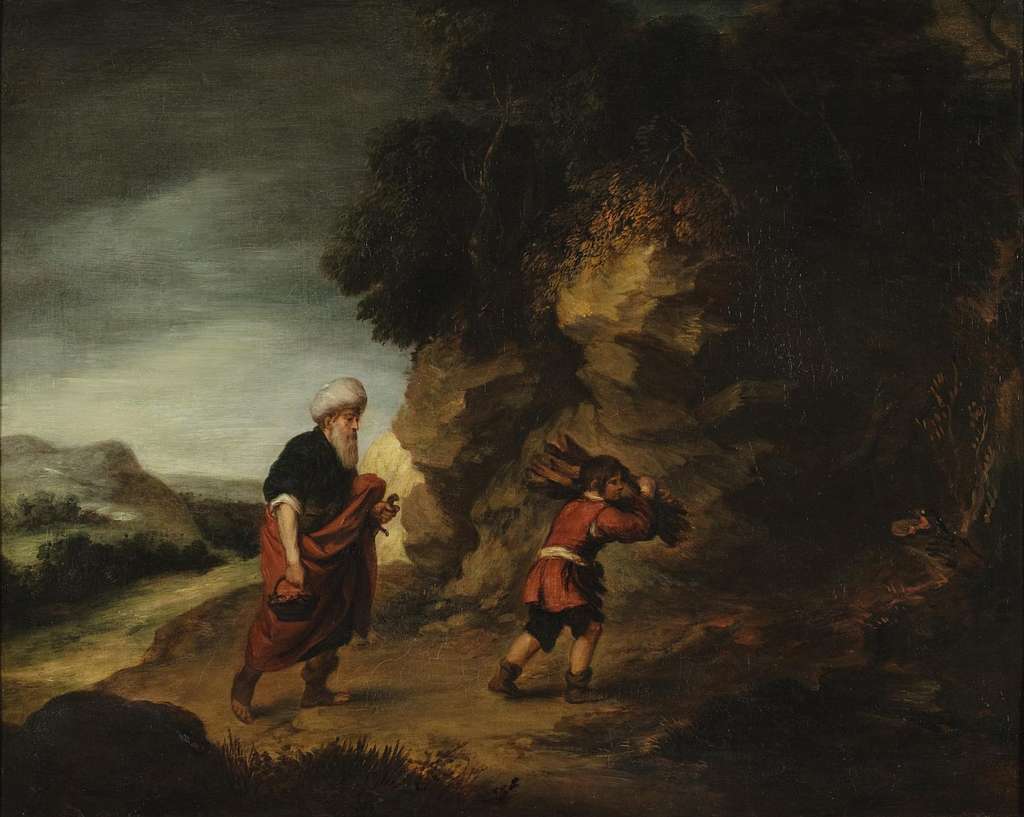
Abraham and Isaac by Gainsborough Dupont at Picryl. Public Domain.

The first time I took my driving test, my instructor said to me, ‘You’ll be all right, just so long as you don’t get Mr McRea as your examiner.’

You can imagine who I got. My left foot kept shaking on the clutch, I don’t know how many times I stalled, and my failure was a foregone conclusion from the first minute of the test.

On my second test, I didn’t fail. But neither did I pass. A quarter of a mile from the end of the test route, there was a nail in the road, and I sustained a puncture. Because I didn’t complete the route, I was given a ‘no result.’

I passed the third time. And on the basis of how that test went, I think I would have passed the second time, but for that pesky nail.

‘After these things God tested Abraham’ (verse 1a)

But what a test this was. When I became a father later in life than most (but nothing like as late as Abraham), this story changed from a Sunday School episode to a distressing narrative. How could you ask a parent to do this? What trauma did it leave in Isaac?

And those who hate our faith love to point to Bible stories like this one to say, look at what a cruel God your Scriptures describe. Do you really want us to believe in a God like this?

So come with me as we wrestle with this disturbing but profound passage. Abraham’s test of faith can illuminate our faith.

I’m going to divide this into three sections: speech, action, and provision.

Firstly, speech:
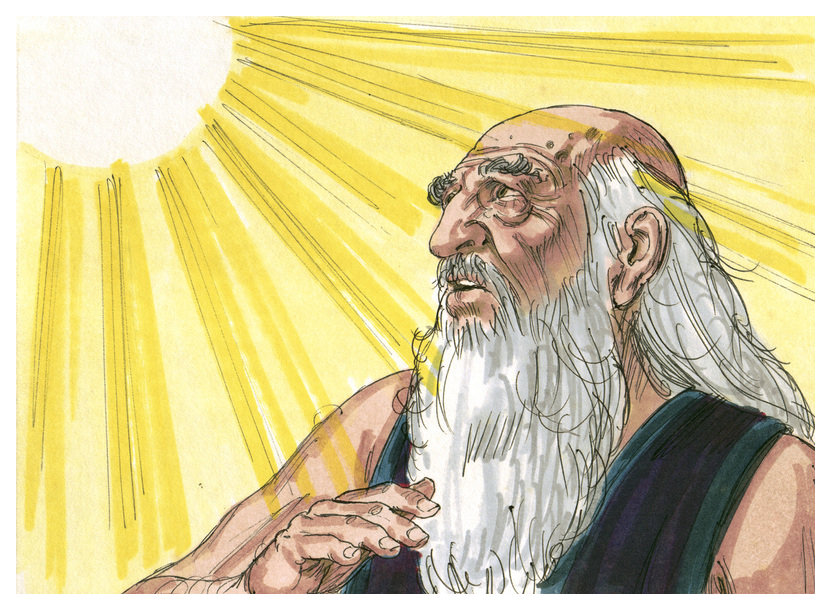
File:Book of Genesis Chapter 22-1 (Bible Illustrations by Sweet Media).jpg – Wikimedia Commons CC 3.0

God speaks to Abraham and gives him this shattering assignment. Sacrifice Isaac, your son of the promise.

If somebody came to me today and said they believed God had called them to sacrifice one of their children, I would doubt whether they had heard God. Why would I say that now, and yet also maintain that Abraham did hear God?

The most important way in which we test whether a claim to hear God’s voice is true is by measuring it against what we know about the general will of God. Our basic plumbline for that is the Bible. Nothing beyond and outside the Bible has quite the same status, because it concludes where it does due to the supremacy of Christ.

In this case, we know from the story of Scripture that God is opposed to child sacrifice. Indeed, when the Israelites enter the Promised Land, one of the reasons he wants them to remove the existing people is that they practice child sacrifice, and it is an abomination to him.

So why not here? Because at this point, God has not yet revealed that. Abraham doesn’t have that particular yardstick to measure against. Now as we know with hindsight, God will ensure the child sacrifice doesn’t happen here, but at this juncture in history Abraham has no grounds to rule it out. He has heard God speak. Somehow, he gets himself together to respond.

There are many things we shall consider when we are wondering whether God has truly spoken to us, and especially if it is something surprising or unusual. There are some Christians who seem to think that the wackier it is, the more likely it is to be of God. And there are others who take the opposite view.

But we shall come back to the big ones. What is the advice and experience of wise Christians? Do the circumstances point us in a particular direction? What does careful reflection and thought tell us? Who does this promote: me or the kingdom of God?

And most of all, is this consistent with what we know about the character of God from Holy Scripture?

You have all heard a lot about scammers on the Internet. One way in which they try to trick people and exploit them is by seeking to make them panic and make rushed decisions. ‘You must phone this number now’ – but it takes you to more criminals. The standard advice is to take your time if you are not at all sure.

I think it is similar with discerning the speech of God. God will not pressurise you and panic you into a hasty decision that you will later regret. Because he is full of grace, he will not be worried if you seek to test whether you have heard him speak. It is only other forces that will aim to frighten you and unnerve you.

Secondly, action:

Day Of Service by Saint Joseph’s University on Flickr. CC 2.0

Abraham acts on what he has heard God say.

It’s easy to say that but think what is behind Abraham’s action. Think of the cost, and the possible confusion.

Isaac is the child or the promise. God had previously promised Abraham and Sarah in their old age that they, despite being decades past their fertile years, would have a son. And not only that, God was going to make their descendants as numerous as the stars in the sky and the sand on the seashore. So why would God now call for that same child, by now probably a teenager[1], to be killed? Doesn’t it go against all that God has revealed as his plan, not only for Abraham’s family but also for his purposes for the world?

And how would it hit him personally? As I said in the introduction, I became a father at a later age than many – although nothing like as late as Abraham! I am sure that most family and friends had thought it was seriously possible that I would neither marry nor become a parent. One of my nephews has David as a middle name, and I’ve always wondered if that was a kind gesture in case I never had children of my own. Were I to be asked to give up one or both of my children, I would become a human wreck. So what might Abraham have felt? We are not told.

But we are told he still acts in obedience to God’s voice. And that is the sign of faith: when God speaks, we respond with the appropriate action.

An awful lot of Christians seem to get worried about not knowing God’s will for their lives. Yet the truth is, he has already given all of us a lot to be getting on with. It’s just that we find some of it, such as much of the teaching of Jesus, too challenging for our liking!

It was Mark Twain who said, it’s not the parts of the Bible that I don’t understand that trouble me: it’s the parts that I do understand that worry me.

I wonder whether some of us ought to take seriously the fact that God has indeed spoken to us, and that we need to respond. It doesn’t have to be something dramatic and life-changing. It may simply be a challenge about how we conduct our daily lives.

We have read the Scriptures. We have heard them read and expounded on Sundays, and maybe in Bible studies too. I don’t think God is half as silent as we claim he is. I suspect he has already spoken quite a lot to us and has given us plenty to be getting on with. We now need to respond in faith by our actions.

Thirdly and finally, provision:
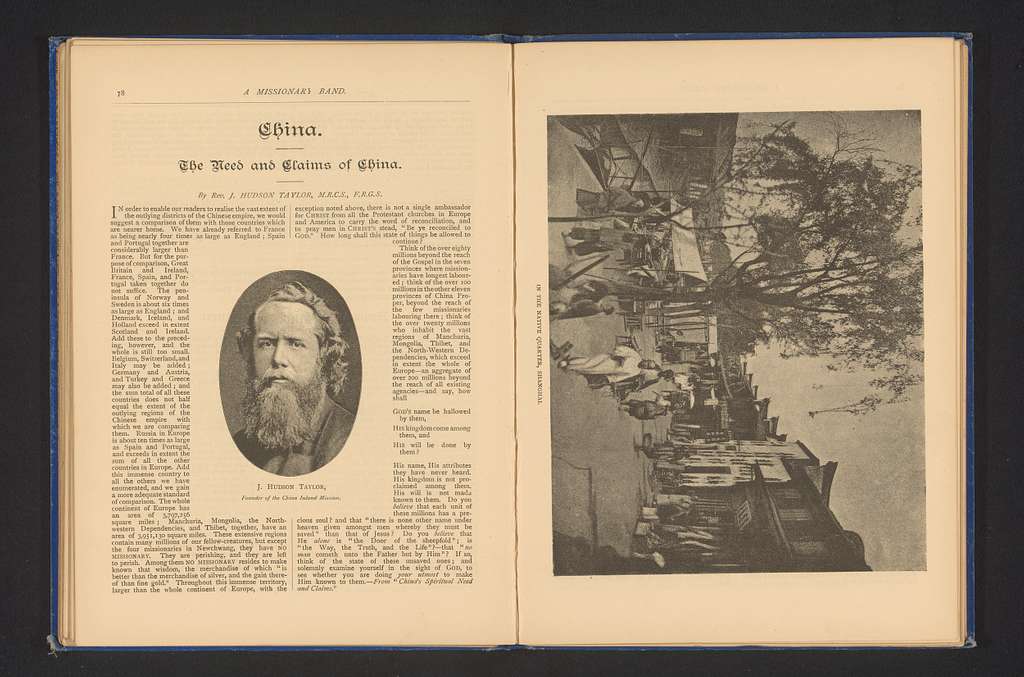
J Hudson Taylor. Photomechanical print at Picryl. Public Domain

Here we get onto the question of the lamb. Isaac asks where the lamb for the burnt-offering is. Abraham replies that God will supply one – although at that point, he is thinking that Isaac is the lamb. Then, when the angel of the Lord calls a halt to the sacrifice, Abraham sees a lamb caught in a thicket by its thorns. God has indeed provided.

Christians of course give a further layer of meaning to this. God will supply his own Son as the Lamb of God to be the offering for the world. But even without that, this is an important truth to remember in the life of faith. When God speaks and calls us to action, he will provide what we need. Speech leads to action leads to provision. This is the natural sequence in the life of faith.

James Hudson Taylor was a pioneer Christian missionary to China in the nineteenth century. He faced many challenges and discouragements in such a huge task. He lost his first wife Maria to cholera. Several children died in infancy. He lived with chronic depression.

His work meant he endured persecution from local authorities, bandits, and warlords during both the Taiping Rebellion and the Boxer Rebellion. He faced language difficulties and a harsh climate. Established organisations criticised him for adopting traditional Chinese dress. Some workers deserted him, because progress was slow.

And with no guaranteed income, he and his colleagues had barely enough money to survive.

But in that context, he wrote these famous words:

Depend on it. God’s work done in God’s way will never lack God’s supply. He is too wise a God to frustrate His purposes for lack of funds, and He can just as easily supply them ahead of time as afterwards, and He much prefers doing so.

Again, there is the pattern: speech leads to action leads to provision. And that’s the challenge. If we have heard God speak, we are called into action, while believing God will provide. That’s often the point at which we are most tested. Will we believe that God will provide for us, so that we can act in response to his challenging word?

I have seen it go both ways. I saw a youth ministry that needed to hire larger premises, which were outside its budget. But they believed God was stretching them, and that God would provide. When they said yes to hiring the new place, a Christian businessman in the town stepped forward with the funding.

But I have also seen a church that wanted to find new ways forward. It engaged a Christian architect. He presented exciting plans that would have given them new opportunities. The church was excited, too. Until it heard the cost. And then all the energy drained away. They acted as if the provision all depended on them, and not their Lord.

So which way will we go? Have we heard God speak? Are we preparing for action? Will we believe in his provision?

Conclusion

There’s a coda to this story. We shouldn’t really finish at verse 14, as the Lectionary dictates. The natural break is at verse 19. In the verses we didn’t read, God re-emphasises his purposes for Abraham and his descendants, and his settled will to bless them so that all the nations of the world will also be blessed.

God promises his blessing when in faith we hear him speak, launch into action, and trust him to provide.

Who would like to see God’s greater blessing on this church? Because this is the way.  


[1] John Goldingay, Genesis (Baker Commentary on the Old Testament), p347.

Breaking Barriers to Faith in Jesus in our Friends, John 6:35, 41-51 (Ordinary 19 Year B)

John 6:35, 41-51

When I started school, it was quickly apparent that I had an aptitude for Maths. Doing sums, learning my tables and all that came naturally to me. I just seemed to understand it.

But what I couldn’t understand was why the other children in my class didn’t get it. In my young naïveté I thought that what was natural to me was normal for everyone.

It took me a long time to realise that Maths is a ‘Marmite subject.’ To me, there is a beauty and an elegance to numbers, and I am of course immensely proud that this is what our son is studying at university. But now I realise that others don’t have that same flair – although they have talents I can only dream of possessing.

Nevertheless, for all the ways in which as adults we understand that people have different gifts, we still hit those moments in our lives when we feel like banging our head against a brick wall when we can’t get someone to understand something that it as clear as daylight to us.

And in our reading, Jesus knows that the members of the crowd are like that when it comes to spiritual matters. They ask the wrong questions, betraying their wrong desires, because they just don’t ‘get’ the life of the Spirit.

But rather than getting frustrated, Jesus knows what the blockages are. He knows that their grumbling (verse 41) and their failure to understand that he is so much more than the son of Joseph and Mary (verse 42) betrays the truth that they have no spiritual life.

But he knows how people come into the life of the Spirit, and we can be grateful that he explains it to us, because that’s what today’s reading is mainly about. So when we encounter friends and family members who seem to be caught in a spiritual log jam, not understanding what we desperately want them to know, the insights of Jesus here can help us.

The first requirement of the spiritual life is to be drawn by the Father.

Jesus says,

44 ‘No one can come to me unless the Father who sent me draws them, and I will raise them up at the last day.

Nobody can come to faith in Jesus unless God the Father first draws them.

Does this mean that God only draws certain people, and leaves others to damnation, as John Calvin believed? No. It simply means that the initiative rests with God. Coming to faith is not a mere human act. We cannot know God unless God first reveals himself to us.

Why is that? Because we are cut off from him by sin. Our sinful nature and our sinful actions are a barrier between us and God. Because of them, we can never reach him on our own. We can never stand in his presence of our own right, because we cannot and do not match his perfection.

Thankfully, God has always reached out first to humankind. He sent patriarchs, judges, prophets, and finally his only begotten Son, who bridged the chasm between heaven and us by being both fully human and completely divine, and by dying for our sins on the Cross.

So where does that leave us when we have unbelieving friends and relatives? The answer is that it takes us to the place of prayer. No breakthrough happens in the spiritual life except it be underpinned by prayer. Don’t worry in the first instances about how you are going to convince your loved one about Jesus – although it is always good to be prepared with an explanation for the hope we have in us, as the Apostle Peter said (1 Peter 3:15).

Leave the arguments aside at this point. If life in the Spirit requires God to make the first move towards someone, then the application for us is to pray that he will indeed do that in the life of the person for whom we are praying. Let it be our prayer that God will reveal himself to him or her. Let us make that a simple daily prayer: ‘Lord, reveal yourself to [name].’

But be prepared to be in it for the long haul. The spiritual breakthrough may take years. In today’s climate where there is much ignorance and rejection of Christian faith, there may be a lot of barriers for God to break down in order to make himself known to those we love. Someone recently described our task today as what he called ‘low tide evangelism.’ The tide is a long way out, and for the waters of the Spirit to be back on the beach, lapping over those there, will take longer.

So be willing to be persistent. Be resilient in prayer. Be disciplined in regularly praying that simple prayer for God to reveal himself to those you care about.

The second requirement of the spiritual life is to hear the Father.

Jesus says,

45 It is written in the Prophets: “They will all be taught by God.” Everyone who has heard the Father and learned from him comes to me.

God revealing himself to people will involve him speaking to them. He speaks so that there can be a response. God makes himself known, but then makes clear what needs to happen.

When I look back at my own coming to faith, I see something like this. I grew up in the church, but I mistakenly imbibed what we call a ‘legalistic’ view of religion. That is, I thought Christianity was about keeping the rules and being good – never realising that no-one could be good enough and we needed the Cross of Christ.  God showed up in my life at a confirmation class, where the promises and professions of faith in the 1975 Methodist Service Book spoke to me about what was required. That was the point at which faith in Jesus came alive in me.

There are more dramatic stories of God revealing himself and then speaking to people. Some of them come from the Muslim world, where it can be virtually impossible for Christians to speak openly about their faith to Muslims, because they would be arrested, tortured, and executed. Yet there is story upon story coming out of that context of Muslims on a spiritual search who find that Jesus appears to them in a dream, and he shows himself to be the answer to all their yearnings, and so much more than the prophet that the Qu’ran says he is.

For most people, of course, it doesn’t tend to be that intense, it’s more often a quieter experience. But at the heart of it is God revealing himself and speaking to people. In a church context, it may be through a preacher’s words in a sermon. It may be that God uses a conversation with a Christian friend. But one way or another, entry to the life of the Spirit requires that God both shows up in someone’s life and then speaks to them, so that they know how to respond.

What is the application for us here? For one, it stretches out that regular, disciplined praying I have already commended for the ones we love who don’t yet share our faith. Our prayer becomes not only ‘Lord, reveal yourself to [name]’ but, ‘Lord, reveal yourself to [name] and speak to them.’

It’s also about praying that our lives will speak of Christ. Some years ago at a conference, I heard a pastor speak about a lady who came to faith in Christ and joined his church. Her husband didn’t believe, and so she took to leaving out Christian literature on the coffee table, pointing out the Christian actors in TV shows, and incessantly playing Cliff Richard CDs.

It drove the husband mad, and he actually went to see the pastor to ask if he could do something about his wife.

So the pastor spoke to the wife and urged her to lay aside her rather manipulative approach. ‘Let your life speak of Christ,’ he advised her. ‘Ask yourself how Jesus would treat your husband, and do that.’

A while later, the husband asked to see the pastor again. ‘What did you say to my wife?’ The pastor explained.

‘That’s a Jesus I’d like to get to know,’ said the husband.

Only after these first two requirements of God revealing himself and speaking comes the third requirement, which is to believe in Jesus.

Jesus says,

46 No one has seen the Father except the one who is from God; only he has seen the Father. 47 Very truly I tell you, the one who believes has eternal life.

Jesus is the One sent by the Father. Jesus is the only One who has seen the Father. If we want to know what the Father is like, we look at Jesus. He makes him known. Hence why it’s Jesus who appears in these dreams of Muslims that I mentioned.

And therefore, the appropriate response to the Father’s revelation and speech is to believe in Jesus.

But what does that involve? It’s not simply believing in Jesus’ existence. The crowd believed he existed!

This is where all the talk of Jesus being ‘The bread of life’ (verse 48), ‘The bread that comes down from heaven’ in contrast to the manna in the wilderness’ (verses 49-50), and ‘The living bread that came down from heaven’ (verse 51) comes in.

For just as we need physical bread to sustain mortal life, so we need ‘The bread of life’ to sustain eternal life. It is Jesus, and the gift of his life, that sustains us spiritually.

All this comes down to being in relationship with Jesus. It means talking with him. We call that prayer. It means listening to what he has to say to us, certainly in the dialogue of prayer but supremely in the Scriptures. It means doing what he asks of us, because we want to please him. Just as Jesus himself told the tempter in the wilderness that we do not live by bread alone but by every word that proceeds from the mouth of God, so, because Jesus himself is divine, we are sustained by his words.

So, what does this mean in terms of our praying for our friends and family members who do not yet know Jesus? Alongside praying that God will reveal himself to them and speak to them, we pray that they may be so captivated by Jesus that they want to enter into a lifetime – well, eternal, actually – relationship with him.

We do not content ourselves with explaining things away by saying, oh, they may not believe but they are good people with good values. That doesn’t bring eternal life. Sure, we may be proud of some of their achievements, but the bottom line is faith in Jesus.

And yes, that may well make some of our praying painful to us. I can’t pretend otherwise. That’s true for me in my praying for others. But Jesus gave his life that we may have eternal life with him – not just when we die, but as a quality of life now, even in the midst of this mortal life. If Jesus was willing to do that, surely we can bear some pain in prayer?

Surely, if we are motivated by God’s love for our friends and relatives, we shall pray for God to reveal himself to them, for God to speak to them, and we shall pray with passion that they may have such an encounter with Jesus that they want to follow him.

Would anything less really be love?

Create a website or blog at WordPress.com

Up ↑