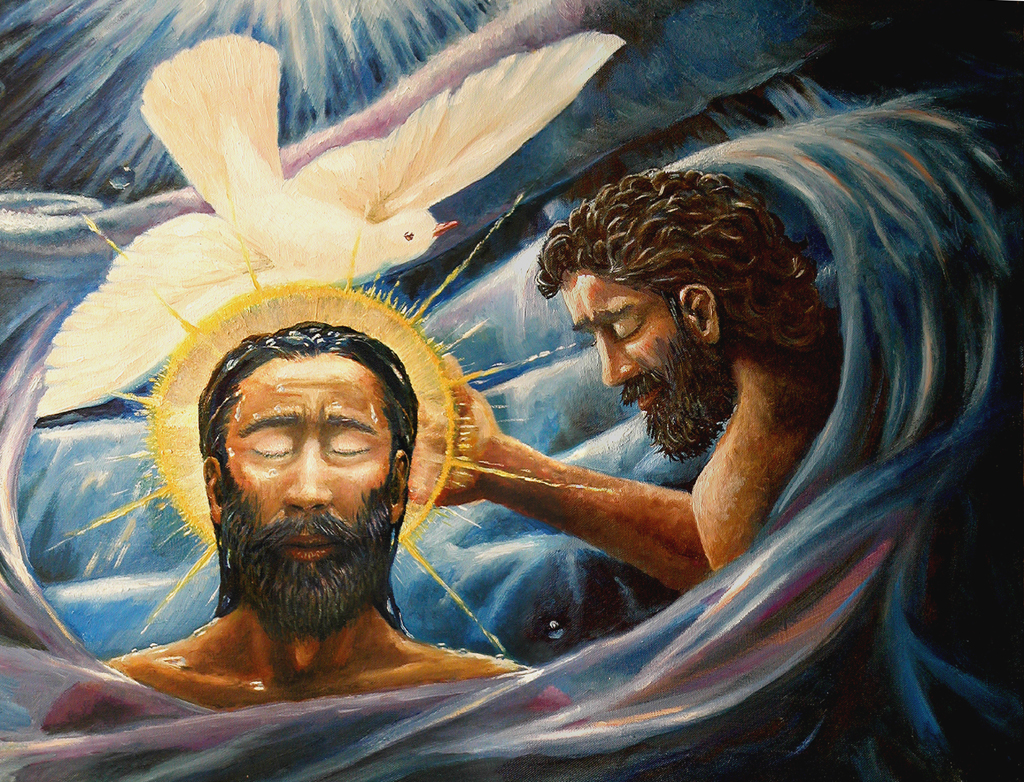
Worship In The Midst Of The World (Isaiah 6)

Isaiah 6:1-13

I expect you’re aware of the custom whereby just before the Sunday service starts, the duty steward prays for the preacher in the vestry. Over the years, I have heard a variety of such prayers, the worst being one Good Friday where in his prayer the steward called the death of Jesus a mistake.

But another common one starts something like this: “Dear Lord, we gather here today to leave the world outside behind and concentrate on you.” Now I guess that could be interpreted more than one way. But is our worship really an escape from the world?

In the year that King Uzziah died, I saw the Lord (verse 1a).

Is that just a date in Isaiah’s diary? I don’t think so. If all he wanted to tell us was the day on which he had a powerful experience of worship and commissioning, he would surely just have named the month and the day of the month. ‘On the twenty-third day of Nisan,’ or something like that.

No. Locating his divine encounter as happening ‘In the year that King Uzziah died,’ Isaiah affirms that worship takes place in the middle of what is happening in the world. The events of history do not drive our worship, for sure, but worship is located in the midst of politics, economics, and every power that competes to shape our lives.

What does this worship look like?

Firstly, glory:

In the year that King Uzziah died, I saw the Lord, high and exalted, seated on a throne; and the train of his robe filled the temple. 2 Above him were seraphim, each with six wings: with two wings they covered their faces, with two they covered their feet, and with two they were flying. 3 And they were calling to one another:

‘Holy, holy, holy is the Lord Almighty;
    the whole earth is full of his glory.’

4 At the sound of their voices the doorposts and thresholds shook and the temple was filled with smoke.

I once arrived at a church as a visiting preacher and was greeted by a member of the congregation who said, “I hope you’re going to entertain us today.” This brought out my Mister Grump side, and I replied, “Well, I hope we’re going to worship.”

We must get rid of this idea that worship is entertainment. It is a prominent heresy across all sorts of Christian traditions and worship styles. Worship is to give glory to the triune God, who is holy, holy, holy. We are here to honour his name and to give thanks for all he has done. Worship is God-centred or it is not worship at all.

Archbishop William Temple gave a famous definition of worship:

Worship is the submission of all of our nature to God. It is the quickening of the conscience by his holiness; the nourishment of mind with his truth; the purifying of imagination by his beauty; the opening of the heart to his love; the surrender of will to his purpose–all this gathered up in adoration, the most selfless emotion of which our nature is capable.[i]

None of this is an escape from the world, for God is the greatest reality there is. Moreover, as the Creator of this world and its Redeemer, God is where our focus needs to be, without having an escapist mentality.

So while it’s not true to say that ‘the world sets the agenda’ – that was one of the heresies from liberals at the World Council of Churches – it is true that we come to focus our energies on God, who created the world we live in through Christ and by the Spirit, and who also redeems the world through Christ and in the power of the Spirit.

Secondly, confession:

5 ‘Woe to me!’ I cried. ‘I am ruined! For I am a man of unclean lips, and I live among a people of unclean lips, and my eyes have seen the King, the Lord Almighty.’

6 Then one of the seraphim flew to me with a live coal in his hand, which he had taken with tongs from the altar. 7 With it he touched my mouth and said, ‘See, this has touched your lips; your guilt is taken away and your sin atoned for.’

If we truly encounter the living God in his glory in worship, then we shall realise quickly that we do not match up. That’s what Isaiah realises, and not only for himself. He admits not only his personal sin, but the sin of the nation. A true encounter with God will blow away once and for all the idea that we’re all good, decent people who merely make the occasional error in life. It will relieve us of the comfortable illusion that we are good enough for eternal life.

Furthermore, here our lives are calibrated not by the popular standards of the world but by God and his holiness alone.

Initially, this leaves Isaiah with a sense of hopelessness. He cannot get beyond ‘Woe is me! I am ruined!’ That’s desperate.

But God can get beyond it. A seraph brings a live coal from the altar, the place of sacrifice. It is God who provides for Isaiah and God’s people to know forgiveness and the removal of their sin.

If you remember the painful story in Genesis where God asks Abraham to sacrifice Isaac, you may recall how Isaac asks his father who will provide the lamb for the sacrifice. Abraham replies that God will provide the lamb. And he does – mercifully not in the way he was expecting.

Ultimately, we believe that is what God supremely did with Jesus at the Cross. The Lamb of God was provided. Now our sins are removed as we confess them. They have already been atoned for at Calvary.

The regularity of our failure is why we confess and receive assurance of forgiveness in every Sunday service. It is God’s free gift. We have not earned it. God has reached out in love to the world at the Cross. Will we look at the worldly horror of the Cross and allow it to cleanse and transform us?

Thirdly, God’s word:

Then I heard the voice of the Lord saying, ‘Whom shall I send? And who will go for us?’

Following confession and forgiveness, the way is clear for us to hear God’s word. That’s why the reading of Scripture and the preaching come next in a typical Sunday service, by the way.

There’s no reading of Scripture in the Temple for Isaiah. It’s questionable what, if anything, they had in written form at this point – not much, for sure. But in any case, God speaks directly on this occasion.

If we are to be worshippers in the midst of the world, we need to hear God’s marching instructions to us. ‘Whom shall I send? And who will go for us?’

Therefore, the reading and proclaiming of the word is to have an honoured and central place in our worship. It is not that with a variety of preachers we get to hear a whole host of different opinions, because the job of the preacher is not to foist their sentiments or even prejudices on the congregation; it is rather to proclaim what the Word of God says.

Therefore, there is another steward’s vestry prayer that both encourages me for its meaning but also humbles me by reminding me of the expectation on my task. It is when the steward prays that the congregation may hear your word through me. That is profoundly sobering!

This is not to say that a congregation should be uncritical of what the preacher says, although I do note the old joke which asks what the favourite Sunday lunch in a Christian household is. The answer is, ‘Roast preacher.’

But it is to say that we should be like the Berean Jews, whom Paul encountered on his missionary travels. In Acts 17:11 we read of them,

Now the Berean Jews were of more noble character than those in Thessalonica, for they received the message with great eagerness and examined the Scriptures every day to see if what Paul said was true.

In some old pulpits, the preacher was confronted by a small plaque. On it were the words of the Greeks who came to meet Jesus before the crucifixion, where they told the disciples, ‘Sir, we would see Jesus.’ Our prayer and aspiration for worship needs to be that we see and hear Jesus, so that we know what he is expecting of us in the world.

Fourthly and finally, response:

And I said, ‘Here am I. Send me!’ (verse 8b)

Isaiah responds to God’s word. He is willing to go into the world on behalf of his God. We learn in the subsequent verses that he can’t necessarily expect people to respond positively to what he has to say, but nevertheless someone must go, and then if there is no redemption there will be no excuse. People will not be able to say they were not warned.

How does this play out in our worship? Within the service, it comes in the intercessions, which are meant to be a response to the word. (I’m not sure they always are, but that is the theory.) If you were used to services where the sermon was the climax of the service before the final hymn and blessing, but then noticed a change, where the intercessions followed the sermon, well, this is why.

And so it’s right that in our intercessions we pray not only for ourselves and the church, but for those in power, authority, or influence. If you read the Bible carefully, you will realise that the divine commands are not limited to God’s people. You will hear prophets speaking to kings and nations and all in authority.

This is a holy task. In the early church, those who had not yet been baptised and professed faith and who were undergoing catechism classes would leave the worship before the intercessions. Why? Because intercession is a priestly task, and they were not yet part of what we later called ‘the priesthood of all believers.’ But for those of us who believe, we are acting as God’s priests when we intercede in response to the word.

But the response doesn’t stop with the end of the prayers or with the blessing at the conclusion of the service. The genuineness of our response to the word is tested by what we do when we leave. At the end of the Latin Mass, Catholics were effectively told in the liturgy, ‘The Mass is over: now go out!’

Isaiah did that. It’s our calling, too. Like him, we may or may not see success in response to our bearing God’s word to the world in word and deed. But Isaiah kept faithfully doing it in response, because to do so in the world was intrinsic to true worship. May we do the same.


[i] William Temple, Readings In St John’s Gospel, on John 4:24.

Journey To Jerusalem 4: The Gift Of Hope, Psalm 130 (Lent 5)

Psalm 130

I have childhood memories of Monty Python’s Flying Circus. Even though our parents didn’t let us watch it, I still heard enough about it. We would ape The Ministry Of Silly Walks in the playground. We recited The Five-Minute Argument. And the Dead Parrot Sketch was our holy text. One of my college friends even rewrote the latter as the Dead Church Sketch. I might still have the script somewhere.

It therefore won’t surprise you to know that Fawlty Towers features among my very favourite ever TV shows. 

And I also like to quote from one of John Cleese’s movies. Not one of the Monty Python films, nor A Fish Called Wanda, but Clockwise, in which Cleese plays the Headmaster of a minor public school, who needs to travel to the annual meeting of the Headmasters’ Conference, the organisation for public school Heads. He is up for an award there. 

But one disaster after another befalls him on the way, and at one dark point he says, ‘The despair I can cope with. It’s the hope that kills me.’

The pilgrims of ancient Israel went to the festivals at Jerusalem to find hope. Today’s psalm reflects that. The kind of hope they sought was similar to that which we seek. 

Firstly, hope for forgiveness:

1 Out of the depths I cry to you, Lord;

2     Lord, hear my voice.

Let your ears be attentive

    to my cry for mercy.

3 If you, Lord, kept a record of sins,

    Lord, who could stand?

4 But with you there is forgiveness,

    so that we can, with reverence, serve you.

If our sins are not forgiven, we have no hope. If we know we have done wrong, then we need mercy. The pilgrims would see God’s forgiveness enacted at the Temple with the sacrificial system. Here, in their culture, it was dramatically enacted that God had dealt with his people’s sins and they were forgiven. 

In the next two weeks we come to our annual remembrance of what God did decisively in Jesus to bring forgiveness. At the Cross, Jesus dies in our place, and he conquers the forces of evil. 

And we should not baulk at the New Testament idea that the forgiveness of our sins comes at a price. It is no coincidence that the Scriptures sometimes talk of this in terms of the forgiveness of debts, both in the Lord’s Prayer and in the parables of Jesus, such as the Parable of the Unforgiving Servant. If I forgive someone a debt that they owe to me, then that is a cost for me, because I absorb that. If they owe me two hundred pounds, then my forgiveness of them costs me two hundred pounds that I no longer have. The New Testament tells us that God in Christ has paid a cost that makes the forgiveness of all our debts to him possible and available. We simply receive this gift by holding out the empty hands of faith and giving our lives over to him and to his ways, not ours. 

We cannot earn this, but we can show our gratitude for receiving this extraordinary gift. As the Psalmist says in verse 4, 

4 But with you there is forgiveness,

    so that we can, with reverence, serve you.

It is by serving God that we live out our gratitude for the hope and new beginnings his forgiveness of our sins gives us. The call to serve in the local church is not merely to fill vacancies, even if it looks like that. It is to express gratitude for the hope God has filled us with. When at the Annual Meeting you hear of jobs that need filling in the church, please see it as an opportunity to express your gratitude for the hope that God’s forgiveness has given you.

And similarly in the community. When an opening arises, this is a way to show gratitude for the hope of forgiveness. We might not see things quite the way Martin Luther did when he said that if there were a vacancy for the post of village hangman the conscientious Christian should apply, but there will be other more palatable possibilities! 

Secondly, hope for life:

5 I wait for the Lord, my whole being waits,

    and in his word I put my hope.

6 I wait for the Lord

    more than watchmen wait for the morning,

    more than watchmen wait for the morning.

People need hope in the sense of having purpose and fulfilment in life. It’s the way God made us. When that doesn’t exist, something is wrong, usually to do with the brokenness of the world God desires to mend and redeem. 

So something like long-term sickness may affect our sense of hope. I read the regular writings of an author named Tanya Marlow, who was once a theological lecturer, but who contracted ME following the birth of her child, and now can rarely get out of bed. If she does so, it’s probably in a wheelchair, and she pays for it in the following days. She writes movingly and passionately on disability issues and has pointed out that the latest Government benefit savings will not always get more people back to work, because many of those receiving them have no chance medically of ever working again. What will that do to their hope?

Or maybe the existence of sin is what suffocates hope in life. To take a personal example, some people naively say to me, ‘Oh, your work must be very rewarding and fulfilling.’ Well, sometimes it is, but there are other times when the hope is sucked out of me. High upon my list of hope-sucking events have been those times when I have done something that one of my chief detractors in a church didn’t like, and the next thing I knew, I was facing an entirely fabricated Safeguarding accusation. 

Around one such season in my life, I bumped into a friend from the local Anglican church outside the village Co-Op. For a year or so, our children had been at the same school. Asking her what she was doing now, she told me she had left the teaching profession to train in a therapy that made a significant difference in the lives of children and teenagers who were neurodivergent, or who had conditions like cerebral palsy. Now qualified, she had set up her own practice, and saw transformative change in the lives of young people. She told me how richly rewarding this was. While I was delighted for her that God had done something special in her life, my own heart ached. 

Some of us, then, find hope and fulfilment in this life; others of us wait, like the Psalmist did. We rejoice in those who find that God makes their lives worthwhile and rewarding. For those who wait, we believe that God is present in the waiting. We know that ‘hope deferred makes the heart sick’, as Proverbs 13:12 says, and we stand with those who endure such sickness. We believe too that God is present in the cries for justice where sin stands in the way of fulfilled hope. 

Thirdly and finally, hope for the world:

7 Israel, put your hope in the Lord,

    for with the Lord is unfailing love

    and with him is full redemption.

8 He himself will redeem Israel

    from all their sins.

What has all this stuff about Israel being forgiven got to do with hope for the world? Simply this: God chose Israel in order to bless the world. Israel’s so called ‘election’ was not a matter of Israel being saved and others not, but of God working through Israel to bring his salvation to the whole world. If Israel is to be renewed, as the Psalmist here prays, then the consequence is not an in-house bless-up, but blessing that spreads to the world. 

It follows that God’s plans for his people, the Church, are similar. We are a channel for God to bless the nations. The renewal of the church matters, not for our own sakes, but so that God’s mission of blessing all creation may move forward. 

I belong to a network that speaks of ‘local churches changing nations.’ I also support the relief and development charity Tear Fund, which speaks of ‘transforming communities through the local church.’ Here’s what Tear Fund says on the subject: 

Extreme poverty impacts every aspect of a person’s life, devastating families, destroying local businesses, and draining communities of their resources and hope. This overwhelming reality is not God’s plan for our world.

We work through the local church in the world’s poorest countries because they know their communities best. The local church is best placed to recognise challenges and release people’s God-given potential to overcome them.

Transforming Communities is not about giving short-term aid. We train local churches to identify the resources they already have so that they can develop lasting solutions to the problem of poverty. This approach supports communities to rewrite their own stories and build a future filled with hope and opportunity.

How do they do this? Not only do they stand against poverty and hunger, they run programmes to restore broken relationships, support local businesses, and support challenges to injustice. 

We have a part to play in this as the church, too. Not only do we do so by supporting God’s work of hope among the poor, we have a calling to bring God’s hope to our neighbourhoods and community, too. It is fundamental to our calling that God has put us here to bring his blessing and hope to our town. 

It goes without saying that there are already ways in which we are doing that here. I believe that if this church were to close, the town would notice. And I can’t say that of every church, sadly. 

But that doesn’t stop the fact that we are always called to seek the spiritual renewal of the church, so that she may continue to grow in her destiny of blessing the world in Jesus’ name. Let us be grateful for where we are, but let us never be satisfied and sit back. 

Conclusion

I pray that being a part of this worshipping community is something that increases our hope:

  • That our hope in forgiveness increases our gratitude, and that we show that by finding new ways to serve our God;
  • That our hope in life brings fulfilment to us and others, and that we stand with those for whom this is not yet true; 
  • And that our hope for the world is expressed through the ministry of the church here and across the globe, in bringing God’s blessings in Christ to all in need.

Many years ago, Amnesty International used to speak about a ‘conspiracy of hope.’ I think we can go much bigger and deeper than them with our vision of hope, don’t you think?

Love Your Enemies, Luke 6:27-38 (Ordinary 7 Year C)

Luke 6:27-38

The older I get and the longer I preach, the more I collect a list of subjects that are awkward to preach on. Prayer – because which of us can say we pray enough? Evangelism – because we know we struggle with that. Giving – because it’s often thought unseemly to talk about money.

I think I might add today’s theme to that list. Who wants to be told to love their enemies? Wouldn’t many of us rather turn up the dial on the furnaces in Hell for those who hate us and hurt us?

I may be doing some of you an injustice. Perhaps you have only serene and beatific thoughts about your enemies. But not all of us do.

I have certainly had to wrestle with this text this week. I contemplated getting out an old sermon on the passage and just modifying it. But the best one I found was tied to a particular item in the news at the time.

And so instead I bring to you the three questions that have been at the heart of my struggle to submit to the words of Jesus here this week:

Who is Jesus addressing?

Who are the enemies here?

How do we love our enemies?

Firstly, then, who is Jesus addressing?

I ask this question, because sometimes Christians want to apply Jesus’ teaching in the Sermon on the Mount (as it is in Matthew’s Gospel) or the Sermon on the Plain (as it is here in Luke) in a rather flat way to national life. They want to make the teaching of Jesus into national policy.

But that is not what Jesus is doing here. He has no vision for a Christian nation. There is no such thing, in contrast to aspirations from Christians on both the right and the left of politics. The Christian nationalists in the USA who have swung behind Donald Trump misunderstand the Gospel itself when they think they can make America more Christian by gaining political power and passing certain laws. That is legalism, not the Gospel.

And of course it’s rather awkward for some of their politics to find that the Jesus they invoke in their prayers taught some things that really don’t fit their political vision at all, not least here. They would probably dismiss this as ‘dangerous woke nonsense.’

But the Christians on the left of the political spectrum who might leap on Jesus’ teaching here and campaign for a nation state that is committed to pacifism are equally wrong. You cannot force the teaching of Jesus on those who do not bow the knee to him as Lord.

I do not say that to justify warmongering nations. Of course not! But we need to recognise that the group of people Jesus is addressing here is his disciples. When you read the Sermon the Mount or the Sermon on the Plain you realise Jesus is talking to his disciples. However, others are listening in.

Hence, in other words, Jesus addresses his followers, who together form a colony or outpost of his kingdom in the world. But others are listening in and watching us. The world will notice how we respond to the challenging teaching of Jesus, such as we find here.

So it’s important for us to get a handle on what it means to love our enemies, because the world knows that Jesus taught this, and it is watching to see how his disciples live it out. We will damage Christian witness if we ignore it, or if we explain it away.

Yes, even in these times when religion is less popular, the world is watching Christians. Just consider the damage to the Church of England caused by the safeguarding scandals lately. A recent survey showed that now only 25% of the population consider it trustworthy. For those of you who grew up thinking the church was a respected institution, please consider that.

Let’s take the challenging teaching of Jesus seriously, then. Including this ‘love your enemies’ stuff.

Secondly, who are the enemies here?

We begin to answer that by saying, it is anyone who hates us.

They may hate us for our faith. We know that millions of our brothers and sisters around the world pay a massive price for their faith, sometimes the ultimate price. In the last week, there have been reports that terrorists beheaded seventy Christians in the Democratic Republic of Congo. Not a week goes by without news of a similar atrocity or other forms of persecution against Christians appearing in my email inbox.

Our enemies may hate us, regardless of our faith. Some of the context here may well be Jesus imagining what the occupying Roman soldiers did to ordinary citizens. Yet we are not simply citizens of our nation, we are citizens of heaven, and our calling is not only to live by the laws of the land (insofar as our faith allows us) but to live by the law of God. In a properly constituted society we may wish to have recourse to the law against such people in order to protect others, but we are called to guard our hearts against hatred.

Or we may simply here be dealing with people who are not naturally in our orbit – our family, our neighbours, our colleagues, our friends, and so on. I say that, because of the way Jesus mentions giving to beggars (verse 30). We would not naturally label beggars as enemies in the conventional way. Yet Jesus calls us to show generous love to them, too.

And this example may have something to teach us about the recent public argument between JD Vance, the new American Vice-President, and Rory Stewart, the former British MP. Vance claimed,

There is a Christian concept that you love your family and then you love your neighbour, and then you love your community, and then you love your fellow citizens, and then after that, prioritize the rest of the world.

Vance seemed to imply that love of people further from us, especially around the world, came a distant last, and he based it on the Catholic concept of ‘ordo amoris’, which says there is an order or sequence of who you love. He probably misrepresented Catholic teaching, and Rory Stewart fired back at him, accusing him of a ‘bizarre take’ on the Bible, which was ‘less Christian and more pagan tribal’. Heaven only knows where Mr Vance would put loving your enemies. A distant last, at a guess. It may be natural and easiest to love those who are nearest to us first, but Jesus upends so many social conventions, and we need to listen to him.

Thirdly, how do we love our enemies?

Jesus sets out the range of what he calls us to do in verses 27 and 28, before he gives any specific examples:

27 ‘But I say to you that listen, Love your enemies, do good to those who hate you, 28bless those who curse you, pray for those who abuse you.

How do we do this? I just want to give you a few examples.

In one town where I served, a bookshop in the High Street began overtly promoting occult books and practices associated with them. Many Christians faced with such a situation would have defaulted into aggressive protest mode. They would have organised petitions and boycotts and maybe contacted the local media. They might have requested a meeting with the manager and angrily demanded the withdrawal of the books. They might have gone on a prayer march and cast out demons.

But not the group of Christians who discovered this incident. They turned to prayer, but not of the angry kind. Instead, they prayed that the bookshop would be blessed. If the bookshop were blessed, they might not need to resort to promoting spiritual darkness.

These Christians had been influenced by a preacher who once said, ‘In the celestial poker game a hand of blessings always outranks a hand of curses.’

Or take the experience of one of my relatives many years ago. He was dating the girl who would later become his wife. However, his girlfriend’s mother disapproved of him. He wasn’t good enough for her daughter, in her opinion. His job did not rank as highly professionally, and he was less educated than the girlfriend.

My relative shared his frustrations about this with a friend at church. And his friend made a suggestion.

‘When you leave your girlfriend’s house each evening, say ‘God bless you’ to her mother. You won’t be able to feel mean towards someone you are blessing.’

My relative bristled at the idea. But he tried it – starting by saying it through gritted teeth. But eventually – it worked. Blessing changes relationships for the better.

One last story: one year while I was training for the ministry in Manchester, a married student and his wife invited me (still single then) to their flat to celebrate my birthday. My birthday meal? Beans on toast!

My friends offered to call a taxi for me to get home, but I declined and chose to walk back.

Big mistake. For on the journey back to the hall of residence a teenage thug mugged me, breaking my glasses and causing minor damage to my eyes.

Another student, himself a former solicitor, took me to the police station and stayed with me while I was interviewed and made a statement.

While I am sure this teenage thug was known in the locality, no-one was ever arrested.

However, people asked me what I would have done if the criminal had been. Would I, as a Christian who believed in and preached forgiveness, have pressed charges?

My answer was that provided I was sure no hatred remained in my heart towards the mugger, then yes, I would consent to the laying of charges. For me – and you may see this differently – this held together both the call to love and forgive my enemy and the need to uphold justice and protect other members of the public.

Conclusion

There may be one final question nagging in our minds: why should we love our enemies?

Because, says Jesus, this is what God is like. As he puts it:

Your reward will be great, and you will be children of the Most High; for he is kind to the ungrateful and the wicked. 36Be merciful, just as your Father is merciful.

We have been brought into the kingdom of God by divine mercy towards us who were his enemies due to sin. Yet God still loved us, his enemies, to the point of his Son dying on the Cross.

If we are to respond in gratitude and imitate our Saviour, then we too shall learn to show practical love to our enemies.

The Good News Covenant, Luke 4:14-21 (Ordinary 3 Epiphany 3)

No video this week: on Friday afternoon, while working on this sermon, a workman’s van crashed into our kitchen wall, causing structural damage to our manse.

No-one was hurt. But it does mean I’ve got behind. Anyway, here’s the text of this week’s sermon.

Luke 4:14-21

How did you hear about the assassination of John F Kennedy in November 1963? I am too young to remember how we heard the news in the UK, but I imagine people heard on the next available TV news bulletin. 

But I do know how I heard about the death of Princess Diana in August 1997. I came downstairs that Sunday morning, and as was my habit I turned on the BBC breakfast news. There was the rolling coverage provided by 24-hour news services. 

And I remember how I heard about the death of the Queen in 2023. Debbie and I were sitting in a branch of Pizza Express, waiting for a meal before going to a concert. A news alert flashed up on my phone. 

How did people hear major news in the Roman Empire two thousand years ago? A messenger would come to their town or village and make a public announcement, probably in somewhere like the marketplace. I guess they were a little bit like town criers. They would tell the people that there was a new Emperor on the throne in Rome, or that Rome’s legions had won a great victory against an enemy.

And do you know what they called their proclamations? You do. ‘Good News.’

So when the New Testament speaks about Good News it takes over this model and gives it a refit according to the life and ministry of Jesus. It would be something like this:

‘Good News! There is a new king on the throne of the universe. His name is Jesus. He has conquered sin and death not with violence but by his own suffering love and death. And God has vindicated him by raising him from the dead.’

Jesus speaks of ‘Good News’ in Luke 4, and – to state the obvious – he is by definition doing so before his death and resurrection. But he is telling his hearers about the nature of the kingdom he is inaugurating, including what it is like to live under his reign and by implication what it requires of its citizens. 

Therefore, what we are considering today is both the offer Jesus makes to us by his grace and the call he makes on us in response. 

Firstly, good news to the poor:

I find that Christians go into battle with each other on this one. What is good news to the poor? Is it that we evangelise them? Or is it that we campaign politically for them? 

I think the answer is ‘yes.’ In other words, I don’t see this as an either/or choice.

But we need to understand who people in Jesus’ world would have understood as ‘the poor.’ Certainly, it included the economically poor, but it also it also included those who had no status or honour in society. So we’re not only talking about the destitute, we’re talking about women, children, lepers, Gentiles, prostitutes, and so on. 

And by making a list like that, you will I am sure be saying to yourself, that sounds pretty much like the main constituency Jesus served. He brought the Good News that there was a new king on the throne of the universe to these people, and they welcomed it. This king was for them. They could be citizens of his kingdom. God’s love was offered freely to them in word and deed by Jesus, and they too could enter the kingdom by repentance and faith, just like anyone else. 

The early church clearly followed up on this. When Paul writes to the Corinthians, he observes that not many of them were of high rank. And after the apostolic age, we find former slaves becoming bishops in the church. 

For John Wesley, it all kicked off on 1st April 1739, when, at the urging of George Whitefield, he preached for the first time in the open air to the miners of Kingswood, between Bath and Bristol. The Good News was for them, he realised. And he would later become concerned about their social needs as well. 

If we are to take the mission of God seriously today, we must put this front and centre, because Jesus did. Yet in this country, church historians say that the Christian church has not seriously taken the Gospel to the poor since the Industrial Revolution. John Wesley was probably the last person to do this on a significant scale. 

I am not saying that we are doing nothing in this respect. I am sure some of the people who come to ‘Connect’ fall into the categories I am talking about. As we give a welcome and acceptance to them, we need to find the right ways and times to share the Good News with them. 

And I am aware that this town is very much divided into two halves. But at the same time, it is a town with Marks and Spencer’s at one end and Waitrose at the other. This is the only church I have served where the hand gel provided to the minister before handling bread and wine at communion comes from M and S! 

So allow me to flag this up, because in this area it would be easy for us to lose sight of this important strand of Jesus’ teaching. There are few things more dangerous for Christians than getting comfortable. 

Secondly, freedom for the prisoners and recovery of sight for the blind:

What did Jesus mean by quoting this from Isaiah? Clearly, ‘freedom for the prisoners’ didn’t mean he went around the jails of Palestine opening prison doors and letting the convicts out. It has more to do with him pronouncing freedom from the guilt of sin in the offer of forgiveness, freedom from the power of sin in his casting out of demons, and freedom from being sinned against by standing for justice and also enabling people to forgive wrongdoers. 

Recovery of sight for the blind is a little more straightforward, given the healing miracles Jesus performed. 

But a lot of that might sound a little distant to us. The church limits the number of people who exercise a deliverance ministry because it needs all sorts of safeguards and protections built in. Most of us don’t have a healing ministry, either. I only know for sure of two occasions in my life when I have prayed for someone to be healed and they were. Not that I want to discourage anyone from praying for healing, though: I’m just saying that only a few Christians have an ongoing ministry of healing. 

So what can we take from this? Plenty, actually. We may not all be evangelists, but we are all witnesses who are called to share our faith in word and in deed with people beyond the Christian community. That’s why we’re beginning the Personal Evangelism course tomorrow morning. This is a chance for us to find ways of being able to speak about our faith gently to others. How else are people going to find faith and the Good News of God’s forgiveness in Christ? I encourage you to sign up!

It’s also about our example. When we are wronged, the world will look at how we respond. When terrible things happen, our culture is full of language about certain actions and crimes being ‘unforgivable.’ And while I obviously wish no harm on anyone, our neighbours will be watching us when we suffer wrongly. If they see forgiveness in us, or at the very least a working towards forgiveness, you can be sure it will make an impression. 

Further, we can be involved socially in campaigns for those who have suffered wrongs. Yes, this includes our fellow Christians who are persecuted around the world, but we should not limit ourselves to our spiritual kith and kin. Anyone who is an unjust victim, even if it is someone we don’t agree with, is someone for whom Jesus wants freedom. In fact, standing up for those we disagree with can itself be a powerful witness. 

As for the recovery of sight for the blind, apart from the question of physical healing there is the matter of those who are spiritually blind. Jesus spoke truth to the wilfully blind, such as many of the religious leaders of his day. He also spoke truth to reveal God’s love to those he was calling out of darkness. 

Therefore, we can do two things. We can pray that blind hearts and minds be opened to the truth of God’s Good News. And we can also be the ones who share that truth, backed by prayer. 

Thirdly and finally, to set the oppressed free, to proclaim the year of the Lord’s favour:

All the talk of releasing and setting free is brought together in the talk of ‘the year of the Lord’s favour.’ And that language is the language of the Old Testament Jubilee. The Jubilee Year, which in the Law of Mosese was to occur once every fifty years. And in that year debts were forgiven, slaves were set free, and land was returned to its original owners. Whether Israel ever truly observed it is debatable, but here Jesus says it’s coming in with his kingdom and so it’s a sign not only of how to live now but also of the age to come. It is a manifesto for how the community of God’s kingdom will be and how his people are to live now. 

The forgiveness of debts was financial. What a test of discipleship to hone in on how attached we are to our money. Will we always stand on our rights, demanding what is ours, or will we forgive a debt?

I saw that demonstrated by my father when I was still living at home in my early twenties. I had a friend who was an only child and an orphan. His father had been killed in a car crash when he was eight, and then when he was fifteen, just before our mock O-Levels, his mother died of cancer. Then in his early twenties he had a broken engagement. With few relatives, he came to live with us for a couple of weeks while he tried to get himself together again. 

But in that time he just expected my mother to do his laundry and cook for him, and he never offered any money towards his keep. After he left to go back to his home, we had a family conference over dinner. What were we going to do about his debt to us?

And my father simply said, ‘We’re going to put it down to God’s account.’ 

And we know Jesus builds that into the Lord’s Prayer: Forgive us our debts, as we forgive those who are indebted to us. Yes, of course it’s a vivid metaphor for the forgiveness of sins and our forgiveness of those who sin against us, but we should never let that fact obscure the challenge of the literal words. 

There is much more I could say about the Jubilee. I could talk about our attachment to the land, which may have implications for our national and international politics. I could mention the ongoing problem of slavery that still exists in our world, and which you might encounter in the staff at the local car wash or nail bar. 

But I don’t have time to go into that. I’ll just say that the way we are willing to forgive and release people, money, land, and possessions will be a powerful witness in our world that frequently talks of things being ‘unforgivable’. 

The Jubilee was part of God’s covenant with Israel. He had delivered them from Egypt, and this was part of their response of grateful obedience to him. In the renewal of our covenant with God, we are called to a similar response, as we also are in bringing good news to the poor along with freedom and sight to people. 

In our commitment this morning, may these be formed as our continuing participation in God’s mission. For then we will be proclaimers of Good News today.

Paul’s Favourite Church 6: Gotta Serve Somebody (Philippians 3:15-21)

Philippians 3:15-21

What do you think the Apostle Paul’s musical taste was? If he were alive in our generation, I would put him down as a likely Bob Dylan fan. Because today’s passage fits very well with his song ‘Gotta Serve Somebody’:

It may be the devil or it may be the Lord, but you’re gonna have to serve somebody, he sings. And there appear to be those same two stark choices in life laid out in Philippians 3. On the one hand we have

18 For, as I have often told you before and now tell you again even with tears, many live as enemies of the cross of Christ. 19 Their destiny is destruction, their god is their stomach, and their glory is in their shame. Their mind is set on earthly things.

And on the other we have

20 But our citizenship is in heaven. And we eagerly await a Saviour from there, the Lord Jesus Christ, 21 who, by the power that enables him to bring everything under his control, will transform our lowly bodies so that they will be like his glorious body.

A nice, simple binary choice.

Or if you don’t like Bob Dylan, then maybe you’ll take someone I’ve quoted before, St Augustine of Hippo, who said that the key to our lives is not our thinking but our affections. Who or what are we devoted to? The great Augustinian scholar James K A Smith puts it like this: ‘You Are What You Love.’ He says there is spiritual power in what we devote ourselves to habitually.

So Paul asks us here: who are we going to serve? Who or what will have our love and devotion?

Let’s hear Option One again:

18 For, as I have often told you before and now tell you again even with tears, many live as enemies of the cross of Christ. 19 Their destiny is destruction, their god is their stomach, and their glory is in their shame. Their mind is set on earthly things.

At the end of every week, the BBC News website has a fun quiz on the week’s news with seven questions. This week’s finished with a question about the theft of luxury cheese from the famous Neal’s Yard Dairy in London, and the final screen, which told you how many answers you got right assigned you a famous quotation about cheese accordingly.

For those who got all seven right, the quotation was from the comedian Steven Wright: “The early bird gets the worm, but the second mouse gets the cheese.” Those like me who scored between four and six were assigned words by the French man of letters Eugène Briffault: “Cheese complements a good meal and supplements a bad one.” Those who scored between zero and three had a Spanish proverb: “I don’t want the cheese. I just want to get out of the trap.”

“I don’t want the cheese. I just want to get out of the trap.”

The problem for many of us is that metaphorically we do want the cheese while still getting out of the trap. To change the food proverb, we want to have our cake and eat it.

For having taken God out of the picture, all we are left with is devotion to our senses: ‘their god is their stomach, and their glory is in their shame.’ We place a priority on satisfying our bodily desires – not that food is unnecessary, but that we elevate things like that above the level of necessity and staple, because without God to satisfy our deepest needs we turn to lesser things to gratify ourselves. They become ends in themselves.

And perhaps it’s not surprising that in a world like Paul’s that was full of temple prostitution he says ‘their glory is in their shame.’ A good and beautiful gift of God is turned into something that is only about personal pleasure. Thus today, sex is no longer the sign of the covenant between a man and a woman for life, now it is something we purely do for our own pleasure, just so long as the other person consents. We have so detached it from the covenant of marriage that we now have ‘friends with benefits’, where two people, usually single, agree that if one of them needs their urges fulfilling, the other one will oblige, just so long as they don’t become romantically attached.

This is the world of Alistair Campbell, Tony Blair’s former adviser, who infamously said, ‘We don’t do God.’ Campbell may have only meant that in in the context of politics, but in a culture where we generally don’t do God then people seek satisfaction elsewhere in merely human things. ‘Their mind is set on earthly things.’ That’s all you can focus on then. Our sensual desires are a natural avenue in such circumstances.

And as Paul says, that’s disastrous: ‘Their destiny is destruction.’ When the ultimate reality is actually God and not our own senses, but we put him out of the picture and devote our affections purely to our own sensory desires, then there can only be one end result. If God is going to make all things new but we are just interested in our physical satisfaction now, then there can be no place for us in eternity. It’s that bleak, and that logical.

So now let’s restate Option Two:

20 But our citizenship is in heaven. And we eagerly await a Saviour from there, the Lord Jesus Christ, 21 who, by the power that enables him to bring everything under his control, will transform our lowly bodies so that they will be like his glorious body.

Here’s where we place our devotion. Here’s where we set our affections as Christians. We look to Christ and to eternity. We gratefully acknowledge that Jesus knows all about the frailties and weaknesses of our bodies and he will make them new in the resurrection of the dead. Instead of loving the creation, we love the One who is the Creator and the Re-Creator of all he has made. To worship the creation is to set our hearts on an idol; to worship the Creator gives us proper focus and perspective.

Our guiding principle for living becomes that of Jesus’ teaching and considering eternity: what will the creation be like when it is made new? I do not know how our bodies will be sustained in eternity, but I do know Jesus refers to feasting in the life to come. I will leave the details to him. In the meantime, I will seek to look after my body because he made it, but that body will not be my focus, Jesus will.

And in contrast to our society’s obsession with sex, I will remember Jesus’ eternal perspective that there will no longer be marrying and giving in marriage in the age to come. For since death will have been abolished, we shall no longer need to replace those who have died.

More generally, if Jesus has ‘the power that enables him to bring everything under his control’, then my goal will be to place my life under his control. What he says matters, because in his life he showed us what a life under his control looks like.

If you ‘gotta serve somebody’ and you choose the Lord, it looks something like this, says Paul.

But here’s the problem. We know all this. I daresay we aspire to all this. But what about the times when we succumb to ‘Option One’ living instead of this ‘Option Two’? How about the occasions when we allow our sensory desires to dictate our actions, rather than Christ, eternity, and the new creation? Are we no better than anyone else? Are we condemned? Do we lose our salvation?

In response I’m going to follow material from a recent article by Dr Jason Swan Clark, a former church leader and college principal who is now moving into the area of spiritual direction. This is how he talks about his conversion when he was a young man:

As I consider my faith, I am grateful that the youth leader who led me to Christ invited me to follow Jesus and exchange my life, plans, and past for one where “I would have something to live for, die for, meaning, adventure and purpose, every day of my life”. My sin has always worked against that salvation story and sought to create an anti-story. To repent means to realise how my sin has disordered me and moved me away from my story with God and to return to my adventure in Christ. 

He says that for us, sin is like what we do when we are asleep and don’t want to wake up. Confession is to wake up – to the truth. And here’s how he describes sin:

The greatest lie of the enemy is that I am free to create myself into any image I want to and, even worse, expect God to comply with my directions to him about my self-creations.

God wakes us up to our true identity and destiny. The Good News is this:

God is very aware of our past sins, but what if his principal interest in them was how they stop us from discovering and living into and out of who he made us to be? God loves us into being and wants us to be free from how Sin forms us away from Him. God meets us within this at our affective and psychological levels.

Note that: ‘God meets us at our affective … levels’ – our affections and loves, the very things I set out at the beginning. He knows our affections are truly for him, but that we have let our desires become disordered, and he describes confession and forgiveness by recounting some words from St Thérèse of Lisieux, the famous nineteenth century Carmelite nun who died from tuberculosis at the age of just twenty-four. She wrote these to a priest:

I picture a father who has two children, mischievous and disobedient, and when he comes to punish them, he sees one of them who trembles and gets away from him in terror, having, however, in the bottom of his heart the feeling that he deserves to be punished; and his brother, on the contrary, throws himself into his father’s arms, saying that he is sorry for having caused him any trouble, that he loves him, and to prove it he will be good from now on, and if this child asked his father to punish him with a kiss, I do not believe that the heart of the happy father could resist the filial confidence of his child, whose sincerity and love he knows.  He realizes, however, that more than once his son will fall into the same faults, but he is prepared to pardon him always, if his son always takes him by the heart.

Here is God’s discipline of those who fail but truly want to serve him: he punishes us … with a kiss.

So when we are faced with the fact that we ‘gotta serve somebody’, let us not choose the indulgence of our senses by not ‘doing God’; let us place our affections and desires on Jesus Christ, keeping our vision on his coming new creation, and knowing that when we fail him he will restore us with a kiss.

Covenant Service: Good News For Failures (Jeremiah 31:31-34)

Jeremiah 31:31-34

It’s that time of year when sign-ups to health clubs and gyms breed like rabbits. Yet in a few months’ time, many of the direct debits will still be going out from bank accounts, but a lot of the new fitness enthusiasts of January will have given up. The thought of ‘New year, new me’ will lie in tatters. Another set of New Year’s Resolutions will have failed.

Maybe that’s why I haven’t bothered with such resolutions for many years. I feel sure I’ll fail.

So much of life is made up of failures – cheerful thought, I know! – be they failures of good intentions or that much larger feeling that our lives themselves are a total failure. Not one of us is without our failures.

But on this first Sunday of the New Year, when we renew our covenant with God, and we traditionally become sombre and serious, wondering whether we can keep the solemn and intimidating promises we make, I want to preach Good News.

In my draft order of service, I simply called this sermon ‘The New Covenant.’ But now I want to give it a different title: ‘Good News For Failures.’ I want you to have a sense of hope from our reading in Jeremiah.

Yes, I know many people have Jeremiah down as a depressing and depressive prophet of doom. But if you read him closely, he preaches short-term doom but long-term hope. And that’s why we can have a theme of ‘Good News For Failures.’

I have two pieces of Good News from Jeremiah for Failures:

Firstly, God’s New Covenant means Failures Are Not Forgotten:

31 ‘The days are coming,’ declares the Lord,
    ‘when I will make a new covenant
with the people of Israel
    and with the people of Judah.
32 It will not be like the covenant
    I made with their ancestors
when I took them by the hand
    to lead them out of Egypt,
because they broke my covenant,
    though I was a husband to them,’
declares the Lord.

Jeremiah has preached doom to Israel. He warned them that if they did not turn from their sins the king of Babylon would come and conquer them and take them into exile. They didn’t listen. They thought they could find political solutions to their troubles without changing their ways while continuing to sin.

It didn’t work. The Babylonian army turned up. At this point, a first tranche of Israel has been marched off into Babylon. They are away from the land, which was so central to their religion, because it had been promised to them by God. If they are away from their own land, then surely they are forgotten and rejected by God for ever.

Yet Jeremiah comes with this word and others that looks forward to the future. God has not finished with his people. They may have broken the old covenant, but he will make a new covenant.

And of course, that is what the coming of Jesus at Christmas is about. If you re-read the nativity stories you will see how many of the promises don’t simply look forward to Christianity and the Church (which is the way we often read them) but are promises to Israel. God has not forgotten and rejected his people. His own Son is bringing the promised new covenant.

Now we Gentile believers are grafted onto the vine which is the People of God, and so we too are inheritors of this same promise. When we fail, God has not forgotten us.

If we come to this Covenant Service this morning conscious of how much we have not lived up to our promise a year ago, we come to a God of grace who in Jesus Christ offers us yet another new beginning. Just as we confess our sins every Sunday morning together and receive assurance of forgiveness, so too year on year at this service we shall confess our sins before we renew the covenant and again receive God’s promise of a fresh start.

Every now and again, I come across people in church who believe that God cannot continue forgiving them. A few will even say they think they have committed ‘The unforgivable sin.’ However, Jesus said the unforgivable sin was blasphemy against the Holy Spirit, and if someone is sensitive to their sin then believe me that usually indicates they are also sensitive to the Holy Spirit.

No: to everyone who fails, I believe God invites us to look at Jesus on the Cross and see his arms stretched out wide – so wide they embrace the world, including us.

Those who are excluded from his embrace are those who exclude themselves not simply by sinning but by refusing to accept they have sinned, perhaps painting their sin as righteousness (often self-righteousness), and thinking they have no need to repent.

But to those of us who are acutely aware of our need to repent, God says, I have not forgotten you. I have not rejected you. Come back. You will find I am already waiting for you.

Secondly, God’s New Covenant Means Failures Have New Hope:

33 ‘This is the covenant that I will make with the people of Israel
    after that time,’ declares the Lord.
‘I will put my law in their minds
    and write it on their hearts.
I will be their God,
    and they will be my people.
34 No longer will they teach their neighbour,
    or say to one another, “Know the Lord,”
because they will all know me,
    from the least of them to the greatest,’
declares the Lord.
‘For I will forgive their wickedness
    and will remember their sins no more.’

Neatly for me, this gives me a chance to link back to my sermon for the Fourth Sunday of Advent, when I looked at the relationship between Jesus and Moses. To recap part of it:

In the Old Testament, people were not saved by the Law but by grace. Keeping the Law did not save people, rather it was a response to having been saved. We can see this by the fact that God only gave Moses the Law for Israel after he had delivered them from Egypt.

Nevertheless, it was external to the people. It showed God’s righteousness, but it did not convey the power to obey it. On the other hand, the Christmas promise is that Jesus is Emmanuel, God with us, and when Jesus returns to the Father that changes to the Holy Spirit, God within us.

Now link that with what Jeremiah records God as saying here. The external Law will be replaced in the New Covenant with everyone knowing the Lord. In other words, the New Covenant promises God’s indwelling of every disciple.

Not only that, we do not have to depend on priests to mediate between us and God – again, because everyone will know the Lord.

We don’t have to struggle to know God, we don’t have to struggle to know his law, and we are also enabled with divine power to do his will.

Yes, we shall still fail from time to time, and God in his mercy will forgive us and lift us up. But we shall also find God’s own strength when we truly want to obey his will.

The Old Covenant was good – it was very good – but the New Covenant is like that moment when you are driving in your car, gently accelerating, but then the turbo cuts in, and whoosh!

The New Covenant contains not only the Old Covenant promises of forgiveness, but the additional promises of God’s presence and power with us. This is God’s side of the bargain. This is his generous, grace-filled offer to every disciple of the Messiah.

So when we come to renew our promises today, I want us to realise that we are not coming to a severe God who is ready to stoke the flames of Hell the moment we let him down. He is the God of mercy and love who has provided everything we need through the Cross of Christ. Forgiveness comes there. The restoration of our relationship with God comes there. The gift of the Spirit follows.

If we remember that this is the nature of our God who calls us to reaffirm our covenant with him, then perhaps we shall be more ready to make those challenging promises.

After all, we’re not making a New Year’s Resolution, we’re responding to God’s grace.

Discipleship and the New Creation, John 1:29-42 (Ordinary 2 Epiphany 2 Year A)

John 1:29-42

I once said of John’s Gospel that John won’t settle for one meaning of a word when ten will do. It’s a Gospel packed with symbolism, even in the literal stories.

And that’s true in our passage today, from the very first words of it: ‘The next day’ (verse 29). There is a whole series of references in the first two chapters of his Gospel to time: this is the first of three times John says ‘The next day’ (also in verses 35 and 43). So they are days two, three, and four of a week.

Then chapter two opens with ‘On the third day’, a phrase that has meanings all of its own when you know about the Resurrection. But if you add it to the first four days we have a week in the life of Jesus.

Now is John just showing us what a typical week in the ministry of Jesus was like? No. A Gospel that has begun with the words ‘In the beginning’ and then alludes to seven days is telling us that these are not seven days of creation, but seven days of re-creation, as Jesus has come to make all things new. These stories are telling us some of the ways in which Jesus brings salvation by making the old, decaying, sin-afflicted creation new.

In today’s reading, we see the part that discipleship plays in the new creation. We see two gifts God gives us, and two responses he calls us to make in order that we may be true disciples of Jesus.

Of the two gifts the first is the Lamb of God. Twice in our reading John the Baptist tells his disciples, ‘Look, the Lamb of God’ (verses 29, 36). Of course, by ‘Lamb of God’ he means Jesus.

And in the first of those two references, John the Baptist goes further:

‘Look, the Lamb of God, who takes away the sin of the world!’

‘Takes up the sin of the world’ is arguably a better translation: Jesus the Lamb takes up the sins of the world like he takes up the Cross. He takes them up onto himself. The very thing which has been wrecking creation, namely sin, is taken out of the way by the One who will die at the time of the Passover lambs. Instead of Israel being passed over for death because her homes were marked with the blood of Passover lambs in Egypt, now anyone marked with the blood of the Lamb of God is passed over, too.

Not only are they forgiven, but their sin is removed because the Lamb of God has taken it up. This is the first gift of a discipleship for a new creation. People are made new as sin is taken up from them by Christ.

‘If anyone is in Christ – new creation!’ wrote the Apostle Paul to the Corinthians. We are made new at the Cross, and creation is taken in the direction of newness rather than decay by the removal of our sins.

What is the application for us? Well, obviously praise and rejoicing. But we will come specifically to application in the two responses in a few moments’ time.

The second of the two gifts is the gift of the Spirit.

32 Then John gave this testimony: ‘I saw the Spirit come down from heaven as a dove and remain on him. 33 And I myself did not know him, but the one who sent me to baptise with water told me, “The man on whom you see the Spirit come down and remain is the one who will baptise with the Holy Spirit.” 34 I have seen and I testify that this is God’s Chosen One.’

Put simply, the Holy Spirit is permanently with Jesus and Jesus will give the Holy Spirit permanently to his disciples.

If the first gift, Jesus the Lamb of God, removes sin from us and from creation, then the second gift, the Holy Spirit, enables us to live in newness of life following that. The Holy Spirit brings the power to live like the new creation is here.

But of course we know that’s a battle. Paul has a wonderful passage on this in Galatians chapter 5 where he talks about living in the flesh versus living in the Spirit. ‘Flesh’ here is not our bodies but our sinful human nature that does not want to do the will of God. He says, you won’t win the battle just by keeping the Law, the religious rules. It’s no good just applying willpower, because you will fail. Instead, he says, you crucify the flesh as you live by the Spirit and keep in step with the Spirit.

So how do we live by the Spirit who has been given to us? By adopting lifestyles that are hospitable to the Holy Spirit. Historically, Methodists have called these the ‘means of grace’. These days, Christians more often call them ‘spiritual disciplines’ or ‘spiritual practices.’ A church leader from Portland, Oregon named John Mark Comer has a course to help groups of Christians learn and practice the disciplines so as to be open to the Spirit. It’s called Practicing The Way. The course teaches each practice over a four-week period, and that includes putting it into practice. Were I remaining here longer I would be introducing this big time, but instead I commend it to you for personal study and house groups. (It’s free of charge.)

These, then, in brief, are two gifts of God that work to bring in the new creation. We have Jesus the Lamb of God who removes all the old creation sin to give us and the world a new start. And we have the Holy Spirit, who helps to live in a new creation way.

But I also said there were two specific examples of our response in the passage. What are they?

The first of the two responses is being wih Jesus.

When John the Baptist identifies the Lamb of God for a second time, two of his disciples leave him to follow Jesus, and the earliest expression of that following Jesus is wanting to see where he is staying (verses 35-39). In other words, they want to be with Jesus.

If you are going to follow someone you had better get to know them, and that’s what happens here. Sure, there is a lot of work in the world with which the Christian needs to get on with, but none of that kind of following Jesus makes any sense unless we have spent time with him, getting to know him and his ways.

That’s why you can’t choose between prayer and action as a Christian. Prayer feeds action. We need time with Jesus and then time in the world. Some people disparage prayer as ‘wasting time with God’, but it’s the best waste of time you can ever fritter away.

How might we do this? Don’t just speak to him, listen as you also read the Scriptures prayerfully. Learn not only to be alert for what he wants you to do, but also be open to him disclosing his heart and his passion to you.

You can be with Jesus on your own. You can be with him in the company of a small group or of a congregation. It’s best to be with him in all of those permutations.

But whatever you do and however you express it, make sure that spending time with Jesus is a priority, because it sets you up for following him in the world. And it gives you the agenda for your part in God’s new creation.

The second of the two responses is bringing people to Jesus.

40 Andrew, Simon Peter’s brother, was one of the two who heard what John had said and who had followed Jesus. 41 The first thing Andrew did was to find his brother Simon and tell him, ‘We have found the Messiah’ (that is, the Christ). 42 And he brought him to Jesus.

We don’t read much about Andrew in the Gospels, but on those rare occasions when he does become centre-stage in the narrative he’s often bringing people to Jesus. As well as this incident, he also brings the boy with the five fish and two loaves to Jesus, and he brings some Greeks who want to see Jesus.

Andrew is the quiet evangelist. Not for him the crowds to teach and preach to like Jesus. But he knows he has encountered someone special in Jesus and he wants other people to know. He doesn’t always know a lot, but he knows enough to say, ‘We have found the Messiah’ and encourage others to try him out, too.

What Andrew does (and quite consistently here) is like the modern-day Christian who knows that Jesus would make a difference in the life of a friend and invites them to come to church.

Simple invitations. Not grand sermons. Not great intellect. Just someone who has had a transforming experience of Jesus Christ and realises that many people need him. This is the chance for others to find who can release them from the deathly habits of the old creation and bid them come into the new creation.

Conclusion

From ‘In the beginning’ at the opening of Genesis to ‘In the beginning’ at the opening of John’s Gospel: we jump from creation to new creation.

How this world needs to be made new. Disciples whose old ways of sin have been lifted off them by Jesus the Lamb of God and have been given the powers of the new creation in the Holy Spirit are part of Jesus’ plan to make all things new. We can get our bearings for following Jesus from being with him, and we can invite others into his saving presence so that they too might be renewed and signed up for the work of God’s kingdom.

It therefore just remains to ask: what part is each of us playing?

It’s The King, Jim, But Not As We Know It, Luke 23:33-43 (Sunday Before Advent Year C 2022)

Luke 23:33-43

It has become fashionable to refer to this Last Sunday Before Advent as the Feast Of Christ The King. But once of my minister friends said recently he wasn’t going to call today the Feast Of Christ The King, because that was only invented by the Pope in 1925.

My friend is right, but I disagree with him.

He is right that Pope Pius XI came up with that name, but just because a Catholic Pope invented the feast doesn’t mean it’s wrong.

I mean, what’s the alternative? When we just call today the Last Sunday Before Advent it’s as if everything is just petering out so that we can start winding up through Advent again, getting excited for Christmas.

But does the Christian Year really fizzle out like that? The Christian story doesn’t. It comes to a climax with the kingdom of God coming in all its fulness and God putting everything right at the Last Judgement. It comes with everything, even death, being conquered by Christ and placed under his feet. It is the time when everything will have been made new. Pain, tears, and suffering will be abolished. I want to celebrate that before we begin to retell the Christian story at Advent.

So I’m sticking with the Feast Of Christ The King. It’s a wonderful day. I was even twenty-four hours later than I intended emailing the order of service through this week because I was so spoilt for choice of hymns and songs, there are so many that celebrate Jesus as King.

But here’s the surprise. If we take a final episode from Luke’s Gospel to explore this wonderful theme, then we end up in an unexpected location. For although we read throughout Luke of Jesus inaugurating the kingdom of God, the place where Luke shows Jesus being addressed as King is in the reading we heard. He is proclaimed King at the Cross. Of all the places.

So how does Jesus act as King at the Cross? In this strange location he also exercises kingship in startling ways.

Firstly, Jesus forgives his enemies.

If you’ve been to any of the weddings I’ve conducted you may have heard me tell the story about the newlyweds who had all their photos taken outside the front of the church after the ceremony. The photographer got all the usual groups together there: groom with best man, bride with bridesmaids, happy couple with his family, with her family, with friends, and so on. What the photographer didn’t notice is that behind the couple in every photo was the church noticeboard, which served as a wayside pulpit. So immediately behind the bride and groom was a Bible verse: ‘Father forgive them, for they don’t know what they’re doing.’

34 Jesus said, ‘Father, forgive them, for they do not know what they are doing.’

A king may pardon criminals. But that is usually after they have been convicted and with a sense that yes, these people have indeed done wrong. But Jesus is surrounded by people who are wilfully taunting him and inflicting pain on him. These are the people he asks his Father to forgive. People who think that the wicked things they are doing are actually right.

They don’t know what they’re doing? They’re acting with their own free will and are therefore answerable for their actions, but this passage is stuffed with allusions to Old Testament psalms and prophecies, indicating that God was working out his eternal purposes at the Cross. So yes, they were morally responsible, but God was using even their sinful actions to accomplish his will.

So here is a kingdom that is based on justice, yes, but not on revenge.

And how glad we should be that his kingdom is like this. We have all acted as enemies of God in our lives. We have all put Jesus on the Cross by our actions, even without realising it. If God’s only option were vengeance, we would have been fried by now.

But at the Cross, Jesus says, whatever you have done to me, I offer you forgiveness. Will you respond by leaving behind the ways by which you have crucified me and live instead under my kingdom?

The invitation is there. How do we respond?

Secondly, Jesus suffers.

38 There was a written notice above him, which read: THIS IS THE KING OF THE JEWS.

But Luke writes this against a backdrop of rulers and soldiers sneering at his apparent inability to save himself (verses 35-37). The supposed Messiah, the true King of Israel, is suffering. This invalidates his claim in their eyes. And so they mock.

That way of thinking hasn’t gone away. It’s still present in the world. As I’ve said before, Islam believes Jesus couldn’t have died on the Cross, because no prophet of God should end up suffering and dying unjustly. To which Christians say – they shouldn’t, but they do. However, God will put things right in the Resurrection.

It’s a contrast to what we marked a week ago with Remembrance Sunday. We remembered great and terrible suffering then, but of a different kind. People risked suffering for the sake of freedom. But it wasn’t that their suffering brought freedom. The surrender of the Nazis and of Japan happened when they could no longer endure the suffering and defeats inflicted upon them.

But in the case of Jesus at the Cross he suffers not in defeat but in victory. His suffering for the sin of the world is what brings freedom to those who will embrace him.

Once again, Jesus turns our expectations of kingship upside-down. Unlike Roman emperors condemning gladiators to death in the Colosseum, he takes on death, feels all its force, and protects others from its consequences. He is like the bumper of the car taking the force of the collision and protecting the driver and passengers.

And he is victorious. For he removes the sting of death, and serves notice on it in the Resurrection.

Jesus is the King in the model of the Old Testament: slow to anger and abounding in steadfast love. And he shows that truth about God not only in the way he lives but in his death on the Cross.

Others mocked that title ‘King of the Jews’ at Golgotha but Jesus was showing his true kingship in the most radical way possible – the King of Love is the King of Suffering Love, suffering for his people.

Thirdly and finally, Jesus restores.

We come to the account of the two criminals executed with Jesus. One joins with the mockers:

39 One of the criminals who hung there hurled insults at him: ‘Aren’t you the Messiah? Save yourself and us!’

But the other, knowing that they have been justly convicted for their crimes unlike the innocent Jesus (verses 40-41) , makes his famous heart-rending plea:

42 Then he said, ‘Jesus, remember me when you come into your kingdom.’

43 Jesus answered him, ‘Truly I tell you, today you will be with me in paradise.’

‘Remember me.’ This sense of being forgotten and rejected by society – understandably! But has he heard of how merciful Jesus is to sinners? Has he heard the stories of Jesus sharing meal tables with the socially disreputable?

And guess what? Even in the middle of his agony as he hangs there, Jesus’ heart still beats for the excluded. He responds with grace to the cry for mercy.

And he does so with a change of his usual language. Normally when Jesus talks about death he uses the image of ‘being asleep.’ Not here. ‘Today you will be with me in paradise.’ Why?

Ian Paul, whom I often quote, puts it like this:

The language of ‘paradise’ would have made sense to a non-Jewish audience, but it was also used by Jews to refer either to an intermediate state in the presence of God as well as to our final destiny in a renewed heaven and earth. It is worth noting that the Greek translation of the Old Testament (the Septuagint, LXX) constantly translated the Hebrew for ‘garden’ with ‘paradise’, so that God planted a ‘paradise’ in Eden for the first human in Gen 2.8. For anyone aware of this, Jesus’ promise to the thief is of the restoration of all things.

The criminal will be in a place of restoration. His salvation means that he, like creation, will be restored to all that he was meant to be. All things are being made new, and that includes him. As the Apostle Paul says in 2 Corinthians, ‘If anyone is in Christ, new creation!’ Jesus isn’t about locking up the criminal and throwing away the key. He truly remembers him and makes him new. He makes him all he was ever meant to be.

He has the same project for us, too.

Conclusion

So King Jesus forgives his enemies, suffers out of love, and restores the forgotten. All this will reach its climax at the end of history as we know it.

How then do we live now in the light of that? If we return to Pope Pius XI and listen to why he made this Sunday the Feast Of Christ The King we shall know the answer. Pius said:

If to Christ our Lord is given all power in heaven and on earth; if all men, purchased by his precious blood, are by a new right subjected to his dominion; if this power embraces all men, it must be clear that not one of our faculties is exempt from his empire. He must reign in our minds, which should assent with perfect submission and firm belief to revealed truths and to the doctrines of Christ. He must reign in our wills, which should obey the laws and precepts of God. He must reign in our hearts, which should spurn natural desires and love God above all things, and cleave to him alone. He must reign in our bodies and in our members, which should serve as instruments for the interior sanctification of our souls, or to use the words of the Apostle Paul, as instruments of justice unto God.

Create a website or blog at WordPress.com

Up ↑