Regime Change, Isaiah 11:1-10 (Advent With Isaiah, 2) Advent 2 Year A

Isaiah 11:1-10

Here are some extracts from a friend’s Facebook post:

3 WISEMEN KILLED ATTEMPTING TO ENTER U.S.

(Bethlehem) The 3 Wisemen were killed attempting to enter the U.S. early this morning. They were still hundreds of miles away from the actual border, but the White House determined there wasn’t time to actually investigate their suspicions.

A White House spokesperson said, “We could tell from the satellite photos that these were bad people. They had gold (probably stolen), myrrh and something that was possibly fentanyl.  It was hard to tell from the picture, but the President knew just enough to kill them without an actual investigation.”

Also arrested were two immigrants named Joseph and Mary, an unnamed child, and an angel. The White House elaborated, “We can tell you that the two suspects were trying to check into a hotel. When asked if they were married, they responded that they were “betrothed.” We can’t have people flaunting Christian moral conventions at this sacred time of the year.

“The undocumented mother was also secretly recorded as saying “(God) has brought down rulers from their thrones, and has lifted up the humble. God has filled the hungry with good things but has sent the rich away empty.” That sounds like communism, pure and simple. These were probably Antifa terrorists.”

I could read you much more, but I don’t have time!

In amidst all our cosy preparations, with Christmas adverts that tug at the heart-strings like this year’s Waitrose ad, we miss the fact that the coming of the Messiah is much more messy and radical. And I don’t mean the mess in the manger.

It’s about regime change.

Sometimes, we get so fed up with our leaders we want change. Maybe we don’t do it like some powerful nations do, where they act nefariously in another country to change the leadership. But look at last year’s General Election here. Broadly speaking, the country was so fed up with the Conservatives that people voted for anyone who wasn’t Conservative. It wasn’t so much a vote for, as a vote against. No wonder the Labour majority was called a ‘loveless landslide.’

In the ancient world, of course the general population didn’t have a say, but kings were replaced and sometimes entire dynasties were removed. It was their version of regime change.

Isaiah 11 proposes the most radical regime change of all. A regime change that brings in the Messiah. Verse 1:

A shoot will come up from the stump of Jesse;
    from his roots a Branch will bear fruit.

Not even a shoot from the stump of David, for he was far from perfect. An adulterer, it not actually a rapist, and a murderer. The greatest king of all had his faults. Instead, Isaiah prepares us to sing

Hail to the Lord’s Anointed,
Great David’s greater Son![1]

So what will characterise the much-needed Messiah, who alone can bring true regime change?

Three qualities:

Firstly, wisdom:

2 The Spirit of the Lord will rest on him –
    the Spirit of wisdom and of understanding,
    the Spirit of counsel and of might,

    the Spirit of the knowledge and fear of the Lord –
3 and he will delight in the fear of the Lord.

Do you recognise these words? We have adapted them for the laying-on of hands at Confirmation and Reception into Membership of the Methodist Church. The minister prays this for the candidates:

By your power and grace, Lord,
strengthen these your servants,
that they may live as faithful disciples of Jesus Christ.
Increase in them your gifts of grace,
and fill them with your Holy Spirit:
            the Spirit of wisdom and understanding;
            the Spirit of discernment and inner strength;
            the Spirit of knowledge, holiness, and awe.[2]

And doubtless we expect the Holy Spirit to impart these qualities: wisdom, understanding, discernment, inner strength, knowledge, holiness, and awe. I’m sure it’s right to expect that.

Wisdom: Public Domain Pictures

But there is a specific context to these qualities of wisdom in Isaiah 11. All of the qualities he lists – wisdom and understanding, counsel and might, the knowledge and fear of the Lord – are lacking in the people of Judah and also of their enemies, such as Assyria. There are various quotes in the preceding two or three chapters that illustrate this.[3]

The Messiah is the One who brings true godly wisdom without lack – we might say it’s wisdom, the whole wisdom, and nothing but the wisdom of God.

When Jesus comes and begins his ministry in the power of the Spirit, we see this without a shadow of a doubt. In Matthew’s Gospel, there are five blocks of Jesus’ teaching, reinforcing the fact that here is the ‘One greater than Moses’ who was prophesied, given that there are five books colloquially known as ‘The Five Books of Moses’ in the Old Testament.

We can gain wisdom from other sources, but nothing is like the wisdom of Jesus. It’s why our high church friends stand for the Gospel reading in worship. They are saying, here is the centre of divine wisdom and revelation in the life and teaching of Jesus.

If we believe we are living under the regime change of the Messiah (which Christians are as citizens of God’s kingdom) then there is a clear application of this truth to us. To honour Jesus as the coming Messiah, our calling is to immerse ourselves in the wisdom of his teaching and commit ourselves to following it more fully.

For that, we too will need the Spirit – just as even Jesus himself, the Son of God, did, at his baptism.

If we are citizens of the coming kingdom, then this is what we do.

Secondly, justice:

He will not judge by what he sees with his eyes,
    or decide by what he hears with his ears;
4 but with righteousness he will judge the needy,
    with justice he will give decisions for the poor of the earth.
He will strike the earth with the rod of his mouth;
    with the breath of his lips he will slay the wicked.
5 Righteousness will be his belt
    and faithfulness the sash round his waist.

Justice. We all want that, don’t we? Our governments should deliver justice. Just so long as we are the ones who are in the right, and those we don’t like are condemned. And we’d like just to leave us feeling comfortable.

Lady Justice Silhouette: Public Domain Pictures

If those are our hopes, then the justice of the Messiah’s regime change will not be what we want. He will bless the poor and the needy (verse 4) – well, that won’t be so great for those of who are used to living with comfort and privilege. For to elevate them, to give them what they need and what is rightfully theirs will means less for us.

And as for all that uncouth talk about striking the earth with the rod of his mouth and slaying the wicked with the breath of his mouth – oh, we don’t like all that violent stuff, do we? Isn’t this one of those parts of the Bible we’d rather strike out? Where’s gentle Jesus, meek and mild? Where’s inclusive Jesus in that?

Or let’s be honest: where’s nice, cosy, liberal, middle-class Jesus?

I’m sorry: he doesn’t exist.

But show passages like these and the similar ones in Revelation that we like to dismiss as altogether too gory to those who are suffering for their faith, and they will rejoice in them. Through the Messiah, God will put things right! If we believe in a God of justice, we must not deny that he will deal with the impenitent.

However, it will be delayed. When Jesus comes and gives his manifesto as Messiah to the synagogue at Nazareth in Luke 4, he reads from Isaiah 61, but he stops before it goes on to talk about ‘the day of vengeance of our God.’ That is coming, but not yet.

Why? Because in his mercy, the Messiah offers the opportunity for even the most reprehensible to repent and amend their ways.

But Jesus is indeed coming to bring good news for the poor. He is coming, as his mother prophesied in the Magnificat, to bring down rulers from their thrones, lift up the humble, fill the hungry with good things, and sent the rich away empty. This is what regime change under the Messiah looks like.

And so again, our duty as citizens of that coming kingdom can be stated very simply, even if it is challenging to implement. It is to advocate for the poor and challenge the powerful.

Thirdly and finally, peace:

6 The wolf will live with the lamb,
    the leopard will lie down with the goat,
the calf and the lion and the yearling together;
    and a little child will lead them.
7 The cow will feed with the bear,
    their young will lie down together,
    and the lion will eat straw like the ox.
8 The infant will play near the cobra’s den,
    and the young child will put its hand into the viper’s nest.
9 They will neither harm nor destroy
    on all my holy mountain,
for the earth will be filled with the knowledge of the Lord
    as the waters cover the sea.

The thought of peace between different animals is appealing. As you know, we are dog lovers, and our cocker spaniel can be a bit of a grumpy old man with other animals, especially other dogs, and most notably on his night-time walk. There’s something about the dark. We have taken to referring to one other dog on our estate as ‘Enemy Dog’, because ours has taken a particular dislike to the red flashing light he wears on his collar at night. The wolf will live with the lamb, the leopard will lie down with the goat, the calf, the lion, and the yearling together? I’d vote for that.

Sadly, we’re dealing with prophetic imagery here rather than a literal prediction. As John Goldingay, the scholar I cited last week, says here:

Context suggests that the talk of harmony in the animal world is a metaphor for harmony in the human world. … A literal interpretation of verses 6-8 would also have difficulty in explaining how wolves and leopards can remain themselves if they lie down with lambs and goats.[4]

So what is the metaphor saying? Goldingay again:

The strong and powerful live together with the weak and powerless because the latter can believe that the former are no longer seeking to devour them.[5]

The Messiah brings together and reconciles the strong and the weak, the powerful and the powerless. They are not divided, they are family. No-one takes advantage of anyone else. What matters in relationships is everybody’s well-being. The ‘goodwill to all on whom God’s favour rests’ that the angels spoke about to the shepherds becomes ‘goodwill among all’.

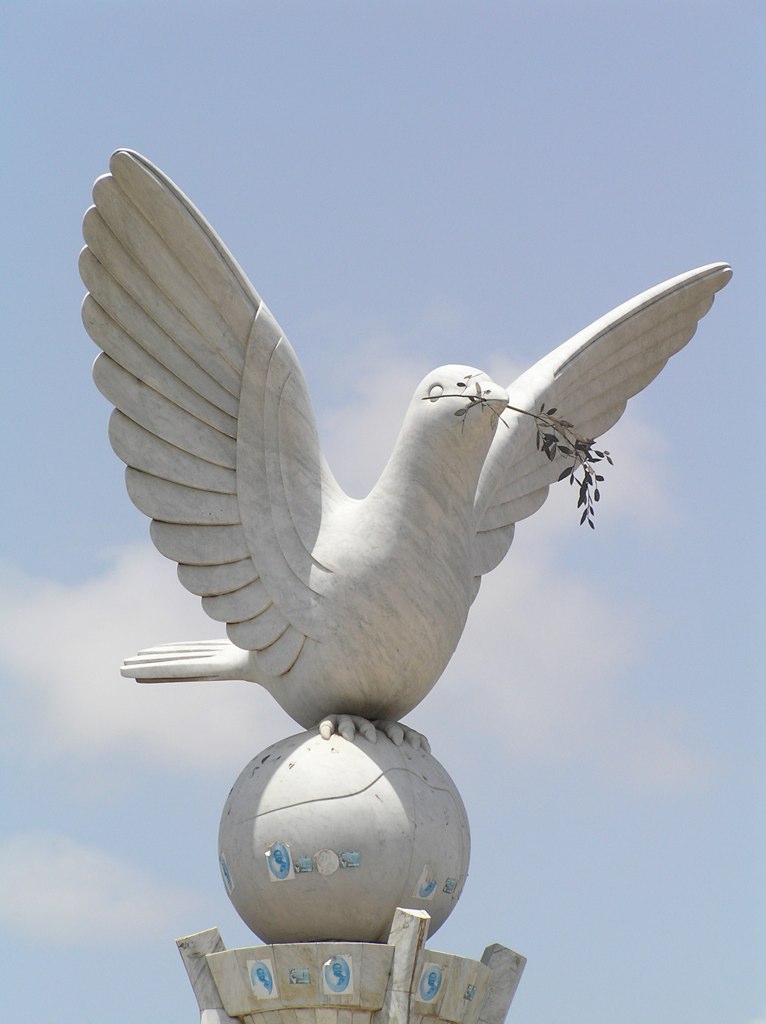
Peace dove: Wikimedia Commons CC 2.0

What does this sound like? Well, to me it sounds like what Jesus always intended his church to be. The redeemed community, the colony of God’s kingdom, is to be the place where the rich and the poor, the highly educated and the barely literate, Europeans, Africans and Asians, the neurotypical and the neurodivergent, old and young, male and female, all care for one another and promote each other’s welfare. Because that’s what Jesus does. That’s the sort of society the Messiah builds.

And imagine not only enjoying a fellowship like that (even though it entails hard and painful work at times). Imagine also inviting someone in to experience it, and being able to say, this is what life is like when Jesus is in charge.

Indeed, this is what regime change under Messiah Jesus brings.


[1] James Montgomery (1771-1854)

[2] Methodist Worship Book, p100.

[3] John Goldingay, Isaiah (New International Biblical Commentary), p84.

[4] Op. cit., pp 85, 88.

[5] p85.

The Blessing of the New Jerusalem, Isaiah 2:1-5 (Advent 1 Year A)

Isaiah 2:1-5

Wine Advent Calendar by In Good Taste. No alterations. CC Licence 4.0.

In among the monsoon of Black Friday emails that have taken over my inbox were links to a fashion of recent years that I have railed against in previous Advent seasons. The luxury Advent calendar.

This year, you could buy not only a perfume Advent calendar, but also a wine Advent calendar. And I thought, I hope someone doesn’t receive both and then confuses the two.

Or maybe it would serve them right!

These luxury Advent calendars show that if Advent means anything in our wider society today, it is that Advent is a countdown to indulgence.

We may respond by saying no, it’s a countdown to the birth of the Messiah.

But we too would be wrong if we said that – at least historically. For in the tradition of the Church, Advent begins with a countdown to focussing on the return of the Messiah.

Like so many, we yearn for the day when evil and suffering will be abolished. Like many critics of faith, we too struggle with why God allows sin and strife in the meantime.

But what we have is a hope based in the promises of God, and which we have glimpsed in the Resurrection of Jesus.

Ancient Israel had her hopes, and we read one such vision in Isaiah 2. We read it, not only for what it is, but through a Christian lens. We believe this prophecy of Isaiah is fulfilled in what is often called the ‘Second Coming’. We believe in a hope described by the New Testament Greek word Parousia, which is often translated as ‘coming’, but which is better translated as ‘appearing’ or ‘royal presence.’

So, when Jesus appears again as King of all creation, what will be the effects of his reign, and what do they mean for us now?

Firstly, blessing for God’s people:

2 In the last days

the mountain of the Lord’s temple will be established
    as the highest of the mountains;
it will be exalted above the hills,
    and all nations will stream to it.

‘In the last days’ here is literally ‘at the close of the days’ – that is, when God’s promises come to fulfilment[1].

Originally, Jerusalem stood at a height below the surrounding mountains. Yet here, Isaiah is inspired to see it elevated in a way consistent with its spiritual significance. God has elevated the city.[2]

God blesses his people. As Psalm 3:3 says,

But you, Lord, are a shield around me,
    my glory, the One who lifts my head high.

God raises his people to their full dignity. In his presence, he makes them into all they were intended to be.

One Sunday when I was at my Anglican college in Bristol, one of my friends invited a few of us to go with him to worship that evening at an independent charismatic church. His contact was a girl he knew. We all went to her house first, and she led us to the place where her church met. She was a plain-looking young woman of unremarkable appearance.

During the service there was an extended time of sung worship. At one point, I looked around the congregation. Wow, I thought: who is that beautiful girl?

I expect you’ve guessed. It was the apparently plain girl who had taken us there. But caught up in the worship and adoration of God, the presence of the Spirit made her into something more.

And I believe that is something of our hope. Just as Jerusalem is elevated in the vision of Isaiah, so God’s people are elevated in the royal presence of God.

It happens already by the Holy Spirit. It will be fulfilled in the coming of Jesus.

I have long believed that the work of the Holy Spirit in us is not to make us less human, as if God wanted us to be religious robots, but rather to make us more human than we’ve ever been. Our gifts are enhanced. Our talents are increased. Our holy desires are raised. As Isaiah saw Jerusalem being raised and exalted, so our destiny is to become everything that God ever intended us to be.

This is not just about ‘religious’ spiritual gifts. It is to do with everything about us. Alison’s admin will be even more on point. Tim’s photos will be even more amazing. Angela’s hospitality will be warmer than ever. Jessica’s tech abilities will be through the roof.

I’m sure that’s something to anticipate with joy and maybe even excitement. But in the meantime, as a sign to the world of all that is to come, let us be open to the Spirit in every part of our lives as God works on this project of elevating us to become more of whom we were always intended to be.

Secondly, blessing for the nations:

3 Many peoples will come and say,
‘Come, let us go up to the mountain of the Lord,
    to the temple of the God of Jacob.
He will teach us his ways,
    so that we may walk in his paths.’
The law will go out from Zion,
    the word of the Lord from Jerusalem.
4 He will judge between the nations
    and will settle disputes for many peoples.
They will beat their swords into ploughshares
    and their spears into pruning hooks.
Nation will not take up sword against nation,
    nor will they train for war any more.

This makes me remember the passage I used on Remembrance Sunday this year, namely Revelation 22:1-5, where ‘the leaves of the tree [of life] are for the healing of the nations’ (verse 2).

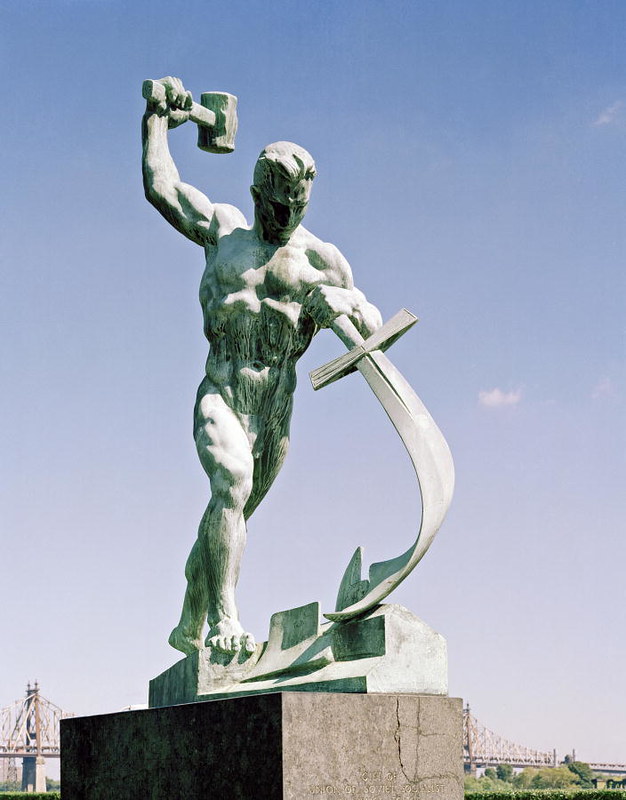
Let Us Beat Our Swords Into Ploughshares. UN Photo/Andrea Brizzi. CC Licence CC BY-NC-ND 2.0

In the New Jerusalem, when God teaches his ways there will be the resolution of disputes between peoples and nations, and the end of all war.  How we long for such a day. Swords into ploughshares and spears into pruning hooks indeed.

Because the New Jerusalem is a place of peace, reconciliation, and justice. Not for the life of the world to come the spectacle of a President lusting after the Nobel Peace Prize while renaming the Department of Defence as the Department of War, while sending quasi-military officers to arrest citizens purely due to the colour of their skin and with no due process, all the while selling Ukraine down the river to his fascist buddy in the Kremlin who probably has dirt on him. That is not peace.

No. The peace of the New Jerusalem will not be the fruit of armed strength but of the Son of God suffering in love on the Cross. The peace of the New Jerusalem will not be about the imposition of a stronger will, because the Cross says otherwise. The peace of the New Jerusalem will not be about finding some compromise halfway in between the positions of two intractable sides but will be based on the truth of God. As we heard in verse 3, ‘He will teach us his ways so that we can walk in his paths.’

Well, what about now? As future citizens of the New Jerusalem, God calls us to point to this future reality by our witness in this life. Can we be people who learn the skills of reconciliation? Can we learn how to transform conflict into peace and harmony? Can we be examples of that in our own relationships? Where are the broken people and broken places in our world to which God is calling us to demonstrate his ways of healing?

Maybe it’s in families. Or in communities. Or in workplaces. Or on a larger stage. But we may be sure, these are the very spaces which God calls his people to inhabit and to serve as a sign of hope in his coming New Jerusalem.

Thirdly and finally, blessing in the here and now:

5 Come, descendants of Jacob,
    let us walk in the light of the Lord.

I’ve been relying this week on the work of the Old Testament scholar John Goldingay to guide my thoughts in understanding this passage. He says that the image of light points in some places to themes of truth or revelation, but not here. ‘The light of the Lord’ has to do with God’s face and hence, God’s blessing. To live in the light of the Lord is to live by his blessing[3].

We can let all sorts of things fire the way we live. It might be material gain. It might be our need for the approval of others. It might be about successful relationships and a good family life.  It might be the desire to be recognised and respected. It might be to climb to the top of our profession.

Not all these things are entirely bad. But they cannot be ends in themselves, or they become idols. Isaiah points us to a better way, a way that enables us to live in the spirit of the Christian hope. It is a way that prepares us for the New Jerusalem.

‘Let us walk in the light of the Lord.’

Let us seek his blessing and respond to that. Where is God shining his light? Let us walk there.

Sometimes God shines a light in a place that is congenial to us, and it is easy to walk there and know his blessing. Other times he shines his light in unexpected and challenging places, and the call to walk there and discover blessing is trickier for us. It can be like that balance we hear in the preamble to the Covenant Service prayer every year:

Christ has many services to be done:
some are easy, others are difficult;
some bring honour, others bring reproach;
some are suitable to our natural inclinations and material interests,
others are contrary to both;
in some we may please Christ and please ourselves;
in others we cannot please Christ except by denying ourselves.
Yet the power to do all these things is given to us in Christ, who strengthens us.[4]

Many ministers did not believe God could be shining his light in that direction as a way of bringing blessing, and some of us had to be dragged kicking and screaming towards that light. Other Christians have known sheer joy and delight in detecting where God was shining his light.

But the reason we do all this is in anticipation again of the New Jerusalem. For in that place, there will be no more night, there will be no more need for lamps or the Sun, because God himself will be the light. Hence, to walk in his light of blessing now is to prefigure that great day. It is to live in a small way now in the ways of eternity, when all our hopes will be fulfilled.

Conclusion

As we step into Advent again this year, may the Holy Spirit hold before us the prophetic vision of hope. May that vision of hope be a blessing that fortifies and energises us.

May we know such blessing that we grow ever more into being the gifted people our Father made us to be. May we offer such blessing that the world knows the Good News of reconciliation with God and with each other. May we walk in such blessing today as we follow God’s light and catch a glimpse of the glory to come.


[1] John Goldingay, New International Biblical Commentary: Isaiah, p42.

[2] Op. cit., p42f.

[3] Op. cit., p44.

[4] Methodist Worship Book, p288.

A Harvest Festival Sermon: As Long As The Earth Endures (Genesis 8:15-22)

Genesis 8:15-22

A week ago, I got a new mobile phone. When I saw that I could get an up-to-date model on a cheaper contract than I had been paying, it was a no-brainer. Save money, get newer model with extra whizzy features: easy decision.

iPhone 17 family from heute.at CC 4.0

To save money, I had to change to a different phone network, and it took a few days to move my number from EE to Vodafone. However, when I then tried to make a phone call once that had all been done, I kept getting the message ‘Call failed.’

The nice AI robot I spoke to at Vodafone told me that what I needed to do was restart the phone. Then I should be sorted.

And a restart is what we have in our passage from Genesis. God reboots creation after the Flood. You can tell that from the way these verses restate things from the original creation stories. For example, the humans and the animals are to ‘multiply on the earth and be fruitful and increase in number on it’ (verse 16), just as it said in Genesis 1.

So what do we learn when we apply this notion of the restart (or reboot) to the words we read about harvest? Here they are again from verse 22:

 ‘As long as the earth endures,
seedtime and harvest,
cold and heat,
summer and winter,
day and night
will never cease.’

The rhythms of the world that we mark at a time like harvest remind us of God’s original good intentions for his creation. When seeds are planted and they ripen at the right time, this is a sign that what God built into his creation is working. The same goes, says the writer, for the rhythms of day and night, and of cold and heat – although as a true Brit I really don’t like it when the days get shorter, and I would happily settle for a climate that had no extremes of cold and heat.

Cosmic waves dancing at Stockcake CC 1.0

God’s intention was always to build a reliable rhythm into his creation. It fits with the notion of there being scientific laws that tell us how the universe behaves. A certainty and a reliability in how something behaves or operates is good and helpful. And because God has not simply created but continues to uphold the universe by the word of his power, as the Letter to the Hebrews says, one preacher was confident to say that scientific laws are a description of God’s habits.

Miracles, by the way, then become those occasional times when God in his sovereign will chooses to change his habits temporarily.

Therefore, one of the things we celebrate at a festival such as harvest is this rhythm and reliability that God has built into his creation. It is out of his goodness that he has built a predictability into our world. This is what he does as a good and benevolent Creator. Hence, the first thing we are doing at harvest is lifting our voices in praise to a trustworthy God who has made his creation reflect that nature of his character.

But when I say this, some of you have questions in your mind. Some of you are saying an inward ‘No’ or at the very least a ‘Yes, but.’ You are probably protesting, ‘But it isn’t always as good and as nice as that.’ We need to observe a second attribute of God when we consider harvest and creation.

Allow me to talk about my new phone again. Part of the process of setting it up involved restoring all my apps, text messages, photos, and so on to the new device so that when I wiped the old one I didn’t lose them. Thankfully, there is a simple way of doing this. Since I was moving from one iPhone to another, I logged into my Apple account on the new phone, and it began a process of downloading everything I needed to my shiny new model. I had always kept the old one backed up, so it went smoothly – although it did take time, and I still have to log into apps again when I first use them.

Why tell you this? Because the God we praise at Harvest is the God who restores. We are used to talking about God restoring broken people through the Cross of Christ, when he heals and forgives broken sinners, bringing us into that knowledge that he loved us before we ever considered him. We may also talk about a God who restores broken relationships, as he teaches us to forgive one another, just as God in Christ forgave us.

National Trust for Scotland Work Party restoring House 15, built in 1860 at Wikimedia Commons CC 2.0

But when we celebrate Harvest, we mark a God who also longs to restore his creation. He put things back together after the Flood, and I therefore believe he also wants to see the healing of creation in our day.

That’s why denominations and church leaders increasingly say that creation care is a Christian duty. We don’t do this out of fear that the world is about to burn, as many do, but out of trust in a God whose desire is to restore. It is an urgent task, but Christians can be hopeful about it.

Those decisions we make when shopping for small things or when considering large purchases like what kind of car we will buy are not just private financial matters. They are questions of discipleship. Do we truly believe in a God whose desire is to restore creation?

It is also our Christian duty to call out those who are banging the drum for policies that will blatantly damage God’s good creation. This week, we have witnessed what one environmental expert dubbed ‘The stupidest speech in UN history’. I am, of course, talking about President Trump’s address, where he falsely claimed that clean energy sources don’t work and are too expensive, and advocated a return to coal (or ‘clean, beautiful coal’ as he has mandated it be called in the White House) and North Sea oil.

Now you may so there is little chance of Mr Trump taking heed, and sadly I think that is right. But it is still our responsibility to declare God’s truth. That way, he – and his acolytes in this country and around the world – will be without excuse on the Day of Judgment.

For most of us, though, we won’t be operating in the political sphere. It will be about standing up for truth when friends pass on misinformation on social media or from extreme political parties.

Finally, there’s a third element I want to bring into this, and it requires us to interpret Genesis in the light of the New Testament.

I want to pick up on the words, ‘As long as the earth endures.’ The Old Testament doesn’t have much to say about the life of the world to come. There are a few glimpses, but for most of what the Bible says about that, we have to go to the New Testament.

The New Testament talks about the destruction of the earth in 2 Peter 3, which is what environmentalists worry about, and which climate-sceptic Christians take as a reason not to worry about the earth’s future.

End Of The World (El Fin Del Mumbo) at Wikimedia Commons CC 4.0

But what both miss is the greater promise of the New Testament that God is making all things new, that there will be a new creation, with new heavens and a new earth. God is the God of resurrection, and resurrection is bodily and material. Our eternal destiny is not to be disembodied spirits, but to be raised with a new body, just as Jesus was.

And therefore, our eternal home is also physical and material. Could it be that there will be harvests too in the life to come? I don’t see why not. John’s vision of the New Jerusalem in Revelation includes trees, and while Revelation is more symbolic than literal, it indicates to me a physical place.

What does that mean for us now? Given that, as Paul tells us, our ‘labour in the Lord is not in vain’ (1 Corinthians 15:58), can we assume that God takes what we do for his kingdom in this world and mysteriously builds it into his coming kingdom? Can it be that nothing we do for God’s creation is ever in vain?

If so, then this reinforces why as Christians we approach harvest and creation with a sense of hope. Yes, there are serious and dangerous issues to face in the world. Harvests do not always happen at their proper time. They do not always yield all that we need. And much of this is down to the way the human race has damaged the planet.

Let us not lose heart when we see the dreadful effects of climate change on our world, with its extreme temperatures, storms, and shortages. It’s not a case of just piously saying, everything is going to be all right and abdicating our responsibility, we still need to take these things seriously and act appropriately. But when we do so, and when we do so in faith that God in Jesus is making all things new, we know that we contribute will count, because God will make it so.

When we make that lifestyle change – it’s worth it. When we raise funds for people suffering in the developing world – it’s worth it. When we write to our MP about government policy – it’s worth it. When we refuse to be taken in by the conspiracy theories our friends are spreading – it’s worth it.

I invite you to ask yourself a question that I see posed in a Christian Facebook group every Friday: what have you been working on this week to help make the world a little more beautiful?

Isn’t that a fitting thing to do? After all, we have a trustworthy God who has made a good creation. He is worthy of our praise, both in gathered worship and in making what is good in the world ourselves.

Not only that, but our God is also a God who restores what is broken, and therefore we can sing his praise for his restoring work and show it by the beauty we create in the world.

And finally, he is a God whose restoring work extends into the life to come, and so it is worthwhile praising him now in anticipation of that new world, and in crafting things that are valuable and praiseworthy.

Let us rejoice in the harvest and build for God’s kingdom.

Begin With The End In Mind, Revelation 21:1-8 (Easter 5 Year C)

Revelation 21:1-8

Have you ever heard the saying, ‘Begin with the end in mind’? A novelist may have a beginning point and also know the end of the story but then has to work out how to get the characters from that beginning point to the end. We do something similar when planning a journey. Our sat-nav knows where we are, and we enter the place where we want to end up. It would be ludicrous just to set out on our travels with a vague hope that we will arrive at somewhere good. We begin with the end in mind.

But do we apply the same principle to the life of faith? I believe we should. A good, clear, healthy vision of the end of all things will guide us as we wonder how to live now.

And the book of Revelation does something like that for its readers. While I don’t believe it was written only to be decoded in our day with details that correspond to our world political situation, it does give a vision of the end that enables its readers to live faithfully now. I accept the common theory that Revelation was written for persecuted Christians, perhaps in the late first century. As they struggled to know how to live as Christians when under pressure and facing suffering, Revelation gave them a vision of the end, which enabled them to calibrate their lives right where they were.

We may not live our lives of faith in Jesus under the same level of stress that they did, but we too need to live with the end in mind. If we don’t, our lives will drift aimlessly, like heading out on that journey with no idea where we’re going.

Our passage today tells us about the end in verses 1 to 5 and then shows how we live with the end in mind in verses 6 to 8. So first of all we’re going to think about the end, and only then secondly are we going to think about how we begin.

Firstly, then, the end:

What is the end that we are to have in mind? As I said, it is described in verses 1 to 5, and to understand it I want us to think about a sandwich[1]. A sandwich has bread on the outside, top and bottom. Then just inside that, we have the butter on each slice of bread. Finally, in the middle, we have the filling.

Verses 1 to 5 are like that. The bread on the outside are the statements about things being made new. So on the top we have the new heaven and the new earth in verse 1 and on the bottom, we have God saying that he is making everything new in verse 5.

This bread of newness is buttered with the ‘No longer’ statements. The top slice is buttered with the statement at the end of verse 1 that ‘there was no longer any sea’ and the bottom slice is buttered with verse 4, where we hear

He will wipe every tear from their eyes. There will be no more death” or mourning or crying or pain, for the old order of things has passed away.

What, then, is the tasty filling? It is that God and his people will dwell together in the holy city, the New Jerusalem, as found in verses 2 to 3.

The making of all things new, eventually leading to the renewal of the entire heavens and the earth, began with the bodily resurrection of Jesus, and that’s why it’s appropriate to read this passage in the Easter season. When God raised Jesus from the dead, while he was recognisable, his resurrection body clearly had new powers, as we see from the times when he suddenly appears and disappears before the disciples. In 1 Corinthians 15 Paul tells us the resurrection body will be animated by the Holy Spirit.

We, then, are anticipating living in a new creation where everything is recognisable but has new powers and does not decay.

The butter on the bread is the ‘no longer’ statements, which show that in this new creation, suffering will be ended. Imagine you are a persecuted Christian in the first century and you hear that in the world to come ‘there will be no more death or mourning or crying or pain’ – all the things you have gone through as either you have been tortured or your friends and loved ones have suffered and even been killed at the hands of the authorities.

And add to that the mysterious – to us – vision that ‘there was no longer any sea’ in verse 1. I suspect this alludes to the fact that the sea was a place of terror for ancient people, and that also earlier in Revelation one of the evil beasts had arisen from the sea. So if there is no longer any sea it’s not that H2O has been abolished: it is that in the new creation, not only is suffering gone, but the cause of suffering is no more. Evil will no longer have its way.

So at the end we have all creation renewed. It is identifiable but now no longer subject to decay but exhibiting new power at animated by the Holy Spirit. Furthermore, suffering and all that causes it has been given its marching orders.

But it gets better. Because the filling in the sandwich, the very centre and heart is the fact that we will dwell together with God. This is what everything is leading up to: creation – including us – is remade, suffering and its causes are banished, all so that the redeemed can live with God with no handicap. Such will be the new creation that, as Augustine of Hippo, the great thinker who inspired the new Pope, put it, everything will mediate the presence of God.

That is the great vision Revelation 21 gives us. That is the end. It is the end we keep in mind when we begin to live the Christian life now.

So secondly, let’s turn to the way we begin:

For now, by the vision we can see that both creation and new creation are accomplished. As God looked on his initial creation and said it was good or it was very good, so he has looked on his new creation and said, ‘It is done.’ (verse 6)

Now, we have a choice in the way we begin our journey with the end of the new creation, drained of evil but filled with the presence of God in mind.

God offers us the free gift of the water of life if we are thirsty (verse 6). Biblically, the water of life is the gift of the Holy Spirit. Our thirst will only truly be quenched by the Spirit of God. It is the Holy Spirit who leads us on in the direction of the end. I mentioned Augustine of Hippo earlier, and one of his prayers puts it neatly:

Breathe in me, O Holy Spirit, that my thoughts may be holy.
Act in me, O Holy Spirit, that my work may be holy.
Draw my heart, O Holy Spirit, to love what is holy.[2]

The way to get on the route from wherever we are beginning to God’s great end is to open ourselves to the Holy Spirit, and to all the Spirit wants to do in our lives. Paul says in Galatians we are to ‘walk by the Spirit’, the Spirit leads us on the journey from where we are now to the destination God has for us in the new creation and in his presence. The Spirit prepares us for such an existence, purifying our motives and transforming our lives, making us more into people who will be in harmony with God’s new creation where suffering and evil are gone.

To set ourselves on this route from our starting place to the end is what will make us ‘victorious’ in the word of verse 7. In other words, we will not bow down to the evil forces of this world that seek to get us to deny our faith in Jesus and our allegiance to him. The Spirit of God is offered to us so that we may persevere in following Jesus. Or to put it another way, when my least favourite Christmas carol ‘Away in a manger’ ends with the words ‘And fit us for heaven to live with thee there,’ the way God fits us for our destiny is by the work of the Holy Spirit.

The other choice is to reject all this and say, actually, Lord, I don’t want to live in your beautiful new creation where evil has had its marching orders and we live close to you in your presence. For those who choose the lifestyles described in verse 8 – ‘the cowardly, the unbelieving, the vile, the murderers, the sexually immoral, those who practise magic arts, the idolaters and all liars’ – are by their very lifestyle saying no to God’s new creation. These are examples of practices that will be extinguished there. Hence, there is nothing harsh and vindictive about the fate of the depraved being ‘the fiery lake of burning sulphur’ (verse 8). It is ‘the second death’ and this is the natural consequence of choosing against the beautiful end God has planned, designed, and promised.

That probably isn’t most or even all of us. But the tricky challenge we face is that sometimes we want the beautiful destination God has for us but we’d like to compromise – everything in moderation as it were, even sin. We can do a bit of cowardice, not always confessing our faith. We can be unbelieving if there are parts of the faith that don’t suit us. We can make concessions to the sexual standards of society. Magic arts? Well, I certainly think of those Christians who read their horoscopes. I see idolatry in the devotion of some Christians to Donald Trump or to the acquisition of wealth.

Some of us want it both ways, but Jesus doesn’t allow us that option.

Don’t get me wrong, I know we are all far from perfect, not least me. But there is a difference between on the one hand setting our sights on the presence of God in his new creation but slipping up from time to time, and on the other hand wanting to hoover up the blessings of God while not wanting to change our lives out of gratitude for all he has done for us.

So as we approach Ascension and then Pentecost, when God pours out his Spirit through the ascended Jesus, let us examine ourselves. Are we imperfect followers of Jesus who desire the ways of God as well as the blessings of God? Or do we simply want to have our cake and eat it?

Pentecost will be an ideal time to avail ourselves of the living water, the Holy Spirit, so that we can indeed live with the end in mind.


[1] This is my version of Ian Paul’s description of the chiastic structure of verses 1 to 5 in his TNTC on Revelation, p338f.

[2] Lectio 365 morning prayer, 16h May 2025, adapted and modernised from https://www.loyolapress.com/catholic-resources/prayer/traditional-catholic-prayers/saints-prayers/holy-spirit-prayer-of-saint-augustine

Holy Week Meditations: Jesus Under Question. Render Unto Caesar? (2/3)

Luke 20:20-26

It’s hard if you are of a certain age reading this story not to remember the time when Margaret Thatcher patronisingly said that Jesus ‘got it about right’ with his teaching to render unto Caesar. In one Christian magazine at the time, a writer compared her attitude to that of Field Marshal Montgomery, who one day was appointed to read the Old Testament lesson at Matins in a parish church. Montgomery began, ‘And the Lord said unto Moses – and in my opinion quite rightly …’

What a dangerous thing it is to put ourselves in judgment over Scripture. And it is not even more dangerous that the temple authorities in our story put themselves in authority over the One to whom the Scriptures witness, Jesus Christ himself?

What is at stake?

We left those leaders down on the canvas yesterday after Jesus outwitted them on the question of authority. But they have not been knocked out. They are going to get up and continue the fight. Indeed they must, if they are to preserve their position, their power, and the institution that gives all that to them. Like Arnie, they’ll be back.

And they are back here, albeit at arms’ length. They do not show their own faces immediately but instead send spies. That in itself is sinister enough. They are practising surveillance of their enemy. Think today of governments that plant spies in churches – China, for example. 

Naturally, Jesus is not fooled by this tactic of confronting him from the shadows. He knows who his questioners represent. He knows what Luke tells us in verse 20, that their motive was to have evidence that would enable them to hand him over to Pontius Pilate as a seditionary. 

In fact, the trap the spies lay is threefold. One element is indeed that if Jesus were to say, do not pay taxes to Caesar then that is an easy win for handing him over to Pilate. Look, they will say, here is someone who is undermining the Pax Romana. He is treacherous. Oh, and by the way, aren’t we good citizens for snitching on him? 

And that last element about their own reputation with Pilate was significant. Because Pilate was in a politically weak situation with them, even though he was the Roman governor. 

Why? Because earlier he had authorised some actions that were so offensive to the Jews when he allowed Roman symbols to be set up in the temple that a delegation of Jewish leaders had gone to Rome to complain about him. He had received a telling-off for not respecting the local religious customs and was now on thin ice. One more wrong step and he would be gone. The religious hierarchy here hope to further strengthen their position with him. As it is, they will certainly play on Pilate’s politically weak position later in Holy Week. 

This, then, is the first trap. Jesus may win popular acclaim if he tells people not to pay taxes to Rome – think how the tax collectors were hated. But if he does so, he effectively signs his own death warrant. And the temple authorities are in a strong and increasingly stronger position with Pilate, which suits them nicely. 

The second trap is if Jesus takes the opposite position and simply says, of course you should pay taxes to the ruling authorities. This is what the good believer does. There is a good case in both Old and New Testaments for Christians being loyal citizens – at least far as their consciences will allow – when living under the rule of nations that do not sympathise with their faith. The most striking example of this is the Jewish exile. Jeremiah tells the exiles in chapter 29 of his prophecy to seek the welfare of the city to which they have been sent. Daniel and his friends serve Babylon as far as they can and only stop at the point where to continue obeying would mean disobedience to God. Later, after Babylon has fallen, Nehemiah serves as cupbearer in the court of King Artaxerxes. 

But for all this, if Jesus does endorse paying taxes to Caesar, this will be seen by the ordinary people as caving in to the hated occupying Romans. These are the unclean people who must leave or be driven out of the Promised Land. The land must be cleansed of them. The Torah must be the law of the land and Israel must obey it. Then the Messiah will come. Groups like the Pharisees taught something like this. The Zealots took it to extremes with their violent and military opposition to Rome. 

Not only that, there was what you might call a social justice element to the opposition to rendering to Caesar. Although the Roman tribute only amounted to an annual payment of a denarius, a day’s wages, that would still have been significant for the many peasants who lived on the borderline of economic subsistence. They needed every penny, and even then survival was still precarious. They could do without another tax. 

These are the two traps that are most obvious in the text, and the two we hear about the most. But there is a third trap. I opened the first meditation by talking about the significance of the theme of the temple, and this is where it makes an appearance in this episode. Guess who was responsible for collecting that annual payment of one denarius to Rome? Why yes, it was the Jerusalem Sanhedrin. Some would say they compromised their loyalty to the Jewish faith by doing so, but in their eyes they were making a small concession in order to guarantee the continuation of the temple cult and the identity of the temple. To them, the temple mattered more than anything else. If Jesus opposed the payment of taxes to Rome, he would be undermining the Jerusalem temple itself, and that most certainly was not to be tolerated. 

How does Jesus respond?

Yesterday, we noticed how Jesus responded to a question with a question of his own. He does the same again today. He will not be boxed in by his opponents. He takes the initiative. He is after all Lord, even if they don’t acknowledge it, and he reserves his right to interrogate.

Not only that, but we shall also see that the outcome of his response is not a straight answer to the dilemma posed by the spies. If anyone is looking here for a simple answer about whether we should pay our taxes, Jesus’ answer will disappoint us, because he refuses to ask that. We are going to see that what Jesus does exposes the sin of the religious leadership. No wonder they are silenced afterwards. 

So here is how Jesus responds with a question:

23 He saw through their duplicity and said to them, 24 ‘Show me a denarius. Whose image and inscription are on it?’

‘Caesar’s,’ they replied.

25 He said to them, ‘Then give back to Caesar what is Caesar’s, and to God what is God’s.’

Well, lo and behold the spies do indeed have a denarius, just as Jesus asks. What a surprise! After all, as I mentioned, the Jerusalem Sanhedrin administered the Roman tribute tax for the occupying army. They are caught red-handed. 

And given that, there are two ways in which what Jesus says condemns the temple authorities. First is his language about ‘image.’ What are they going to think of in biblical terms when the word ‘image’ comes up? They are going to remember that all human beings were created in the image of God, and that the commandments forbade any graven images of the one true God. Yet here in the denarius is a coin that bears the inscription, ‘Tiberius Caesar, son of the divine Augustus.’ By colluding with the Roman authorities to collect a coin with that text, the temple leadership, the people who should have been defending and propagating the faith of Israel, are in fact colluding with false gods. They are promoting idolatry. They have no moral or religious authority, because it is undermined by their actions, which utterly contradict the basic tenets of the faith they are supposed to promote. 

The second is when he says, ‘Give back to Caesar what is Caesar, and to God what is God’s.’ Traditionally, we’re used to hearing, ‘Render unto Caesar’, but the emphasis is not simply on ‘Give,’ but on ‘Give back.’ In other words, Jesus is not saying, you have some civic duties and some religious duties. He is not answering a general question about taxation. Margaret Thatcher and others misunderstood him. No: he is telling the Sanhedrin to get out of administering the temple tax. They are more concerned with winning favour with the Roman powers-that-be than they are with winning favour with God. They have compromised their faith for the sake of political gain. 

Don’t get me wrong: Jesus is not saying that true disciples should not be involved in politics, but he is saying that followers of the One True God should not sell their souls to politics. They should not place it above their devotion to God. They should not use politics as a means to an end of personal gain. And if that sounds uncomfortably like what we have seen in the USA with Donald Trump’s MAGA Christian supporters, well, it is. 

Politics is a worthy if difficult place for a Christian to serve God in the world. Christians should take on such a call on the grounds of the old saying that if Jesus is not Lord of all then he is not Lord at all. He is Lord over politics. But going into that field must not be for personal gain. It must be to serve others, regardless of whether any benefit comes our way. 

Besides, when people play with politics for their own ends, what kind of people do well out of it? Is it the poor and the powerless? No. It’s the wealthy. It’s people who already have power. That should concern Christians. Again, look at America, and perhaps this time look at Elon Musk. 

No, Sanhedrin, says Jesus, give back to Caesar. Your job as leaders of God’s people – if that is what you truly are – is to speak truth to power, not to prefer power to truth. It’s a searing critique, and one the church needs to hear in every generation. 

Ultimately, this is not that different from when Jesus said, you cannot serve both God and Mammon. You have to make a choice, you ‘gotta serve somebody’, as Bob Dylan sang, but it can only be one and not both. The temple authorities have chosen to side with the Empire rather than the kingdom of God. 

The spies are silenced. They have been caught out. Moreover, they have been shamed by this public exposure of their utter disloyalty to Israel’s God. 

But while their shame may indicate that their sin has been laid bare, it is no more than remorse at best. It is not repentance. They do not change. They stay on their evil course, as the rest of Holy Week will demonstrate.

Love Your Enemies, Luke 6:27-38 (Ordinary 7 Year C)

Luke 6:27-38

The older I get and the longer I preach, the more I collect a list of subjects that are awkward to preach on. Prayer – because which of us can say we pray enough? Evangelism – because we know we struggle with that. Giving – because it’s often thought unseemly to talk about money.

I think I might add today’s theme to that list. Who wants to be told to love their enemies? Wouldn’t many of us rather turn up the dial on the furnaces in Hell for those who hate us and hurt us?

I may be doing some of you an injustice. Perhaps you have only serene and beatific thoughts about your enemies. But not all of us do.

I have certainly had to wrestle with this text this week. I contemplated getting out an old sermon on the passage and just modifying it. But the best one I found was tied to a particular item in the news at the time.

And so instead I bring to you the three questions that have been at the heart of my struggle to submit to the words of Jesus here this week:

Who is Jesus addressing?

Who are the enemies here?

How do we love our enemies?

Firstly, then, who is Jesus addressing?

I ask this question, because sometimes Christians want to apply Jesus’ teaching in the Sermon on the Mount (as it is in Matthew’s Gospel) or the Sermon on the Plain (as it is here in Luke) in a rather flat way to national life. They want to make the teaching of Jesus into national policy.

But that is not what Jesus is doing here. He has no vision for a Christian nation. There is no such thing, in contrast to aspirations from Christians on both the right and the left of politics. The Christian nationalists in the USA who have swung behind Donald Trump misunderstand the Gospel itself when they think they can make America more Christian by gaining political power and passing certain laws. That is legalism, not the Gospel.

And of course it’s rather awkward for some of their politics to find that the Jesus they invoke in their prayers taught some things that really don’t fit their political vision at all, not least here. They would probably dismiss this as ‘dangerous woke nonsense.’

But the Christians on the left of the political spectrum who might leap on Jesus’ teaching here and campaign for a nation state that is committed to pacifism are equally wrong. You cannot force the teaching of Jesus on those who do not bow the knee to him as Lord.

I do not say that to justify warmongering nations. Of course not! But we need to recognise that the group of people Jesus is addressing here is his disciples. When you read the Sermon the Mount or the Sermon on the Plain you realise Jesus is talking to his disciples. However, others are listening in.

Hence, in other words, Jesus addresses his followers, who together form a colony or outpost of his kingdom in the world. But others are listening in and watching us. The world will notice how we respond to the challenging teaching of Jesus, such as we find here.

So it’s important for us to get a handle on what it means to love our enemies, because the world knows that Jesus taught this, and it is watching to see how his disciples live it out. We will damage Christian witness if we ignore it, or if we explain it away.

Yes, even in these times when religion is less popular, the world is watching Christians. Just consider the damage to the Church of England caused by the safeguarding scandals lately. A recent survey showed that now only 25% of the population consider it trustworthy. For those of you who grew up thinking the church was a respected institution, please consider that.

Let’s take the challenging teaching of Jesus seriously, then. Including this ‘love your enemies’ stuff.

Secondly, who are the enemies here?

We begin to answer that by saying, it is anyone who hates us.

They may hate us for our faith. We know that millions of our brothers and sisters around the world pay a massive price for their faith, sometimes the ultimate price. In the last week, there have been reports that terrorists beheaded seventy Christians in the Democratic Republic of Congo. Not a week goes by without news of a similar atrocity or other forms of persecution against Christians appearing in my email inbox.

Our enemies may hate us, regardless of our faith. Some of the context here may well be Jesus imagining what the occupying Roman soldiers did to ordinary citizens. Yet we are not simply citizens of our nation, we are citizens of heaven, and our calling is not only to live by the laws of the land (insofar as our faith allows us) but to live by the law of God. In a properly constituted society we may wish to have recourse to the law against such people in order to protect others, but we are called to guard our hearts against hatred.

Or we may simply here be dealing with people who are not naturally in our orbit – our family, our neighbours, our colleagues, our friends, and so on. I say that, because of the way Jesus mentions giving to beggars (verse 30). We would not naturally label beggars as enemies in the conventional way. Yet Jesus calls us to show generous love to them, too.

And this example may have something to teach us about the recent public argument between JD Vance, the new American Vice-President, and Rory Stewart, the former British MP. Vance claimed,

There is a Christian concept that you love your family and then you love your neighbour, and then you love your community, and then you love your fellow citizens, and then after that, prioritize the rest of the world.

Vance seemed to imply that love of people further from us, especially around the world, came a distant last, and he based it on the Catholic concept of ‘ordo amoris’, which says there is an order or sequence of who you love. He probably misrepresented Catholic teaching, and Rory Stewart fired back at him, accusing him of a ‘bizarre take’ on the Bible, which was ‘less Christian and more pagan tribal’. Heaven only knows where Mr Vance would put loving your enemies. A distant last, at a guess. It may be natural and easiest to love those who are nearest to us first, but Jesus upends so many social conventions, and we need to listen to him.

Thirdly, how do we love our enemies?

Jesus sets out the range of what he calls us to do in verses 27 and 28, before he gives any specific examples:

27 ‘But I say to you that listen, Love your enemies, do good to those who hate you, 28bless those who curse you, pray for those who abuse you.

How do we do this? I just want to give you a few examples.

In one town where I served, a bookshop in the High Street began overtly promoting occult books and practices associated with them. Many Christians faced with such a situation would have defaulted into aggressive protest mode. They would have organised petitions and boycotts and maybe contacted the local media. They might have requested a meeting with the manager and angrily demanded the withdrawal of the books. They might have gone on a prayer march and cast out demons.

But not the group of Christians who discovered this incident. They turned to prayer, but not of the angry kind. Instead, they prayed that the bookshop would be blessed. If the bookshop were blessed, they might not need to resort to promoting spiritual darkness.

These Christians had been influenced by a preacher who once said, ‘In the celestial poker game a hand of blessings always outranks a hand of curses.’

Or take the experience of one of my relatives many years ago. He was dating the girl who would later become his wife. However, his girlfriend’s mother disapproved of him. He wasn’t good enough for her daughter, in her opinion. His job did not rank as highly professionally, and he was less educated than the girlfriend.

My relative shared his frustrations about this with a friend at church. And his friend made a suggestion.

‘When you leave your girlfriend’s house each evening, say ‘God bless you’ to her mother. You won’t be able to feel mean towards someone you are blessing.’

My relative bristled at the idea. But he tried it – starting by saying it through gritted teeth. But eventually – it worked. Blessing changes relationships for the better.

One last story: one year while I was training for the ministry in Manchester, a married student and his wife invited me (still single then) to their flat to celebrate my birthday. My birthday meal? Beans on toast!

My friends offered to call a taxi for me to get home, but I declined and chose to walk back.

Big mistake. For on the journey back to the hall of residence a teenage thug mugged me, breaking my glasses and causing minor damage to my eyes.

Another student, himself a former solicitor, took me to the police station and stayed with me while I was interviewed and made a statement.

While I am sure this teenage thug was known in the locality, no-one was ever arrested.

However, people asked me what I would have done if the criminal had been. Would I, as a Christian who believed in and preached forgiveness, have pressed charges?

My answer was that provided I was sure no hatred remained in my heart towards the mugger, then yes, I would consent to the laying of charges. For me – and you may see this differently – this held together both the call to love and forgive my enemy and the need to uphold justice and protect other members of the public.

Conclusion

There may be one final question nagging in our minds: why should we love our enemies?

Because, says Jesus, this is what God is like. As he puts it:

Your reward will be great, and you will be children of the Most High; for he is kind to the ungrateful and the wicked. 36Be merciful, just as your Father is merciful.

We have been brought into the kingdom of God by divine mercy towards us who were his enemies due to sin. Yet God still loved us, his enemies, to the point of his Son dying on the Cross.

If we are to respond in gratitude and imitate our Saviour, then we too shall learn to show practical love to our enemies.

Making A Choice About Jesus, John 6:1-21 (Ordinary 17 Year B)

John 6:1-21

You are at the pub quiz night – or community centre, if you prefer – and your team gets this question:

Apart from the crucifixion and the resurrection, what is the only story to appear in all four of the Gospels according to Matthew, Mark, Luke, and John?

Full marks if you said, the feeding of the five thousand.

Now do not let modern scepticism explain it away, for example, as a symbolic story. In Mark’s account, he makes the apparently incidental comment that the grass was green, which implies this happened in springtime. John corroborates this when he observes that ‘The Jewish Passover Festival was near’ (verse 4). Passover occurred in the spring.

No: this incident must have made a massive impact on the early Christians for all four evangelists to record it.

And in John’s case, you can tell that from the fact that he includes it as one of the seven ‘signs’ in his Gospel. John never just speaks about ‘miracles’. Even the healings at the beginning of this account (verse 2) are called ‘signs.’

Why a ‘sign’ and not just a common-or-garden miracle? Because a sign points somewhere. The signs in John point to Jesus. Read on in the chapter and we will find Jesus making one of his ‘I am’ sayings that are also a feature in John – in this case, ‘I am the bread of life.’ That is where ultimately the feeding of the five thousand points to as a sign.

But even before we get to that point, there is a very basic issue that both the disciples and the crowd must face. In different ways, they need to make a choice about Jesus. We’re going to explore those choices about Jesus, because the alternatives before them also come up for us.

Firstly, with the disciples, there is a choice between problems and possibilities.

We read that Jesus knew all along what he was going to do, and when he asked Philip where they were going to buy bread to feed the crowd, he did so in order to test him (verses 5-6). And Philip doesn’t do too well on the test:

‘It would take more than half a year’s wages to buy enough bread for each one to have a bite!’ (verse 7)

All he can see is the problem.

Andrew does marginally better. He who had brought his brother Simon to Jesus in chapter 1 now brings the boy with the five barley loaves and two fishes, even if he also asks how that meagre offering will feed the multitude (verse 9). Andrew struggles, but at least sees a tiny possibility.

Meanwhile, all along, Jesus knows the divine possibilities.

If we are to be people of true faith in Jesus, then we need to start tilting towards possibilities rather than problems.

But I confess to you, I am far from perfect myself in this area. My wife will tell you how frustrating I can be when she comes up with a bright idea, and my instinctive response is to list all the hurdles it faces. I like to think that I’m simply setting out what obstacles we’ll need to cross in order to achieve her idea, but I’m not convinced she believes me. Maybe it’s my depression speaking, or a lack of self-confidence, but I know I can present as being a glass-half-empty person who takes the remaining water in the glass and uses it to douse the flames of enthusiasm.

Yet for all that, I’m very different when the boot is on the other foot. If I am making suggestions to a church about things we can do and all I get in response is, we can’t do that, we don’t like that, we won’t do that, then I become the frustrated one. Churches ask you to give them a lead and when you do, they don’t take it. Many a time I have come home from a meeting and told my wife that I am wasting my time as a minister.

Jesus calls us to be people of possibilities, not problems. He calls us to be people of faith. We nod our heads to that, but then refuse to live that out in practice. Some of us are addicted to middle-class comfort, rather than committed to living out a life of faith in Jesus.

The other day, I watched an interview with the late Tim Keller, who planted a successful Presbyterian church from scratch in New York City, and then when he stepped down, he set up an organisation to support anyone else who wanted to reach people in cities around the world with the Gospel. The interviewer asked him why he was so passionate about cities.

Keller replied that more and more people are moving into cities, but Christians are retreating from them. He said too many Christians are more concerned to ask where they will be comfortable than where they will be useful to God.

So I want to lay this out as a challenge to the church today. Are we so bound up in problems that we have forgotten that we are meant to have a live faith in Jesus? Could it even be that our obsession with problems is a way of avoiding the challenge of the possibilities he lays before us, so that we remain comfortable, rather than finding out where we are useful to Christ, with the attendant discomfort that may bring?

If we keep running away from the challenges Jesus sets before us, won’t we become like the man in the parable who buried the one talent he had, instead of investing it? You know what happened to him. The same can happen to a church.

Let’s make sure we choose the possibilities of Jesus over the problems we see.

Secondly, with the crowd there is a choice between grace and grabbing.

Right from the outset, Jesus is generous and gracious towards the crowd. Why should he feel obligated to feed them? Shouldn’t he have expected them to prepare and pack provisions if they were going to be out for the day? Surely they should bring the first century equivalent of a packed lunch or snacks? One lad did. If we encountered such thoughtlessness or laziness on a grand scale, wouldn’t we be inclined to say, it’s their fault, they can sort it out?

Not Jesus. In his kindness and compassion, he miraculously provides for this huge gathering.

And that is entirely consistent with what we know about the character of Jesus. Hasn’t he provided a world where there is enough for all, regardless of our selfishness? Doesn’t his Father send the sun to shine on both the righteous and the unrighteous? Isn’t he the One who asked sick people, what do you want me to do for you?

And isn’t it our own fault that we are messed up with our sins? Don’t we deserve to be left to our own devices and rot?

Jesus doesn’t see it that way. He offers his very life that we might find the forgiveness of sins. He rises from the dead for us to know new life. He sends his Spirit on us to begin the work of transformation. We don’t deserve any of that, but this is his generous, gracious love in action.

Jesus is characterised by generosity and grace. He isn’t stingy. The disciples filled up twelve baskets with the leftovers from the miraculously multiplied barley loaves (verse 13).

And after the feeding of the five thousand, look at how he calms the fears of his disciples when he comes walking on the water. ‘It is I; don’t be afraid’ (verse 20).

This is Jesus. He isn’t miserable. He isn’t mean. He doesn’t have a thunderbolt in his back pocket that he’s just itching to throw at you. He longs for us to know and experience his generous love and his grace.

But the crowd makes the wrong call. Having enjoyed all that Jesus had done for them and given them, then instead of gratitude for that love, they want to grab Jesus for their own purposes:

14 After the people saw the sign Jesus performed, they began to say, ‘Surely this is the Prophet who is to come into the world.’ 15 Jesus, knowing that they intended to come and make him king by force, withdrew again to a mountain by himself.

They just want to use Jesus for their own purposes and what they can get out of him. This is not the relationship of friendship and love that Jesus would later talk about. They just wanted to grab Jesus and use him.

The stakes are high. Had the crowd succeeded, then Jesus would have become a failed Messiah. He can’t afford that. He has to withdraw from them.

And if we just want to manipulate Jesus for our own purposes, he will withdraw his presence from us, too. What he offers us in his generous love and grace is the very best and most important gift we need, in his reconciling love. But if we want to use him for our own ends, he will withdraw from us. We have refused what he knows we need the most.

Does this sort of thing happen today? Yes. Plenty of people invoke God for their own political ends. Maybe it’s more obvious in the USA than the UK. Donald Trump claimed God protected him from the assassin’s bullet. I’m not sure what that says about the family man at the rally who nevertheless died protecting his wife and children. Joe Biden said that God led him to step down from the presidential race. Does that just give a gloss to what he should have done weeks or months earlier?

Us? Do we sometimes treat Jesus as some glorified fortune cookie? We just want what we can get out of him. We’ll follow him while he offers us the things we want from him, but when he asks for our loyal commitment to him and his cause, then we’ll drift away. It’s no coincidence that by the end of this chapter in John most of the crowd has given up on following him. Just being in it for what we can get out of him doesn’t last. It shows us up for how shallow we are.

Yes, Jesus is full of generous love. He is full of grace and mercy. It is his nature. But he also longs for us to follow him, and not just ask ourselves what’s in it for us.

And maybe that’s the point at which the two sets of choices come together for us. How we make those choices will determine whether we move from the crowd to the disciples.

Firstly, we need to receive the generous love and grace of Jesus, as in his kindness he forgives us our sins and provides us with everything we need. In gratitude we choose to follow him rather than just exploit him for all we can selfishly get out of him.

That moves us from crowd member to disciple. And then as disciples, hearing the call to follow Jesus, we join him on the adventure of faith when we refuse to play life safe by concentrating on the problems and instead embrace all the possibilities far beyond our own imagination that Jesus lays before us for the sake of his kingdom.

Create a website or blog at WordPress.com

Up ↑