

All kinda rolled into one. By Paul Howard at Flickr. CC 2.0.
One of my less attractive attributes – and there are many – is that I can be quite cynical. As I pondered why I was like that, I came across the idea that a cynic is a failed idealist.
And I thought, yes: that’s me. The failed idealist.
One of the things I’ve been an idealist about over the years is the church. I’ve been grieved by the difference between the New Testament church, even with all its imperfections, and church as we experience it today.
I had some sympathy with the late Billy Graham when someone criticised him, saying, ‘Mr Graham, you are setting the church back fifty years.’
Graham replied, ‘If I have only set the church back fifty years then I have failed. I wanted to set it back two thousand years.’
Today’s passage from Acts is one of those accounts where we see some of the core values of the early church. This description shows what they focussed on in the immediate aftermath of Pentecost, when three thousand were added to the number of the first disciples when Peter preached.
I think it would be good for us to measure ourselves against this plumbline.
The initial summary statement in verse 42 –
They devoted themselves to the apostles’ teaching and fellowship, to the breaking of bread and the prayers
is filled out in verses 43 to 47.
We’re going to reflect on those four key things to which the earliest church was devoted – the apostles’ teaching and fellowship, the breaking of bread and the prayers – and see how well we reflect them.
The first characteristic of the early church is the apostles’ teaching:
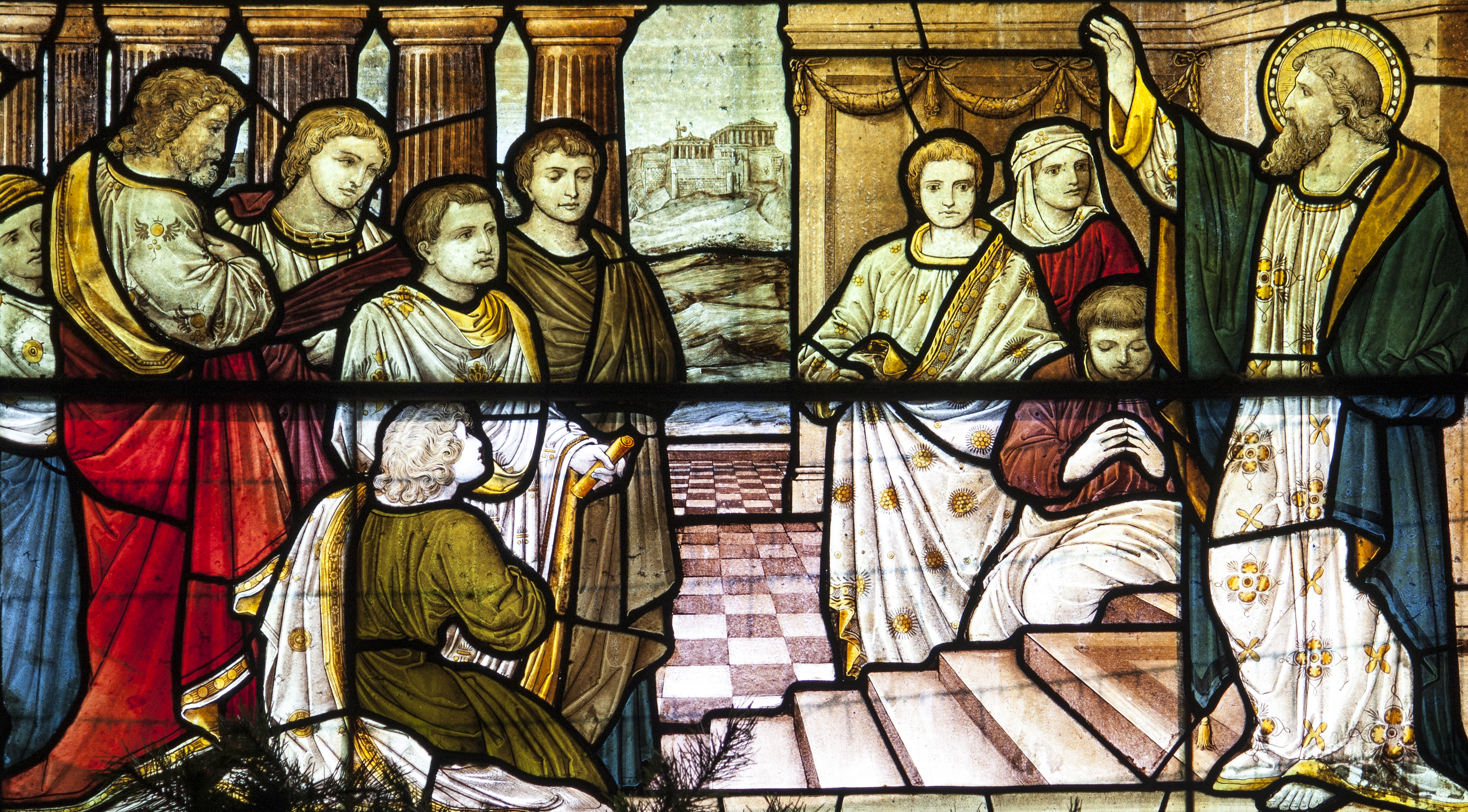
The converts are both listening to the spoken teaching of the apostles and also watching them put it into practice: ‘many wonders and signs were being done by the apostles’, according to verse 43.
There is no true Christian church unless it stands in continuity with the apostles, to whom Jesus entrusted his teaching. How is that guaranteed? Anglicans do it through a succession of laying-on of hands down the centuries, vouchsafed by the continuation of bishops. Catholics do it by a similar method, but especially by seeing the Pope as the successor to the Apostle Peter.
But both methods are suspect. There have been enough bishops who clearly have not believed the historic faith down the centuries. And some Catholic traditions and teachings are also questionable.
We may not be much better. We are right to say that we need a succession in the apostles’ teaching, but we certainly let a lot of people – church leaders included – sit very loose to that (to put it as diplomatically as I think I can).
The New Testament is the collection of writings that are either from the apostles or from their circles of influence, and it is the basis for the content of Christian faith. Our call is to know that teaching and to live it out. That makes us apostolic.
Therefore, let us all ask ourselves: what are we doing to learn more about what the New Testament calls ‘the faith once delivered to the saints’? Do we not only attend to its reading and exposition on Sundays but also read it for ourselves (preferably every day)? Do we discuss it with others? Do we take on its teaching by saying, OK, that’s what it means, now what am I going to do about it?
I love the story of the grandchild who observed Grandma reading her Bible, and saying, ‘Nanny, why are you still reading the Bible? Haven’t you read it over and over again in your life?’
‘Yes,’ said Grandma, ‘I have. But I’m studying for my finals.’
The second characteristic of the early church is fellowship:
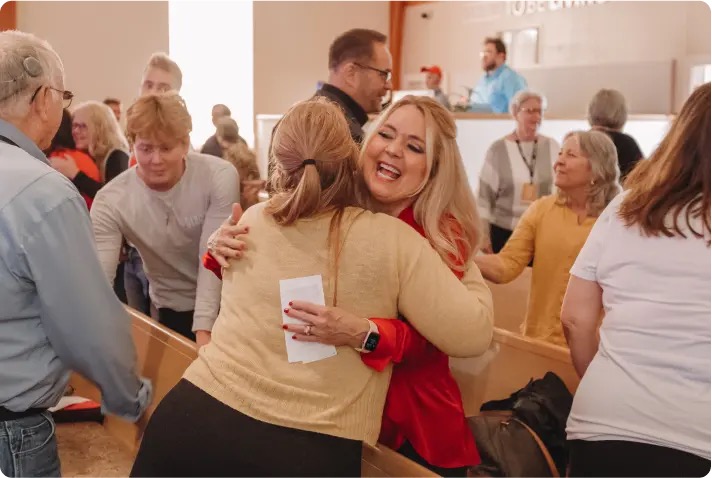
They are devoted to ‘the fellowship’ and this has its outworking in verses 44 and 45:
44 All who believed were together and had all things in common; 45 they would sell their possessions and goods and distribute the proceeds to all, as any had need.
We have such a shallow understanding of fellowship. We think it’s drinking coffee together while we chat about the weather. Somebody once said that the kind of fellowship we witness in some churches is no more than what he called ‘billiard ball fellowship’: we just bump into one another once a week. The New Testament church shows us up.
For the word translated ‘fellowship’ means ‘in common.’ Who or what do we have in common? They had Jesus in common, and because of that they shared not only him but every aspect of their lives, possessions included.
Let’s not write this off lazily as some have, by saying this was an early experiment in communism that failed. The earliest church shared their experience of Jesus, and because of that they also shared life together at a very deep level.
I have seen some wonderful examples of this over the years. I think of when my grandmother (who lived with us) died. Our West Indian Christian friends from the Bible study group we hosted turned up on the doorstep. Some came in and relieved my mother of the housework. Others arrived, carrying a fully cooked meal for the whole family. They shared and gave so that we as a family had time and space to grieve. I will never forget that.
Or this incident from the first theological college I attended: there was a Singaporean student whose mother died back home while she was at the college. She couldn’t afford a plane ticket to fly home for the funeral and then come back to England for the rest of her course. But the student body, comprised of people with very limited incomes, rallied around. She was given the money for a return ticket.
If we share Jesus in common, what else do we share?
The third characteristic of the early church is the breaking of bread:
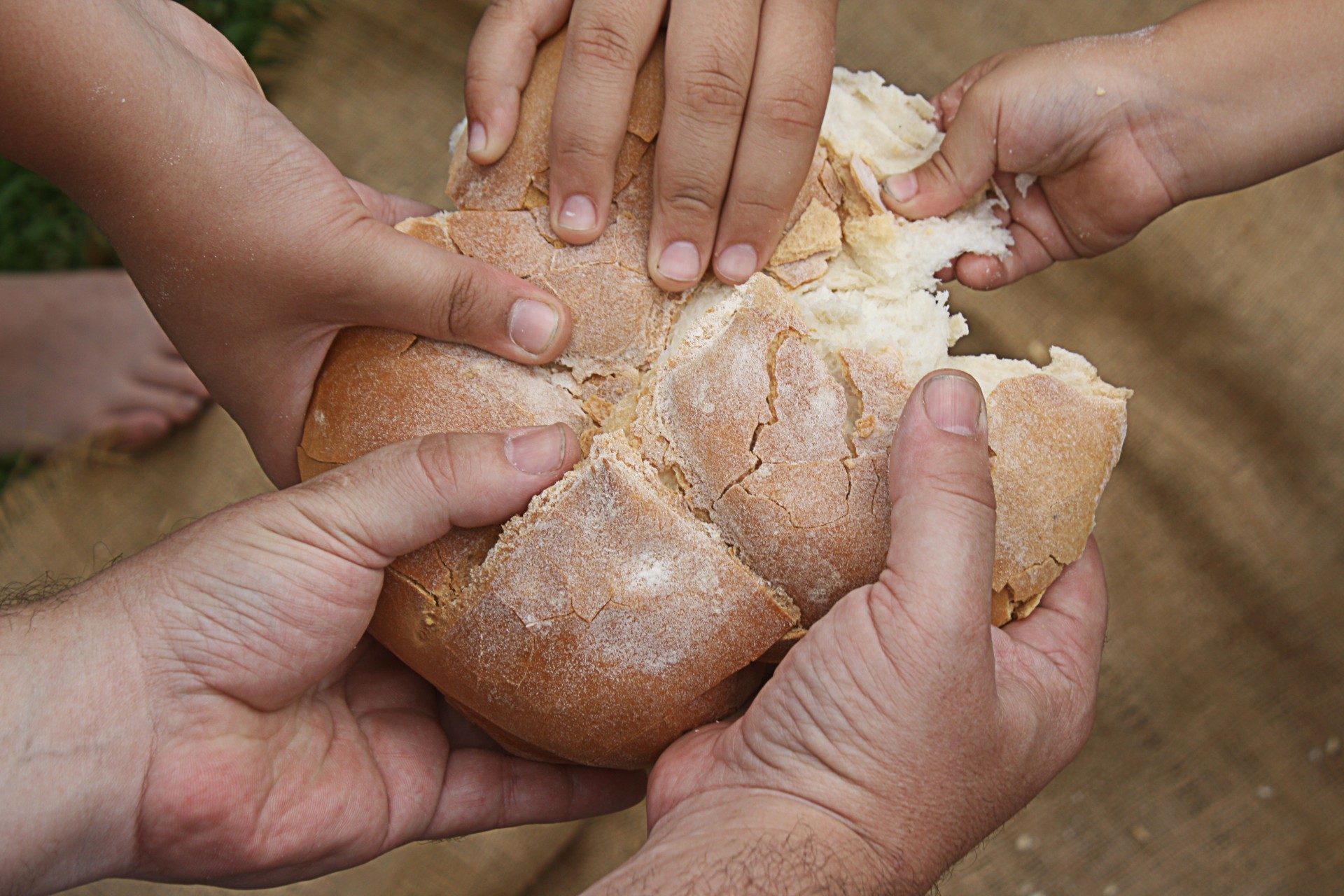
This too is mentioned in the summary statement in verse 42. It is expanded upon in part of verse 46:
they broke bread at home and ate their food with glad and generous hearts
Now some Christians hear those words ‘the breaking of bread’ and ‘they broke bread’ and think this is some kind of primitive communion service held in people’s homes without the need for formal leadership. It isn’t – any more than when the risen Jesus broke bread with the two who walked to Emmaus at their house was. It was an ordinary meal.
You could say this is an extension of what I have just said about the true meaning of fellowship. It is a marker of how life was shared together. Homes were open. There was no limitation to just the nuclear family of Mum, Dad, and the kids, like there is in our society. Your family was not just biological. Your family was the family of God.
It’s quite a challenge to the concept that an Englishman’s home is his castle, and that we get in, shut the door, pull up the drawbridge, and shut out the rest of the world. The church family, according to the example of the early believers, has more of an ‘open door’ philosophy. Open to the family of God. Open to those in need.
When I was single, I was glad to know others who would open their home to me, so that I didn’t have to spend every mealtime alone. I think too of the Christian couple I know who applied to have an extension on their home. It wasn’t so that they could live in more comfort. They did it, because they wanted to become foster parents. Over the years, I believe they fostered somewhere between thirty and fifty children, many of whom came from traumatic backgrounds. As a result of their caring witness, some even found faith and joined the church.
What might it mean for us to eat our food ‘with glad and generous hearts’?
The fourth characteristic of the early church is the prayers:

This is mentioned at the end of verse 42 and is amplified in the rest of verse 46 and the first half of verse 47:
46 Day by day, as they spent much time together in the temple, they broke bread at home and ate their food with glad and generous hearts, 47 praising God and having the goodwill of all the people.
Prayer and praise? Am I just stating the obvious here? Am I about to tell a collection of grandparents how to suck eggs?
I hope not. But here’s the thing. When the Holy Spirit is at work, prayer and praise moves from duty to desire to delight. It is no longer what we have to do, but what we want to do. The work of the Spirit is to reveal Jesus, and as we see more of who Jesus is and what Jesus is like, then our capacity for worship will inevitably increase.
I am not suggesting we should spend so much time in church that we ignore the needs of the world. If I thought that, I wouldn’t have shared the last point about our open homes.
And nor am I saying that duty on its own is necessarily bad. Sometimes we get through a difficult period or a dry spell by attending to the need for duty in coming to worship. We cultivate virtuous habits that help us.
But what does concern me is a lackadaisical attitude to worship that I sometimes see in church members. I’ll come to worship provided there’s no better attraction available to me. I won’t come to worship today, because it’s raining. I’ll come to worship, because I want to get something rather than give something.
A true church is committed to praise and prayer as a priority. I think of the Ugandan Anglican priest I knew at my first college who would walk up to twenty miles, carrying all his vestments and everything he needed. Over the years, he had developed a stoop from the weight of all he had carried, and while you might reasonably ask whether it was sensible in the African climate for clergy to wear the same attire that they do in the UK, that deformity also spoke of one who was committed to leading God’s people in praise and prayer.
I wonder what cost we were glad to pay to come to worship today.
Conclusion
Here’s the whole of verse 47:
praising God and having the goodwill of all the people. And day by day the Lord added to their number those who were being saved.
They wouldn’t always enjoy the goodwill of the people. But they did generally grow in number. We have much to learn from them about continuing in the apostolic faith, holding our lives in common because we have Jesus in common, having open homes, and being committed to worship.
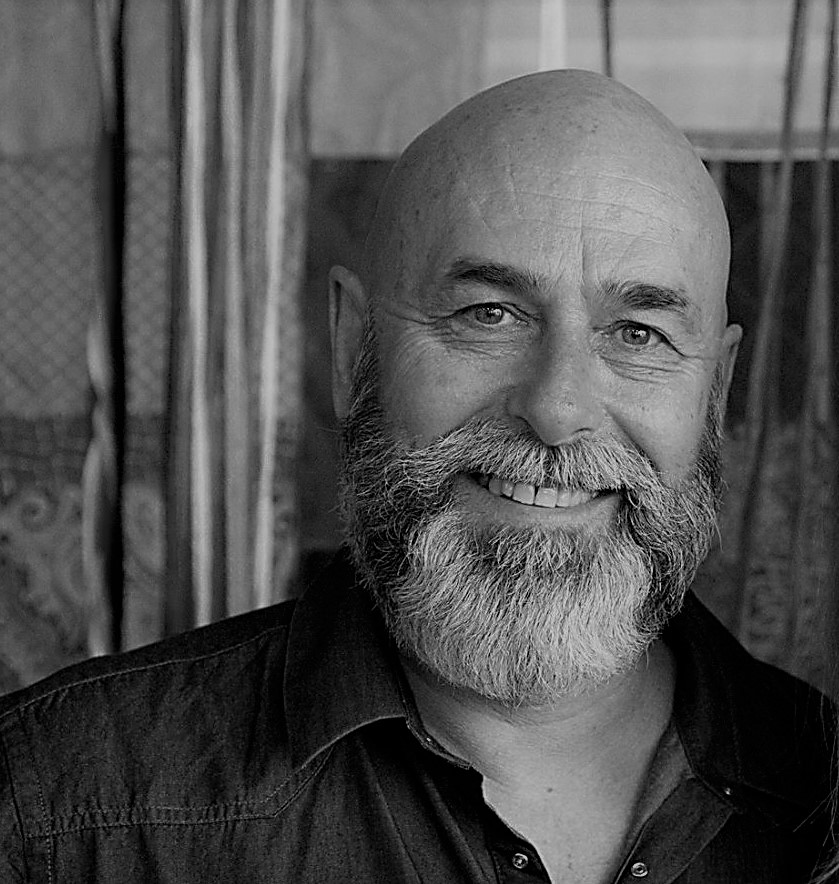
I want to close with a pattern of life suggested by the Australian missiologist Michael Frost. I do not live up to all these ideals, but I think he captures the spirit of the early church in a mnemonic for the Christian life called BELLS:
Bless —I will bless three people this week — at least one of whom is not a member of our church.
Eat — I will eat with three people this week — at least one of whom is not a member of our church.
Listen — I will spend at least one period of the week listening for the Spirit’s voice.
Learn — I will spend at least one period of the week learning Christ.
Sent — I will journal throughout the week all the ways I alerted others to the universal reign of God through Christ.[1]
How about we ring some bells?
[1] See Michael Frost, Surprise the World: The Five Habits of Highly Missional People.


