The Blessing of the New Jerusalem, Isaiah 2:1-5 (Advent 1 Year A)

Isaiah 2:1-5

Wine Advent Calendar by In Good Taste. No alterations. CC Licence 4.0.

In among the monsoon of Black Friday emails that have taken over my inbox were links to a fashion of recent years that I have railed against in previous Advent seasons. The luxury Advent calendar.

This year, you could buy not only a perfume Advent calendar, but also a wine Advent calendar. And I thought, I hope someone doesn’t receive both and then confuses the two.

Or maybe it would serve them right!

These luxury Advent calendars show that if Advent means anything in our wider society today, it is that Advent is a countdown to indulgence.

We may respond by saying no, it’s a countdown to the birth of the Messiah.

But we too would be wrong if we said that – at least historically. For in the tradition of the Church, Advent begins with a countdown to focussing on the return of the Messiah.

Like so many, we yearn for the day when evil and suffering will be abolished. Like many critics of faith, we too struggle with why God allows sin and strife in the meantime.

But what we have is a hope based in the promises of God, and which we have glimpsed in the Resurrection of Jesus.

Ancient Israel had her hopes, and we read one such vision in Isaiah 2. We read it, not only for what it is, but through a Christian lens. We believe this prophecy of Isaiah is fulfilled in what is often called the ‘Second Coming’. We believe in a hope described by the New Testament Greek word Parousia, which is often translated as ‘coming’, but which is better translated as ‘appearing’ or ‘royal presence.’

So, when Jesus appears again as King of all creation, what will be the effects of his reign, and what do they mean for us now?

Firstly, blessing for God’s people:

2 In the last days

the mountain of the Lord’s temple will be established
    as the highest of the mountains;
it will be exalted above the hills,
    and all nations will stream to it.

‘In the last days’ here is literally ‘at the close of the days’ – that is, when God’s promises come to fulfilment[1].

Originally, Jerusalem stood at a height below the surrounding mountains. Yet here, Isaiah is inspired to see it elevated in a way consistent with its spiritual significance. God has elevated the city.[2]

God blesses his people. As Psalm 3:3 says,

But you, Lord, are a shield around me,
    my glory, the One who lifts my head high.

God raises his people to their full dignity. In his presence, he makes them into all they were intended to be.

One Sunday when I was at my Anglican college in Bristol, one of my friends invited a few of us to go with him to worship that evening at an independent charismatic church. His contact was a girl he knew. We all went to her house first, and she led us to the place where her church met. She was a plain-looking young woman of unremarkable appearance.

During the service there was an extended time of sung worship. At one point, I looked around the congregation. Wow, I thought: who is that beautiful girl?

I expect you’ve guessed. It was the apparently plain girl who had taken us there. But caught up in the worship and adoration of God, the presence of the Spirit made her into something more.

And I believe that is something of our hope. Just as Jerusalem is elevated in the vision of Isaiah, so God’s people are elevated in the royal presence of God.

It happens already by the Holy Spirit. It will be fulfilled in the coming of Jesus.

I have long believed that the work of the Holy Spirit in us is not to make us less human, as if God wanted us to be religious robots, but rather to make us more human than we’ve ever been. Our gifts are enhanced. Our talents are increased. Our holy desires are raised. As Isaiah saw Jerusalem being raised and exalted, so our destiny is to become everything that God ever intended us to be.

This is not just about ‘religious’ spiritual gifts. It is to do with everything about us. Alison’s admin will be even more on point. Tim’s photos will be even more amazing. Angela’s hospitality will be warmer than ever. Jessica’s tech abilities will be through the roof.

I’m sure that’s something to anticipate with joy and maybe even excitement. But in the meantime, as a sign to the world of all that is to come, let us be open to the Spirit in every part of our lives as God works on this project of elevating us to become more of whom we were always intended to be.

Secondly, blessing for the nations:

3 Many peoples will come and say,
‘Come, let us go up to the mountain of the Lord,
    to the temple of the God of Jacob.
He will teach us his ways,
    so that we may walk in his paths.’
The law will go out from Zion,
    the word of the Lord from Jerusalem.
4 He will judge between the nations
    and will settle disputes for many peoples.
They will beat their swords into ploughshares
    and their spears into pruning hooks.
Nation will not take up sword against nation,
    nor will they train for war any more.

This makes me remember the passage I used on Remembrance Sunday this year, namely Revelation 22:1-5, where ‘the leaves of the tree [of life] are for the healing of the nations’ (verse 2).

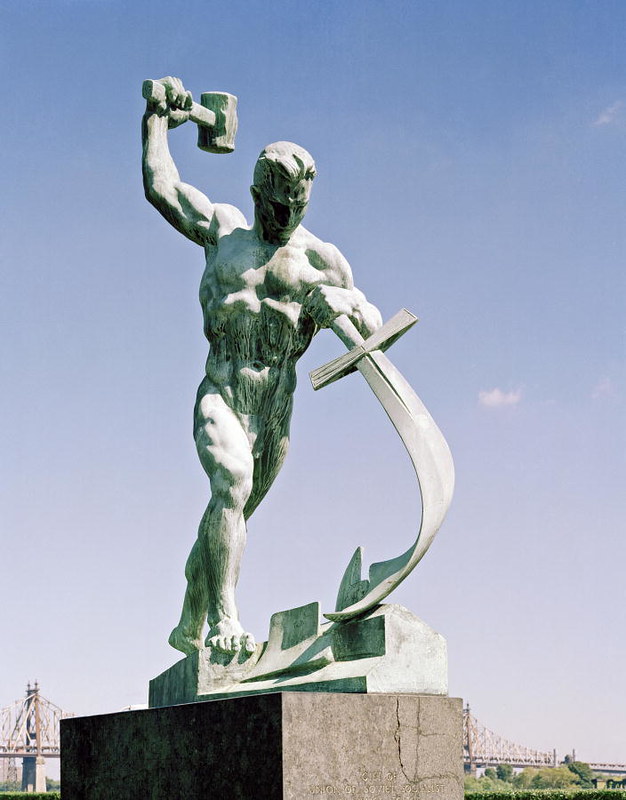
Let Us Beat Our Swords Into Ploughshares. UN Photo/Andrea Brizzi. CC Licence CC BY-NC-ND 2.0

In the New Jerusalem, when God teaches his ways there will be the resolution of disputes between peoples and nations, and the end of all war.  How we long for such a day. Swords into ploughshares and spears into pruning hooks indeed.

Because the New Jerusalem is a place of peace, reconciliation, and justice. Not for the life of the world to come the spectacle of a President lusting after the Nobel Peace Prize while renaming the Department of Defence as the Department of War, while sending quasi-military officers to arrest citizens purely due to the colour of their skin and with no due process, all the while selling Ukraine down the river to his fascist buddy in the Kremlin who probably has dirt on him. That is not peace.

No. The peace of the New Jerusalem will not be the fruit of armed strength but of the Son of God suffering in love on the Cross. The peace of the New Jerusalem will not be about the imposition of a stronger will, because the Cross says otherwise. The peace of the New Jerusalem will not be about finding some compromise halfway in between the positions of two intractable sides but will be based on the truth of God. As we heard in verse 3, ‘He will teach us his ways so that we can walk in his paths.’

Well, what about now? As future citizens of the New Jerusalem, God calls us to point to this future reality by our witness in this life. Can we be people who learn the skills of reconciliation? Can we learn how to transform conflict into peace and harmony? Can we be examples of that in our own relationships? Where are the broken people and broken places in our world to which God is calling us to demonstrate his ways of healing?

Maybe it’s in families. Or in communities. Or in workplaces. Or on a larger stage. But we may be sure, these are the very spaces which God calls his people to inhabit and to serve as a sign of hope in his coming New Jerusalem.

Thirdly and finally, blessing in the here and now:

5 Come, descendants of Jacob,
    let us walk in the light of the Lord.

I’ve been relying this week on the work of the Old Testament scholar John Goldingay to guide my thoughts in understanding this passage. He says that the image of light points in some places to themes of truth or revelation, but not here. ‘The light of the Lord’ has to do with God’s face and hence, God’s blessing. To live in the light of the Lord is to live by his blessing[3].

We can let all sorts of things fire the way we live. It might be material gain. It might be our need for the approval of others. It might be about successful relationships and a good family life.  It might be the desire to be recognised and respected. It might be to climb to the top of our profession.

Not all these things are entirely bad. But they cannot be ends in themselves, or they become idols. Isaiah points us to a better way, a way that enables us to live in the spirit of the Christian hope. It is a way that prepares us for the New Jerusalem.

‘Let us walk in the light of the Lord.’

Let us seek his blessing and respond to that. Where is God shining his light? Let us walk there.

Sometimes God shines a light in a place that is congenial to us, and it is easy to walk there and know his blessing. Other times he shines his light in unexpected and challenging places, and the call to walk there and discover blessing is trickier for us. It can be like that balance we hear in the preamble to the Covenant Service prayer every year:

Christ has many services to be done:
some are easy, others are difficult;
some bring honour, others bring reproach;
some are suitable to our natural inclinations and material interests,
others are contrary to both;
in some we may please Christ and please ourselves;
in others we cannot please Christ except by denying ourselves.
Yet the power to do all these things is given to us in Christ, who strengthens us.[4]

Many ministers did not believe God could be shining his light in that direction as a way of bringing blessing, and some of us had to be dragged kicking and screaming towards that light. Other Christians have known sheer joy and delight in detecting where God was shining his light.

But the reason we do all this is in anticipation again of the New Jerusalem. For in that place, there will be no more night, there will be no more need for lamps or the Sun, because God himself will be the light. Hence, to walk in his light of blessing now is to prefigure that great day. It is to live in a small way now in the ways of eternity, when all our hopes will be fulfilled.

Conclusion

As we step into Advent again this year, may the Holy Spirit hold before us the prophetic vision of hope. May that vision of hope be a blessing that fortifies and energises us.

May we know such blessing that we grow ever more into being the gifted people our Father made us to be. May we offer such blessing that the world knows the Good News of reconciliation with God and with each other. May we walk in such blessing today as we follow God’s light and catch a glimpse of the glory to come.


[1] John Goldingay, New International Biblical Commentary: Isaiah, p42.

[2] Op. cit., p42f.

[3] Op. cit., p44.

[4] Methodist Worship Book, p288.

Epiphany and Covenant Service 2025: The Magi (Matthew 2:1-12)

This is a revised version of a sermon I preached six years ago but which is not on the blog. The text that follows is how I preached it in 2019 and does not exactly conform to the video, because I paraphrased and added some material:

Matthew 2:1-12

Rumour has it that the Nativity Play was cancelled at Parliament this Christmas.

Why? Apparently, they couldn’t find three wise men.

OK, that’s a silly Internet joke I saw during the festive season, along with the cartoon where three wise women bring practical gifts such as a casserole instead of gold, frankincense, and myrrh.

But I love the story of the Magi, and with Covenant Sunday falling this year on Epiphany, the feast where the wider Christian Church throughout the world and down through history celebrates the appearing of the Messiah to the Gentiles, we have a story that also says much to the Covenant theme of commitment to Christ.

Here, then, are three aspects of the Magi and their coming that speak to the question of our commitment to Christ.

Firstly, the Magi were Gentiles.

Yes, I know that’s stating the obvious, but it’s important. Matthew is the most Jewish of all the four Gospels, but no Jew comes to worship the infant Christ in his Gospel, only the Magi from the east – perhaps modern-day Iraq.

The Magi represent all that is wrong in spiritual practice in the eyes of faithful Jews. They were astrologers, and astrology began in ancient Babylon. When Israel was taken captive to Babylon, astrology was a common habit of the surrounding culture. In the parts of Isaiah that relate to that part of Israel’s history, astrology is condemned and ridiculed. It is not the way to find truth and purpose in life. For the Jew, that could only be found by following the one true God – as it should for us, too, and which incidentally is why no Christian should devote time to their horoscope.

It is these unsound, unclean people that come in the highly Jewish Gospel according to Matthew and worship the infant Christ. Matthew is telling us that the Gospel, while originating with the Jews, is for the whole world. It’s no coincidence that Matthew ends his Gospel with the so-called Great Commission, where the risen Jesus sends his followers to the whole world with the call to discipleship.

Therefore the first challenge I want to bring from the story of the Magi this morning to us on Covenant Sunday is our call to be bearers of the Gospel to all people, including those who are not remotely like us. Who are the people who to us are unclean or unsound? Who are the people whose lifestyles we would instinctively condemn? Christ lived and died for them, too. Who are the people with whom we would not naturally associate, the people we wouldn’t mix with at a social gathering? Again, Christ lived and died for them.

I’ve noticed that one of the most contentious issues among residents of Byfleet has to do with what happens when travellers come and pitch up on land in the village. I understand some of that reaction, given the mess they often leave and the inconvenience they cause. But one of the great areas of numerical growth in Christianity in the UK these days is among travellers and gypsies. Largely, the Gospel was originally taken to them by our Pentecostal friends. Now there are indigenous gypsy congregations and Christian conventions. We might not want to have too much to do with them. But God loves them and has reached out to them through other Christians.

So I’d like us to consider this Covenant Sunday whether there are any people we might naturally think are unsavoury, but who need God’s love in Christ to be shown to them. Does anyone occur to you?

Secondly, the Magi decided to go.

The Magi go on their long and arduous journey, and when the biblical scholars tell them and Herod that the Messiah will be born in Bethlehem, they are still the only ones who go. Those who apparently know their Scriptures do nothing.

Christian commitment involves hearing the call of God and doing something about it. This the Magi demonstrate in spades. They don’t even know the Scriptures, but they follow the call as they have heard it the best they can. The strange sign of the star, the biblical reference from the prophet Micah to Bethlehem, and finally the warning in the dream not to return to Herod. In all these ways they show the characteristic of true disciples: they hear and they go.

I sometimes fear that we in the modern church are rather like the biblical scholars whom Herod called. We have heard and read the Christian message over and over again down years and decades, but do we always allow it to have a challenging or transforming effect on us? Do we hear the Bible read and then move on? Do we just read it and then close it?

I may have told you before the story of the Argentinean pastor who preached on the same text every week for a year.

‘Pastor, when you are you going to preach on something different?’ asked one church member.

‘When you start obeying this passage,’ replied the pastor.

Something like that can be our problem. We are fed a diet of weekly sermons, we think we know the Bible and our faith quite well, but how much have we let it change us?

Yet along come the Magi and for all their learning in other areas they are simple when it comes to matters of faith. God shows them what to do, and off they go.

I believe that sometimes it’s the newer and spiritually younger Christians who come along, get hold of something basic about the faith, and run with it in ways that really the experienced Christians might have done.

One example of this would be the Addlestone (now Runnymede) Food Bank. The person who had the vision for this was a middle-aged woman who had only recently found faith through an Alpha Course, but she quickly grasped that following Jesus meant caring about the poor. Her professional background was as a stockbroker. She was used to managing accounts containing many millions of pounds. She used her managerial and entrepreneurial skills in the service of God’s kingdom to sell the vision of the food bank to the churches, to start it up, organise, and run it, before being snapped up by the Trussell Trust for a national rôle with them. As I say, she was young in the faith, but she heard the voice of God and ran with it.

What more might we do if we allowed ourselves to be that bit less jaded about all the things we have heard over and over again in the Scriptures and in the preaching of the word?

More specifically, is there one particular thing where you know God has been giving you a little poke for a long time? Wouldn’t the Covenant Service be a great time finally to say ‘yes’ to him, ‘I’ll do it’?

Thirdly and finally, the Magi decided to give.

So yes, here we’re onto the gold, frankincense and myrrh. Not a casserole dish in sight.

The popular idea is that gold is for a king, frankincense for a priest, and myrrh to mark death. It’s very appealing, it fits with what comes later in Jesus’ ministry, but Matthew makes no such connections. This interpretation first arose in the second century AD, courtesy of the church leader Irenaeus.

As the New Testament scholar Dr Ian Paul says [in the article linked above],

In the narrative, they are simply extravagant gifts fit for the true ‘king of the Jews’.

And it’s as simple as that. The ‘king of the Jews’ who will come to be seen in Matthew as the king of all creation is worthy of extravagant giving. The gifts presented are worth a lot of money and come on the back of the immense giving of time and energy the magi have put in to come this great distance and pay homage to Jesus.

I wonder whether as experienced Christians our whole approach to giving becomes jaded. The giving of our time and energy can feel no different from a job or from involvement in a social activity or a hobby. The giving of our money can seem like little more than a subscription to a favourite cause, like just another standing order or direct debit from our current account.

Does it take the passion of newer Christians to get us in touch again with what giving could be for disciples of Jesus? Younger Christians are often passionate and inelegant in their worship and their giving. We may look down on their uncouth offering. We may give them a withering look or damn them with faint praise. We may do something similar not just with new Christians but with new churches.

But rather than resort to dressing up cynicism in spiritual language, we might better ask how the giving aspect of our own discipleship might be freshened up. Maybe in our spiritual lives we are tired and worn out. So perhaps that means we need a renewed encounter with Jesus himself.

And surely the God of love and mercy wants to refresh our dry Christian lives. He would love to give us a new vision of his Son through the work of his Holy Spirit in our lives. He would love to bring us to the feet of Jesus again. For there we encounter the One whose whole existence is of self-giving love. He loved us enough to give up heaven for human life – and humble, poor, obscure human life at that. He loved us enough to walk the way of the Cross so that our woundedness might be healed, our sins forgiven, and the power of dark forces broken. He loves us even now so much that he longs to give eternal life and spiritual gifts and blessings.

Yes, when we encounter God the Giver in Jesus Christ, we shall surely be inspired into a renewal of our own giving.

What I’d like to note as we conclude is that in twelve short verses where Matthew tells the story vividly but concisely, the Magi who leave by dodging Herod are men who have been changed from how they were at the beginning of the account. They arrived through the dubious offices of astrology. But they left, having listened to Scripture, having met Jesus, and having listened to God in a dream.

So are we open on this Covenant Sunday to being changed, too? Who are our Gentiles who need the Good News? Are we just sermon-tasters of theoretical Bible students, or are we like the Magi ‘going’ – that is, putting what we have heard into action? And have we encountered Jesus the Giver, who stirs up the extravagant giving of our hearts?

Friends, we too need to be changed. May we be open this Covenant Service and this New Year to the transforming power of Christ through his Holy Spirit.

Covenant Service: Good News For Failures (Jeremiah 31:31-34)

Jeremiah 31:31-34

It’s that time of year when sign-ups to health clubs and gyms breed like rabbits. Yet in a few months’ time, many of the direct debits will still be going out from bank accounts, but a lot of the new fitness enthusiasts of January will have given up. The thought of ‘New year, new me’ will lie in tatters. Another set of New Year’s Resolutions will have failed.

Maybe that’s why I haven’t bothered with such resolutions for many years. I feel sure I’ll fail.

So much of life is made up of failures – cheerful thought, I know! – be they failures of good intentions or that much larger feeling that our lives themselves are a total failure. Not one of us is without our failures.

But on this first Sunday of the New Year, when we renew our covenant with God, and we traditionally become sombre and serious, wondering whether we can keep the solemn and intimidating promises we make, I want to preach Good News.

In my draft order of service, I simply called this sermon ‘The New Covenant.’ But now I want to give it a different title: ‘Good News For Failures.’ I want you to have a sense of hope from our reading in Jeremiah.

Yes, I know many people have Jeremiah down as a depressing and depressive prophet of doom. But if you read him closely, he preaches short-term doom but long-term hope. And that’s why we can have a theme of ‘Good News For Failures.’

I have two pieces of Good News from Jeremiah for Failures:

Firstly, God’s New Covenant means Failures Are Not Forgotten:

31 ‘The days are coming,’ declares the Lord,
    ‘when I will make a new covenant
with the people of Israel
    and with the people of Judah.
32 It will not be like the covenant
    I made with their ancestors
when I took them by the hand
    to lead them out of Egypt,
because they broke my covenant,
    though I was a husband to them,’
declares the Lord.

Jeremiah has preached doom to Israel. He warned them that if they did not turn from their sins the king of Babylon would come and conquer them and take them into exile. They didn’t listen. They thought they could find political solutions to their troubles without changing their ways while continuing to sin.

It didn’t work. The Babylonian army turned up. At this point, a first tranche of Israel has been marched off into Babylon. They are away from the land, which was so central to their religion, because it had been promised to them by God. If they are away from their own land, then surely they are forgotten and rejected by God for ever.

Yet Jeremiah comes with this word and others that looks forward to the future. God has not finished with his people. They may have broken the old covenant, but he will make a new covenant.

And of course, that is what the coming of Jesus at Christmas is about. If you re-read the nativity stories you will see how many of the promises don’t simply look forward to Christianity and the Church (which is the way we often read them) but are promises to Israel. God has not forgotten and rejected his people. His own Son is bringing the promised new covenant.

Now we Gentile believers are grafted onto the vine which is the People of God, and so we too are inheritors of this same promise. When we fail, God has not forgotten us.

If we come to this Covenant Service this morning conscious of how much we have not lived up to our promise a year ago, we come to a God of grace who in Jesus Christ offers us yet another new beginning. Just as we confess our sins every Sunday morning together and receive assurance of forgiveness, so too year on year at this service we shall confess our sins before we renew the covenant and again receive God’s promise of a fresh start.

Every now and again, I come across people in church who believe that God cannot continue forgiving them. A few will even say they think they have committed ‘The unforgivable sin.’ However, Jesus said the unforgivable sin was blasphemy against the Holy Spirit, and if someone is sensitive to their sin then believe me that usually indicates they are also sensitive to the Holy Spirit.

No: to everyone who fails, I believe God invites us to look at Jesus on the Cross and see his arms stretched out wide – so wide they embrace the world, including us.

Those who are excluded from his embrace are those who exclude themselves not simply by sinning but by refusing to accept they have sinned, perhaps painting their sin as righteousness (often self-righteousness), and thinking they have no need to repent.

But to those of us who are acutely aware of our need to repent, God says, I have not forgotten you. I have not rejected you. Come back. You will find I am already waiting for you.

Secondly, God’s New Covenant Means Failures Have New Hope:

33 ‘This is the covenant that I will make with the people of Israel
    after that time,’ declares the Lord.
‘I will put my law in their minds
    and write it on their hearts.
I will be their God,
    and they will be my people.
34 No longer will they teach their neighbour,
    or say to one another, “Know the Lord,”
because they will all know me,
    from the least of them to the greatest,’
declares the Lord.
‘For I will forgive their wickedness
    and will remember their sins no more.’

Neatly for me, this gives me a chance to link back to my sermon for the Fourth Sunday of Advent, when I looked at the relationship between Jesus and Moses. To recap part of it:

In the Old Testament, people were not saved by the Law but by grace. Keeping the Law did not save people, rather it was a response to having been saved. We can see this by the fact that God only gave Moses the Law for Israel after he had delivered them from Egypt.

Nevertheless, it was external to the people. It showed God’s righteousness, but it did not convey the power to obey it. On the other hand, the Christmas promise is that Jesus is Emmanuel, God with us, and when Jesus returns to the Father that changes to the Holy Spirit, God within us.

Now link that with what Jeremiah records God as saying here. The external Law will be replaced in the New Covenant with everyone knowing the Lord. In other words, the New Covenant promises God’s indwelling of every disciple.

Not only that, we do not have to depend on priests to mediate between us and God – again, because everyone will know the Lord.

We don’t have to struggle to know God, we don’t have to struggle to know his law, and we are also enabled with divine power to do his will.

Yes, we shall still fail from time to time, and God in his mercy will forgive us and lift us up. But we shall also find God’s own strength when we truly want to obey his will.

The Old Covenant was good – it was very good – but the New Covenant is like that moment when you are driving in your car, gently accelerating, but then the turbo cuts in, and whoosh!

The New Covenant contains not only the Old Covenant promises of forgiveness, but the additional promises of God’s presence and power with us. This is God’s side of the bargain. This is his generous, grace-filled offer to every disciple of the Messiah.

So when we come to renew our promises today, I want us to realise that we are not coming to a severe God who is ready to stoke the flames of Hell the moment we let him down. He is the God of mercy and love who has provided everything we need through the Cross of Christ. Forgiveness comes there. The restoration of our relationship with God comes there. The gift of the Spirit follows.

If we remember that this is the nature of our God who calls us to reaffirm our covenant with him, then perhaps we shall be more ready to make those challenging promises.

After all, we’re not making a New Year’s Resolution, we’re responding to God’s grace.

New Year, New Commitment (Methodist Covenant Service) Romans 12:1-2

Romans 12:1-2

Artificial Intelligence – or AI for short – has been much in the news lately. It’s a form of technology that seeks to think better than humans and act more skilfully (or at least quickly) than humans. Even as I type the words of this sermon, the word processor is periodically predicting which words I am typing, or even which are the next words I am typing. If I like what I see, I can hit the Tab button on my keyboard and it will confirm the suggestion.

If you want to experiment and have a bit of fun with this, then you can find an AI tool on the Internet called ChatGPT. I registered the other day, and decided to play by giving it a specific task: write me a sermon for a Methodist Covenant Service.

You know what? It did. What a time-saver!

But I had a reservation. It used the words of the Covenant Prayer as the text for the sermon, whereas a Christian sermon must have Scripture as its text. So I tried it again, using these verses from Romans.

It worked again. I am sure some of you would like the results. But it was only a three-minute sermon. Even my Catholic friends, who are used to homilies, not sermons, might consider that too short. It made the odd good general point, but didn’t flesh it out to make it practical.

So for the time being I will not be replaced by a computer, and you will have to accept the three points I want to make about our commitment to Christ from Romans 12:1-2.

Firstly, why does God call us to commitment?

Therefore, I urge you, brothers and sisters, in view of God’s mercy … (verse 1a)

‘Therefore’: we need to refer to what Paul has written up to now in the letter. In view of the first eleven chapters. But fortunately Paul sums up those eleven chapters as ‘in view of God’s mercy’.

Paul has been talking about God’s merciful plans and actions towards a human race that has spurned his love and his laws. Despite all human beings having grounds to believe in God’s existence and despite his chosen people being given his laws everyone has sinned.

But God has given up his Son, even to death, that we might be forgiven our sins and put right with him. And God has given us his Spirit, so that we can live a new life. God has done all this for us in his mercy.

In fact, strictly what Paul says here is not ‘God’s mercy’ but ‘God’s mercies’, because time and time again God is merciful to us. We respond to his mercy by giving our lives to him. But then we fail and sin again. Yet he continues to forgive us when we come in repentance. If Jesus teaches us to forgive ‘seventy times seven’, how much do we think God will forgive when we seek his mercy?

He shows mercy upon mercy. Truly, his mercies are new every morning.

Yes, of course God is our Judge. Of course, God is holy. But he has shown his intentions towards us in his deeds of mercy. When we renew our covenant with him today, we are responding to his mercy, not his severity.

Today is a day when we rejoice in how merciful God is towards us, and we say that because of his mercy, we joyfully give ourselves to him  all over again.

Secondly, what kind of commitment does God seek from us?

… to offer your bodies as a living sacrifice, holy and pleasing to God – this is your true and proper worship. (Verse 1b)

In the original Greek of the New Testament, it’s not just the adjective ‘living’ that applies to the word ‘sacrifice’, it’s all three adjectives: living, holy, and pleasing [to God].

Somebody once said that the problem with living sacrifices is that they keep crawling off the altar. And maybe that’s a clue to what this is about. We need to offer ourselves daily to God. Jesus spoke about taking up our cross daily and so each day we say afresh to God, ‘Here I am, please use me for your kingdom today.’

Then we are a holy sacrifice, because we are offering ourselves not only to do God’s work but to do God’s work in God’s way. We’ll never say that the means justifies the ends. We’ll avoid manipulating people. We’ll examine our motives the best we can. And our goal will be God’s glory, not our own.

And it’s also a pleasing sacrifice to God. This is our invitation to put a smile on the face of God. It is to ask ourselves, what can we do that we know will please God? The Bible is full of thoughts about what the Lord loves: if we look those up we will start to have a good idea of ways in which we can lay down our lives, our talents, and our possessions to bring God joy.

Thirdly and finally, how do we work out that commitment?

Do not conform to the pattern of this world, but be transformed by the renewing of your mind. Then you will be able to test and approve what God’s will is – his good, pleasing and perfect will.

On Friday, I read a brilliant essay[1] by James Cary, who is a TV comedy scriptwriter and also a Christian. He begins with a quote: ‘Politics is downstream from culture’ and explains how our politicians only really put policies into practice that derive from our wider culture.

The problem, he says, is that our culture is now hostile to Christianity, because the Church has abdicated the rôle she had centuries ago as a patron of the arts and culture, especially since the Reformation, when only the word mattered, and visual things became under suspicion.

So it’s very dangerous today for the Christian in Paul’s words to ‘conform to the pattern of this world’, because if we do we will take on values that are opposed to Christianity. Yes, Christians need to start influencing our culture again by producing artistic works that are shaped by the Gospel,  but even before that we need to make sure that our own thinking and living is shaped by the Gospel. We need to heed Paul’s call to ‘be transformed by the renewing of [our minds].’

It’s absolutely urgent that we let the Gospel shape our minds. That’s why we need to be reading our Bibles daily and pondering what we need to do in response to its teaching. That’s why we need to read good quality, thoughtful Christian literature rather than trashy magazines or watching junk TV. It’s why younger generations need to reduce their intake of social media in favour of prayer.

I’m not saying we should never consume lighter forms of art and culture. But I am saying that it is crucial we take deliberate steps to renew our minds according to the ways of Christ. If we’re not deliberate about it, then we shall end up no different from the wider world.

And every day that goes by, it becomes more crucial to renew our minds. How about we make 2023 the year when we make major strides in that cause?


[1] James Cary, Getting Upstream (Or A Call To ‘Once Upon A Time’) n.d., available for a donation towards his writing at https://jamescary.substack.com.

Yesterday’s Sermon: Shaped By The Covenant Meal (Covenant Service Sermon)

Mark 14:22-25

What am I reading@
What Am I Reading? by John on Flickr. Some rights reserved.

Henri Nouwen was a much-lauded Dutch Roman Catholic priest. A brilliant man, he held doctorates in both psychology and theology, and rose through various academic posts to become Professor of Pastoral Theology at the prestigious Yale University. He later taught at Harvard, so effectively he taught at the American equivalents to our Oxford and Cambridge. He also had the common touch, and wrote popular books about the spiritual life that sold in quantities that delighted his publishers. We studied one of them, The Return Of The Prodigal Son, in an ecumenical Lent course here in Knaphill.

But for all his acclaim, Nouwen was uncomfortable. It wasn’t until he joined the staff at L’Arche, an international community for people with developmental disabilities, that he felt he was living a truly authentic Christian life.

In looking for a model of how to live the spiritual life in a secular world, he settled upon the Last Supper, and wrote about it in a wonderful book called Life Of The Beloved. What he said there so struck me when I read it that I want to use his framework as we consider our covenant with God again this year. The covenant meal – Holy Communion – provides a structure for the covenant life.

Essentially, what Nouwen is saying is this: what Jesus does with the bread, he does with us. Hear again verse 22:

While they were eating, Jesus took bread, and when he had given thanks, he broke it and gave it to his disciples, saying, ‘Take it; this is my body.’

Note the four actions Jesus does with the bread: took, gave thanks, broke, and gave. Jesus does the same with us, says Nouwen: he takes us, gives thanks for us, breaks us, and gives us.

If that seems a bit far-fetched, then bear with me for the sermon, but also listen to these reflections on the passage before us from Tom Wright:

This Passover-meal-with-a-difference is going to explain, more deeply than words could ever do, what his action , and passion, the next day really meant; and, more than explaining it, it will enable Jesus’ followers, from that day to this, to make it their own, to draw life and strength from it. If we want to understand, and be nourished by, what happened on Calvary, this meal is the place to start.[1]

So, on the day when we once again ‘make this covenant our own’, let us do so by making the covenant meal our own.

Pastoral Baguettes
Pastoral Baguettes by Kurmann Communications on Flickr. Some rights reserved.

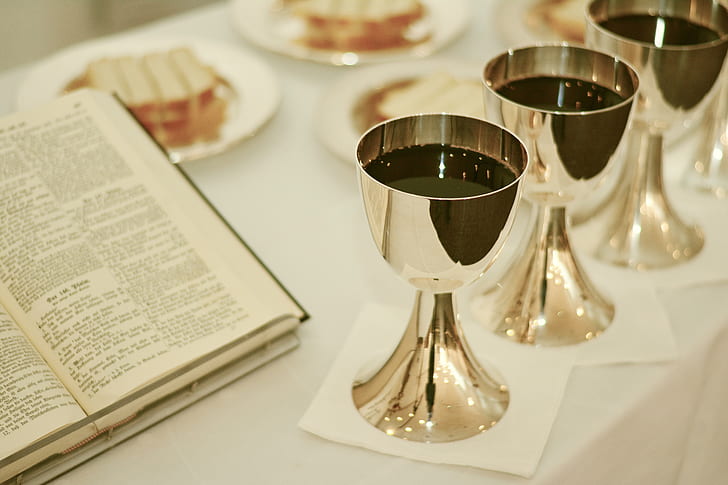
First of all, Jesus takes the bread and he also takes us. In our communion service, we represent this simply by unveiling the elements, removing the white cloth. Other traditions process the bread and wine to the table. I don’t do that, and I won’t bore you with the reasons now, but note that we simply take the bread.

And Jesus takes us, too. He takes the initiative to choose and call us. Yes, we made a choice to follow him, but it only came because before we ever thought of him he thought of us, and in his love reached out to us.

We start, then, from a perspective not only of having been chosen by Jesus but in that choosing being taken and held in his hands. Whatever happens from here, we are not alone but in his hands. The covenant life starts in a safe place. As we come to renew our covenant today, we are coming to the One who promises never to leave or forsake us.

So we start from that point of security. Like the child held by the parent, we are safe. Like the friend giving us a hug, we are reassured. Like the beloved held by the lover, we know we are loved. This is the beginning of the covenant. On Covenant Sunday, I am always thinking about those who are nervous about making promises to God which amount to an abandonment to his will and wonder what that would mean. But I come back to the fact that we begin in this place: Jesus takes us. Covenant starts in a good place, not a scary one.

Give Thanks!
Give Thanks! by Kevin Dooley on Flickr. Some rights reserved.

The second action of Jesus is that he gives thanks for the bread – and he gives thanks to the Father for us, too. Again, we might feel uncomfortable, but stay with me to think about this.

One of my nephews used to get so impatient about when a meal was due to arrive that by the time the plate was put in front of him, he was famished. Not wanting to wait a second longer than necessary to eat, he would sometimes abbreviate grace to three words: ‘Father God, Amen.”

Our custom of saying ‘Grace’ derives from the Jewish custom of giving thanks to God for food, and for all sorts of aspects of the material creation. Here, for example, is a traditional prayer said after a meal:

Blessed are You, L-rd our G-d, King of the universe, who, in His goodness, provides sustenance for the entire world with grace, with kindness, and with mercy. He gives food to all flesh, for His kindness is everlasting. Through His great goodness to us continuously we do not lack [food], and may we never lack food, for the sake of His great Name. For He, benevolent G-d, provides nourishment and sustenance for all, does good to all, and prepares food for all His creatures whom He has created, as it is said: You open Your hand and satisfy the desire of every living thing. Blessed are You, L-rd, who provides food for all.

The thanksgiving for the unleavened bread at Passover (and I am assuming Jesus was celebrating a form of Passover with his disciples at the ‘Last Supper’) begins in similar vein. The sense is maintained that created things are good, they are a gift from God, and have a divinely ordained purpose in the world. Therefore God is praised for his good gifts.

And in Covenant, God is praised for his good gift of you. God has made each of us in the church as a gift to one another and a gift to the world. For this reason, Jesus praises the Father for us. It is not that he praises us, but he praises God for us.

Even so, some people find this hard to accept. They feel worthless and insignificant, small and wracked by sin. How can Jesus praise God for me, they ask?

He can, because of God’s work in you. And God has some special purpose for you. He has given you gifts and talents, he has placed you in certain families, neighbourhoods, workplaces, and leisure, and for that Jesus is thankful. However much the holiness of God cannot abide sin, there is no picture here of an angry God, only of the Son of God who is pleased that you are God’s good gift. So rejoice that you are seen this way.

Break Free
Break Free by Nick Wheeler on Flickr. Some rights reserved.

Jesus’ third action is to break the bread, and also break us. Here we may feel we are getting closer to the challenging, if not severe, side of the Covenant that intimidates some church members into not attending this service each year.

At one level, though, this isn’t a fearful picture. For the one bread to be distributed, it has to be broken. And for the one church to be sent on the mission of God, she has to be dispersed to different places. Some of this is just a natural expression of what happens at the end of worship when we are dismissed to serve Christ in the world. It’s like the church building which had a slogan over the exit door: ‘Servants’ Entrance’. We go from here to our separate localities as Christ’s witnesses. We are the church gathered and we are also the church dispersed.

But in another way, being broken by Jesus is part of that submission to whatever he needs to do in our lives. I am not talking about something so extreme as military training, where the civilian is destroyed in order for the soldier to emerge, although we should take seriously the call to a disciplined life as Christians.

And in this respect, Jesus uses the circumstances of life that he allows us to face, or even perhaps brings into our lives, to shape us into better people. However, those life situations are not always pleasant. They may be little different from what people who do not share our faith also encounter, but in our case, Christ allows brokenness to be a tool that leads us to pursue a life that is more like his.

So even in the joy of a marriage, we come face to face with just how self-centred we are. In the loss of something important, we confront the call to decide exactly where our faith and trust lie.

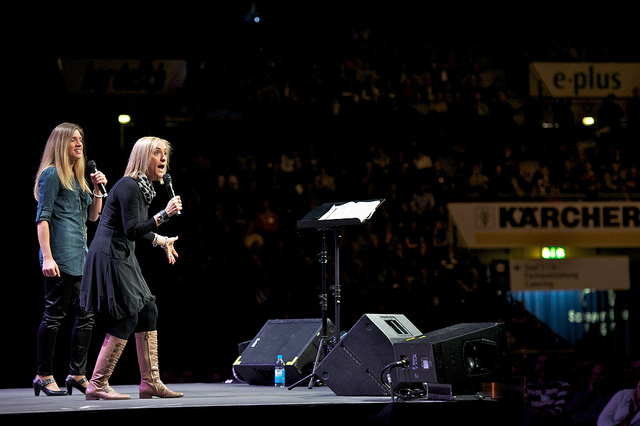
Christiane Caine
Christine Caine by Willow Creek D/CH on Flicr. Some rights reserved.

This week I read an extraordinary testimony by the Australian preacher Christine Caine. An energetic pastor, evangelist, and campaigner against human trafficking, she was diagnosed with thyroid cancer and other conditions in her body. I would love to read you the whole testimony, but it’s long, and I can only focus on a couple of brief parts. Firstly, here are just a few of the words she said to her surgeon after her diagnosis:

Leslie, it’s okay. Cancer is not terminal. Life is terminal. I will live every second of every day that God has ordained for me to live on this earth, and then I will go home. … We are on a battlefield, not a playground; it’s time to go to war. You tell me what to do medically, and I will fight this spiritually, and whatever happens, Jesus will have the final victory.

And then I note how she said,

I wanted to be delivered FROM this situation, but ten weeks later, I discovered God wanted me to walk THROUGH this.

Why walk through this? Because it brought her into contact with other cancer patients. Lonely, fearful people. Those who had lost their hair, were marked with radiation lines, bruised by needles, or unable to walk without assistance. A father wheeling his son in for treatment. In her broken condition, she could minister. As she says,

I wondered why so many people wanted a platform ministry when there was ministry waiting in hospital waiting rooms all over the world.

How many are waiting for us to go to them while we wait for them to come to us?

Waiting rooms are waiting for us.

What are you waiting for?

And this leads me into the fourth and final action of Jesus: he gives the bread, and he gives us, too. That’s where we’ve been heading from the beginning. Just as the bread is destined to be given, so are we. Chosen and cherished by God in his taking of us and Christ’s thanksgiving for us, the breaking that then ensues in the knowledge that we are so loved is in order for us to be distributed into the world.

Just as ancient Israel had to learn that her special covenant with God was not a matter of élite status but in order to bless the world, so the same is true of our ‘new covenant’. It does grant remarkable status to us as children of God, but the purpose is not to luxuriate in that, but to become God’s gift to the world, calling others to meet this astonishing God who calls them too into the covenant community.

LICC
LICC by Brett Jordan on Flickr. Some rights reserved.

And so this theme comes at a good time, with our Life On The Frontline series beginning this Wednesday with a midweek meeting at 8:00 pm and continuing next Sunday with the first sermon in the series. Here is the chance to identify the people and places to which God has given us so that we might be his ambassadors.

If we are serious about renewing our covenant with God this year, we shall be serious about the fact that Jesus gives us to others in his name.

So if you are aware that Christ has taken hold of you and you are safe with him; if you realise that Jesus thanks his Father for the gifts and opportunities he has given you; if you realise that the brokenness in your life has been allowed for a kingdom reason; and if you acknowledge that Jesus is giving you to the world …

… then why not take part in Life On The Frontline. And be ready as part of working out your covenant vows to seek openings to be Christ’s witness in word and deed.

[1] Wright, N. T. (2004-03-01). Mark for Everyone (p. 194). Westminster John Knox Press. Kindle Edition.

Sermon For Covenant Sunday, 2014

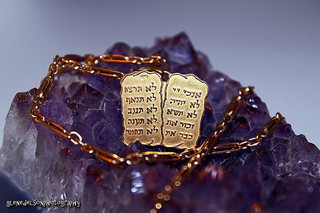
Ten Commandments
Ten Commandments by Glen Edelson on Flickr. Some rights reserved.

Exodus 24:3-11

Sometimes as a preacher I think I must sound like a broken record, repeating the same themes. Usually I am brought down to earth by congregations who haven’t remembered the theme I think I am repeating, anyway. (What that does to the value of preaching is another matter that I won’t consider at this point.)

One of the themes I know I repeat comes around at Covenant Sunday every year. It’s the notion I like to advance that tries to deal with the fears we have in making such solemn and even radical promises to God. And that thought is the one that points out – virtually every year – that the human side of a covenant with God in the Bible is always a response to his great acts of mercy, love and salvation. We only enter into a covenant with God because he has already done so much for us.

That is the position the Israelites find themselves in when we come to our first reading in the Covenant Service, from Exodus 24. God has saved them from the terrors of the Egyptian Pharaoh. The commandments are only given in the Old Testament after that act of salvation. They are not being required to do something good so that God will feel favourably disposed to them: God loved them before that, and unconditionally. As we consider God’s call on us as disciples of Jesus again this year, we remember that as our starting-point: God acted to save us before we did anything for him. It isn’t slavery in Egypt and the parting of the Red Sea in our case, it’s slavery from sin and the parting of the waters of death.

So the first point I want to make this morning is precisely that: yes, today is a day when we are called to reaffirm our obedience to God. We might not like it, but we do so because we already know God loves us. He loves us beyond measure. As Christians, we would go beyond the Exodus text and say that he loves to the point of his only begotten Son taking on human flesh, and living and dying for us. This is the love by which God sets us free, and this is the love to which we respond today by offering our obedience.

Some of us might find it helpful to draw an imperfect parallel with parenting. We ask our children to do what we require of them, but we do so out of love. We ask our children to obey us, because we love them and because we have already shown that love sacrificially for them, and indeed we shall go on loving them at great cost to ourselves. That is the love that calls forth a child’s healthy response to parents.

And it is similar in the life of the Spirit, as I have said. We gather to make these promises today, because we know a God who loves us to the uttermost in Jesus Christ. He doesn’t simply say to us, “Do this, because I say so,” he says, “Do this, because I love you.” That makes all the difference in the world.

So the commandments are the first feature of the covenant, from our perspective, and they are our response to God’s redeeming love in Jesus Christ.

The second feature of the covenant in Exodus 24 is blood. We read about the animal sacrifices made by the Israelites, and how Moses divided the blood between the basins and the altar.

You might expect me to make a point here from a Christian perspective about the sacrificial death of Jesus Christ for our sins, but that isn’t quite what I’m going to say – apart from the fact that I have already alluded to that in talking about the level of God’s committed love for us in the first point.

Fellowship
Christian Student Fellowship by Jeremy Wilburn on Flickr. Some rights reserved.

Actually, there were several kinds of sacrifices in the Old Testament, and the ‘sin offering’ was only one. Here, we have ‘offerings of well being’ (verse 5). Other translations call these ‘fellowship offerings’. They are offerings that express something about the relationship between God and the people. They do not so much make the relationship by dealing with the barrier of sin as show that the relationship already exists.

Furthermore, in the context of a covenant, the shedding of blood is significant. In ancient times, a covenant was sealed with blood. We may seal an agreement with signatures, or perhaps a solicitor will attach a wax seal to something particularly serious, but go back three thousand years or so and you will find people sealing covenants and solemn agreements with the blood of an animal.

So – this may not be the way we do things now, but the essential message for us to take from this in the passage is our relationship with God has been sealed and confirmed.

Our covenant is, of course, sealed in the blood of Jesus Christ on the Cross. His death does not only mean the forgiveness of our sins, it means a permanent relationship of mutual commitment has been settled. Through the Cross, we become not only forgiven sinners, but disciples and friends of Jesus.

In other words, this is what we say in the Covenant Prayer when we conclude with the words, ‘you are mine and I am yours.’ It is a declaration of such close fellowship with God in Christ by the Holy Spirit that we are united. The covenant is not simply an exchange of deeds – God’s salvation and then our obedience – it is the making of a deep and lasting relationship.

Can it be broken? The Old Covenant was broken by God’s people, as we heard in Jeremiah 31. Some say the New Covenant cannot be broken, but John Wesley said it could – albeit only in extreme circumstances.

Again, think of the parent-child relationship. When that has been built on sacrificial love, it takes something extreme to break it completely. Wrong-doing can seriously weaken it and make parent and child distant instead of close. Likewise, it takes something on the scale of our utter rejection of God to break the fellowship of the covenant. We can by our sin weaken the relationship so that it is not as close, rewarding and joyful as it could be, but that should not make us complacent. Instead, would it not be good to think that as we renew our covenant this year, we commit to building and strengthening our relationship with God through the use of spiritual disciplines (what Wesley called ‘the means of grace’) and by doing his will?

And that leads neatly into the third and final feature of the covenant: eating and drinking. Listen again to the curious way in which the reading ends:

Then Moses and Aaron, Nadab, and Abihu, and seventy of the elders of Israel went up, 10and they saw the God of Israel. Under his feet there was something like a pavement of sapphire stone, like the very heaven for clearness. 11God did not lay his hand on the chief men of the people of Israel; also they beheld God, and they ate and drank. (Verses 9-11)

Pastor Appreciation Sunday
Pastor Appreciation Sunday by Judy Baxter on Flickr. Some rights reserved.

You have the close fellowship, culminating with those words, ‘and they ate and drank.’ You can soon think of other biblical examples of people ‘eating with God’, even if not quite so directly. The Passover meal. Jesus dining with sinners. The Lord’s Supper – of course. The wedding feast of the Lamb and his Bride in Revelation. It’s very physical and material, hardly the ethereal, spiritual occasion that many assume a religious experience to be. No wonder C S Lewis called Christianity ‘the most materialist of all the religions’.

Again, in ancient times, after a covenant had been sealed with the sprinkling of blood, the parties to the covenant would sit down and feast together. We shall do this at the climax of our service with bread and wine, although when we speak of the sacrament being ‘a foretaste of the heavenly banquet prepared for all people’ and then swallow a tiny piece of bread and a thimbleful of wine, it is a pretty microscopic foretaste!

This God enjoys our company, meets us in the ordinary and necessary areas of life, and transforms the mundane into feasting. This God turns everyday grey into multi-coloured celebration.

Most of all, perhaps, the thought of us sitting together and feasting with God confirms the notion that the covenant has brought us into a family. Like a family sitting down to eat in the evening when everyone has come in from school or work, so we reflect together on what we have done with God and what we shall do tomorrow with him. And we do that with food and drink, bread and wine, at tables and in cars, in homes and in shops, breathing air and using our five senses, because we can not only taste and see that the Lord is good as the Psalmist said, we can also touch, see, smell and hear that he is good.

We live out this relationship which the covenant has established and confirmed not waiting for heaven but seeking to do his will on earth as it is in heaven, all the while giving the world an advance taste of the new heavens and the new earth which God will bring with the resurrection of the dead at the end of all things as we know them now.

What does this have to say to us as we renew our covenant this morning? We are called not only together into the fellowship of the church with God but also to go into the world with him and celebrate his love there. We can find him in the normality of daily living just as we can also find him in the specialness of Sunday morning. And as we encounter God in the physical world, so we rejoice in that love as we turn material things back into the stuff of his kingdom.

May that be what each of us does this year.

Covenant Service Sermon: The People Of God

John 15:1-10

'Vine on the Dunes' by Tom Gill on Flickr. Some rights reserved.
‘Vine on the Dunes’ by Tom Gill on Flickr. Some rights reserved.

‘I am the vine,’ says Jesus (verse 1). The moment you allude to vines and therefore grapes – and hence to their product, wine – you get into difficulty in Christian relationships. In one Anglican-Methodist church I knew, the bishop was so intent on the communion wine being alcoholic and the Methodists equally determined to use non-alcoholic wine that a way forward had to be found. The bishop wouldn’t tolerate the Methodist suggestion that both forms of wine were made available at the sacrament. He therefore insisted that the wine be made by local worshippers trampling the grapes before the service, so that the Methodists could believe they were drinking grape juice and the Anglicans could believe that the fermenting process had begun. The one time I attended a communion service there under this regime, the lighting was poor and I felt like I was drinking something mushy – it was more like a thick New Covent Garden soup than wine.

But we need not worry ourselves with such farces this morning. When Jesus says ‘I am the vine’, he is making an important statement to people who can hear the Jewish background. In the Old Testament, Israel – God’s people – was described as a vineyard. Isaiah 5 is a notable example. So for Jesus to call himself the vine is for him to claim that he is all that God intended the People of God to be. If we are to be joined to him as branches of the vine, then he is teaching us how to be and to grow as part of the People of God. Jesus is telling us here, then, about how we grow as God’s people. And hence why we read this passage at a Covenant Service.

First of all, Jesus makes it clear that all we do in the process comes under the rubric of responding – that is, responding to God. The passage is filled with assumptions that God acts first, and we respond. Jesus is already the vine, the Father is already the gardener, the Father already loves Jesus, and Jesus already loves us. God’s saving actions come first. Everything we do is because God has already reached out to us in love through his Son.

This is the very nature of a covenant. Ancient Israel’s covenant with God at Mount Horeb was similar to the covenants of their time. A powerful king rescued a weaker party. In gratitude, the weaker parties then responded to the wishes of the powerful one who had saved them. That is what we see with Israel when God has delivered her from Egypt. The covenant is set in place at the mountain of God, and the Ten Commandments are given. Thus Israel was never to keep the Ten Commandments and the other laws of God as a way to earn salvation, because their salvation had already been freely and graciously given in love: God had saved them from the evil power of Egypt. All that Israel did was a response.

That is what we are coming to do today, as well. We are not coming in order to make impossible promises to God, fingers crossed behind our backs, hoping that we might manage to twist his arm into pleasing us. No: we are responding to God’s love for us in delivering us. We come to this Covenant Service, because God has already come to us in Immanuel, God with us, his Son Jesus Christ. We come to make our vows today, because God has already set us free in the death and resurrection of Jesus, and he is continuing to set us free from the penalty, the power and the presence of sin. Today we come, then, not to a severe God who wants to torture us with unreasonable demands, but to the God of outrageous grace.

Let us come and make our promises today, because we are already loved by God. We do not have to win him over. It is rather God who wants to win us over to him. Do not let past or recent failure put you off. His arms are open wide from the Cross. He has stopped at nothing to love us. Our promises today are where we recognise that with joy, and say that we will stop at nothing to love God and love our neighbours in response.

The second theme to pick out here is of remaining – as the branches of Jesus the Vine we are to remain in him in order to be fruitful. We need to be attached to receive the sap that enables us to make a difference in the world as Christians.

‘Remaining’ suggests something continuous, not a one-off event or action. Other translations speak of ‘abiding’, which implies permanent residence. Why is it important to emphasise ‘remaining’ in this way?

Because there is a strand of Christianity which tends to reduce faith down to the moment of decision for Christ, and little else. Do not mistake me, deciding to trust Christ is important, but my point is this: the Christian life is not simply about a decision in the past, it is about on-going discipleship. Jesus called for disciples, not decisions. And disciples are those who are committed to the long haul. By definition, a disciple is a learner, or an apprentice. We do not learn our trade as Christians overnight. The training and the study take a lifetime – maybe more!

So Jesus therefore calls us to ‘remain’ in him. That way, he can nurture us. Remaining in him involves staying closely connected to him, through all the classic ways: prayer, Bible reading, worship, the sacraments, fellowship, solitude, silence, simplicity, fasting and so on. One renewed commitment we might make today is to our spiritual disciplines, or ‘means of grace’, as John Wesley called them.

As well as that, there are a couple of general applications of this notion of ‘remaining’ that come to mind. One is that we simply say to God, ‘I am not going to be a fair-weather Christian. I am going to stick with you, through good times and bad, through times when I feel blessed beyond words and times when for I can barely feel your presence. I will not just be your follower because I receive good things from you, I will be your follower simply because it is the right and good thing to do.’

And in a slightly similar vein, I think not so much of those who are only up for expressing their faith when everything is sunny, I think of those who are struggling to hang on. For those who are finding the going altogether too difficult for whatever reason – painful life circumstances, things getting on top of us, dreadful things happening – I invite you to see the Covenant promises today as just a simple commitment to staying with Christ. I see some of us effectively saying words rather like this: ‘Right now, Lord, I really don’t feel much like this Christian stuff. I can barely keep my head above water. But even if it’s only by one finger, I’m going to hang onto you.’

I believe that when we say things like that, there is good news for us: God’s grip on us is stronger than ours on his.

The third and final element I want to talk about this morning as we seek to grow as God’s people is obeying. ‘You want to know how to remain in my love?’ asks Jesus. ‘You do it by keeping my commands, just as I obey the Father.’

Let me illustrate the point like this. I was once asked to complete a questionnaire to discover what kind of a learner I am. There were four different learning styles that you could be. Most people were not exclusively one type, but a varying mixture of the four. In my case, I was predominantly someone who learned knowledge by studying the theories behind it. I was also someone who learned by reflecting on things that had happened. I learned a little bit by putting things into action, and I learned little or nothing at all from a pragmatic approach. If you know me well, none of that will surprise you – academic, theoretical and impractical.

But for someone like me, Jesus says the way to learn discipleship in the People of God is not by theory. Or at least doing the theory is not enough on its own. It has to be put into practice. I have commended the spiritual disciplines yet again this morning, but just doing them is not enough on its own. What we learn from our devotions has to be put into practice in the form of obedience to Christ.

Two weeks ago I mentioned in passing when I talked then about practising spiritual disciplines that one of the church members I had known in the past who had been most faithful in daily Bible study had also been one of the cruellest Christians I had come across. She was someone who did the theory but didn’t translate it into action. Indeed, unless we act on what we learn we will earn that common charge made against Christians, namely that we are hypocrites.

Ultimately, the need to obey is about love. Jesus links keeping his commands with remaining in his love. Does that sound tough or unfair? Well, granted we often think of love in terms of equal relationships, and so obedience is not the first category that comes into our minds, and we would have to acknowledge that our relationship with Christ is not one of equals. Nevertheless, love is possible, just as we call a child to do what a parent asks in the context of a loving family. If we love someone, we have more than warm feelings for them: we want to do what pleases them. When we do so, that strengthens the relationship we have with them.

And that, I think, ties together everything this is about today. For, as I said first of all, we are responding to a God who in Christ has reached out to us in love in the first place. All that we do is in loving response to his love. And in the light of that love, we secondly want to remain in the relationship: we are in this for the long haul in a disciplined way, even if there are also times when we are able to do no more than cling on. And so thirdly we want to demonstrate that remaining in Christ’s love by obeying.

These things bind us more closely to Jesus the Vine, the True Israel. We become more truly what we have been called to be by grace: the People of God.

Sermon: Epiphany Meets The Covenant Service

Matthew 2:1-12

The Feast of Epiphany, when Christ was revealed to the Gentiles in the visit of the Magi, is one that sometimes gets overlooked in Methodist churches, because it frequently clashes with the annual Covenant Service. Today, I thought I would try combining the two. The Covenant Service is the time when we renew our commitment to Christ, and the Magi are a great example of that. They arrive in Jerusalem saying they have come to pay homage to the child born to be king of the Jews (verse 2) and when they finally get to the house where the child is, they get down on their knees and do exactly that (verse 11). This morning I want to highlight some of the elements in this story that make them into true worshippers that we can emulate in our way in our day.

Firstly, they were listeners. They were more attuned than anyone else in the story to what God was saying and doing. They are the least likely candidates for that, yet that is true of them. They are pagans, they are Gentiles. They are astrologers, following a practice condemned in the Old Testament in the prophecies of Isaiah. They come to the land of God’s chosen people, yet they are the ones who are keen to know the purposes of God and act on them. You might think that Herod would know the Scriptures, but he hasn’t a clue and he has to call in the experts. You might think that those experts, the chief priests and scribes of the people (verse 4), would know their Scriptures. Well, they do, and they quote them. But they do nothing about them.

In this respect, it is sad to say that too many of us in the church are like either Herod or the experts. Either we don’t know our Scriptures at all, or we know them but we don’t put them into practice. It is a scandal that many professing Christians only engage with the Bible in a Sunday morning service. They listen to it being read but never pick it off the shelf in the week. And even among those who do read the Bible frequently, it is too common an attitude to read it and forget it.

In other words, we are shamed by people with less knowledge about the faith than we ourselves have.

In my youth and early adulthood, a relative we used to visit often as a family was a woman we called ‘Auntie Rene’. She wasn’t really an auntie, but she was a relative: she was my Mum’s cousin. But rather than get into complicated discussions about what kind of a cousin that made her to my sister and me, we called her ‘Auntie’.

She had poor health. In 1969 she was given six months to live, but – despite smoking – she stretched that six months out to eighteen years, and she finally passed away in the Spring of 1987. Sometimes we wondered about where she stood on matters of faith, but when she died, someone (I think it might have been my sister) discovered that by her bedside was a Bible. She had been reading Jeremiah.

As we talked about this, we came to the conclusion that in her life Auntie Rene had responded to as much light as she had come across, whether that was the full Gospel of Jesus Christ or not.

I suggest to you that the Magi are a group of people who respond to as much light from God as they find. It starts with following the star, it continues with going to Bethlehem when they hear about Micah’s prophecy and it ends with their obedience to the dream that leads to them avoiding Herod on their way home.

Now if that’s the case, what excuse do we have – we who have had decades of Christian experience? Maybe we feel we don’t know much about our faith – well if that’s the case, can we like the Magi start by responding to what light we already do have?

And if we do have some Bible knowledge, then will we start putting it into practice, unlike the chief priests and scribes? Christian teaching and learning is not simply about filling our heads with knowledge, it’s about assimilating what God wants us to do and then getting on with it.

Now that leads to the second element I want us to consider about the Magi: they were pilgrims. In other words, they went on a journey, a spiritual journey. Based on what light they had received from observing the star, they left their homeland. Based on what light they received when they heard Micah’s ancient prophecy, they travelled from Jerusalem to Bethlehem. Based on what light they received in their dream, they took a different route home. We would never have heard of them unless they had been willing to travel on a journey – that is, to be pilgrims.

Now surely the point about a pilgrim is that you travel somewhere with spiritual intentions, but in doing so you leave behind the familiarity of your home in order to arrive at somewhere unknown and in the process to encounter God. To go further in the spiritual life as a pilgrim requires getting off our familiar home territory to go to new places.

And that’s the challenge. How many of us are willing to move away from the places where we feel safe and comfortable in order to draw closer to Jesus Christ? Isn’t one of the problems with the church the fact that too many of us just want to keep everything familiar and cosy? Jesus calls us to an adventure. He calls us to what the Methodist Church called a few years ago ‘Holiness and Risk’.

There are so many areas where our unwillingness to be pilgrims onto new, uncharted ground means that the church withers. It can be in the area of evangelism, where any small efforts we make are all based on the assumption that people want to come to where we feel comfortable, in a church service, rather than us being willing to go to where they feel safe.

It affects our general profile in the community. Only the other day I was having to explain why the regular ecumenical lunch time meeting of the Knaphill ministers happens in a pub, rather than in the Christian coffee shop in the village. We feel it’s important to be off home territory and visible in the wider world. But some Christians think that anything other than doing things with overtly Christian tools is somehow wrong. Back in the 1980s, the Christian musician Steve Taylor satirised this in a song called ‘Guilty by Association’ with lines such as, ‘You’ll only drink milk from a Christian cow.’

More generally, our unwillingness to get away from the safe and the predictable afflicts any possibility whatsoever that the church might innovate in a creative way. Perhaps you’ve been told what the seven last words of a dying church are? ‘But we’ve always done it this way.’

Real disciples of Jesus are willing to go on pilgrimage. They will leave home territory behind to venture somewhere new as part of their longer journey to the New Jerusalem. It goes right back in our heritage to Abram, when he was called to leave his homeland. It is there in the incarnation of Jesus, who left the glory of heaven. We see it here in the account of the Magi. Why, then, do we not see it much in the life of today’s church? Might the New Year and our renewal of the Covenant be the time when we finally take this part of our Christian inheritance seriously?

Thirdly and finally, the Magi were givers. We had a bit of fun with this at Knaphill during the Christingle service on Christmas Eve. Following a throwaway comment, we based the whole service on the theme of ‘Elf and Safety’. We retold the Christmas story in dramatic form, but every now and again an elf would appear and object that something broke ‘elf and safety’ rules. For example, the donkey should not have been allowed to cover so many miles in such a short time, and it should have had a tag on its ear.

When it came to the arrival of the Magi, another elf sprang out when they produced the gold, frankincense and myrrh. He wanted to know whether they had an import licence for these goods.

I think some of us have trouble with the gifts of the Magi. They are so expensive and extravagant. Surely they are beyond us? Or maybe we don’t want to be challenged. So we resort to ancient explanations that the gold symbolises Jesus’ kingship, the frankincense his priestly role and the myrrh his death. We do so, despite Matthew never claiming that meaning in the text and despite none of the major commentaries seriously entertaining that interpretation.

But perhaps the key to understanding this example of devotion is not the contents but the container, not the gifts but the treasure box. The Magi ‘[opened] their treasure-chests’ (verse 11), and I think that is the call to us. What are our treasure chests? What are the things we treasure – which might be money, possessions, talents or a whole lot of other things? Our treasures may well not be gold, frankincense or myrrh, but there are aspects of our lives that are inordinately precious to us, and the Christian disciple lays them down before Jesus as an act of worship and commitment.

I believe that is something well worth thinking about as we make our solemn vows again this year in the traditional words of the Covenant Prayer. Our treasures may not be just money, talents or possessions. They may be people, ambitions or dreams we have had for our lives. All these we bring to the feet of Christ and say, “Here is all that is most precious to me. I offer it to you. Use it as you will.”

That was what made the Magi different. Herod was desperate to clutch tightly onto what he considered to be rightly his. The chief priests and scribes had great intellectual gifts, but those talents were not offered to the true King of the Jews. They were just intellectual dilettantes, not servants of God’s kingdom.

There may be ways in which our churches are mixtures of mini-Herods, priests and scribes and Magi. We have little Herods who secretly find Jesus a threat to their whole way of life. We have priests and scribes who are full of religious knowledge but empty when it comes to practical obedience. But we also have Magi, people who may not be the likely suspects but who actually are more committed to Jesus Christ than anyone else in the neighbourhood.

But in truth, each one of us may be a mixture of the three. Sometimes we are antagonistic towards what Jesus wants of us. Sometimes we are apathetic. And sometimes – thankfully – we are as passionate for Christ as the Magi were.

Let us identify these different aspects of ourselves this morning, so that we may put aside our Herod tendencies and our priestly and scribal complacency, in order that we may renew our to listen for God’s will and obey it the best way we know how; to strike out on the pilgrim way, even if that means going far from what we would call home; and to offer our treasures in devotion at the feet of Christ.

May that be the attitude of our hearts in a few minutes’ time, when we come to recite again the – truly – awesome words of the Covenant Prayer.

Covenant Service Sermon: Body And Mind

Finally getting back to posting sermons. My church at Knaphill holds its annual covenant service today, where we renew our promises to God. Here is the sermon.

Romans 12:1-2

Henry Gerets was the American padre appointed as a chaplain to those Nazis who were put on trial at Nuremberg after World War Two. It was not a job he wanted. His only son had been killed by the Germans in the war, and so you can imagine his feelings towards these evil people.

But eventually he accepted the post. He went to Nuremberg, and he set about visiting every notorious Nazi held there. Gerets went from cell to cell, sharing the Gospel with men who were about to pay for their crimes by being hanged. Some went to the gallows, proudly defying the God of whom Henry Gerets spoke.

But some got down on their knees, and begged for mercy.

And mercy is a fundamental quality of the Gospel. ‘Therefore, I urge you, brothers and sisters, in view of God’s mercy,’ says Paul in Romans 12:1. It is the mercy of God that has brought us to this Covenant Service. We, too, are the ‘tax collectors and sinners’ beloved of Jesus and brought into his Father’s presence by grace.

In fact, it’s better than ‘mercy’. What Paul really says is, ‘in view of God’s mercies’. How many of us have known God only to be merciful once to us? Is it not our testimony that God is merciful to us over and over? Like the author of Lamentations, we know that his mercies are ‘new every morning’. Mercy upon mercy, grace followed by more grace, love poured out over more love – is that not the God of the Gospel?

And we come to make our promises today ‘in view of God’s mercies’. Paul has given his readers eleven chapters about God’s mercies. We know many years of God’s mercies. In view of all he has done for us in Christ, we offer ourselves.

How are we going to do that? Paul says it’s going to take all we are and all we have. He calls us to make two responses – one with our bodies and one with our minds.

Firstly, then, our bodies:

‘offer your bodies as a living sacrifice, holy and pleasing to God – this is your true and proper worship’ (verse 1)

‘Sacrifice’ – for Paul as a Jew, this is the language of worship. It is appropriate to use our bodies as expressions of our worship. Some Christians do this quite naturally. They may do in set liturgical ways such as kneeling for prayer. I have to say, that I have found that simple bodily act of kneeling for prayer in, say, an Anglican church has been a profound reminder for me of my need to be humble before God. Similarly, I remember asking one Anglican friend why she signed herself with the cross before worship. She told me it was a particular reminder to herself that the Cross was the reason she could be in worship at the first place. It therefore prevented her from approaching worship casually.

Some Christians, especially those of a charismatic of Pentecostal spirituality, use their bodies more spontaneously in worship, perhaps most notably when lifting their hands in praise. It is, of course, an ancient Jewish practice to lift up holy hands to God in the sanctuary. It is mentioned in the Psalms. The Jewish tradition is more to raise hands in intercession, whereas the charismatic-Pentecostal style is more about praise. It’s as if to say, ‘I am already lifting my voice to God in praise. What else can I raise as a sign of how much I want to worship God?’

One thing that strikes me about prayers in worship and before worship is that a common theme is this: ‘Lord, we thank you that we are free to worship you in this country.’ Now that’s a laudable sentiment, and we should not take that freedom lightly. But I wonder whether it morphs for some of us into, ‘Thank you, Lord, that we don’t have to pay a price in order to worship you.’ Because if it does, then we have lost sight of the fact that worship is a sacrifice, and that surely means it will cost us something.

How, then, are we going to offer something costly with our bodies as an act of worship to God? It may not be in terms of persecution, but if worship costs us nothing then it is barely on the level of a hobby or a pastime. They probably cost us more than worshipping our God of mercy does.

That cost may come for some of our more elderly and frail family in the physical effort it takes to be at worship, and to participate. Their faithful commitment to worship is something the rest of us will only understand when we get to their age and condition.

But of course this is not all about Sunday services. This call to use our bodies sacrificially in worship is also about our expression of devotion every day. Think of how the old marriage service contained the promise, ‘With my body I worship thee’ – it says, ‘With my body I honour you’ in the modern service. is that not what we are to do? God created our bodies. They are not empty shells for the ‘real person’. They are part of who we are. Tomorrow morning, you will see there are ways in which you can make a physical effort with your body as a way of honouring God. There will be something you can do that will be ‘holy and pleasing to God’ with your body.

I’m sure you have little problem with the idea that worship is ‘holy’ – that is, it is something we set aside for God’s service. When we do something that is specifically for our Lord – whether it is explicit or implicit – the fact that we have made it for him means it is holy.

But what about the idea that Paul tells us here that this offering of our bodies is ‘pleasing to God’? Will you just take a moment to reflect on the fact that we can give God pleasure with what we offer him? Our images of a solemn, severe old-fashioned Headmaster God need tempering with these words. Right now, I believe God is looking forward to what we can offer him. Why? Because it will be what Paul calls here our ‘true and proper worship’. That is, when we have reasoned how we should respond to the mercies of God, it will become apparent that the offering of our bodies is an appropriate response.

Let us each think this morning, especially as we renew our covenant promises: how are we going to offer our bodies in worship to God?

Secondly, our minds:

Do not conform to the pattern of this world, but be transformed by the renewing of your mind. Then you will be able to test and approve what God’s will is – his good, pleasing and perfect will. (Verse 2)

This may sound like a negative question to get into this point, but bear with me: what do we think the effects of sin are? I would suggest that we have underplayed the effect of sin upon our minds, because our society has for the last three hundred years placed such value upon the powers of human reason. We sometimes overlook the effect of sin upon the mind. So, for example, we rightfully laud the achievements of scientists, whose use of their minds have brought wonderful benefits to our lives. But we miss the way scientific minds have been used to bring terrible harm to our world – nuclear weapons, environmental damage, climate change and so on.

I suggest we are all like that. Our minds are capable of great things, but they are also corrupted. They are as much affected by sin as any other part of us. Earlier in the epistle, Paul spoke about the ‘unfit mind’ (1:28) and that is what we have. So our minds need renewing, because as Christians we are not finally to be part of this sinful age but of the glorious age to come, the kingdom of God.

So if we are grateful for the mercies of God, we shall submit our minds to the renewing power of the Holy Spirit. What does this renewal of our minds look like? We get some idea when we realise that the end product, according to Paul, is that we ‘will be able to test and approve what God’s will is – his good, pleasing and perfect will’. In other words, having renewed minds is not a matter of just reading a list of rules and following them. That is what machines and computer programs do. It is impersonal. No: the renewed mind can ‘test and approve what God’s will is’. That implies personal involvement, a journey of discovery.

And so I suggest to you that the Holy Spirit renews our mind not by filling them with rules but with the mind of Christ. The Spirit shows us more of Christ – his person, work and teaching. This becomes the matrix by which we are guided into evaluating what the will of God is. We are involved in working out what that will is – it isn’t simply dropped into our empty minds.

How, then, do we open ourselves to the Holy Spirit’s renewing work in our minds? Well – if it means getting in touch with the mind of Christ, then yes, this is another time when I need to urge us to engage in those spiritual disciplines that soak us in the Scriptures, particularly the New Testament and especially the Gospels. It may be daily reading of the Bible using Bible reading notes. It may be taking a reading and using our imagination to get inside the story by wondering what our five senses would tell us or how we would feel if we were one of the characters. It may mean taking a passage, looking for the one thing that particularly strikes us and then chewing that over. Whatever methods we use, we need to be as diligent about our Bible reading as we are about nourishing ourselves with food, and we certainly need to respond prayerfully to whatever we have encountered. We shall also do this not only on our own but in conversation and fellowship with our sisters and brothers in Christ. For the mind of Christ will come in exploration with them as well as individually.

And I must also remind you that none of this is a quick fix. In a society that is addicted to instant solutions (so says he whose Internet connection speed is about to double!) the renewal of our minds is a long process. If the old mind is, as I said before, an ‘unfit mind’, then the renewal that makes our minds spiritually fit for the kingdom of God is a long training process, much like the years of training our Olympic and Paralympic heroes of recent weeks have had to follow.

But … it’s worth it. Because this leads us to discern ‘God’s will – his good, pleasing and perfect will.’ Did you notice that? His will is ‘good, pleasing and perfect’. Although our Covenant promise will balance the ideas that some things we are called to will be enjoyable and others will be difficult, it is common among some Christians to assume that the will of God will automatically be hard, if not unpleasant and maybe downright tortuous. Yet Paul says it is ‘good, pleasing and perfect’. Yes, of course sometimes following God’s will can be painful – in talking about our bodies we used the word ‘sacrifice’ – but it can also be a joyous thing. Our faith is resurrection as well as death.

So let us embrace the call to dedicate our bodies and minds to God, in the light of his never-ending mercies. Let us be willing to sacrifice, yes, but let us also relish the thought that discovering his will and walking in it may bring joy not only to our Lord but also to us.

Create a website or blog at WordPress.com

Up ↑