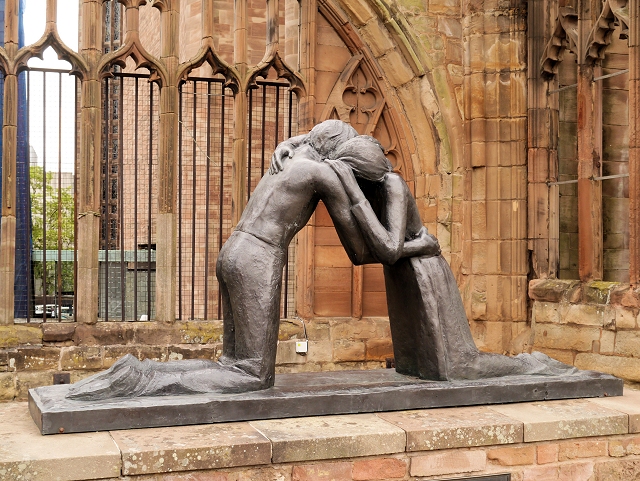
Worship In The Midst Of The World (Isaiah 6)

Isaiah 6:1-13

I expect you’re aware of the custom whereby just before the Sunday service starts, the duty steward prays for the preacher in the vestry. Over the years, I have heard a variety of such prayers, the worst being one Good Friday where in his prayer the steward called the death of Jesus a mistake.

But another common one starts something like this: “Dear Lord, we gather here today to leave the world outside behind and concentrate on you.” Now I guess that could be interpreted more than one way. But is our worship really an escape from the world?

In the year that King Uzziah died, I saw the Lord (verse 1a).

Is that just a date in Isaiah’s diary? I don’t think so. If all he wanted to tell us was the day on which he had a powerful experience of worship and commissioning, he would surely just have named the month and the day of the month. ‘On the twenty-third day of Nisan,’ or something like that.

No. Locating his divine encounter as happening ‘In the year that King Uzziah died,’ Isaiah affirms that worship takes place in the middle of what is happening in the world. The events of history do not drive our worship, for sure, but worship is located in the midst of politics, economics, and every power that competes to shape our lives.

What does this worship look like?

Firstly, glory:

In the year that King Uzziah died, I saw the Lord, high and exalted, seated on a throne; and the train of his robe filled the temple. 2 Above him were seraphim, each with six wings: with two wings they covered their faces, with two they covered their feet, and with two they were flying. 3 And they were calling to one another:

‘Holy, holy, holy is the Lord Almighty;
    the whole earth is full of his glory.’

4 At the sound of their voices the doorposts and thresholds shook and the temple was filled with smoke.

I once arrived at a church as a visiting preacher and was greeted by a member of the congregation who said, “I hope you’re going to entertain us today.” This brought out my Mister Grump side, and I replied, “Well, I hope we’re going to worship.”

We must get rid of this idea that worship is entertainment. It is a prominent heresy across all sorts of Christian traditions and worship styles. Worship is to give glory to the triune God, who is holy, holy, holy. We are here to honour his name and to give thanks for all he has done. Worship is God-centred or it is not worship at all.

Archbishop William Temple gave a famous definition of worship:

Worship is the submission of all of our nature to God. It is the quickening of the conscience by his holiness; the nourishment of mind with his truth; the purifying of imagination by his beauty; the opening of the heart to his love; the surrender of will to his purpose–all this gathered up in adoration, the most selfless emotion of which our nature is capable.[i]

None of this is an escape from the world, for God is the greatest reality there is. Moreover, as the Creator of this world and its Redeemer, God is where our focus needs to be, without having an escapist mentality.

So while it’s not true to say that ‘the world sets the agenda’ – that was one of the heresies from liberals at the World Council of Churches – it is true that we come to focus our energies on God, who created the world we live in through Christ and by the Spirit, and who also redeems the world through Christ and in the power of the Spirit.

Secondly, confession:

5 ‘Woe to me!’ I cried. ‘I am ruined! For I am a man of unclean lips, and I live among a people of unclean lips, and my eyes have seen the King, the Lord Almighty.’

6 Then one of the seraphim flew to me with a live coal in his hand, which he had taken with tongs from the altar. 7 With it he touched my mouth and said, ‘See, this has touched your lips; your guilt is taken away and your sin atoned for.’

If we truly encounter the living God in his glory in worship, then we shall realise quickly that we do not match up. That’s what Isaiah realises, and not only for himself. He admits not only his personal sin, but the sin of the nation. A true encounter with God will blow away once and for all the idea that we’re all good, decent people who merely make the occasional error in life. It will relieve us of the comfortable illusion that we are good enough for eternal life.

Furthermore, here our lives are calibrated not by the popular standards of the world but by God and his holiness alone.

Initially, this leaves Isaiah with a sense of hopelessness. He cannot get beyond ‘Woe is me! I am ruined!’ That’s desperate.

But God can get beyond it. A seraph brings a live coal from the altar, the place of sacrifice. It is God who provides for Isaiah and God’s people to know forgiveness and the removal of their sin.

If you remember the painful story in Genesis where God asks Abraham to sacrifice Isaac, you may recall how Isaac asks his father who will provide the lamb for the sacrifice. Abraham replies that God will provide the lamb. And he does – mercifully not in the way he was expecting.

Ultimately, we believe that is what God supremely did with Jesus at the Cross. The Lamb of God was provided. Now our sins are removed as we confess them. They have already been atoned for at Calvary.

The regularity of our failure is why we confess and receive assurance of forgiveness in every Sunday service. It is God’s free gift. We have not earned it. God has reached out in love to the world at the Cross. Will we look at the worldly horror of the Cross and allow it to cleanse and transform us?

Thirdly, God’s word:

Then I heard the voice of the Lord saying, ‘Whom shall I send? And who will go for us?’

Following confession and forgiveness, the way is clear for us to hear God’s word. That’s why the reading of Scripture and the preaching come next in a typical Sunday service, by the way.

There’s no reading of Scripture in the Temple for Isaiah. It’s questionable what, if anything, they had in written form at this point – not much, for sure. But in any case, God speaks directly on this occasion.

If we are to be worshippers in the midst of the world, we need to hear God’s marching instructions to us. ‘Whom shall I send? And who will go for us?’

Therefore, the reading and proclaiming of the word is to have an honoured and central place in our worship. It is not that with a variety of preachers we get to hear a whole host of different opinions, because the job of the preacher is not to foist their sentiments or even prejudices on the congregation; it is rather to proclaim what the Word of God says.

Therefore, there is another steward’s vestry prayer that both encourages me for its meaning but also humbles me by reminding me of the expectation on my task. It is when the steward prays that the congregation may hear your word through me. That is profoundly sobering!

This is not to say that a congregation should be uncritical of what the preacher says, although I do note the old joke which asks what the favourite Sunday lunch in a Christian household is. The answer is, ‘Roast preacher.’

But it is to say that we should be like the Berean Jews, whom Paul encountered on his missionary travels. In Acts 17:11 we read of them,

Now the Berean Jews were of more noble character than those in Thessalonica, for they received the message with great eagerness and examined the Scriptures every day to see if what Paul said was true.

In some old pulpits, the preacher was confronted by a small plaque. On it were the words of the Greeks who came to meet Jesus before the crucifixion, where they told the disciples, ‘Sir, we would see Jesus.’ Our prayer and aspiration for worship needs to be that we see and hear Jesus, so that we know what he is expecting of us in the world.

Fourthly and finally, response:

And I said, ‘Here am I. Send me!’ (verse 8b)

Isaiah responds to God’s word. He is willing to go into the world on behalf of his God. We learn in the subsequent verses that he can’t necessarily expect people to respond positively to what he has to say, but nevertheless someone must go, and then if there is no redemption there will be no excuse. People will not be able to say they were not warned.

How does this play out in our worship? Within the service, it comes in the intercessions, which are meant to be a response to the word. (I’m not sure they always are, but that is the theory.) If you were used to services where the sermon was the climax of the service before the final hymn and blessing, but then noticed a change, where the intercessions followed the sermon, well, this is why.

And so it’s right that in our intercessions we pray not only for ourselves and the church, but for those in power, authority, or influence. If you read the Bible carefully, you will realise that the divine commands are not limited to God’s people. You will hear prophets speaking to kings and nations and all in authority.

This is a holy task. In the early church, those who had not yet been baptised and professed faith and who were undergoing catechism classes would leave the worship before the intercessions. Why? Because intercession is a priestly task, and they were not yet part of what we later called ‘the priesthood of all believers.’ But for those of us who believe, we are acting as God’s priests when we intercede in response to the word.

But the response doesn’t stop with the end of the prayers or with the blessing at the conclusion of the service. The genuineness of our response to the word is tested by what we do when we leave. At the end of the Latin Mass, Catholics were effectively told in the liturgy, ‘The Mass is over: now go out!’

Isaiah did that. It’s our calling, too. Like him, we may or may not see success in response to our bearing God’s word to the world in word and deed. But Isaiah kept faithfully doing it in response, because to do so in the world was intrinsic to true worship. May we do the same.


[i] William Temple, Readings In St John’s Gospel, on John 4:24.

Sabbatical, Day 25: Ash Wednesday Soup

I’m going to be nice about Iona today. Specifically about one of their confession prayers.

Yes, you read both of those sentences correctly. The confession in chapel this morning was more refreshing – and challenging – to my mind. It was modelled on the verse in Isaiah 55 where God says ‘My ways are not your ways’. It thus consisted of a series of stark contrasts between the ways of God and of humans. So we got a clearer focus on God in the confession as a result, in my opinion.

Wednesday is not a normal lecture day here. After morning chapel, students keep silence until 10 am when they meet in their pastoral groups, then at 11 they all meet together with the Principal for Community Coffee. I’m not sure what happens in the afternoons – I think it must be free for study. I decided I would observe silence with the students before taking another walk into town to buy presents for Debbie and the children.

Trinity was the first place I ever observed any extended silence, on college Quiet Days. At first it frightened me. There is something terrifyingly loud about the way one’s own thoughts invade and clamour for attention. Yet silence, with the accompanying discipline of solitude, is a sign of health and vitality in the life of the Spirit. On one of those Quiet Days, I remember deciding I would read Dietrich Bonhoeffer‘s ‘Life Together‘. Figuring it was only ninety or a hundred pages, I was sure I could get through it easily in one day. I couldn’t. Bonhoeffer packed such a punch with every sentence, the book kept stopping me like brakes on a car. What I most remember is him saying that no-one is fit for community life who cannot also embrace solitude. This morning, the silence was not a ringing in my ears but a recharging of my batteries.

Then I went off present-hunting. I found an art shop and bought some little models for the children to paint. I won’t say what I bought Debbie, because she occasionally reads this blog. I just hope she likes my purchase.

Lunch was suitably spartan for Ash Wednesday: soup and bread. But it wasn’t gruel. There was a choice between carrot and coriander soup (which I normally consume by the gallon) and a fish and cream soup. Both were accompanied by two types of bread: one was a tomato bread, the other I’m not sure, but it was good. I got through two bowlfuls of the fish and cream soup. Debbie dislikes both fish and mushrooms, and they are two things I love, so if I’m not at home to eat and I get the chance, I take advantage. This one had vague similiarities with the most wonderful soup I have ever tasted: cullen skink at Sheena’s Backpackers’ Lodge cafe in Mallaig, the fishing port at the northern end of the Road to the Isles in Scotland.

At the end of lunchtime, I had the joy of spending twenty minutes or so catching up with my old tutor John Bimson.

What to do this afternoon? Still feeling very disciplined after the morning silence, I read more of Goldsmith and Wharton’s book ‘Knowing Me, Knowing You‘, especially the chapters on personality type in the church. I concentrated on those sections specific to my own personality type of INTP. Time and again, I read paragraphs and thought the authors had met me. Yes, I am someone who likes to bring new vision to a church, because I’m more about the future than the present, more big picture than fine detail.

And – apparently, my personality type often gets frustrated with regular local church ministry and ends up in sector ministry. In particular, my type often likes to engage in research. I felt another underlining of the sense I’d had at Cliff College a fortnight ago about doing a PhD. Well, no, more than that: I felt like the research idea came up and mugged me again.

So to the weekly college communion service at 5 pm. Trinity is an evangelical college, but very much what is called an ‘open evangelical‘ college. It is not hardline Calvinist/fundamentalist. Secure in a commitment to biblical authority, it believes there is value to be found in other Christian traditions, too. Today that meant the Lord’s Supper conducted in a more Anglo-Catholic style, complete with incense, processing and the like, and of course an ashing ceremony. I don’t think a real Anglo-Catholic would have recognised it as a complete facsimile, not least because the music was mainly from evangelical and charismatic sources. But it was a genuine attempt to be sympathetic. And I find the imposition of ashes to be a powerful symbolic act. It sends a tremor through me every time. I’m glad we have it in the Methodist Worship Book, too. I haven’t washed mine off yet. The only pity was that just the first half of the words were used with the imposition of the ashes: ‘Remember that you are dust and to dust you shall return’, but they forgot to say, ‘Turn from your sin and follow Christ.’

On to dinner and another great conversation with the other former lecturer of mine who is still on the staff here, John Nolland, along with his wife Lisa. John has ‘a brain the size of a planet’ and authored the three volumes on Luke’s Gospel in the Word Biblical Commentary. More recently, he has written a highly acclaimed commentary on Matthew for the New International Greek Text Commentary on the New Testament. We learned from some top-class scholars here, and so do the current students, with staff such as Gordon and David Wenham here, to name but two of many.

During the Peace in the communion service, the Principal, George Kovoor, shared the Peace with me and then continued the conversation. He invited me to book an appointment with him to chat over coffee for half an hour. The only problem is, I shall only be able to offer tomorrow afternoon, and I’ll be pleasantly surprised if he has space in his diary for then at such short notice. I’ll let you know tomorrow whether it comes off. I hope it will. He is a genial man, and if you click the link I gave to him above you’ll be exhausted just reading about him. I spoke to him on Monday, explained who I was and he told me he was a Methodist minister, too. It’s true. He is Indian, and was ordained in the Church of North India, which is a united denomination. Yesterday, he gave a notice to the community, saying that he was going to play a student at table tennis. He wouldn’t ask for prayer, because last time he played someone and asked for prayer he won, and he didn’t want an unfair advantage this time. Turns out he won anyway.

See you tomorrow.

Sabbatical, Day 24: No Sleep Till Brekkie, More Lectures And The Bristol Tourist Trail

I don’t do well on first nights in new locations. Not on the evidence of this sabbatical, anyway. Having barely slept before 4 am on my first night at Cliff College a fortnight ago, I didn’t sleep before 1:30 here, then woke at 5:30 with a vile headache. (Not that I know what a nice headache would be, you understand.) At 7 am, I decided I needed a large dose of tannin, so I took the pint-sized mug I’d brought from home and made my first tea of the day. The pain slowly subsided over a period of several hours, until it was gone by late afternoon.

Trinity does worship differently from my time. Twenty years ago, nearly everything was Alternative Service Book. Except when Paul Roberts inflicted chanted Book of Common Prayer services, that is. Though the ASB has been replaced in the C of E by Common Worship, the college seems to have themes for particular weeks. This week it’s Iona Community worship, widely popular in many parts of the British church but something that drives me nuts. I have no problem with a liturgy that emphasises social justice and makes no division between work and worship. However, I have found several of their liturgies and some of their songs hectoring and lecturing. Not only that, the confession used this morning was fundamentally inadequate. I like the mutual confession approach of Iona (service leader confesses and congregation pronounces forgiveness, then the process is reversed), so I’m not critical of everything. But this confession started from the point that we had hurt ourselves, then others, then the world. Absolutely no reference to the rupture between humans and God that is central to confession. Remind me never to use it in worship.

There were good things – not least the brief testimony of a student as to what God did in a prolonged experience of a spiritual desert. And the guy who read the Gospel reading did so with great feeling. Those were highlights.

Lectures were more relevant this morning. The operating paradigm (I’m at a theological college – out come the long words!) was still that of the large church, but I felt that more of today’s material was translatable or adaptable. We began with a session on team leadership and issues around teams. We then looked at how to run a meeting, largely taken from the old John Cleese video ‘Meetings, Bl**dy Meetings‘. Finally, a few thoughts about some common mistakes made by leaders.

This afternoon had an optional session. I opted out. It comprised some BBC videos on assertiveness training. While that’s an area I could do with improving in, I needed some air and some exercise to counter the effects of the much improved food. I decided I would try to find some old haunts. Off I went across the Clifton Downs, down two roads whose names may just betray Bristol’s slave trade past – Blackboy Hill and Whiteladies Road – and on down, eventually to Park Street, where I used to frequent three shops. I knew that SPCK would have been long gone after the business atrocities that have been inflicted on that chain of bookshops. Sadly, Rival Records is no longer around – I remember buying Bruce Cockburn‘s World Of Wonders in there during my first year. And the Evangelical Christian Literature bookshop is now a branch of Wesley Owen, stocking everything from N T Wright to Joel Osteen. Insert words such as ‘sublime’ and ‘ridiculous’ as you see fit. I think I’m right in remembering that ECL had been founded by George Mueller.

Not being home today means I’ve missed Shrove Tuesday with the family, but Debbie told me tonight she and the children had decided to postpone pancakes until Saturday. I’m glad they have. Pancakes and their toppings are one of those simple pleasures where it is a joy to see the fun Rebekah and Mark have. Two small pancakes with toffee ice cream here at lunch time were delicious, but no replacement for being with the children. As to toppings generally, I’m a fan of those English Provender jars – no, not the garlic, ginger or horseradish, rather the raspberry coulis or the Belgian chocolate sauce. The latter has been harder to find in the supermarkets recently, though.Looking at the website tonight, I’ve noticed they now do a Fairtrade chocolate sauce, though.

More seriously, I had to miss a hospital out-patient’s appointment Rebekah had this afternoon. Eighteen months ago she had grommets inserted in her ears after protracted episodes of glue ear and consequent poor hearing. They still haven’t solved the problem. One grommet fell out a few months ago, and today they could see congestion in it. She may have to have more grommets fitted, poor lass. Recently, we’ve let her start answering the telephone, but conversations with her are punctuated with “What did you say?”

Tonight, I’ve just spent the time quietly reading. Next stop a spot of supper then an early night, I hope, to catch up on last night.

Sabbatical, Day 18

Thank you to everyone who has offered prayers and advice regarding Mark’s illness. He has now been clear of vomiting for two days, but the problem has moved to the other end. He remains reluctant to eat, which brings back all the fears of the two years (only recently ended) during which he barely picked at food. However, it could just be the bug. He also remains pretty tired.

Today, I drove to Kent and picked up Rebekah from her sleepover. She had been rather subdued, but was much closer to her usual more-bouncy-than-Tigger self today. Pat, her old childminder, has come to stay with us for two days.

On the way back, we were coming over the new bridge-like slip road from the A2 to the M25 when we hit one of those first-gear-if-you’re lucky traffic jams. It did not surprise us remotely when it cleared the moment we got through the tolls at the Dartford Crossing. Tolls were introduced here with the south-to-north tunnels and the north-to-south Queen Elizabeth II bridge. Once the bridge was paid for, they were due to be abolished.

But governments are good at lying. Or at least of playing along with a previous administration’s policy, and then changing when it suits them. So, as is well known, once the crossing was paid for, the tolls were kept in place. Now it is supposedly a congestion charge. So let’s just call that the lie that it is. When the tolls cause traffic to stack up in the way they do, fuel consumption worsens badly. Therefore they do not save environmental damage, they cause more pollution. It can hardly be argued that the tolls work by deterring people from taking that route and that if they were abolished more people would use it for two reasons. Firstly, those on the route often have little practical alternative. Secondly, the few who might change would be on the roads anyway. No, the Dartford tolls only increase greenhouse gas emissions and human tempers. So let’s just call the government a big fat teller of porkies. I know people will find it hard to believe in a dishonest government, but there you go.

So little has happened on sabbatical topics today. However, I have just noticed this report on the BBC News site: the Vatican says that the two sexes ‘sin in different ways’. Never mind personality differences, there are sex differences in terms of preferences for the classic seven deadly sins. For women, the popularity of sins comes in the following order:

1. Pride
2. Envy
3. Anger 
4. Lust
5. Gluttony
6. Avarice
7. Sloth.

For men, it is 

1. Lust
2. Gluttony
3. Sloth
4. Anger
5. Pride
6. Envy
7. Greed.

So now you know. The top three in the men’s list sounds very much like the profile for certain seedy men’s magazines, such as Zoo and Nuts (which I’m not going to dignify with links).

The Vatican is reacting to a decline in the practice of personal confession. One third of Catholics no longer consider confession to a priest necessary, and one in ten consider it an obstacle to their relationship with God. All this, despite the fact that the Catholic Catechism still states that 

“immediately after death the souls of those who die in a state of mortal sin descend into Hell”.

The objections to confession sound vaguely similar to traditional Protestant objections to the rôle of a mediator between humans and God other than Jesus Christ. All this at a time when some streams and traditions emanating from Protestantism are rediscovering the importance of accountability groups, which may not have the formalised place for the priest, but which can respect the injunction in the Letter of James that we should confess our faults to one another. I don’t suppose we’re going to wave to each other as we pass one another going in the opposite directions, but isn’t this one of those cases where it would be good to listen carefully to one another and pick out strengths and weaknesses from the various traditions? 

Finally tonight, something that should have drawn a comment from me yesterday. I visit an osteopath every couple of months, as I have previously written. Yesterday, I saw Tom again. In addition to treatment for my usual neck and back issues, I mentioned that a practice nurse at our doctor’s surgery had recently diagnosed some pain in my heel as plantar fasciitis.

Tom being Tom, he not only proceeded to treat it and give me some exercises to do, he launched into an explanation of the condition and the physiology. He told me how the plantar fascia is like a mesh that changes shape, tensing and relaxing, in relation to the movement of the foot and pressure on it, and said something about energy storage that I confess I don’t now understand. He explained how the fascia is linked to the calf muscle. When the latter is tight all the time, it puts strain on the plantar fascia. Therefore, he prescribed some gentle stretching exercises for the calf muscle that would release it and therefore relieve the plantar fascia. He said that unless we started to work quickly, the condition would set in for months and months. 

In the midst of the explanation about how things should work in this part of the body, Tom suddenly said, “He thought of everything, didn’t he?” Now Tom knows my profession and has dropped hints before about believing in God. It was he and not my previous, Christian, osteopath, who told me that the discipline was founded by a Christian, Andrew Taylor Still. However, one thing Tom has never suggested to me that he is a Christian or a disciple of any other faith.

I imagine he might be one of the many who hold to a belief in God without ‘formalising’ it, but my concern here is less with theorising about his convictions. My point is that I wasn’t ready, even within a friendly, warm relationship to make an appropriate response. Sometimes I am so into building a good relationship with someone and avoiding the preachiness of my Christian youth that when an opportunity for spiritual conversation comes up, I blow it. Someone must know how to keep a good balance!

Create a website or blog at WordPress.com

Up ↑