The Centre of Gravity of the Christian Faith, Matthew 16:13-20 (Trinity 12 Ordinary 21 Year A)

(I’m aware I preached on this passage as recently as May, but on that occasion it was a Church Anniversary at a different church. This time, it has come up in the Lectionary. There will be some crossover between the two sermons, but this is a newly-written message.)

Matthew 16:13-20

Our dog loves us to take him to a park with a stream running through it. We will collect sticks and throw them into the stream for him to retrieve. He jumps into the water, swims after the stick, and brings it back to shore.

But for all his intelligence, there is one thing he has not grasped about this game. Instead of carrying the stick in the centre, he holds the stick in his mouth at its end. Although it amuses us that it can look like he has a cigar, his failure to discover the centre of gravity can have awkward consequences. He may crash the other end of the stick into the ground and break it, for example. He clearly missed the lessons about balance at doggy school.

Finding the centre is important. A briefer version of this reading forms the centre of Mark’s Gospel. But here in Matthew, the content of this passage is central to the message of this Gospel. Moreover, the reading itself balances nicely into two halves. Hence, we’re going to think today firstly about Peter’s Confession (The Christ), and secondly Peter’s Commission (The Church).

Firstly, Peter’s Confession (The Christ)

Verses 13 to 16 are about who the disciples believe Jesus to be. He starts by asking who others say he is, but then focusses the question of them: ‘But who do you say that I am?’ (verse 15)

This is the question at the centre of Christian faith and at therefore at the centre of church membership. Who do you say Jesus is?

In the Methodist Church, people are not confirmed and brought into church membership just on my say-so as the minister. If people attend a confirmation class and I am satisfied they have confessed Jesus Christ as Lord and Saviour, then I have to bring their names to the Church Council so that the church can say whether we see that these people are Jesus-followers.

And that’s important. The question is not, are they nice people? If I want nice people, I can find them in all sorts of places outside the church. There are lots of nice people in the camera club where I am a member. But only a few have Christian faith.

Nor do we simply make a decision to avoid upsetting people. Jesus himself tells his disciples here that who they confess him to be is the most important question in all of life.

Let none of us rely on being ‘good’ or ‘nice’, because that won’t cut it with God. It is Muslims, not Christians, who rely on the hope that our good deeds will outweigh our bad deeds to be admitted to Paradise. The Gospel speaks in contrast about the grace of God in Jesus, through his death and resurrection. In response, we turn from sin to him and confess him as the Christ, the Son of the living God.

And it’s a confession to be made in the midst of life and all its pressures. Note that Jesus doesn’t ask the disciples to make their confession on home territory, or in somewhere safe and familiar like a synagogue. He does this when they come ‘into the district of Caesarea Philippi’ (verse 13). Why is that significant?

The recently renamed Caesarea Philippi was as pagan a territory as one could find: famous for its grotto where people worshipped the Greek god Pan[1]

At this centre of paganism, where other gods were worshipped, Jesus wants the allegiance of his disciples.

And he wants the same from us today. He calls us to confess him as our Lord in the midst of a society that offers plenty of competing false gods. Some of these are familiar to us. Look at the worship of money and possessions. Consider the way some people are devoted to celebrities, sportspeople, and entertainers. Ponder how others put their trust in extremist politicians. Still others expect romantic relationships to fulfil them, hence the phenomenon of relationship addiction and sex addiction.

In each of these cases, good servants have been elevated to the status of bad masters. And they will not fulfil all the desires their worshippers seek from them. Welcome to Pan’s Grotto, twenty-first century style.

But there is another way by which people are tempted to Pan’s Grotto, and it has been around a long time. It is the desire or expectation to short-circuit the process of hearing from God. In the Christian tradition, we often have to ‘wait upon the Lord’ to discern what he may be saying, but some want to hear instantly. And so, they turn to horoscopes or other occult methods, where it’s not God who is speaking to them.

There is a new variation on this desire to get an instant answer. I am hearing increasing stories of people who, rather than turning to the Scriptures and prayer to seek God’s voice, are instead relying upon … AI. A recent survey showed that 48% of Christians say they would trust AI with their spiritual growth. One in three American adults believe that spiritual advice from artificial intelligence is just as trustworthy as the advice a minister would give.

Older Christians will perhaps poo-poo those figures. But sometimes it’s those older Christians who are reading their horoscopes instead of their Bible. The problem goes right across the generations.

So I make the challenge today that we all confess Jesus as Lord of our lives, and that we place all the good things of life that we enjoy or aspire to under that Lordship. And further, that in confessing Jesus as Lord before the paganism of today, we accept the discipline of listening patiently for the voice of God, instead of taking short-cuts that lead us into spiritual danger.

Secondly, Peter’s Commission (The Church)

Verses 17 to 20 build on Peter’s confession as Jesus commissions him to be the first leader of his messianic community. The Greek word used for ‘church’ in these verses, ekklésia, is used in Greek translations of the Old Testament for the People of God. And surely it’s no surprise that Jesus as the Messiah of Israel will form a community of his people.

And it is, as I have already hinted, faith in Jesus alone that is the basis for Christianity, and therefore for membership of the church. Not niceness, not sincerity, not a religious club that is the centre and circumference of our social lives, but a community of people who have put their lives in the hands of Jesus.

Now this is not humanly achievable. It only comes, because God reveals it to people and we respond, as Jesus tells Peter. When we are seeking to spread the good news, one thing we must never lose sight of is that it is not us who convert people, but the Holy Spirit. All our evangelistic witness to build the church (verse 18a) depends not upon our techniques or clever words or good answers, but on the prior work of the Holy Spirit to reveal Jesus to people. Our prayers for mission begin with praying for the Spirit of God to go ahead of us and be at work before we get there. We then ask for the grace to join in with what the Spirit does first.

Isn’t it great that it doesn’t depend on us?

And isn’t it great, too, that the church is an indestructible community? What do I mean by that? Jesus says that ‘the gates of Hades will not prevail against it’ (verse 18b). I have been fond of saying for many years now that we have misunderstood these words. For too long Christians have understood this as meaning that no demonic schemes can prevail against us, even when we are trapped in a corner. But since when did gates go around attacking people? Gates are a defensive measure! If the gates of Hades cannot prevail, then given that Hades is the place of the dead in the New Testament, this means that it is the church that is on the offensive, and even death cannot stand in our way!

So be of good courage when you hear the stories of church decline. Yes, individual churches may decline and close, and we are no exception to that if we default to making our church experience about our personal preferences rather than seeking to glorify God. But overall, the church cannot fail. We are resurrection people. We plunder death to bring life in the Name of Jesus.

Within all this, Peter has a particular commission, and it’s to leadership and authority in this community of the Messiah. That’s what the language about being given the keys of the kingdom, and binding and loosing on earth on behalf of heaven (verse 19) are about. While I certainly think my Catholic friends have taken this too far in pointing to the papacy, I nevertheless agree with them that at this point Jesus commissions Peter as the first leader of the church.

A church cannot be anarchy. It cannot be a bundle of people where everybody just does what he or she wants. For example, I have lost count of the number of times I have encountered arguments in churches about styles of worship, where mostly they come down to personal taste rather than seeking to please God. So, there are those whose responsibility it is to say, this is what the teaching of Jesus and the Gospel is. There are those whose responsibility is to show the spacious place that is the Gospel, but also the boundaries of the faith.

Now that’s dangerous talk, in the eyes of some. There are those who are not willing to be corrected. But also, as we know time and time again, there are leaders in the church who have exercised their ministry in harmful ways, hurting others to bolster their own power. This must not be tolerated: those who are called to lead are to keep to the Gospel teaching themselves as a matter of example, and that includes fidelity to a Gospel lifestyle.

Peter will discover what that means in the next verses beyond today’s reading: the way of the Messiah is the way of the Cross, and he will be shocked. No wonder Jesus tells the disciples here not to tell anyone he is the Messiah (verse 20), because right now that is too outrageous and revolutionary to be contemplated, even by his own closest followers.

But this is how the community of Jesus will live, and it will be what its leaders exemplify. Tradition tells us Peter himself, despite his initial objections, will give himself to this way, too.

It is as far from the pagan Grotto of Pan as you can realistically go.


[1] Craig Keener, The Gospel of Matthew: A Socio-Rhetorical Commentary, p424.

Church Anniversary Sermon: The Jesus-Shaped Faith of the Church (Matthew 16:13-20)

Matthew 16:13-20

As a young person growing up, I became very frustrated by the Church. I used to describe it, in typical teenage black and white terms, as a God club where God had been voted off the committee.

It became a passion for me that the Church become more like she was meant to be. One time, as a young Local Preacher, I was in my bedroom one evening preparing a service for the following Sunday, when my sister came in.

‘What are you preaching about this Sunday?” she asked.

‘The Church,” I replied.

“You’re always preaching about the Church,” she said. She was probably right.

Even when I undertook my postgraduate research in Theology while I was training for the ministry, the focus of my thesis was ‘ecclesiology’ – that is, the doctrine that describes what we believe about the nature of the church.

So when you ask me to take a church anniversary, it feels to me like eating one of Penny’s cheese scones straight from the oven, closely followed by her lemon drizzle cake!

The way I want to speak about this subject today from this passage is to talk about ‘The Faith of the Church’.

Firstly, the Location of the Church’s faith:

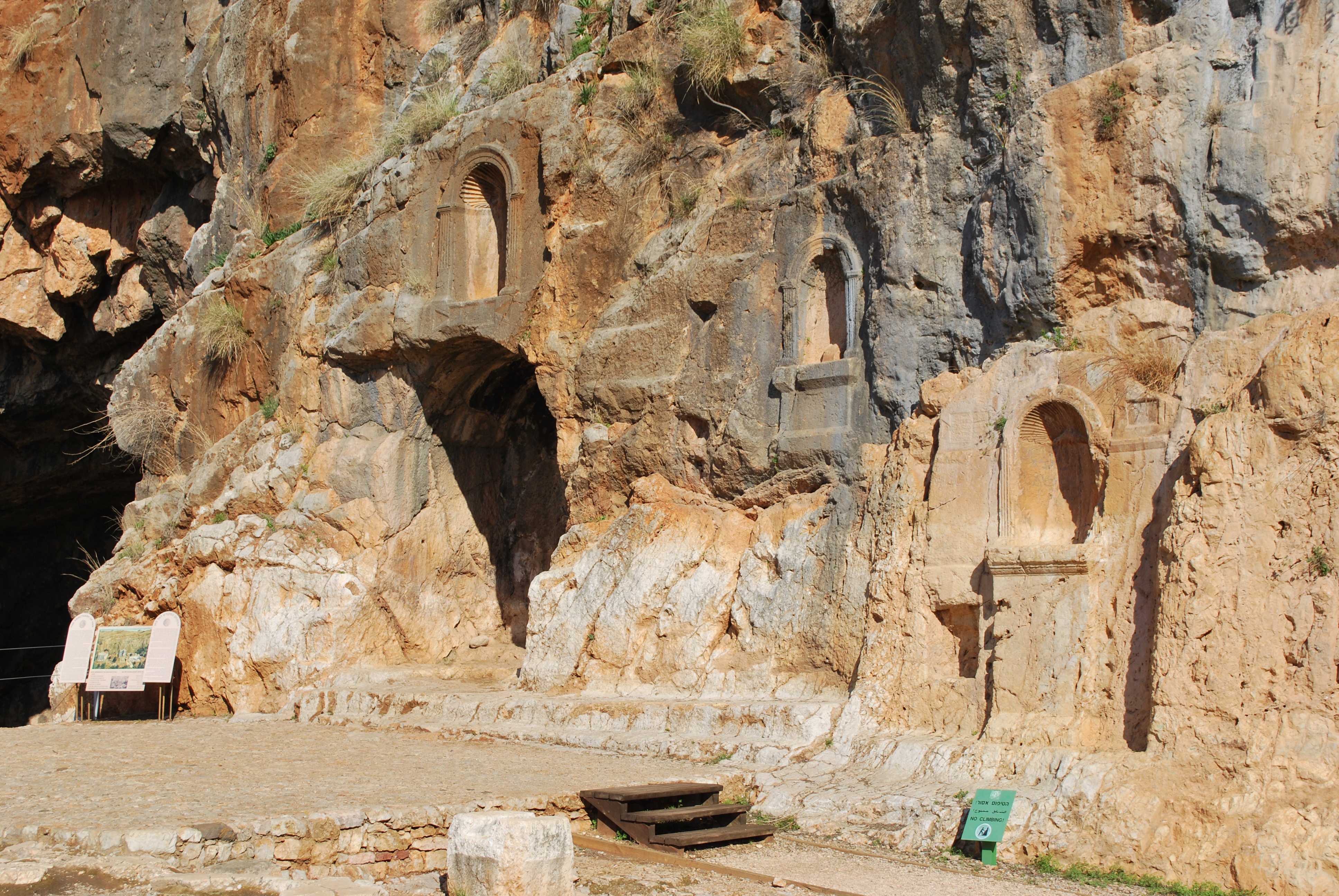
Caesarea Philippi. Wikimedia Commons. CC 2.0.

Verse 13:

When Jesus came to the region of Caesarea Philippi, he asked his disciples, ‘Who do people say the Son of Man is?’

‘When Jesus came to Caesarea Philippi’ is not mere decorative detail. Caesarea Philippi[1] was twenty-five miles north from the Lake of Galilee by the source of the River Jordan and close to the ancient city of Dan, that had marked the northern end of the Promised Land.

But this boundary place no longer reflected the ancient faith of Israel. You can tell from the name ‘Caesarea Philippi’ that it had succumbed to Roman influence. It was famous by then for its grottos and caves dedicated to the worship of the Greek god Pan. He was the god of nature, flocks, shepherds, and wild mountain areas. Sacrifices of cows, rams, lambs, milk, and honey were offered to him in the hope he would bring them luck. He was approached noisily: quiet and silence were considered inappropriate.

Against this pagan context, Jesus invites his disciples to elucidate their faith. Not in the relative safety of the synagogue, but as part of God’s people throughout the world, surrounded by paganism and Roman military might. Here – in the midst of the world, where not everyone would agree – the faith was to be lived out.

It’s the same for us today. We live out our faith, not in the cosy warmth of church fellowship but in a world where it is one of many competing ideas. Today, Jesus calls us to live for him not only in a society full of other faiths but also in a context of different cultural persuasions. At one end we have a political protest that wants to reverse all the social change since the 1960s; at the other, we have so-called ‘progressive’ or ‘woke’ values. Not only that, we have a spectrum that runs from those who believe true satisfaction can be found in money and possessions to those who are beginning to realise that their parents’ rejection of God and religion has left a vacuum at the heart of life.

To live as a family that follows Jesus in such a society is neither easy nor simple. But this is the context in which our Lord calls us to be faithful community today. We cannot wistfully hope for a return to the way things were when we were younger. This is the generation in which Jesus calls his church to live as one for him.

Secondly, the Confession of the Church’s faith:

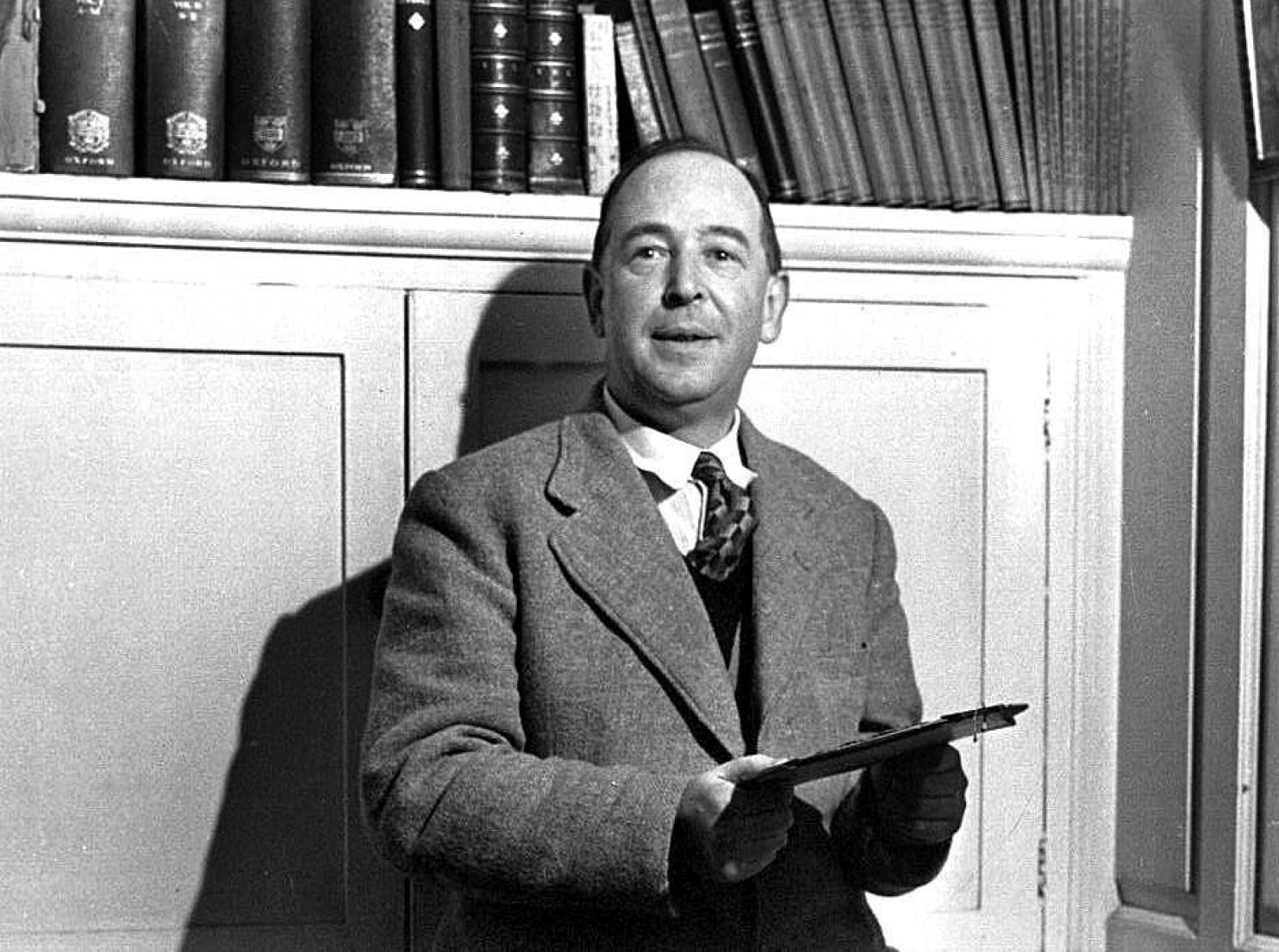
CS Lewis. Leman Ramishvili on Flickr. Public Domain.

Here, we go from ‘Who do people say the Son of Man is?’ in verse 13 to ‘Who do you say I am?’ in verse 15.

To be part of the faithful Church it’s not enough to say Jesus is a good guy, a prophet. Our Muslim friends revere Jesus, and that’s why it’s untrue to claim they want to ban Christmas, but this is as far as they go. They are vulnerable to CS Lewis’ famous criticism that it won’t do to say Jesus was a good man. It doesn’t fit with the remarkable claims he made about himself. Lewis said that the only realistic options in the light of those claims is to say that he is (or was) either Lord, liar, or lunatic. There is no evidence of him being a liar and he doesn’t behave like a lunatic. The best explanation that fits the evidence is that he is Lord.

And that’s where the Church’s confession of faith lands. The earliest Christian confession was the words, ‘Jesus is Lord.’

Naturally, the words of our confession need to be accompanied by deeds. To acknowledge him as Lord, as Son of the Living God, is something to be demonstrated. It calls us to be a community that lives according to his teaching.

Not only that, this complex, plural society that is the context for our faith expects us to live differently, and that is a fair expectation. Moreover, it may be one of the best ways we witness to Jesus. As the saying goes, ‘You may be the only Bible someone reads.’ People do not know the Christian faith anymore. It has been said that we have moved as a society from being one that framed itself inside the Christian story as its defining narrative to one that instead frames itself against the story of Hitler and the Nazis. You hear more reference to them negatively today than you do to Jesus positively. We have a calling here, to confess Jesus as Lord and to live in harmony with that confession.

Thirdly, the Foundation of the Church’s faith:

Sylvester Stallone. Wikimedia Commons. CC 2.0.

Have you ever wondered where Sylvester Stallone appears in the Bible? It’s here. Jesus pronounces a blessing on Simon for his answer that was given to him by heaven and then renames him Rocky. For that’s what Peter means. Those Hollywood movies would never have sounded so attractive had they been called ‘Peter I, II, III, and IV’, but in this text you get a sense of the wordplay if you read it as ‘You are Rocky, and on this rock I will build my church’ (verse 18).

Foundations were often made from rock. Remember Jesus’ teaching in the Sermon on the Mount about the wise man who built his house on a rock, whereas the foolish man built his on sand.

The Church, then, is built on the rock of Peter’s confession of faith in Jesus. How much of that is connected to the person of Peter as our Catholic friends believe is a debate I will not enter here, but the crucial point for us is that we are only the Church insofar as we build on the foundation of faith in Jesus, the Messiah, the Son of the Living God, our Lord. We cannot jettison any of what the apostles handed on to us whilst remaining the Church, even if it is true that we must always interpret the application of the ancient faith in our day.

So whatever we are doing in the Church, let us always bring it back to Jesus – and not our imaginings of him, but his life, teaching, and example as set out in the Gospels. That way, we attend to our foundations, and our house is not swept away in the storm.

Fourthly, the Resilience of the Church’s faith:

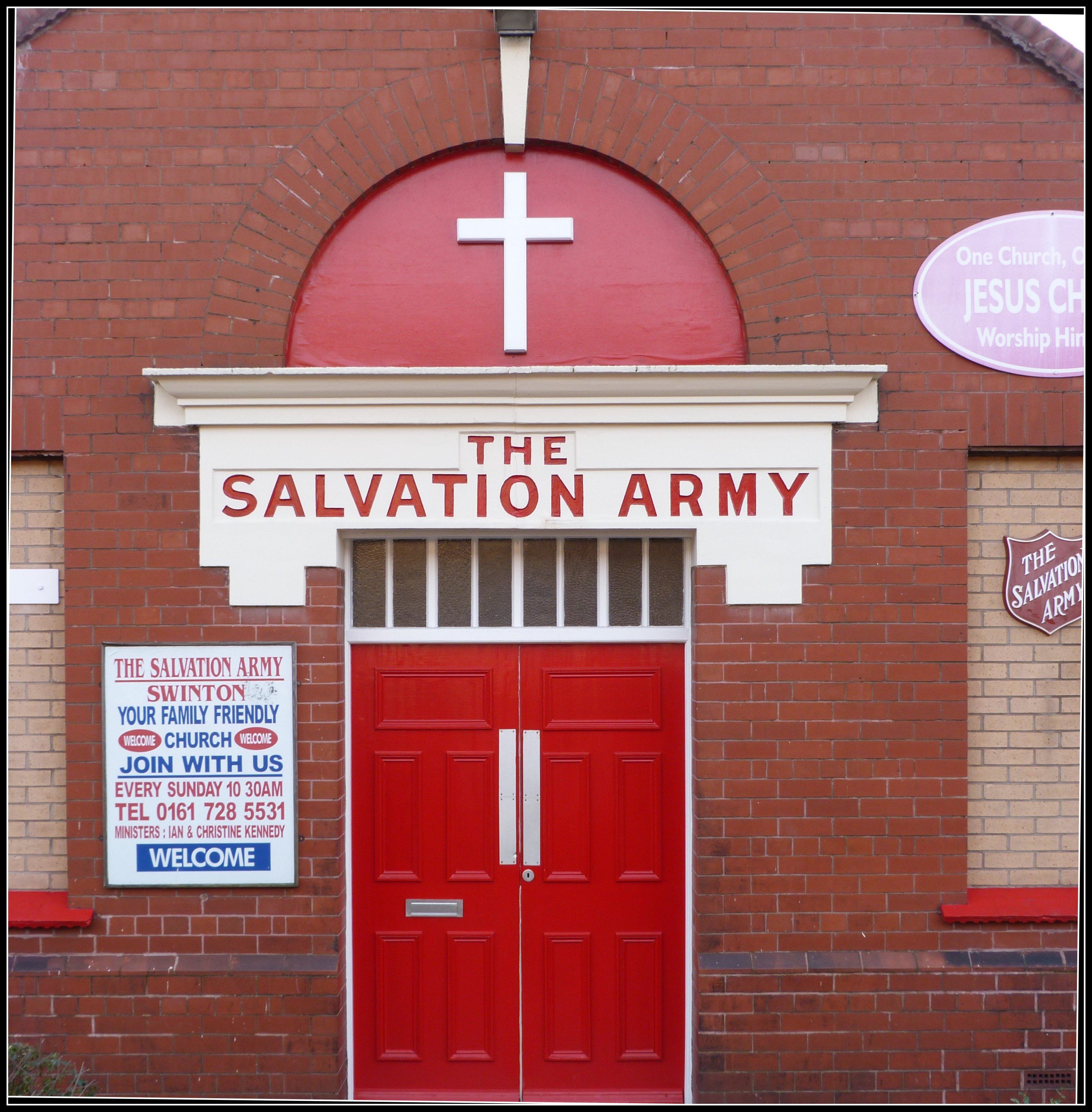
Salvation Army building. Wikimedia Commons. CC 2.0.

Jesus promises that the gates of Hades will not overcome the church in verse 18. Sometimes we imagine these words as depicting the church cowering under attack, but since when was anybody attacked by a set of gates?

No! Gates are defensive objects. They are there to keep people out. And these are the gates of Hades – not of Hell, as in older translations. Hades was the place of death. Here, Jesus promises that death cannot kill the church, and what is more, the church is on the offensive against death.

Therefore, all our worries about church decline and aging need to put into this context. Yes, it is true that certain individual churches (and denominations) will disappear, but overall, the Church of Jesus Christ is indestructible. He has made it so. In history, various denominations have declined and become moribund, but God has raised up a new expression of his church to continue his mission.

Methodism is one example. God raised up the Methodist movement when the eighteenth-century Church of England was not so much full of living waters as of spiritual ditchwater.

Then Methodism became rather too comfortable and middle-class cozy towards the end of the nineteenth century, so God raised up the Salvation Army to restore the importance of bringing good news to the poor.

When Methodism also declined in holiness and spiritual power at the beginning of the twentieth century, God acted again. He raised up the Pentecostal movement partly, at least, out of Wesleyan holiness churches.

Our version of Christianity may possibly wither and die, but still God will do something new with his people.

And whatever form it takes, God’s people will be on the offensive against death and all its friends – sickness, poverty, injustice. The gates of Hades don’t stand a chance against the Church of Jesus Christ.

Fifthly and finally, the Authority of the Church’s faith:

A metal keyring and three keys on a dark surface. Free Images Live. CC 3.0.

Here we’re thinking about all the ‘keys of the kingdom’ and ‘binding and loosing’ language Jesus applies to Peter (or should I say, Rocky?) in verse 19.

These words clearly involve Jesus giving Peter some power and authority. The keys to the kingdom make him some kind of ‘Prime Minister’ or ‘Chief Rabbi’[2] in God’s kingdom, giving ruling decisions and interpretations of God’s will. That comes down to us in the teaching of Peter and the other apostles that is authoritative for us in the New Testament canon.

The binding and loosing on earth as it is in heaven should probably be translated, ‘Whatever you bind on earth will have been bound in heaven, and whatever you loose on earth will have been loosed in heaven.’ Therefore, this is about ratifying the decisions of heaven[3]. It means that church leaders must only allow into the church community those who have confessed Jesus Christ as Lord.

I know an incident in a past circuit where I think I failed in this regard. A couple started coming to the church and eventually asked to see me about church membership. They wanted to know if they were ‘good enough’ for membership of the church. I recommended them.

But those words ‘good enough’ should have been a red flag for me. Their religion was all about rules – that is, so-called legalism. They brought a harshness into the church that was hard to remove. We even had to shut down one home group because the husband of this couple turned all the discussions into occasions of taking every preacher in the circuit to pieces.

Pray that those entrusted with authority in Christ’s Church use it in ways that reflect the life and teaching of Jesus. To vary from it is disastrous.

Conclusion

We’ve looked at the location of the Church’s faith in a varied and mixed-up world. We’ve looked at our confession of Jesus as Lord, and how Jesus alone is the foundation of that faith. We have taken encouragement from the resilience of the Church’s faith, based on the unchanging purposes of God in Christ, and we have looked at the solemn responsibility of leaders to base their authority on Christ alone.

In other words, everything always comes back to Jesus in the Church. Let’s make sure we do.


[1] On what follows, see Craig S Keener, The Gospel of Matthew: A Socio-Rhetorical Commentary, p424.
[2] Keener, p429.

[3] Keener, p430.

Create a website or blog at WordPress.com

Up ↑