The Virtues of Wrestling with God, Genesis 32:22-31 (Trinity 9 Ordinary 18 Year A)

Genesis 32:22-31

The London International Invitational Wrestling event took place from 10-11 December 2011. Wrestling 166 on Flickr by Greg Cullen. CC 2.0.

I was sharing at Midhurst on Easter Day about how one of my ministerial student friends in Manchester invited me and others to go with him to watch bouts of professional wrestling. I never understood the fascination and never accepted his invitations.

Why? For me, wrestling was irredeemably camp, and that’s not me. I associated it with my grandmother watching the Saturday afternoon wrestling on World Of Sport with Dickie Davies from 4 pm every week. As she cheered and booed the likes of Mick McManus and Jackie Pallo, I couldn’t wait for it to end so that we could get the football results.

Wrestling was unwelcome for me, and the first thing I want to say about this story is that Jacob’s overnight wrestling with the mysterious man was also unwelcome.

Life is challenging enough for Jacob at this point in his life. He is heading for this first meeting with his brother Esau in years. Esau, you remember, is the twin whom he tricked out of his blessing from their father Isaac. How will Esau receive him? Will he want revenge? Jacob has already prepared to soften the blow by arranging for members of his family and household to go ahead of him, along with gifts for his brother.

The mysterious man in some way represents God, given that at the end Jacob says he has seen God and lived (verse 30). What we read about here is an unwelcome wrestling bout with God, whether that was directly with God or with his representative.  

It is not too much of a jump to recognise the seasons in our own lives when we find ourselves wrestling with God, and that the experience is equally unwelcome for us. We believe God is in charge of our lives, but events happen that we do not want. Ill health. A job loss. Estrangement from family members or friends. A death. We all too easily expect life to resemble a Hallmark greetings card or the cover of a box of chocolates, only for major incidents to throw us off course.

And when they do, it is not unusual for us to end up complaining to the God who has allowed these things. As Jacob might have wondered why he had to face Esau with no certainty of a good outcome, so do we remonstrate with God for our circumstances. Very few of us accept the undesirable circumstances placidly. We are wrestling with God, although it feels like God has come to wrestle with us.

We were never promised the easy life we long for. Jesus said, ‘In the world you will have tribulation, but be of good cheer, I have overcome the world.’ He would then go to the Cross.

A little girl once asked her mother, ‘Mummy, do all fairy stories end with the words, ‘And they lived happily ever after’?’

‘No,’ replied Mum, ‘Some end with, ‘When I became a Christian, all my troubles disappeared.’’

I wish it were different. But God has not opted for a way of working where he routinely presses a button and we fly away from danger in our ejector seat. Instead, he has chosen a path that takes us through unwelcome situations to lead us into greater depth, for our sake, for the sake of others, and even for his glory. That is, after all, what Jesus did through the Cross.

To that end, he has given us resources to help us. We have the Book of Job to read. We have those Psalms that we call ‘The Psalms of Lament’, in which the psalmists eloquently and passionately bring their pain to God. They give us permission to say exactly what we think. As the early church father Athanasius said, ‘Most of the Bible speaks to us, but the Psalms speak for us.’

When we find ourselves caught up in an unwelcome bout of wrestling with God, let us pray that he will do a deep work in us and through us as he accompanies us through this time we would have preferred not to have happened.

Secondly, wrestling with God teaches us trust.

Diverse people stacking hands together at PxHere. Public Domain.

That may sound unlikely at first: why would you grow in trust in this One with whom you have wrestled and complained? But listen to the text in verse 25:

When the man saw that he did not prevail against Jacob, he struck him on the hip socket; and Jacob’s hip was put out of joint as he wrestled with him.

 When sunrise comes, Jacob will limp past Penuel (verse 31). This is Jacob, the fixer, the manipulator, the one who has sought to control his own destiny and the lives of others. Mister Independent now has a limp.

Will he now at last realise that he cannot be in total control of his lot? This is the time for Jacob truly to be a man of faith, rather than one who deceives in order to get his own way.

Faith is about both belief and trust. Believing certain things to be true about God, the world, and us. And trust in the God and Father of our Lord Jesus Christ. Jacob’s challenge here is to embrace the ‘trust’ part of faith. A man who limps is at a serious disadvantage as he prepares to meet the brother he so sorely wronged all those years earlier. He has already tried to butter up his brother by planning to send his family members, servants, and herds ahead of him – but what if they don’t impress Esau? What if all that is left is for him to face Esau with a limp? How can the man who even wrestled for hours with God’s own representative have a chance? There is nothing left but to trust.

And when we wrestle with. God over those unwelcome intruders into our lives, be they health, relationships, work, finance, of any other major aspect of our existence, there is nothing left but to trust in God.

It’s what the Apostle Paul did with his ‘thorn in the flesh’, whatever that was. It’s what Jesus did when the Father would not remove the cup of suffering from him.

I’m not saying we shouldn’t ask God to remove trials from our lives. After all, we shall pray in the Lord’s Prayer in a few minutes’ time, ‘Save us from the time of trial.’ But there are occasions where he does his deep work when we are in the furnace before deliverance comes.

I have spoken before about examples of this in my own life. The lung surgery I had in my twenties that gave me an experience of what it is like to go through major surgery. My encounters with depression. Playing my part in caring for my father through his Alzheimer’s Disease. I would happily never have had any of those experiences. But by letting me go through these, God has given me things whereby I can support people.

The mistake would have been to listen to the lies some Christians tell about these experiences. ‘If you haven’t been healed, then you don’t have enough faith.’ ‘If you suffer from depression, then you must have committed a sin.’ For to believe those lies stops us from trusting our Father in the darkness.

God invites us to trust him as we limp along after wrestling with him. He is the One who works all things together for good for those who love him. If we are struggling right now, let us take courage to trust him.

Thirdly and finally, wrestling with God leads to blessing.

A figurine of a man holding a child at Picryl. Public Domain.

This may be the opposite of what many Christians expect. We have just spoken about trust, and many of us have gained the idea that Christian trust is something simple and serene. Struggle doesn’t enter into it: that would be the opposite of trust. We ‘let go and let God.’

Now there are Christians who seem to have a gift for such trust. But many of us do not. And we are not necessarily inferior in God’s eyes because of that. Listen again to Jacob and his mystery divine assailant:

25 When the man saw that he did not prevail against Jacob, he struck him on the hip socket; and Jacob’s hip was put out of joint as he wrestled with him. 26 Then he said, ‘Let me go, for the day is breaking.’ But Jacob said, ‘I will not let you go, unless you bless me.’ 27 So he said to him, ‘What is your name?’ And he said, ‘Jacob.’ 28 Then the man said, ‘You shall no longer be called Jacob, but Israel, for you have striven with God and with humans, and have prevailed.’

You might think Jacob’s request for a blessing is another example of him trying get something out of the other party at their expense. And we don’t know all his motives. But whether or not his motives are pure, the divine messenger does indeed bless him. He gives him a new name:

‘You shall no longer be called Jacob, but Israel, for you have striven with God and with humans, and have prevailed.’

What Jacob has done here is honoured with a blessing. God approves of his wrestling to the point of prevailing.

Yes! God invites the struggle, and ultimately, he blesses it.

If you are wrestling with God about something, I want to encourage you to continue to do so. Be persistent. Persevere. You will prevail if you do. And you will discover blessing, perhaps of a style or magnitude you never considered.

This may not only be to do with the areas of life we have already pondered where we wrestle with God over adverse circumstances in our lives. One area where it is important that Christians wrestle with God is in prayer, and especially in intercession.

There are examples in Scripture and church history of people who have done this. The prophet Daniel confessed and interceded on behalf of God’s people in respect to their sins that had led them to exile in Babylon. He was eventually granted remarkable visions of God’s will, not just for his own people, but for the nations.

In World War Two, a group of people at the Bible College of Wales gathered to pray against the advances of Hitler and the Axis forces. They believed that if they succeeded, the spread of the Gospel would be hindered. Day after day and night after night they prayed, led by a man called Rees Howells.

I have been in the company of people I would call ‘prayer warriors’, and to listen to them struggle with God over issues of social injustice and personal pain was like listening to women in labour. But they persisted, and God blessed their wrestling in prayer.

When we wrestle with God, let us resist the temptation to dismiss it as unwelcome and seek an easy life. Let us trust God even in the wrestling, and let us persist until his blessing comes.


The Blessing of the New Jerusalem, Isaiah 2:1-5 (Advent 1 Year A)

Isaiah 2:1-5

Wine Advent Calendar by In Good Taste. No alterations. CC Licence 4.0.

In among the monsoon of Black Friday emails that have taken over my inbox were links to a fashion of recent years that I have railed against in previous Advent seasons. The luxury Advent calendar.

This year, you could buy not only a perfume Advent calendar, but also a wine Advent calendar. And I thought, I hope someone doesn’t receive both and then confuses the two.

Or maybe it would serve them right!

These luxury Advent calendars show that if Advent means anything in our wider society today, it is that Advent is a countdown to indulgence.

We may respond by saying no, it’s a countdown to the birth of the Messiah.

But we too would be wrong if we said that – at least historically. For in the tradition of the Church, Advent begins with a countdown to focussing on the return of the Messiah.

Like so many, we yearn for the day when evil and suffering will be abolished. Like many critics of faith, we too struggle with why God allows sin and strife in the meantime.

But what we have is a hope based in the promises of God, and which we have glimpsed in the Resurrection of Jesus.

Ancient Israel had her hopes, and we read one such vision in Isaiah 2. We read it, not only for what it is, but through a Christian lens. We believe this prophecy of Isaiah is fulfilled in what is often called the ‘Second Coming’. We believe in a hope described by the New Testament Greek word Parousia, which is often translated as ‘coming’, but which is better translated as ‘appearing’ or ‘royal presence.’

So, when Jesus appears again as King of all creation, what will be the effects of his reign, and what do they mean for us now?

Firstly, blessing for God’s people:

2 In the last days

the mountain of the Lord’s temple will be established
    as the highest of the mountains;
it will be exalted above the hills,
    and all nations will stream to it.

‘In the last days’ here is literally ‘at the close of the days’ – that is, when God’s promises come to fulfilment[1].

Originally, Jerusalem stood at a height below the surrounding mountains. Yet here, Isaiah is inspired to see it elevated in a way consistent with its spiritual significance. God has elevated the city.[2]

God blesses his people. As Psalm 3:3 says,

But you, Lord, are a shield around me,
    my glory, the One who lifts my head high.

God raises his people to their full dignity. In his presence, he makes them into all they were intended to be.

One Sunday when I was at my Anglican college in Bristol, one of my friends invited a few of us to go with him to worship that evening at an independent charismatic church. His contact was a girl he knew. We all went to her house first, and she led us to the place where her church met. She was a plain-looking young woman of unremarkable appearance.

During the service there was an extended time of sung worship. At one point, I looked around the congregation. Wow, I thought: who is that beautiful girl?

I expect you’ve guessed. It was the apparently plain girl who had taken us there. But caught up in the worship and adoration of God, the presence of the Spirit made her into something more.

And I believe that is something of our hope. Just as Jerusalem is elevated in the vision of Isaiah, so God’s people are elevated in the royal presence of God.

It happens already by the Holy Spirit. It will be fulfilled in the coming of Jesus.

I have long believed that the work of the Holy Spirit in us is not to make us less human, as if God wanted us to be religious robots, but rather to make us more human than we’ve ever been. Our gifts are enhanced. Our talents are increased. Our holy desires are raised. As Isaiah saw Jerusalem being raised and exalted, so our destiny is to become everything that God ever intended us to be.

This is not just about ‘religious’ spiritual gifts. It is to do with everything about us. Alison’s admin will be even more on point. Tim’s photos will be even more amazing. Angela’s hospitality will be warmer than ever. Jessica’s tech abilities will be through the roof.

I’m sure that’s something to anticipate with joy and maybe even excitement. But in the meantime, as a sign to the world of all that is to come, let us be open to the Spirit in every part of our lives as God works on this project of elevating us to become more of whom we were always intended to be.

Secondly, blessing for the nations:

3 Many peoples will come and say,
‘Come, let us go up to the mountain of the Lord,
    to the temple of the God of Jacob.
He will teach us his ways,
    so that we may walk in his paths.’
The law will go out from Zion,
    the word of the Lord from Jerusalem.
4 He will judge between the nations
    and will settle disputes for many peoples.
They will beat their swords into ploughshares
    and their spears into pruning hooks.
Nation will not take up sword against nation,
    nor will they train for war any more.

This makes me remember the passage I used on Remembrance Sunday this year, namely Revelation 22:1-5, where ‘the leaves of the tree [of life] are for the healing of the nations’ (verse 2).

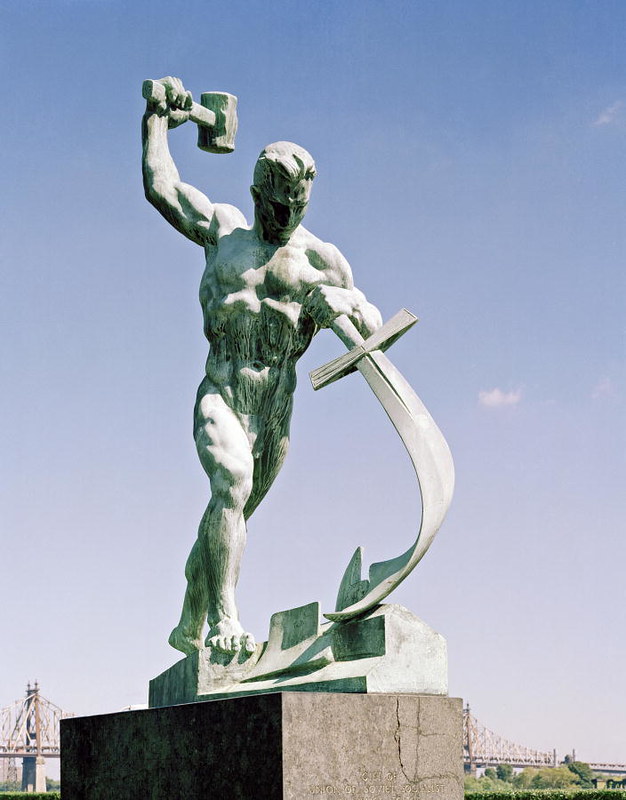
Let Us Beat Our Swords Into Ploughshares. UN Photo/Andrea Brizzi. CC Licence CC BY-NC-ND 2.0

In the New Jerusalem, when God teaches his ways there will be the resolution of disputes between peoples and nations, and the end of all war.  How we long for such a day. Swords into ploughshares and spears into pruning hooks indeed.

Because the New Jerusalem is a place of peace, reconciliation, and justice. Not for the life of the world to come the spectacle of a President lusting after the Nobel Peace Prize while renaming the Department of Defence as the Department of War, while sending quasi-military officers to arrest citizens purely due to the colour of their skin and with no due process, all the while selling Ukraine down the river to his fascist buddy in the Kremlin who probably has dirt on him. That is not peace.

No. The peace of the New Jerusalem will not be the fruit of armed strength but of the Son of God suffering in love on the Cross. The peace of the New Jerusalem will not be about the imposition of a stronger will, because the Cross says otherwise. The peace of the New Jerusalem will not be about finding some compromise halfway in between the positions of two intractable sides but will be based on the truth of God. As we heard in verse 3, ‘He will teach us his ways so that we can walk in his paths.’

Well, what about now? As future citizens of the New Jerusalem, God calls us to point to this future reality by our witness in this life. Can we be people who learn the skills of reconciliation? Can we learn how to transform conflict into peace and harmony? Can we be examples of that in our own relationships? Where are the broken people and broken places in our world to which God is calling us to demonstrate his ways of healing?

Maybe it’s in families. Or in communities. Or in workplaces. Or on a larger stage. But we may be sure, these are the very spaces which God calls his people to inhabit and to serve as a sign of hope in his coming New Jerusalem.

Thirdly and finally, blessing in the here and now:

5 Come, descendants of Jacob,
    let us walk in the light of the Lord.

I’ve been relying this week on the work of the Old Testament scholar John Goldingay to guide my thoughts in understanding this passage. He says that the image of light points in some places to themes of truth or revelation, but not here. ‘The light of the Lord’ has to do with God’s face and hence, God’s blessing. To live in the light of the Lord is to live by his blessing[3].

We can let all sorts of things fire the way we live. It might be material gain. It might be our need for the approval of others. It might be about successful relationships and a good family life.  It might be the desire to be recognised and respected. It might be to climb to the top of our profession.

Not all these things are entirely bad. But they cannot be ends in themselves, or they become idols. Isaiah points us to a better way, a way that enables us to live in the spirit of the Christian hope. It is a way that prepares us for the New Jerusalem.

‘Let us walk in the light of the Lord.’

Let us seek his blessing and respond to that. Where is God shining his light? Let us walk there.

Sometimes God shines a light in a place that is congenial to us, and it is easy to walk there and know his blessing. Other times he shines his light in unexpected and challenging places, and the call to walk there and discover blessing is trickier for us. It can be like that balance we hear in the preamble to the Covenant Service prayer every year:

Christ has many services to be done:
some are easy, others are difficult;
some bring honour, others bring reproach;
some are suitable to our natural inclinations and material interests,
others are contrary to both;
in some we may please Christ and please ourselves;
in others we cannot please Christ except by denying ourselves.
Yet the power to do all these things is given to us in Christ, who strengthens us.[4]

Many ministers did not believe God could be shining his light in that direction as a way of bringing blessing, and some of us had to be dragged kicking and screaming towards that light. Other Christians have known sheer joy and delight in detecting where God was shining his light.

But the reason we do all this is in anticipation again of the New Jerusalem. For in that place, there will be no more night, there will be no more need for lamps or the Sun, because God himself will be the light. Hence, to walk in his light of blessing now is to prefigure that great day. It is to live in a small way now in the ways of eternity, when all our hopes will be fulfilled.

Conclusion

As we step into Advent again this year, may the Holy Spirit hold before us the prophetic vision of hope. May that vision of hope be a blessing that fortifies and energises us.

May we know such blessing that we grow ever more into being the gifted people our Father made us to be. May we offer such blessing that the world knows the Good News of reconciliation with God and with each other. May we walk in such blessing today as we follow God’s light and catch a glimpse of the glory to come.


[1] John Goldingay, New International Biblical Commentary: Isaiah, p42.

[2] Op. cit., p42f.

[3] Op. cit., p44.

[4] Methodist Worship Book, p288.

Journey To Jerusalem 5: The Blessings Of Unity, Psalm 133 (Lent 6 Palm Sunday)

Psalm 133

1 How good and pleasant it is

    when God’s people live together in unity!

‘God’s people’? If you know this psalm in older versions of the Bible you will know this verse as ‘How good and pleasant it is when brothers dwell together in unity.’ Strictly, that is an accurate translation. But today, with the concern for inclusive language, just to render it as ‘brothers’ would in the eyes of many exclude women. We want to get the same truth across in a different way. 

But the choice here of ‘God’s people’ as a modern substitute loses the emphasis on family. ‘Brothers and sisters’ would be better, maybe ‘siblings’, depending on your views about transgender and non-binary. 

Because it really is a miracle sometimes when brothers and sisters live together in unity! How many of you fell out with your sisters or brothers when you were young? My sister and I certainly did. It took growing and maturing, perhaps also along with a shared faith, to leave our childhood squabbles behind. 

You would hope, then, that in a church, a gathering of those who are brothers and sisters in the family of God, that there would be the mature love for one another as we are bound together in unity by the love of God in Christ. 

But you know and I know that it isn’t always true. Many churches are more like the childhood siblings engaging in petty arguments. People fall out with one another. They make disparaging remarks about someone behind their backs. Strong personalities clash and neither side backs down. Gossip. Negative comments are repeated without checking whether they are true. 

You may think this all sounds trivial. It isn’t. This immature and cavalier attitude to our unity destroys the church, because it undermines our very identity as those who are united in Christ. Habits like gossip are cancer in the church. 

What can we do about it? Jesus had a fair bit to say about how we handle our differences, and we could consider them some time. At one church in a past circuit I made it a rule that no-one could bring a complaint about someone to the Church Council if they had not already tried to talk it over with the person they were unhappy with. I did so, because someone drove a couple out of that church by orally attacking them at the Council without warning. 

But the Psalmist doesn’t offer solutions here. Instead, he (most likely it was a man in that society) offers a compelling vision of what unity among the believers looks like and accomplishes. There are two images he gives us that make us want to aspire to greater unity in the faith. They are the oil on Aaron’s beard and the dew on Mount Hermon. Put like that, they sound culturally alien to our world today. But it’s quite easy to see what the Psalmist is getting at, and as a result we can be inspired and challenged by the vision he puts before us. 

The oil on Aaron’s beard

2 It is like precious oil poured on the head,

    running down on the beard,

running down on Aaron’s beard,

    down on the collar of his robe.

Aaron, the brother of Moses, and his male descendants were set aside to be the priests of Israel. For this they were anointed and consecrated with holy oil poured on their heads. Therefore, when the psalmist says that the unity of God’s family is like the oil on Aaron’s beard he is saying that unity is a priestly thing for the whole family of God. 

But what would it mean for us as the family of God to be priestly? Are we to offer sacrifices? Well, not in the sense of sacrifices for sin. They are all fulfilled, completed, and replaced by the death of Jesus on the Cross. We can, however, offer sacrifices of praise, according to the New Testament. 

That will also include making personal sacrifices for one another in Christian love. I saw that at my first theological college when a student from South East Asia lost her mother back at home and a bunch of students, who mostly didn’t have much money, rallied around to make sure she had her return air fare. I saw it in my last circuit when a Nepalese church member was made stateless and the church rallied around to make sure he could afford to apply for British citizenship. We even got that campaign into the local press and gained community support. 

But the other ongoing part of the priest’s life is prayer for the people of God. And that’s also where we as brothers and sisters in the family of God can be priestly together. It is our privilege to bring one another to God in prayer. 

Yes, of course we all have direct access to God in prayer through the Cross of Christ, and you might therefore wonder why we would ask someone else to pray for us. However, this is about mutual support as part of our unity in Christ. Sometimes there are other ordinary tasks in life that we can normally accomplish but where we need someone else’s help from time to time, especially if we are feeling weak. Prayer is no different.

This came home to me with some force in one pastoral situation at a former church. One lovely couple really did have what the late Queen once called an ‘annus horribilis’, a terrible year. In the space of twelve months, they both lost both of their parents, and then a beloved uncle also died. Five close bereavements in a year. Can you imagine the toll it took on them? 

In one conversation, the wife shared with me that this was a season where she found it hard to pray, but she was glad to be carried by the prayers of the church. That’s the oil on Aaron’s beard: a priestly ministry of prayer for one another that enhances our unity. 

One other comment on this theme is to point out that you will note I am talking about praying for other Christians, not praying against them. There are some Christians who default too quickly to the latter, effectively using prayer as a way of cursing their brothers and sisters. There are limited extreme circumstances where we might pray against the influence of a brother or sister Christian, but usually it is where they are damaging the unity of the church. 

I had one such instance early in my ministry where one of the church organists deliberately sided with a couple who were stirring trouble in the congregation. I learned that the organist and the husband in the couple were both Freemasons in the local lodge. They carried a greater loyalty to one another there than to the church. (There are other reasons to say that Freemasonry is incompatible with Christianity, not least the way it makes human merit rather than divine grace the way to salvation.)


Eventually, I was driven to extreme prayer about the organist and I prayed, ‘Lord, please either change him or move him. I’d far rather you changed him, but if he will not change then please move him.’ A week later, he and his wife put their house up for sale and a few months later they moved a hundred miles away. 

But as I say, prayers like that are the exception. Normally, the oil on Aaron’s beard means that we are blessing one another in prayer and thus deepening our unity together in Christ as his family. 

The dew of Hermon

3 It is as if the dew of Hermon

    were falling on Mount Zion.

For there the Lord bestows his blessing,

    even life for evermore.

It’s time for a bit of geography. Mount Hermon is in Lebanon, to the north of Israel. The climate is not quite as hot. Unlike peaks in the Holy Land, Mount Hermon is a place where snow can settle at the top. It thus generates cool water in a way unknown in the Promised Land. The dew on Mount Hermon is thus a symbol for being refreshed. 

There is a link, says the psalmist, between our unity as believers and experiencing a sense of refreshment in our lives. When we are one in Christ, we pull together, and we look out for one another. 

It’s something we have experienced in the last few weeks. Both ministry and life in general have been profoundly affected by the damage that was caused to the manse and the necessary measures while it has been repaired. Having had to live a distance away has not only meant the strange combination of doing more decamping than you would for a self-catering holiday but less than a full house move, the extra travel combined with road works and road closures to negotiate on our routes has made for getting in substantially later at night and leaving for meetings significantly earlier in the morning. You will not be surprised to know that one effect upon us of such an arrangement has been an increased tiredness. 

We have therefore been so glad when people in the churches and circuit have shown particular understanding of our situation. People have not asked more of us than they had to. Some specifically told us not to worry about certain regular commitments for the duration. These attitudes have refreshed us. They have helped us cope with a difficult situation. I can think of other appointments I’ve been in where people would still have wanted their pound of flesh out of me, regardless. 

And you know what? When members of the church family decide they are going to do things that refresh others it draws us closer together. The opposite pulls us apart. 

Therefore it’s worth us all pondering what we can do to refresh our brothers and sisters in the family of Jesus. Is there a way we can show understanding to someone in difficulty? Is there someone carrying a burden where we can take some of their load? Is there somebody having to cope with a challenging situation where a gesture of service would make a difference to them? 

Actually, let me suggest to you a simple prayer we can pray each day. In fact, this one goes wider than just refreshing our brothers and sisters in Christ: there are no boundaries to it. But it will bless the Body of Christ and engender deeper unity when applied there. The prayer is this:

Lord, please show me who I can bless today.

It’s really that simple. Imagine the effect if we all prayed that every day. Imagine what kind of a spiritual family we would become. 

Then put it together with the priestly actions indicated by the oil on Aaron’s beard where we are praying for each other and sacrificing for each other. Can you have a vision for the kind of community we would grow into? Can you envisage what it would be like for strangers to encounter a spiritual family like that? How might they react? 

Yes,

How good and pleasant it is

    when God’s people live together in unity!

Love Your Enemies, Luke 6:27-38 (Ordinary 7 Year C)

Luke 6:27-38

The older I get and the longer I preach, the more I collect a list of subjects that are awkward to preach on. Prayer – because which of us can say we pray enough? Evangelism – because we know we struggle with that. Giving – because it’s often thought unseemly to talk about money.

I think I might add today’s theme to that list. Who wants to be told to love their enemies? Wouldn’t many of us rather turn up the dial on the furnaces in Hell for those who hate us and hurt us?

I may be doing some of you an injustice. Perhaps you have only serene and beatific thoughts about your enemies. But not all of us do.

I have certainly had to wrestle with this text this week. I contemplated getting out an old sermon on the passage and just modifying it. But the best one I found was tied to a particular item in the news at the time.

And so instead I bring to you the three questions that have been at the heart of my struggle to submit to the words of Jesus here this week:

Who is Jesus addressing?

Who are the enemies here?

How do we love our enemies?

Firstly, then, who is Jesus addressing?

I ask this question, because sometimes Christians want to apply Jesus’ teaching in the Sermon on the Mount (as it is in Matthew’s Gospel) or the Sermon on the Plain (as it is here in Luke) in a rather flat way to national life. They want to make the teaching of Jesus into national policy.

But that is not what Jesus is doing here. He has no vision for a Christian nation. There is no such thing, in contrast to aspirations from Christians on both the right and the left of politics. The Christian nationalists in the USA who have swung behind Donald Trump misunderstand the Gospel itself when they think they can make America more Christian by gaining political power and passing certain laws. That is legalism, not the Gospel.

And of course it’s rather awkward for some of their politics to find that the Jesus they invoke in their prayers taught some things that really don’t fit their political vision at all, not least here. They would probably dismiss this as ‘dangerous woke nonsense.’

But the Christians on the left of the political spectrum who might leap on Jesus’ teaching here and campaign for a nation state that is committed to pacifism are equally wrong. You cannot force the teaching of Jesus on those who do not bow the knee to him as Lord.

I do not say that to justify warmongering nations. Of course not! But we need to recognise that the group of people Jesus is addressing here is his disciples. When you read the Sermon the Mount or the Sermon on the Plain you realise Jesus is talking to his disciples. However, others are listening in.

Hence, in other words, Jesus addresses his followers, who together form a colony or outpost of his kingdom in the world. But others are listening in and watching us. The world will notice how we respond to the challenging teaching of Jesus, such as we find here.

So it’s important for us to get a handle on what it means to love our enemies, because the world knows that Jesus taught this, and it is watching to see how his disciples live it out. We will damage Christian witness if we ignore it, or if we explain it away.

Yes, even in these times when religion is less popular, the world is watching Christians. Just consider the damage to the Church of England caused by the safeguarding scandals lately. A recent survey showed that now only 25% of the population consider it trustworthy. For those of you who grew up thinking the church was a respected institution, please consider that.

Let’s take the challenging teaching of Jesus seriously, then. Including this ‘love your enemies’ stuff.

Secondly, who are the enemies here?

We begin to answer that by saying, it is anyone who hates us.

They may hate us for our faith. We know that millions of our brothers and sisters around the world pay a massive price for their faith, sometimes the ultimate price. In the last week, there have been reports that terrorists beheaded seventy Christians in the Democratic Republic of Congo. Not a week goes by without news of a similar atrocity or other forms of persecution against Christians appearing in my email inbox.

Our enemies may hate us, regardless of our faith. Some of the context here may well be Jesus imagining what the occupying Roman soldiers did to ordinary citizens. Yet we are not simply citizens of our nation, we are citizens of heaven, and our calling is not only to live by the laws of the land (insofar as our faith allows us) but to live by the law of God. In a properly constituted society we may wish to have recourse to the law against such people in order to protect others, but we are called to guard our hearts against hatred.

Or we may simply here be dealing with people who are not naturally in our orbit – our family, our neighbours, our colleagues, our friends, and so on. I say that, because of the way Jesus mentions giving to beggars (verse 30). We would not naturally label beggars as enemies in the conventional way. Yet Jesus calls us to show generous love to them, too.

And this example may have something to teach us about the recent public argument between JD Vance, the new American Vice-President, and Rory Stewart, the former British MP. Vance claimed,

There is a Christian concept that you love your family and then you love your neighbour, and then you love your community, and then you love your fellow citizens, and then after that, prioritize the rest of the world.

Vance seemed to imply that love of people further from us, especially around the world, came a distant last, and he based it on the Catholic concept of ‘ordo amoris’, which says there is an order or sequence of who you love. He probably misrepresented Catholic teaching, and Rory Stewart fired back at him, accusing him of a ‘bizarre take’ on the Bible, which was ‘less Christian and more pagan tribal’. Heaven only knows where Mr Vance would put loving your enemies. A distant last, at a guess. It may be natural and easiest to love those who are nearest to us first, but Jesus upends so many social conventions, and we need to listen to him.

Thirdly, how do we love our enemies?

Jesus sets out the range of what he calls us to do in verses 27 and 28, before he gives any specific examples:

27 ‘But I say to you that listen, Love your enemies, do good to those who hate you, 28bless those who curse you, pray for those who abuse you.

How do we do this? I just want to give you a few examples.

In one town where I served, a bookshop in the High Street began overtly promoting occult books and practices associated with them. Many Christians faced with such a situation would have defaulted into aggressive protest mode. They would have organised petitions and boycotts and maybe contacted the local media. They might have requested a meeting with the manager and angrily demanded the withdrawal of the books. They might have gone on a prayer march and cast out demons.

But not the group of Christians who discovered this incident. They turned to prayer, but not of the angry kind. Instead, they prayed that the bookshop would be blessed. If the bookshop were blessed, they might not need to resort to promoting spiritual darkness.

These Christians had been influenced by a preacher who once said, ‘In the celestial poker game a hand of blessings always outranks a hand of curses.’

Or take the experience of one of my relatives many years ago. He was dating the girl who would later become his wife. However, his girlfriend’s mother disapproved of him. He wasn’t good enough for her daughter, in her opinion. His job did not rank as highly professionally, and he was less educated than the girlfriend.

My relative shared his frustrations about this with a friend at church. And his friend made a suggestion.

‘When you leave your girlfriend’s house each evening, say ‘God bless you’ to her mother. You won’t be able to feel mean towards someone you are blessing.’

My relative bristled at the idea. But he tried it – starting by saying it through gritted teeth. But eventually – it worked. Blessing changes relationships for the better.

One last story: one year while I was training for the ministry in Manchester, a married student and his wife invited me (still single then) to their flat to celebrate my birthday. My birthday meal? Beans on toast!

My friends offered to call a taxi for me to get home, but I declined and chose to walk back.

Big mistake. For on the journey back to the hall of residence a teenage thug mugged me, breaking my glasses and causing minor damage to my eyes.

Another student, himself a former solicitor, took me to the police station and stayed with me while I was interviewed and made a statement.

While I am sure this teenage thug was known in the locality, no-one was ever arrested.

However, people asked me what I would have done if the criminal had been. Would I, as a Christian who believed in and preached forgiveness, have pressed charges?

My answer was that provided I was sure no hatred remained in my heart towards the mugger, then yes, I would consent to the laying of charges. For me – and you may see this differently – this held together both the call to love and forgive my enemy and the need to uphold justice and protect other members of the public.

Conclusion

There may be one final question nagging in our minds: why should we love our enemies?

Because, says Jesus, this is what God is like. As he puts it:

Your reward will be great, and you will be children of the Most High; for he is kind to the ungrateful and the wicked. 36Be merciful, just as your Father is merciful.

We have been brought into the kingdom of God by divine mercy towards us who were his enemies due to sin. Yet God still loved us, his enemies, to the point of his Son dying on the Cross.

If we are to respond in gratitude and imitate our Saviour, then we too shall learn to show practical love to our enemies.

Fourth Sunday in Advent: God Is Coming Home (Luke 1:39-55)

(This is a second consecutive repeat sermon from six years ago – sorry about that, but the week has been thoroughly disrupted by loss of landline and broadband for five days. I’m really not sure the words ‘BT’ and ‘Business’ belong together in the expression ‘BT Business Contract’!)

Luke 1:39-55

‘It’s coming home, it’s coming home, it’s coming – football’s coming home.’

Every time the England football team has qualified for a major tournament since 1996, that songs – ‘Three Lions’ – is dusted down and sung again.

There is a sense of ‘coming home’ when Mary visits her older cousin Elizabeth. It’s not immediately obvious in English translations of the Bible, but there are allusions in this story to 2 Samuel 6:2-19, where King David and his men bring the ark of the covenant to Jerusalem. Just as the ark of the covenant was the portable sign of God’s presence among his people, so now in the Incarnation Jesus will be ‘the portable presence of God’, if that doesn’t sound too irreverent. And just as David danced before the ark of the covenant, so the infant John leaps in his mother Elizabeth’s womb. The prophetic voice in Israel has been silent since Malachi four hundred years earlier, but now God is at work. Like that sentence in ‘The Lion, The Witch, And The Wardrobe’, ‘Aslan is on the move.’

So what happens when God is on the move? Blessing – that’s what happens. Mary is blessed. Her baby is blessed. Elizabeth is blessed – she says she is ‘favoured’, which is a word that explains what blessing is. And surely her leaping, dancing baby is also blessed.

What blessings appear when God comes home to his people?

For Elizabeth’s unborn baby John, it is the blessing of joy. He leaps in the womb (verse 41) and Elizabeth says he ‘leaped for joy’ (verse 44). Why would John leap for joy?

Remember what their relationship will be. They are cousins, but John will be born first and he will herald the coming of his cousin Jesus, the Messiah. John will be the forerunner. He will be the compère, introducing the main event. He will be the best man to the bridegroom. In adult life, nothing will give John greater joy than the advent of Jesus. He will be filled with joy to announce that the Messiah is coming. He will not be interested in promoting himself; instead, his passion will be to introduce Jesus, and then get out of the way so that all the spotlight can fall on his cousin.

Our joy too is to announce the presence of Jesus. For in him, God has come to be with all who will follow him. We are not left alone, for the One called Immanuel, God with us, is here. We have no interest in promoting ourselves, only in highlighting Jesus, for he is our joy and nothing gives us greater joy than to see people recognise him, acknowledge him, and celebrate his love.

Remember what I said that the infant John leaping in his mother’s womb is a New Testament parallel to King David leaping and dancing for joy before the ark of the covenant, the Old Testament sign of God’s presence, being restored to the midst of God’s people. Does anything give us more joy than to know that in Christ God is present? We are not left alone. We are not deserted. Even in the silence, God is here.

So let us be joyful this Christmas. We rightly query the self-indulgence of society at Christmas, and the excessive celebration of – well, what, exactly? But if anyone has reason for joy at Christmas it is the Christian.

That said, being truly joyful in this season can be difficult. There are so many pressures and things to do that if we are not careful, we get so run down that we are unable to celebrate. I know that is true of me as a minister, with all the extra services, and I can remember the time my daughter asked me how grumpy I was going to be this Christmas.

But I also know I am not alone in that experience. It is widespread. How ironic that the loudest voice I have heard in the last year or two urging people to simplify Christmas in order to make it better has been the television and internet money saving expert, Martin Lewis. What’s the irony in Martin Lewis urging people to simplify Christmas in order to enjoy it more? He isn’t a Christian. He’s Jewish.

Can we find space again this year to be filled with joy at the coming of our Lord?

For Elizabeth herself, the blessing of God coming home to his people is to be filled with the Holy Spirit.

41 When Elizabeth heard Mary’s greeting, the baby leaped in her womb, and Elizabeth was filled with the Holy Spirit.

God not only comes near to Elizabeth, God comes right into Elizabeth’s life. It is a sign of what is to come. The coming of God will not end with the departure of Jesus but will continue in the gift of the Holy Spirit.

Now the coming of the Holy Spirit can lead to all sorts of gifts in God’s people. What do we see in Elizabeth? Let’s read on:

42 In a loud voice she exclaimed: ‘Blessed are you among women, and blessed is the child you will bear! 43 But why am I so favoured, that the mother of my Lord should come to me?

Elizabeth’s gift is to ‘recognises blessedness’[1]. In other words, the Holy Spirit enables Elizabeth to recognise what God is doing, to notice where God is bestowing favour. So when God comes close to Elizabeth and fills her with the Holy Spirit, she receives the ability to discern what God is doing, and then to welcome it and live accordingly.

Now when you state the work of the Holy Spirit like that, isn’t that something we long for and desperately need? Isn’t it critical for us too to be able to discern what God is doing and respond appropriately? In today’s church we often lurch from one thing to another, trying this trick or that technique in order to see things turn around, but I rarely hear people say, let us seek God to know what God is doing. It’s as if we can solve the problems of the church by human ingenuity and technology. And we can’t. Not only that, God won’t let us, because if things turned for the better that way we would end up glorifying ourselves, telling ourselves what clever folk we are, rather than bringing praise to God.

Remember that in Elizabeth and Mary’s day things were bad. As I said in the introduction, it had been four hundred years since God had spoken through the prophet Malachi. God’s people were not even free in their own land, they were under the occupying force of Rome. They weren’t truly it at home: they saw themselves as being in exile, similar to when they had been carted off to Babylon in the sixth century BC. The people of God in their day were looking around for ways to turn the situation around, just as we are with the aging and declining numbers of the church.

But unlike the leaders of her day, Elizabeth realised that the problem was a spiritual issue. When God drew near, she was filled with the Holy Spirit and began to see what God was doing. Surely her blessing is a lesson for us. As we long to find a way forward today, it won’t do to follow the fads and fashions. We need instead to pray, ‘God, come close to us. Holy Spirit, fill us with the presence and wisdom of God.’ Should not this be our posture in response to the plight we find ourselves in – prayer rather than conferences and committees?

Finally, Mary: what is her blessing when God comes near? It is the gift of faith. For as the discerning Elizabeth recognises,

45 Blessed is she who has believed that the Lord would fulfil his promises to her!

We need to pause and reflect on just how remarkable Mary’s faith was. Unlike our society, to fall pregnant outside marriage was shameful. And while the imposition of the death penalty by stoning was by no means certain, the ending of her betrothal by divorce and social shaming and ostracization were sure bets. In the face of this, Mary believes her Lord.

Think also about Mary’s age. Marriages were arranged soon after girls reached puberty, and the young men were just a few years older, but not much. Mary is therefore probably about thirteen or fourteen when she learns of her unusual supernatural pregnancy. At that tender age, Mary believes her Lord. In a society where older people were respected and younger people weren’t, Mary is the one who is the example of faith.

The fact that God has moved close to Mary in sending Gabriel to announce the birth and in the Holy Spirit overshadowing her to cause the pregnancy has put Mary in touch with the great tradition of faith in which she stands. She

places herself squarely in solidarity with all God’s people and recognises in her own experience the establishing at least in principle of all that the faith of God’s people had encouraged them someday to expect from God.[2]

It all comes alive in Mary. The great stories of faith and trust in the past, long dormant in the four-hundred-year silence of God, are seen now in a young teenage girl.

And if we feel remote from God and the great heroes of faith, then one thing we can surely do is petition God to draw near to us that our faith might be ignited and we display faith that puts us too clearly within our great spiritual heritage. We might stop banging on about the greatness of the Wesleys and begin instead to emulate them.

But let’s notice too that Mary’s faith is not some vague, general belief. Elizabeth defines it as ‘she who has believed that the Lord would fulfil his promises to her’. Often that is the challenge of faith. God makes many promises to us in the Scriptures and either they seem hard to believe (as was surely the case for Mary with her pregnancy) or we are left waiting a long time for God to come through on what he has promised.

But Mary stood firm. God had spoken. Yes, she sought clarification from Gabriel, but unlike Zechariah she did not lapse into unbelief. It is symbolic, surely, that when Zechariah expresses unbelief he is struck dumb, because he had nothing worthwhile to say, whereas Mary, who asks questions but still believes can hurry rejoicing to her cousin’s house and pour out her praise in the hymn we call the Magnificat (verses 46-55).

Maybe it’s easier when we sense the nearness of God to stand firm. But whether we currently feel God to be close to us or not, are there divine promises where we are still waiting to see the fulfilment? Is God asking us to wait trustingly to see what he will do?

We might be facing the temptation to wobble in our faith. If we do, remember how the children of Israel wobbled at the Red Sea when they felt trapped between the waters and Pharaoh’s army. And remember what Moses said to them: ‘Stand still and you will see the deliverance of the Lord.’ Where is God calling us to stand still and see his deliverance, like Mary?

So this Christmas, as we tell the two-thousand-year-old story of God coming to his people in human flesh, may it not be another act of going through the motions. May it be a time when we sense God drawing near to us and filling us with joy. May we sense God’s nearness as he pours out his Spirit on us and we discern what he is doing, so that we may respond and join in. And may the closeness of God’s presence strengthen our faith so that we may believe his promises and stand firm to see his deliverance.


[1] John Nolland, Luke 1-9:20, p75.

[2] Ibid.

Mission in the Bible 2: Chosen to Bless the Nations (Genesis 12:1-9)

Genesis 12:1-9

Last week, when I launched this series, I looked at Genesis chapter 3, where God comes looking for Adam and Eve in the Garden of Eden after they have sinned. As such, God is the first missionary and mission is a God thing.

I used a quote from the great Anglican missiologist Dr Chris Wright, who wrote this:

It is not the church of God that has a mission in the world, but the God of mission who has a church in the world.

This week, we see God beginning to work out the plan of his mission in co-operation with human beings as he chooses Abram and his descendants.

Now before I get into the heart of this, I think it’s worth addressing one issue about this passage that some Christians are relating to the current violence between Israel and Hamas. It’s one that gets trotted out every time Israel engages in actions that are subjected to international criticism. It’s the first half of verse 3, where God says,

I will bless those who bless you,
    and whoever curses you I will curse;

Some Christians take this as reason for saying we should never criticise Israel, and only ever support her. However, there is a difference between criticism and cursing. If criticising Israel constituted cursing, then the Old Testament prophets ought to be deleted from the Bible, because they do plenty of it! No: we can still make honest moral evaluations of Israel’s actions and be biblical. Cursing Israel should just be invoked on things like the constitutions of Hamas, the Houthis, and other radical Muslims who call for the destruction of Israel.

That said, let’s get back to considering what this passage teaches us about mission. We’ll have to say a little bit about the original Old Testament Israel context of each theme that I mention before we understand them in terms of the New Testament and the Church.

The first of three great themes here is what has been historically called election.

When I use the word ‘election’, I do not mean a poll where we choose our politicians. I mean that God elects, or chooses, his people. Here, God chooses Abram to be the forefather of the people he is choosing as his own.

Now some Christians have pushed this to the point of suggesting that God chooses some people for salvation and he chooses all the rest for damnation. Christians such as John Calvin taught this, and later John Wesley argued and disagreed with the followers of Calvin. Wesley said that while he agreed not all people would be saved, God offered salvation to all and it was up to us to respond, to receive God’s free gift.

Because of the Calvinist teaching about election which became expressed as what we call ‘double predestination’ – God predestines some to salvation and others to damnation, as I said – the word ‘election’ has had a bad reputation among people like us who stand in the tradition of Wesley.

But it need not, because it has a positive meaning. Election is not about privilege: it is about blessing. Hear what God said to Abram in the second half of verse 2:

I will make your name great,
    and you will be a blessing.

Election means that God has blessed his people so that they will be a blessing to others.

Now we begin to see why this passage is a missionary text. We are blessed in order to bless others. Sometimes I have done that with a formal blessing at the end of a service: ‘May God bless you that you may bless others.’

We know the incredible blessings of God. We know about his love in creation, his love in sending people in his name over the centuries before finally sending his Son, who even died for us, rose again for us, and even now prays for us before the day he appears again in glory. We know the blessing of the Holy Spirit in our lives if we have given ourselves to Jesus Christ.

And all these blessings are not just so that we can enjoy some self-indulgent spiritual bless-up. God blesses us with the riches of his love so that we can bless others with that love.

It’s why the Bible contains such radical commands as ‘Love your enemies.’ It’s why God placed each of us in the world as well as in the church – so that we have people around us to bless.

In fact, on that subject why not ponder for a moment who you are likely to meet in the next twenty-four hours and consider how you might bless them? What if the church became known as a people who blessed others generously, outrageously, even? And what if at the same time as blessing people we prayed for the opportunity to open up so we can tell people about the source of the blessing, Jesus Christ?

The second theme overlaps with the first, but I’m separating them for convenience. It’s the great nation.

Consider how verse 2 begins:

I will make you into a great nation,
    and I will bless you

The bigger the nation, the more people to bless, and the more who can bless others. Let there be no doubt that in Christian terms, God’s basic intention for the church is for it to grow in quantity as well as quality.

Now I say that in the face of decline that has been going on in our nation for about a century, there or thereabouts. Our numbers are reducing and our average age is increasing. It’s a hard thing to preach that God wants to grow the church when most of the time we see the opposite. Some of us had great hopes for the church when we were younger but have become progressively more discouraged as we have got older.

So let us be honest here about decline as well as growth. Some of the decline is our fault, and some of it is not. To some extent we cannot help it that we live in a society that is increasingly hostile to Christianity. Some of that is a sinful choice to reject God.

But in other ways it is down to us. We have not always been good witnesses. The obvious example of that is the huge number of sexual abuse scandals in churches. There are other factors, too: our unwillingness to share our faith; our ambivalent attitude to strangers; our rejection of core Christian beliefs by trying to make ourselves more like the world – in which case the world says, if you’re just like us then we don’t need to change or join you. And so on.

I cannot guarantee growth to you. If there were a foolproof method, then we would have reduced faith to a form of technology, rather than a mysterious relationship of love.

But we can be intentional about the things that make for growth. We can be disciplined about the ways of growing our spiritual lives – the ‘means of grace’, as Wesley called them. These involve prayer, Bible study, fellowship, worship, the sacraments, fasting, giving, serving the poor, openness to the Holy Spirit, and so on. And we can be intentional about building relationships with people outside the church, as I said in the first point about blessing people and looking for opportunities to share about the source of all blessing.

What we can do, then, is sow the seeds and pray that God will water what we sow.

The third and final theme I want to highlight for mission from this passage is the land.

Verses 6 and 7:

Abram travelled through the land as far as the site of the great tree of Moreh at Shechem. At that time the Canaanites were in the land. The Lord appeared to Abram and said, ‘To your offspring I will give this land.’ So he built an altar there to the Lord, who had appeared to him.

We know how important the land was and is for Israel and the Jewish people. When they were exiled to Babylon, it struck at the very heart of their faith. ‘How shall we sing the Lord’s song in a strange land?’ lamented the Psalmist. The gift of the land was always conditional upon obedience to God’s Law.

And we still see the importance of the land for Judaism in dimensions of the current tragic violence in the Middle East.

But what sense does it make for us as the Church, the people who have been grafted onto the People of God through faith in Christ? We are not an ethnic group. We come from every tribe, and tongue, and nation (Revelation 7:9).

There’s a clue in the way Jesus takes one Old Testament verse and rephrases it. You will know how in the Sermon on the Mount he says,

Blessed are the meek,
    for they will inherit the earth. (Matthew 5:5)

But do you know what Old Testament verse he is amending? It’s Psalm 37:11, which says,

But the meek will inherit the land
    and enjoy peace and prosperity.

Inheriting the land made sense in the Old Testament with Israel. And that it’s the meek who do retains the important truth that the gift of the land is conditional, not automatic. You need to do what God requires.

But for Jesus it’s bigger. The meek will inherit the earth, which makes sense if it’s a multinational people of God. And it also makes sense if that’s at the end of all things, when God will bring in the new heavens and the new earth (Revelation 21:1).

Our inheritance is so much more than what falls within the boundaries of one nation. Our inheritance is the new creation itself.

Well, that’s all fine and dandy, but what does it have to do with mission? It means that our calling is to take as many people as we can on the journey to the new creation. That doesn’t mean simply that we say, get your sins forgiven and have a ticket to heaven when you die.

It certainly does include our sins being forgiven, but it is so much more. The vision of the new heavens and the new earth where God has made everything new is the hope that inspires us to say that this is what the kingdom of God looks like in all its richness and fulness, so let’s start working for the kingdom now.

And so what inspires us and what we urge people to do is not only come to Jesus for the forgiveness of sins, but also to come to him to find fulfilment and true purpose in life by building for his kingdom. Be made new by the Holy Spirit, and work for a world where sickness, sin, poverty, and other curses no longer exist. There really is nothing like it.

That’s why God chooses us. That’s why God wants us to grow. This is God’s mission. And he wants us to bless the nations with him.

Seven Churches 6: Philadelphia (Revelation 3:7-13)

Revelation 3:7-13

One of the discussions Debbie and I have been having lately has centred around the fact that next March our daughter reaches the age of 21 and what we might do to mark that occasion.

It’s less of a milestone now, since 18 became the age of majority in the UK. (I think I’m right in saying it’s still 21 in the USA, though.) So our daughter will probably not recognise the old ditty,

I’ve got the key of the door, never been 21 before! 

The traditional gift of a key or a key pendant when someone reached 21 signified them becoming an adult and now being responsible enough to have an actual key. Doors opened for them both literally and metaphorically.

In our passage, Jesus is the One who has the key to the door, spiritually:

These are the words of him who is holy and true, who holds the key of David. What he opens no one can shut, and what he shuts no one can open. (Verse 7)

‘The key of David’ alludes to a messianic prophecy in Isaiah 22:22:

The one with the keys, the steward of the household, had authority both to allow and to prohibit admission to the house itself … As the successor to the Davidic kingdom, Jesus has authority to give access, not to the physical Jerusalem, but to the New Jerusalem and the presence of God.[1]

And Jesus explicitly says he has opened the door for the church at Philadelphia:

I know your deeds. See, I have placed before you an open door that no one can shut. (Verse 8a)

When we use the metaphor of a door being opened, it is often to mean that an opportunity has presented itself for us. It’s not unusual for Christians to read about the door Jesus has opened for the church at Philadelphia and think that Jesus has given them a particular opportunity. Indeed, I recall reading many years ago the book ‘God’s Smuggler To China’ and learning how this verse encouraged the author that there was an opening to smuggle Bibles into communist China. It’s a thrilling story.

But the original context here does not indicate that Jesus is presenting an opportunity to the Philadelphian church. Remember, he has the key of David, which opens up citizenship of the New Jerusalem and a place in the presence of God.

And that key of David opens the door to three blessings for the church at Philadelphia. There are no criticisms or rebukes of this church, unlike most of the others, just blessings of grace.

Blessing number one is affirmation:

I know your deeds. See, I have placed before you an open door that no one can shut. I know that you have little strength, yet you have kept my word and have not denied my name.

Philadelphia is not a big, strong church. Their city is fragile, and so are they. The city had been devastated economically by the Emperor Domitian. Although they were loyal to the emperor, he had taken over half their vineyards to grow grain that would feed the Roman army. Philadelphia depended economically on their vineyards. This was a devastating blow.[2]

Jesus explicitly says he knows the church has ‘little strength.’ Perhaps they are a mixture of those who have weathered the economic storm and those who have been plunged into financial difficulty and poverty. They are not glamorous. But Jesus loves them. He is pleased with them.

Why? They have access to the presence of God through Jesus and in response to that they have engaged in good deeds out of gratitude, they have kept his word because he is trustworthy, and they have not denied him, despite strong social pressures.

A church doesn’t have to be big and trendy to be loved and cherished by Jesus. If we are small because we have been unfaithful, that is one thing. But if we are small, despite celebrating Jesus who opens the door to God’s presence by his death and resurrection, and if we respond to that in gratitude with our deeds, and faithfully keep God’s word even when it is costly, then you can be sure he is pleased with a congregation like that.

It’s not for us to worry about whether we have flashy programmes, big budgets, and eye-catching publicity. We only need to concern ourselves with whether we are doing good because Jesus has been good to us, and whether we are remaining faithful to his word, because we know he has the words of eternal life and it is therefore worth sticking with his ways, even when society doesn’t like them.

Blessing number two is vindication:

I will make those who are of the synagogue of Satan, who claim to be Jews though they are not, but are liars – I will make them come and fall down at your feet and acknowledge that I have loved you.

The church in Philadelphia is under the cosh. At a guess, what has happened is something like this. Whoever first took the Gospel to that town probably followed the example of the Apostle Paul and shared the message first of all in the local synagogue. You may recall that Paul said that the Gospel is first to the Jew and then to the Gentile, and there are several examples of him pursuing this strategy in the Acts of the Apostles.

But what typically happened was that some responded positively and others with hostility. Some Jews would believe that Jesus was their Messiah, but others would react angrily. Maybe that is what has happened in Philadelphia. The church is suffering unjustly. What does Jesus say to them?

Effectively, his message is, leave this with me. I will sort it out. It’s a version of Paul’s counsel in Romans 12:19, where he quotes Deuteronomy 32:35,’Vengeance is mine, says the Lord.’ No fighting back. No violence in words, thoughts, attitudes, or actions. Leave it in his hands.

My last but one appointment was a mismatch. I certainly made some mistakes there, but from the beginning my gifts were not what several of the more vociferous church members wanted, and it became a painful experience. The trouble was, it was a lovely area to live in and the children had settled in happily to an excellent primary school. But we had to make the painful decision to leave.

When we did so, a friend who at the time was the URC minister of an ecumenical church in the circuit had words for me that I have never forgotten. He pointed me to the opening of Psalm 35:

Contend, Lord, with those who contend with me;
    fight against those who fight against me. (Verse 1)

That’s what I needed to do. Ask God to sort it out. It was no use me getting worked up about it. If I tried to sort it out, then even my purest motives for justice would have been coloured by the emotions of my pain. Best to leave it to God.

It didn’t mean that things were fixed quickly. I know that, because a few months later I was asked back to conduct the funeral of a saintly church member. I was still subjected to nastiness.

But leave it to God. Hand it over. In time, he will sort it out. It is not for us to set the timetable for his justice.

Whenever we are picked on for our faith, let us ask God to contend with those who contend with us. He can do so with pure love. Even his wrath is an expression of his love.

Blessing number three is preservation:

10 Since you have kept my command to endure patiently, I will also keep you from the hour of trial that is going to come on the whole world to test the inhabitants of the earth.

What is this hour of trial that will test the inhabitants of the earth? I don’t think it can be a reference to the Last Judgment. That could hardly be construed as a test. It sounds more to me like a time of general suffering in the world, as opposed to the specific suffering for faith in Jesus that we considered in the last point. I suspect this is the suffering to which all people are vulnerable, from ill health to natural disasters to war and so on. Certainly God uses such times to test people and perhaps to see whether such times will lead people to call out to him.

Christians were not exempted from COVID. Christians are not being spared in Israel and Gaza, or in Ukraine. We are in the thick of these things just like everyone else. In what sense does God preserve his church, then?

Well, it’s not that we are miraculously protected from the suffering of the world. We do not get an escape route in the way that some Christians read Revelation and other New Testament texts to believe that we shall be ‘raptured’ to heaven before the so-called ‘Great Tribulation’ comes on the earth.

But God will always preserve his church. Remember that Jesus said the gates of Hades would not be able to withstand the church. Hades is the place of the dead. Death cannot destroy the church. We are resurrection people!

But neither will death destroy the church on earth. Many of the churches in Revelation disappeared years and centuries later. Places that became strongholds of the church in her early centuries, such as North Africa, are now deserts for Christianity. Yet even though the church may be crushed in some places, she blossoms and flowers elsewhere. In our day, the western church may be in trouble, but the church is growing in Latin America, sub-Saharan Africa, and south-east Asia amongst other places.

To the world, the church of Jesus Christ is the jack-in-the-box that will not stay in the box. To our enemies, their efforts to destroy us are no better than a game of Whack-A-Mole. Hit us in one place, we pop up somewhere else. God will always preserve us. His church is central to his eternal purposes.

Whatever discouragements we face, let us never forget that.

In conclusion, Christ’s faithful church receives many blessings, even in times of trouble: affirmation, vindication, and preservation. How might we respond? Jesus says,

11 I am coming soon. Hold on to what you have, so that no one will take your crown.

Keep on keeping on. Continue to be faithful to Jesus’ word.

Simply said and sometimes less simple to put into practice, I know. But let us remember God’s grace and mercy to us in Christ. Let us remember the blessings he promises his faithful people that we have thought about today.

And let those things motivate us to depend on the Holy Spirit to hold on in faith and await Christ’s blessings.


[1] Ian Paul, Revelation (TNTC), p106.

[2] Op. cit., p105.

Restoring Work (Easter 5 Resurrection People 6) John 21:1-14

John 21:1-14

Christians are a little too good at times at keeping God in a box. One of the ways we do that is we put him in a church box. The only place we think we’ll encounter God is in a church setting.

But people who do that haven’t read the Gospels very carefully. Much more of the action with Jesus is not at the synagogue or the Temple but in daily life.

And if the Resurrection (and the Ascension) make Jesus present everywhere then we can meet him at the breakfast table, at the shops, and at our place of work, as the disciples did here.

How do we feel about that? Are there times when we would rather he wasn’t there? I remember a Christian businessman saying, ‘On Sundays, my priorities are first, God, second, my family, and third, my work. On Mondays, those priorities are reversed.’

Does this truth make us feel uncomfortable, or is it good news? If, like that businessman, we’re clearly uncomfortable with the prospect, reflect with me now, because actually, it’s good news that the risen Lord is present everywhere, including work.

Firstly, the risen Lord is present to guide our work.

Peter and the lads are experienced fishermen. By going fishing at night they have opted for the time commonly accepted to be the most productive for fishermen on the Sea of Galilee. Yet they catch nothing. Not even some plankton.

Why on earth – apart from desperation – would they take instructions from Jesus, who had been a carpenter, not a fisherman? What does he know?

Well, he must know something, because one of those little unexplained details of the story is that he has already got some fish and is cooking them on the beach!

Of course, as readers of the Gospel, we know he’s more than a carpenter, he’s the Risen Lord. Those pesky fish that Peter and his friends are trying to catch are part of the creation he oversaw.

And furthermore, in that creation the human race was assigned work as a good thing, for it was part of the stewardship of creation under God which is the human calling.

So it makes complete sense that the risen Lord is interested in the disciples’ fishing work. It isn’t inferior because it’s not overtly religious. It isn’t inferior because this is what several of them left to follow Jesus. It’s still valuable as part of what makes for a flourishing world as God designed it.

The same is true for us, whether we do paid work or whether we volunteer, whether we need the income, or whether in retirement we are free to dedicate our time to other causes.

Therefore our risen Lord has a genuine interest in our work, and that involves him guiding us in that as much as in any church decision. Our work is to be a matter for prayer as much as any other aspect of our lives.

Are there areas of our paid work or our volunteering where we are struggling? Have we thought that this was secular and not religious, and therefore not brought it to God? That would be a sad mistake.

You may be an employee or self-employed. You may be a business owner. Or you may be a student. Or you are using free time to make a difference as a volunteer. Jesus is risen and alive and cares about what you are doing. Don’t be afraid to involve him. He wants to be involved.

So bring him that staffing decision. Bring him that knotty problem your lecturer set. Bring him the moral issue you’re wrestling with. He is interested, and he is present to help.

Secondly, the risen Lord is present to give purpose to our work.

I once had a manager who was the sort of person who lived to work. This was a problem for most of her staff, who generally worked to live. The office was everything to Mrs Freeman, and she couldn’t understand those who didn’t see it that way.

Why were the rest of us different? Well, for a few, they had spouses who earned a lot more and so their earnings weren’t a life and death issue. But for many, it was because work was not a place of fulfilment but of frustration or tedium. It certainly wasn’t a fulfilling experience.

I think many people would identify with the latter group. We’ve replaced the Seven Dwarfs’ song ‘Hi ho, hi ho, it’s off to work we go’ with ‘I owe, I owe, it’s off to work I go.’

And as I’ve said to you before, I’ve had that same experience of frustration and tedium in the ministry just as I did in the office. Those who romantically look on at my work and think it must be some kind of uninterrupted heavenly bliss have never got close to a manse family.

I have also testified before that the Bible verse which just about kept me going during the worst of times was 1 Corinthians 15:58, the climax to Paul’s great chapter on the Resurrection, where he says that a great consequence of Christ being risen from the dead is that our labour is not in vain.

If you remember the sin of Adam and Eve in Genesis 3, you will recall that when God finds them he pronounces various curses on them and the snake. One of those curses is that Adam will find work to be frustrating. The Good News of salvation in the Resurrection reverses this curse, just as it reverses our separation from God by sin.

We heard that promise when we also read Isaiah 65:17-25 in the service:

21 They will build houses and dwell in them;
    they will plant vineyards and eat their fruit.
22 No longer will they build houses and others live in them,
    or plant and others eat.
For as the days of a tree,
    so will be the days of my people;
my chosen ones will long enjoy
    the work of their hands.
23 They will not labour in vain,
    nor will they bear children doomed to misfortune;
for they will be a people blessed by the Lord,
    they and their descendants with them.

Surely Peter and his colleagues in the boat had a sense of this when they dragged their huge catch to shore. After the fruitlessness of the night, now their purpose was fulfilled. They had fish. They could sell fish. They could make a living.

Not everything will be put right now. The vision of complete fulfilment awaits the ‘new heavens and new earth’ of which Isaiah 65 and Revelation 21 speak. (Which implies, by the way, that there will be work to do in the life to come – but it will be fulfilling work.)

However, we can ask the risen Lord whose resurrection promises that coming new heavens and new earth to help us find purpose and meaning in what we are doing now. It may be the chance to serve. It may be creative management of the earth and its resources.

Sure, while sin lasts there will still be frustration. But as the new creation begins to poke through, the risen Lord will bring purpose and meaning to what we do. Let us ask him to make that clear for us.

Thirdly and finally, the risen Lord is present to bless our work.

One hundred and fifty-three fish! Bulging, over-filled, and heavy nets! This is clearly way more than a normal catch!

Over the centuries, various scholars have tried to find symbolic meaning or significance in the number 153, and maybe that’s not surprising, given the many layers of meaning we often find in John’s Gospel. However, those attempts have largely failed, and perhaps we just need to default to a simple explanation.

Somebody counted the fish. The risen Lord had blessed the work of his disciples’ hands.

In Ephesians 3:20 the Apostle Paul tells that prayer can lead to God doing

Immeasurably more than all we ask or imagine, according to his power that is at work within us.

There is no reason to confine that promise to church work. Paul places no such limit. And this story shows that we can seek God’s blessing through the risen Christ in every part of life, including work such as paid employment, studies, and volunteering.

How significant might that be in the economic situation we are now facing? As prices increase at a rate we haven’t seen for thirty years, as manufacturers’ costs go up, and as household budgets get squeezed to the point where more families are having to make impossible choices, would this not be a great time to ask the risen Lord to bless our work?

So what are the needs of your employer, your educational institution, or your charity? Pray that the risen Lord will be present to bless.

Yes, let’s increase the range of people and causes that we pray God will bless. Not churches and the sick, but all sorts of elements in society. As you walk along the high street in the village, why not pray a blessing on the businesses? OK, there will be one or two whose business you will consider inappropriate for blessing, such as the betting shops, but why not pray that blessing?

The prophet Jeremiah told those Jews who were forcibly taken into Babylonian exile that they should ‘seek the peace and prosperity of the city to which [God] has carried [them] into exile’ (Jeremiah 29:7).

This makes for an interesting challenge: instead of complaining about our society, why don’t we instead pray blessing upon it through the risen Christ?

In conclusion, because the risen Christ is present everywhere to bless we need to get rid of our old sacred/secular divide. Jesus doesn’t see things like that. As one preacher once put it, ‘The only thing that is secular is sin.’

No, see the whole creation as the arena for our risen Lord to be at work, because his Resurrection is the first sign of him making that entire creation new.

And let that vision of the Risen One who transformed the fishing expedition of his friends be one that inspires us to pray and to believe that he also wants to transform our work, our studies, our volunteering, our work in our homes and families.

Because all of those are part of the creation he is renewing. Let’s join him in his work – in prayer and in action.

Seventh Sunday of Easter (Sunday After Ascension): Waiting Well

For the foreseeable future, the videos are only going to be the Bible reading and the talk. My workload at present makes it difficult to find time for sourcing and editing the music and prayers that I have been including. (On top of a full appointment, I am temporarily the Acting Superintendent of my circuit while my boss is on sabbatical.)

Luke 24:44-53

Since this video goes beyond my usual congregations via YouTube, I hope my churches will forgive me if I begin this Ascension reflection with some material they may have heard before.

At this time I always remember the story told by one famous Anglican bishop about how he was invited to perform the reopening of a local Post Office. It happened to be on Ascension Day.

When he arrived, he found a hot air balloon tethered in the field. There was also a brass band. He learned that the Post Office had planned to combine his reopening with Ascension Day. So they expected him to soar up into the sky in the balloon while the band played the hymn ‘Nearer My God To Thee’!

The idea of Jesus ascending into the sky is an intimidating story for us today. I was also intimidated one year when as a theological student the local Methodist minister invited me to fill his pulpit on the Sunday after Ascension. There in the congregation was the local university Professor of New Testament, following the Bible reading in his Greek New Testament. If ever I had to get a difficult reading right it was that morning!

I have found most help from a source not commonly quoted in my own theological tradition, indeed someone who is often reviled among Methodists. And that is John Calvin. He wasn’t all double predestination and executing his enemies, he had some good points!

One of them was his doctrine of ‘accommodation’. He said that in revealing himself and his truth to people, God often had to ‘accommodate’ the way he did that to the limited understanding of human beings.

The Ascension would be a good example of this. Jesus ‘lifting off’ like a rocket from Cape Canaveral seems strange to us, but how else was he going to show his followers that he was returning to heaven? So the Ascension story isn’t designed to tell us that heaven is literally above us, the miracle is there to communicate a theological truth about where Jesus is in terms that would have been understood two thousand years ago. How Jesus would do it today I’m not at all sure, but this is how he needed to communicate it at the time.

Now when Jesus ascends, his disciples are left waiting for Pentecost and the arrival of the Holy Spirit. He expressly tells them to wait in Jerusalem for that event:

49 I am going to send you what my Father has promised; but stay in the city until you have been clothed with power from on high.

Waiting can be an exciting time, as we anticipate something we’re looking forward to. But it can also be a difficult time spiritually. ‘Lord, when are you going to fulfil your promises? When are you going to do what we need you to do?’ Does that sound familiar to you?

I recall a time as a child of primary school age when in the school holidays I went over the park that was opposite our house to play with my schoolfriend Tony. We were set upon by bullies, and Tony ran away. I was terrified.

But a few minutes later I discovered why Tony had run away. He had gone back to our house and returned with my father. The bullies then ran away!

It was awful waiting for those few minutes and not even knowing why Tony had gone, but the wait brought a good outcome.

Unlike those first disciples, we don’t have to wait for the Holy Spirit. But those other times of waiting for the promise of God that I alluded to a moment ago are common to our spiritual experience.

And therefore a question that the Ascension helps us with is this: how do we wait well as Christians?

I see two elements in the story about how we can wait well for what God wants to do.

The first is that the disciples are blessed people.

50 When he had led them out to the vicinity of Bethany, he lifted up his hands and blessed them. 51 While he was blessing them, he left them and was taken up into heaven.

That’s how Jesus leaves them – with a blessing upon them. But what does it mean to be blessed by Almighty God?

Essentially, if God blesses you, then you receive his favour. Perhaps the most dramatic example is when the Archangel Gabriel appears to Mary to announce her pregnancy. He says she is ‘highly favoured’ and that ‘the Lord is with [her]’[1]. That’s a blessing – well, that particular one may be a blessing and a half!

When I as a minister pronounce a blessing at the end of a service, what I am praying for is that everyone in that congregation leaves knowing that they are favoured by God. This is the good news: sinners receive the favour of God.

And it forms our core identity as Christians. It’s the most important thing about us, that through no merit of our own we are blessed, we are favoured by God.

If we don’t make it our core identity, then things go awry. I had an elderly lady in one previous appointment who made the fact that she was a Local Preacher central to her sense of worthy. But the time came when her mind and body began to fail. The most telling occasion was a service where she introduced the Lord’s Prayer three times. We asked her if she would step down gracefully and we would hold an event to celebrate all her years of preaching, but she refused. I know it would have been hard for anyone in her position, but she carried that bitterness with her as her health declined, instead of recognising the unchanging fact that she was a beloved child of God.

But more positively, if we do accept that we are favoured by God as his dearly loved children, then this holds us through the waiting times. On a small scale it happened to me earlier this week when I was preparing this talk. That morning I received an email that caused me some stress. I was rather anxious as I waited some hours for the outcome of it, and in the meantime had to go off and do other things.

But then the very teaching I’m giving you here hit me. What doesn’t change is that I am a beloved child of God. I am blessed by him. Therefore I can trust God to work this thing out. And he did.

So can I encourage you, then, to live out your identity as a son or daughter of the living God? That he has adopted you into his family is a sign of the most monumental blessing you can possibly imagine. Let that truth hold you up in the times of waiting.

The second element is that the disciples are worshipping people.

52 Then they worshipped him and returned to Jerusalem with great joy. 53 And they stayed continually at the temple, praising God.

Why do they worship Jesus? For sure, one reason is the blessing they’ve just received, but there has to be more. As good Jews, they would only worship Jesus if they thought he had divine status. They know now that he is more than a prophet. At the beginning of our reading, he has taken them through the Scriptures and shown how necessary his suffering, death, and resurrection were, and how that good news must now go out to the nations. Instead of the nations coming to Jerusalem, now God’s people will go from Jerusalem to the nations. All these things are wonderful signs that God’s purposes are being fulfilled, and that God has kept his promise to Israel – just not in the way they were expecting.

And when they appreciate all that they are filled with wonder. And that wonder comes out in praise and worship.

It’s interesting to compare this with the description the crowd at Pentecost gives the disciples when they hear them speaking in tongues: they say they hear them ‘declaring the wonders of God’[2], which could be a pretty good description of worship.

Yes, they are full of wonder at what God has done. They were slow to get it during the three years that they followed Jesus around, but now the shekel has dropped and it makes sense.

How does this help us when we are waiting? It would be good for us to be reminded of the amazing ways in which God has fulfilled his purposes over the centuries, supremely in his Son Jesus. It would be good for us to recount the promises God has made to his people and kept.

Sometimes we recount them in broad brushstrokes during the great prayer of thanksgiving at a communion service. We go back to the marvels of creation. We move on to God making a people for himself and continually calling people back when they stray through patriarchs, judges, and prophets. Ultimately, we celebrate the coming of Jesus, with his birth, ministry, death, resurrection, and – yes – ascension. The next time you’re at a communion service, listen for the minister covering those great topics in the thanksgiving prayer.

These things fortify us because they remind us of the great truths relating to our God. Our faith and confidence increase. We sing his praise. And we become more certain that he will see us through the difficulties of the waiting time, because he is a purpose-fulfilling, promise-keeping God. His ascended Son is at his right hand praying for us, and his Holy Spirit is within us and praying through us.

Don’t neglect worship. We engage in it because God is worthy of our praise. But as we worship, it builds up our own faith and trust.

So there you have it – two elements from the period between the Ascension and Pentecost that strengthen us in those periods when we have to wait to see God at work. One is done to us – we are blessed, we are favoured as adopted children of God by grace. The other we ourselves do in response – we worship, because God keeps his promises and fulfils his plans, and he will do the same for us.

I hope and pray that as a result, each of us will be able to bear the waiting times with greater faith.


[1] Luke 1:28

[2] Acts 2:11

Create a website or blog at WordPress.com

Up ↑