
The Blessing of the New Jerusalem, Isaiah 2:1-5 (Advent 1 Year A)

Isaiah 2:1-5

Wine Advent Calendar by In Good Taste. No alterations. CC Licence 4.0.

In among the monsoon of Black Friday emails that have taken over my inbox were links to a fashion of recent years that I have railed against in previous Advent seasons. The luxury Advent calendar.

This year, you could buy not only a perfume Advent calendar, but also a wine Advent calendar. And I thought, I hope someone doesn’t receive both and then confuses the two.

Or maybe it would serve them right!

These luxury Advent calendars show that if Advent means anything in our wider society today, it is that Advent is a countdown to indulgence.

We may respond by saying no, it’s a countdown to the birth of the Messiah.

But we too would be wrong if we said that – at least historically. For in the tradition of the Church, Advent begins with a countdown to focussing on the return of the Messiah.

Like so many, we yearn for the day when evil and suffering will be abolished. Like many critics of faith, we too struggle with why God allows sin and strife in the meantime.

But what we have is a hope based in the promises of God, and which we have glimpsed in the Resurrection of Jesus.

Ancient Israel had her hopes, and we read one such vision in Isaiah 2. We read it, not only for what it is, but through a Christian lens. We believe this prophecy of Isaiah is fulfilled in what is often called the ‘Second Coming’. We believe in a hope described by the New Testament Greek word Parousia, which is often translated as ‘coming’, but which is better translated as ‘appearing’ or ‘royal presence.’

So, when Jesus appears again as King of all creation, what will be the effects of his reign, and what do they mean for us now?

Firstly, blessing for God’s people:

2 In the last days

the mountain of the Lord’s temple will be established
    as the highest of the mountains;
it will be exalted above the hills,
    and all nations will stream to it.

‘In the last days’ here is literally ‘at the close of the days’ – that is, when God’s promises come to fulfilment[1].

Originally, Jerusalem stood at a height below the surrounding mountains. Yet here, Isaiah is inspired to see it elevated in a way consistent with its spiritual significance. God has elevated the city.[2]

God blesses his people. As Psalm 3:3 says,

But you, Lord, are a shield around me,
    my glory, the One who lifts my head high.

God raises his people to their full dignity. In his presence, he makes them into all they were intended to be.

One Sunday when I was at my Anglican college in Bristol, one of my friends invited a few of us to go with him to worship that evening at an independent charismatic church. His contact was a girl he knew. We all went to her house first, and she led us to the place where her church met. She was a plain-looking young woman of unremarkable appearance.

During the service there was an extended time of sung worship. At one point, I looked around the congregation. Wow, I thought: who is that beautiful girl?

I expect you’ve guessed. It was the apparently plain girl who had taken us there. But caught up in the worship and adoration of God, the presence of the Spirit made her into something more.

And I believe that is something of our hope. Just as Jerusalem is elevated in the vision of Isaiah, so God’s people are elevated in the royal presence of God.

It happens already by the Holy Spirit. It will be fulfilled in the coming of Jesus.

I have long believed that the work of the Holy Spirit in us is not to make us less human, as if God wanted us to be religious robots, but rather to make us more human than we’ve ever been. Our gifts are enhanced. Our talents are increased. Our holy desires are raised. As Isaiah saw Jerusalem being raised and exalted, so our destiny is to become everything that God ever intended us to be.

This is not just about ‘religious’ spiritual gifts. It is to do with everything about us. Alison’s admin will be even more on point. Tim’s photos will be even more amazing. Angela’s hospitality will be warmer than ever. Jessica’s tech abilities will be through the roof.

I’m sure that’s something to anticipate with joy and maybe even excitement. But in the meantime, as a sign to the world of all that is to come, let us be open to the Spirit in every part of our lives as God works on this project of elevating us to become more of whom we were always intended to be.

Secondly, blessing for the nations:

3 Many peoples will come and say,
‘Come, let us go up to the mountain of the Lord,
    to the temple of the God of Jacob.
He will teach us his ways,
    so that we may walk in his paths.’
The law will go out from Zion,
    the word of the Lord from Jerusalem.
4 He will judge between the nations
    and will settle disputes for many peoples.
They will beat their swords into ploughshares
    and their spears into pruning hooks.
Nation will not take up sword against nation,
    nor will they train for war any more.

This makes me remember the passage I used on Remembrance Sunday this year, namely Revelation 22:1-5, where ‘the leaves of the tree [of life] are for the healing of the nations’ (verse 2).
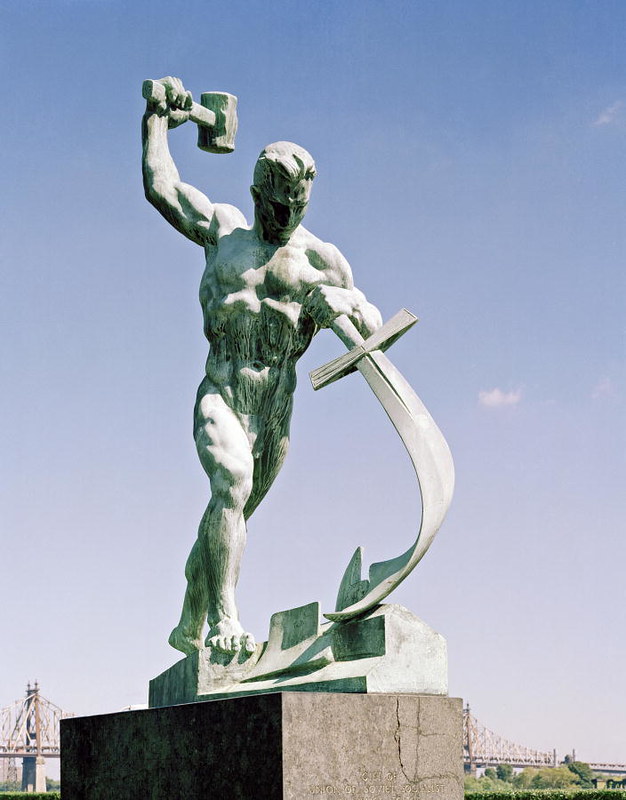
Let Us Beat Our Swords Into Ploughshares. UN Photo/Andrea Brizzi. CC Licence CC BY-NC-ND 2.0

In the New Jerusalem, when God teaches his ways there will be the resolution of disputes between peoples and nations, and the end of all war.  How we long for such a day. Swords into ploughshares and spears into pruning hooks indeed.

Because the New Jerusalem is a place of peace, reconciliation, and justice. Not for the life of the world to come the spectacle of a President lusting after the Nobel Peace Prize while renaming the Department of Defence as the Department of War, while sending quasi-military officers to arrest citizens purely due to the colour of their skin and with no due process, all the while selling Ukraine down the river to his fascist buddy in the Kremlin who probably has dirt on him. That is not peace.

No. The peace of the New Jerusalem will not be the fruit of armed strength but of the Son of God suffering in love on the Cross. The peace of the New Jerusalem will not be about the imposition of a stronger will, because the Cross says otherwise. The peace of the New Jerusalem will not be about finding some compromise halfway in between the positions of two intractable sides but will be based on the truth of God. As we heard in verse 3, ‘He will teach us his ways so that we can walk in his paths.’

Well, what about now? As future citizens of the New Jerusalem, God calls us to point to this future reality by our witness in this life. Can we be people who learn the skills of reconciliation? Can we learn how to transform conflict into peace and harmony? Can we be examples of that in our own relationships? Where are the broken people and broken places in our world to which God is calling us to demonstrate his ways of healing?

Maybe it’s in families. Or in communities. Or in workplaces. Or on a larger stage. But we may be sure, these are the very spaces which God calls his people to inhabit and to serve as a sign of hope in his coming New Jerusalem.

Thirdly and finally, blessing in the here and now:

5 Come, descendants of Jacob,
    let us walk in the light of the Lord.

I’ve been relying this week on the work of the Old Testament scholar John Goldingay to guide my thoughts in understanding this passage. He says that the image of light points in some places to themes of truth or revelation, but not here. ‘The light of the Lord’ has to do with God’s face and hence, God’s blessing. To live in the light of the Lord is to live by his blessing[3].

We can let all sorts of things fire the way we live. It might be material gain. It might be our need for the approval of others. It might be about successful relationships and a good family life.  It might be the desire to be recognised and respected. It might be to climb to the top of our profession.

Not all these things are entirely bad. But they cannot be ends in themselves, or they become idols. Isaiah points us to a better way, a way that enables us to live in the spirit of the Christian hope. It is a way that prepares us for the New Jerusalem.

‘Let us walk in the light of the Lord.’

Let us seek his blessing and respond to that. Where is God shining his light? Let us walk there.

Sometimes God shines a light in a place that is congenial to us, and it is easy to walk there and know his blessing. Other times he shines his light in unexpected and challenging places, and the call to walk there and discover blessing is trickier for us. It can be like that balance we hear in the preamble to the Covenant Service prayer every year:

Christ has many services to be done:
some are easy, others are difficult;
some bring honour, others bring reproach;
some are suitable to our natural inclinations and material interests,
others are contrary to both;
in some we may please Christ and please ourselves;
in others we cannot please Christ except by denying ourselves.
Yet the power to do all these things is given to us in Christ, who strengthens us.[4]

Many ministers did not believe God could be shining his light in that direction as a way of bringing blessing, and some of us had to be dragged kicking and screaming towards that light. Other Christians have known sheer joy and delight in detecting where God was shining his light.

But the reason we do all this is in anticipation again of the New Jerusalem. For in that place, there will be no more night, there will be no more need for lamps or the Sun, because God himself will be the light. Hence, to walk in his light of blessing now is to prefigure that great day. It is to live in a small way now in the ways of eternity, when all our hopes will be fulfilled.

Conclusion

As we step into Advent again this year, may the Holy Spirit hold before us the prophetic vision of hope. May that vision of hope be a blessing that fortifies and energises us.

May we know such blessing that we grow ever more into being the gifted people our Father made us to be. May we offer such blessing that the world knows the Good News of reconciliation with God and with each other. May we walk in such blessing today as we follow God’s light and catch a glimpse of the glory to come.


[1] John Goldingay, New International Biblical Commentary: Isaiah, p42.

[2] Op. cit., p42f.

[3] Op. cit., p44.

[4] Methodist Worship Book, p288.

Sermon: Advent Preparation In The Wilderness

Luke 3:1-6

For the second year running, a group called Beyond Church has organised an outdoor Advent calendar. It’s a series of beach huts on Brighton beach. Does anyone fancy Brighton beach in December? They had a hundred people turn up on the first night. But if you don’t fancy that, you can follow it online or follow the daily coverage in The Independent and stay in the comfort of your home.  If, however, Brighton in winter isn’t challenging enough for you, then you can travel north to Bridlington, where local Christians are doing the same on their beach. Brighton or Bridlington, though, you’re talking about bleak places at this time of year.

But Advent is about God doing great things in bleak places. Today’s Gospel reading offers us precisely that, as it describes the essence of John the Baptist’s ministry. John’s ministry not in a cold, bleak place but a hot, bleak place – the wilderness – prepared the people of his day for the coming of Jesus. We too may discover a profound meeting with God in the bleak places.

The first thing I want to share is to do with our significance to God.

When I candidated for the ministry, my Superintendent Minister at the time gave me a piece of advice. It began with the word ‘Read’, and you know that’s a favourite word of mine! But he went on to say, ‘Read political biographies and learn all you can from the people who exercise power.’

There is some virtue in this, of course. It is good to understand the way things work and the motivations people have. What I wasn’t to know was that he was a man obsessed with getting to know the well-known and the powerful – admittedly in the small pond of Methodism – and that his interest in the influential was about climbing the greasy pole of preferment in the church. He succeeded – for a short while.

And you might think when you hear the beginning of this reading that Luke has a similar interest:

In the fifteenth year of the reign of Emperor Tiberius, when Pontius Pilate was governor of Judea, and Herod was ruler of Galilee, and his brother Philip ruler of the region of Ituraea and Trachonitis, and Lysanias ruler of Abilene, during the high-priesthood of Annas and Caiaphas, the word of God came to John son of Zechariah in the wilderness. (Verses 1-2)

Emperors, governors, rulers, high priests. Indeed when you read Luke’s Gospel, you often find him setting events in historical context. But you know, Luke isn’t too bothered about the Emperor Tiberius or Pontius Pilate or Herod, Philip, Annas or Caiaphas. He isn’t star-struck. Luke knows that God has a special place for the poor and marginalised, for those whom this world doesn’t regard as powerful or significant. So Luke recognises that the true action doesn’t take place in a palace or a temple, but in the wilderness. The same Luke who tells us about the manger and the shepherds takes us to the centre of God’s purposes where the red carpet is made of sand.

Here, then, is this country boy, John, living in the middle of nowhere, probably undetectable by sat-nav. And he is God’s person for this strategic moment in history. He gets to be the compère for the long-awaited Messiah.

Now if this is true of John, what might we take from this? I suggest it’s time to challenge all the ideas that some of us might not be valuable to God or able to be used by him. So often I hear people saying, “I can’t do that, I’m not a minister. I don’t have your knowledge. I’m not special. I’m not anyone.”

To that, God says a great big NO! Because to him you are significant, you are made in his image, you are redeemed by his Son, the Spirit of God lives in you. And what matters is not your ability but your availability. This year, learn that you are significant to God. He isn’t waiting for you to be rich and famous. He isn’t impressed by celebrity culture. He is just waiting for you to say ‘yes’ to him, because he loves you and he has a purpose for you that nobody else can fulfil.

You are significant to God.

Secondly, John in the wilderness shows us the importance of God’s word.

Two things in this reading point to this. One is that John’s ministry begins when ‘the word of the Lord came to [him]’ (verse 2). The other is that Luke sees John’s ministry as a fulfilment of the prophecy in Isaiah 40 (verses 4-6). Between them, these help us in our call to hear the word of God.

How John receives the word of the Lord isn’t explained to us, any more than it is in the Old Testament when we read similarly that the word of the Lord came to a certain prophet. We know ourselves that there are many ways that we hear God’s message. The common theme, surely, is that John was listening. And focussed listening is a great challenge in our society, when we are being bombarded by messages from here, there and everywhere. You have turned your mobile phones off before the service, haven’t you?

The (American) author of a book I’m reading tells this story about a visit he and his wife made to the cinema:

There were three people in the rows in front of us who had their cell phones open during the entire movie. They were text messaging and surfing the Internet and otherwise annoying people. As I saw those cell phone screens open during the movie, I observed that the people using them were not fully committed to being anywhere during those two hours. They were physically sitting in the theatre, even sitting with others who accompanied them, but their minds and hearts were all over the place. They were not fully present, in terms of their attention, to the visual and auditory experience in front of them, they were not fully present to their friends and family that they were sitting next to, and they were not geographically present to the people they were text messaging. They ha a hand and foot in several different places that were disconnected, leaving them as some sort of radical amputees. They were everywhere and they were nowhere. (Page 68f)

Everywhere and nowhere, radical amputees. Because they couldn’t or wouldn’t be fully present to one source of communication. A page before this, the author quotes a magazine article in which the writer argues that the rise of new technology has adversely affected people’s ability to concentrate for a long period of time on reading. Now people get fidgety after two or three pages.

Now you know I am not exactly adverse to new technology, and I know not all of you use it, but we are all affected in some way by the increased number and speed of communications today. But if I really want to reflect deeply on a Bible passage, then it’s not enough for me to look it up on the Internet and display it on my computer screen as I do when preparing sermons, because if I do that there are plenty of distractions at hand which disturb my concentration. I have to go away from the computer and ensure that I am only focussing on that Bible passage. It’s the same with a book. I can’t read one at the desk where the computer sits.

Why go into all this? Because if we, like John, are to hear the word of the Lord, we need to do some radical things in terms of aiding our concentration in listening. We need to set aside time for the Scriptures and prayer that are away from other distractions. That’s why a set time of personal devotions is good. Get away from whatever might tempt you with a stream of other messages or information, whether that’s the computer, the television or the phone.

Luke may not have had modern communications tools, but I feel sure the only way he would have concluded that John the Baptist fulfilled the prophecy of Isaiah was that he – as a Gentile interested in Judaism – had given concentrated time to the Scriptures. And John probably only heard the word of the Lord because he had put himself away from distractions, too. In his case it was the wilderness. In our case it might simply be another room in the house. But whatever it takes, do it – because we need to hear the word of the Lord.

Thirdly and finally, John in the wilderness shows us the importance of repentance.

John proclaims ‘a baptism of repentance for the forgiveness of sins’ (verse 3), and Luke adds imagery to this from Isaiah 40: the way of the Lord is to be prepared by making crooked paths straight, dealing with bumpy roads by filling valleys and lowering mountains, and smoothing out the rough ways. It’s what we all wish the Highways Agency would do for the A12.

Now that’s more than a cheap joke. Many of us know what it’s like to drive stretches of the A12 and feel the suspension of our car tested. The section from around about Witham to Colchester is particularly taxing. We long for a straight, smooth road. No wonder it was dubbed Britain’s worst road in a 2007 survey.

God longs for a smooth, straight road, too. His desire is that the potholes in our lives be filled in, that our crooked ways are made straight, and that when people encounter us we don’t damage their suspension!

In the wilderness, away from other distractions, we find ourselves unnervingly face to face with ourselves, and the disguises with which we cloak our sins are gone. Spiritually naked before God, we know what we must do. John’s baptism (which is not quite the same as Christian baptism) gives us the symbol of washing to be made clean and new.

So what are our crooked ways? Where are we not on the level? What are we hiding in our valleys or covering with mountains? Let’s not pretend that just because we are churchgoers and Christians that we are fine. Most, if not all, of us, need straightening out by God in some ways. If we just see Advent as a time when the anticipation and excitement ramps us towards the 25th, we are seriously mistaken.

For repentance is fundamental to our Advent preparation. If the King is coming, we need to make a straight and smooth highway for him in our lives. And repentance is essentially two things in the Bible. In the Greek of the New Testament the word means ‘a change of mind’, just as our English word ‘repent’ is related to the French repenser, which means to think again. So repentance first of all means we have a change of mind, a complete rethink about our lives. Jesus is not just a bolt-on to an existing Western lifestyle. Meeting Jesus means thinking again about the whole direction of our lives.

And the second thing it means, more so in the Aramaic and Hebrew behind the New Testament culture, is related to that. It means ‘a change of direction’. Because if we have had a change of mind about our lives, it can’t stop with the thinking: the thinking must lead to action. If we continue with the imagery of the road, this is not about a straight road but about a U-turn. God’s sat-nav is pointing some of us in a new direction, and our spiritual health depends on us following the new route instructions.

In conclusion, someone once said that Advent is a mixture of promises and warnings. We have had both in our reading today. In appreciating our significance to God, we have a promise of grace. In hearing the call to repentance, we have a warning. And in coming to God’s word, we have a message that is both promise and warning.

What is the Holy Spirit bringing to us this morning? Promises? Warnings? Or both? Let those with ears to hear, hear what the Spirit is saying.

Create a website or blog at WordPress.com

Up ↑