RHS Wisley ‘Glow’ event, 3rd December 2020. Image copyright (C) Dave Faulkner.
Merry Christmas. I guess some of us could do with a Merry Christmas this year. It might be because of the national and international situation. The cost of living. Having to work longer before retirement. The difficulty of getting on the housing ladder. The threat of AI taking people’s jobs.
Or it might be that a Merry Christmas would cheer us up in the face of personal circumstances. A loved one has a serious illness. Family troubles.
Are we too ‘The people walking in darkness’ that Isaiah spoke of? It certainly feels like it at times.
The people of Judah in Isaiah’s day had all sorts of political troubles. They feared invasion by Assyria, who had already taken over the northern kingdom of Israel. And it was worse for them, because they had no way of voting in a new government. Imagine what good news it is to hear Isaiah saying that ‘The people walking in darkness have seen a great light.’
And Isaiah describes the one who is that great light:
6 For to us a child is born, to us a son is given, and the government will be on his shoulders. And he will be called Wonderful Counsellor, Mighty God, Everlasting Father, Prince of Peace.
If the government were to be on his shoulders, they will think this is a political leader, a king. But they will be disappointed. No king in their day fulfils these hopes. Just like us, they pin their hopes on politicians, only to be let down.
The prophecy is only fulfilled in Jesus. He came as the hope of Israel. He is our hope, too. He is the
Wonderful Counsellor, Mighty God, Everlasting Father, Prince of Peace.
But what do those titles mean? And what do they mean for us?
Well, they go in pairs. The Wonderful Counsellor is the Mighty God, and the Everlasting Father is the Prince of Peace.
Firstly, the Wonderful Counsellor is the Mighty God:
The word ‘counsellor’ here doesn’t so much mean an adviser or someone who listens to your problems. It is to do with someone who makes plans. It is a ‘wonder planner.’[1] The mighty God makes wonderful plans for his people.
And you might be cynical about that, especially if you are going through bad times.
But let me tell you about someone who went through terrible times but still had faith in this God. Corrie ten Boom was a Dutch woman who, along with her father Casper and sister Betsy, in World War Two, hid Jews from the Nazis. When they were discovered, they were arrested. Casper died ten days later. The sisters were put in a concentration camp. Betsy died there. Corrie survived.
After the war, she spoke widely and wrote about her experiences and her faith in those dark times. Towards the end of her life, she said she had lived by the promises of God in the Bible while in the concentration camp and found them all to be true. She observed,
When a train goes through a tunnel and it gets dark, you don’t throw away the ticket and jump off.[2]
One of her most famous quotes about God is this:
There is no pit so deep, that He is not deeper still.
She lived and died by that faith. She knew that the good plans of the mighty God for her were seen in Jesus, who came into the darkness of this world, and even died unjustly. But God worked for good in that.
Are you in a deep pit in your life? I invite you to trust Jesus, who is deeper than your pit. God sent him to be with you, to be alongside you by his Spirit, and to bring hope and light in your darkness.
Secondly, the Everlasting Father is the Prince of Peace:
How do we Christians understand the title ‘Everlasting Father’ when Jesus is not God the Father but God the Son? ‘Everlasting Father’ here is an extravagant ancient description of a king’s relationship with his people[3]. The king who ultimately fulfils Isaiah’s prophecy will be the Prince of Peace.
And that is Jesus. ‘Peace on earth, goodwill to all on whom his favour rests.’
Do you need peace in your life? Perhaps you feel you can never be forgiven for something that has left you with deep shame. Jesus can resolve that. He died on the Cross for you. Nothing is too big for him.
Perhaps you are dealing with the pain of broken relationships. Jesus can help. He can show the way to reconciliation through forgiveness, bearing one another’s burdens, and a commitment to truth and justice. And if the other parties will not respond, he can hold you in the certainty of his love.
Or maybe you are worried by the state of the world, as warmongers and aggressive and violent national leaders take centre stage. We can’t control the actions of others, although we can pray. We know that if those who made a lot of their support for Christianity would actually follow Jesus, things would be different. In the meantime, this too is another case of there being no pit so deep that Jesus isn’t deeper still. He will hold us in the storm.
And one day, as the mighty king, he will put all things right.
Conclusion
I don’t want to give you a long address in a Christmas Eve service. But I do want us all to know as we head towards Christmas Day that Jesus is the best present ever. We can begin and have a lifetime of unwrapping all that he is.
[1] John Goldingay, Isaiah (New International Biblical Commentary), p73.
(Bethlehem) The 3 Wisemen were killed attempting to enter the U.S. early this morning. They were still hundreds of miles away from the actual border, but the White House determined there wasn’t time to actually investigate their suspicions.
A White House spokesperson said, “We could tell from the satellite photos that these were bad people. They had gold (probably stolen), myrrh and something that was possibly fentanyl. It was hard to tell from the picture, but the President knew just enough to kill them without an actual investigation.”
…
Also arrested were two immigrants named Joseph and Mary, an unnamed child, and an angel. The White House elaborated, “We can tell you that the two suspects were trying to check into a hotel. When asked if they were married, they responded that they were “betrothed.” We can’t have people flaunting Christian moral conventions at this sacred time of the year.
“The undocumented mother was also secretly recorded as saying “(God) has brought down rulers from their thrones, and has lifted up the humble. God has filled the hungry with good things but has sent the rich away empty.” That sounds like communism, pure and simple. These were probably Antifa terrorists.”
I could read you much more, but I don’t have time!
In amidst all our cosy preparations, with Christmas adverts that tug at the heart-strings like this year’s Waitrose ad, we miss the fact that the coming of the Messiah is much more messy and radical. And I don’t mean the mess in the manger.
It’s about regime change.
Sometimes, we get so fed up with our leaders we want change. Maybe we don’t do it like some powerful nations do, where they act nefariously in another country to change the leadership. But look at last year’s General Election here. Broadly speaking, the country was so fed up with the Conservatives that people voted for anyone who wasn’t Conservative. It wasn’t so much a vote for, as a vote against. No wonder the Labour majority was called a ‘loveless landslide.’
In the ancient world, of course the general population didn’t have a say, but kings were replaced and sometimes entire dynasties were removed. It was their version of regime change.
Isaiah 11 proposes the most radical regime change of all. A regime change that brings in the Messiah. Verse 1:
A shoot will come up from the stump of Jesse; from his roots a Branch will bear fruit.
Not even a shoot from the stump of David, for he was far from perfect. An adulterer, it not actually a rapist, and a murderer. The greatest king of all had his faults. Instead, Isaiah prepares us to sing
Hail to the Lord’s Anointed, Great David’s greater Son![1]
So what will characterise the much-needed Messiah, who alone can bring true regime change?
Three qualities:
Firstly, wisdom:
2 The Spirit of the Lord will rest on him – the Spirit of wisdom and of understanding, the Spirit of counsel and of might, the Spirit of the knowledge and fear of the Lord – 3 and he will delight in the fear of the Lord.
Do you recognise these words? We have adapted them for the laying-on of hands at Confirmation and Reception into Membership of the Methodist Church. The minister prays this for the candidates:
By your power and grace, Lord, strengthen these your servants, that they may live as faithful disciples of Jesus Christ. Increase in them your gifts of grace, and fill them with your Holy Spirit: the Spirit of wisdom and understanding; the Spirit of discernment and inner strength; the Spirit of knowledge, holiness, and awe.[2]
And doubtless we expect the Holy Spirit to impart these qualities: wisdom, understanding, discernment, inner strength, knowledge, holiness, and awe. I’m sure it’s right to expect that.
Wisdom: Public Domain Pictures
But there is a specific context to these qualities of wisdom in Isaiah 11. All of the qualities he lists – wisdom and understanding, counsel and might, the knowledge and fear of the Lord – are lacking in the people of Judah and also of their enemies, such as Assyria. There are various quotes in the preceding two or three chapters that illustrate this.[3]
The Messiah is the One who brings true godly wisdom without lack – we might say it’s wisdom, the whole wisdom, and nothing but the wisdom of God.
When Jesus comes and begins his ministry in the power of the Spirit, we see this without a shadow of a doubt. In Matthew’s Gospel, there are five blocks of Jesus’ teaching, reinforcing the fact that here is the ‘One greater than Moses’ who was prophesied, given that there are five books colloquially known as ‘The Five Books of Moses’ in the Old Testament.
We can gain wisdom from other sources, but nothing is like the wisdom of Jesus. It’s why our high church friends stand for the Gospel reading in worship. They are saying, here is the centre of divine wisdom and revelation in the life and teaching of Jesus.
If we believe we are living under the regime change of the Messiah (which Christians are as citizens of God’s kingdom) then there is a clear application of this truth to us. To honour Jesus as the coming Messiah, our calling is to immerse ourselves in the wisdom of his teaching and commit ourselves to following it more fully.
For that, we too will need the Spirit – just as even Jesus himself, the Son of God, did, at his baptism.
If we are citizens of the coming kingdom, then this is what we do.
Secondly, justice:
He will not judge by what he sees with his eyes, or decide by what he hears with his ears; 4 but with righteousness he will judge the needy, with justice he will give decisions for the poor of the earth. He will strike the earth with the rod of his mouth; with the breath of his lips he will slay the wicked. 5 Righteousness will be his belt and faithfulness the sash round his waist.
Justice. We all want that, don’t we? Our governments should deliver justice. Just so long as we are the ones who are in the right, and those we don’t like are condemned. And we’d like just to leave us feeling comfortable.
Lady Justice Silhouette: Public Domain Pictures
If those are our hopes, then the justice of the Messiah’s regime change will not be what we want. He will bless the poor and the needy (verse 4) – well, that won’t be so great for those of who are used to living with comfort and privilege. For to elevate them, to give them what they need and what is rightfully theirs will means less for us.
And as for all that uncouth talk about striking the earth with the rod of his mouth and slaying the wicked with the breath of his mouth – oh, we don’t like all that violent stuff, do we? Isn’t this one of those parts of the Bible we’d rather strike out? Where’s gentle Jesus, meek and mild? Where’s inclusive Jesus in that?
Or let’s be honest: where’s nice, cosy, liberal, middle-class Jesus?
I’m sorry: he doesn’t exist.
But show passages like these and the similar ones in Revelation that we like to dismiss as altogether too gory to those who are suffering for their faith, and they will rejoice in them. Through the Messiah, God will put things right! If we believe in a God of justice, we must not deny that he will deal with the impenitent.
However, it will be delayed. When Jesus comes and gives his manifesto as Messiah to the synagogue at Nazareth in Luke 4, he reads from Isaiah 61, but he stops before it goes on to talk about ‘the day of vengeance of our God.’ That is coming, but not yet.
Why? Because in his mercy, the Messiah offers the opportunity for even the most reprehensible to repent and amend their ways.
But Jesus is indeed coming to bring good news for the poor. He is coming, as his mother prophesied in the Magnificat, to bring down rulers from their thrones, lift up the humble, fill the hungry with good things, and sent the rich away empty. This is what regime change under the Messiah looks like.
And so again, our duty as citizens of that coming kingdom can be stated very simply, even if it is challenging to implement. It is to advocate for the poor and challenge the powerful.
Thirdly and finally, peace:
6 The wolf will live with the lamb, the leopard will lie down with the goat, the calf and the lion and the yearling together; and a little child will lead them. 7 The cow will feed with the bear, their young will lie down together, and the lion will eat straw like the ox. 8 The infant will play near the cobra’s den, and the young child will put its hand into the viper’s nest. 9 They will neither harm nor destroy on all my holy mountain, for the earth will be filled with the knowledge of the Lord as the waters cover the sea.
The thought of peace between different animals is appealing. As you know, we are dog lovers, and our cocker spaniel can be a bit of a grumpy old man with other animals, especially other dogs, and most notably on his night-time walk. There’s something about the dark. We have taken to referring to one other dog on our estate as ‘Enemy Dog’, because ours has taken a particular dislike to the red flashing light he wears on his collar at night. The wolf will live with the lamb, the leopard will lie down with the goat, the calf, the lion, and the yearling together? I’d vote for that.
Sadly, we’re dealing with prophetic imagery here rather than a literal prediction. As John Goldingay, the scholar I cited last week, says here:
Context suggests that the talk of harmony in the animal world is a metaphor for harmony in the human world. … A literal interpretation of verses 6-8 would also have difficulty in explaining how wolves and leopards can remain themselves if they lie down with lambs and goats.[4]
So what is the metaphor saying? Goldingay again:
The strong and powerful live together with the weak and powerless because the latter can believe that the former are no longer seeking to devour them.[5]
The Messiah brings together and reconciles the strong and the weak, the powerful and the powerless. They are not divided, they are family. No-one takes advantage of anyone else. What matters in relationships is everybody’s well-being. The ‘goodwill to all on whom God’s favour rests’ that the angels spoke about to the shepherds becomes ‘goodwill among all’.
Peace dove: Wikimedia Commons CC 2.0
What does this sound like? Well, to me it sounds like what Jesus always intended his church to be. The redeemed community, the colony of God’s kingdom, is to be the place where the rich and the poor, the highly educated and the barely literate, Europeans, Africans and Asians, the neurotypical and the neurodivergent, old and young, male and female, all care for one another and promote each other’s welfare. Because that’s what Jesus does. That’s the sort of society the Messiah builds.
And imagine not only enjoying a fellowship like that (even though it entails hard and painful work at times). Imagine also inviting someone in to experience it, and being able to say, this is what life is like when Jesus is in charge.
Indeed, this is what regime change under Messiah Jesus brings.
Wine Advent Calendar by In Good Taste. No alterations. CC Licence 4.0.
In among the monsoon of Black Friday emails that have taken over my inbox were links to a fashion of recent years that I have railed against in previous Advent seasons. The luxury Advent calendar.
This year, you could buy not only a perfume Advent calendar, but also a wine Advent calendar. And I thought, I hope someone doesn’t receive both and then confuses the two.
Or maybe it would serve them right!
These luxury Advent calendars show that if Advent means anything in our wider society today, it is that Advent is a countdown to indulgence.
We may respond by saying no, it’s a countdown to the birth of the Messiah.
But we too would be wrong if we said that – at least historically. For in the tradition of the Church, Advent begins with a countdown to focussing on the return of the Messiah.
Like so many, we yearn for the day when evil and suffering will be abolished. Like many critics of faith, we too struggle with why God allows sin and strife in the meantime.
But what we have is a hope based in the promises of God, and which we have glimpsed in the Resurrection of Jesus.
Ancient Israel had her hopes, and we read one such vision in Isaiah 2. We read it, not only for what it is, but through a Christian lens. We believe this prophecy of Isaiah is fulfilled in what is often called the ‘Second Coming’. We believe in a hope described by the New Testament Greek word Parousia, which is often translated as ‘coming’, but which is better translated as ‘appearing’ or ‘royal presence.’
So, when Jesus appears again as King of all creation, what will be the effects of his reign, and what do they mean for us now?
Firstly, blessing for God’s people:
2 In the last days
the mountain of the Lord’s temple will be established as the highest of the mountains; it will be exalted above the hills, and all nations will stream to it.
‘In the last days’ here is literally ‘at the close of the days’ – that is, when God’s promises come to fulfilment[1].
Originally, Jerusalem stood at a height below the surrounding mountains. Yet here, Isaiah is inspired to see it elevated in a way consistent with its spiritual significance. God has elevated the city.[2]
God blesses his people. As Psalm 3:3 says,
But you, Lord, are a shield around me, my glory, the One who lifts my head high.
God raises his people to their full dignity. In his presence, he makes them into all they were intended to be.
One Sunday when I was at my Anglican college in Bristol, one of my friends invited a few of us to go with him to worship that evening at an independent charismatic church. His contact was a girl he knew. We all went to her house first, and she led us to the place where her church met. She was a plain-looking young woman of unremarkable appearance.
During the service there was an extended time of sung worship. At one point, I looked around the congregation. Wow, I thought: who is that beautiful girl?
I expect you’ve guessed. It was the apparently plain girl who had taken us there. But caught up in the worship and adoration of God, the presence of the Spirit made her into something more.
And I believe that is something of our hope. Just as Jerusalem is elevated in the vision of Isaiah, so God’s people are elevated in the royal presence of God.
It happens already by the Holy Spirit. It will be fulfilled in the coming of Jesus.
I have long believed that the work of the Holy Spirit in us is not to make us less human, as if God wanted us to be religious robots, but rather to make us more human than we’ve ever been. Our gifts are enhanced. Our talents are increased. Our holy desires are raised. As Isaiah saw Jerusalem being raised and exalted, so our destiny is to become everything that God ever intended us to be.
This is not just about ‘religious’ spiritual gifts. It is to do with everything about us. Alison’s admin will be even more on point. Tim’s photos will be even more amazing. Angela’s hospitality will be warmer than ever. Jessica’s tech abilities will be through the roof.
I’m sure that’s something to anticipate with joy and maybe even excitement. But in the meantime, as a sign to the world of all that is to come, let us be open to the Spirit in every part of our lives as God works on this project of elevating us to become more of whom we were always intended to be.
Secondly, blessing for the nations:
3 Many peoples will come and say, ‘Come, let us go up to the mountain of the Lord, to the temple of the God of Jacob. He will teach us his ways, so that we may walk in his paths.’ The law will go out from Zion, the word of the Lord from Jerusalem. 4 He will judge between the nations and will settle disputes for many peoples. They will beat their swords into ploughshares and their spears into pruning hooks. Nation will not take up sword against nation, nor will they train for war any more.
This makes me remember the passage I used on Remembrance Sunday this year, namely Revelation 22:1-5, where ‘the leaves of the tree [of life] are for the healing of the nations’ (verse 2).
Let Us Beat Our Swords Into Ploughshares. UN Photo/Andrea Brizzi. CC Licence CC BY-NC-ND 2.0
In the New Jerusalem, when God teaches his ways there will be the resolution of disputes between peoples and nations, and the end of all war. How we long for such a day. Swords into ploughshares and spears into pruning hooks indeed.
Because the New Jerusalem is a place of peace, reconciliation, and justice. Not for the life of the world to come the spectacle of a President lusting after the Nobel Peace Prize while renaming the Department of Defence as the Department of War, while sending quasi-military officers to arrest citizens purely due to the colour of their skin and with no due process, all the while selling Ukraine down the river to his fascist buddy in the Kremlin who probably has dirt on him. That is not peace.
No. The peace of the New Jerusalem will not be the fruit of armed strength but of the Son of God suffering in love on the Cross. The peace of the New Jerusalem will not be about the imposition of a stronger will, because the Cross says otherwise. The peace of the New Jerusalem will not be about finding some compromise halfway in between the positions of two intractable sides but will be based on the truth of God. As we heard in verse 3, ‘He will teach us his ways so that we can walk in his paths.’
Well, what about now? As future citizens of the New Jerusalem, God calls us to point to this future reality by our witness in this life. Can we be people who learn the skills of reconciliation? Can we learn how to transform conflict into peace and harmony? Can we be examples of that in our own relationships? Where are the broken people and broken places in our world to which God is calling us to demonstrate his ways of healing?
Maybe it’s in families. Or in communities. Or in workplaces. Or on a larger stage. But we may be sure, these are the very spaces which God calls his people to inhabit and to serve as a sign of hope in his coming New Jerusalem.
Thirdly and finally, blessing in the here and now:
5 Come, descendants of Jacob, let us walk in the light of the Lord.
I’ve been relying this week on the work of the Old Testament scholar John Goldingay to guide my thoughts in understanding this passage. He says that the image of light points in some places to themes of truth or revelation, but not here. ‘The light of the Lord’ has to do with God’s face and hence, God’s blessing. To live in the light of the Lord is to live by his blessing[3].
We can let all sorts of things fire the way we live. It might be material gain. It might be our need for the approval of others. It might be about successful relationships and a good family life. It might be the desire to be recognised and respected. It might be to climb to the top of our profession.
Not all these things are entirely bad. But they cannot be ends in themselves, or they become idols. Isaiah points us to a better way, a way that enables us to live in the spirit of the Christian hope. It is a way that prepares us for the New Jerusalem.
‘Let us walk in the light of the Lord.’
Let us seek his blessing and respond to that. Where is God shining his light? Let us walk there.
Sometimes God shines a light in a place that is congenial to us, and it is easy to walk there and know his blessing. Other times he shines his light in unexpected and challenging places, and the call to walk there and discover blessing is trickier for us. It can be like that balance we hear in the preamble to the Covenant Service prayer every year:
Christ has many services to be done: some are easy, others are difficult; some bring honour, others bring reproach; some are suitable to our natural inclinations and material interests, others are contrary to both; in some we may please Christ and please ourselves; in others we cannot please Christ except by denying ourselves. Yet the power to do all these things is given to us in Christ, who strengthens us.[4]
Many ministers did not believe God could be shining his light in that direction as a way of bringing blessing, and some of us had to be dragged kicking and screaming towards that light. Other Christians have known sheer joy and delight in detecting where God was shining his light.
But the reason we do all this is in anticipation again of the New Jerusalem. For in that place, there will be no more night, there will be no more need for lamps or the Sun, because God himself will be the light. Hence, to walk in his light of blessing now is to prefigure that great day. It is to live in a small way now in the ways of eternity, when all our hopes will be fulfilled.
Conclusion
As we step into Advent again this year, may the Holy Spirit hold before us the prophetic vision of hope. May that vision of hope be a blessing that fortifies and energises us.
May we know such blessing that we grow ever more into being the gifted people our Father made us to be. May we offer such blessing that the world knows the Good News of reconciliation with God and with each other. May we walk in such blessing today as we follow God’s light and catch a glimpse of the glory to come.
[1] John Goldingay, New International Biblical Commentary: Isaiah, p42.
If, like me, you’re a bit of a misery guts in the run-up to Christmas, then the Third Sunday in Advent is your favourite. It’s the day we traditionally remember John the Baptist. And what finer example of pricking the balloon of froth and trivia is there than the man who called the people who rushed to him ‘You brood of vipers’ (Luke 3:7)? We’d be thrilled to have crowds rushing here, wouldn’t we? Imagine if we had a sudden major influx of newcomers on a Sunday morning and I stood in the pulpit, denouncing them in that way? I think you’d be going home and phoning the Superintendent – even though what John tells people to do, in sharing, honest and just behaviour, and plain integrity – isn’t theologically radical. (Although it is disturbing that he does have to be that basic.)
In clearing the way for the Messiah, we often think of the severe images in John’s preaching – the brood of vipers, the winnowing fork and fire of the Messiah, and so on. But what I want to look at this morning is not so much the process of preparation but rather what John was preparing for.
And that’s where Zephaniah’s prophecy comes in. He brings God’s vision of what things will be like after the end of exile. And while God’s people are no longer in a foreign land, you’ll perhaps recall how I’ve said that in Jesus’ day they saw themselves as still in exile, due to their occupation by the Roman forces.
Now we know that Jesus announced a very different end of exile from that which his nation anticipated. Not all of them would have seen the need for the repentance which John proclaimed. And even those who did would have assumed that if they lived in holiness then God would grant their wish of deliverance from the Romans.
But nevertheless the images in Zephaniah give us a great indication of what life is like in the kingdom of God that Jesus inaugurated. You may remember that Jesus was once asked why he and his disciples feasted, whereas the disciples of John fasted. He said that while the bridegroom was present, there would be feasting. So we’re not going to look this morning at the fasting and the preparation, we’re going to consider the feasting that follows the preparation.
I want to highlight two aspects.
Firstly, we find a singing people:
14 Sing, Daughter Zion; shout aloud, Israel! Be glad and rejoice with all your heart, Daughter Jerusalem! 15 The Lord has taken away your punishment, he has turned back your enemy. The Lord, the King of Israel, is with you; never again will you fear any harm.
Israel is forgiven and no longer under threat from her enemies. The natural reaction is to sing, to shout aloud, to be glad, and to rejoice. No longer are they oppressed due to their sins: God has taken that away. Joy is the natural result!
In my teens, one popular worship song had the words, ‘I get so excited, Lord, every time I realise I’m forgiven.’ We did sometimes deliberately sing wrong words to it: ‘I get so excited, Lord, every time I realise I’m a gibbon,’ but even our laughter at our silly alteration was part of our joy. We knew we were forgiven sinners through the Cross of Christ, and that led to excitement and great joy.
Sometimes, though, it’s hard to find where the joy has gone. As I’ve told you before, coming from a family which has a history of depression, I know what it is for the dark cloud suddenly to appear over my life, even though I’ve never been diagnosed with depression. Sometimes we don’t react in the best ways to circumstances, but at other times we are at the mercy of unbalanced chemicals in our bodies. These situations need talking therapies or tablet cures.
But on other occasions you really wonder where the joy has disappeared in the church generally. I recall a dismal Good Friday ecumenical service when I was young. We happened to be singing ‘I get so excited, Lord’, and our minister, who was leading the service, asked if there really was any evidence that people there were excited that they were forgiven. Were they so caught up with the sense that Good Friday reminded them of their sins that they had forgotten Good Friday also brought them relief from their sins?
As I’ve pondered this, I’ve developed a theory. The longer we go on as Christians and get further away from our heady younger days when we discover the joy of forgiveness for ourselves, and as we slowly with the help of the Holy Spirit correct wrong behaviour, the trouble is that we start to see ourselves not as forgiven sinners but as decent, respectable people.
And when you start to see yourself as fundamentally good, you see less reason to view yourself as a sinner needing the grace that first thrilled your heart. In fact, you become like those opponents of Jesus who criticised him for partying with the disreputable. Jesus told them with, I think, a note of sarcasm, that it was not the healthy who needed a doctor, but the sick. But we who now see ourselves as so healthy no longer connect with what brought us joy. Our spiritual amnesia makes us the miserable self-righteous religious types that nobody likes.
What is the cure? Well, if this condition is a progressive amnesia, what we need is the gift of remembering. We need the grace to look at our past (and at our present attitudes) in the searching light of Christ. We need then to remember what Christ did for us when we knew we were sinners, and then receive that gift of undeserved mercy again.
You may recall that the Preface to the 1933 Methodist Hymn Book began with the famous words, ‘Methodism was born in song,’ and so it was. But the birth of our spiritual tradition in song was not some cultural love of a particular kind of hymnody, it was a spiritual experience that had to be sung. It was the experience of forgiveness and the assurance of God’s love that led the early Methodists to sing for joy. Some Christians have argued that just about every major spiritual renewal down the centuries has been accompanied by a new outburst of music, because that’s the natural and creative outlet for the joy that God brings.
For us to be a joyful people, then, means reconnecting with the life of the Spirit – the Holy Spirit who showed us we were sinners but who also revealed to us the forgiving love of God in Christ; the Holy Spirit who graciously makes us more like Jesus as we open ourselves to him, but who also reminds us of our need of grace, to inoculate us from the risk of becoming Pharisees; the Holy Spirit, who indeed pours the joy of God into our hearts, along with divine love. If we welcome the Holy Spirit, one thing we do is welcome holy joy into the depths of our beings.
Secondly, we find a singing God:
16 On that day they will say to Jerusalem, ‘Do not fear, Zion; do not let your hands hang limp. 17 The Lord your God is with you, the Mighty Warrior who saves. He will take great delight in you; in his love he will no longer rebuke you, but will rejoice over you with singing.’
So there you go, right there is ‘the Lord of the dance’: he ‘will rejoice over you with singing’. Sometimes in our Advent preparation as with our Lent preparation we think about the holiness of God in a severe way, and we are conscious of how far short we fall of God’s standards. Certainly, we can react that way to the preaching of John the Baptist, as I indicated at the beginning – although it’s worth noting that at the end of our Gospel reading, we heard Luke say that what John preached was ‘good news’.
And it may therefore be that our image of God is the stern headmaster with furrowed brow, holding us to unattainable standards and punishing us when we fail.
Now there is a place to speak of God’s holiness, and even of his judgment, but here we see another side to God: one who delights in his children and sings for joy over them. If anyone still believes that the Old Testament reveals God as a God of wrath and the New Testament shows him to be a God of love, this passage should thoroughly confuse such people!
Where do we most fully see such a joyful God? Surely it is in the ministry of Jesus. He teaches this about his Father when he tells the Parable of the Prodigal Son, where the father scandalously keeps looking out for his errant son and then throws a great party to celebrate the return. And Jesus lives it out as he turns water into wine at a wedding, as he invites himself to Zaccheus’ house, thus prompting the tax collector’s repentance, as he feasts with the last and the least. Jesus teaches and demonstrates a God who is full of joy when sinners come home to him, and whose joy is such that it leads sinners home.
Perhaps Johann Sebastian Bach got it right with his words, ‘Jesu, joy of man’s desiring.’ Jesus is our joy, for he is full of joy himself. He is utterly outrageous with joy. No wonder those who – perhaps like us, as I said earlier – had spent so much time concentrating on being good that they had forgotten their need of grace as sinners – were so wound up by him.
So out with the idea that God grudgingly or stingily or reluctantly forgives us our sins. The evidence of Scripture is that he longs to forgive, he loves to forgive, and he forgives generously and whole-heartedly. In Zephaniah he has longed for his children to return, and he has brought them home. Now they celebrate – and so does he. In the Gospels, Jesus shows us this same God in flesh and blood.
Perhaps you think that it’s all very well me preaching this, but I don’t know you, and I don’t know your darkest secrets. Believe me, in all my years of ministry I have heard plenty of dark secrets from church members, and yours probably would not surprise me. I have listened from time to time to someone talk about a terrible thing they did decades ago, which no-one at church knows about, and which has haunted them ever since. Then I have had the privilege of assuring them that no pit is too deep that God in Christ cannot haul them out. I have watched as relief, peace, and joy have broken out on their faces. And I believe that as such events have unfolded on earth, Jesus and the angels have been putting up the bunting and decorating the cake in heaven.
In the carol service, we will be reading of angels singing to shepherds. But we don’t need to wait to sense the divine song being sung over our lives. Right now God is lovingly offering restoration to the broken, forgiveness to the sinner, and strength to the weak. He loves to do this. Receive the grace he is offering you, even urging you to take, through Christ. Know and feel his forgiveness, as Jesus invites himself into your house, just as he did with Zaccheus.
And as you see the smile on his face, so let your facial muscles relax and let the joy spread across your countenance, too.
In my case, my parents gave me the name ‘David’ because it means ‘beloved.’ And I was certainly beloved of them, right through to their deaths.
I am sure you know that in the Bible someone is often given a name with a particular meaning to signify their life’s calling. Thus, God sometimes commands parents to give babies certain names. Most prominent of all in this is the detail in the nativity stories, where Joseph is told by the angel to name the infant Mary is carrying ‘Jesus’, which means ‘God saves.’
We see something similar in the famous verse 6 of Isaiah 9:
For to us a child is born, to us a son is given, and the government will be on his shoulders. And he will be called Wonderful Counsellor, Mighty God, Everlasting Father, Prince of Peace.
Whoever Isaiah had in mind in his day, the early church saw this as only completely fulfilled in the coming of the Messiah, Jesus. Those four names or titles – Wonderful Counsellor, Mighty God, Everlasting Father, Prince of Peace – are like a job description for the Messiah.
And so we’re going to explore those four titles from the perspective of the New Testament.
Firstly, Wonderful Counsellor:
In the Old Testament, a counsellor tended to be an adviser to the king at the royal court. And that interpretation would do very nicely for some people: if the Messiah, Jesus, were just an adviser to us, we might be pleased. He could advise us, but we would be under no obligation to follow everything he said. All that pesky stuff about caring for the poor, sharing our possessions, and so on: we could reject awkward stuff like that and simply follow the bits we like.
And some people live pretty much like that, including regular churchgoers.
But in the New Testament we get a different sense of the word ‘counsellor.’ You may be familiar with the way the Holy Spirit is called ‘The Counsellor’ in John’s Gospel: well, in fact, when Jesus introduces that topic he speaks of the Holy Spirit as ‘another Counsellor.’ The sense is that the Spirit will come as Counsellor to replace the Counsellor who is leaving, namely Jesus.
And what does ‘counsellor’ mean here? ‘One called alongside.’ That’s why alternative translations to ‘Counsellor’ are Comforter, Helper, or Advocate.
The Holy Spirit comes alongside us to replace Jesus, who previously came alongside us. And this gets to the heart of the wonder of the Incarnation. In coming to earth, taking on human flesh, and living an ordinary (if not poverty-stricken) life, Jesus came alongside us.
Some people talk as if God is remote. There is that dreadful song that Cliff Richard covered some years ago called ‘From A Distance’, which includes the refrain, ‘God is watching us from a distance.’ But God has done so much more. In Jesus, he has come alongside us, in all the mess and the confusion of everyday living.
Don’t you want someone like that when you are in need? When I had a broken engagement a few years before I met Debbie, two friends of mine turned up on my doorstep and said they were taking me out to lunch. I hadn’t realised that both of them had been through broken engagements before meeting their husbands.
When we pray, let’s remember that Jesus is the ‘Wonderful Counsellor’, who in the Incarnation has come alongside human beings in the grimiest, bleakest parts of life. He is Good News.
Secondly, Mighty God:
A couple of weeks ago after the morning service, Haslemere Methodist Church hosted a nativity production by a group of Ukrainian refugees. Adults and children together in native costumes told the nativity story in what they said was a traditional Ukrainian way. Almost all of it was in their native tongue, so they provided a translation sheet. Their one concession to English was to sing ‘Silent Night’ in both languages. All of this was to raise money for a small charity set up by some British Christians in Portsmouth called Ukraine Mission, which takes relief supplies out there to suffering people.
They explained beforehand how elements of the Christmas story had become all the more relevant to them since Putin’s invasion, not least the flight into Egypt to escape murderous Herod, which spoke to them about the many Ukrainian mothers who had fled their homeland with their children.
And most notable to me in their presentation of the nativity was the attention they gave to Herod’s plot to kill the infant boys in Bethlehem. However, they did vary from the script of the Gospels by including an elite hit squad of angels who turned up to kill Herod and his henchmen. I can’t imagine what hopes they were expressing …
We’d like a ‘Mighty God’ like that. One who sent his hit squads of angels like some heavenly SAS unit to knock out the tyrants and evildoers of this world. Of course, it’s altogether too easy for us to assume that we are the goodies and this God would have no bones to pick with us. Which makes this vision of God dangerous.
But our Mighty God is not like that, and it’s certainly not what we see of the Messiah in the Christmas story. Tom Wright says this:
When God wants to sort out the world, as the Beatitudes in the Sermon on the Mount make clear, he doesn’t send in the tanks. He sends in the meek, the broken, the justice hungry, the peacemakers, the pure-hearted and so on.[1]
He doesn’t send in the tanks. He sends in the meek. That sounds very Christmassy to me. That sounds like the way Jesus came. Mighty God? Oh yes. He turned history upside-down.
Like a stone on the surface of a still river Driving the ripples on forever Redemption rips through the surface of time In the cry of a tiny babe
Thirdly, Everlasting Father:
Well, this could be tricky: as Christians, we don’t want to confuse Jesus and the Father in our understanding of the Trinity.
But maybe what we need to remember here is this. There is plenty of biblical material to say that no-one has seen God. Even Moses, who wanted to see the face of God, was denied that.
But on the other hand, Isaiah says in chapter 6 of his prophecy that in the year King Uzziah died, he saw the Lord in the Jerusalem Temple. And we need to put this alongside Jesus’ assertion that if you have seen him, you have seen the Father.
Jesus himself is divine, and he is the revelation of God. If we want to know what God is like, we look at Jesus. And we get to see that in the Incarnation.
God is Christlike, and in him is no un-Christlikeness at all
The other night, Debbie and I were watching Sky News when the ad break came. One of the ads was for Asda supermarkets. Now I expect companies like that to be promoting all their Christmas wares at this time – although as one of my Midhurst members said, much of it is insensitive at a time when food banks are being used more than ever.
But what really got me was the slogan at the end: Asda – the Home of Christmas.’ How shallow. How depressing. The home of Christmas is a manger.
And if Jesus came to reveal the Everlasting Father to us, then Christmas is so much more. It is a time when God is revealed to the world.
That’s why I’ll always have a short evangelistic talk in a carol service. God is revealed to the world at Christmas. It’s our unique message at this time.
Fourthly and finally, Prince of Peace:
This is a huge title for the Messiah. Paul talks about us receiving peace with God through Christ in Romans, and in Ephesians he talks about Jews and Gentiles finding peace with each other and bringing all things together in unity under Christ. Is it any surprise that the angels appear to the shepherds in Luke’s Gospel and proclaim peace on earth to those on whom God’s favour rests?
So this is big! It’s the Hebrew peace of shalom, where all is restored in the world. Not just the absence of war, but reconciled relationships, justice, healing of people and planet, basically everything right with the world. In other words, Jesus has come to reverse all the curses of Eden when everything went wrong.
Indeed, if we go back to Genesis 3 and the story of the Fall, we see brokenness everywhere. Adam and Eve hide from God – but now there will be peace with God through the Messiah. Adam and Eve are alienated from each other – because the man will rule over the woman – but in Christ human beings are reconciled with one another. Eve will suffer pain in childbirth – but Jesus brings healing. Adam is alienated from the earth, because his daily toil will be subjected to frustration – but the creation, which Paul says in Romans is ‘groaning’, will also find peace.
Let’s not just pick and choose our favourite bits from this and ignore the rest. Let’s not call people to conversion while missing the social dimensions. And equally, let’s not just make ourselves into religious politicians and downplay the call to personal commitment to Christ. Because if Jesus is the Prince of Peace we need to embrace the whole package. Jesus the Prince of Peace ushers in the new creation, and he calls us to be his disciples in this project.
Howard Thurman was an American Christian theologian at Boston University and civil rights leader who acted as a spiritual advisor to people like Martin Luther King. His most famous piece of writing is called ‘The Work of Christmas’. This is the best-known passage from it:
When the song of the angels is stilled,When the star in the sky is gone,When the kings and princes are home,When the shepherds are back with their flock,The work of Christmas begins:
To find the lost, To heal the broken, To feed the hungry, To release the prisoner, To rebuild the nations, To bring peace among brothers, To make music in the heart.
Conclusion
Jesus the Messiah comes alongside us in even the darkest parts of life. He mightily transforms the world in his meekness. He reveals the Father to us, and he brings peace to every aspect of creation.
This is Jesus’ job description. This is his calling. This is the mission on which he came at the Incarnation.
Moses isn’t the first Old Testament character that comes to our mind at Christmas, I’ll give you that. Maybe we think of Isaiah prophesying the virgin birth or the One who is called Wonderful Counsellor, Mighty God, Everlasting Father, and Prince of Peace. We might remember Micah and his prophecy that the Messiah would be born in Bethlehem, which Herod’s advisers quote when the Magi show up.
But Moses?
Well, John seems to think it’s worth contrasting Jesus with Moses at the end of our great passage. Hear verses 14 to 18 again:
14 The Word became flesh and made his dwelling among us. We have seen his glory, the glory of the one and only Son, who came from the Father, full of grace and truth.
15 (John testified concerning him. He cried out, saying, ‘This is the one I spoke about when I said, “He who comes after me has surpassed me because he was before me.”’) 16 Out of his fullness we have all received grace in place of grace already given. 17 For the law was given through Moses; grace and truth came through Jesus Christ. 18 No one has ever seen God, but the one and only Son, who is himself God and is in the closest relationship with the Father, has made him known.
Why didn’t I just read verse 17, which is the only verse here that explicitly mentions Moses? Because even when he’s not named, John is alluding to him. And by doing so, John tells us more about what the Good News of Jesus is.
I’m going back to three episodes in Moses’ life that John has in mind and we’ll see how the comparison and contrast with Jesus tells us about the wonder of the Incarnation.
Firstly, we go to the wilderness:
14 The Word became flesh and made his dwelling among us. We have seen his glory, the glory of the one and only Son, who came from the Father, full of grace and truth.
When we read, ‘The Word became flesh and made his dwelling among us,’ the English ‘made his dwelling’ if translated more literally would be ‘tabernacled’ Jesus tabernacled among us. Why is that significant?
Do you remember the tabernacle that Moses was instructed to get Israel to construct? It was the dwelling-place of God’s presence that the Israelites carried with them in the wilderness. And indeed it remained so until the Temple was built, centuries later, in Jerusalem.
The tabernacle was the portable presence of God. When John says that Jesus tabernacled among us, he is telling us that in coming to earth Jesus is the very presence of God with us. He wasn’t just some prophet. He was the very presence of God in the midst of human life.
We do not believe in a God who has stayed remote from us. Contrary to the Julie Gold/Nanci Griffith song that Cliff Richard covered, God is not simply watching us from a distance. God has traversed the distance and in Jesus he is Emmanuel, God with us. He knows what it is to live the human life with all its joys and struggles. He is not an ivory tower God.
When we struggle with suffering or injustice, Jesus has lived it. This is what he came to do. As I often say at funerals, when I go through a bad experience in life, the people who come up with the clever answers that explain my predicament are no help. They are as smug as Job’s comforters. But those who have walked the road I am on, and who come alongside me – they make a difference. So it is with Jesus.
One simple example from my life: a few years before I met Debbie, I had a broken engagement. (Or a narrow escape, as my sister called it. I married the right woman in the end!) One day, when I was particularly down, two friends of mine, Sue and Kate, rang the doorbell and said, “We’re taking you out to lunch.” What I discovered over lunch was their own histories of broken relationships.
Jesus tabernacled among us. He understands. He is still present with us by the Holy Spirit. Hear the Good News of Christmas that the Son of God tabernacled among us. He is Emmanuel, God with us.
And it’s the model for the way we spread that Good News. For after the Resurrection, Jesus told his disciples,
As the Father has sent me, so I am sending you. (John 20:21)
So the way we begin sharing the Gospel is by openly living for Christ in the midst of those who do not yet believe. We do not go on helicopter raids to bring people in, we start by going among other people, living our Christian lives before them. This is what Jesus himself, the Word made flesh, did, when he tabernacled among us. So too us.
In one town where I ministered, some Christians left the local United Reformed Church and said they were going to start a new church on a deprived estate. They hired a hall there for meetings. But did any of them move to the estate and live out their faith among the people they were supposedly going to evangelise? No.
The Word was made flesh and tabernacled among us. It is Good News for us in all that life throws at us, and it is the model for us sharing that Good News even today.
Secondly, let’s look generally at the exodus and for this we go to verse sixteen of John chapter one:
16 Out of his fullness we have all received grace in place of grace already given.
Many people say that the Old Testament is about God’s Law and the New Testament is about God’s grace. Wrong! There is grace in the Old Testament. The New Testament tells us so, in verses like this. So when Jesus comes, his mission of grace builds on what has gone before and takes it to new levels.
In Moses’ case, grace is seen in the Exodus. God sees the suffering of his people in Egypt as they are enslaved, as Pharaoh worsens their already bad working conditions, as he attempts to have male Israelite babies killed.
The Israelites themselves are not perfect, but God in his mercy and grace will save them. Moses whom he calls to lead them is also far from perfect – in fact that’s an understatement, he’s a murderer. But in grace God calls him and mercifully redirects his passions.
Grace comes before anything we ever do for God. He acted in grace to deliver the Israelites from Egypt. And when Jesus comes, he does so to bring grace on a far greater scale, a cosmic scale, even. Yes, God is still interested in setting free people who are suffering due to the sins of others, but in Jesus he comes to do even more. He comes to set people free from their own sins. He comes to bring reconciliation not only with God but with one another. And he comes to heal broken creation. For when Jesus is raised from the dead, it will be the first fruits of God’s project to make all things new, even heaven and earth, as we learn in the Book of Revelation.
If from Moses and the wilderness we learn that Jesus is Emmanuel, God with us, then from Moses and the Exodus, we learn that Jesus is – er – Jesus, the One who will save his people from their sins.
This tells us why the Word was made flesh and tabernacled among us. He came to bring this comprehensive salvation. To save us from what others do to us. To save us from what we do. To save creation from its brokenness.
Never let us reduce salvation to a personal and private forgiveness of my own sins which earns me my ticket to heaven. Yes, we do need our own sins forgiving, we do need to repent of them and put our faith in Jesus, but that is just the beginning. God saves us to involve is in the whole project of grace that Jesus heralded. We have a job to do, and Jesus is enlisting us in the ways of grace.
I love to tell the story of a keen young Christian who found himself on a train sharing a compartment with a man of the cloth dressed in a purple shirt, in other words a bishop. The young Christian had heard about these religious establishment figures and was sure the bishop would not have any vital experience of Christ, and so he said to him, ‘Bishop, are you saved?’
The bishop looked up and calmly replied, ‘Young man, do you mean have I been saved? Or do you mean am I being saved? Or do you mean will I be saved?’
Before the bemused young man could respond the bishop continued: ‘Because I have been saved – Jesus in his grace has forgiven my sins. I am being saved – Jesus by his grace is slowly making me more like him. And I will be saved – because one day there will be no more sin in this creation. I have been saved from the penalty of sin, I am being saved from the practice of sin, and I will be saved from the presence of sin.’
The bishop understood what it meant for Jesus to have given us ‘grace in place of grace already given.’
Thirdly and finally, let’s go to Mount Sinai with Moses.
17 For the law was given through Moses; grace and truth came through Jesus Christ.
Ah, the law: that’s what we associate Moses with, isn’t it? Coming down from Mount Sinai with God’s prescription of two tablets, and then all those other laws, some of which perplex us today.
So it was law in the Old Testament and grace in the New Testament after all? Except you have to remember when it was that God gave the law to Israel. It was after he had delivered them from Egypt in the Exodus and they were on their way to the Promised Land. So it’s not true that keeping God’s law was the way to salvation, it was rather how they responded to salvation.
Even so, there was a problem. Israel failed to keep the law. Prophet after prophet called them to repentance, but either they rejected the message or it didn’t stick.
Hence, the coming of Jesus with grace and truth. For grace is not just about forgiveness. It is about that on-going salvation from sin that the bishop told the earnest young Christian about.
And he does not only bring the truth, he is the truth. Jesus the truth lives among us and eventually within us by his Spirit. The truth of God is no longer laws external to us on tablets of stone. Now that truth lives within us and enables us to be different. This is the promise of Christmas. Not only God with us, not only God saving us from our sins, but God within us.
An old lady once collared me after a service and told me that what this country needed to do was simply to get back to the Ten Commandments, and then all would be well. But she missed the grace that Jesus offers here. Because on our own we fail to keep the Ten Commandments, or indeed any of God’s law. We need the grace of forgiveness, and the grace of God’s presence in our lives to transform us. If faith was just a rule-keeping exercise, Jesus would never have needed to come.
But he did come. He came to be present with us, even when we wander in a wilderness, and he calls us to do the same in the midst of others. He came to bring the greatest exodus of all, in the many ways he liberates us and this world from sin. He came to bring the inner strength we need if we are to respond to God’s love for us by being with us and within us.
If anyone has reason for joy and celebration this Christmas, it’s the disciple of Jesus. Don’t be miserable in the face of inappropriate celebrations in the world at Christmastime. Instead, show that we have greater reasons to throw a party than anybody else.
I know there are lots of things that affect our mood and our ability to celebrate at Christmas. We may have had a good or a bad year. There may be an empty seat at the table this year, or there may be new life in our family.
But in terms of our faith, the coming of Jesus gives us true strength. Christmas really is ‘good tidings of great joy.’
Isn’t it strange that just as ‘I’m A Celebrity, Get Me Out Of Here’ is on our screens yet again that John the Baptist comes into focus in the church year? The man whom Matthew tells us wore clothes made of camel’s hair and lived on a diet of locusts and honey[1] sounds perfect for the bush tucker trial.
And speaking personally, I’d rather engage with John the Baptist than Nigel Farage. Which is one major reason I’m not watching this year.
But we think of John at this time due to his connection with Jesus – not simply that they were related through their mothers[2] but that they were related in the purposes of God. We talk about John as the ‘Forerunner’ of Jesus. Their relationship is important for the Advent story.
But it’s not just interesting historical detail. John’s mission of preparing the way for Jesus is also a model for the ways in which God gives us our mission of pointing to Jesus.
I’m going to explore that in two phases today.
Firstly, John was sent.
We are used in the Methodist Church to the idea of ministers being sent. I was sent to this appointment by the authority of the Methodist Conference. The Salvation Army send their officers; the Roman Catholics send their priests. (Other denominations are different and speak less of the church sending and more of God calling.)
But being sent isn’t just a churchy thing. It happens in other areas of life, too. As I mentioned to some around Remembrance Sunday last month, I am the first man in my family for a couple of generations not to go into the Royal Air Force. My Dad only did National Service, but I often thought he might have fancied a longer time in it than that. My uncle served for many years, and so did my three male cousins.
The armed services’ concept of a ‘posting’ is very much a sending, and young families are often in an area only for a short time before the next posting happens, with adverse effects upon socialisation and education. One of my cousins was awarded the MBE for work he and his wife did on RAF bases with lonely families.
John the Baptist’s sending comes not from the church or the armed services, but from God:
6 There was a man sent from God whose name was John.
And yes, John has a very special calling that we mark at this time of year. And yes, we are used to the idea that certain Christians have particular callings in which they are sent by God.
Sadly, what we forget in all that is that every Christian is called and sent by God in some respect. Being sent by God doesn’t automatically mean being sent to dark jungles to be attacked by ferocious creatures and wild savages. Sometimes, God has already sent us to the place where we are, and this is the place where we are called to be fruitful and faithful for him.
Perhaps we still have that mediaeval Roman Catholic view of being sent that regarded the only vocations worth mentioning as those where someone was called to the church – priests, monks, and nuns. At least the Reformers broadened out that sense of vocation so that Martin Luther, ever provocative in his writing, could say that were the job of village hangman to fall vacant, the devout Christian should apply.
I am not here to recruit any hangmen today! But I am here to invite us all to consider our sense of being sent. Has God sent us to the particular job where we work? The neighbourhood where we live? The social groups in which we mix?
And if we think that’s possible, how does that change our attitude to those workplaces, neighbourhoods, and social groups? Are we on a mission from God in those places? Have we been placed there to live out our faith and bless those we meet with the love of God in our attitudes and actions? Has God sent us there as a sign of his abiding truth to those who may or may not want to know about it?
And for others of us, have we become restless where we are? Is it because we have not embraced the sense that God has sent us here, or is God preparing us to take up another posting and be sent somewhere else? Is this an issue that some of us should be praying about?
Secondly, John was specifically sent as a witness.
One of the things I do when I go to preach at a new church is I always ask for an assurance from the person on the sound desk that they will turn my microphone off during the hymns. Much as I love music, I am not blessed in that area with any personal ability. I was once next to my aunt in a congregation and she said to me afterwards, “I’m glad my bad singing voice has passed down another generation in the family.”
So when my friends in the church youth group formed a band, I was the only one not to be part of it. They became quite popular in local church circles and sold out some concerts.
I talk in the first chapter of my book about some of the socially awkward ways in which I related to them. Yet one Saturday evening in December, and I think it proved to be their biggest concert ever, they involved me by asking me to be the compère.
It stayed with me, because the next morning the Advent theme was John the Baptist, and the preacher spoke about how John was the compère for Jesus. Given my rôle the previous night, that description stuck with me. Just as the compère’s job is not to point to themselves but to the act everyone has paid to see, so the rôle of John the Baptist is not to big himself up but to be ‘a witness to the light’:
7 He came as a witness to testify concerning that light, so that through him all might believe. 8 He himself was not the light; he came only as a witness to the light.
This rôle of a witness is seen in some of the other New Testament models for those who speak of Christ. We have the herald, who brought ‘good news’, rather like a town crier. ‘Good news’ was a technical term in the Roman Empire for the announcements heralds made that either the Roman army had won a great battle or that there was a new emperor on the throne. The first Christians translated this to their heralding of a different good news, the good news that God had won a great battle against evil at the Cross and that there was now a new king of the universe, Jesus the Lord.
And we have the ambassador that the Apostle Paul talks about. The purpose of an ambassador is to represent the king and the kingdom that sent them to an alien land. Paul and the first Christians saw themselves as representing Christ and the kingdom of God in an alien land.
All of these images – the witness, the herald, and the ambassador – have one thing in common. These spokespeople are not drawing attention to themselves but to Jesus Christ and the good news of God’s kingdom.
This was John’s purpose in a particularly special way when Jesus came into the world and thirty years later began his public ministry. It is also our calling.
For the New Testament also calls us witnesses. We may not all be evangelists, but we are all witnesses. Every Christian has the ability to witness to Jesus Christ by speaking about what he has done for them and what he has done for the world.
Think of a witness in a court of law. The witness speaks of what he or she has seen or heard, or about what he knows to be true. These are the things we do as witnesses for Christ, too. We speak about our experience of Jesus. We speak about what we know about him. Sure, we are not all what the courts call expert witnesses – perhaps those are the evangelists – but if we think about it, can we not all think of what Jesus has done for us, what he means to us, and what we know for sure about him?
Conclusion
Last week we saw that the Father’s relationship with Jesus said something about our relationship with Jesus, too. This week, John’s relationship with Jesus also has something to say about our relationship with Jesus.
Last week we saw that just as the Father’s relationship with Jesus was characterised by unity, love, and light, so too was Jesus’ mission to the world. This week with John we find that we are sent by God as heralds and ambassadors of King Jesus and his kingdom of unity, love, and light.
May the Holy Spirit show us the place where we are sent. And may we depend on that same Spirit to empower us as witnesses to Jesus and all that he has done.
For Advent this year, I want to explore one of the great Bible passages – the one that above all talks about ‘The Mystery of the Incarnation’, as it is often called in carol services.
It’s the passage we more widely call ‘The Prologue’ – but people of a certain generation must not think about Frankie Howerd and Up Pompeii when I say that!
It’s The Prologue to the Gospel According to John, the first eighteen verses of the wonderful Fourth Gospel, in which the evangelist introduces many of the themes of his Gospel in the context of Jesus’ birth.
There are so many ways we could explore this passage, for there are so many riches there. A friend of mine wrote his PhD on it, and I could easily imagine preaching every Sunday for a year on these verses.
But I’m going to resist that temptation! This is just an Advent series. And one way of exploring the Prologue over the four Sundays of Advent is to take a particular strand in it about Jesus’ relationships. So we shall look first of all at Jesus’ relationship with the Father, and in other weeks at his relationships with Moses, John the Baptist, and human beings generally.
I am not the most avid television watcher, but I did set our satellite box to record Monday night’s quiz programmes on BBC2 – Only Connect, Mastermind, and the one that goes right back to my childhood, University Challenge. That was something we used to watch as a family on Sunday lunchtimes – that and Thunderbirds.
For some reason, I still remember one starter question from an early series: ‘Which two books of the Bible begin with the same three words in English?’
Now, leaving aside the awkward issue of differing translations, the answer they wanted was Genesis and John’s Gospel, both starting with the words, ‘In the beginning.’
And that’s where we’re going today – to the beginning, to that relationship between Jesus and the Father that existed before creation and led to creation. I follow those scholars who say that the inner relationships of the Trinity are demonstrated in their actions towards human beings and the world. In the case of the Incarnation, they tell us something about why Jesus came, and that’s what we’re going to explore today.
Firstly, unity:
In the beginning was the Word, and the Word was with God, and the Word was God. 2 He was with God in the beginning.
Note those words ‘with God’, ‘was God’, and ‘with God in the beginning.’ The Word, that is, Jesus, and the Father are united in fellowship and very nature. Theirs is a perfect and pure unity of relationship. They are one in heart, mind, and spirit.
It is this inner experience of unity that Jesus comes to bring at the Incarnation. It is the knowledge that human relationships with God, each other, and creation are broken that leads him to come. This is not what was intended. Humankind was made in the image of God, the One God in Three Persons who is unity, but sin has distorted and destroyed that.
So when Jesus comes, his is a mission of reconciliation. He wants human beings at one with the Godhead again. He wants human beings reconciled to each other. He wants the alienation of human beings from the creation healed.
To bring this unity will involve a great cost. It will take him from Bethlehem to Calvary, from the manger to the Cross. It makes me think of a Graham Kendrick Christmas song, ‘Thorns in the straw’, where he imagines Mary seeing the thorns for Jesus’ crown of thorns in the straw of the manger.
Therefore as Christians we remember our need to draw ever closer to our God, as we receive the forgiveness of our sins. We remember our need to work for unity with one another, putting right our broken relationships, and finding reconciliation with each other. We remember that our reconciliation with one another is one of the deeds that witnesses to our preaching about reconciliation with God.
And we remember our calling to bind up the wounds of the creation – not out of the desperation many have over things like climate change, but in the Christian hope of the God who is making all things new.
Let us remember this Advent that the unity of Father and Son leads to Jesus’ mission to bring unity. And just as that was costly for him, let us be prepared to pay a cost to proclaim and demonstrate Christ’s nature and message of unity to the world.
Secondly, love:
3 Through him all things were made; without him nothing was made that has been made.
Jesus is the Father’s agent in creation. But what has that got to do with love?
Let me ask you a question that the famous twentieth century Swiss theologian Karl Barth asked: was it necessary for God to create?
Barth answered that question with a ‘Yes’, and so do I. Here’s why. It’s certainly true that love between people can be personal and exclusive, but it is never private. If two people love each other exclusively but it never touches others for good, how is it so very different from mutual self-indulgence?
Take marriage as an example. The most common way in which a married couple express this love is when they are able to have children. Their personal and exclusive love naturally reaches out in a creative act and they sacrificially love their children.
Of course, I know that many couples don’t want children immediately and others cannot have children at all. So one of the things I do when I prepare a couple for marriage is I challenge them to show the love they have wonderfully discovered between themselves in service of others. Can they do something in their community? Is there a cause they could support?
I think something like that has happened on a cosmic, spiritual scale in the Godhead. Such is the love between the members of the Trinity that it has to be expressed beyond them. The Father creates through the Son and in the power of the Spirit. A universe is created beyond the Godhead for the Godhead to love.
And it is out of this love at the heart of God that Jesus comes in the Incarnation. Seeing the brokenness and lack of unity that I talked about in the first point, it is his very nature of love that brings him to earth. Remember that most basic of all statements about God in the Bible: ‘God is love.’
What I’m talking about here is what Christina Rossetti wrote about in one of her Christmas carols:
Love came down at Christmas, Love all lovely, Love divine; Love was born at Christmas, star and angels gave the sign.
Worship we the Godhead, Love incarnate, Love divine; worship we our Jesus: but wherewith for sacred sign?
There it is: Jesus comes in love because the very nature of the Godhead is love.
And Rossetti also tells us what the only fitting response is:
Love shall be our token, love be yours and love be mine, love to God and all the world, love for plea and gift and sign.[1]
If the Incarnation is about the love at the heart of the Godhead coming to us in Jesus, then our response is ‘love to God and all the world’ – love God and love our neighbour, as Jesus was to say the two greatest commandments were. Even the new commandment he gave was about love: ‘Love one another as I have loved you.’
When the song of the angels is stilled, When the star in the sky is gone, When the kings and princes are home, When the shepherds are back with their flock, The work of Christmas begins: To find the lost, To heal the broken, To feed the hungry, To release the prisoner, To rebuild the nations, To bring peace among others, To make music in the heart.
Thirdly and finally, light:
4 In him was life, and that life was the light of all mankind. 5 The light shines in the darkness, and the darkness has not overcome it.
At the heart of God’s life is light: purity, wholeness, righteousness, hope. But we have a world of darkness: sin, brokenness, injustice, despair. So when Jesus brings very inner character of God to Earth in the incarnation, he comes as light, the light of the world who ‘stepped down into darkness’[2].
Wherever we experience darkness, Jesus comes to shed his light. It may be the darkness when we know ourselves to be a moral failure, but the light of Jesus’ seventy-times-seven forgiving love draws us back to him again.
It may be the wounds we carry through life that leave us with low self-worth or even a sense of self-loathing, but the hope found in Jesus gives us strength to carry on.
It may be that a particular issue of injustice in the world affects us and we get involved with campaigning but nothing seems to change for the better. I listened to a talk recently by a Christian journalist whose life work it is to expose corruption in the church, but she has suffered attacks and false accusations from parts of the Christian community for her work. She has been tempted to give up, but the light of Jesus keeps her persevering for justice in the darkness.
Or maybe it’s bereavement. Six years ago when my father died, I said that a light had gone out of my life. He had modelled for me so much of what it meant to live with integrity as a Christian man in the world. Yes, he was just two months shy of his ninetieth birthday. Yes, Alzheimer’s Disease had taken his true personality before death took his body, and you could say it was a merciful release. But you know what grief is like. The logical answers don’t remove the pain.
Dad died on 1st August. It was not until Advent that year and reading John 1 that I felt a sense of hope. It was verse 5: ‘The light shines in the darkness, and the darkness has not overcome it’ that made sense of things for me. Jesus gave just enough light in the darkness to take me forward in hope.
Let us begin this Advent with a sense of hope. The relationship between Jesus and his Father may seem like hi-falutin’ brain-bending stuff, but at its heart are characteristics that stretch out from the inner life of God to us through the Incarnation of Jesus. Let that unity, love, and light give us strength and hope.
Now there was a time When they used to say That behind every great man There had to be a great woman[1]
If you’re a fan of Eighties music, you’ll recognise those words. They are the opening verse of ‘Sisters Are Doin’ It For Themselves’, a glorious feminist anthem of female emancipation from simply being the supporters of men to being people who are out front making major contributions to society in their own right.
The story of the Annunciation as related to Joseph reverses the patronising ‘Behind every great man there is a great woman’ slogan of past times which the song references. This is a story in which behind a great woman – Mary – is a great man – Joseph.
I want to show how Joseph is a model not only for supporting Mary but also for following Jesus.
Firstly, Joseph displays humility.
I didn’t realise until this year something that absolutely stares you in the face about Joseph: he doesn’t utter a word in the Gospels. Mary has plenty to say! But Joseph – well, maybe he’s the strong, silent type.
Certainly he makes no play for himself and his own importance. He knows his rôle is to support Mary in her amazing task. He doesn’t seek the limelight. He simply gets on with doing the right thing. Quietly. In the shadows.
The same is true about following Jesus. The rôle of the Jesus-follower is to support him, not draw attention to ourselves.
I’ve been a minister for thirty years. Five years into my ministry, I got the chance to be a seminar speaker at the biggest Christian holiday/conference event in this country, Spring Harvest. One of my minister friends wrote to me and said, “You’re getting into the evangelical big time now!”
Well, as you can tell – no, I didn’t. If I’m honest, I think I would have enjoyed going on to speak at more conferences, but it only ever happened once more, at an event called Easter People. And then the opportunities dried up.
But the important thing was to get on with proclaiming and supporting Jesus wherever God gave me the opportunity. And that proved generally to be in quieter, more obscure places than under the lights.
But that’s OK. Because the deal about being a Christian is not self-promotion. It’s promoting Jesus.
Are you tempted to make a name for yourself? I tell you, it’s an awful lot better making a name for Jesus.
Secondly, Joseph displays courage.
Here we must remember what a different society Joseph and Mary were living in compared to ours. In our culture, we have learned recently that for the first time births outside marriage exceeded those inside marriage. But Joseph and Mary lived in a world where the moral norm was for sex to be restricted to marriage.
Therefore, for Joseph to discover that Mary (who is not yet quite married to him) is pregnant is devastating. Not only that, but it will also bring shame on him in the village. We know that one of the stories which went around about Mary in those days is that she fell pregnant after a liaison with a Roman soldier, an enemy.
It’s not surprising that he thinks of ending the relationship – although his compassion is shown by wanting simply to end it with a divorce (because a betrothal had legal status) rather than exposing Mary to the risk of being stoned for adultery.
Yet in the face of mockery and shame, and with the encouragement of the angelic visitor in his dream, he presses on with marrying Mary. That takes courage.
Often it takes courage to do what God asks of us. When Jesus grew up, he gave a lot of teaching that requires courage to follow in the face of likely social reaction. That is true for us today, too. It can be a challenge to stand up for truth-telling when people want to cover an embarrassment with lies. It can require courage to defend the needs of refugees and asylum seekers when others in our society want to sling anyone not born here out of the country. Bravery is needed to stand in opposition to the idea that disabled babies should be aborted before birth, as if the disabled are of less value than the healthy.
Sometimes Christians are portrayed as wimps. But if you really follow Jesus you won’t be a wimp, you will be courageous. The real wimps are those who opt out of following Jesus, because they just want to be popular or have an easy life.
Which are you?
Thirdly and finally, Joseph displays faith.
Joseph was a good guy. He wanted to be faithful to God’s law and still protect Mary. That’s why he opted for the divorce route, we’re told. He was a salt of the earth type, and even some of those who mocked him (for which he needed the courage we’ve just spoken about) probably also had a sneaking respect for him. He was one of the good’uns.
But being good is not what gets you into God’s people. Having faith is what does that. And it’s when Joseph has the faith to do what the angel tells him that he shows himself to be a true believer.
Many people today still think that if they do good things they will go to heaven. But that is not the Christian message. We all fail God. Not only that, we tend to deceive ourselves. We criticise others for their wrongdoing while cutting ourselves plenty of slack for our own failings. No-one is good enough to reach God’s standards.
Joseph’s action of trusting God’s message through the angel and acting on it reminds us to stop relying on our own goodness to get us into heaven. It won’t get us there. Instead, we need to hold out empty hands in trust to God, so that he can give us all we need for salvation. That means receiving the forgiveness of our sins. That means receiving the goodness of Jesus in place of that sin. That means receiving his Spirit to give us life, just as the same Spirit enabled life to begin in Mary’s womb.
This is the only way we can be good enough for heaven: to receive the goodness of Jesus by holding out the empty hands of faith.
So – where does all of this leave each of us this Christmastime? Will we accept the humility to make our lives all about Jesus rather than about ourselves? Will we take the necessary courage to follow Jesus, even when that puts us at risk in our society? And will we strop trumpeting how good we are to rely instead by faith on the goodness of Jesus qualifying us for heaven?
I once succeeded a previous minister in an appointment who was described to me as a Marmite minister. In other words, he divided opinion and everyone had an opinion about him. You couldn’t sit on the fence. You were for or against. He had that effect on everyone.
And in a similar way, John the Baptist was a Marmite minister. You had to take sides over what he preached. Some of that will come out as we think about this week’s reading.
But to our surprise, this story shows us another side of him. The vulnerable, struggling side of his personality.
This means we’re going to divide up four things I want to say about this passage into two halves. In the first half we’re going to think about John’s response to Jesus, and here we’re going to see signs of the weaknesses with which he wrestled.
In the second half we’re going to examine two ways people respond to John, and there we’ll see the Marmite minister in all his glory.
Firstly, then, two ways in which John responded to Jesus.
The first response John makes to Jesus in our reading is doubt.
2 When John, who was in prison, heard about the deeds of the Messiah, he sent his disciples 3 to ask him, ‘Are you the one who is to come, or should we expect someone else?’
Doesn’t that seem astonishing? John has been preaching that the Messiah is coming and that people should prepare. We know from earlier in Matthew that he recognised his cousin Jesus as that Messiah by the way he saw himself as unworthy to baptise him (3:11-15). So why does he even need to send his disciples with this question?
I think the clue is found in the opening words of verse 2: ‘When John, who was in prison ….’ Things have gone wrong for John. This is not how he planned it. His fearsome preaching has got him in deep trouble with the political authorities. And of course, we know how it will end.
In such strained and stressed circumstances John begins to doubt. Does my imprisonment mean I got it wrong all along?
I have been in situations like that. Have you? Not in prison and likely to lose my life, but times when I thought I knew God’s will and then everything seemed to go wrong. I began to doubt.
One such occasion for me was before going to theological college. I have told you before some of the amazing stories of how God provided the money for me to go when I was denied a grant from my local authority and when I lost my appeal against the refusal of that grant.
Looking back, it is a wonderful story of God’s provision. But when I was at the in-between stage, with no grant and far from enough savings of my own, I too began to doubt.
It’s not that doubt is a good thing, but it is understandable. I follow the Christian thinker Os Guinness in saying that doubt is not the same as unbelief, because doubt is where our faith is in two minds and unbelief has no faith.
What a gift it is, then, to read Jesus’ response to the question:
4 Jesus replied, ‘Go back and report to John what you hear and see: 5 the blind receive sight, the lame walk, those who have leprosy are cleansed, the deaf hear, the dead are raised, and the good news is proclaimed to the poor. 6 Blessed is anyone who does not stumble on account of me.’
If you are struggling with doubt in your faith at present, bring your questions to Jesus. Ask him to resolve them. He loves to do so.
John’s second response to Jesus is very similar to doubt: it is disappointment. There is a note in his questioning of ‘This is not how it was meant to be. Israel was meant to turn back to her God when the Forerunner and then the Messiah came. Yes, some have certainly turned back, but there is still opposition. That’s why I’m in prison. How does that fit in the divine plan?’
Many people lose their faith when they feel God has disappointed them. They believe he has let them down at a crucial time in their lives. Someone they loved fell ill and died young. Their marriage broke up, or maybe they lost all hope of ever marrying in the first place. There can be many other things, too.
Jesus sends back that message detailing the great things he is doing, and also describes John to the crowd as a prophet and more than a prophet. But prophets are people who at least in part live with unfulfilled hopes as they proclaim what God wants to do. It is the tension of being a prophet that you declare that God will perform certain actions but you don’t always get to see them yourself.
So John must live with disappointment in the short term. It isn’t that the mission has failed, but it is that before the end of all things it is incomplete.
Jesus will disappoint us, too. We need that prophetic perspective that disappointments now are not the end of the story. They may be terrible things. But the story of God does not end in darkness. It ends in his victory.
Then we have two ways in which people responded to John.
The first of these is something I am going to call determination. I’ll pick out one verse to summarise this:
12 From the days of John the Baptist until now, the kingdom of heaven has been subjected to violence, and violent people have been raiding it.
What do you make of a verse like that? If it’s any comfort to you, I remember this verse being singled out in New Testament Greek classes at college as being one of the very hardest to translate in the whole New Testament!
But let’s cut to the chase and say I believe this is about people who are very determined in their positive response to the message of John and then of Jesus.
One scholar puts it like this:
Jesus regularly borrowed images from his society and applied them in shocking ways, and thus may speak favourably here of spiritual warriors who were storming their way into God’s kingdom now. One second-century Jewish tradition praises those who passionately pursue the law by saying that God counts it as if they had ascended to heaven and taken the law forcibly, which the tradition regards as greater than having taken it peaceably. These were the people actively following Jesus, not simply waiting for the kingdom to come their way.[1]
So I simply want to ask: how are we showing determination and passion in our response to the kingdom of God? Has God given us a great zeal for some aspect of his kingdom work, and if so, are we pursuing it?
It could be that you want to see people find faith in Christ – so are you sharing your faith actively? It could be that you care passionately about the eradication of injustice in the world – so are you getting your hands dirty with that one? It could be that you long to see relationships healed and people reconciled – so are you putting in the quiet, patient, and resilient work behind the scenes which that needs?
Maybe it’s something else. But what is important is that we find how God wants us to respond to the Gospel in a determined and passionate way.
The second way in which people responded to John was by a decision.
Honestly, says Jesus, some of you can’t be pleased. You won’t dance to the music of the pipe and nor will you grieve when a dirge is sung. You don’t like John’s austere lifestyle and yet you condemn me when I enjoy a good party (verses 16-19). There is no pleasing some people.
And there is no pleasing such people because they want to make every excuse possible to avoid making a decision about the message first John and then later Jesus proclaim.
Ultimately, no-one can sit on the fence when it comes to John and to the One he preached about, Jesus himself. In fact, to sit on the fence is to choose against God’s kingdom.
John would say to us, if we’ve been putting off that decision about following the Messiah, it’s time to stop doing that now. It’s urgent and crucial, he says, that we make up our minds about Jesus.
Some of us cover up our refusal to get off the fence by manufacturing respectable churchgoing lives. We look for all the world like a dedicated follower of Jesus, but we are in fact using religious behaviour as a cover for our failure to declare for Christ.
And therefore I cannot finish my words today without putting out that challenge. Is anyone listening to this avoiding making that commitment to Jesus Christ that John urges us to do?
Remember, this is a Marmite matter: you have to decide one way or the other.








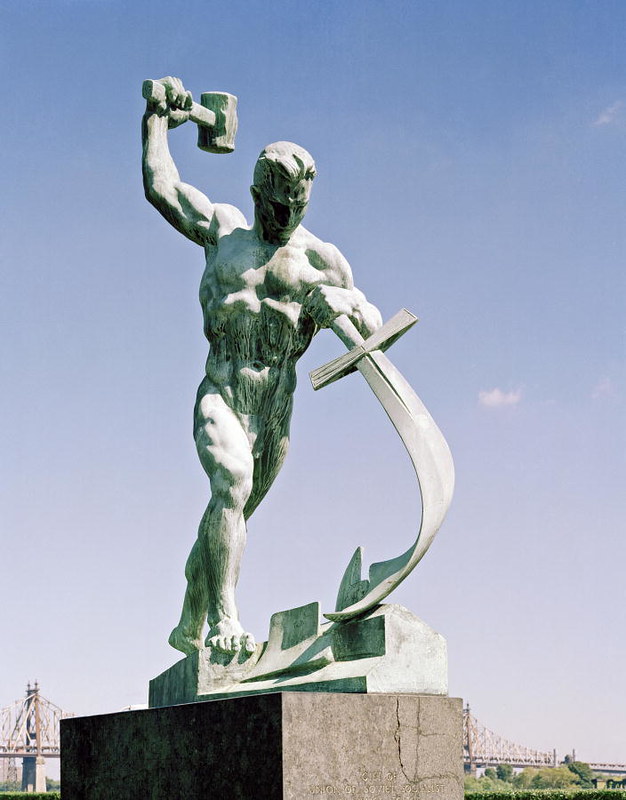
 Big Circumstance