Sermon: A Missional Wedding Banquet

I’m not preaching in my own churches or even circuit tomorrow. We have a visiting minister at Knaphill, taking a missions Sunday, and I am filling one of his pulpits. Hence you may recognise the odd little bit of content here that you’ve seen previously from me.

Matthew 22:1-14
Legend tells of Ian Paisley preaching ferociously about the ‘weeping and gnashing of teeth’ that we hear about in this and a couple of other parables in Matthew’s Gospel. As he described the torments awaiting the ungodly in Hell, one elderly woman spoke up:

“What about me? I’ve only got dentures!”

“Teeth,” replied Dr Paisley, “will be provided!”

For those of us who have a cosy image of Jesus and his parables, the ending to this one is a shock. We shall come to think about that shock in the final part of the sermon, but for now let me just say that we have become so used to the parables that we miss their shocking nature. The Good Samaritan is a shocking story. A Samaritan helps a Jew? Whatever next? A terrorist helping a wounded person in New York?
And the Prodigal Son? There’s nothing fluffy in that story. Jesus’ listeners would have been appalled when they heard that the father looked out for his errant son and then ran to meet him. Culturally, the father should have been waiting inside the house for the younger son to return crawling on his hands and knees, grovelling for all he was worth – which wasn’t much.

I would say it is a key to understanding many of the parables: look for the shock. With today’s parable, I venture to suggest that the ending is not the only scandalous part. And I think that in this parable of mission, Jesus needs to shock us into recognising key aspects of God’s mission, in which we share.

Consider, firstly, the initial invitation. This should be routine, shouldn’t it? The servants go out ‘to those who had been invited’ (verse 3). These people are expected to come. We might think with some justification that these are the people who would fall into the natural orbits of the two families about to be joined together. While social conventions are different today, we know that there are certain groups of people from whom we naturally draw the bulk of the numbers when we are issuing wedding invitations. Family – starting with the closest; friends – from school or university, from church or work or social circles related to our hobbies and pastimes. And so on. Most wedding couples don’t spring massive surprises with their guest lists, other than the usual difficulty of deciding where the cut-off point is.

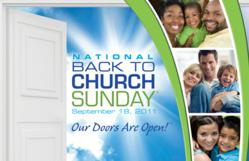
And similarly, perhaps, with our strategies for mission. There are certain people whom it seems right to connect with first, if we hope to touch people with the love of God in Christ with our words and deeds. There are particular groups of people who we shall naturally invite to join us at church. There are those who once used to come, but then dropped out. They may be relatives of existing church members. There will be people associated with groups that hire our premises. Perhaps this list might include uniformed organisations. We might think of people who show a certain affinity with us, even if they do not yet share our commitment to Christ. If you have come across Back To Church Sunday in recent years, that is a strategy directly aimed at those who used to go to church, but who retain more of a sympathy for the church than we might commonly imagine.

Indeed, for a long time now, our mission strategy has been based on an appeal to ‘come’, and in generations when churchgoing was much more natural than it is today, that approach had certain degrees of success.

But there are a couple of dangers.

One is that the religiously sympathetic are not always the most likely to commit themselves to the radical step of following Jesus. Just as the natural invitees to the wedding banquet in the parable ignored, mistreated or killed the second wave of servants that was sent to summon them, so religious people can be those most inoculated against the Gospel. And could it be, given the way the king in the parable sends his army against those people who reject his invitation (verse 7), that God is less impressed with the religious and the respectable than we are?

The other danger is that the natural constituency for this approach is shrinking fast. If we do step out in mission, we want to be as comfortable as possible about it, so we only reach out to people we feel safe with, and furthermore we only do it in locations where we feel at ease – such as our own church buildings.

Secondly, let’s consider the second group that the king invites. The king sends his servants to invite ‘anyone [they can] find’ (verse 9), and this leads them ‘into the streets’ where they [gather] all the people they could find, both good and bad’ (verse 10).

What might this mean for us in terms of the call to Christian mission? Clearly in Jesus’ own day he is indicating a message that will ultimately go beyond the Jewish community to the unconscionable Gentiles. When those we might humanly expect to respond to God’s redeeming love do not do so, God has a way of pushing us out to the least and the last, to those least likely – at least in our eyes.
Before I studied Theology and candidated for the Methodist ministry, my prior work was as a civil servant, working in Social Security. As some people said, that was certainly one way of seeing life. During my first year in the civil service, I had my final family holiday with my parents. We went on a Methodist Guild Holiday[1]. One devout Methodist we met on the holiday asked me what my work was. I explained that I worked in Social Security. Back came a response I have never forgotten: “At least you are on the right side of the counter.”

Obviously, I have never forgotten those words for all the wrong reasons. Apart from the fact that in my work I knew full well that the great majority of those claiming benefits were honest people who didn’t want to be in the situations they had found themselves in, there is also the fact that this parable shows us how the Gospel is for those who are ‘on the wrong side’.

Could we not do with a challenge in the church sometimes to this effect? Who are the people whom we would not naturally consider, but who are loved with an everlasting love by God through Jesus Christ? Are there those he is calling us to reach in word and deed with his love?

Might it be that we just have a problem in the church with being that little bit too comfortable that we need reminding God sends to ‘anyone [we can] find’? Might this be to do with the same fear we hinted at in the first point that leads us just to operate our mission in places where we feel at home? We base our concepts of mission on attracting people to where we are already. However, while we want to bring people into the Christian community, could it be that in a day when – as I said – the number of people for whom it is natural to come onto church premises is shrinking so fast – that we might need to change our primary verb from ‘come’ to ‘go’?
Indeed, might Jesus be saying to us, look at how I embraced the Father’s mission? I am the Word who was made flesh and dwelt among you. I did not wait for you to come to me, I took the initiative and brought the Father’s love to you. And since at my Resurrection I said I sent you as the Father sent me, then do you not hear? Your call in mission is not to say, “Come to us”, but to go to the world, to anyone you can find.

Thirdly and finally, let us consider the intruder at the wedding.
Our own royal family knows all about intruders. Whether it’s Michael Fagan getting into the Queen’s bedroom, a comedian dressing up as Osama bin Laden or protestors from Fathers For Justice landing inside Buckingham Palace, they tend to suffer spectacular intrusions every few years.

I’m not sure whether the word ‘intruder’ is the right one here, but it will have to do. What I’m concerned with is the shocking end to the parable where the king finds a man who has managed to get into the wedding banquet without wearing wedding clothes. He suffers a cruel fate as the king orders him to be bound and thrown out. What could explain such an apparently harsh reaction?

When you attend a wedding today you normally dress up. I remember conducting a wedding in my first appointment and wearing my customary suit and clerical shirt only for a guest to complain that the minister ‘had no sense of occasion’. He was expecting a robed Anglican and got me!
They dressed up for weddings in the ancient world, too. Although a wedding feast could begin at almost any time, there was the tacit understanding that you had time in between receiving your invitation and the wedding beginning for you to find appropriate attire and put it on. There was also a tradition where a king would provide guests with festal clothing. Either way there was no excuse: if you come to the wedding, you will be dressed appropriately. To do otherwise was to bestow a grave insult upon your host.[2]

Now we can understand what was so wrong about the man who was not in wedding clothes. He has insulted the king. Either he had the chance to dress properly and he didn’t bother or the king offered him clothes and he had the temerity to turn him down. The man has enjoyed the invitation but he has not accepted the responsibility that came with it.

Hence this is a powerful picture to challenge the way we respond to God. We may not be like the religious people who refuse the need for grace – indeed we may know only too well that we are entirely dependent upon grace in order to enter God’s presence.

But some of us stop there. We know that Jesus accepts us as we are, but we then coast along complacently. We do not accept the obligation to change – to be clothed differently.

The old saying is that Jesus loves us just as we are, but he loves us too much to leave us as we are. In other words, he provides new spiritual clothes. He expects us to be different. The dirt must go and a clean, holy lifestyle replace it. What else is appropriate as a thankful response to the King for inviting us to his Son’s wedding banquet?

Tragically, some of us are just not serious about living a holy life. God offers us the new clothes – that is, he himself makes it possible for us to be transformed. He does this by the power of his Holy Spirit whose work is to make us more like Jesus. Think of the fruit of the Spirit – love, joy, peace, patience, kindness, goodness, faithfulness, gentleness and self-control – is that not a description of Jesus’ character? This is what God offers us.
But some of us are happy just to wear the same old dirty clothes. I have to admit that too often my wife has to remind me when my suits need to be dry cleaned. I don’t notice the marks on them. Part of my function as a minister is to hold before us all the need for a spiritual dry-clean. We need the reminder that we have got dirty again and we need to be cleaned up.

What does this have to do with mission? Quite a lot, to be honest. The Gospel is the Gospel of the kingdom. God’s kingdom is one of free grace that accepts us as we are. However, God is calling us to be community that is a sign of the kingdom, a sign of what is to come, and that means transformed lives. This too is part of our witness. Our call to mission is not only to go into the streets and gather anyone we can find, it is also to be dressed in our wedding clothes.

Are we playing our part in getting ready for the great wedding?


[1] Now Christian Guild Holidays.

Leading Intercessions

I’m thinking of writing some guidelines for those who lead prayers of intercession in church. I have a few ideas of my own – range of themes to cover, overall length, how to signpost the prayers since most people will have their eyes closed, seeing them as representative of the congregation’s prayer life rather than exhaustive, etc. But before I get to this task I thought I would ask you, O noble blog reader, what you would include in any such document.

Suggestions are welcome below.

Depending on the appropriateness of the final content,  I may post the document here on the blog.

Sermon: Overcoming Sin

1 John 2:12-17
The highest grossing film in British cinema history is ‘Mamma Mia!’. You may well know that it began life as a West End musical, in which the story is woven around songs by ABBA. It tells of a bride-to-be named Sophie, who is trying to find her real father. She discovers from reading her mother’s diary that her father could be any one of three different men, and so invites them all to the wedding.

In a conversation with her fiancé, a character called Sky, she says, “I want to know who I am.”

He replies, “That doesn’t come from finding your father; that comes from finding yourself.”[1]

Knowing who you are is vital to healthy living. And knowing who we are seems to be John’s point here in the battle against sin. When he tells us not to ‘love the world’ (verse 15) – that is, the parts of creation organised in rebellion against God – it would be easy to issue a list of what to do and what not to do. A set of rules. He could tell us what is wrong in terms of the greed and lust he describes ‘the desire of the flesh, the desire of the eyes, the pride of riches’ (verse 16), naming and shaming all the wrong behaviour. It would all be so easy.

And so wrong.

It would fail. A list of rules on its own doesn’t work. Telling us what is right and wrong isn’t enough to induce good behaviour. It doesn’t transform us. If anything, it makes wrongdoing more appealing.

John has a different tactic here. He encourages us to know our identity first. He wants us to know who we are in the sight of God. Because that will make a difference.

So to get to how we resist the allure of a world in opposition to God, we examine the words before that, the words addressed to ‘children’, ‘young people’ and ‘fathers’ – because in spiritual terms,

All Christians should have the innocence of childhood, the strength of youth, and the mature knowledge of age.[2]

To be innocent, strong and mature in the face of temptation to sin requires knowing our spiritual identity. We need to know who we are in God’s eyes.

Firstly, we are forgiven:

I am writing to you, little children,
because your sins are forgiven on account of his name. (Verse 12)

You will recall, no doubt, that my predecessor was a big fan of Doctor Who. I do not share his passion. However, Rebekah and Mark avidly watch repeats of the children’s spin-off The Sarah Jane Adventures and Debbie loves the adult spin-off, Torchwood. This last summer, there was a Torchwood story called Miracle Day, where suddenly humanity becomes immortal. A convicted child killer thus survives execution and lives to make this statement:

I have been forgiven, a substantial number of people have forgiven me. I can feel that in my heart, my guts. And forgiveness is like a tide or storm – it clears the air. I’m very lucky to have been forgiven and I feel very blessed. And I think of forgiveness as a cure.[3]

The character is right. Forgiveness clears the air. It is a cure. Amongst other things, it is not only a cure for past wrongs, it is a cure as we face present temptation.

How so? Like this: if we face temptation and simply invoke the ‘right and wrong’ approach, we shall get worked up about failure, because we shall feel both guilt and hopelessness on the occasions when we fail. There is no good news for someone who breaks the rules, if that is all there is.

But what if we know we are forgiven? People who are forgiven still have a deep sense of right and wrong. They too do not want to depart from God’s ways. However, their motive is different. They know they are loved, even when they transgress God’s laws. They still want to do what is right, but it is not out of fear. It is because they long to please the God who loves them enough to forgive them in Jesus Christ and him crucified.

Next time you face temptation, remember that God has already forgiven you in Jesus Christ. Remember what that tells you about the God of love, grace and mercy. When fear paralyses you, remember what kind of God we believe in: the God of the manger, the Cross and the empty tomb. He offers forgiveness before we receive it. Let that set you free in the face of temptation.

Secondly, we know Jesus:

I am writing to you, fathers,
because you know him who is from the beginning. (Verse 13)

‘Him who is from the beginning’ could be God the Father, but he gets a name check in the next verse, so we’ll assume this is Jesus[4]. In any case, knowledge of one is similar to knowledge of the other. However, for the purposes of this point we’ll stick with knowing Jesus, and see that as covering what John says about knowing the Father, too. But what is the significance to overcoming sin of knowing Jesus?
Let me approach it this way. I expect you remember the quiz show Mr and Mrs. Husbands and wives took it in turns to answer questions about each other while their spouse could not hear their replies. Then the spouse came back and we saw whether the answers were correct. You would see how well they knew each other. Sometimes it was surprisingly accurate, sometimes the surprise came in what they didn’t know about each other, however many years they’d been married.

Let me venture to suggest that our relationship with Jesus is a little bit like that. We come to know him through the forgiveness we have just talked about, and that relationship grows over the years. Our knowledge of him is far from perfect, but as we get to know him better we discover someone who is an amazing support in our struggle against sin.

It isn’t that Jesus is like an indulgent grandfather who trivialises the misdeeds of his grandchildren, who explains away their actions and makes easy excuses for their wrongdoing. Such an answer would not go down well on a spiritual ‘Mr and Mrs’.

Nor is it true to envisage Jesus as a severe monster, ready to rip to shreds any being that puts the slightest foot wrong. Again, that would be a wrong answer about our relationship with him.

The Bible presents an image of Jesus as full of both acceptance and holiness. His holiness means he cannot abide sin, but he also accepts us through the Cross, in which he has conquered sin. And furthermore, he is the Lord of the broken and the weak. If he has a particular group that he targets for criticism, it is religious leaders who harshly apply the rules and end up excluding people for no good reason.

When you know you are loved, warts and all, you can stand strong. If you doubt whether you are loved or accepted, you will wobble in the face of sin. If you are unsure of Jesus and his love, you will struggle. But if you know a relationship with Jesus in which you are accepted then yes, you will still stumble and fall from time to time, but you will be able to pick yourself up because Jesus does that for you and sets you on your way again. To know he loves you is to be in a different place when facing temptation.

Remember – Jesus is ‘him who is from the beginning’ – and since the beginning of all things, the Father and Jesus have had grand designs on your life. They have planned good things for you. Jesus is called ‘the Lamb who was slain from the foundation of the world’ (Revelation 13:8). Jesus is on our side in the war against sin. He is not standing back, waiting to condemn us at the earliest opportunity. He is for us, he has always been planning for our welfare, he is our cheerleader and he gives us all we need to fight against the lusts and desires of the world.

Thirdly and finally, we are winners. Compare the two statements John makes to those he calls ‘young people’:

I am writing to you, young people,
because you have conquered the evil one. (Verse 13)

I write to you, young people,
because you are strong
and the word of God abides in you,
and you have overcome the evil one. (Verse 14)

When our children are having one of their altogether too frequent wars with each other, they insult one another by calling out, ‘Loser!’ And sadly that’s what a lot of us think we are. We don’t see ourselves as winners, but as losers. We know our failures. The idea that we are in any sense winners makes little sense to us. We are conscious of our many failures, and some of us go further, tipping into low self-esteem, practising what someone once called ‘worm theology’ – as if we say, ‘I am only a worm.’ We might see ourselves the way Elvis Costello once described in a song:

I was a fine idea at the time
But now I’m a brilliant mistake.[5]

So talk of being winners in the spiritual life may sound like a foreign language to us. But John says we have conquered the evil one, we are strong, the word of God abides in us and we have overcome the evil one. In other words, whatever mess we have made of our lives, whatever mistakes and failures we can count, whatever disappointments we have caused, the Holy Spirit gives us the tools that can enable us to be winners – to ‘conquer’ or ‘overcome’ the evil one.

What are those tools? They come in our being ‘strong’ and in ‘the word of God [abiding] in [us]’. We have a new strength in that the Gospel is about more than the forgiveness of our sins. The kingdom message is not only that we are forgiven through the Cross of Christ. It is also that we are given power to live differently, because the Holy Spirit lives in us. Therefore, in the face of temptation, we have new resources to call on. When we struggle on our own, we frequently fail. But we are a new creation in Christ, the Spirit of God resides within us, and sometimes what we need to do is call out to the Holy Spirit for help.

We also have the ‘tool’ of ‘the word of God [which] abides in [us]’. The message of the Gospel, encapsulated in the Scriptures, is available to us, just as Jesus used it time and again in the wilderness when he was tempted. One of the things we can do to build up our defences ready to withstand seasons of temptation is to soak ourselves in the Scriptures. Not so much the quickly dashed off reading of the Bible for daily devotions, but taking the time to meditate on the Scriptures and give time for them to soak into us.

All in all, then, we don’t have to face the temptations of worldly lusts and desires with just our own willpower. We face temptation, knowing that it is not about struggling to achieve a certain performance level of holiness, because we are already forgiven. We face it too, in the knowledge that we are known and loved by Jesus and his Father. We cannot earn their love by attaining perfection; rather, we know already they are on our side, full of grace, mercy and love for the broken and the failures. And to our astonishment, we are no longer weak but strong, because the Holy Spirit gives us not only his own power but also unlocks the power of the Scriptures, as we take deliberate steps to store them up in our hearts and minds during our ‘seven years of plenty’ before the spiritual famine comes.

Let us be encouraged, then, that by the grace of God, the love of Jesus and the power of the Holy Spirit, we have the resources to resist worldly appetites. May we live more closely according to this Good News.


[1] Tools For Talks; subscription required.

[3] Tools For Talks; subscription required.

[4] Marshall, op. cit.. p 140.

[5] Elvis Costello, Brilliant Mistake.

Why Social Media Activism Still Needs Real World Activism


Alfred Edmond, Jr
on Why Twitter Couldn’t Save Troy Davis:

I heard a lot of people on Twitter who believed their tweeting about the Davis case constituted activism on the level of the actions, risks and sacrifices (including their lives) made by young Americans during the Civil Rights Movement. A few people actually compared their persistent and passionate tweeting about Troy Davis to lunch counter sit-ins by students in Greensboro, North Carolina and other parts of the South in the 1960s. My response to that line of thinking: don’t be ridiculous. Unless riot cops were waiting outside to bust your head wide open to stop your Troy Davis tweets, just stop it.

Social media activism does not take place while you are on Twitter or Facebook. It’s about more than turning a cause into a trending topic. It’s what you do with your time, money, energy and relationships once you’ve signed off, in the real world, that is the true measure of your activism. Anything less is just smartphone activism, an insult to those, both past and present, who really risked and sacrificed for the causes they believe in. Social media can’t save people. Only active, committed, informed and engaged people can do that.

A sobering reminder.

Singing The Faith: A First Look

Singing The Faith is the first new official British Methodist hymn book for nearly thirty years, superseding the (in my opinion) deadly dull Hymns and Psalms. My copy arrived in the post on Friday, and I’ve been skimming through it for some first impressions.

Hymns and Psalms just had to go, and many churches were voting with their wallets. It had the misfortune to come out just before the explosion in contemporary worship music (twelve months too early even for Kendrick‘s ‘The Servant King’,

I seem to recall). But you got the feeling that even if it hadn’t, that stuff would probably not have been included. It was published around the high water tide of liberal antipathy to evangelical and charismatic Christianity in Methodism. Furthermore, the musical arrangements were, as one friend put it kindly, ‘for musicians by musicians, to interest musicians’. I can’t judge the truth of that as a non-musician, but it may explain why they were largely deadly dull to me.

It had its bright spots – and I think particularly of the additional verse it includes in ‘When I Survey The Wondrous Cross‘ (retained here) that I’ve never seen elsewhere, the scholarship applied to restoring original texts and the Scripture Index in the music edition.

Methodist Conference and the panel that put together Singing The Faith faced the implications of several cultural revolutions that have deeply affected how Christians, Methodists included, approach faith and sung worship. Revolutions in communications (especially the Internet), transport (you can more easily get to a church whose style you prefer) and ecumenism (people are exposed to other traditions more easily and frequently) mean that fewer Methodists will be easily satisfied with ‘what we already know’. Some would argue (myself included) that technological changes and the fact that churches had already bought all sorts of supplementary books, such as Songs Of Fellowship, Mission Praise and The Source, meant that a new hymn book probably wasn’t the answer, and another approach was needed. The moment of publication is the beginning of fossilisation today. However, Methodism is almost umbilically attached to hymn books, and so a new book it was.

Given that fact, the new book, then, would need to embrace a diversity of musical and theological styles. Centralised or hierarchical control of doctrine may technically be still present in our system, but for many people it is long gone. There is therefore a huge question here of how Methodism maintains her doctrine in this central aspect of our piety, our singing. It may be that the forthcoming additional resource Singing The Faith Plus will act as some kind of clearing house to reflect on which of the newer material that is published from now on is consonant with Methodist doctrine, but we’ll see.

When it gets to the handling of theological diversity, there certainly is a spread in Singing The Faith. It embraces both the neo-Calvinist emphasis on the wrath of God at the Cross in Stuart Townend‘s ‘In Christ Alone’

and at the other end we have Marty Haugen‘s ‘Let Us Build A House (All Are Welcome)’

which some have criticised for allegedly extended the universal offer of salvation into universalism. So the issue of acceptable diversity is alive and well within the book!

It is also worth noting the considerable reduction in Charles Wesley hymns – very significant for Methodists, this. Hymns And Psalms was originally to be edited by an ecumenical committee, but when Methodist Conference insisted on at least two hundred Wesley hymns, the United Reformed Church pulled out. And for the URC to withdraw takes quite something! In the new book, at a quick count Wesley is down to seventy-nine contributions. Much as I love Wesleyan theology, I think this is the right move. Indeed, if many in our churches who have been most vocal about singing Wesley hymns had been as fervently aligned to his doctrine as to the music, Methodism might be more vibrant! Here is a prime example of the argument that allegiance to hymns, however central they are to Methodist spirituality, has not always maintained and fed our faith in the ways to which we might aspire.

Two more traditional-style contemporary Methodist hymn writers, Andrew Pratt and Marjorie Dobson, both participated in the STF committee, and both are represented in the final collection. Both have nine entries. With those numbers, I don’t think anyone can accuse the compilers of favouritism. I imagine the STF panel did what the HAP committee did, and required authors who were members of the group to vacate when their potential contributions were being discussed.

On, then, to think about those writers who have come more out of the explosion in contemporary worship styles. Matt Redman (also) features nine times, and the observation that interests me here is how it isn’t always his ‘hits’ that have been chosen. It looks to me like the committee has taken a real interest in what he writes about struggle and suffering. So as well as the popular ‘Blessèd Be Your Name’ we get ‘When We Were In The Darkest Night’ (‘God Of Our Yesterdays’)

and ‘We Have Nothing To Give’. No sign of ‘The Father’s Song’: one hopes that isn’t about avoiding male language for God, in the way that Fred Pratt Green‘s ‘For The Fruits Of His Creation’ has been altered to ‘For The Fruits Of All Creation’.

Having said that, the compilers are less confident that middle of the road Methodist congregations are ready for much by the late Delirious? Martin Smith and Stuart Garrard get in a couple each, but that’s it. This might be about some of the slightly unusual ways the band expressed itself lyrically, or it is about the more performance-oriented style, or possibly some other reason.

There is also evidence of taking into account the effect of contemporary worship trends on older hymns. It has become popular, particularly under so-called ‘Celtic’ influences, to sing the afore-mentioned ‘When I Survey The Wondrous Cross’ to the tune ‘O Waly Waly’ as well as ‘Rockingham’. This is recognised in Singing The Faith.

But beyond the contemporary worship movement, one area where I am particularly pleased to see innovation is in children’s worship songs. Mark and Helen Johnson of Out Of The Ark Music have been producing worship songs for primary schools for many years. Indeed, that is how I was introduced to them – by a primary head teacher. It’s a delight to see songs such as ‘Everywhere Around Me’

included, along with songs about the Incarnation and the Crucifixion (which actually doesn’t feature that often in their lyrics). Sadly, the wonderful ‘Harvest Samba’

Vodpod videos no longer available.

isn’t in. Did it lose out because it has a middle eight, and that would confuse some older congregations? I wonder.

However, overall, as you will gather, for someone who stays on the fringes of the Methodist establishment, and who is usually quite uncomfortable about it, I greatly welcome Singing The Faith. I still think a new book wasn’t the right approach in a fast-moving creative and digital world, but given that the decision was made, I think what has been produced is far better than many of us might have hoped.

Sermon: Energised By Faith

Here’s my sermon for tomorrow. I’m preaching at another church in the circuit, and I get to kick off a sermon series they are following on the seven signs of a healthy church. ‘Energised By Faith’ is the first of the seven signs. What I’ve prepared is heavily influenced by my recent reading of Alan Hirsch and Michael Frost‘s book ‘The Faith of Leap‘, but I hope I’ve put my own stamp on it.

1 Thessalonians 1:1-10; Luke 17:1-10

Recently, my wife and children and a friend left me for Beaver Camp one weekend, while I stayed home to take church services. On the Saturday morning that they set out, I expected our daredevil eight-year-old daughter to be excited. But our cautious seven-year-old son was excited, too.

“What’s in the programme?” I asked. Out came the list: tug of war, slippery bungee, rifle shooting (with blanks, I hoped), archery, hammock making, inflatable slides, rope bridge building, cooking full English breakfast around a camp fire, barbecue, curry. I was exhausted just listening to them reel it off!

“Why are you asking?” they interrogated me.

“Because I want to talk about it soon in a sermon,” I replied.

“Why?”

“Because I want to talk about how following Jesus is meant to be an exciting adventure,” I told them.

My daughter yawned. She has teenage attitude five years early. “But church is boring,” she complained. “Sitting in the adult service for ten minutes before going into Sunday School is boring. I prefer all age worship!”

Put that attitude down to, well … attitude, but don’t miss the fact that many perceive church and faith as boring. It was never meant to be. I went on to talk with my children about how in the Bible faith in Jesus was an exciting and dangerous adventure. But that isn’t what we often notice in our churches.

And in a week when I kick off your sermon series about the seven characteristics of healthy churches with the first of those characteristics, ‘Energised by faith’, would we not think that associating the word ‘faith’ with ‘energised’ might mean that faith is rather more dynamic than it often is?

Honestly, what do we make of it when we listen time after time to hearing that someone in our church had a ‘quiet faith’? If that means peaceful and serene, then fine, but if it means their faith never got in the way of someone else and led to energy or even conflict, then something is desperately wrong.

Think back to our Bible readings this morning: when Paul commends the faith of the Thessalonians, it involves imitating him, even in facing persecution, and becoming an example to other churches in the region. It involves their faith being known here, there and everywhere, not least for their rejection of idols in order to serve Christ. Is that ‘quiet faith’?

And when the disciples ask Jesus, “Lord, increase our faith”, and Jesus replies, talking about mustard seed faith that can tell a mulberry tree to be uprooted and planted in the sea, is that quiet faith? No! Whatever the text means, we can be sure Jesus doesn’t lead his disciples into growing quiet faith.

These two passages aren’t untypical of the New Testament. Jesus calls men to leave their occupations and follow him at the drop of a hat, just as God told Abram to leave everything and go somewhere unspecific in the Old Testament. When you get to the Book of Acts and you see the apostolic church putting into practice the Great Commission of Jesus, you see daring and courageous faith exhibited by Paul, Peter, Stephen, Philip and others.

By that reckoning, we should stop a lot of the silly talk in our churches that says someone is ‘faithful’ when all we mean is that they are ‘regular’.
Anyone who knows me for any length of time will hear me quote time and again something the late John Wimber said. Let me ask you this: how do you spell ‘faith’? Whenever anyone replied by saying, F-A-I-T-H, Wimber would say, “No”. The answer, he said, is that ‘faith’ is spelt R-I-S-K.

Faith as an adventure, a living on the edge, is normal. But you wouldn’t guess it from some of our churches, and I wonder whether the lack of it has contributed to our decline. Could it be that churches are declining, at least in part, because we have lost the daring, risky side of discipleship that is fundamental to faith in Jesus?


David Murrow
is a television producer in the United States. He got bored with his Christian faith, and started exploring other religions, including Islam. He noticed that Christianity was the only major religion to have a major deficit of males in comparison to females. He wondered whether this might have anything to do with his boredom.

At the risk of grossly over-simplifying things, he discovered the work of an historian who showed that while there had been a seven-hundred-year history of reduced adventure in the Church, a major effect on this was the Industrial Revolution. By and large, as the men had to find work in mines, mills and factories, often far from home, the women who stayed behind rightly kept the notions of gentleness and nurturing. This showed itself in the rise of church nurseries, craft groups, Sunday Schools, soup kitchens and the like – all worthy and honourable things. However, with the men less able to contribute, the sense of adventure declined. In time, it became a vicious circle.

Now before anyone complains, I am not saying that all men are of the same style and all women are alike. The irony of me preaching this is that I am someone who was born with scoliosis, curvature of the spine, and this has affected what physical efforts I can make all my life. I of all people would not argue for a ‘macho’ culture in the church. It does exist in places, and it can be ugly. But you and I know that many men outside the church view it as like a lifeboat – ‘women and children first’. If we have downplayed adventure and risk, which are at the heart of the faith to which Jesus calls us, is it any surprise?

Might it be, then, that in order for the church to be ‘energised by faith’, one thing we urgently need to rediscover is this sense of living on the edge? Could it be that faith for us needs to be something where what we aspire to do can only be delivered by God, and if God doesn’t come through, we’re sunk? Could it be that too often what we call faith is really ordinary human action that is explicable in other ways, and we don’t like to admit it?

Now you will say to me that the church needs to be a safe place, never mind all this talk of danger and risk, and I will agree with you – up to a point. We do need to be a safe place for the broken and the wounded. In that sense, we are a little like the spiritual equivalent of a hospital. But just as hospitals aim to treat people so they can return to ordinary life and not spend their whole lives on a ward, so our aim is the healing of people in order that they might return to the action.
It may be worth remembering the exchange in ‘The Lion, the Witch and the Wardrobe’ that the children have with Mr and Mrs Beaver when they first hear about Aslan, the lion, who serves as the Christ figure.

“If there’s anyone who can appear before Aslan without their knees knocking, they’re either braver than me or else just silly.”

“Then he isn’t safe?” asked Lucy.

“Safe?” said Mr. Beaver. “Don’t you hear what Mrs. Beaver tells you? Who said anything about safe? ‘Course he isn’t safe. But he’s good. He’s the King, I tell you.”

And of course the Narnia novels, along with that other great twentieth century Christian fantasy series, The Lord of the Rings, depict faith as an epic adventure. Can Narnia be rescued from permanent winter under the White Witch? Can Frodo and his friends dispatch the ring with its terrible curse and defeat Sauron and all the armies of wickedness? How will they cope with Gollum, who cannot be trusted as he vacillates between good and evil?

What C S Lewis and J R R Tolkien describe in those stories is an experience of fellowship being deepened as people go out on a limb in daring faith. It is something that has been observed through other disciplines, not just literature or theology. Those who study human society in anthropology and sociology have noticed this, too. Now I can give you the long words if you really want them – they are ‘liminality’ and ‘communitas’ – but what it all comes down to is this: when a small group of Christians gets together to work on a mission project that puts them out beyond their comfort zones, they are pulled together into a much deeper sense of fellowship than they experience in any other form. The home group doesn’t compare. Certainly coffee after morning service doesn’t amount to much fellowship, compared with what these people experience as they forge new frontiers in the name of Christ.

Here is just one example of what I mean. It’s an experience I had in my first circuit as a minister. An elder at the local United Reformed Church had a vision to bring the teenagers of the churches in the town together for worship. This wasn’t too difficult. Representatives of most of the churches came together to form a planning group, and we started holding youth services every six weeks, going around various local churches, taking over their evening services.

However, youth services like that were altogether too safe and predictable. The teenagers needed something more credible, and relevant to their culture. We found an empty shop in town, and borrowed it for a very low rent from the landlord while he looked for new tenants. It was the days of the MTV Unplugged programmes and CDs, and we did ‘worship unplugged’, only having room for a simple acoustic set-up in the cramped shop.

But more young people were coming, and we reluctantly went back into church premises. We took over the URC church hall and decorated it appropriately. However, the teenage Christians wanted to be able to invite their non-Christian friends, and we were crowded for space. As we leaders talked, we realised there was only one viable option: we would need to move into the local night club.

One of our number, a businessman, approached the owner of the night club. He was willing to hire out to us, one Sunday night a month, and agreed that no alcohol would be served on those nights. However, the cost of renting the club was well beyond any level of finance we had ever raised for the project. What should we do? We were out of our depth.

As we talked, we concluded that God had always been stretching us that bit beyond what we had got used to each time. This was surely one more example of the same. We agreed to the night club owner’s terms, not knowing where the money would come from. But when we did, some wealthy local Christians backed us financially, and we never lacked the money to hire the club.

Is it any surprise that as a group of Christians, we experienced deep fellowship, deeper than the average Bible Study group? We did read the Bible and pray together – fervently! We also hung out together, eating pizza, watching videos and drinking non-Methodist liquids. We helped one couple move house. We babysat. We picked each other up when we were down – in my case, they rallied round when I had a broken engagement. Most of those things would happen to some extent in ordinary church fellowship, I know, but I can only testify that they were deeper in that group. To this day, I have never known better friends than the members of that group, and I miss them terribly.

Friends, could God be calling you to go beyond the boundaries of what you have done for him in faith before? Believe me, if you are willing to live on a knife edge for Christ by faith because he has called you, then every aspect of church life – worship, community, discipleship and mission – will be infused with an energy you have not known before.

Trinity Methodist Church: is God calling you to dive in at the deep end?

Sacred Rhythms

We’ve just started a new course at Knaphill: Sacred Rhythms is a DVD course that abbreviates the book of the same name by Ruth Haley Barton, an American retreat leader and spiritual director. I’ve been reading her regular emails from The Transforming Center for some while. I’m about half way through the original book.

Why are we doing it? Because people asked at our annual meeting in the Spring for teaching on prayer. Barton says something striking about that: it is young Christians who typically do not ask how to pray, because they get on with it. As we become more mature, we hit  more obstacles in prayer and realise we don’t know what we thought we knew. Ironically, it is the more experienced Christians who may have to come to the point of honesty, asking, “Teach us to pray.”

We had an excellent first meeting this week. The opening chapter or session locates ‘desire’ as a way into discovering why we need to develop the habits of spiritual disciplines that form a rule of life, in which we focus on Christ.

That sounds strange, even wrong, at first. However, Barton begins from the times in the Gospels when Jesus asks needy people like Bartimaeus questions such as, “What do you want me to do for you?” We could come up with selfish answers to that, or the question could expose honourable desires. Yet even if we come up with answers from sinful motives, these are exposed in the light of Christ and that is a first step to coming into a better place. Like Bartimaeus, we may need to ‘throw off our cloak’ to press towards what God has for us – we may need to let go of certain things that are not always sins in order to walk in the way of Christ.

At this early stage, I recommend the course to you.  As a taster, here are the opening three minutes of it.

Cohabitation, Marriage And Fragile Relationships

How do we see cohabitation as Christians? I’d be interested in your thoughts. I have many Christian friends who adopt the ‘traditional’ view, but an increasing number who live together before marriage. Friends of both persuasions read this blog.

I’ve known for years that research that suggests those who cohabit are more likely to break up than those who don’t. I seem to recall figures that couples who cohabit and then marry are 60% more likely to divorce than couples who only move in together at marriage. Couples who cohabit but never marry are twice as likely to break up as couples who marry without cohabiting first. However, I’ve lost the references to that research, so my memory of it may be faulty.

I have, though, now come across some nuanced research from a Christian perspective that not only shows the greater likelihood of cohabiting couples to break up, but also goes into something I had long thought: that there are many reasons for cohabitation. While in some less bureaucratic societies a couple moving in together did constitute marriage, cohabitation in our society has a number of different reasons. Informal marriage, trial marriage, a rejection of marriage, a matter of convenience and so on. The report, ‘Cohabitation – an alternative to marriage?‘  comes from the Jubilee Centre. One of the researchers was interviewed by Cross Rhythms.

It can’t all be about statistics, of course. It must also be about what we believe to be the core principles of marriage and relationships. For example, is a sexual relationship covenantal or even sacramental?

So – over to you. How do you see this?

What I Wrote After 9/11

So today is the tenth anniversary of the attacks on the World Trade Center and the Pentagon. I’ll leave learned reflections on the interim to better commentators. In particular, I’ll point you to Will Willimon’s challenging reflection.

But I remembered something I wrote at the time. 9/11 (or 11/9 in British English) was a Tuesday. At that time, I wrote a regular Christian column in the local newspaper where I lived, the Medway Messenger.  The Messenger was published on a Friday, and I had to have my copy in a couple of days ahead. That week I had written something, but the magnitude of the terrorist attacks meant I needed to write something fresh and email it in.
I’m going to reproduce below what I actually wrote. All copy for newspapers risks being edited, and mine was. Savagely. It was cut only to leave the parts about the terrorists deserving the judgement of God. I think it ended with the paragraph that concludes, ‘there is no forgiveness for the terrorists’.

Why? There are two possible explanations. One is that my piece was published in a week when the paper was celebrating a relaunch, and they were keen to devote many trees to praising their own success. Some of that appeared on the same page as my article.

The other possibility is that they didn’t like the tenor of my piece. As you will see, it concludes that every single one of us needs mercy, and that God’s mercy can scandalously extend to the most evil of human beings. They may have been offended by the Gospel.

Would I change anything now? Certainly not the emphasis on mercy! We have a scandalous gospel, and it needs celebrating. In the following fortnight, I preached two sermons to help my congregations come to terms with what had happened. In the second one, I preached from Isaiah 30, with its message of woe to those who trusted in horses and went down to Egypt. Might there be a word of judgement from God on the West in what happened? I preached that sermon twice, and in one of them a worshipper publicly argued with me in the middle of the sermon about that. She then refused to share The Peace with me.

I might say different things about President Bush, and pick up on his offensive remark at the time that the way for Americans to respond to terrorists was to go shopping.

But see what you think. My full, unedited script follows below the asterisks.

************

Where were you when you heard that JFK had been shot? That was the question of my parents’ generation. I don’t know: I was only three years old at the time, and my family would not own a television set for another two years.

Where were you when you learned that Princess Diana had died? That’s easier: I had just moved into Medway, was living in temporary accommodation in Lordswood, and was due to start work here the next day.

Now the new question for our generation is, where were you when you heard of the plane attacks on the World Trade Center and the Pentagon? I was sitting here at my desk, when my wife came in from work. I had not long emailed my regular column to the paper. “Isn’t it terrible, these terrorist attacks in America?” she called out.

“What attacks?” I asked. We turned on the TV and found ourselves affixed with a morbid glue to ITN. If only it were a Bruce Willis movie.

That original column seems less important now. Maybe it will be printed one day – who knows? I just had to write something different. My thoughts are all over the shop; perhaps yours are, too. But here goes.

Before anything else, let me plead with you not to assume that your Muslim neighbours are all secret terrorists. Whatever my own (quite fundamental) disagreements with the Muslim faith, I know enough to realise that many Muslims share the same abhorrence of terrorism. Do not stereotype them, do not stigmatise them, and do not take out your anger on them.

But then let me move on to the questions I am often asked as a Christian about justice, punishment, and forgiveness. In the Church we are often caricatured as being weak and namby-pamby when we speak up for forgiveness. The Bible speaks of justice as well as forgiveness. Criminals must be brought to book. But it is for justice, not revenge.

President Bush was right to say in one of his early addresses to the American people that there should be no distinction between the actual terrorists and those who harboured them. To the Christian, motive and attitude of heart are just as crucial as outward action. Jesus said that those who harbour anger are as liable to judgement as murderers, and those who lust in their hearts are as much sinners as adulterers.

But one distinction can be drawn between the terrorists and others involved in the planning of these unspeakably evil acts. Let me put it in a provocative way for a Christian: there is no forgiveness for the terrorists.

Why do I say that? We presume that the terrorists all perished on the hijacked planes. Unless there was a last-minute repentance, they will face the judgement of God. The Bible teaches that ‘it is appointed for mortals to die once, and after that the judgement’.

But their co-conspirators are still alive, we assume. They still have opportunity for repentance and forgiveness. Whether they do so is another matter, but there have been some remarkable precedents in history.

Take the end of World War Two. Hitler and Eva Braun committed suicide, and as far as we know there was not an ounce of repentance from the evil man himself. I may be wrong, but I do not expect to see him in Heaven.

But at the Nuremberg war trials, something remarkable happened. An American Army padre named Henry Gerrick was appointed to be a chaplain to those accused of war crimes. The Nazis had killed his only two sons: imagine how he felt in having to minister to them.

Of the twenty-one prisoners, sixteen requested his services. He gathered them together and told them of a God of mercy, whose Son Jesus Christ had died for their sins. Some, like Goering, sneered, despite the pleas of his own daughter. But others, including von Ribbentrop, Keitel, and Frick, went to the gallows, accepting their earthly punishment but saying their confidence was placed in the mercy of God and the death of Christ.

It is in that mercy that we all find our only hope in eternity.

Covenant Service Sermon: Knowing And Obeying Jesus

1 John 2:3-11
One thing we did at college was to take a survey to find out what kind of a learner we are. A man called Peter Honey had invented what he called his ‘Learning Styles Questionnaire’, and we all had to complete it. There were four types of learner you could be. I came out very strongly as what was called a ‘theorist’, someone who learns in a theoretical way. Next, I was a ‘reflector’, someone who reflects on what has happened and tries to interpret it. I only had quite a low score as an ‘activist’, someone who learns by doing, and I hit a big, overweight zero as a ‘pragmatist’, someone who learns on the basis of ‘if it works, it’s right’.

Today’s passage from 1 John poses us a question about learning or knowledge – specifically, our knowledge of God. The theorists like me can use knowledge of God to go off into our ivory towers (or onto another planet, Debbie says of me), contemplating all sorts of deep things, but not doing anything about it. We might be able to write complicated sentences with long words, but what happens as a result?

Whether we learn by theory, reflection, action or pragmatism, John tells us there is one basic test for true knowledge of God: does our knowledge turn into action? And this is the first theme I want to share this morning. Knowledge of God is only shown in obedience. Here again verses 3 and 4:

We know that we have come to know him if we obey his commands. The man who says, I know him, but does not do what he commands is a liar, and the truth is not in him.

You can be as clever as you like, but if you don’t turn knowledge of God into obeying him, it isn’t true knowledge of God, says John. On the other hand, you can have a simple faith, but if you have grasped certain things about God and put them into practice, then you have more knowledge of God than the most learned professor.

This seems to be relevant as we renew our vows to Christ at this Covenant Service. Today we say again that we shall obey him. Today, then, we promise that we shall put our knowledge of God into obedient action.
A story is told about the great stunt man Charles Blondin. He had a tightrope stretched high above Niagara Falls, from one side to the other. Before a crowd, he walked the length of the tightrope, from one side of the Falls to the other.

When he got to the other side, he addressed his audience. “I am Blondin! Do you believe I can carry a man on my back all the way back along the tightrope to where I began?”

“Yes!” shouted the crowd. “We believe!”

“Then if you believe,” asked Blondin, “who will volunteer to climb on my back?”

From a crowd of thousands, only one person volunteered.

How many people knew Blondin could accomplish this feat? Only one.

It’s easy to affirm our knowledge of God. We sing hymns, say prayers and read the Scriptures. But the only people who truly know God are those who obey. I have been in Anglican churches where the person leading the worship has said after the sermon, “Let us affirm our faith by saying the Creed.” Well, I have nothing against the historic Creeds of the Church. I affirm them, too. But the real place we affirm our faith is after the service and in the world, by our obedience. You could say that it isn’t now that we know we are covenant people, it’s this time tomorrow – when our obedience matters.

Now if the first thing John does here is link knowledge and obedience, the second move he makes continues the sequence. He links obedience and love. This is summarised in verses 5 and 6:

But if anyone obeys his word, God’s love is truly made complete in him. This is how we know we are in him: Whoever claims to live in him must walk as Jesus did.

Now why would John make the link from obedience to love? For one thing, he is saying that obedience is a sign of love. We say we love God, fine: how do we show that? Is it enough to sing hymns and songs? To say our prayers? To read our Bibles? To make solemn promises? However worthy any of those are, they mean nothing unless they are translated into action. So one thing John is emphasising here is what we have just said about knowledge and obedience: what counts is putting it into practice. Knowledge of God must be put into practice as obedience, and love of God must also be put into practice as obedience. We can make the most fervent declarations of devotion today, but what will they mean if we do nothing about them tomorrow?

Think of it this way: two weeks ago, I conducted a wedding at Weybridge. I had the privilege of taking the couple phrase by phrase through the solemn vows. They promised to love and cherish each other for better for worse, for richer for poorer, in sickness and in health, until they were parted by death. Heart strings were duly tugged. Eyes became moist on cue. But what would the point be if they didn’t go on to love each other through thick and thin?

In a similar way, then, our love for God is shown only by our actions – in this case, our actions of obedience, because unlike marriage, our relationship with God is not one between two equals. Knowledge cannot remain abstract and theoretical; neither can love.

But maybe there is another reason. Perhaps we also need to be careful that love, and nothing else, is the motivation for our obedience. There are people in church circles who say all the right things on a Sunday and who then lead good lives in the week, yet still something is missing. They have things the wrong way round. They obey in order to be loved, instead of obeying because they are loved.

What I mean is this: our churches still have people who think that if you do all the good things, you can twist God’s arm to love you. If you are good enough – whatever that is – God will love you.

But that stands in contradiction to the Gospel. John will put it eloquently in a couple of chapters’ time: ‘We love, because God first loved us.’ In other words, the love that is translated into obedience is only something we do because God loves us in Christ in the first place. Jesus has died for us, therefore we love in return. None of us can be ‘good enough’. God knows that. He has made provision in Christ for that, at great cost. Today, we affirm that we receive the love of God, because he has made the first move, and we shall love in return as a sign of gratitude, and we shall express that love in our obedience to his will.

To sum up so far – knowledge is linked to obedience; obedience is the sign of responding love. Finally, John makes a third link: from knowledge to obedience, from obedience to love, and finally from love to light. In the middle of verses 9 and 11 where he discusses how those who hate a brother or sister are in the darkness, not the light, we get the positive side of the coin in verse 10:

Whoever loves his brother lives in the light, and there is nothing in him to make him stumble.

Again, hear a double meaning: the first meaning is again about putting it all into practice. If we claim to live in the light, we will love. Christianity isn’t about receiving some enlightened knowledge and then posturing around like some élite spiritual class. Coming into the light only happens when we live a life of love. Living in love in response to Jesus is what prevents us from stumbling. To continue living in hatred is to remain in the darkness, says John.
And is not that pertinent on this tenth anniversary of the so-called ‘9/11’ attacks? The American Methodist bishop Will Willimon has been reflecting on the anniversary, and he sees darkness not only in the terrorists, but also in his own nation’s response:

The criminals who perpetrated 9/11 and the flag-waving boosters of our almost exclusively martial response were of one mind: that the nonviolent way of Jesus is stupid. All of us preachers share the shame; when our people felt very vulnerable, they reached for the flag, not the Cross.

But I want to suggest another meaning here: living in the light by living in love is not simply something we do in order to benefit ourselves – we don’t stumble – how can it be? Love is for the sake of others, not ourselves! The light does not shine on us in private. Love is something done in the world. If we live in responsive love to Jesus by loving him and loving others, and if that means we live in the light, then … will not others see the light shining, because we love in the name of Jesus?

That is to say, there is a missional reason for love. We want the light of Christ to shine in the world. OK then, says John: get on with loving people!

Put it this way: some churches exhaust themselves with endless reinventions of their worship, their buildings and all sorts of other accoutrements, thinking they can make themselves attractive to non-Christians. But are non-Christians beating a path to their doors? No. Are they beating a path to many churches? No, again. In one previous appointment, I inherited a building refurbishment project that ran to a six-figure cost. The congregation sincerely thought that having swish new premises would attract the community. It never did.

But what if we were so committed to an obedience of love in the world that the light of Christ shone through what we do? What if we were the people known for loving the broken, loving the wounded, loving those whom society is too afraid to love?

Do we want more people to meet Jesus and follow him? Then let’s see what we can do to reduce our church bureaucracies that consume so much of active church members’ time and concentrate on the essentials: worship, community, discipleship and mission. If something doesn’t build up worship, community, discipleship or mission, we should jettison it. We need to be freed to love the lost and the needy in the name of Christ, so that Christ’s light may shine in the world and people may realise they have a choice to make between the light and the darkness.

This Covenant Sunday, may it be that the promises we renew in the light of God’s faithfulness to us take us on a journey from this building to God’s world. May our knowledge of God issue in obedience. May our obedience be motivated by love, a responsive love because God first loved us. And as we love, may the light of Christ shine: in darkest Knaphill, in darkest St John’s, in darkest Bisley, in darkest West End, in darkest Pirbright, in darkest Lightwater, in darkest Camberley. Everywhere we go, may we take Christ’s love and reflect his light.

Create a website or blog at WordPress.com

Up ↑