On The Death Of Brennan Manning

Brennan Manning
Brennan Manning (Photo credit: Jordon)

I was sad to pick up the news today about the death of Brennan Manning. His books, with their radical embrace of God’s grace, have meant a lot to me in recent years. I recall someone once saying that you have not truly preached grace until you are falsely accused of antinomianism – well, if that were ever true of anyone it was true of Brennan Manning. His message that ‘Abba is very fond of you’ was too much for many contemporary Pharisees.

And the same Pharisees had a field day with the self-confessed evidence of Manning’s own life. In many places, not least his final book, a memoir entitled ‘All Is Grace‘, he talks ruthlessly about his failings and his unconquered sins. To the horror of many fellow Catholics, he quit the priesthood to marry (not that I see that as a sin). However, his marriage didn’t last. He never broke his habit for alcohol. To the scandal of many, he would return to his room after giving a powerful sermon or a homily at a retreat and hit the bottle. He knew the gutter at the same time that he knew Jesus Christ. He said that he was dying of a disease caused by his alcoholism, ‘wet brain‘. Where did he stand on the New Testament conviction that Christians will not continue to sin? Some felt this made him a false teacher. Others felt the accusers were not being honest about their own besetting sins.

Time and again, Manning the sinner came back to the message of grace. He brought his readers and listeners back to grace, too. If you have never read ‘All Is Grace’ or classics such as ‘The Ragamuffin Gospel‘, then I commend them to you highly.

Sleep well, child of Abba. A reward awaits you on the Last Day when you awake.

Rachel Held Evans And The Southern Baptists

Only in America? Rachel Held Evans tells her readers:

Since a lot of you have asked, (and in the spirit of Banned Books Week,) I thought I’d let you know that I recently received word that Lifeway has decided not to carry A Year of Biblical Womanhood in stores, presumably in the wake of the “vagina” controversy over the summer.

The history: Evans has written a book detailing how she spent twelve months attempting to follow all the biblical instructions for wives as literally and fully as possible. Her manuscript contains the word ‘vagina’. Her editor encouraged her to remove this scandalous word, because it would offend the sensibilities of Christian bookstores. Readers of her blog campaigned for her not to give in to such silliness, and she didn’t.

Now, the Southern Baptist bookstore chain Lifeway has said it won’t stock this evidently shocking book. Is it down to using this terrible word? Certainly, Evans has criticised Christian bookstores for demanding such ultra-sanitised content that, if they really followed through with their stated convictions, they wouldn’t stock the Bible itself. So maybe this is Lifeway’s revenge. That’s a nice Christian motive if it is the truth. Yet bizarrely, they are taking online orders for this book! Well, business is business, I guess.

Maybe it’s Evans’ public pronouncements in general, that have been deemed too theologically liberal for Southern Baptists. One of their scholars, Denny Burk, denounced her the other day as a ‘non-evangelical’, a ‘post-evangelical’ and a ‘theological liberal’. He doesn’t give any evidence in the blog post or the comments, but since Burk is a ‘complementarian‘, he is probably offended by her egalitarian views on gender rôles. Indeed, one of the thrusts of his article is that several of these women should not be celebrated, because they are doing things that only men should do – proclaim the Word of God. Worse than that, Evans has raised doubts about creationism and dares to think that gay people are human beings, not an issue.

Only in America?

Actually, no. Although they have certainly changed in recent years, the British-based international bookstore chain Christian Literature Crusade used to be known in some circles as ‘Constricted Literature Crusade’. (I think Michael Saward may have been responsible for that name.) They only sold certain books under the counter in brown paper bags if you ordered them, because they wouldn’t stock them. The Lion Handbook to the Bible was one example, because it contained a photo of an archaeologist who was smoking.

So am I advocating that Christian bookstores should have no boundaries? Of course not. But I am saying that fear is not a decent motive for boundary-setting. And I am saying that attitudes which denigrate women (why else would a proper biological name for a body part – a body made by God – be unacceptable?) are also unworthy of Christians.

The Gospel Coalition And Rape

Back after a long, difficult period away from blogging with this: in apparently trying to condemn the tawdry book ‘Fifty Shades of Grey’, the Gospel Coalition allows a blog post that uses language which seems to endorse rape. The justifications in the comments by author Jared Wilson that the language of a man ‘conquering’ his wife in the sexual act are to be taken metaphorically are beyond belief. What kind of metaphor is that? How does it soften the language? Not one bit. He accuses critics of misunderstanding the post – all this when it later appears he thought E L James, the author of the murky trilogy, was a man. I don’t think he’s in any position to tell others they have misunderstood. Jared Wilson has posted a clarification, but he is still so tied to male authority and female submission that he doesn’t see the point about the grim metaphor of conquest, however much he might protest that Douglas Wilson doesn’t stand for that.

As for repeatedly quoting 1 Corinthians 7:1-5 and the Song of Songs in favour of male authority and female submission, that requires taking a pair of scissors to both texts. The former clearly says that both parties in a marriage must realise their bodies belong to their spouse, not to themselves. And in the Song of Songs the Shulammite woman clearly takes the initiative in an erotic encounter.

I’m left with this question: does the Gospel Coalition have any Gospel for women? I think the answer is ‘no’.

(See also Scot McKnight, Rod the Rogue Demon Hunter, Rachel Held Evans and others.)

A Year For Memoirs

I won’t be foolish to try a review of 2011 in its entirety, not even my own 2011. But I thought I would just highlight the fact that one thing I have enjoyed this year is reading memoirs. They have been a refreshing contrast to the linear arguments of theology that I often read, and a useful reminder of the truth I often proclaim that God wants to draw us into his story.

Here are three I especially commend. I certainly discovered the first two from Scot McKnight’s blog, and I think possibly the third one, too.


Rachel Held Evans
, Evolving In Monkey Town is a book I have wanted to read for a while. Evans comes from the town in Tennessee that was the storm centre of the infamous Scopes Monkey Trial, and is thus a bastion of fundamentalism. Evans grew up in that faith, and her memoir details where her questioning led her. Some of her conclusions will not surprise those who have grown up in mainstream churches, but they are a hurricane all of their own for someone with her background, and she writes engagingly, with both modesty and passion. Read her blog, too, or follow her on Facebook.
Then I would commend Flirting With Faith by Joan Ball. Ball is an atheist who is  dramatically apprehended by God in a church service. Don’t read it for intellectual arguments in favour of Christianity and against atheism, but do read it for the humour and honesty she displays. It is both fun and poignant to read how her faith grows, and disturbing to hear how she is attacked from within the community of faith for it. Nevertheless, her faith endures, and she never stops questioning. Like Evans, there is a beautiful honesty in her reflections. You feel like you are living someone’s real life, rather than one of those ‘When I came to Jesus, all my problems were solved’ stories. Ball knows better than that, and so her story is not at all remote from the average reader.
Last of all, let me add my praise for Ian Morgan Cron‘s wonderfully titled and powerfully written Jesus, My Father, the CIA and Me. Cron is an Episcopal priest in the States. For some he will be too sacramental, but even if his expression of faith is not quite the same as yours, do not be put off. This is a book in which to encounter grace and the healing work of the Holy Spirit, as Cron battles the demons of his father’s life and his own inner struggles. The book will be like a magnet, attached to your hands.

Yes, all three books are American. That’s just a coincidence. There is plenty in these for those of us east of the Big Pond to appreciate.

Have any of you read these books, and if so, what did you think? What else have you read this year that you would recommend, and why?

My Memory Of John Stott

Yesterday evening, reports appeared on the web that John Stott had passed away yesterday afternoon at the age of 90. (This search will take you to about two hundred stories in Google News at the time of typing.) Obituaries cover his evangelism, his leadership of All Souls, Langham Place, his key place with Billy Graham in the Lausanne Movement, his commitment to social action as core to evangelical understandings of mission, his clear Bible teaching, his concern for the Majority World, his love of birdwatching and much more. I particularly recommend Christianity Today’s obituary.
More concisely, Maggi Dawn has described him this morning on Twitter as

 The most compassionate, sane evangelical Christian I ever met.

I have read many of his books. Favourites of mine include his expositions of Acts and Ephesians (the latter is particularly worn and battered). However, I only heard him preach once. I was training for the ministry in Manchester at the time, and he came to preach one evening at the local Anglican church, which had a large student ministry. Dr Stott agreed to stay behind afterwards and field questions.
I attended that meeting. I was engaged in my postgraduate research in Theology, specialising in ecclesiology, the doctrine of the Church. I asked him a question. Why did he think Archbishop Robert Runcie had chided evangelical Anglicans at the third National Evangelical Anglican Congress in 1987 that

‘If the current evangelical renewal in the Church of England is to have a lasting impact, then there must be more explicit attention given to the doctrine of the church’?

Dr Stott gently batted the question back at me, with quiet grace and a faintly sparkling smile. “Why do you think he did?”
I had no sense that he was trying to dodge the question. Rather, like Jesus, he knew that questions could be more deeply explored by asking further questions. He wasn’t short of answers himself, and for those who want to know, it is worth reading his book The Living Church.

Farewell, then, in this life, to one of the most gracious, compassionate  and hard-thinking evangelical Christians to have come to prominence in the last century. May more of us in that tradition seek to emulate his example.

The Imagination Of God: An Address For Addlestone Arts Festival

Luke 14:15-24[1]


Yann Martel
is the Canadian author who won the Man Booker Prize in 2002 for his novel ‘The Life of Pi’. In 2007, he was invited, along with forty-nine other distinguished Canadian contributors to the arts, to the Visitors’ Gallery of the House of Commons in Canada, where they would celebrate fifty years of the Canada Council for the Arts, the equivalent to our Arts Council. One artist for each of the fifty years that this body had been making grants to aspiring artists. Martel himself had received a grant from them when he was beginning as a novelist.
The Arts Minister, Bev Oda, stood up and gave a speech of less than five minutes. The Prime Minister, Stephen Harper, spent the time shuffling his papers and did not even acknowledge the artists with eye contact. After the speech, it was all over. There had been a reception the day before, when only twenty-five of the 306 MPs had attended.

Martel was devastated. What could he do? Doubtless these people, the Prime Minister, especially, were busy people. But they still needed stillness, and they needed something to stimulate their imaginations in that stillness.

He made a plan. He would send the Prime Minister a book, every other Monday, in the hope that he might read it. During an election period, he even sent an audio book instead, so Mr Harper could hear the book while travelling.

After sending the hundredth book, he gave up. Never had Harper acknowledged him. Only five times did he receive a three-line reply from the Prime Minister’s staff. In an interview with The Independent newspaper in February, Martel said,

“I can’t understand how a man who seems never to read imaginative writing of any kind (novels, poetry, short stories, high-brow, middle-brow, low-brow, anything) can understand life, people, the world,” … “I don’t care if ordinary people read or not. It’s not for me to say how people should live. But people who have power over me? I want them to read because their limited, impoverished dreams may become my nightmares.”[2]

We are celebrating the end of Addlestone Arts Festival. We have enjoyed music, crafts, poetry and even valuation of antiques – although I confess I’m at something of a loss to understand how Bingo fits into an arts week! I imagine that many of our contributors have seen their art as more than entertainment. They have been glad to entertain us, I am sure. But I suspect many had a bigger vision than merely entertainment.

For example – we’ve had two Disney events. Don’t the Disney films try to take you into a particular world, and see life a certain way? Poetry – don’t poets want to engage our imagination to hear the world with fresh ears? The music about royalty encourages a certain understanding of national life. And so on.

So what does a Christian minister like me have to do with this? I had a failed attempt to learn the guitar some years ago. I can’t sing – although a friend of mine swears he could teach me. My art doesn’t get much beyond matchstick men, and I am embarrassed into inferiority by my eight-year-old daughter. I used to write the odd bit of poetry and song lyrics, but they tended to head in the pretentious/Sixth Form direction.

Where does that leave me? To advocate the historical position the Christian churches had as patrons of the arts? No – because we don’t have the money any more! Although when we did so, it reflected our belief in a good Creator.

It leaves me offering you something that I believe is rich beyond measure. In this year when we mark the four hundredth anniversary of the King James Version of the Bible, think about the Bible as a work of art. It’s a compendium of sixty-six books, representing a wide range of literary styles, not only history and poetry but also some literary forms rarely seen any more. It tells of a God who not only speaks, but who sings, dances and tells stories. All these things combine to tell one great story, spread over centuries, if not aeons, that invites our imaginations to see the world differently from the culture in which we live.

So whereas Richard Dawkins urges us to see a universe that is pitiless, indifferent and lacking any basis for morality, the biblical story invites us to see a creation rooted in the work of a good, loving and purposeful God.

Or take the way our culture thinks that the leopard can’t change its spots. We see broken people causing damage and pain to others, and we say they can’t change. Yet the biblical story invites us into a kingdom where people are forgiven and transformed.

We live in a society where dreadful things happen to people and they say, “That’s unforgivable. I could never forgive them.” Yet the Bible invites us into a story where the one who was on the receiving end of the greatest injustice of all prayed, “Father, forgive them, they don’t know what they’re doing.”

Or how do we view the future? As ending in death? As the chaos of environmental destruction? As something that science will solve, despite the fact that for all the advances it gives us, it also hands us other gifts such as the ability to cause mass destruction? Or do we think all our troubles will be alleviated by the next hot consumer product? The Bible invites us to imagine something much bigger, with a universe made new and freed from suffering.

A couple of minutes ago, I disparaged my artistic abilities. In truth, there are one or two artistic pursuits I enjoy. One – when I have the time – is photography. Another is writing. I belong to a group of writers who are Christians. Like most novelists, we know the truth of one telling approach about getting our message over:

Show, don’t tell.

In other words, don’t in your story tell people the message you want them to hear. Show it instead, by the nature of the tale. Now the Bible has its ‘tell’ moments, to be sure, but a surprising amount of it is more like ‘showing’ than ‘telling’. Jesus tells stories, like the parable we heard Ben read, and he invites us to see where we fit in the story. Who are we? Are we those who are ludicrously self-obsessed that the invitation to a banquet – yes, a banquet – means nothing? Or are we the people on the margins, not the folk you’d normally expect to be associated with God and religion, but to whom Jesus throws open the doors? Might there even be jazz musicians in the kingdom of God?

So at the end of this year’s festival, I thank God for the artists of all types who have both entertained us and also given us an illuminated commentary on life.

And I also commend to you the greatest Artist of them all, the One who invites us to improvise within his general script, the One who invites each of us to take a rôle in his story.


[2] I found this story and quotation through Tools For Talks (subscription required).

The Church And The Scarecrow Festival

“You’ve got to go to the Pirbright Scarecrow Festival, it’s amazing,” said one of the mums at school. It was on yesterday, and, well, Sally was right.

Over fifty scarecrows scattered around the village green and the church, the latter forming a tableau of the recent royal wedding. I think my favourite, even if not the most sophisticated scarecrow, was the ‘cartwheeling verger’:

And here he is at Pirbright:

Yes, complete with odd socks.

It was a great day. Lots of stalls, amazing sausages and burgers from Fulks the local butcher, music, ice cream, fun for children and adults.

The royal wedding was the theme – or, perhaps more accurately, the theme was ‘William and Kate’. Hence you also saw scarecrows of William Shatner, Willy Wonka, and my favourite, a bush with a speech balloon containing the lyrics to ‘Wuthering Heights’. Yes, the bush was called Kate.

And you know what: the church was the driving force behind it.

Evidently, the event has been going some years, but the way the programme was worded, you couldn’t miss the theme that this had begun from the parish church. They had corralled local businesses into supporting it in various ways, and many local families had made the scarecrows.

No, it wasn’t remotely an overtly religious event, but I wonder what goodwill they build up in the village by doing this.

David Wilkerson

It is sad to read this morning the overnight news from Texas about the death of David Wilkerson.  in a car crash. His life and ministry impacted millions. No appeals to his supporters for the money to buy a Lear Jet, just a guy who risked his life in the violent Projects of New York to show the love of Christ to gangs led by the likes of Nicky Cruz. Famously, this was recounted in the book The Cross And The Switchblade, and the film of the same name, along with Cruz’ testimony, Run Baby Run.

Then the founding of Teen Challenge, to help young people with troubled lives. And a ministry at Times Square Church, New York, where he still preached regularly, even as he approached 80.

Google the Internet and you will find some of the controversial prophecies he made in recent years, not least on his blog. On some of these, time alone will tell.

His life affected my family. My sister went forward at one of his evangelistic meetings, around 1978 at Loftus Road, Queens Park Rangers football stadium.

Today I give thanks for the life of a courageous Pentecostal preacher, and the fruit of his ministry. May he rest in peace and rise in glory.

Not St George’s Day

Today is not St George’s Day here in England.

“But it is,” some object, “It’s 23rd April. That’s St George’s Day.”

Not this year, it isn’t.

The church calendar for this special season of the year takes precedence over saints’ days (we’ll overlook the dubious nature of George as a saint), and this year it’s relegated to 2nd May.

So what is today – Easter Saturday?

No, not that either. Easter doesn’t start until tomorrow. We’re still in Lent today. Easter Saturday is in a week’s time.
Today is Holy Saturday, one of the most neglected days of the church’s year. It is the day when, as my friend Will Grady posted on Twitter and Facebook earlier,

Sometimes, though, we Christians need to observe a Holy Saturday moment. On Holy Saturday, there is nothing you can do except wait. — N. T. Wright, Lent for Everyone

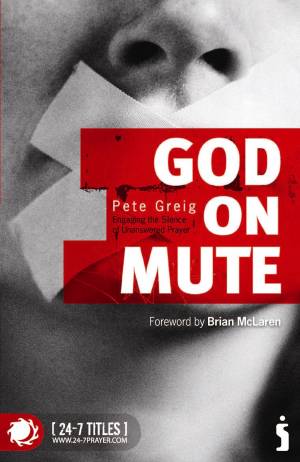
It’s the day of waiting. Jesus is still in the tomb, so to speak. Hopes are still dashed. Darkness still covers over hope. It forms a wonderful section in Pete Greig‘s book on unanswered prayer, God On Mute, where he recognises that this darkness is where many people spend much of their lives. We wait in the tomb of hopelessness, with our prayers seemingly unanswered or refused, not necessarily knowing that it is all going to burst out of the tomb in new and unexpected ways tomorrow. Greig quotes the poet R S Thomas, who says that God is ‘the darkness between stars’.

So let’s not rush past today in the hurry to prepare for tomorrow. If we get a chance, let’s linger here. Because many people are – often against their will.

Later tonight – after sunset – my Easter Day sermon will appear here on the blog. But in the meantime, let’s wait – especially with those who are living protracted seasons in Holy Saturday.

Action For Happiness

Mark Easton reports on the BBC this morning about the launch of the Action For Happiness Project. Naturally, this interests me from a religious perspective.

Its ten pledges make no reference to God, which leave it doomed to failure in an important sense for me, although it rightly emphasises doing things for others as a source of happiness. Nevertheless, aiming for my own happiness is like looking for the pot of gold at the end of the rainbow. You won’t find it by seeking it.
However, it’s interesting to note that one of the founders, Labour economist Professor Richard Layard, says the project is important because organised religion has failed to turn back the “tide of narrow individualism”. And that’s a criticism I think we should listen to in the Church. Has that happened because we simply have not persuaded people of the virtues of the Gospel? Or is it more about us failing to embody an adequate Gospel?

In the book I’m reading right now, Alan Hirsch says,

In an already overtly consumeristic culture, Western Christians tend to view the church as a place that exists to serve my spiritual needs. When viewed like this, it becomes just another silo. If one church (silo) doesn’t fulfill my particular taste and perceived needs, then I will simply look until I find one that does. If this is true, then we can probably say that many Christians have now subconsciously determined that “the community exists for me”, rather than the more missional “me for the community”. (Page 166)

So – there’s the challenge for the Church: to be a community, not a silo.

Create a website or blog at WordPress.com

Up ↑