

This is not a full sermon this week. I am participating in an act of worship led by some church members. I have been asked to give the final reflection that leads the congregation from Palm Sunday into Holy Week.
A former minister of mine who influenced me greatly came to us after he had got in trouble in his previous circuit. It was said that he had divided a church. Because of that, he was given an official telling-off by Methodism. After all, you can’t have people dividing churches, can you?
Or can you?
I don’t think ‘unity at all costs’ survives scrutiny by the ministry of Jesus. The moment we get past the joy and celebration of the Palm Sunday procession, Jesus’ ministry provokes conflict.
Would we give Jesus a welcome? The Palm Sunday procession suggests we would, but these stories question that. Would we turn on Jesus? The joyful mood is turning dark.
Let’s briefly examine the two conflicts in these verses.
Firstly, the turning of the tables:
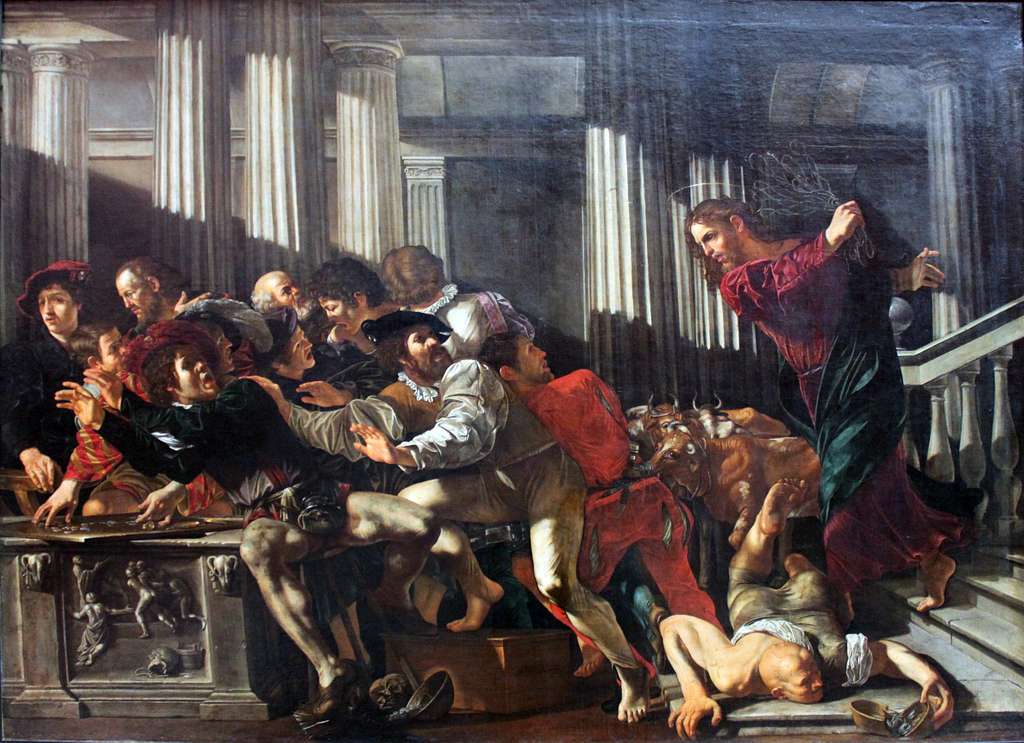
What is the charge Jesus levels at all those who are buying and selling in the Temple?
“My house shall be called a house of prayer”;
but you are making it a den of robbers.’
‘A house of prayer (for all peoples)’ is from Isaiah 56; the ‘den of robbers’ from Jeremiah 7. He stands in the great tradition of the prophets in announcing this conviction of evil.
A den of robbers? The pilgrims coming to Jerusalem had to risk being attacked by bandits on the way. Criminals lurked in the hillsides next to the pilgrim roads. But if they had survived that and got to Jerusalem, they now face the real bandits, says Jesus – the people running the Temple. Their concern is less with it being a holy, spiritual, and welcoming place – a house of prayer – they are running the enterprise for their own benefit.
Let this be a warning to us before we end up taking that approach, too. Think back to our discussions about the finances of the church. When we know that our regular giving is not covering the assessment we must pay to the circuit and that we rely on hiring out the premises, we are in trouble. But there is another danger here, and that is concentrating so much on the finances that we become a religious business rather than a spiritual family. We can come up with all the fund-raising ideas we like, and we do of course have to be responsible stewards of the finance and the property, but unless we address the spiritual nature of the church family first, we will go in the same direction as the moneychangers in the Temple.
Let me put this on the agenda for this church, then: we can talk about increasing our membership, and we can talk about raising more income, but unless our top priority is to be a ‘house of prayer’, a spiritual community, we shall only be a church in name, not nature.
How many of us have taken up some of the spiritual disciplines we’ve been talking about during Lent? What are we doing together to grow in grace? Jesus says, this is important.
Secondly, the praise of the children:
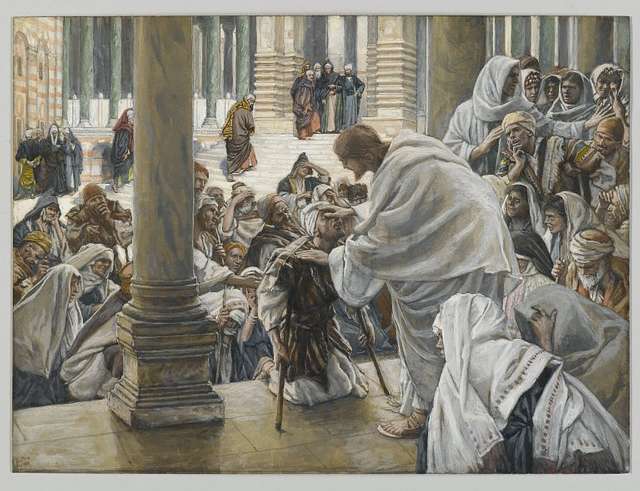
Jesus heals the blind and the lame, and the children praise him, saying, ‘Hosanna to the Son of David.’ The chief priests and scribes hate this and say, ‘Do you hear what they are saying?’ (Verses 14-16a) How dare you accept this praise!
But Jesus says it’s right for him to do so, and quotes a verse where he equates the praise of the children to him with praise being given to God himself:
“Out of the mouths of infants and nursing babies
you have prepared praise for yourself” (Verse 16b, quoting Psalm 8:2 LXX)
If the authorities didn’t like Jesus already, then now they will hate him. He is accepting praise like he is God. Moreover, Jesus is implying that they have been shown up by children! The children have got their beliefs right, and the religious leaders haven’t!
Now that is provocative. This is not gentle Jesus, meek and mild. You’ve been shown up by the kids, he says, and that in a culture that thought little of the younger generations.
Imagine what the authorities are thinking. He is a blasphemer, and he expects us, with all our education, to take lessons from children!
Can you feel the tension rise? Soon, people will have to take a side. And events will take the darkest of turns.
We too shall need to choose a side. Even if that leads us into a dark place.
 Big Circumstance
What Do You Think?